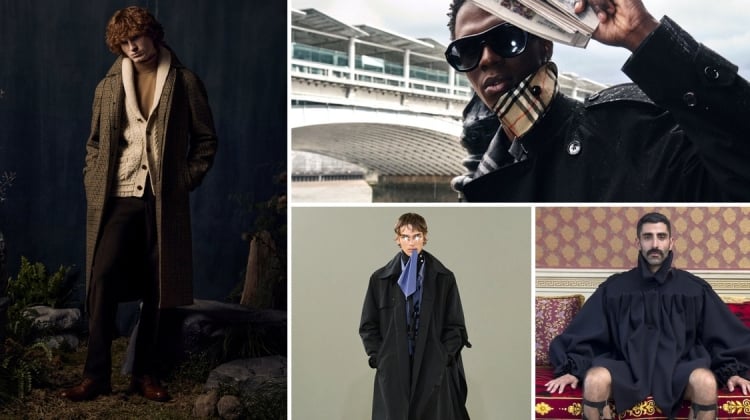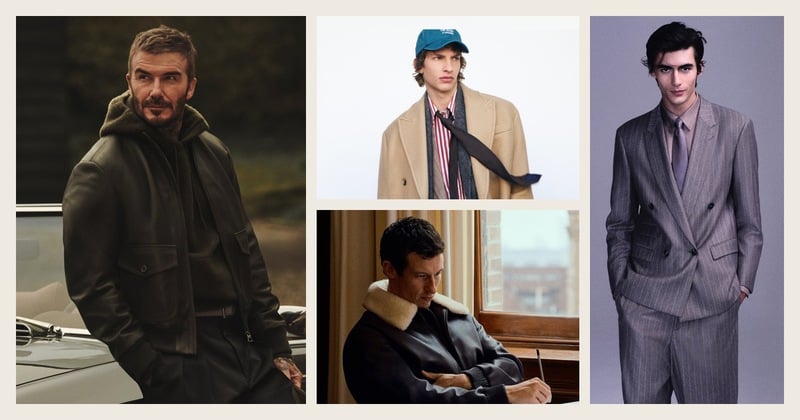
A good designer wardrobe starts with knowing what you want from the clothes. That might be the ease of an unstructured suit, the confidence of a leather coat, or a pair of trousers whose shape changes how everything else looks. Luxury designer brands offer very different answers, even when their prices occupy the same territory.
The differences matter more than a shared promise of quality. Some houses build their menswear around tailoring; others start with fabric experiments or the friction between formal and casual dress. These labels range from established European houses to independent Japanese designers, each with a particular idea of how a man might dress.
Top Luxury Designer Brands for Men
Acne Studios
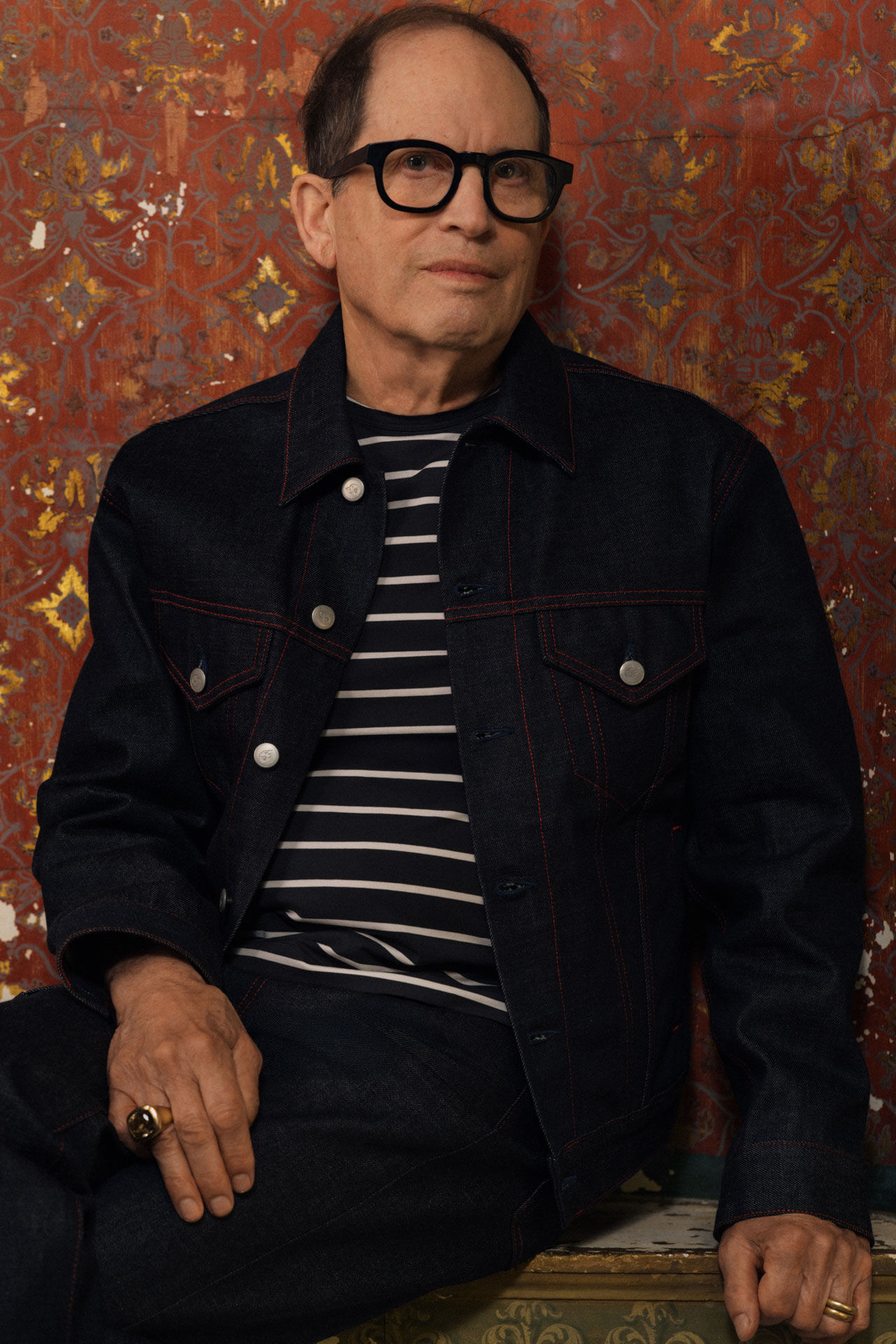
Acne Studios treats everyday clothes as an opportunity to get the proportions slightly wrong, often to excellent effect. Founded in Stockholm in 1996, the house is led by Jonny Johansson, whose interest in art and photography informs its approach to dressing. Denim remains central, but the same curiosity runs through elongated tailoring and leather outerwear. A recognizable garment becomes less predictable through its wash, texture, or scale. The appeal is in that tension between something ordinary and something a little strange.
AMI Paris
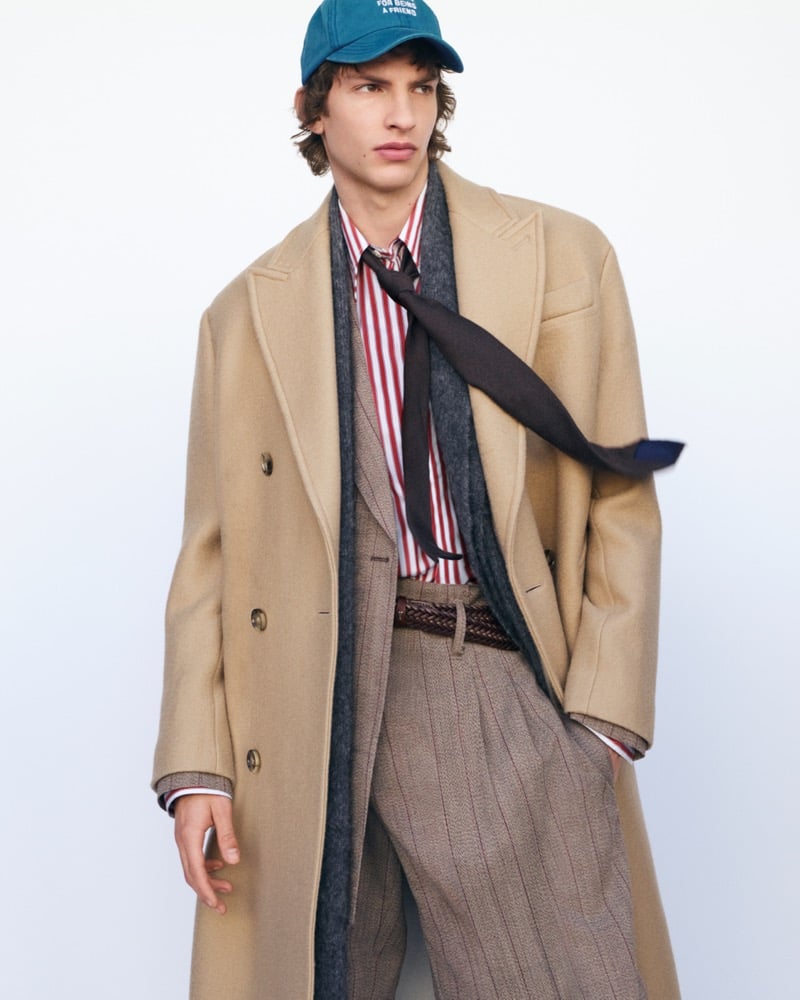
AMI Paris takes a friendly approach to French designer fashion, starting with the wardrobe of a friend. Alexandre Mattiussi founded the label in 2011, bringing experience at larger Paris houses to clothes that could move between the office and an evening out. Relaxed tailoring and textured knits establish the silhouette, with the Ami de Cœur heart giving simpler pieces an immediate identity. The point is how the clothes work together. A roomy coat and an easy pair of trousers can convey as much character as a conspicuous runway piece.
AMIRI
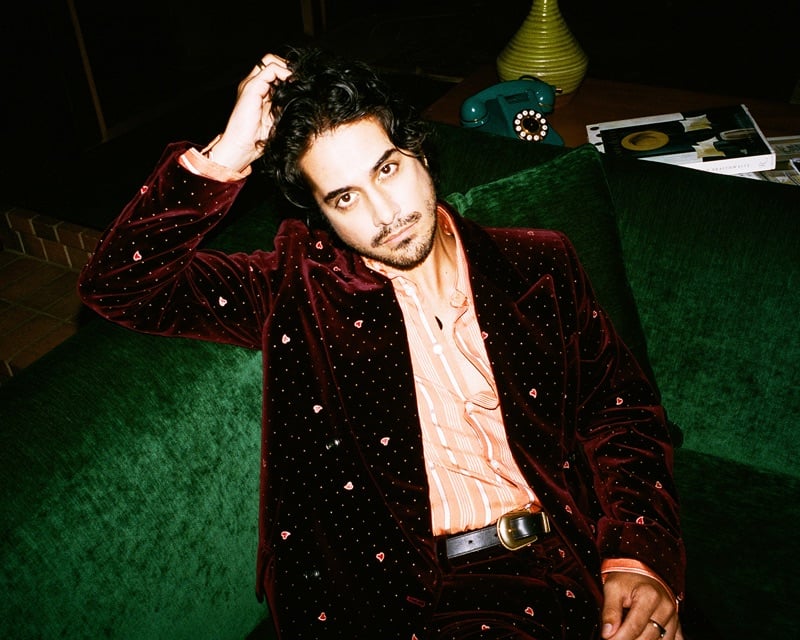
Mike Amiri founded AMIRI in Los Angeles in 2014, drawing on his experience making stage clothes for musicians. Distressed denim and worked leather established its early reputation, turning the wear of a rock wardrobe into a demanding production process. The menswear has since expanded into tailoring and the more dressed-up rituals of Hollywood life. Embroidery and rich surfaces remain useful identifiers. Even when the collection puts on a suit, the attitude owes more to a late night in Los Angeles than a boardroom.
Auralee
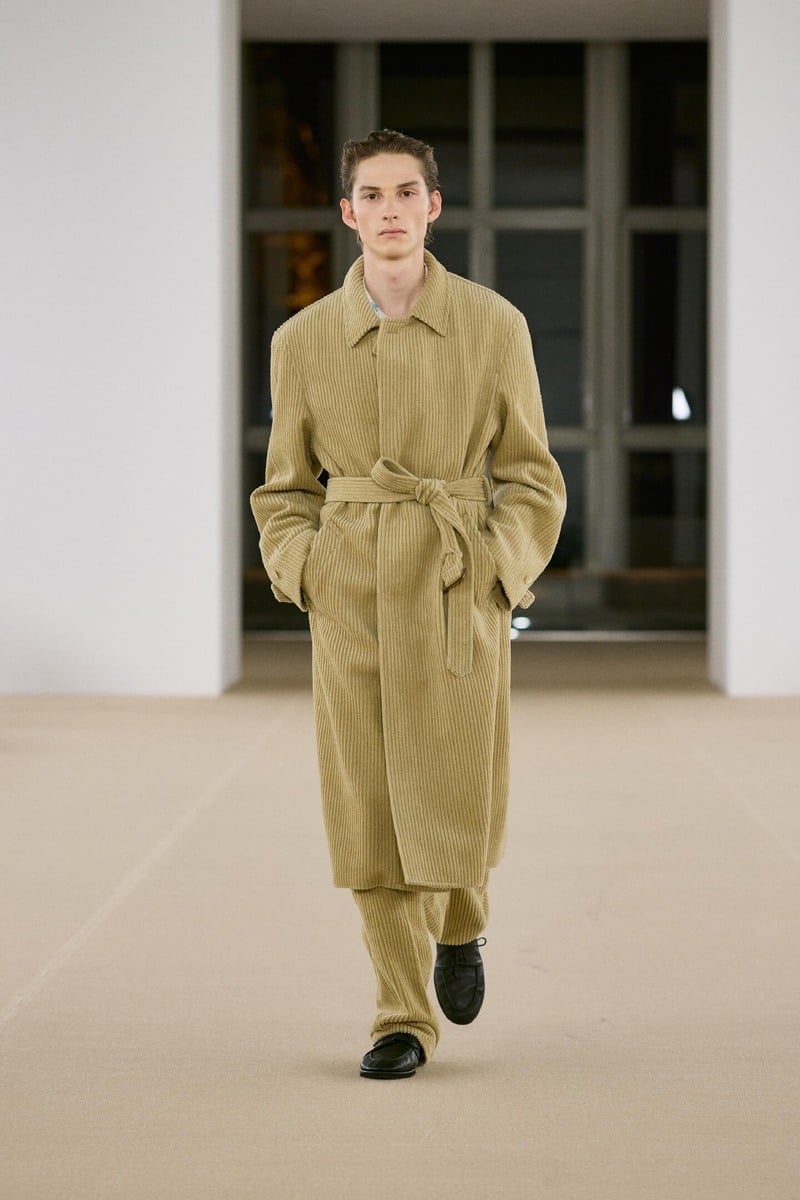
Auralee begins with the fabric. Ryota Iwai established the Tokyo label in 2015, developing textiles whose weight and finish give simple garments their character. A sweater's color or the fall of a coat can do most of the work, leaving little need for conspicuous decoration. The relaxed proportions are precise enough to keep the clothes from looking incidental. It is a useful label for men who enjoy getting dressed but want the interest to emerge gradually, through how a piece feels and moves.
Balenciaga

Balenciaga's menswear has made volume a subject in its own right. The house was founded by Cristóbal Balenciaga in Spain in 1917 and established in Paris in 1937; its modern men's wardrobe developed much later. Demna's decade at the label brought enormous outerwear and distorted everyday clothes into the center of luxury fashion. Pierpaolo Piccioli succeeded him in 2025. That history gives the current house more to draw on than oversized sneakers, with the cut of a jacket remaining as important as its cultural associations.
Bally

Bally's strongest argument begins at ground level. Established in Switzerland in 1851 by Carl Franz Bally and his brother Fritz, the company developed around shoemaking before expanding into leather goods and clothing. Loafers and leather lace-ups remain an intelligible starting point, with ready-to-wear giving them a wider setting. The menswear tends to reward attention to surface and finish. A leather jacket or a well-shaped coat can suggest luxury through its material and construction, leaving the shoe to complete the thought.
Balmain
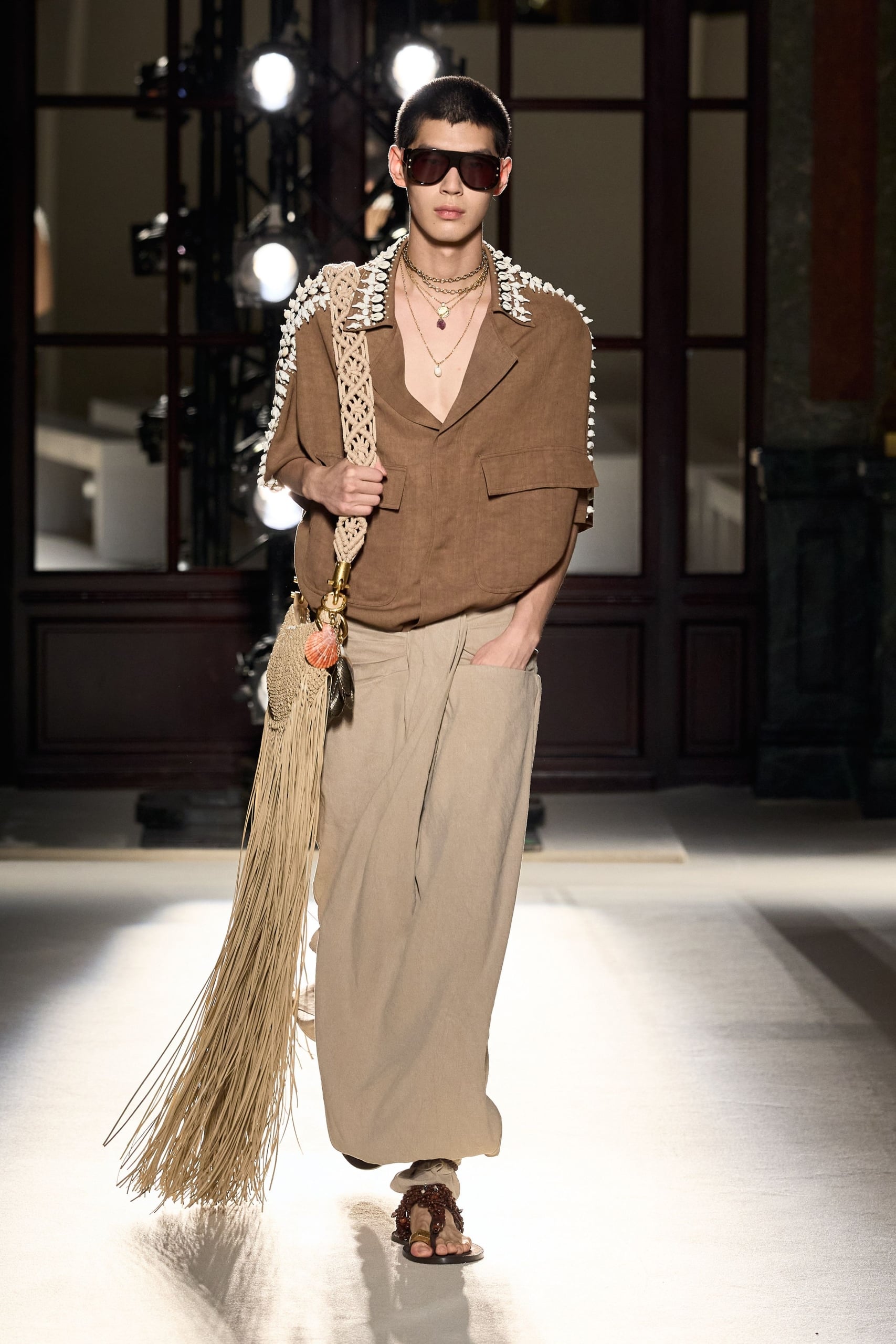
Balmain has long understood the authority of a strong shoulder. Pierre Balmain established the Paris house in 1945, while its more recent menswear identity developed through the rock-inflected clothes of Christophe Decarnin and Olivier Rousteing's highly visible, embellished wardrobe. Military references and close-cut denim helped make that language recognizable. Antonin Tron became creative director in November 2025, opening a new chapter. The house's history remains useful context, but its current menswear deserves to be judged through the clothes as that direction develops.
Berluti
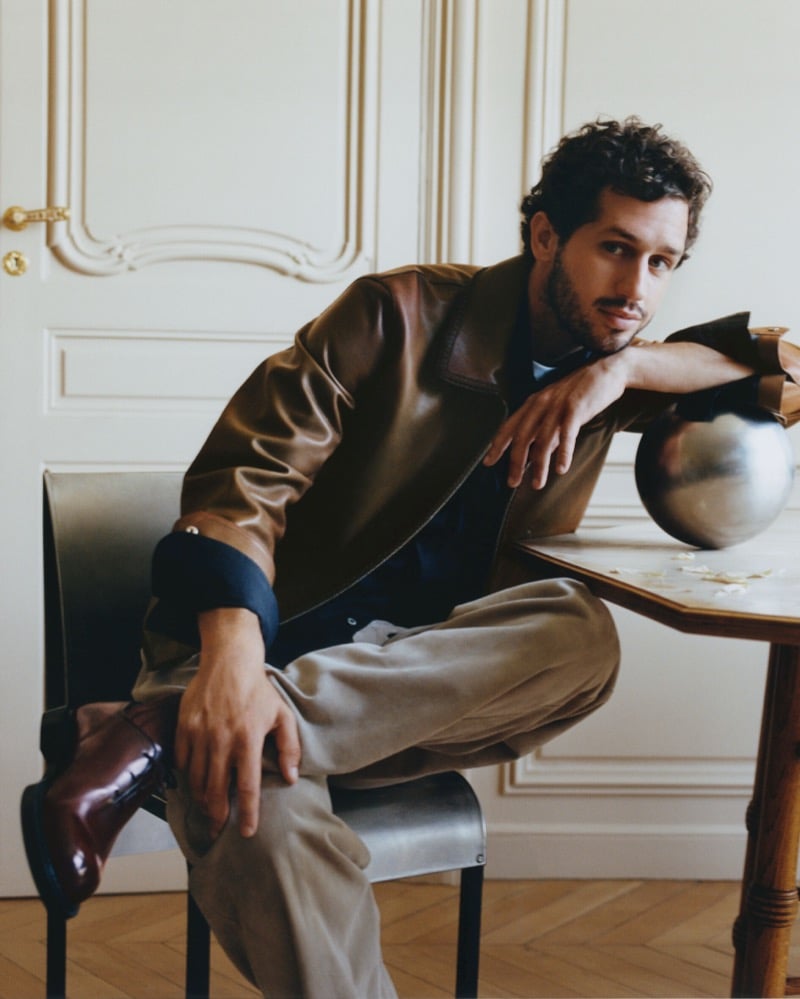
A pair of shoes explains Berluti more quickly than a logo. Founded in Paris in 1895 by Alessandro Berluti, the house is known for leather whose patina gives color depth and variation. Ready-to-wear extended that expertise into a complete men's wardrobe, including tailoring and supple outerwear. The relationship between the pieces matters. A suit provides a setting for the shoes, while a leather jacket brings their tactile interest closer to the face. The effect can be formal, but it rarely depends on severity.
Bottega Veneta
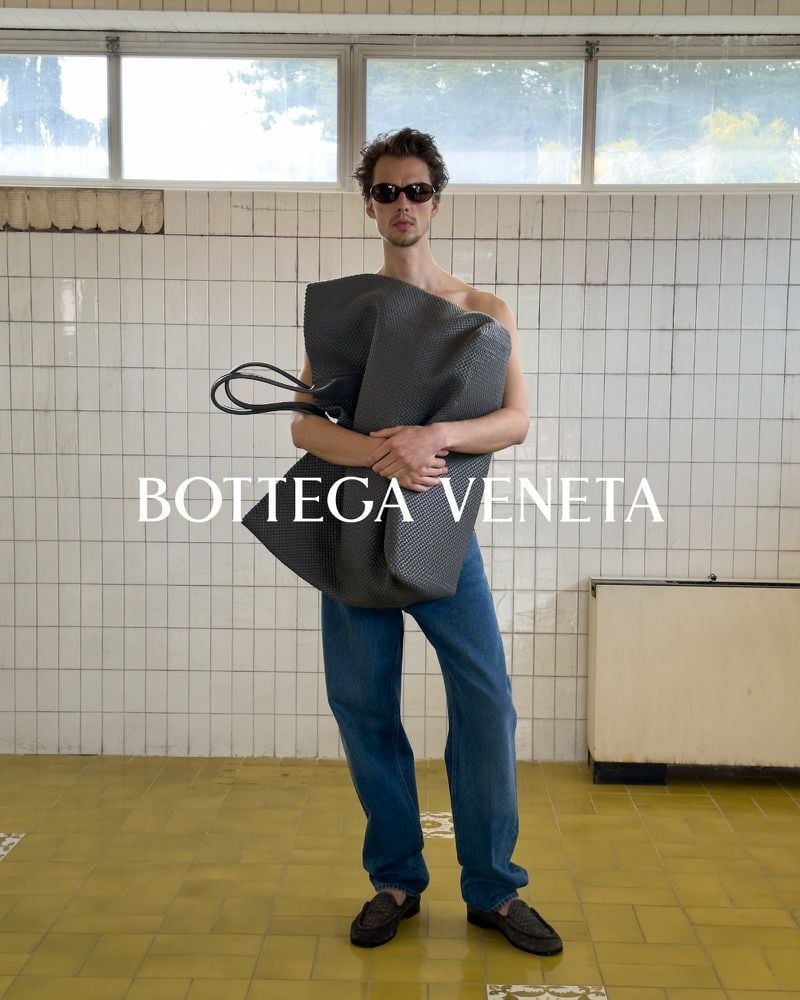
Bottega Veneta makes leatherwork part of the silhouette. Founded in Vicenza in 1966, the house is identified with intrecciato, its woven-leather technique, and an approach to recognition that does not rely on a large printed name. In menswear, the interest extends to the volume of a jacket and the behavior of a fabric. Louise Trotter became creative director in 2025, succeeding Matthieu Blazy. The continuity lies in making construction visible through the finished object, whether that object is a bag or an apparently straightforward coat.
Brioni
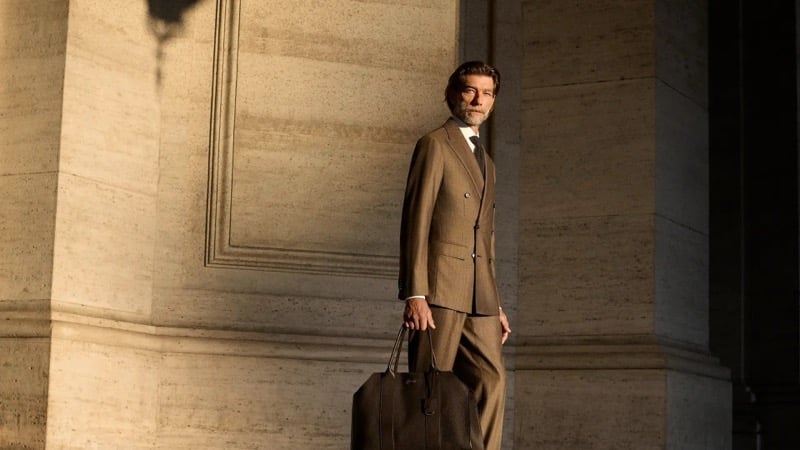
Brioni approaches menswear through the discipline of the suit. Tailor Nazareno Fonticoli and entrepreneur Gaetano Savini founded the house in Rome in 1945, building a reputation around fit and handwork. Its screen history includes dressing Pierce Brosnan as James Bond in GoldenEye, a useful illustration of tailoring that communicates authority before a character speaks. The modern wardrobe also includes knitwear and more relaxed outerwear. Those pieces make sense beside the suits because the same attention to line remains central.
Brunello Cucinelli
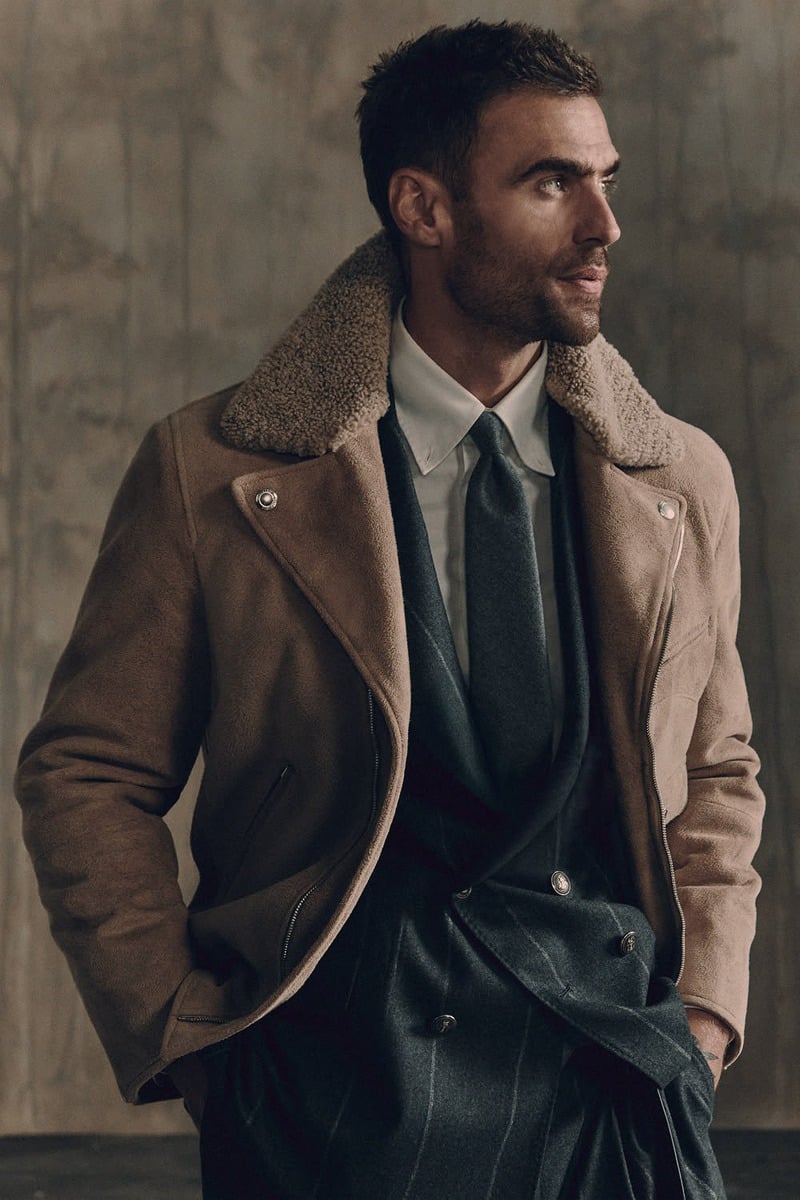
Brunello Cucinelli built his company around cashmere in 1978, with Solomeo becoming the center of its identity. The menswear now presents a complete wardrobe in which tailored jackets can sit comfortably over knitwear and trousers have enough room to move. Texture supplies much of the interest, particularly when neighboring shades keep the overall effect quiet. The look is often associated with leisure, but its ease is carefully assembled. It suits men who want the benefits of dressing well to survive an ordinary day.
Burberry
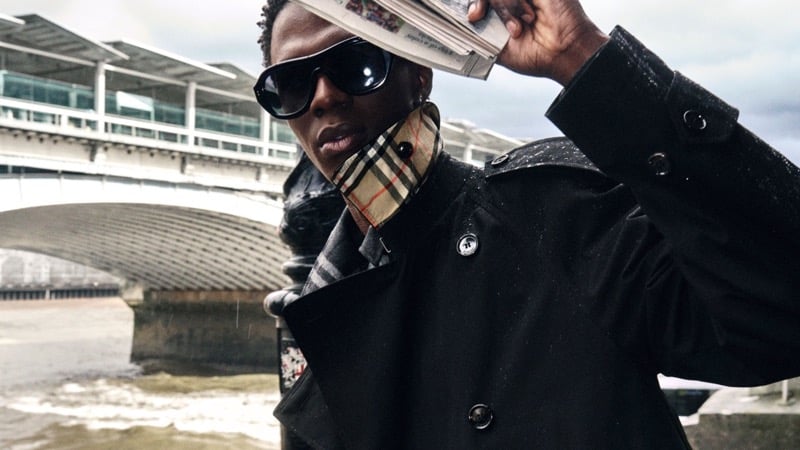
Weather gives Burberry its most persuasive starting point among British designer brands. Thomas Burberry founded the company in 1856, and gabardine helped establish a business built around protective outerwear. The trench coat remains the clearest expression of that history. Under Daniel Lee, chief creative officer since 2022, the wider wardrobe has returned attention to British outdoor life and the house's recognizable codes. Checks and thick scarves have their place, but the more useful question is how a coat works over the clothes a man actually wears.
Canali
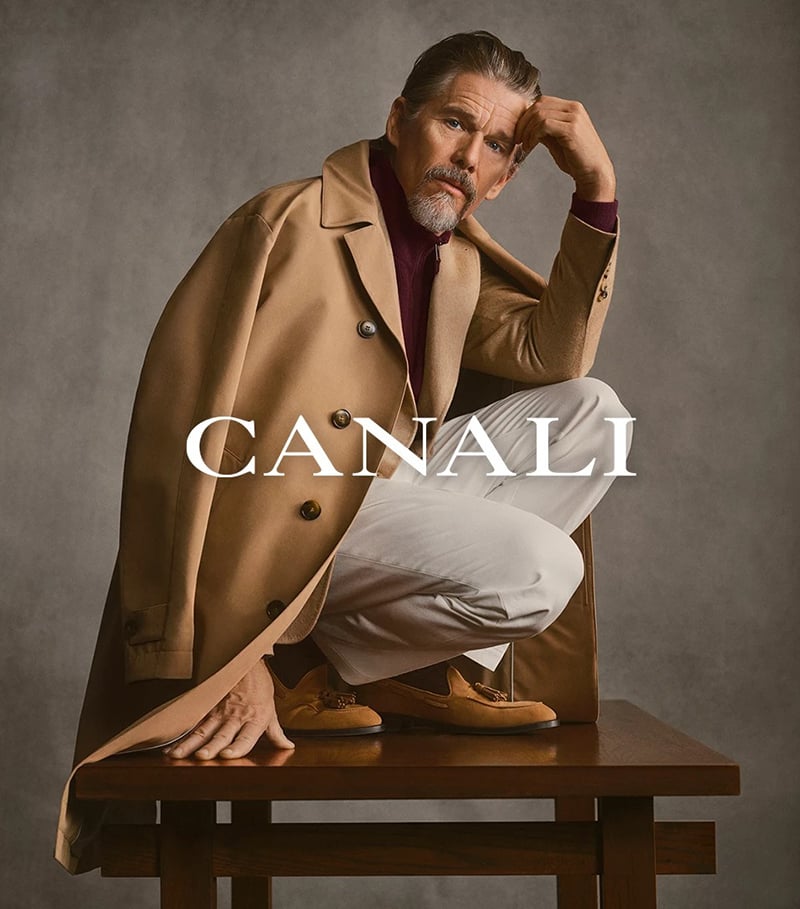
Canali has made tailoring the center of its business since its beginnings in 1934. The family-owned Italian company builds its men's wardrobe around suits and jackets, extending the same attention to cloth and proportion into casual dressing. Soft construction is especially useful when a jacket needs to work beyond formal occasions. Knitwear and lighter outerwear extend that approach, allowing a man to dress coherently even when he leaves the tie at home. Its appeal comes from making a complete wardrobe feel like a practical proposition.
Celine

Celine's modern menswear identity took shape under Hedi Slimane, whose narrow tailoring and music references gave the French house a clear male silhouette. Michael Rider became artistic director in 2025, bringing a different set of references to the wardrobe. The distinction matters when looking at current collections. Celine is more than a permanent replay of the skinny black suit, even if that image remains influential. Leather goods and carefully judged proportions connect the men's clothes to the larger house as its vocabulary changes.
Comme des Garçons
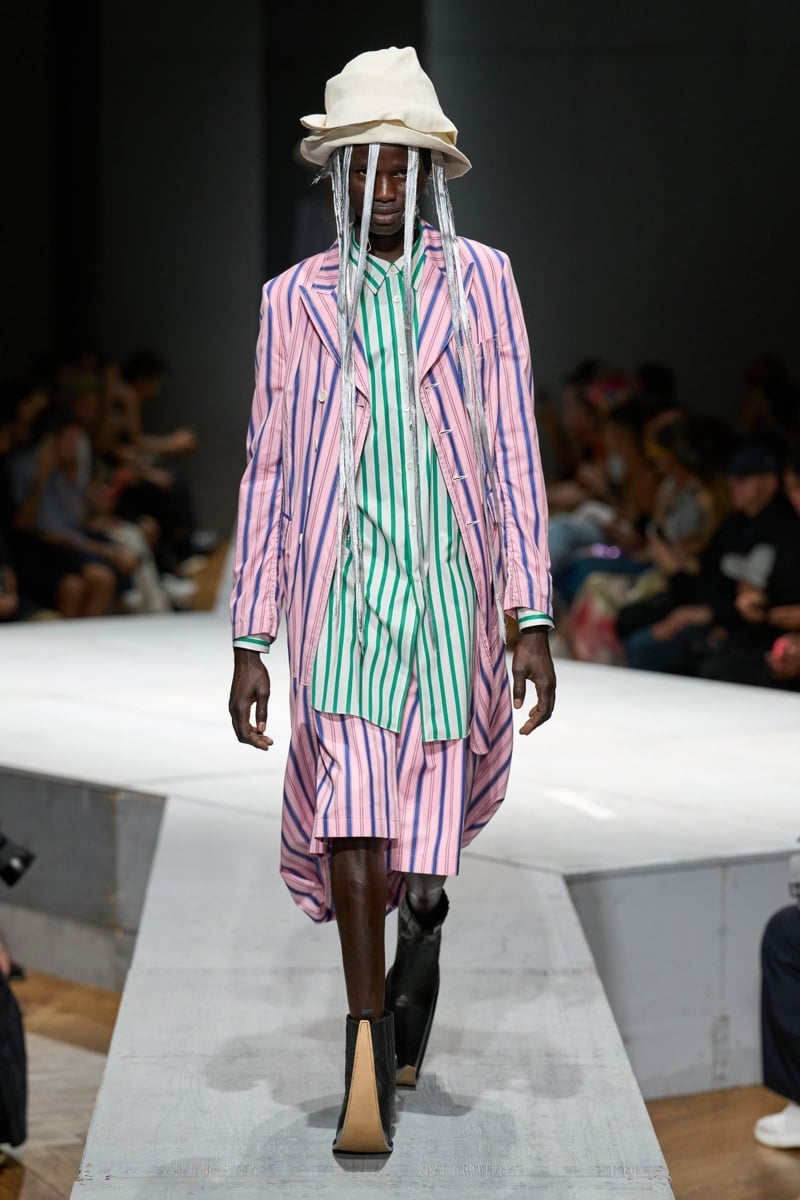
Comme des Garçons asks what happens when a garment refuses its expected shape. Rei Kawakubo's house contains several distinct men's propositions, which should not be treated as interchangeable. Comme des Garçons Homme Plus is a setting for her more radical runway experiments, while Homme and Junya Watanabe MAN have their own design identities. Play's heart-logo T-shirts are another part of the business. For menswear, the useful entry point is the construction itself, from disrupted tailoring to pieces that make an ordinary shirt newly unfamiliar.
Dior Men

Dior's men's wardrobe has changed since the narrow suits of Hedi Slimane and the later work of Kris Van Assche and Kim Jones. Jonathan Anderson took charge in 2025 and now leads the house's women's and men's collections as well as couture. His approach brings historical references into conversation with everyday dressing, making the relationship between a jacket and its wearer feel newly unsettled. Dior remains a house where tailoring matters, but the particular kind of man imagined by that tailoring continues to change.
Dolce & Gabbana
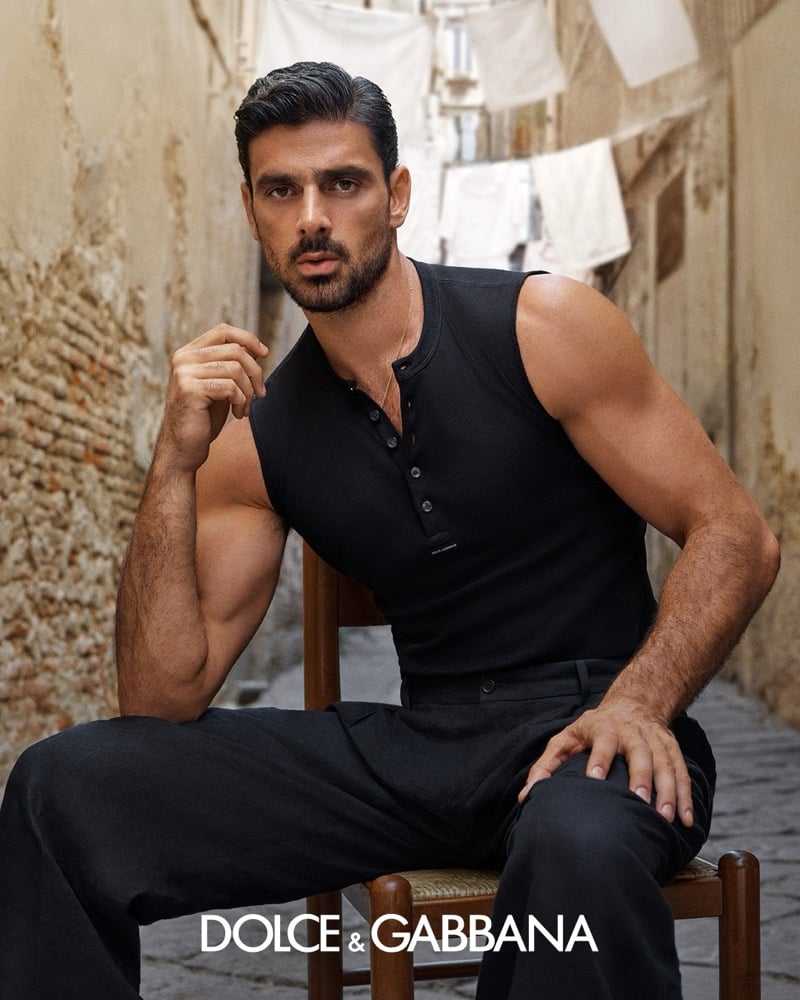
Domenico Dolce and Stefano Gabbana launched Dolce & Gabbana in 1985, with menswear following in 1990. The men's wardrobe moves between dark tailoring and a more demonstrative vision of Italian life, using printed silk and visible skin to change the mood. A black suit can suggest restraint until the shirt underneath alters the proposition. The brand's strength lies in that range of masculine performance, from formal ceremony to a summer evening. Treating it only as a source of extravagant prints misses half the story.
Dries Van Noten
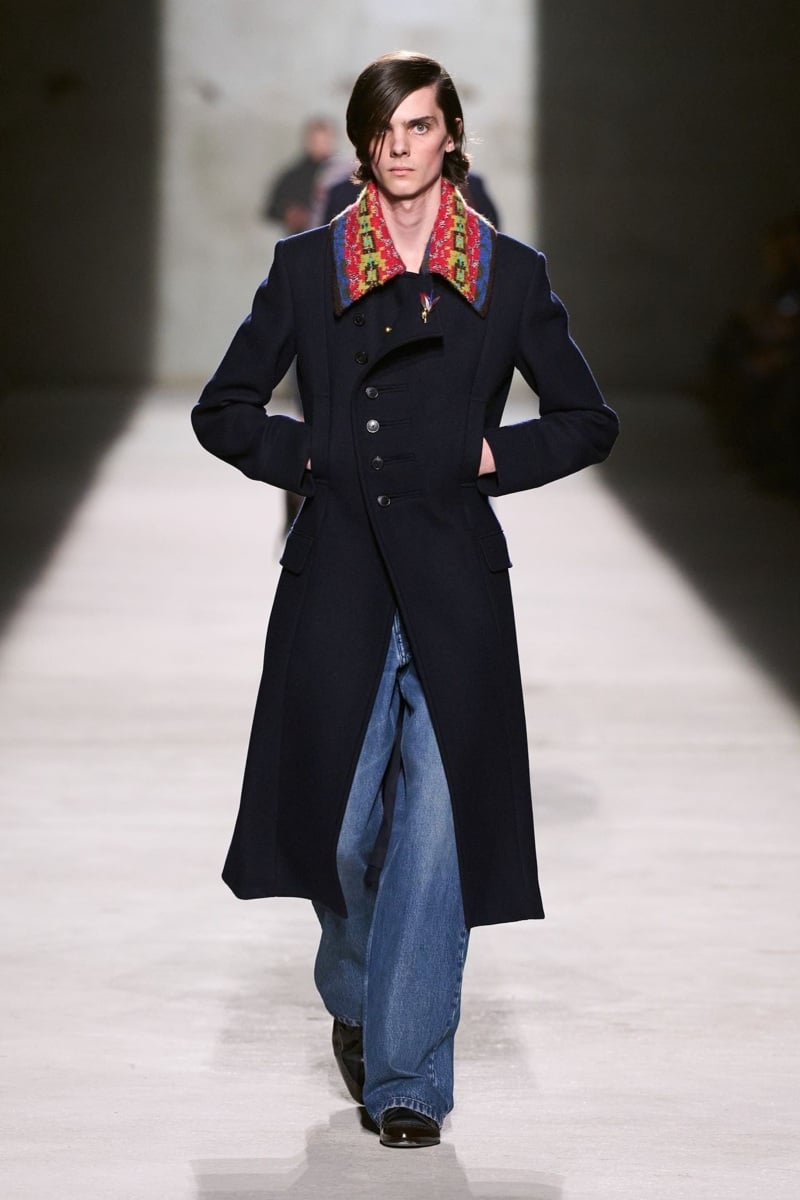
Dries Van Noten made color and pattern feel like the foundations of a wardrobe, not occasional departures from it. The Belgian designer launched his label in 1986 and built menswear around combinations that rewarded a second look. A printed shirt could change the temperature of an otherwise sober suit. Following his final show in June 2024, Julian Klausner became creative director in December that year. The house's enduring appeal lies in giving men permission to enjoy surface and decoration while keeping the clothes wearable.
Dsquared2

Dean and Dan Caten launched Dsquared2 in 1995, joining their Canadian background to an Italian fashion business. Denim gives the menswear a durable center, often through distressing and exaggerated proportions. The styling can move from outdoor references to nightclub display in the space of an outfit. That mix is the point. A rugged jacket or an emphatic boot becomes part of a highly staged idea of masculinity, with the clothes inviting the wearer to participate in the performance.
Dunhill
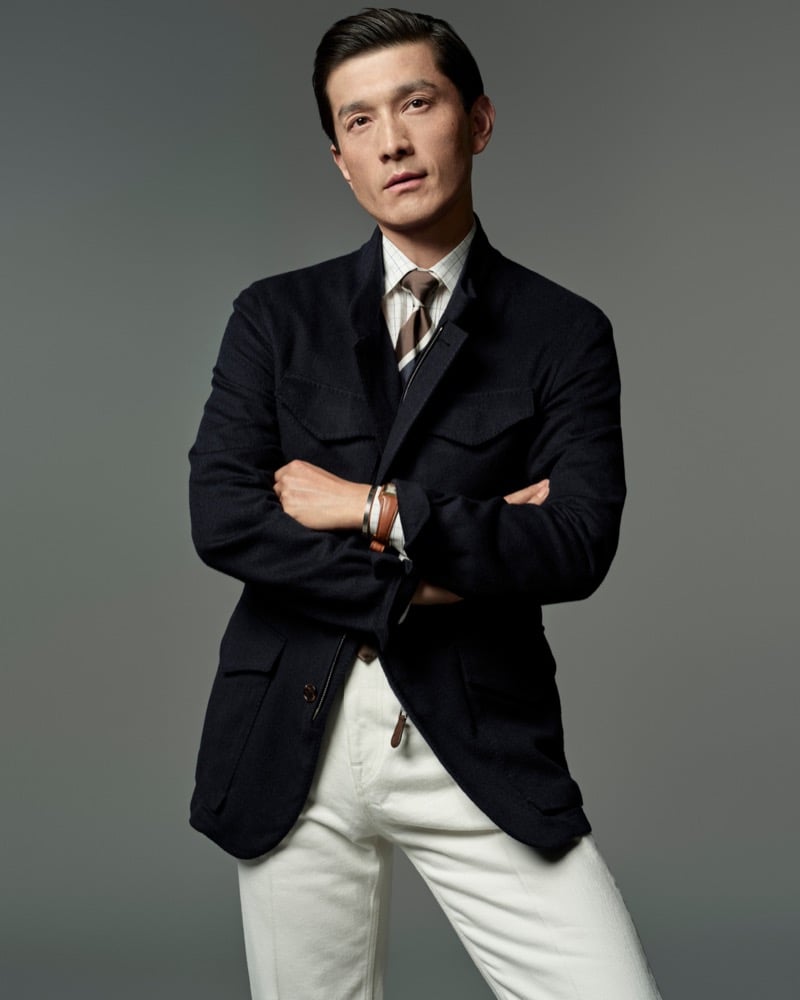
Dunhill's history begins with Alfred Dunhill's development of his father's London business in 1893, when the needs of motorists supplied a new direction. Today's menswear is less concerned with driving equipment, but the idea of dressing for a particular life remains useful. Simon Holloway, appointed creative director in 2023, has placed British tailoring and the house's archives at the center of his work. The wardrobe gives formal clothes room to breathe, using knitwear and outerwear to make a suit part of daily life.
Etro
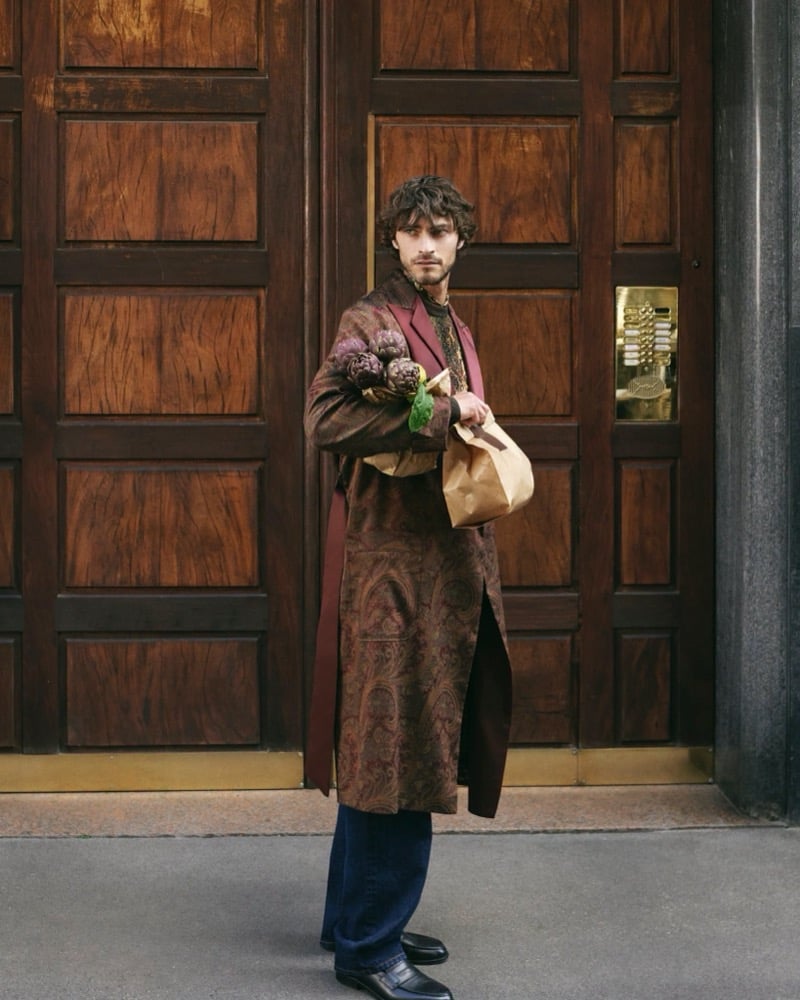
Etro's identity is rooted in textiles. Founded in Milan in 1968 by Gerolamo Etro, the house made pattern and an appetite for color part of its everyday vocabulary. Paisley is the best-known signature, but the interest is also in how fabrics meet across an outfit. Marco de Vincenzo led design from 2022 to 2026, following the family's long stewardship. For men, Etro offers a way to loosen the conventional relationship between tailoring and sobriety, allowing a coat or a shirt to set a more individual mood.
Fendi

Fendi began as a Roman leather-goods and fur business in 1925. Its men's wardrobe developed a particular character under Silvia Venturini Fendi, combining technical material work with a willingness to question conventional masculine dress. Maria Grazia Chiuri returned to the house as chief creative officer in 2025. That change makes it important to distinguish the label's established menswear vocabulary from the work now emerging. Leather remains a useful thread through both, linking the clothes to Fendi's history as a maker of objects as well as outfits.
Ferragamo
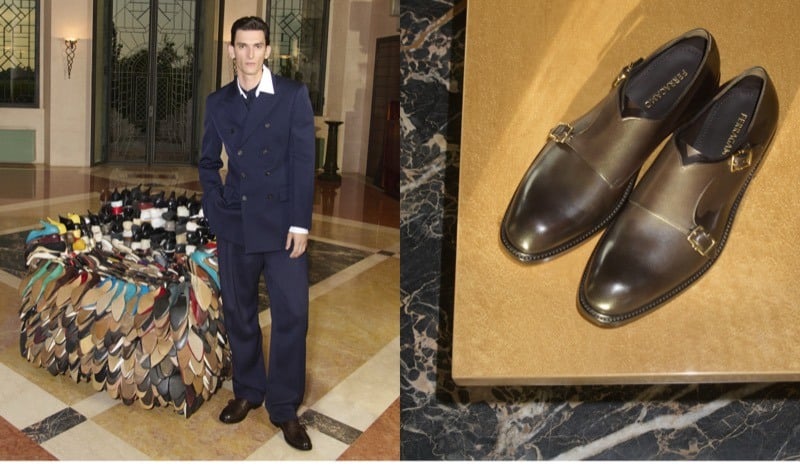
Shoes remain the natural introduction to Ferragamo, the Italian house established by Salvatore Ferragamo in 1927. The founder's technical interest in fit and construction gives the brand more substance than a recognizable buckle. Maximilian Davis, creative director since 2022, has brought a focused sense of color and silhouette to the wider wardrobe. In menswear, leather and tailoring often work together to give the body a clear line. The result can be sensual even when the styling is relatively restrained.
Giorgio Armani
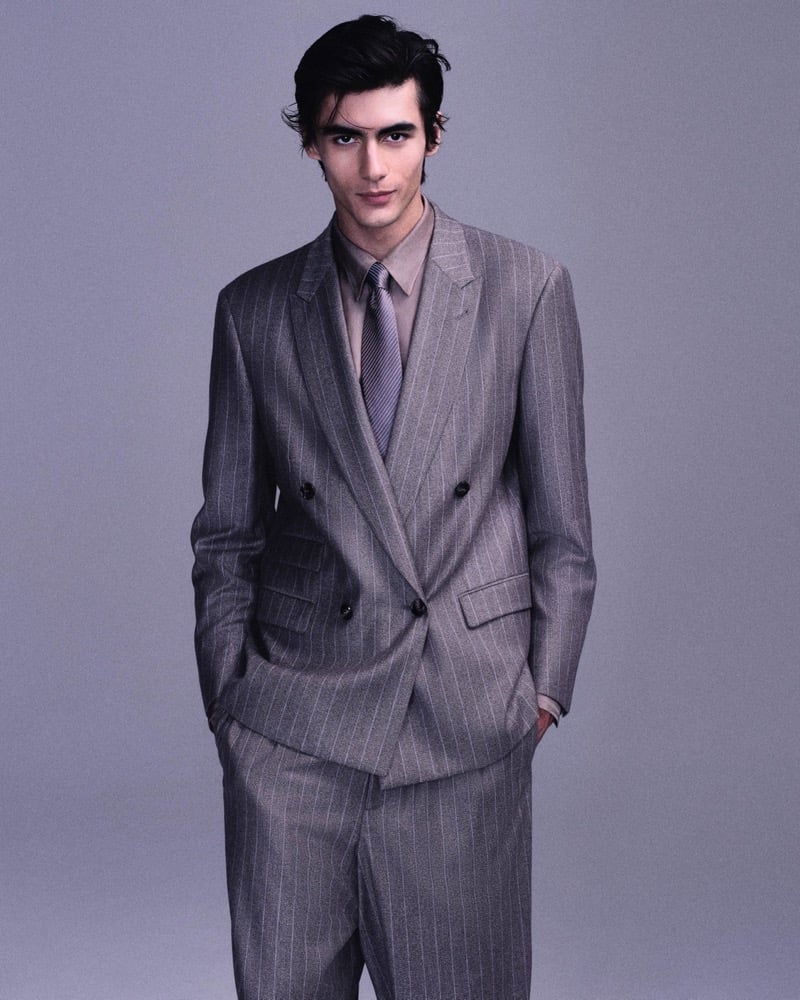
Giorgio Armani changed the relationship between a man and his suit by allowing the jacket to soften. The company he founded with Sergio Galeotti in 1975 helped reshape Italian designer menswear, making fluid tailoring an alternative to clothes that announced their structure. That history still explains the main line more usefully than the word minimalism alone. Following Armani's death in 2025, longtime collaborator Leo Dell'Orco leads the menswear. The continuing challenge is to preserve the movement and ease that made an Armani suit feel different on the body.
Givenchy

Givenchy's menswear has moved through several sharply different identities, from Riccardo Tisci's graphic, street-influenced wardrobe to Matthew M. Williams's interest in hardware and utility. Sarah Burton became creative director in 2024, with responsibility for women's and men's collections. The Paris house, founded by Hubert de Givenchy in 1952, gives her a couture history to draw on. For men, the useful point of connection is the cut, whether a jacket suggests formality or a shirt makes the wardrobe feel more intimate.
Gucci
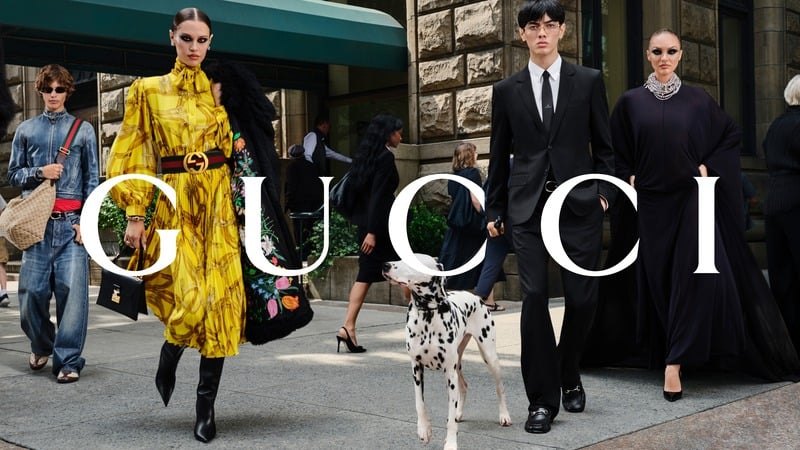
Gucci has never had only one idea of a well-dressed man. The Florentine house, founded by Guccio Gucci in 1921, has moved from Tom Ford's overt sensuality to Alessandro Michele's layered eccentricity, with Sabato De Sarno between Michele and the current direction. Demna became artistic director in 2025. The archive supplies a shared language of horsebits and recognizable leather goods, but the clothes change their meaning around them. Looking at current Gucci requires separating those enduring signatures from the particular attitude of each designer.
Hermès

Hermès began in Paris as a harness workshop in 1837, and its expertise with leather remains central to the men's wardrobe. Clothing extends that attention to material into pieces that often reveal their complexity through use. Véronique Nichanian shaped the menswear for nearly four decades, making ease and tactile pleasure enduring associations. Grace Wales Bonner has been appointed her successor, with a first collection scheduled for January 2027. Until that debut, the house's latest clothes should be understood in the context of Nichanian's concluding chapter.
Hugo Boss
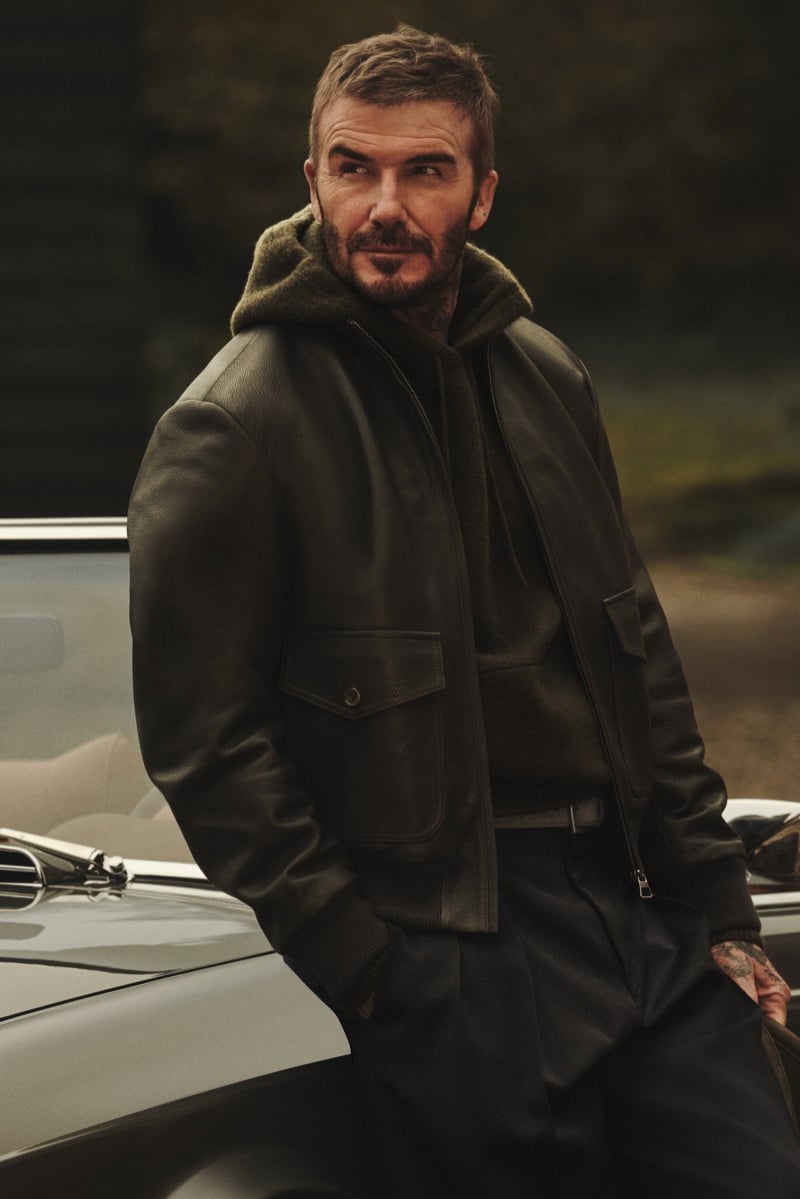
Hugo Boss offers a men's wardrobe that extends well beyond an office suit. BOSS, its principal brand, works across tailoring and leisurewear, with leather outerwear and carefully shaped coats giving the range weight. The difference between BOSS and the younger-facing HUGO line is worth keeping clear. Recent BOSS by Beckham collections have brought particular attention to the way a man combines a coat, knitwear, and trousers. That practical relationship between pieces is a more useful measure of the clothes than a rigid luxury classification.
Issey Miyake
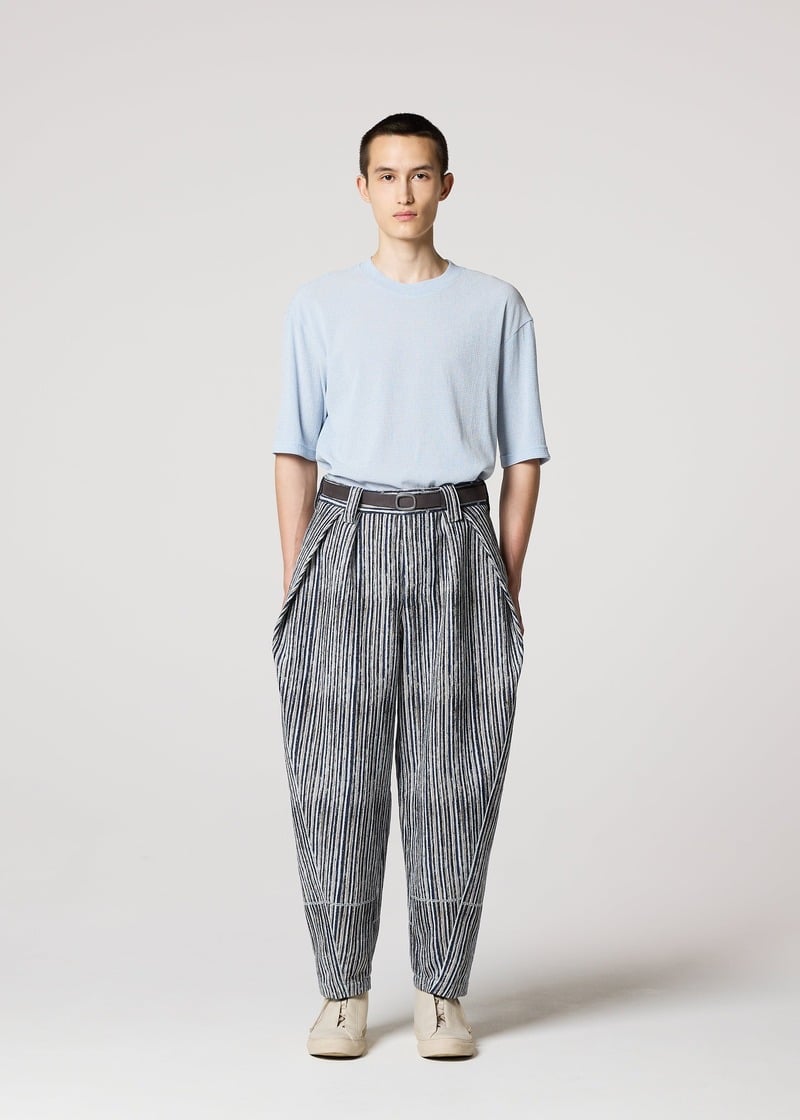
Issey Miyake's menswear is best understood through its different lines. Homme Plissé Issey Miyake uses pleating to create light garments that expand and move with the body, while IM MEN explores clothing through fabric development and construction. Those are related interests, but they produce different wardrobes. The company was founded in 1970, and the founder's death in 2022 did not end its experiments. For a wearer, the appeal can be immediate: trousers or a jacket that feel less restrictive than their conventional counterparts.
Jil Sander

Jil Sander's reputation for reduction depends on what remains after decoration is removed. Jil Sander established her label in Germany in 1968, creating a design language in which cloth and exact proportions had to do the work. Successive designers have interpreted that discipline differently. Simone Bellotti became creative director in 2025, following Lucie and Luke Meier. The menswear is most interesting when an apparently simple jacket or pair of trousers reveals an unusual decision in its shape, keeping restraint from becoming a synonym for anonymity.
JW Anderson

JW Anderson has used menswear to question what belongs in a man's wardrobe since Jonathan Anderson founded the label in 2008. Knitwear has been an especially productive medium, allowing changes in scale and texture to make a conventional garment feel unexpected. The brand's 2025 reset placed greater emphasis on craft and carefully selected objects alongside clothing. It gives the current label a different rhythm from its earlier runway identity, while retaining Anderson's interest in how an ordinary thing can become desirable through an unusual treatment.
Kenzo

Kenzo's menswear draws on the history of a Japanese designer building a fashion house in Paris. Kenzo Takada established the label in 1970, making color and a meeting of cultural references part of its identity. Nigo, artistic director since 2021, brings his own experience of streetwear and collecting to that inheritance. Denim and varsity references sit within a wardrobe that can also accommodate tailoring. The clothes are strongest when those elements feel connected to a particular point of view, beyond the familiarity of a logo.
Kiton
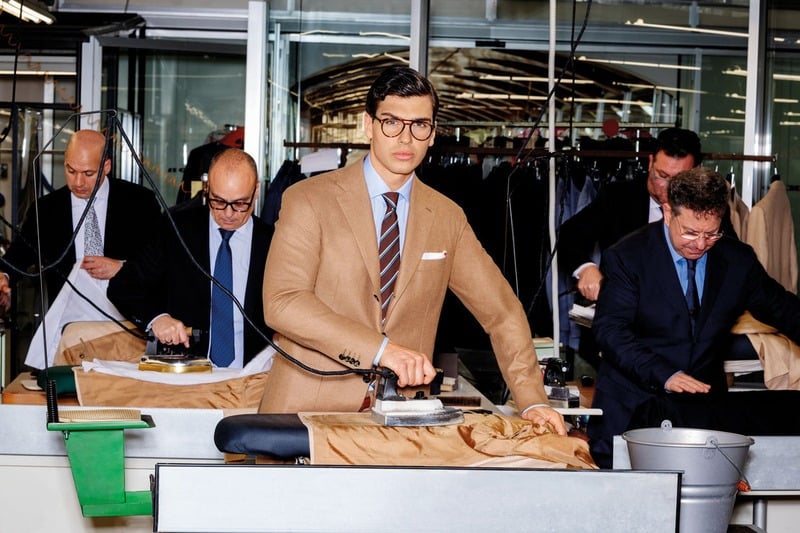
Kiton's authority comes from the work inside the jacket. Ciro Paone founded the Neapolitan company in 1968, bringing skilled tailors together to make clothing at a scale beyond the individual workshop. Suits remain central, but the wardrobe extends into cashmere and relaxed outerwear. The relationship between them is unusually important. Kiton treats softness and comfort as qualities a tailored garment can possess, giving men a route into formal clothing that depends on the experience of wearing it as much as its appearance.
Lanvin
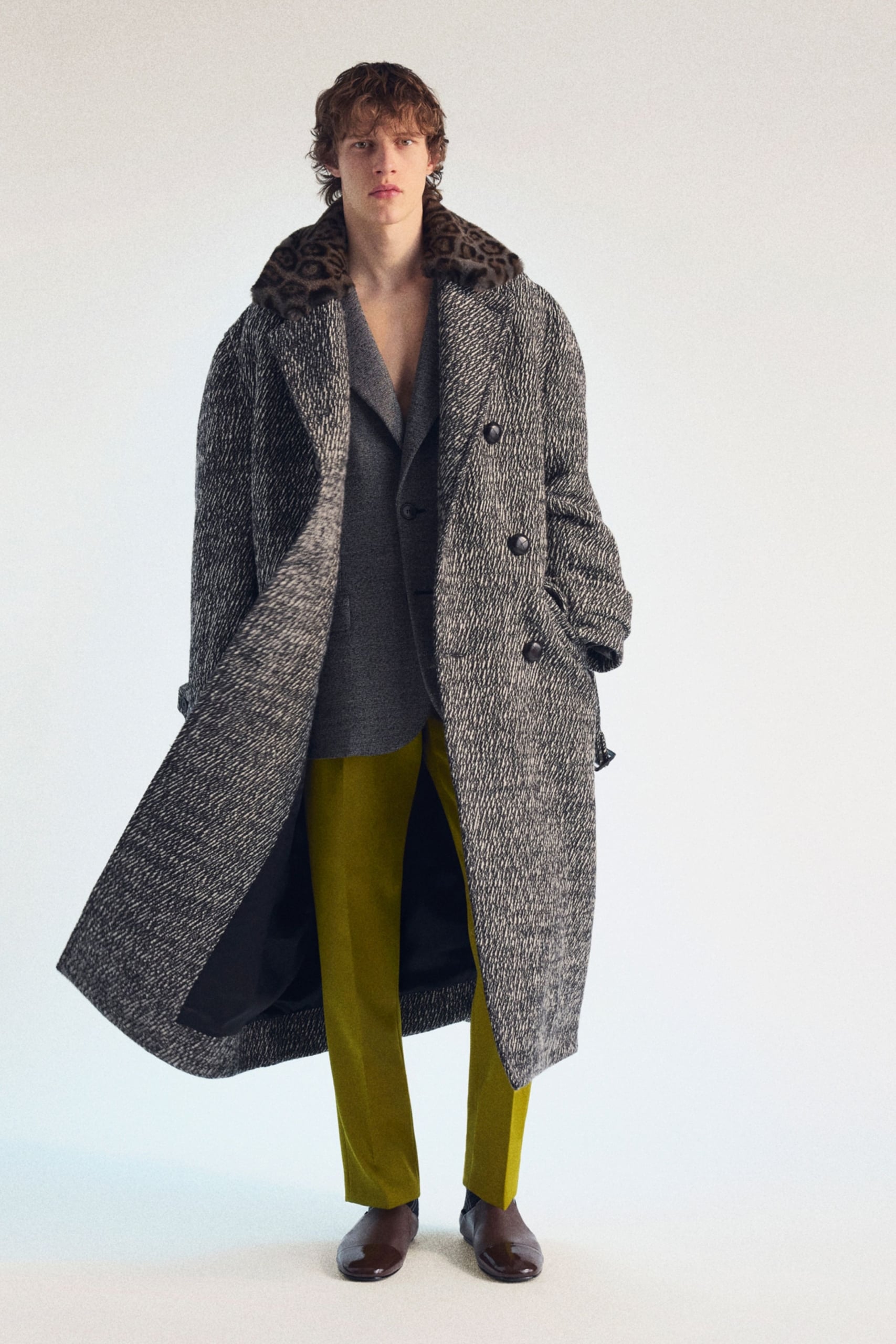
Lanvin's men's wardrobe has a longer history than its recent sneaker successes suggest. Jeanne Lanvin founded the Paris house in 1889 and established a men's department in 1926. Modern designers have drawn different connections between that history and contemporary dressing, from Lucas Ossendrijver's work under Alber Elbaz to later interpretations. Peter Copping became artistic director in 2024. The house offers room for a decorative approach to menswear, in which the shape of a jacket or the finish of a shirt can move tailoring beyond its business associations.
Lemaire
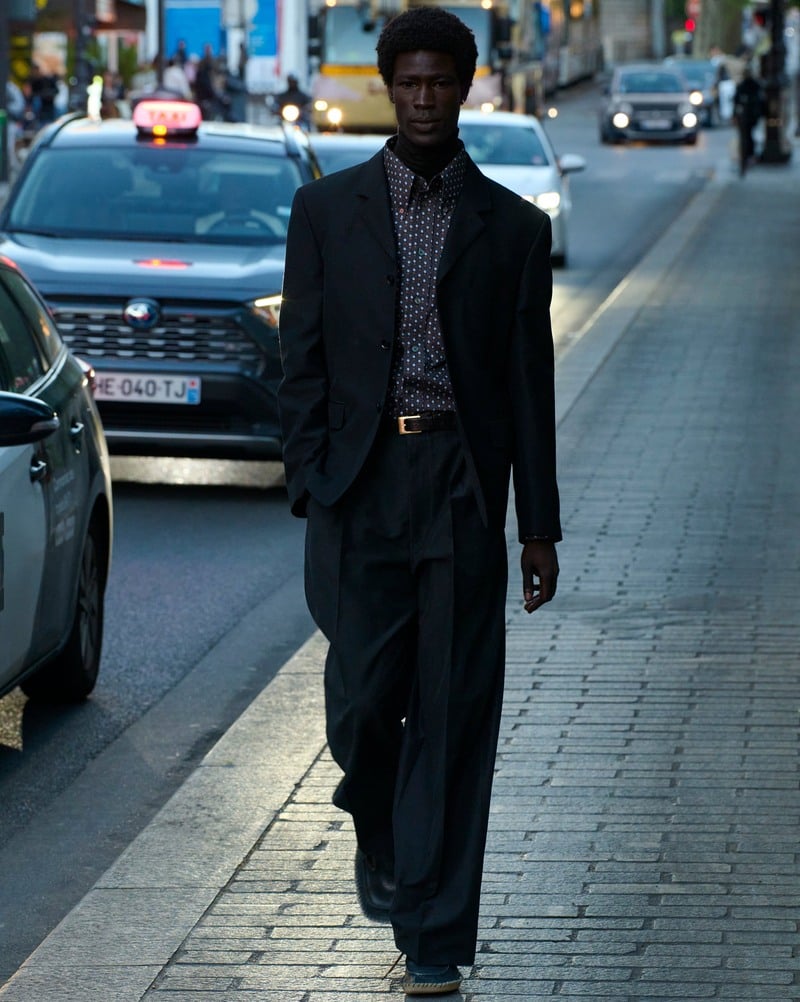
Lemaire builds a wardrobe through the relationship between garments. Christophe Lemaire founded his label in 1991, and Sarah-Linh Tran has helped shape its direction since joining in 2010. Their clothes allow room around the body, with curved lines and tactile fabrics giving everyday dressing a particular rhythm. A coat needs to work over the layers beneath it; a bag becomes part of how the wearer moves. The Paris house's appeal lies in making those practical decisions feel visually compelling, season after season.
Loewe
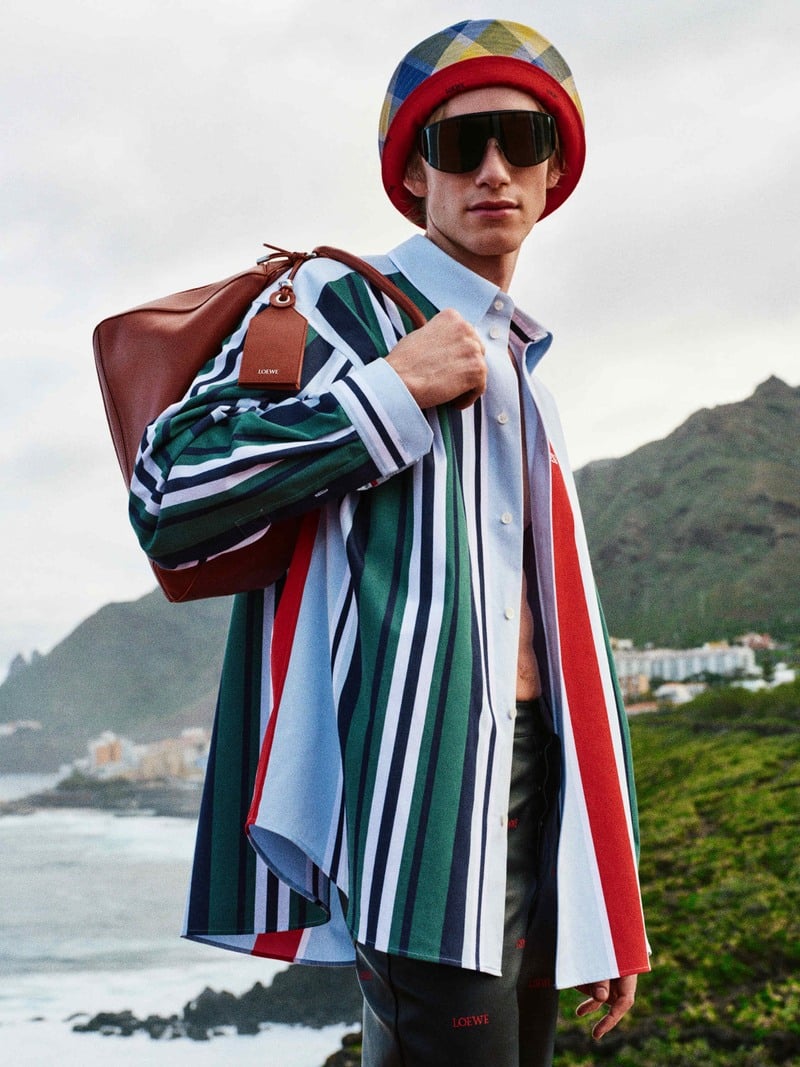
Loewe's leatherwork gives its experiments a material foundation. The house was established in Madrid in 1846, long before its clothes became a setting for Jonathan Anderson's playful changes of scale and form. Jack McCollough and Lazaro Hernandez succeeded him as creative directors in 2025. Their appointment opens another interpretation of the relationship between craft and fashion. For men, Loewe remains a place to look for pieces whose construction changes the way they register, whether the starting point is leather or an everyday knit.
Loro Piana
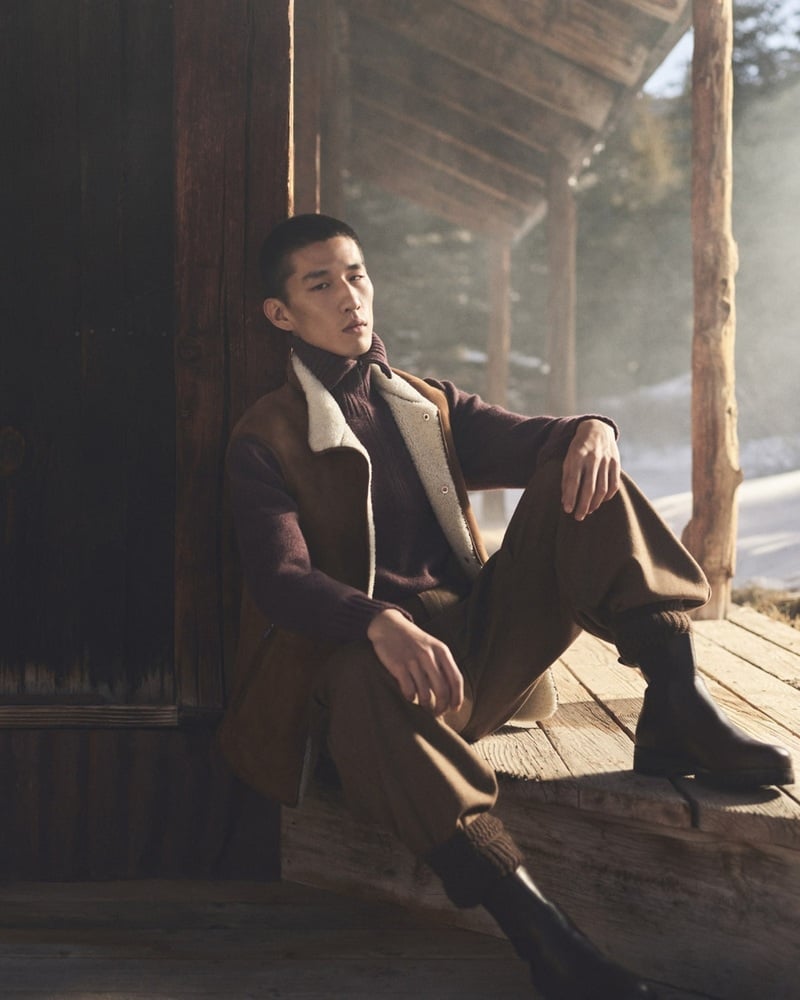
Loro Piana's history as a textile company helps explain its clothes. Established in 1924 in Quarona, Italy, the house built its reputation through fine fibers and the expertise required to turn them into fabric. In menswear, that knowledge finds an immediate application in cashmere knitwear and light outerwear. The silhouettes often leave the material to make the strongest impression. That can look quiet in a photograph, but the distinction is intended to become more apparent when a garment is handled and worn.
Louis Vuitton
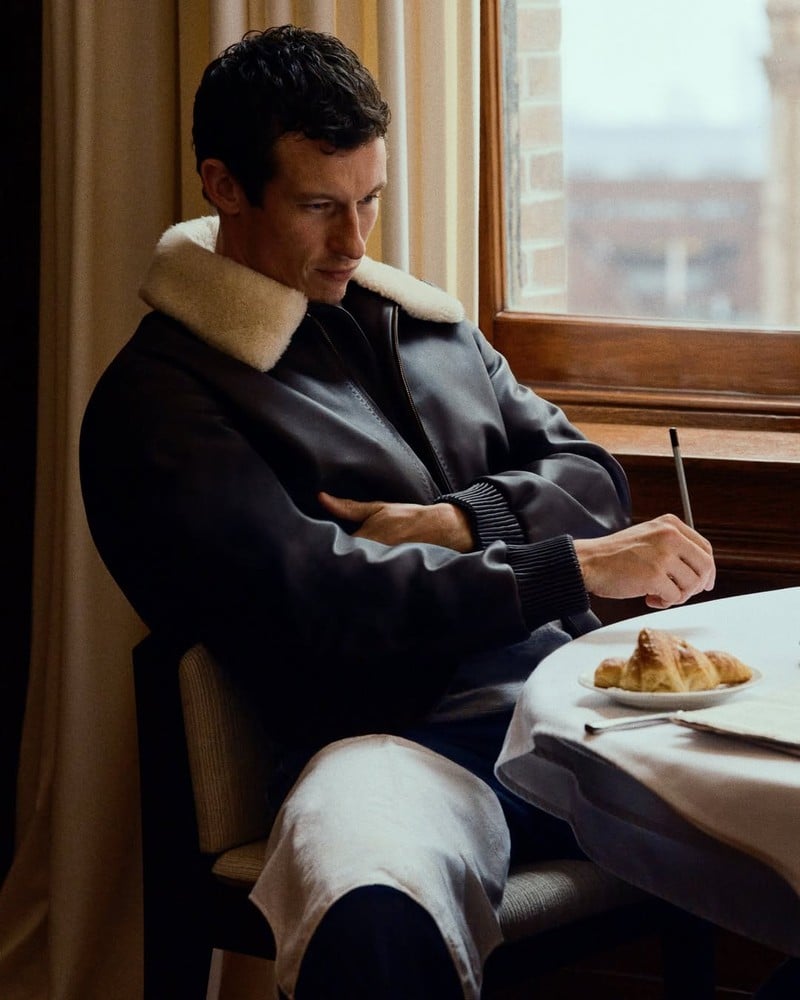
Louis Vuitton began as a Paris trunk maker in 1854, and travel still supplies a useful framework for its men's wardrobe. Ready-to-wear now occupies a much broader cultural stage, shaped in succession by designers including Kim Jones and Virgil Abloh. Pharrell Williams became men's creative director in 2023, bringing music and his own approach to personal style into the house. Tailoring and casual clothes share space with the leather goods, allowing the collection to imagine both the journey and the life waiting at the destination.
Maison Margiela
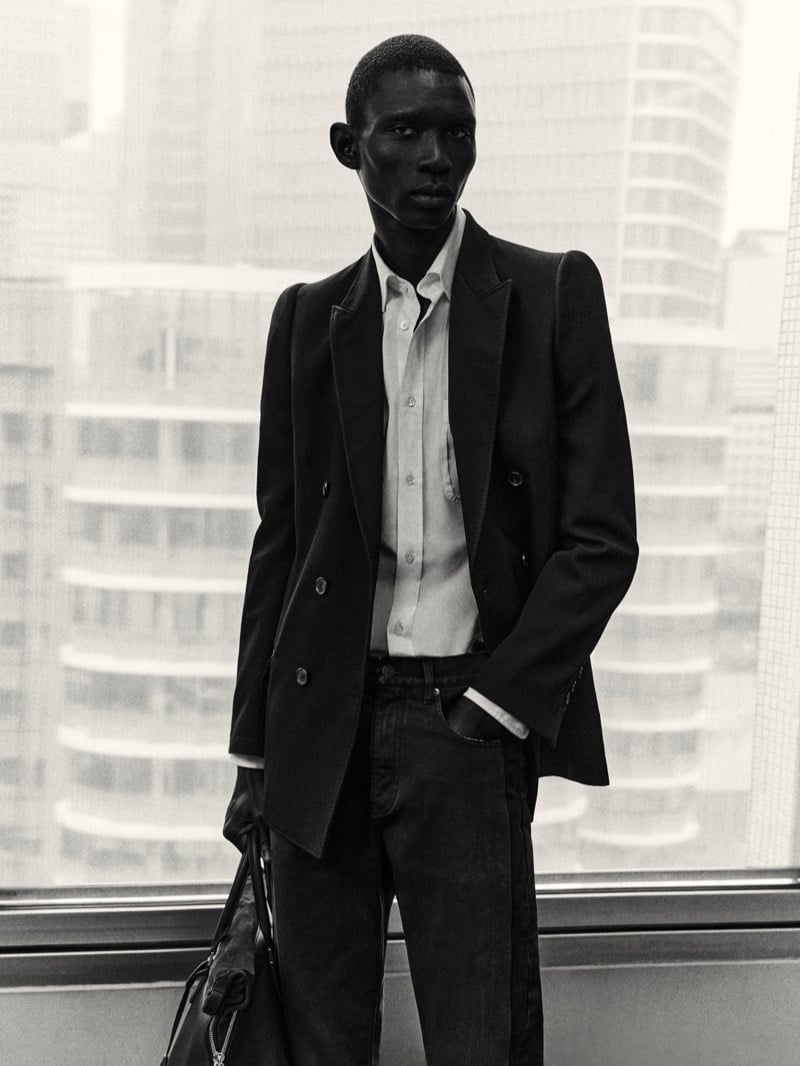
Maison Margiela makes the construction of clothing part of its subject. Martin Margiela established the house with Jenny Meirens in 1988, questioning ideas of authorship and finish through exposed workings and altered proportions. John Galliano later developed a more theatrical interpretation of that inheritance. Glenn Martens became creative director in 2025. The men's wardrobe remains a useful place to encounter clothes that reward inspection, where a seam or a change in scale can make an apparently recognizable garment behave differently.
McQueen

The foundation of McQueen is tailoring, even when the result looks unruly. Lee Alexander McQueen's Savile Row training gave his London house, founded in 1992, the technical authority to distort a suit and still make it convincing. Narrow waists and assertive shoulders remain part of its menswear vocabulary, alongside distressed surfaces and dark romantic references. Seán McGirr led the house from 2023 until his departure in October 2026. Its strongest clothes retain a sense of confrontation that a skull logo alone cannot supply.
Missoni
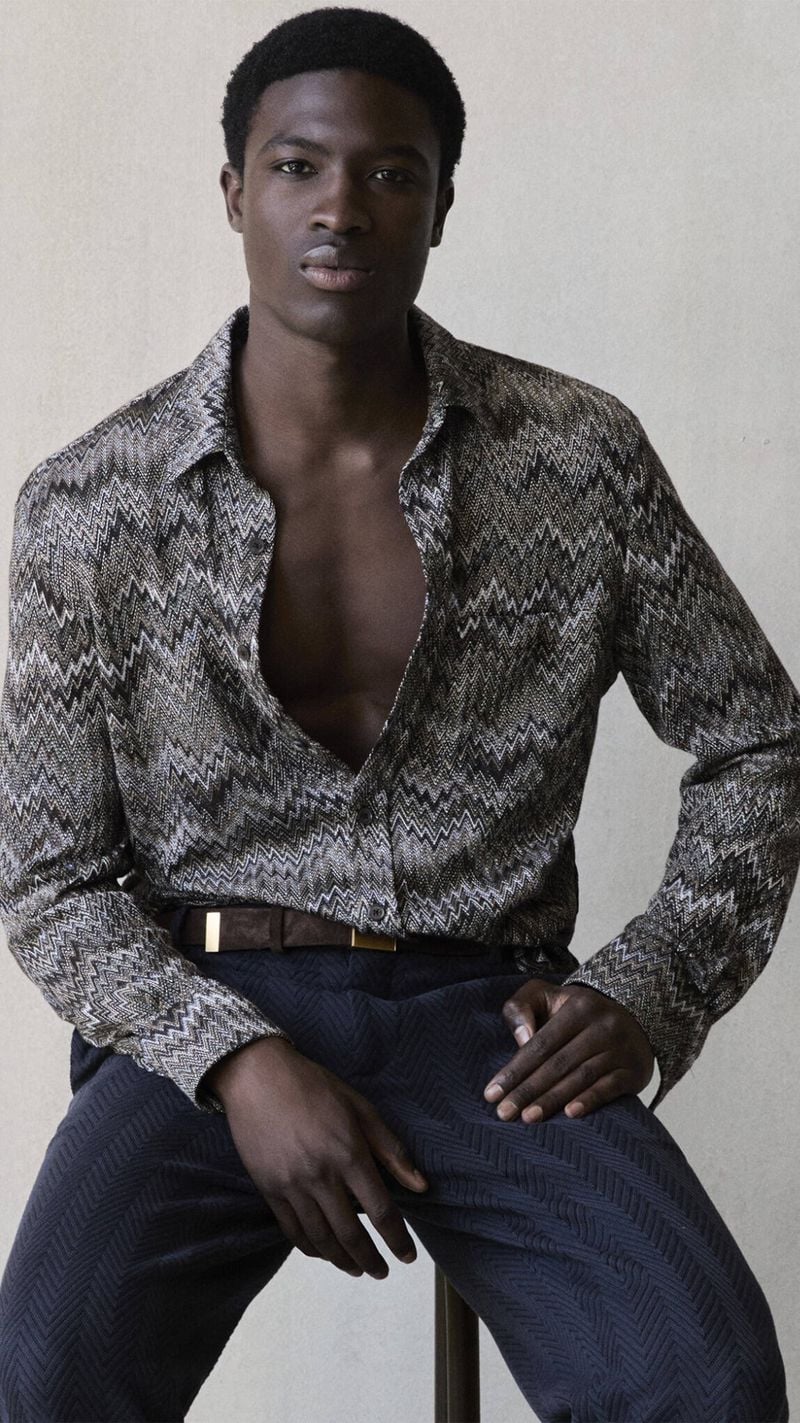
Missoni turns knitwear into a way of organizing an entire outfit. Ottavio and Rosita Missoni founded the Italian company in 1953, developing a recognizable language of color and rhythmic pattern. Zigzags are the best-known signature, but the interest is also in how shades meet within a single surface. For men, a knitted shirt or cardigan can provide the visual focus that tailoring usually supplies. Simpler trousers allow the fabric to remain legible, though the brand's fuller looks invite a less cautious approach to dressing.
Moncler
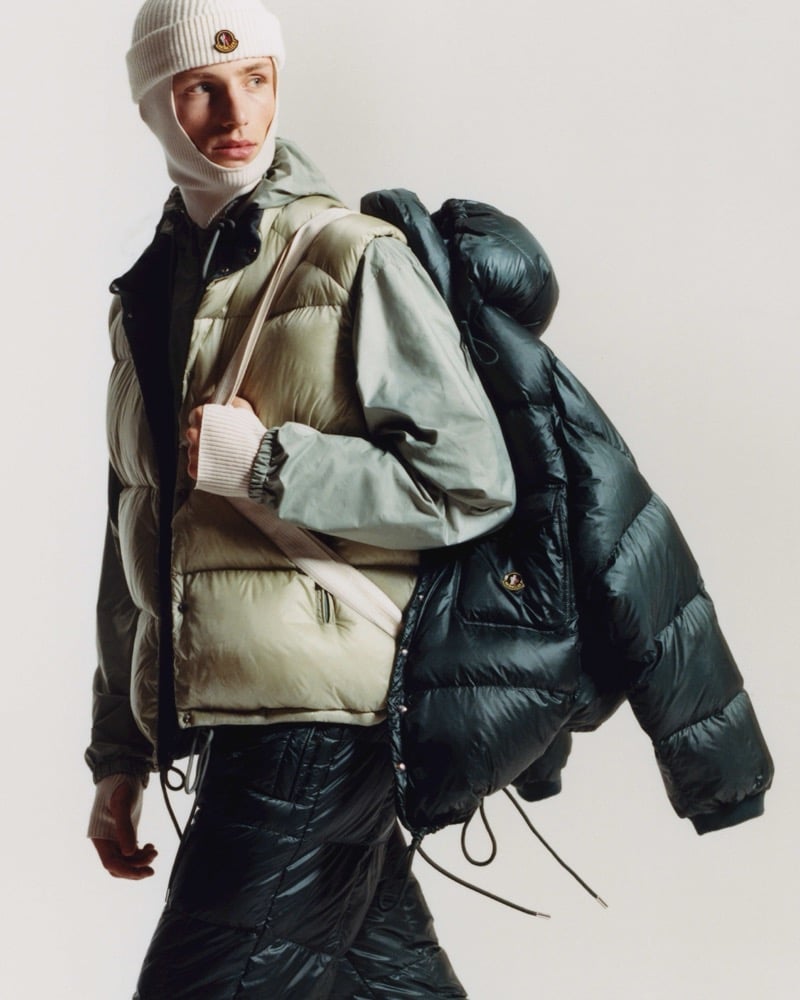
Moncler began in the French Alps in 1952, making equipment for cold conditions before its down jackets became international fashion objects. That history still gives its outerwear a clear purpose, even when the silhouette becomes more theatrical. The Genius platform brings outside designers into the brand, while other collections develop different balances of fashion and technical clothing. It is worth knowing which part of Moncler a garment comes from. A highly specific collaboration and an everyday puffer answer different questions, despite sharing the name.
Off-White
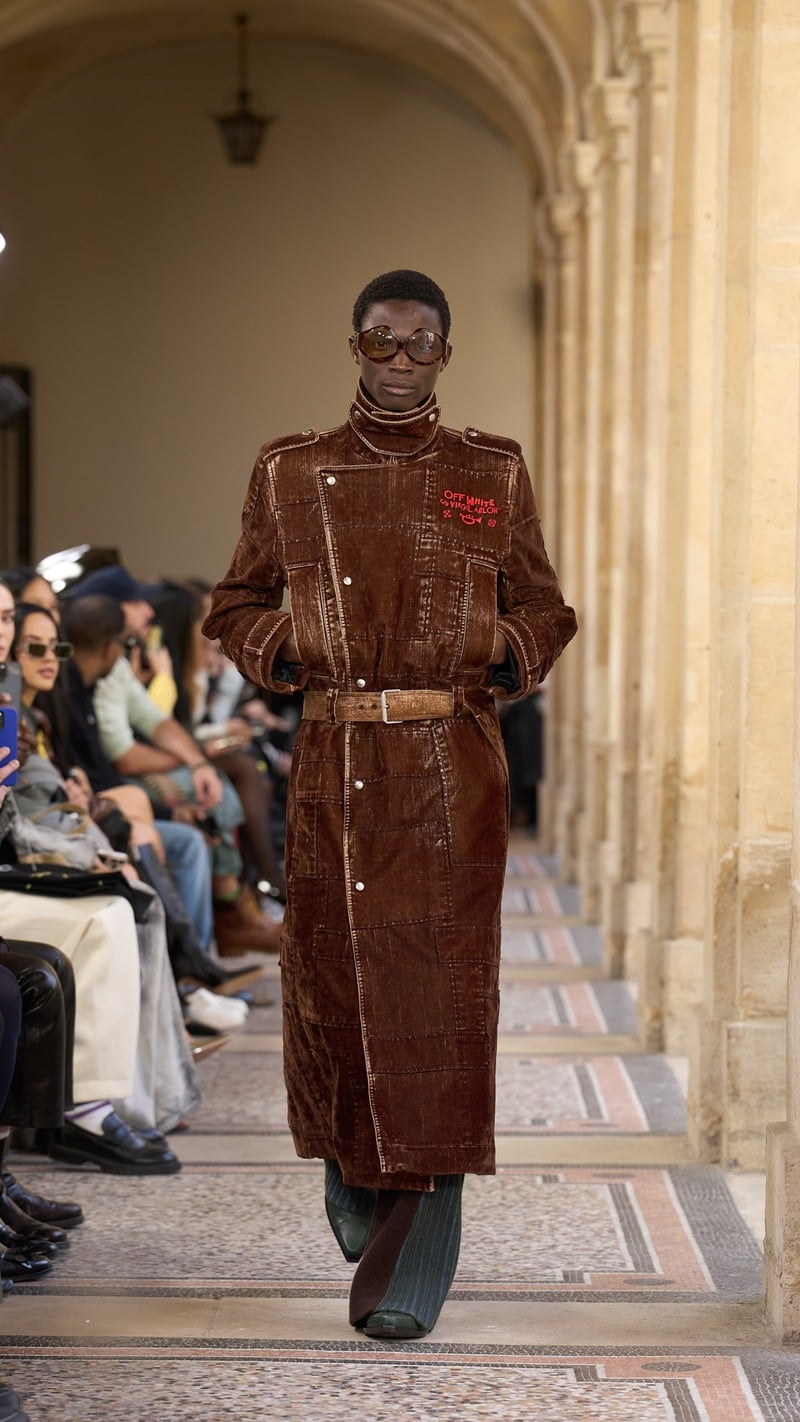
Virgil Abloh founded Off-White in 2013, using the languages of streetwear and industrial design to question the boundaries of luxury fashion. Quotation marks and zip ties became signatures, but the larger project concerned how clothes acquire cultural value. The label continued after Abloh's death in 2021, with Ib Kamara leading a subsequent creative chapter that ended in 2026. Its place in menswear is tied to that history as well as its current products. The strongest pieces make an idea visible through the garment itself.
Paul Smith
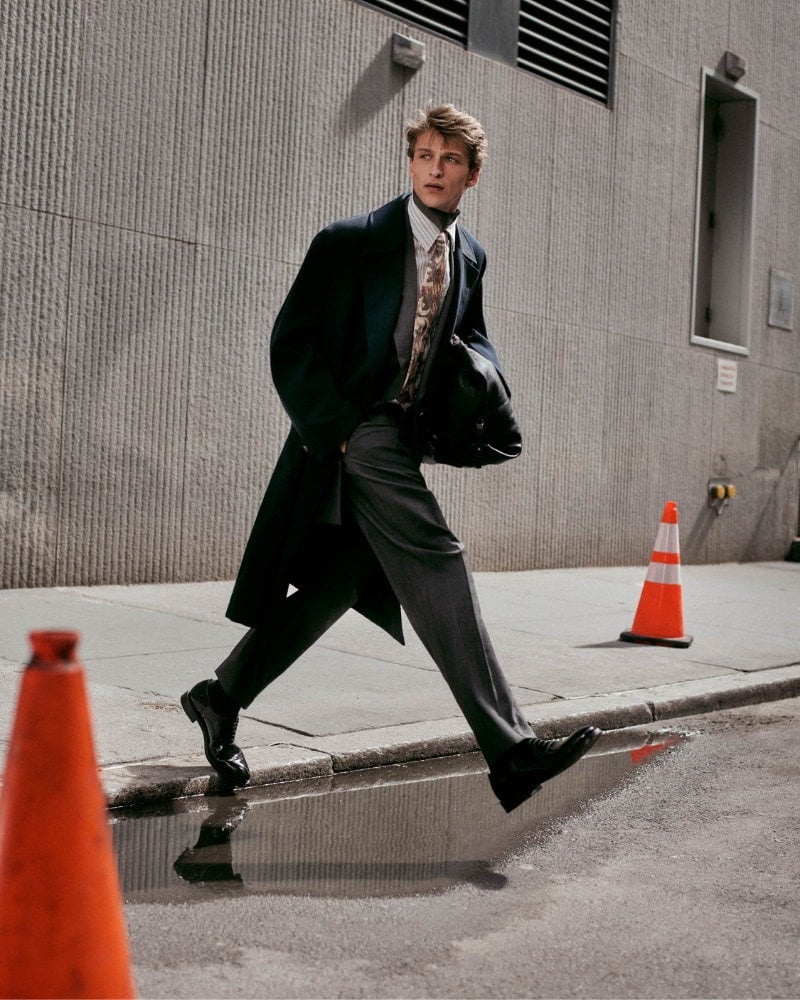
Paul Smith's clothes often begin with something a man already understands, then introduce a detail that changes the mood. Smith opened his first Nottingham shop in 1970, developing a business in which British tailoring could coexist with an appetite for color. A lining or a printed shirt may provide the surprise, though the collections are capable of a more emphatic silhouette too. The point is not novelty for its own sake. It is the possibility of dressing conventionally while leaving room for a private joke.
Prada

Prada's menswear often finds interest in the clothes fashion has taught men to overlook. A severe shirt or an apparently awkward jacket can become desirable through proportion and context. The Milanese house began as a leather-goods business in 1913; Miuccia Prada and Raf Simons have worked as co-creative directors since 2020. Their collections keep the relationship between elegance and discomfort open to discussion. Technical fabrics and tailoring can both participate, giving the wardrobe an intellectual character that still has to succeed as something worn.
Ralph Lauren Purple Label

Ralph Lauren Purple Label presents a complete luxury wardrobe among American designer brands. Ralph Lauren introduced the line in 1994, placing Italian-made tailoring at the center of a wardrobe that can move from a formal dinner to country leisure. The attraction is the continuity between those settings. Cashmere and weighty outerwear belong beside the suits, allowing a man to maintain the same sense of dress when the occasion changes. This is a specific part of Ralph Lauren's business, distinct from the broader Polo offer and RRL's workwear references.
Rick Owens
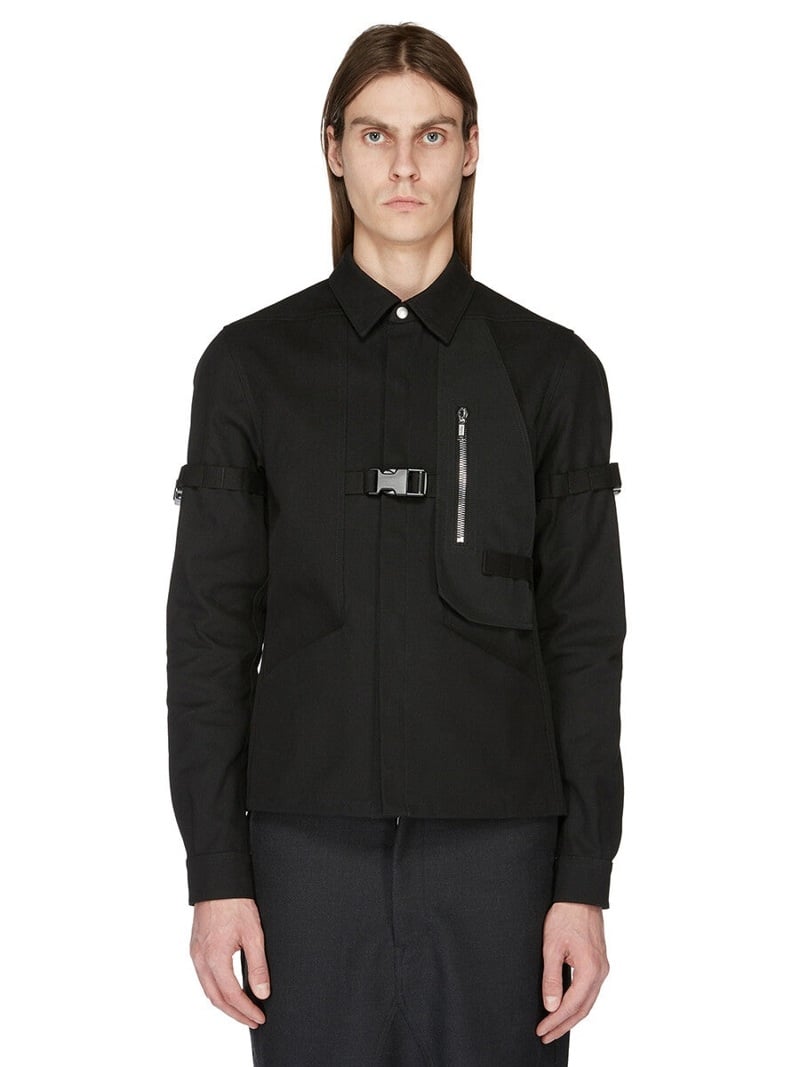
Rick Owens changes the outline of a man before he changes the details of his outfit. Founded in Los Angeles in 1994 and later based in Paris, the label uses elongated layers and emphatic footwear to shift the body's proportions. Leather and draped jersey can produce very different effects within the same wardrobe. Black remains an anchor, but it is the shape that makes the clothes recognizable. The appeal requires some commitment from the wearer, particularly when a single piece changes the balance of everything around it.
Roberto Cavalli
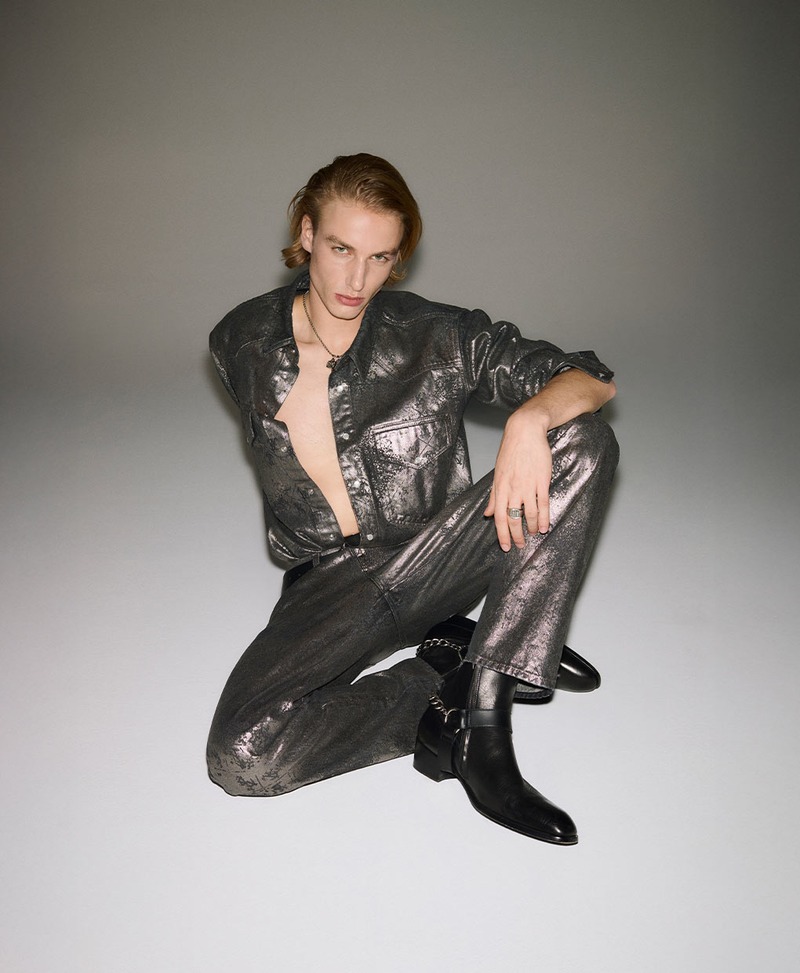
Roberto Cavalli made the surface of a garment a source of spectacle. The Florentine designer established his house in 1970, developing printing and leather techniques that helped give its clothes their visual intensity. Animal patterns became the most recognizable result. In menswear, printed silk and worked denim offer a direct route into that world, with tailoring able to adopt the same appetite for display. Fausto Puglisi took creative charge in 2020. The label's history is best understood through those material experiments, beyond a general promise of extravagance.
Sacai
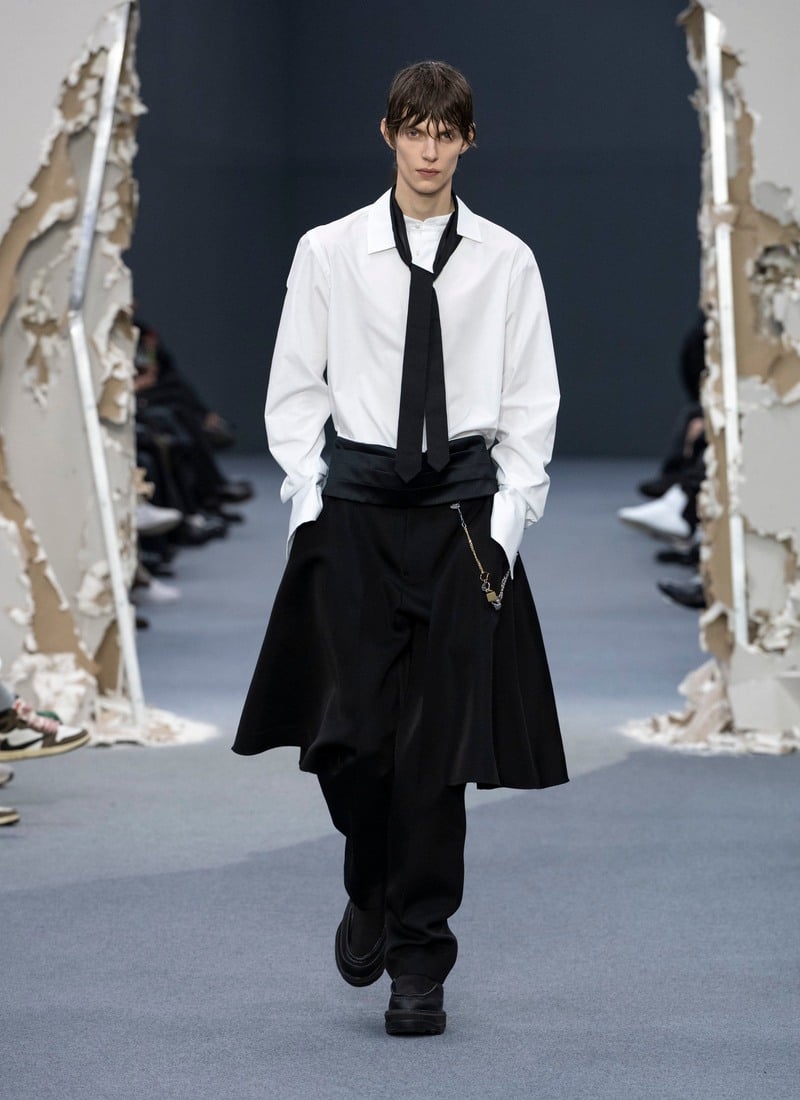
Chitose Abe founded Sacai in Tokyo in 1999 and introduced its men's collection for spring 2009. Her method often joins garments that have separate lives elsewhere, making a familiar jacket behave differently through its fabric or construction. Knitwear and military references are especially productive starting points. The ingenuity matters because the result is still intended to be worn. For men, Sacai offers a way to change the character of an everyday outfit through a single piece whose complexity becomes clearer at close range.
Saint Laurent
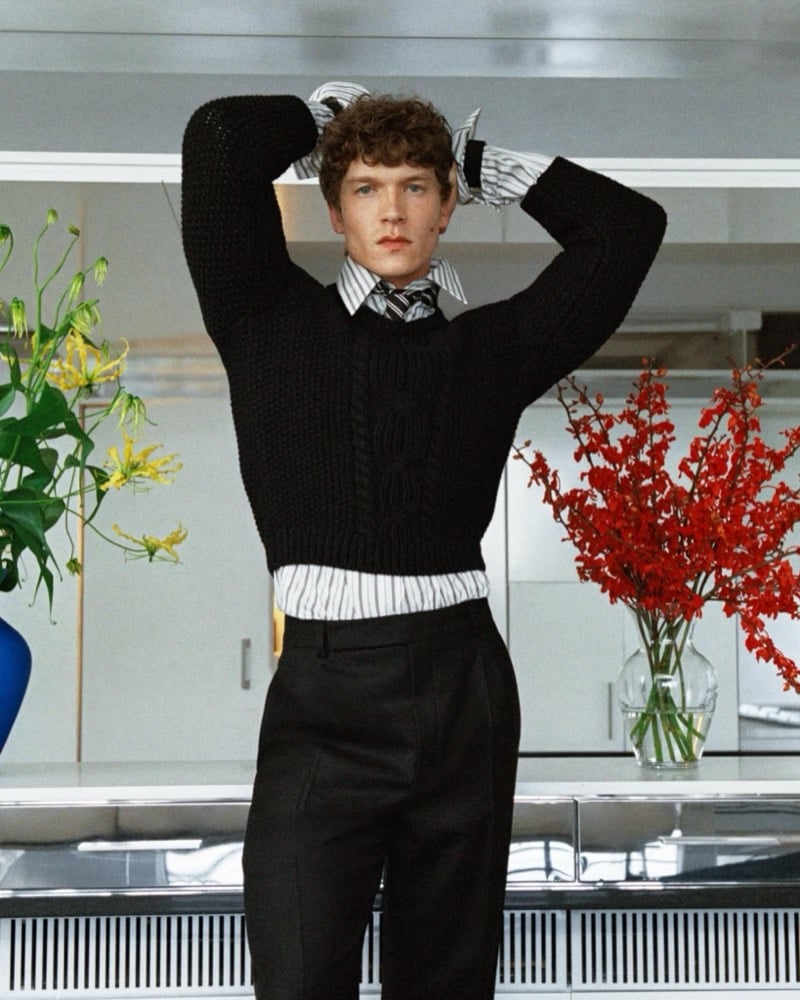
Saint Laurent's men's wardrobe has moved between narrow rock tailoring and a more expansive, fluid silhouette. Yves Saint Laurent and Pierre Bergé established the house in 1961, while Hedi Slimane's later work made the skinny suit a powerful part of its modern image. Anthony Vaccarello led the house from 2016 until his departure in October 2026, developing another reading of that sensuality. Broad shoulders and flowing shirts can change the balance dramatically. The continuity is an interest in how clothes make a man look deliberate, whether the outfit is severe or languid.
Stone Island
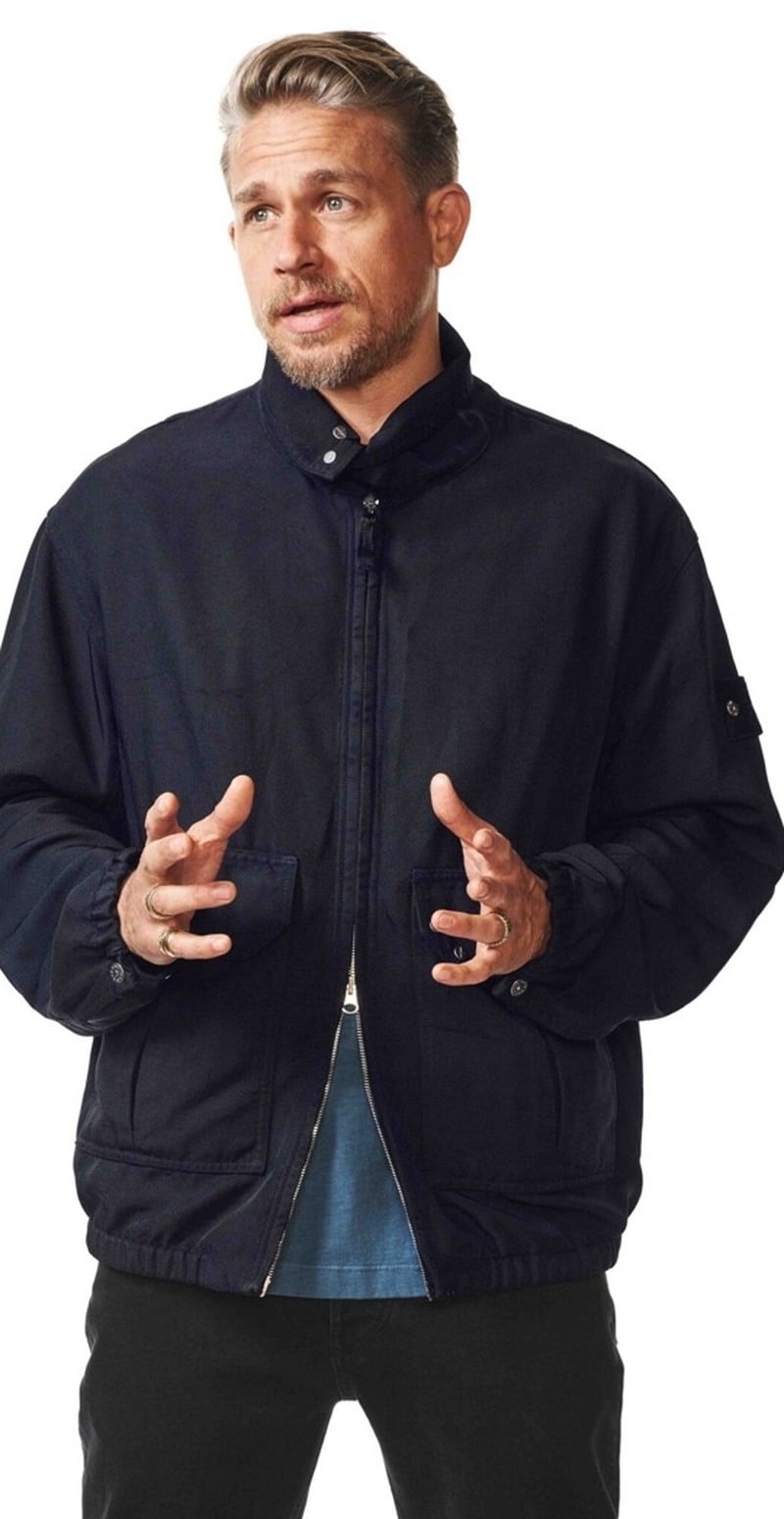
Stone Island treats fabric development as the starting point of design. Massimo Osti founded the Italian label in 1982, using experiments in dyeing and industrial materials to alter the behavior of sportswear. The sleeve badge makes the clothes recognizable, but it is not the whole proposition. A jacket's changing surface or the depth of its color explains more about the brand's purpose. For men who approach luxury through technical outerwear, Stone Island offers a different kind of interest from the conventions of a tailored wardrobe.
Thom Browne
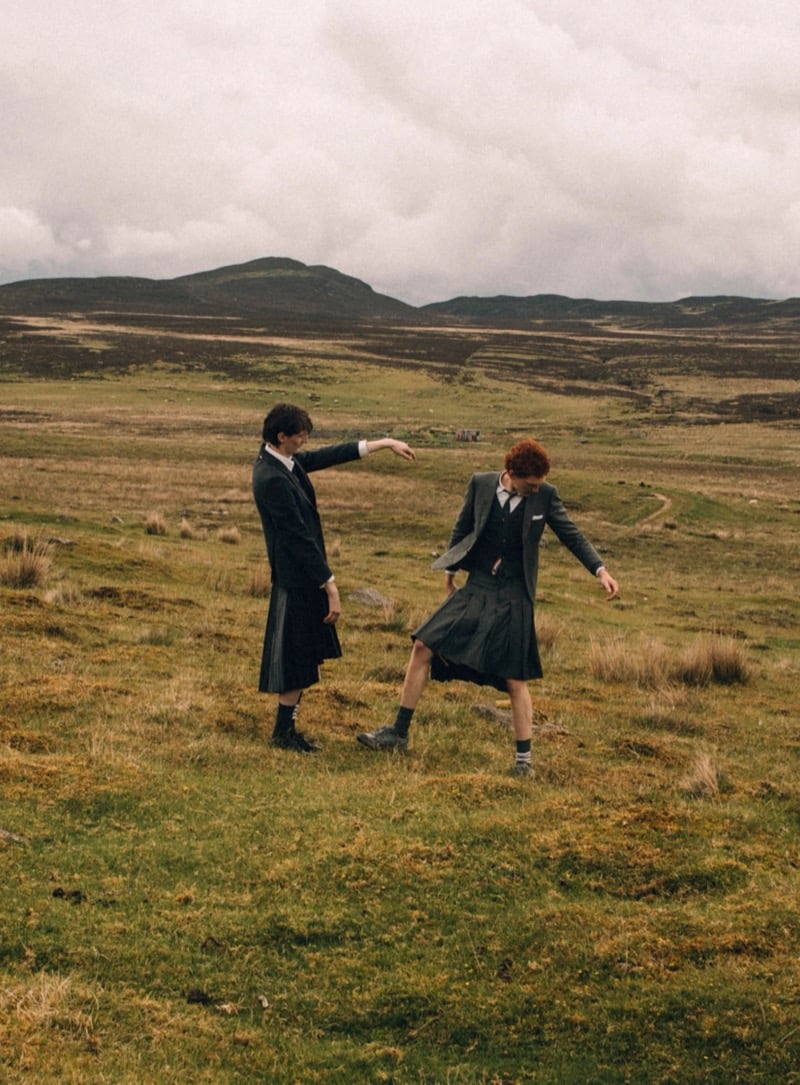
At Thom Browne, the gray suit looks peculiar because its proportions have changed. Thom Browne established his namesake New York label in 2001, shortening jackets and trousers until a uniform associated with conformity became an individual declaration. That tension still shapes the house, even as runway collections turn tailoring into more elaborate forms. Four-bar stripes and tricolor tabs provide recognizable signatures. The deeper interest lies in how a relatively small change in length can alter a man's stance and the social meaning of what he wears.
Tod’s
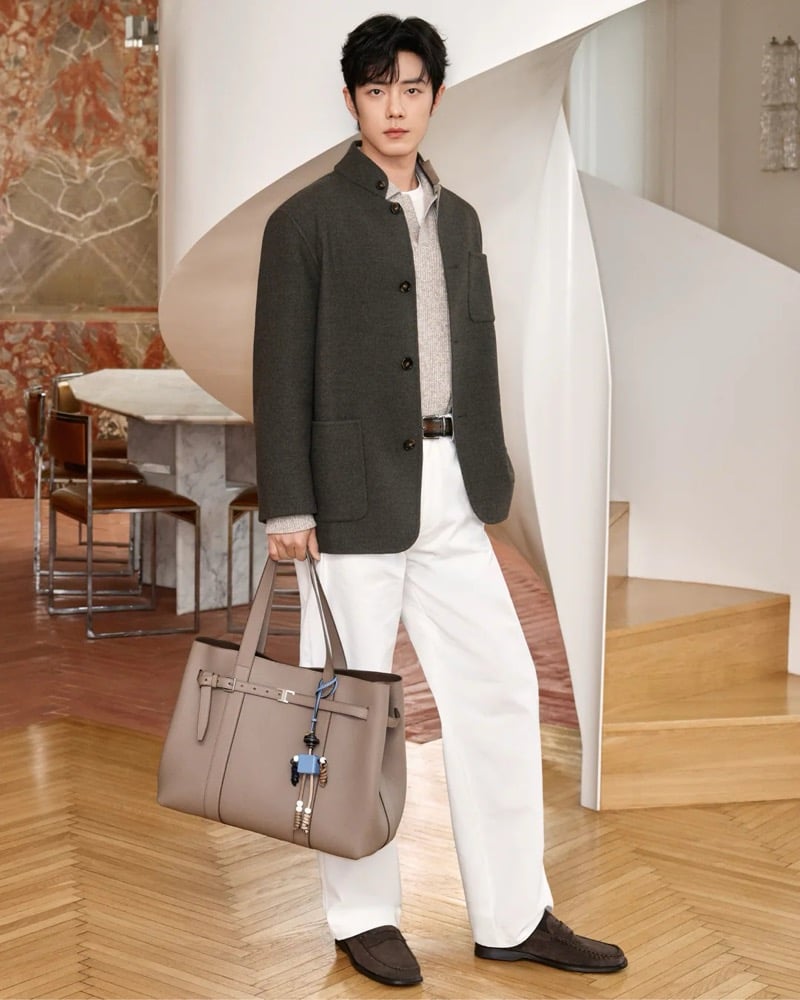
Tod's developed from the Della Valle family's shoemaking business in Italy's Marche region. Diego Della Valle built its modern international identity around supple leather and the Gommino driving shoe, whose rubber-pebble sole became a signature. The wider men's wardrobe follows that suggestion of ease. Suede outerwear and soft knitwear make sense beside footwear designed for comfort, giving the clothes a connection beyond a shared label. The appeal is a version of Italian dressing in which leisure has its own standards, even when formality is unnecessary.
Tom Ford
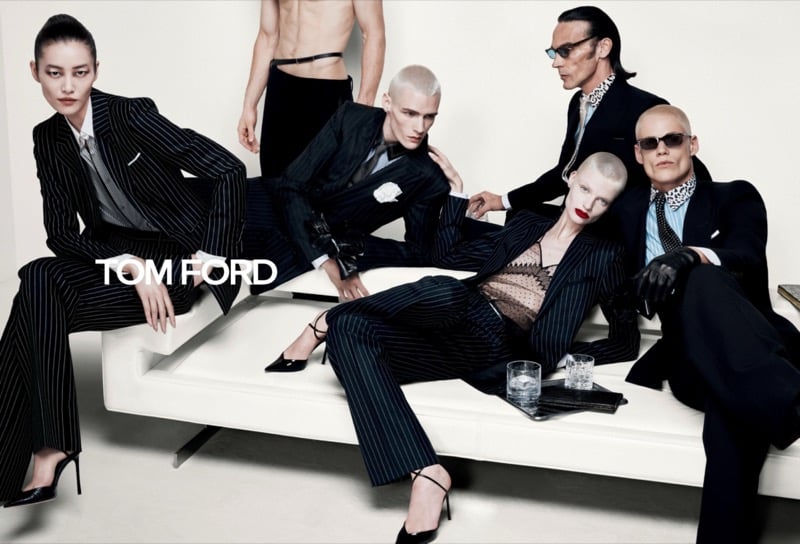
Tom Ford centers its men's wardrobe on a strongly cut suit. The designer Tom Ford launched his namesake brand in 2005 and introduced menswear in 2007, establishing a wardrobe built around broad lapels and a defined waist. Following Ford's departure and Peter Hawkings's tenure, Haider Ackermann became creative director in 2024. His work brings another understanding of drape and color to the house. The continuity lies in treating dressing as an act of intention, with the material and cut doing as much as the occasion.
Valentino

Valentino's menswear has inherited a Roman house's appetite for beauty and ceremony. Valentino Garavani established the label in 1960, with Giancarlo Giammetti becoming his essential business partner. Subsequent designers have found different ways to bring that history into men's clothes. Alessandro Michele, creative director since 2024, approaches it through an elaborate conversation with the past. Decoration and carefully chosen accessories can change the meaning of a suit, making the wardrobe an alternative to the assumption that masculine elegance must be visually restrained.
Versace
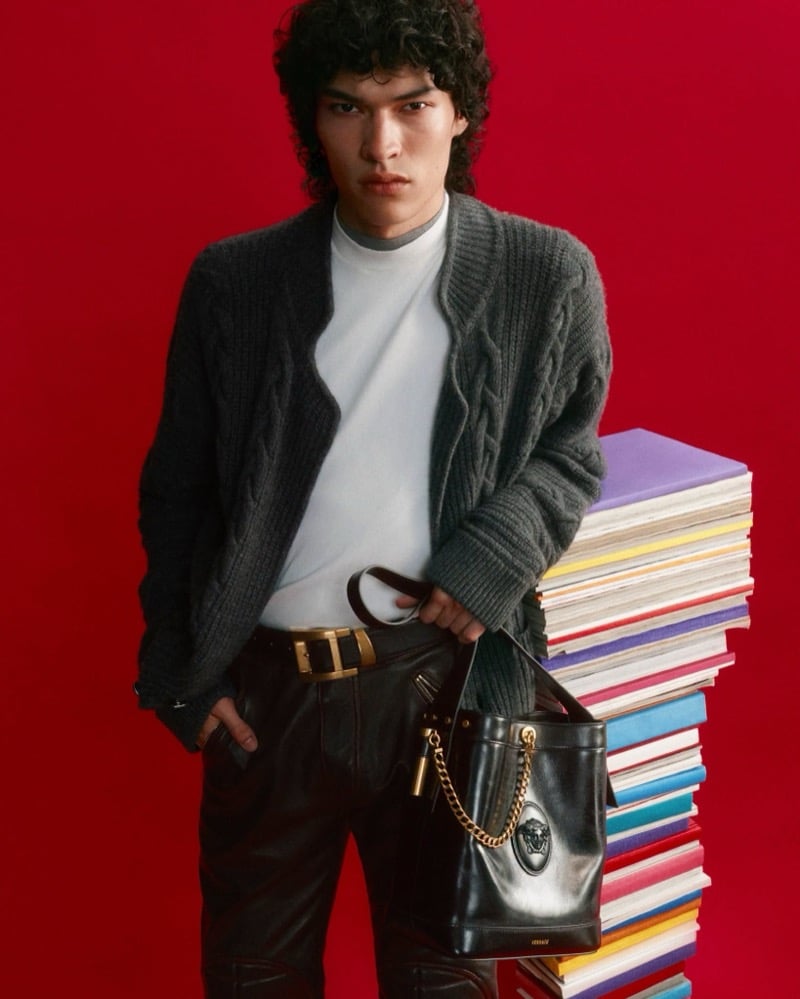
Versace has made the male body part of its fashion language since Gianni Versace established the house in 1978. Printed silk and forceful tailoring helped develop a wardrobe in which dressing well could also mean being seen. Donatella Versace sustained and expanded that identity over the following decades. Pieter Mulier became chief creative officer in July 2026, beginning another chapter. The Medusa and baroque patterns remain recognizable codes, but the house's deeper inheritance is its willingness to give masculine display an unapologetically luxurious setting.
Yohji Yamamoto

Yohji Yamamoto's menswear gives space a practical and emotional role. Yohji Yamamoto established Y's in 1972, presented his namesake work in Paris in 1981, and brought a men's collection to the city in 1984. Long coats and wide trousers allow fabric to fall away from the body, changing the usual relationship between tailoring and authority. Black is a recurring medium, not the entire idea. The clothes can look imposing in still photographs, yet their meaning often becomes clearer when the wearer begins to move.
Zegna
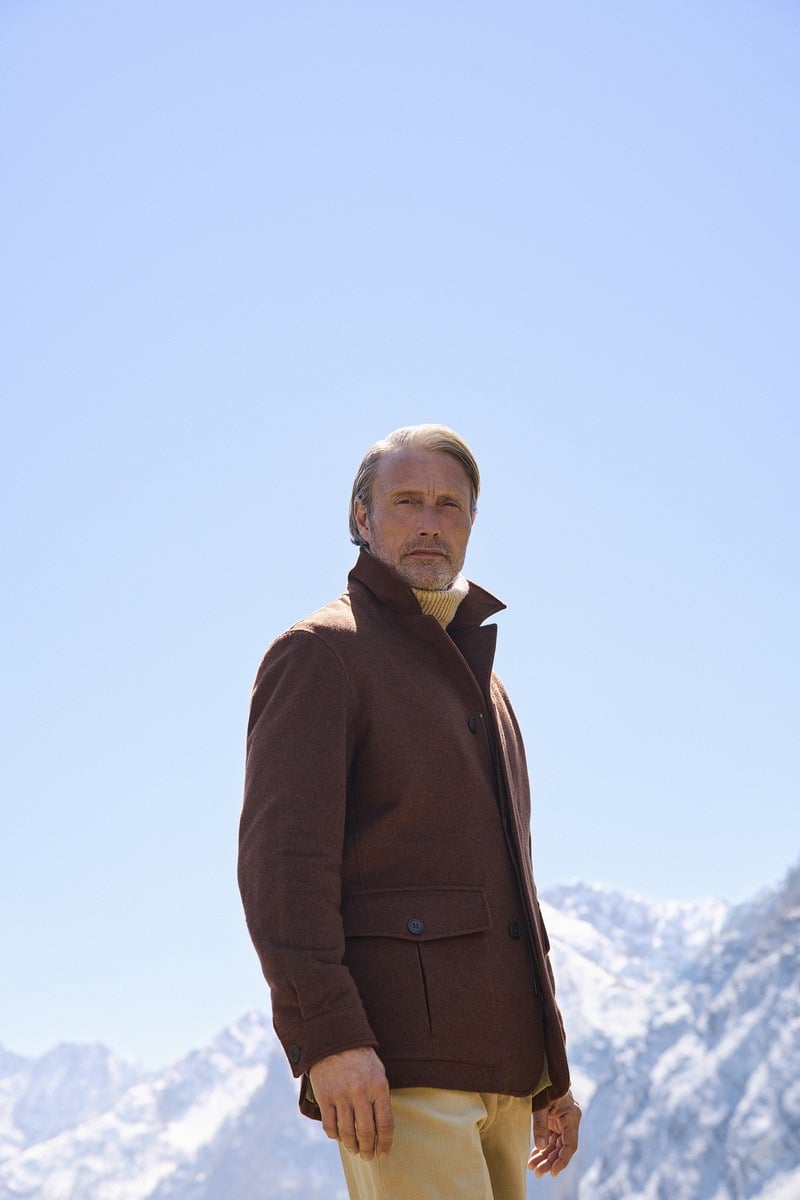
Zegna's menswear begins with the cloth. Ermenegildo Zegna established his wool mill in Trivero in 1910, creating the foundation for a business that later expanded into finished clothing. Artistic director Alessandro Sartori has developed a wardrobe in which tailoring and casual dress increasingly share the same sense of ease. An overshirt can do the work of a jacket, while a suit can allow more movement than its traditional associations suggest. The material expertise matters because it helps those changes feel natural on the body.
Choosing Designer Clothes for Your Wardrobe
A designer name can tell you where a garment comes from, but it cannot decide whether the garment belongs in your wardrobe. Start with the pieces a house understands particularly well, then pay attention to fit and how they work with what you already wear. The most useful luxury purchase is often the one whose distinction remains apparent after the initial excitement has passed.