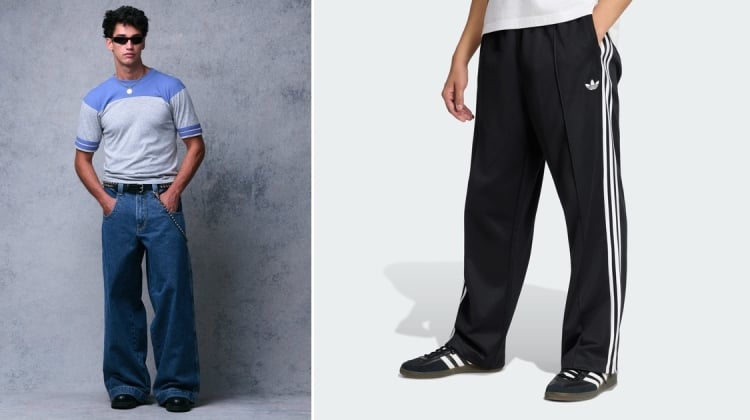
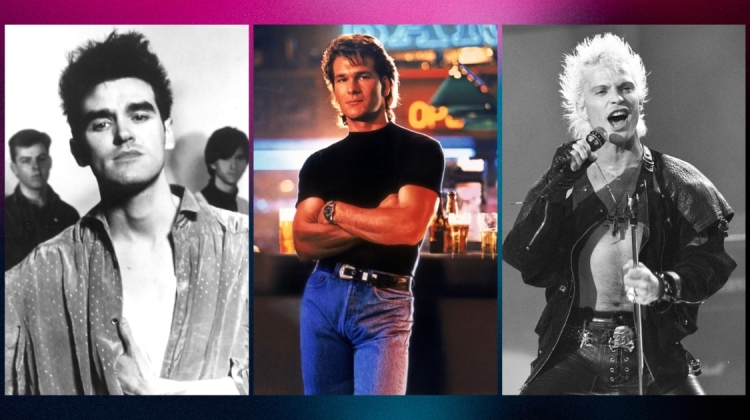
Men’s fashion through the decades tells a story of collisions between who men were told to be and who they wanted to become. The buttoned-up formality of the early 1900s gave way to the rebellious looseness of the ’60s, while the peacocking excess of the ’80s shared the stage with the minimalism that followed. Across these chiefly British and American examples, clothes expressed aspiration and sometimes a very public argument with the previous generation. Each decade rewrote the terms.
Men’s Fashion Through the Decades
1900s

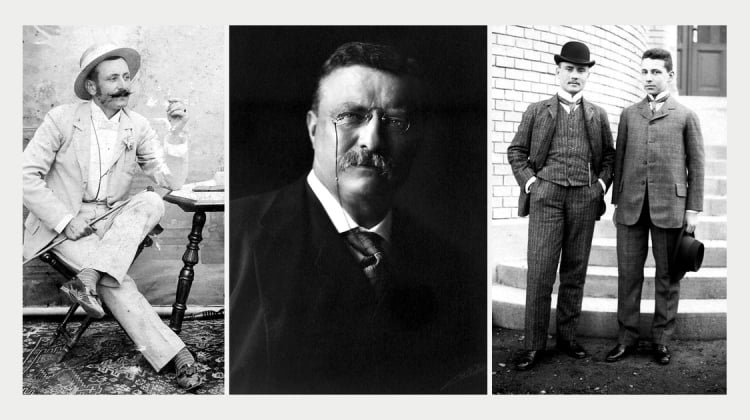
Formal dress still shaped men’s wardrobes in the 1900s, with Victorian conventions continuing into the Edwardian era. Morning coats and frock coats served formal daytime occasions, while three-piece lounge suits offered a less ceremonial option. The Wright brothers’ contrasting jackets show some of the variety within that buttoned-up world.
High, stiff collars and carefully knotted ties made even everyday tailoring look exacting by modern standards. Men’s clothes also marked the difference between work and recreation. Norfolk jackets, knickerbockers, and flat caps belonged to outdoor pursuits, giving sportswear a growing role alongside the suit.
1910s

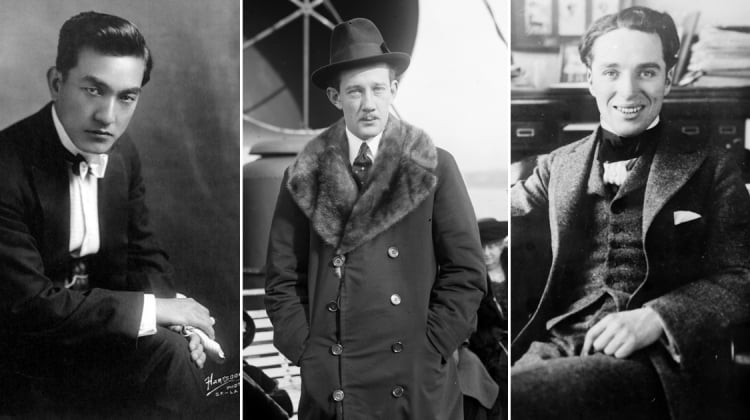
The lounge suit became increasingly common in the 1910s, continuing a shift already underway before World War I. Jackets worn with matching waistcoats and trousers offered a practical alternative to formal day dress. Charlie Chaplin’s fitted suit shows how far this wardrobe was from the oversized costume associated with his screen character.
The war gave military clothing a different significance. Officers’ trench coats established an association that would later help the garment become a civilian classic. Pocket watches and bowler hats remained part of men’s daily dress, even as uniforms became the defining clothes of wartime life.
1920s

Postwar optimism found expression in the 1920s through lighter fabrics, sporting clothes, and a growing appetite for Hollywood style. Rudolph Valentino represented the appeal of the well-dressed film star, with tailoring that made elegance part of a leading man’s identity.
Suit proportions changed over the decade, with fuller trousers becoming especially fashionable in its later years. College wardrobes helped popularize sweaters and Oxford bags, while plus-fours connected everyday fashion with the golf course. Youth was becoming a market with its own ideas about how men should look.
1930s

The Great Depression set the economic terms of the 1930s, yet the fashionable suit projected confidence. Broad shoulders and a shaped waist created an imposing outline, with full, high-waisted trousers completing the silhouette. Charles Farrell’s double-breasted jacket captures that ambition.
Hollywood helped sustain the appeal of immaculate dressing, even when many men had limited money to spend on clothes. Double-breasted suits and fedoras became defining images of the period, while sports jackets, flannel trousers, and open-neck shirts offered a more casual expression of the same attention to appearance.
1940s

Wartime restrictions shaped clothing in the 1940s, though the rules varied by country. Fabric-saving measures reduced details such as trouser cuffs and extra pockets, making economy part of the suit’s construction. Military uniforms also reinforced the appeal of practical outerwear.
Humphrey Bogart’s trench coat and fedora in Casablanca gave that practicality a romantic screen identity. His clothes suggested a man accustomed to uncertainty who still knew how he wanted to appear.
After the war, fuller tailoring regained momentum, although restrictions continued in some places. Knitwear and relaxed shirts expanded the casual wardrobe, reflecting the growing appeal of clothes suited to life beyond the office.
1950s

Respectability and rebellion competed for attention in the 1950s. Business suits remained central to professional life, with narrow ties becoming increasingly fashionable. Younger men found a different vocabulary in denim and the white T-shirt.
James Dean’s zip-front jacket in Rebel Without a Cause made casual clothing part of teenage discontent. Rock ‘n’ roll, including Elvis Presley’s performances and style, intensified that generational divide. In Britain, Teddy Boys adapted Edwardian-inspired drape jackets and narrow trousers into a working-class statement, finished with towering quiffs and an appetite for attention.
1960s

Early 1960s menswear favored fitted tailoring and narrow ties, with London’s Mods giving the suit a particularly youthful identity. The Beatles helped put that image before an international audience, making coordinated dressing look like something belonging to the next generation.
As the decade progressed, brighter colors and more adventurous patterns widened men’s options. Hippie dress brought flowing shapes, fringe, and psychedelic prints into view. Clothing became an increasingly visible way to express allegiance, whether to a music scene or a challenge to established social expectations.
1970s

Flared trousers and open-neck shirts gave the 1970s a silhouette built for display. Barry Gibb’s fitted shirt and denim show how even casual clothes could emphasize the body, with wider trouser hems changing the proportions below.
Disco took that appetite further through glossy fabrics and close-fitting shirts that caught the light. Denim continued its connection with musicians and counterculture, while its growing popularity made it part of ordinary life. Self-expression could mean dressing for a dance floor or finding a personal uniform in jeans.
1980s

Power dressing gave the 1980s one of its most recognizable images, with broad-shouldered suits making ambition visible. Men’s 80s fashion thrived on the tension between corporate status and street culture, each with its own ways of announcing success.
Giorgio Armani helped turn designer tailoring into an international symbol of aspiration. Casual screen style had its own appeal, including David Hasselhoff’s leather jacket and jeans. Punk’s leather and torn denim continued into the decade, while hip-hop gave tracksuits, sneakers, and gold jewelry a powerful cultural identity.
1990s

Loose silhouettes helped define the 1990s, though their meaning changed between music scenes and communities. Grunge brought worn jeans and layered shirts to wider attention, with Nirvana making an apparently indifferent approach to clothes an influential image of its own. Skaters and hip-hop artists expanded the appeal of baggy denim, graphic tees, and practical outerwear.
Minimalism offered another direction, with labels such as Calvin Klein favoring simple shapes and muted colors. Chunky sneakers and Timberland boots occupied different corners of the decade’s wardrobe, while bucket hats and snapback caps reinforced the connection between clothes and cultural affiliation.
2000s

Celebrity dressing gave the 2000s an enthusiasm for layering, with graphic tees, trucker hats, and distressed jeans competing for attention. Orlando Bloom’s sports coat and jeans show how tailoring could join that casual mix. Men’s Y2K fashion added a futuristic strain through metallic surfaces and technology-inspired details around the turn of the millennium.
H&M and Zara made changing trends more accessible, while rock-inspired skinny jeans gained ground as the decade progressed. Tracksuits retained their appeal through sportswear and music culture, alongside the increasingly narrow shapes appearing elsewhere in menswear.
Converse All-Stars and chunky sneakers both figured in 2000s style for men, reflecting a decade comfortable with competing versions of casual dress.
2010s

The 2010s brought nostalgia into close contact with contemporary streetwear. Skinny jeans and biker jackets remained influential, as Justin Bieber’s jacket-and-boots combination shows. Graphic tees and snapbacks shared the decade with the expanding reach of athleisure and luxury sneakers.
Tailoring had its own revival, with Mad Men helping renew interest in slim suits and midcentury style. Later in the decade, wider trousers and Cuban-collar shirts gained attention. Menswear was looking backward in several directions at once, drawing from earlier decades to build new combinations of formal and casual clothing.
2020s

The 2020s began with the pandemic making comfort an immediate priority. Loungewear moved to the center of everyday dressing, while labels such as Fear of God connected relaxed proportions with luxury fashion. Social media accelerated the circulation of older looks and newly named aesthetics.
Colorful “dopamine dressing” and revivals of late-1990s and early-2000s style reflected an appetite for self-expression. Harry Styles helped bring gender-fluid dressing to a wider pop audience, while his retro tailoring showed another way of revisiting menswear’s past.
Vintage Americana, “grandpacore,” and “dark academia” have offered competing interpretations of nostalgia. With the decade still unfolding, older styles continue to supply men with ways to shape a contemporary identity, extending the argument between convention and self-expression into another generation.