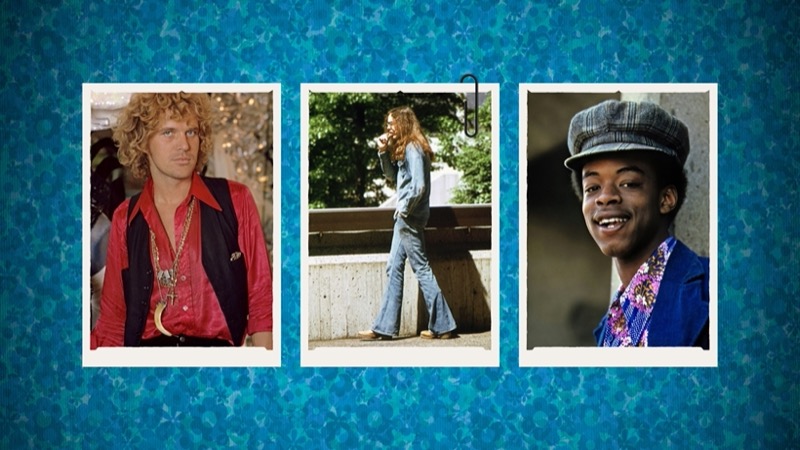
1970s men’s fashion had more going on than a white disco suit. Flared jeans and wide collars helped define the decade, but so did corduroy jackets, patterned knitwear, and the simple combination of a fitted T-shirt and trousers. The clothes could announce a night out or get someone through an ordinary afternoon. What often connected them was proportion, with shirts close to the body and trousers opening out toward the shoes.
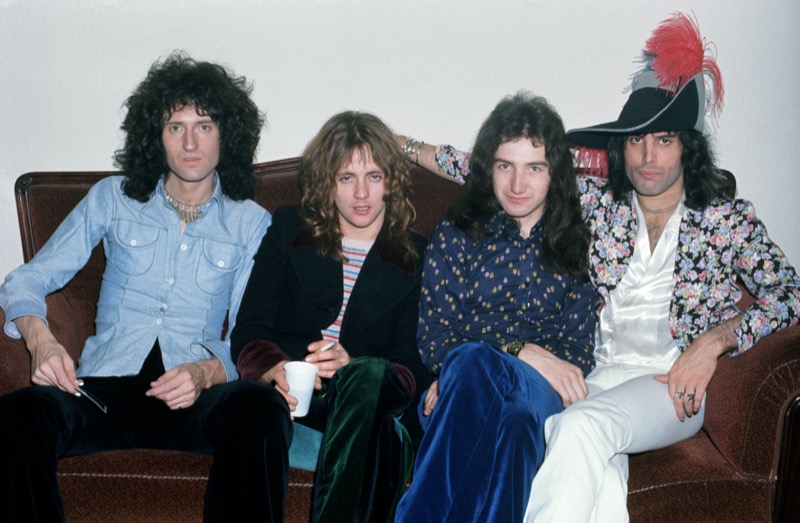
Building on late 1960s fashion, the seventies expanded the possibilities of men’s dress. Soft fabrics and decorative shirts challenged older expectations of masculinity, while tailoring took on exaggerated dimensions. The fashion decade’s appeal lies in that range, from an embroidered jacket to a business suit with an unusually broad lapel.
What Did Men Wear in the 70s?
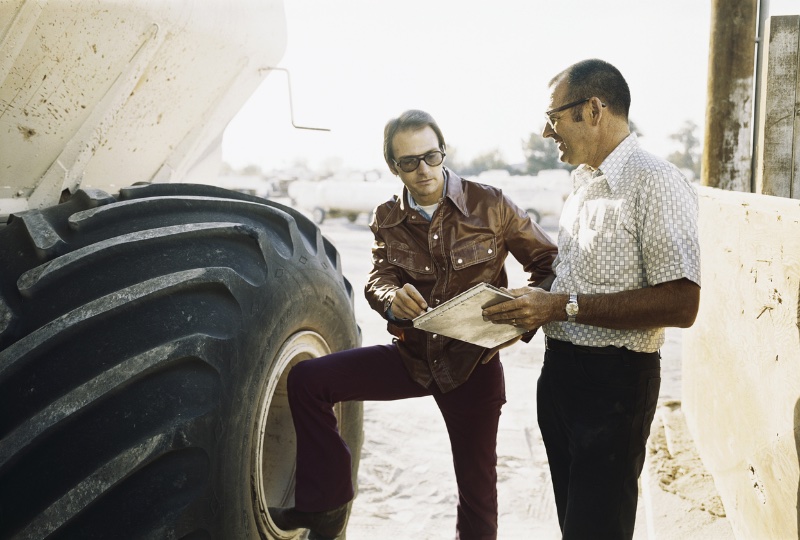
Men wore high-rise trousers, flared jeans, wide-collared shirts, and suits with broad lapels. For casual dressing, denim and knitwear were important, with leather or suede jackets adding another layer. Disco gave shirts a glossy finish, while glam rock and punk offered more confrontational interpretations of getting dressed.
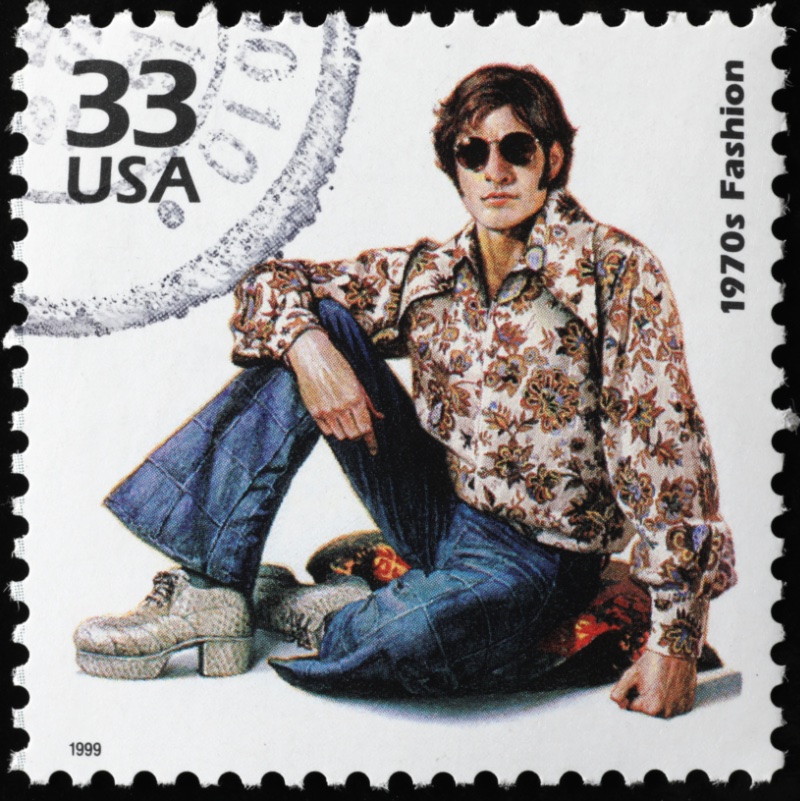
These styles overlapped. A man in a conventional office suit occupied the same decade as someone wearing patchwork denim or a metallic stage costume. Age, location, and social scene mattered as much as the year.
The Defining 70s Silhouette
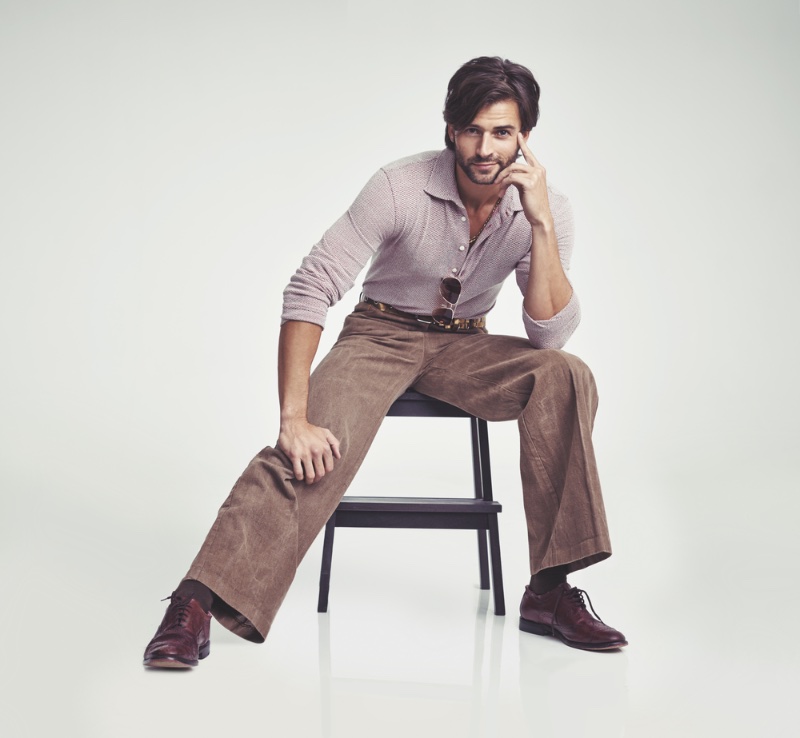
Many early-seventies outfits emphasized a long, lean figure. A fitted shirt met trousers at a high waistband, sometimes marked by a wide belt. Below the knee, a flare widened the outline again. Tailored jackets followed the torso, even when their lapels spread across the chest. This relationship between a narrow middle and wider edges helps explain why the clothes remain recognizable. FIT’s Fashion History Timeline documents this emphasis on the lean figure.
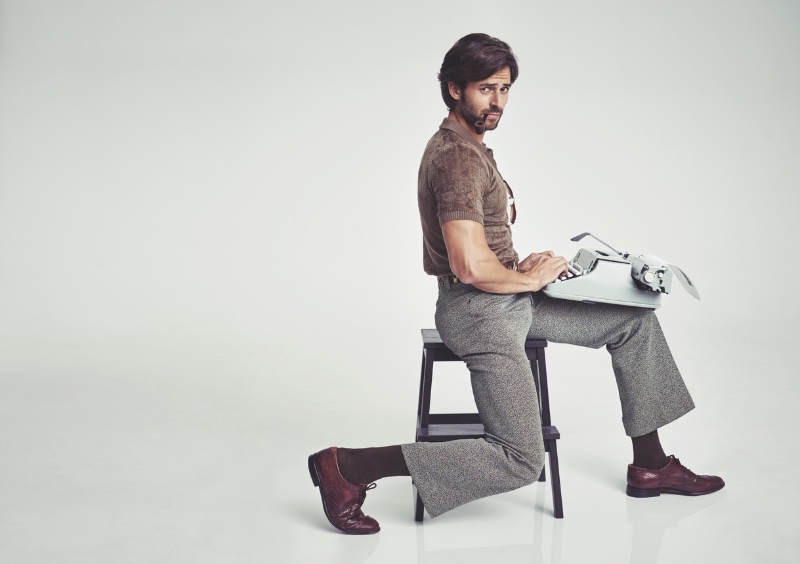
Flared trousers and wide-leg trousers are related, but their cuts differ. Flares widen toward the hem, usually from around the knee. A wide-leg cut gives more room through the leg itself. Bell-bottoms describe a pronounced flare, although the terms are often used loosely in vintage listings.
Everyday 1970s Men’s Clothing
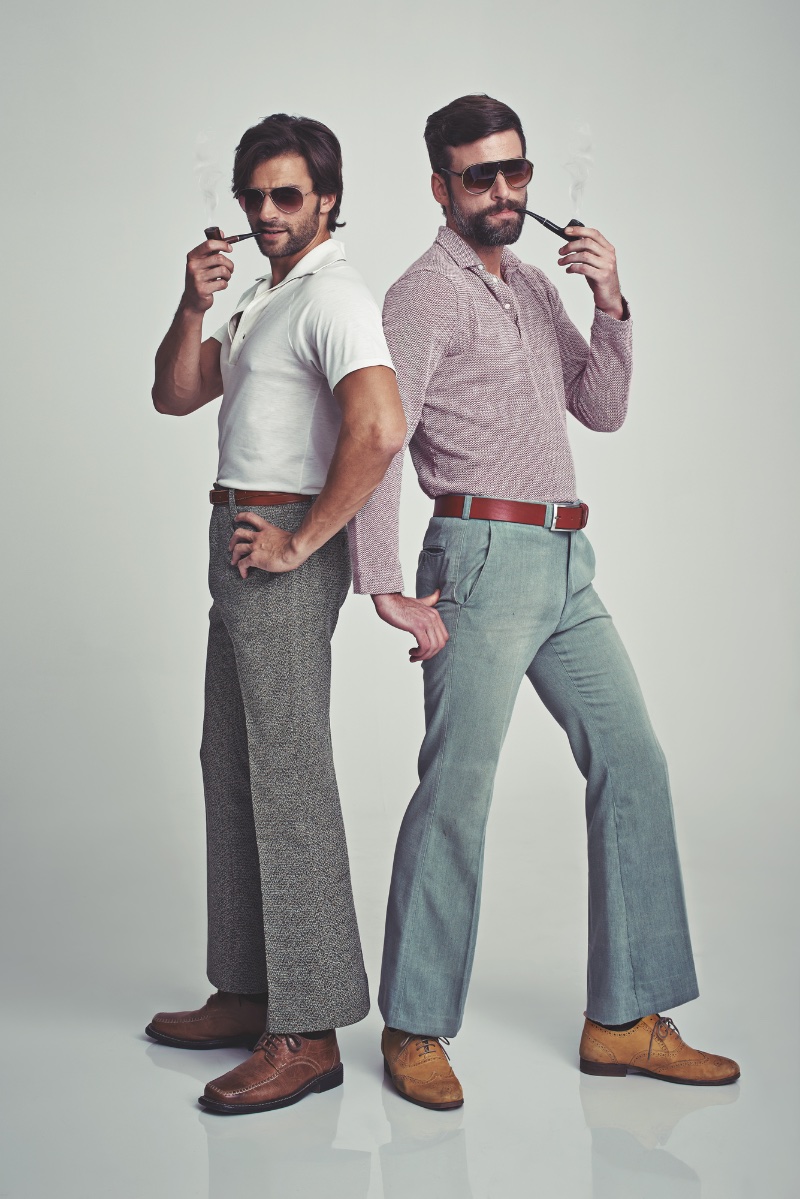
The quieter side of seventies dress deserves attention. A knitted shirt tucked into trousers could establish the period as effectively as a sequined outfit. Everyday clothing also makes the decade easier to draw from now, particularly when the appeal is texture or fit.
Denim & the Hippie Influence
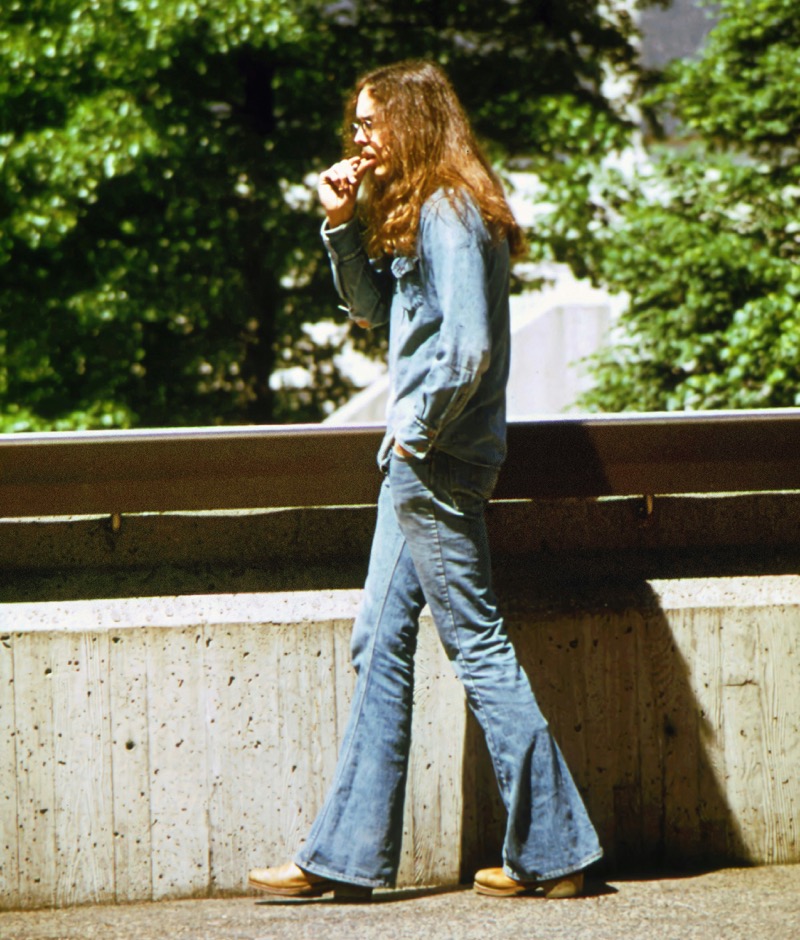
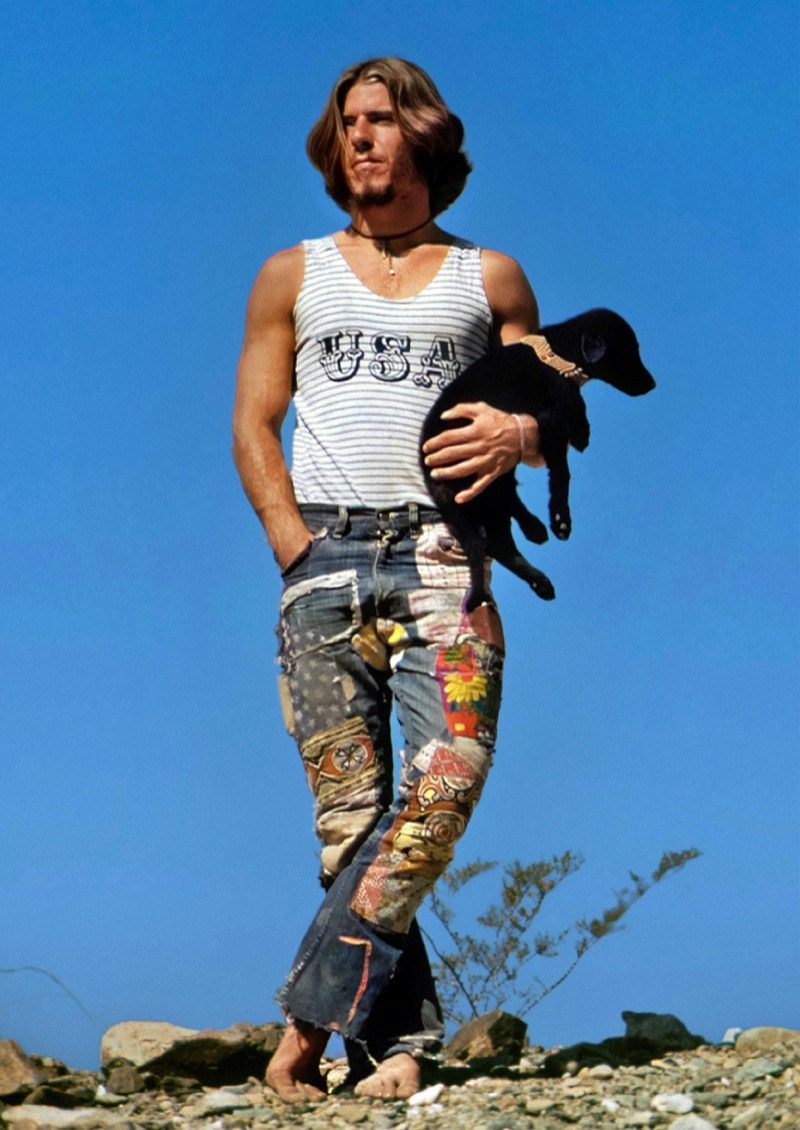
Denim connected several versions of seventies style. A fitted jacket and flared jeans created a coordinated casual outfit; patchwork or embroidery made the same fabric more personal. The contrast between plain denim and decorated jeans shows how much variation a basic wardrobe could accommodate.
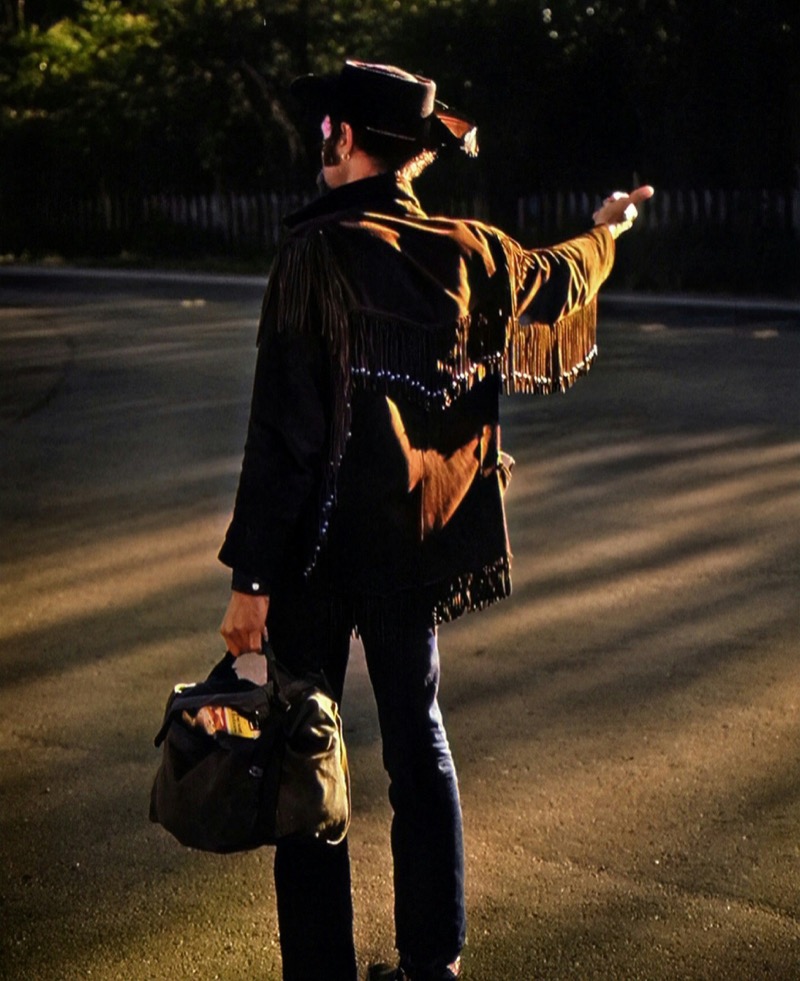
The hippie influence continued from the previous decade through long hair, handmade details, and clothing that looked worn and individualized. Fringed suede jackets belonged to this vocabulary, as did jeans repaired or altered in visible ways. The distinction was often in the treatment of the clothes, not simply the presence of a flare.
For a contemporary outfit, start with high-rise jeans and a tucked cotton shirt. A suede jacket can supply the texture. Adding fringe, beads, and a headband changes the intention considerably, moving closer to a deliberate period recreation.
Shirts & Patterned Knitwear
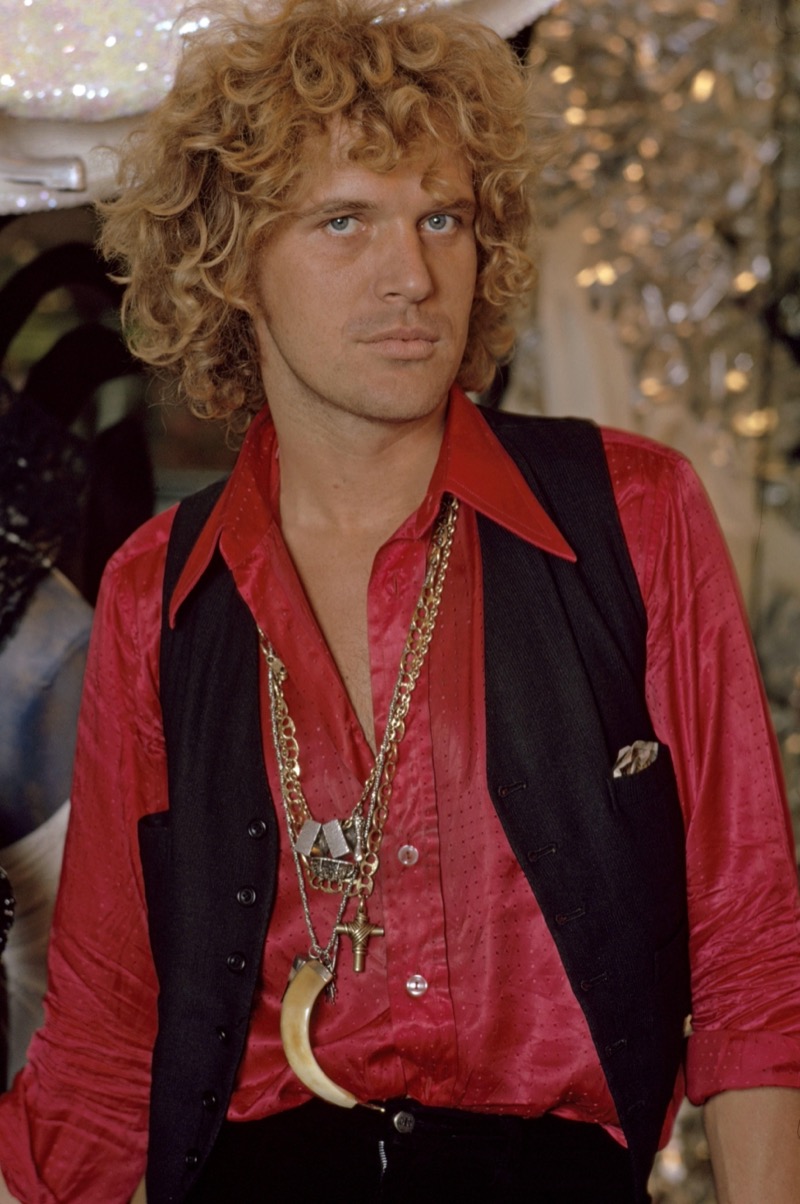
A broad shirt collar could sit over a jacket’s lapels or frame an open neckline. Prints gave even a straightforward shirt-and-trousers outfit visual energy. Glossy shirts offered another effect, catching light as the wearer moved.
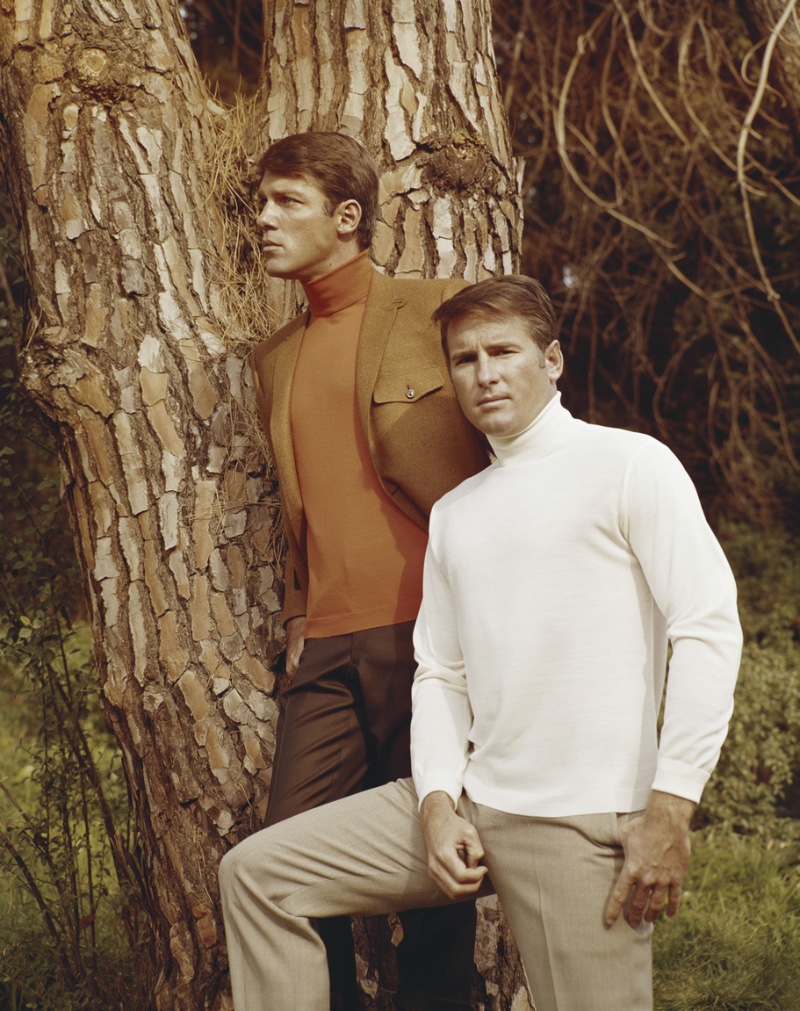
Knitwear made the decade’s proportions easier to wear casually. A close-fitting roll neck could replace a shirt and tie beneath a jacket, while a patterned sweater or knitted polo supplied interest on its own. Modern turtleneck outfits still benefit from that uninterrupted line between the neck and waistband.
When borrowing the look today, check the collar against the jacket. A wider collar needs room to sit properly; forcing it beneath narrow lapels can make the combination look accidental.
Corduroy, Velvet, & Earthy Colors
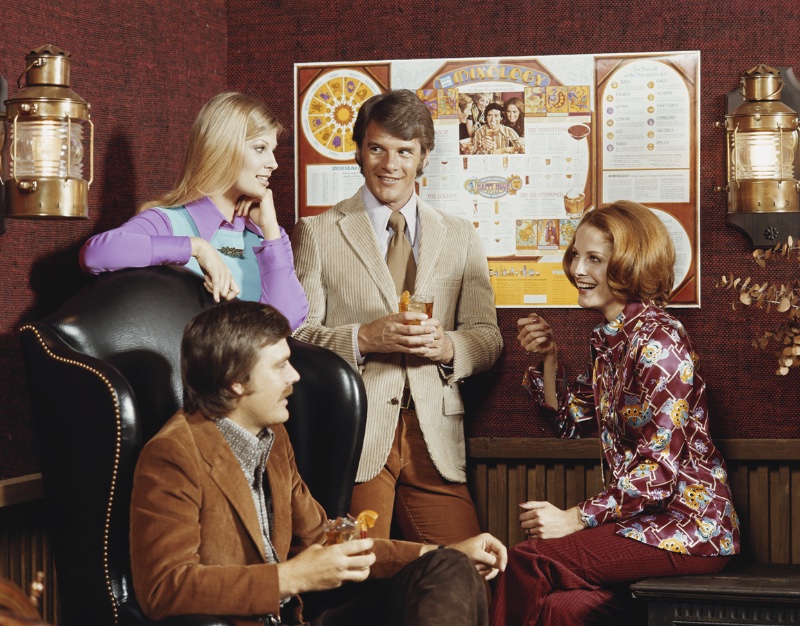
Brown is central to the popular memory of seventies clothing, particularly in corduroy and suede. Beige and cream provide useful contrasts, while stronger colors and busy prints offer a different reading of the period.
Corduroy pants give a simple outfit texture before a pattern enters the picture. With a fine-gauge sweater and leather boots, they suggest the decade through fabric and proportion. A matching corduroy jacket makes the reference more explicit.
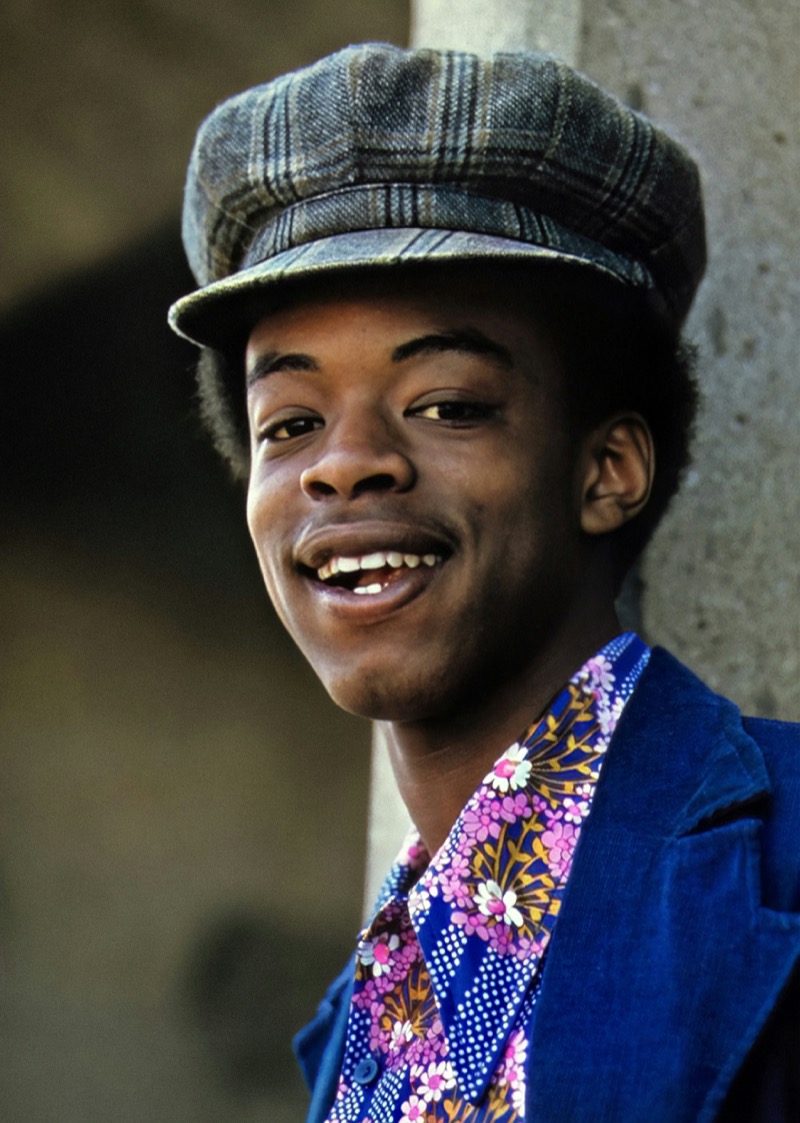
Velvet offers a richer surface, particularly in a jacket worn for the evening. Its effect comes from the way the pile responds to light. A plain shirt lets that surface do more of the work.
Casual Sets & Sportswear
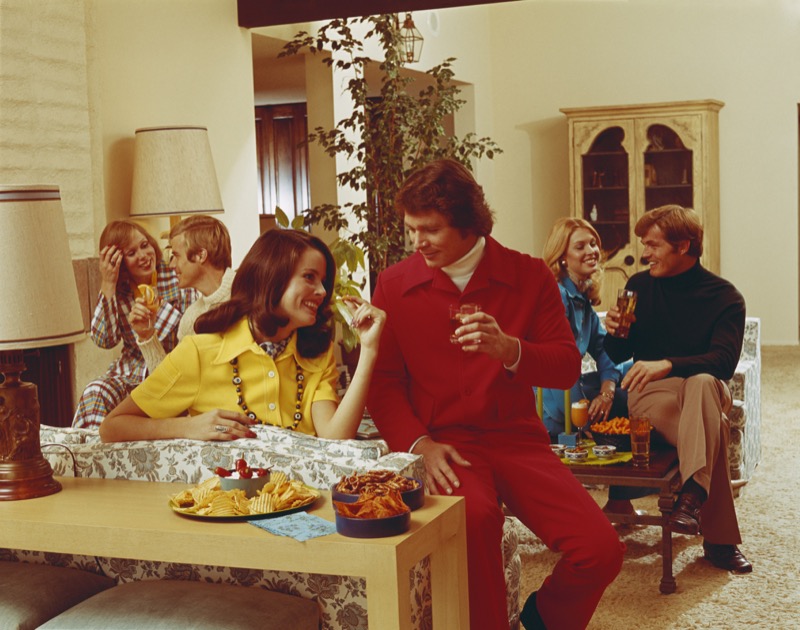
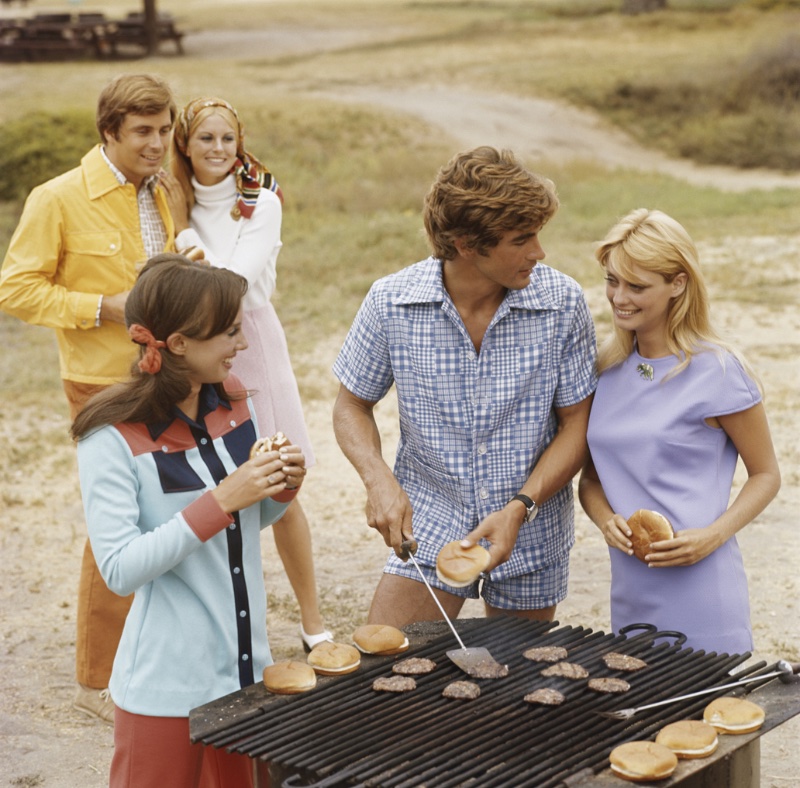
Matching casual separates also belong in the picture. Short-sleeved shirts and shorts offered a relaxed wardrobe for summer gatherings. These outfits serve a different purpose from clubwear, even when their colors are equally assertive.
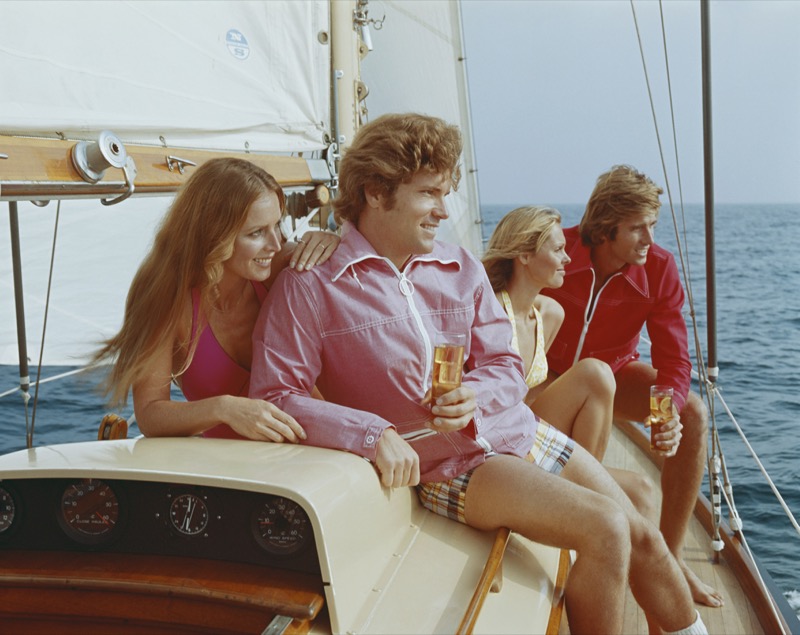
Athletic clothing became more visible in everyday menswear too. Tracksuits and running shoes moved beyond their sporting settings, a development discussed in FIT’s account of seventies menswear.
Fitted T-Shirts & Physique Culture
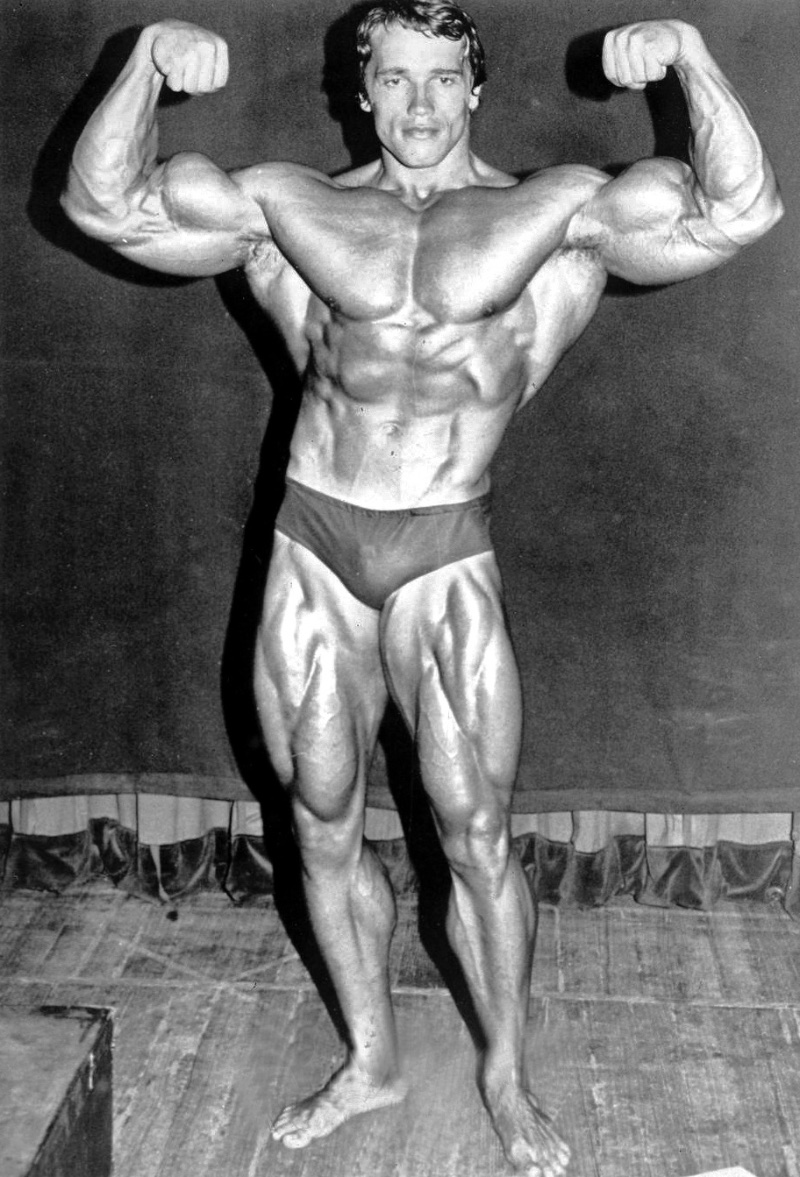
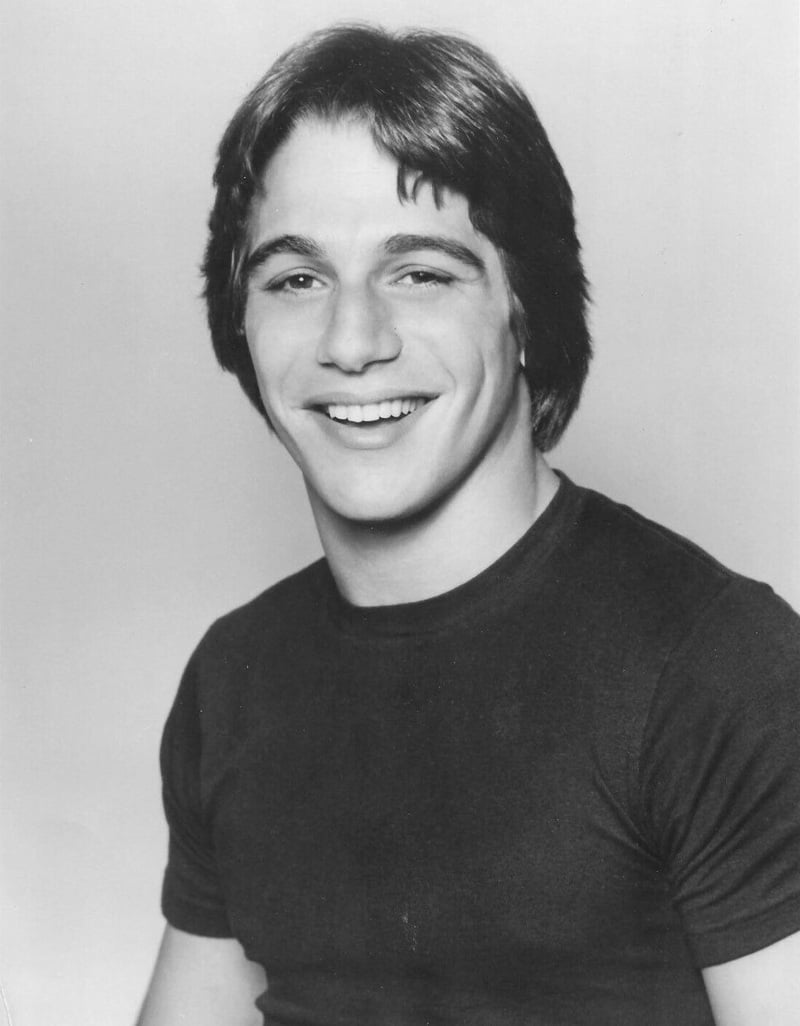
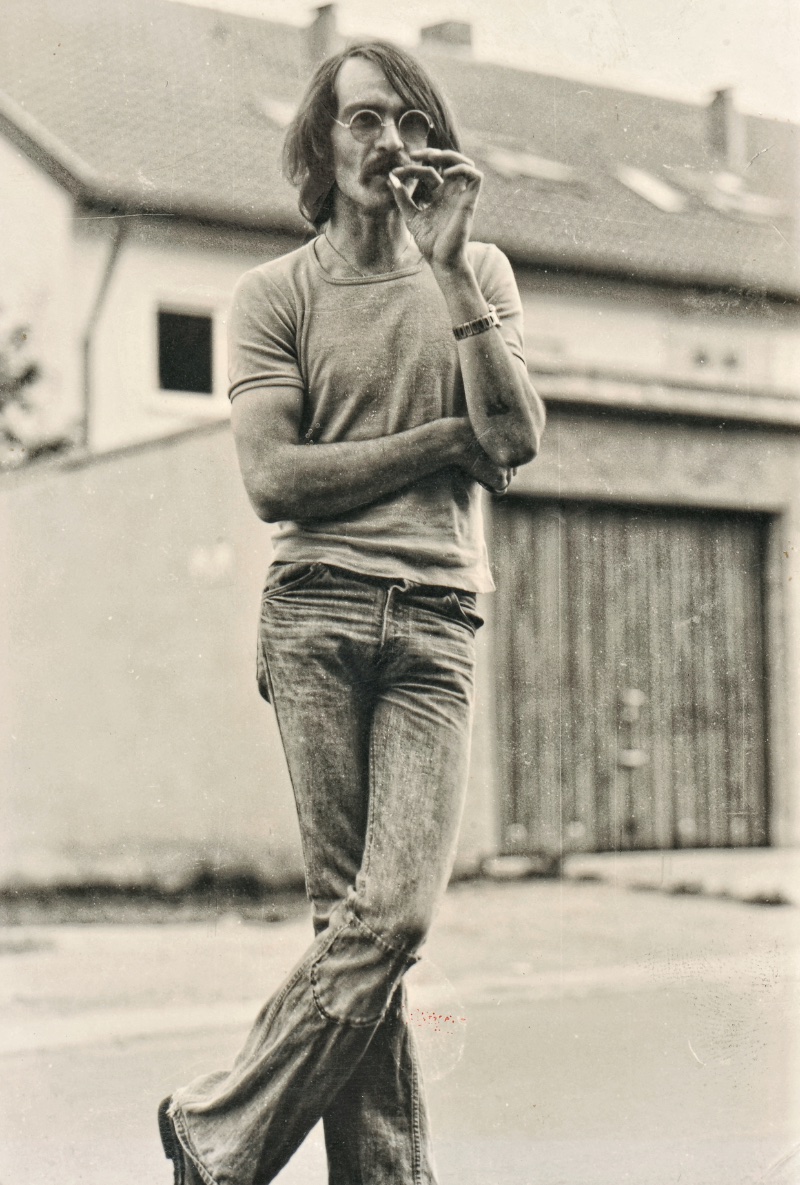
The period’s interest in physique found expression in close-fitting T-shirts. Short sleeves drew attention to the upper arms, while a snug fit through the chest made the torso part of the outfit’s silhouette. Even a plain crew neck could emphasize the body, bringing an athletic quality to everyday casualwear.
Worn tucked into high-rise jeans, these T-shirts also defined the waist. A belt marked the transition between the fitted top and trousers, while flared legs could balance the narrower line above. The effect depended on proportion as much as muscle: a simple T-shirt and jeans could create a shaped silhouette through fit alone.
Seventies Suits & Tailoring
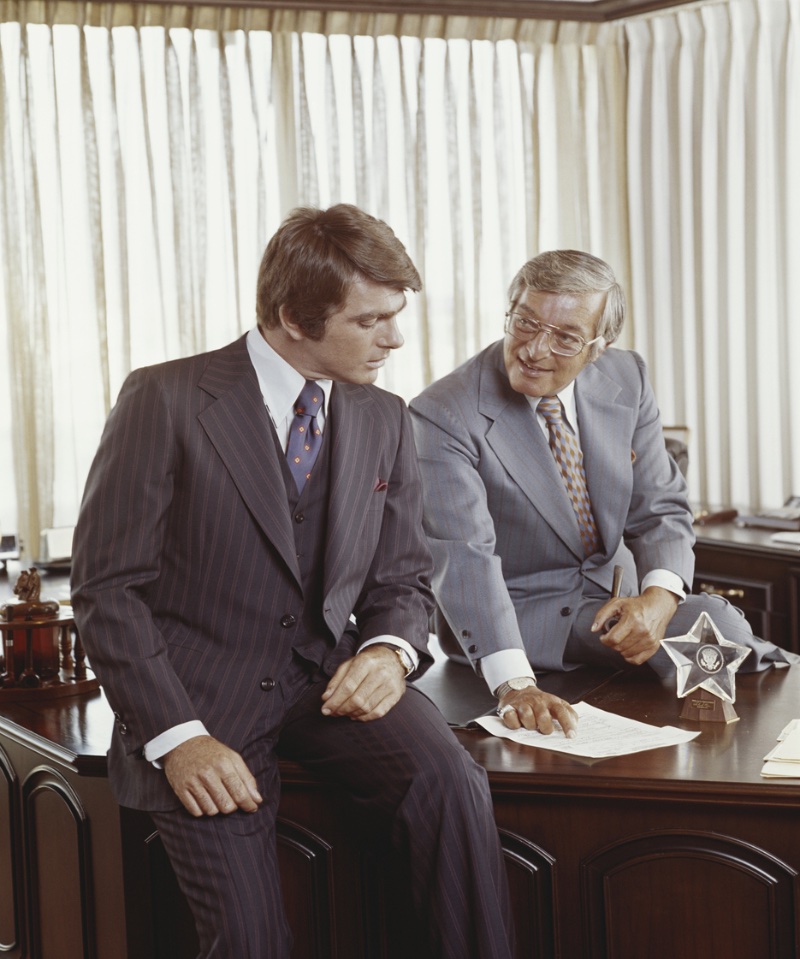
A seventies suit often combined broad lapels with a shaped jacket and flared trousers. A wide patterned tie balanced the scale of the lapels, while a waistcoat could extend the tailored line through the torso.
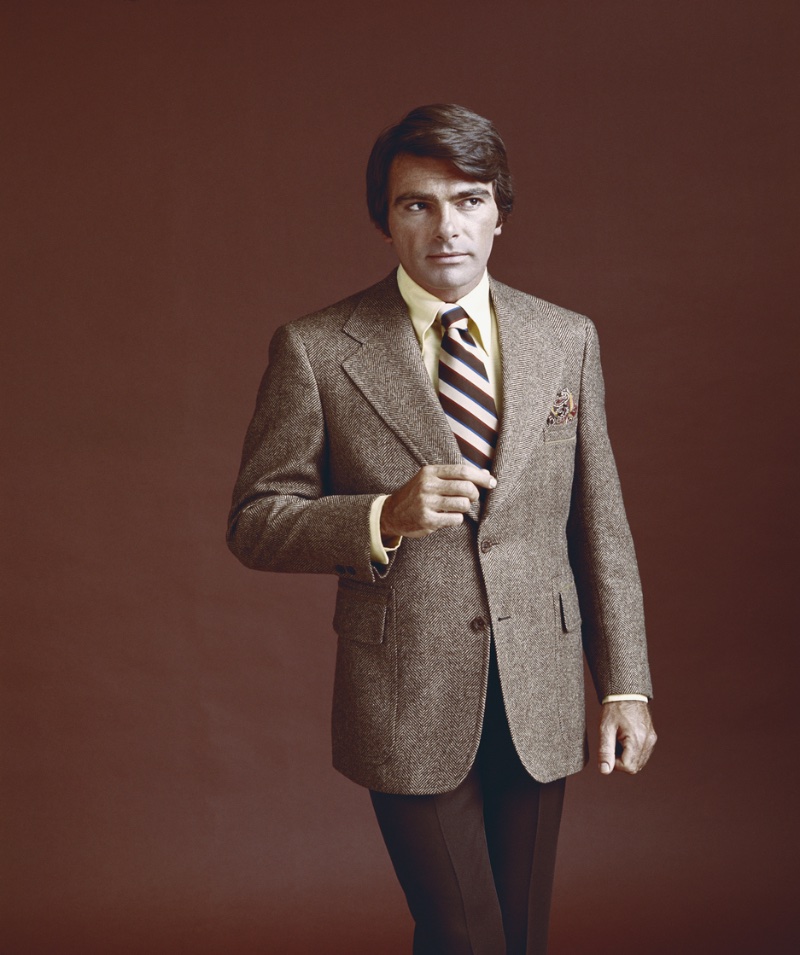
The effect depended on coordination. Wide lapels did not operate in isolation; the shirt collar and tie needed enough visual weight to meet them. This is one reason a vintage jacket can look awkward when everything beneath it belongs to a much narrower tailoring vocabulary.
Leisure Suits & Safari Styles
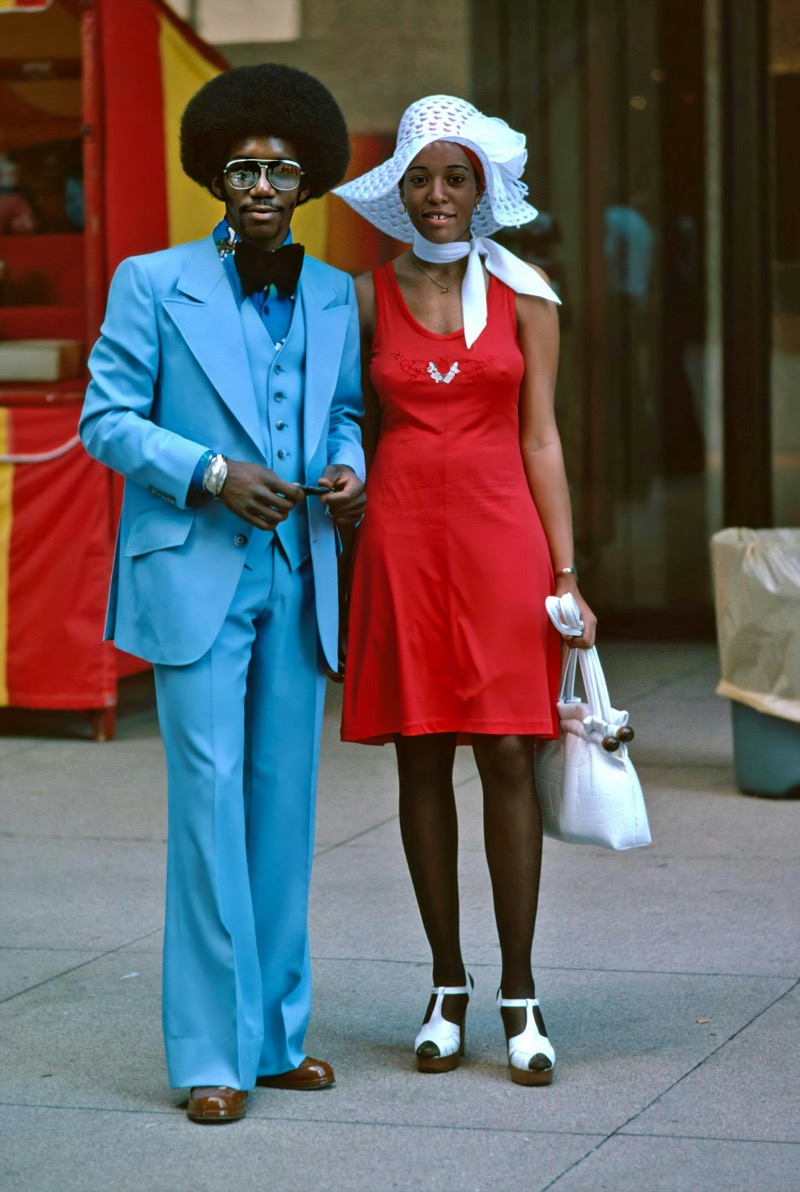
The leisure suit offered a casual alternative to conventional tailoring. It used coordinated trousers and a matching top or jacket, often with prominent collars or patch pockets. Polyester became closely associated with the style, but it was not the only material. The Metropolitan Museum of Art’s 1977-79 leisure suit, for example, is made from cotton velveteen.
A tracksuit is a separate garment category, with sporting origins and construction suited to movement. Calling every matching seventies outfit a leisure suit obscures the differences.
Safari styles offered another approach to informal coordination, using belted waists and patch pockets. Together, these alternatives show that the decade’s interest in matching clothes extended well beyond the business suit.
Disco, Glam Rock, & Punk
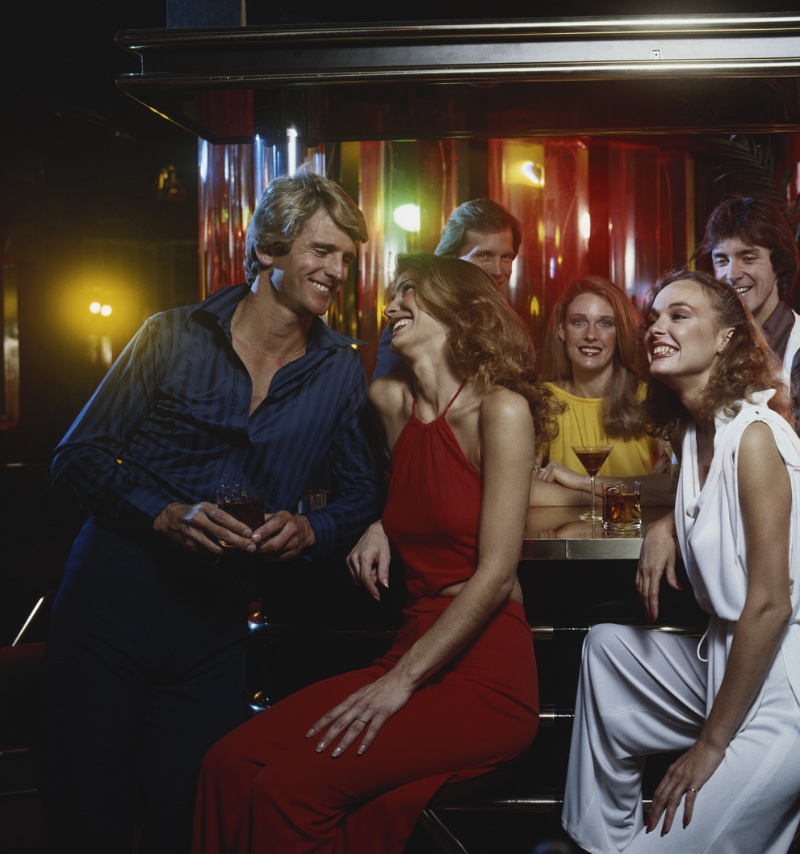
Music gave seventies clothing some of its most memorable images, but each scene used dress differently. Clothes for dancing needed a different relationship to the body from an outfit built to command a stage.
Men’s Disco Outfits
Disco style brought fitted shirts and flared trousers into a setting where movement and reflected light mattered. Open necklines and glossy fabrics made a relatively simple combination feel dressed for the evening. A waistcoat or matching jacket could turn it into a more elaborate outfit.
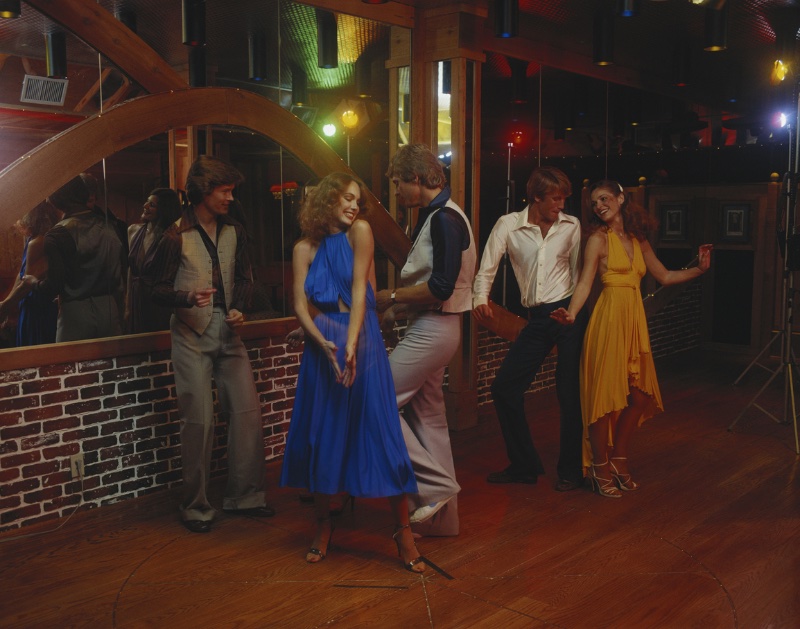
The culture was broader than its most famous celebrity photographs. Disco developed through Black and Latino music scenes and gay dance communities, as Ohio State’s costume and textiles exhibition explains. Its fashion should be understood as clothing worn within those social spaces, as well as a commercial look adopted more widely.
Platforms are a recognizable option, but an outfit does not require extreme footwear to read as disco. The relationship between the shirt, waistband, and trouser hem often establishes the look first.
Glam Rock Clothing
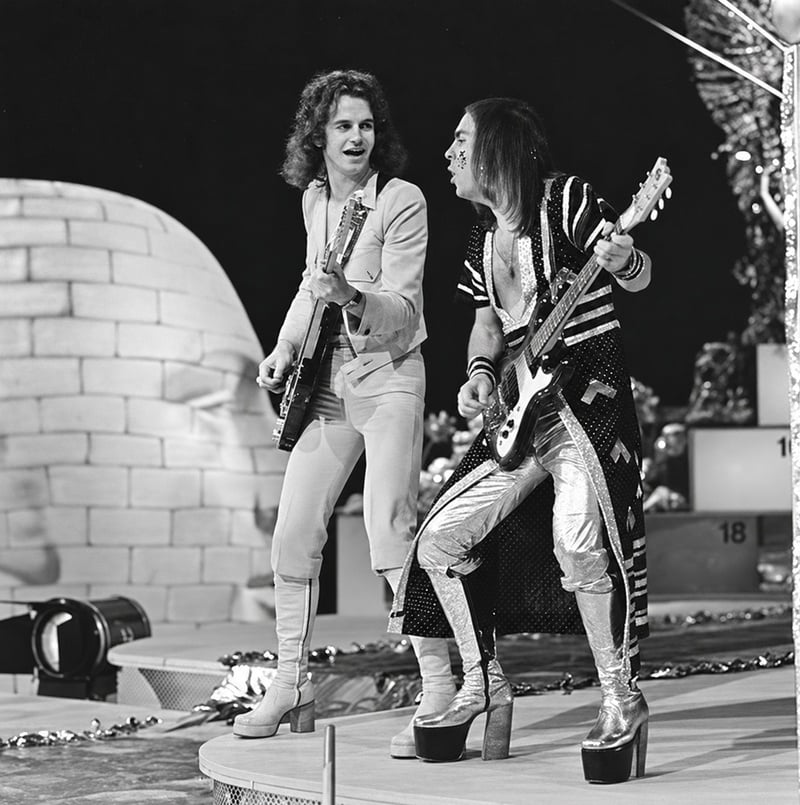
Glam pushed clothing toward performance. Metallic surfaces and platform boots enlarged the figure, while fitted jumpsuits made the whole body part of the image. On stage, posture and movement amplified the effect of these clothes.
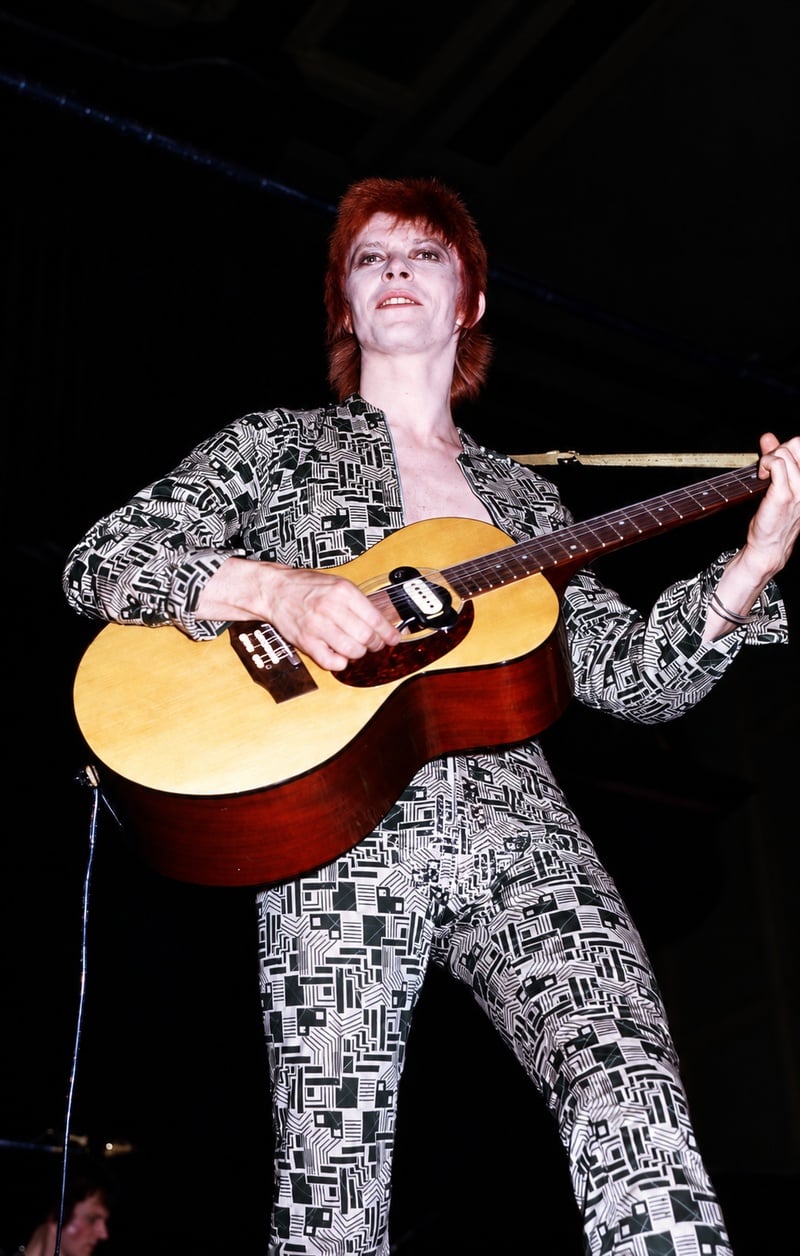
The challenge to masculine convention had roots in the previous decade. The V&A’s history of the peacock revolution describes men embracing velvet, frills, and decorative clothing during the sixties. Glam took those possibilities into a more theatrical setting.
For daily wear, one element is usually enough. A satin shirt beneath a plain jacket borrows the appetite for decoration while remaining practical.
Punk Style
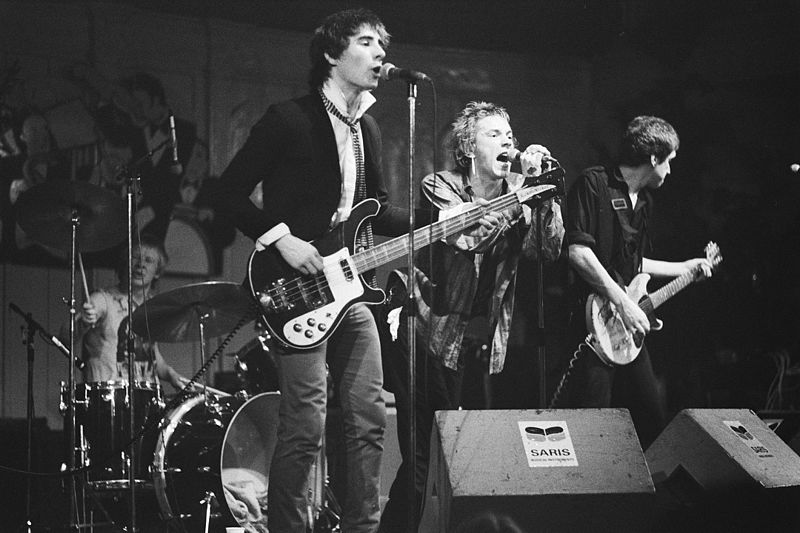
Punk offered another way to make clothing confrontational. Ripped fabric and visible hardware interrupted the finished appearance expected of respectable dress. Narrow trousers also created a different outline from the flares associated with much of the decade.
DIY clothing was central to the approach. Alteration could turn an ordinary garment into something personal and abrasive. Ohio State’s history of punk fashion identifies distressed clothing, studs, and the subversion of conventional garments as key elements.
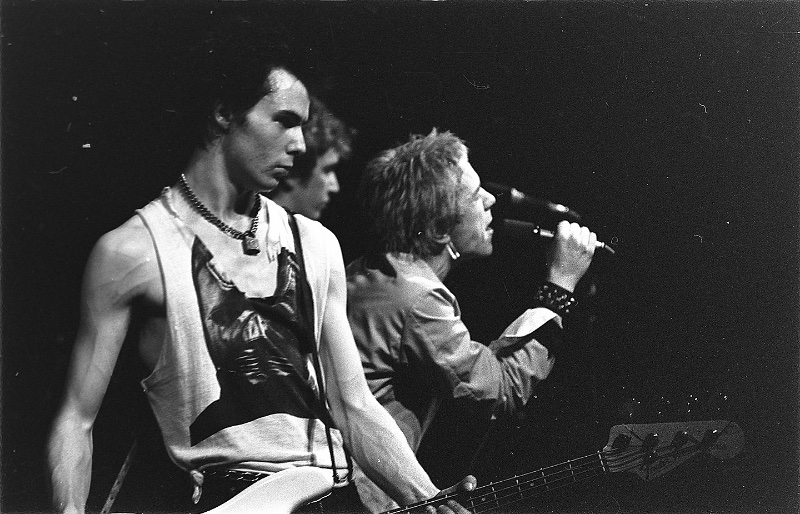
Punk’s visual language continued developing after the seventies. Later associations, including elaborate hairstyles like mohawks, should not become a uniform imposed on every early punk photograph.
Leather Jackets, Shoes, & Accessories
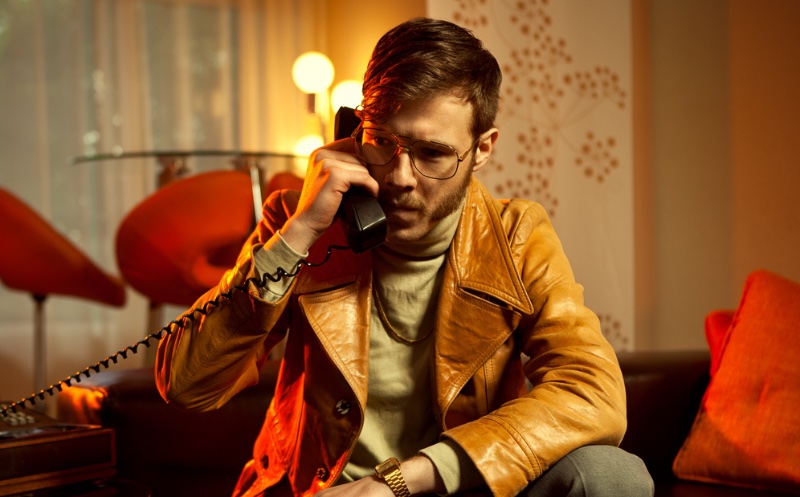
Leather jackets could look severe or relaxed, depending on the cut. A broad-collared jacket over a roll neck belongs to a different wardrobe from a studded motorcycle jacket, even though both sit within the decade.
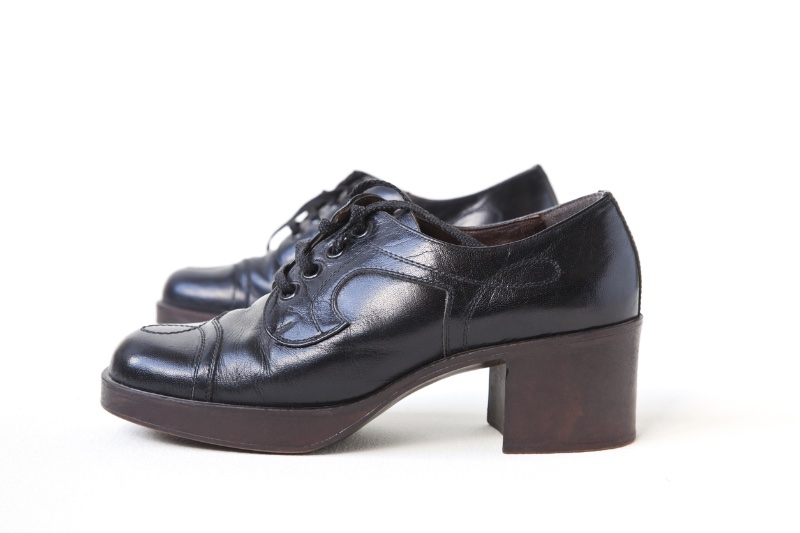
Shoes deserve similar attention. Platforms exaggerated height and helped balance wide hems, but loafers and boots offer less theatrical ways into the period. For modern wear, try the trousers with the intended shoes before having them hemmed. A flare that works over a boot may drag when worn with a flatter sole.
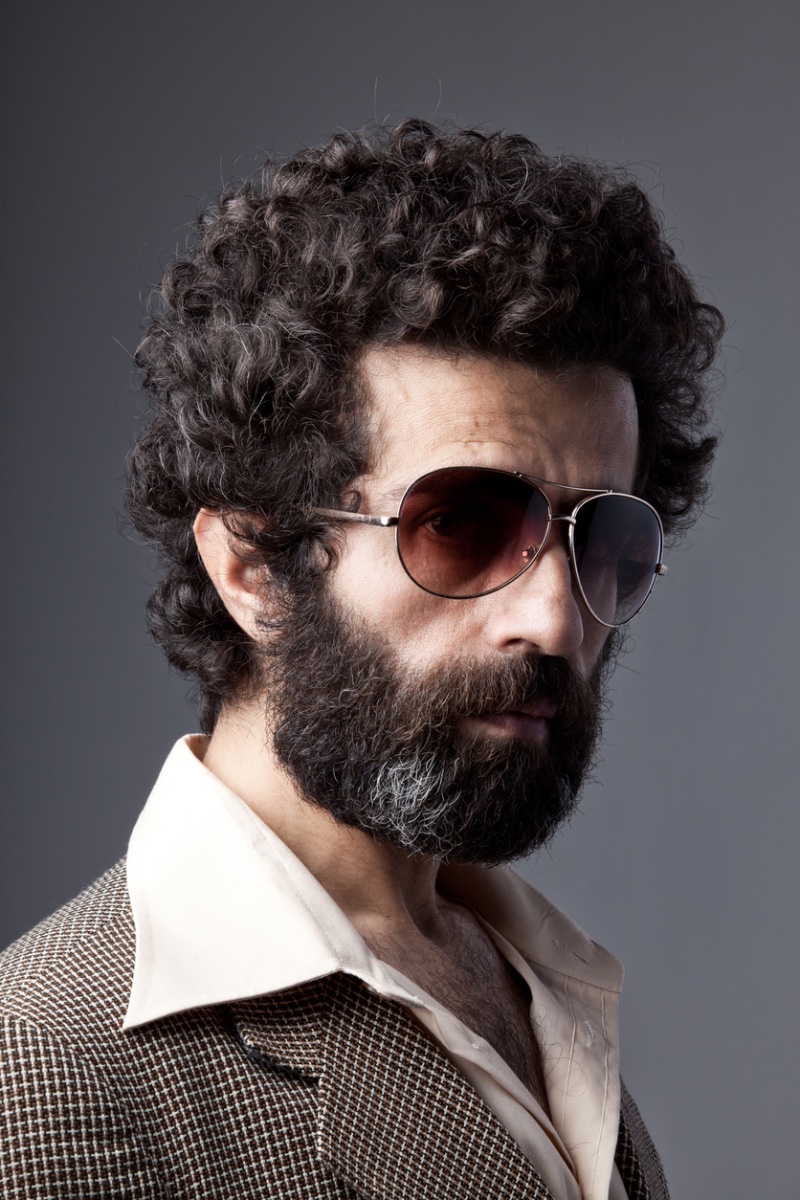
Accessories can reinforce the proportions. A broad belt defines the waistband; large sunglasses give the face a stronger frame. Choose details that support the clothes instead of collecting every seventies reference in one outfit.
How to Wear 70s Fashion Today
Start with the trousers. A higher rise changes where the shirt meets the body, and a modest flare changes how the leg meets the shoe. Those adjustments can establish the period before a print or accessory is added.
For a casual outfit, wear flared jeans with a tucked knitted polo and boots. For something dressier, try a roll neck beneath a shaped jacket, with trousers that have enough width to balance it. Keep the fabrics comfortable and the fit usable when sitting down.
A seventies party allows a more explicit reference. Printed shirts with bell-bottoms are an accessible starting point; a wide-lapel suit offers a dressier option. Decide whether the intention is disco or another specific style, then build a coherent outfit around it.
The decade rewards looking beyond its loudest clothes. A well-cut trouser or textured jacket can explain the appeal just as clearly as a platform shoe. As 80s outfits for men took shape, the proportions changed again. The seventies remain useful because they offer so many ways to reconsider the relationship between the body and the clothes.