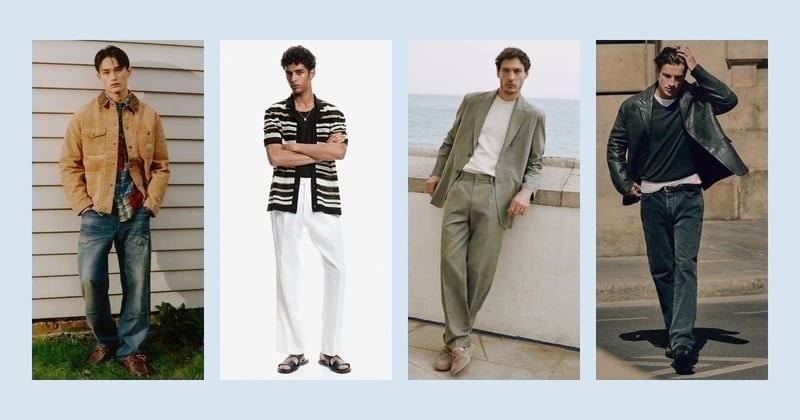
Men’s fashion in the 2020s began with a problem few wardrobes had been assembled to solve. Getting dressed often meant staying home. Sweatpants became daily clothes, and a jacket could spend months waiting for an occasion. As public life resumed, the appetite for comfort met a renewed interest in dressing up. The results have ranged from fuller trousers to shirts that reveal more skin than they cover.
The decade is still taking shape. Slim jeans coexist with baggy denim, and a matching resort set answers a different need from a roomy business suit. Yet recognizable changes have emerged in the clothes men buy and how they put them together. Some concern the outline of an entire outfit. Others require only a pearl necklace or a different type of summer shirt.
Pandemic Dressing & the Expectation of Comfort
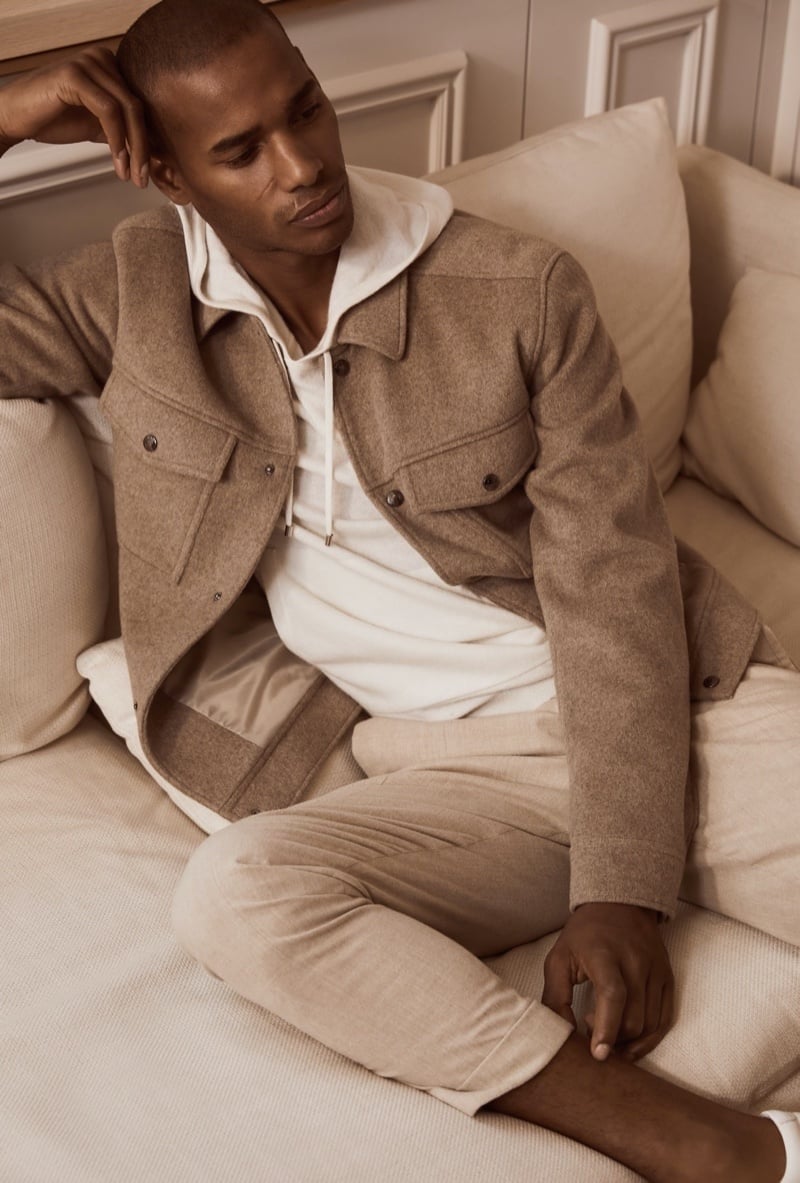
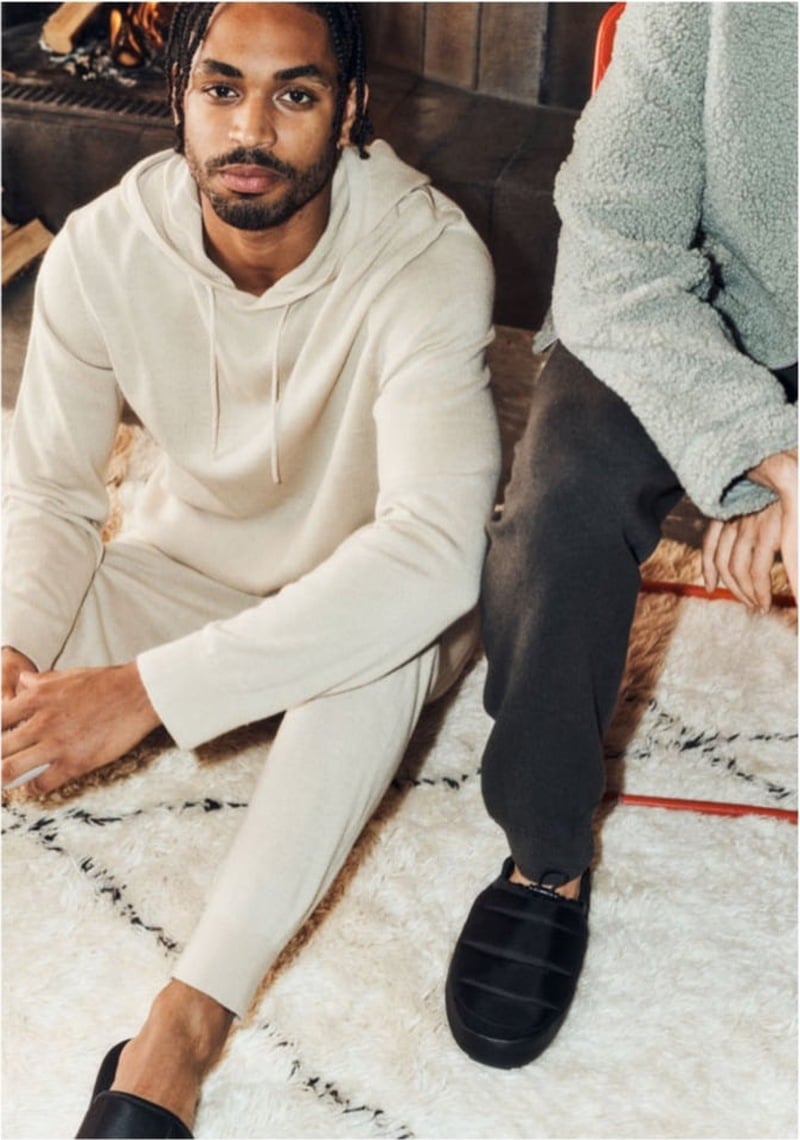
The pandemic gave sweatpants a much larger job. Clothes associated with evenings and weekends became the wardrobe for long stretches of working and living at home. Matching sweat sets offered an easy way to feel dressed, even when the day’s travel ended at the kitchen.
By fall 2020, Reiss was proposing a wardrobe that brought hoodies into the company of soft jackets and coordinated trousers. H&M’s 2021 loungewear edit made the indoor-outdoor crossover equally clear, presenting pale sweats and slippers as a complete look. Neither brand had invented comfortable clothing. The change was the expectation that comfort could remain a priority beyond private hours. Returning to public life did not require every man to return to the same waistband.
Baggy Jeans
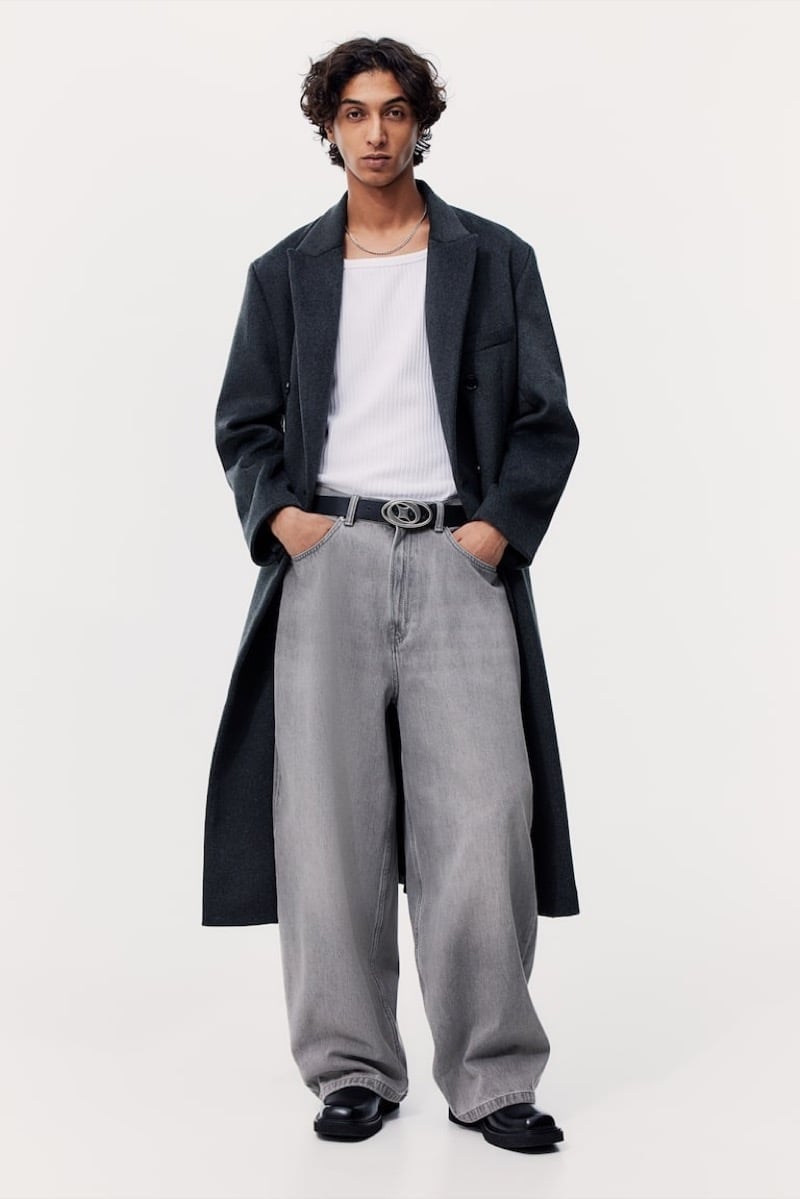
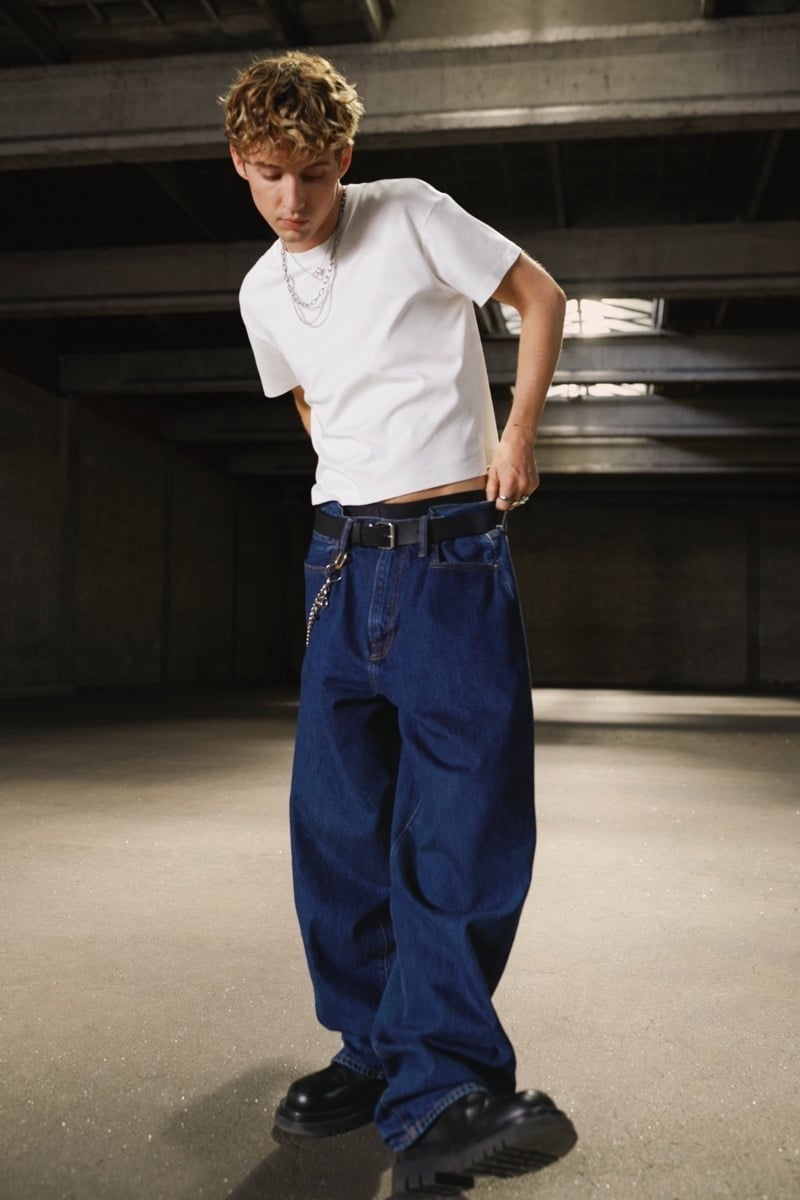
After years in which slim and skinny jeans helped define the fashionable male outline, baggy denim changed the space between body and clothes. Room through the seat and thigh became part of the appeal, with loose legs sometimes gathering over shoes. The effect could be slouchy or exaggerated, but it was visibly different from denim cut to trace the leg.
Gap’s fall 2024 Get Loose campaign made movement central to that proposition. A plain white T-shirt left the volume of the jeans to do most of the work. H&M pushed further with its Collins super-baggy fit in 2025, showing how a long coat could sit above an expansive denim silhouette. Skinny jeans continued to have wearers. They had lost their claim to being the automatic fashionable choice.
Wide Trousers & Higher Waists
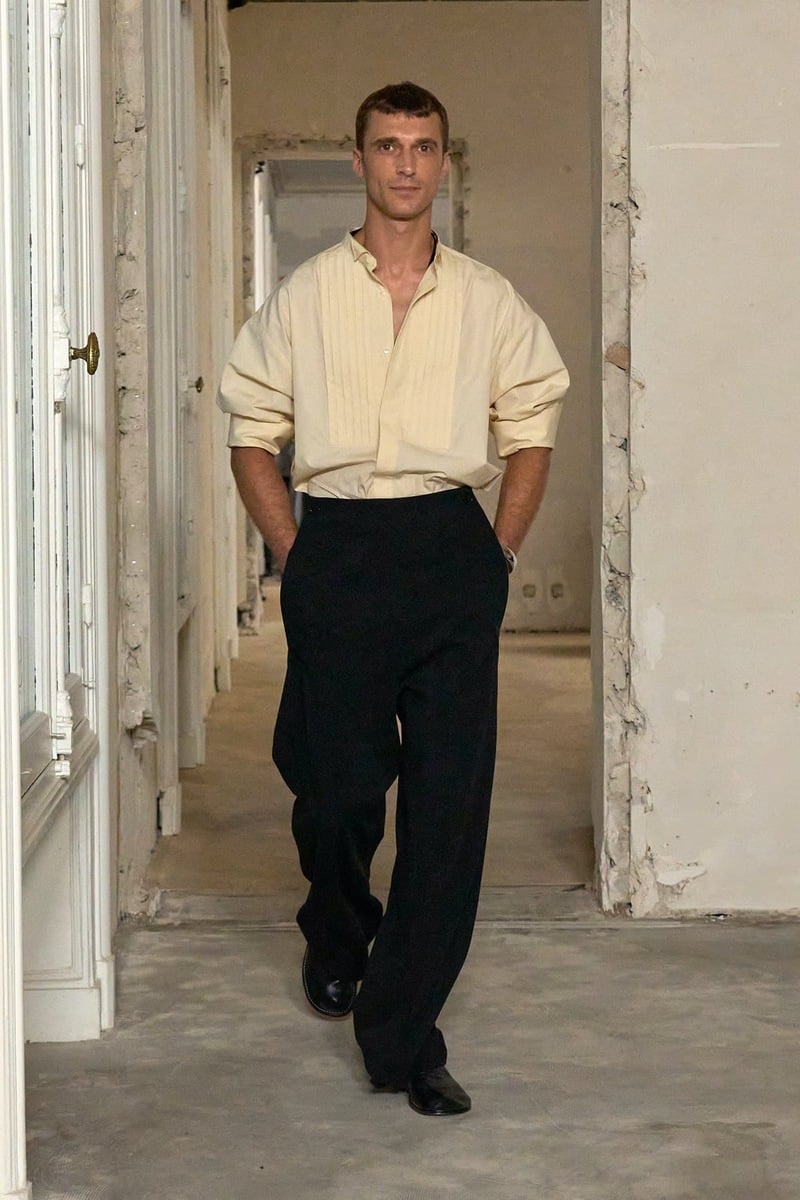
The change in proportion extended beyond denim. Fuller trousers gave smarter dressing a different line, particularly when a higher waist and pleats allowed fabric to fall from the hips. Shirts tucked into these shapes could emphasize the waist while leaving ample room below it.
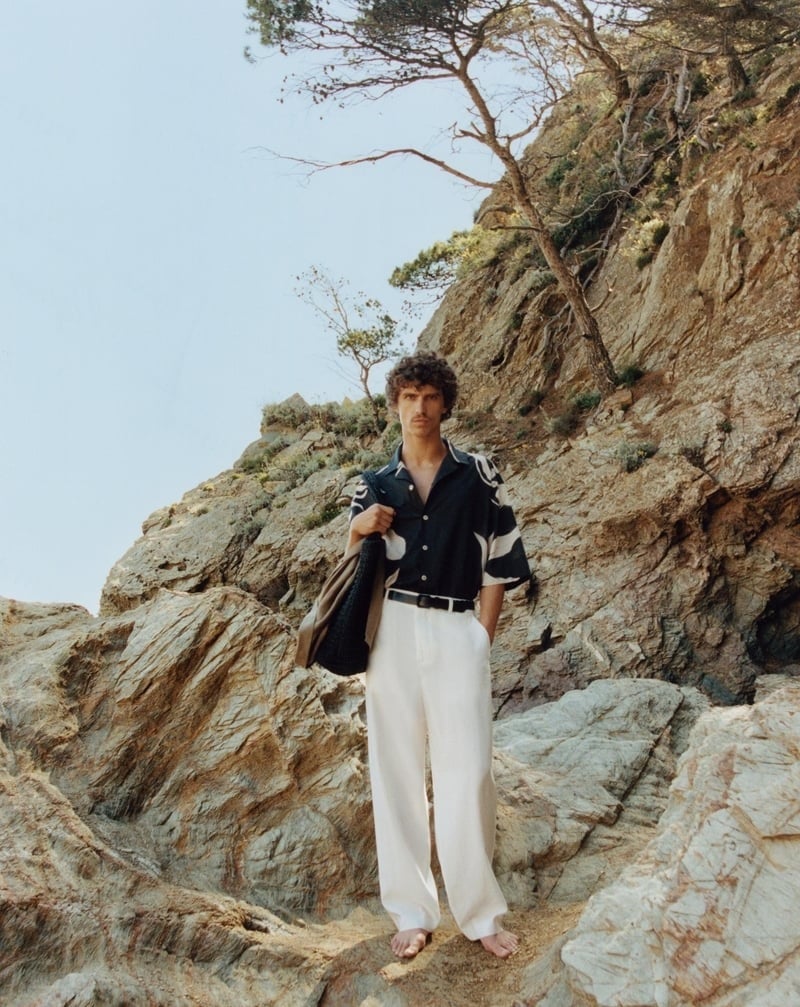
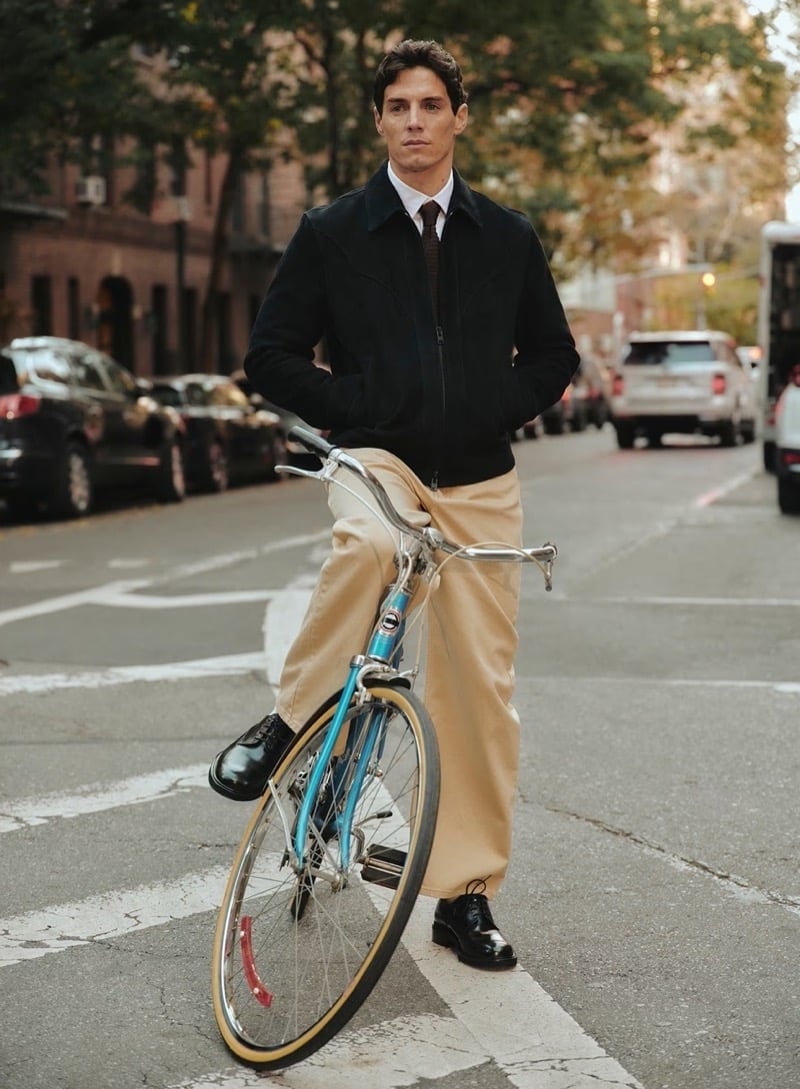
AMI’s spring-summer 2025 collection showed the appeal of a pale shirt tucked into high-waisted black trousers. Zara’s summer 2024 styling took a looser approach, letting broad white trousers fall beneath a short-sleeve printed shirt. Banana Republic’s 2026 workwear edit brought roomy chinos into a city wardrobe with a collared shirt and tie. These were different ways to dress, joined by a willingness to give the lower half more space. The trouser was becoming an active part of an outfit’s proportions, not simply the narrow accompaniment to its jacket.
The Relaxed Suit
Tailoring also found reasons to loosen up. A fuller trouser could change a suit’s character as much as its jacket, replacing the close-cut outline associated with much 2010s business dressing with a longer, easier fall of fabric.
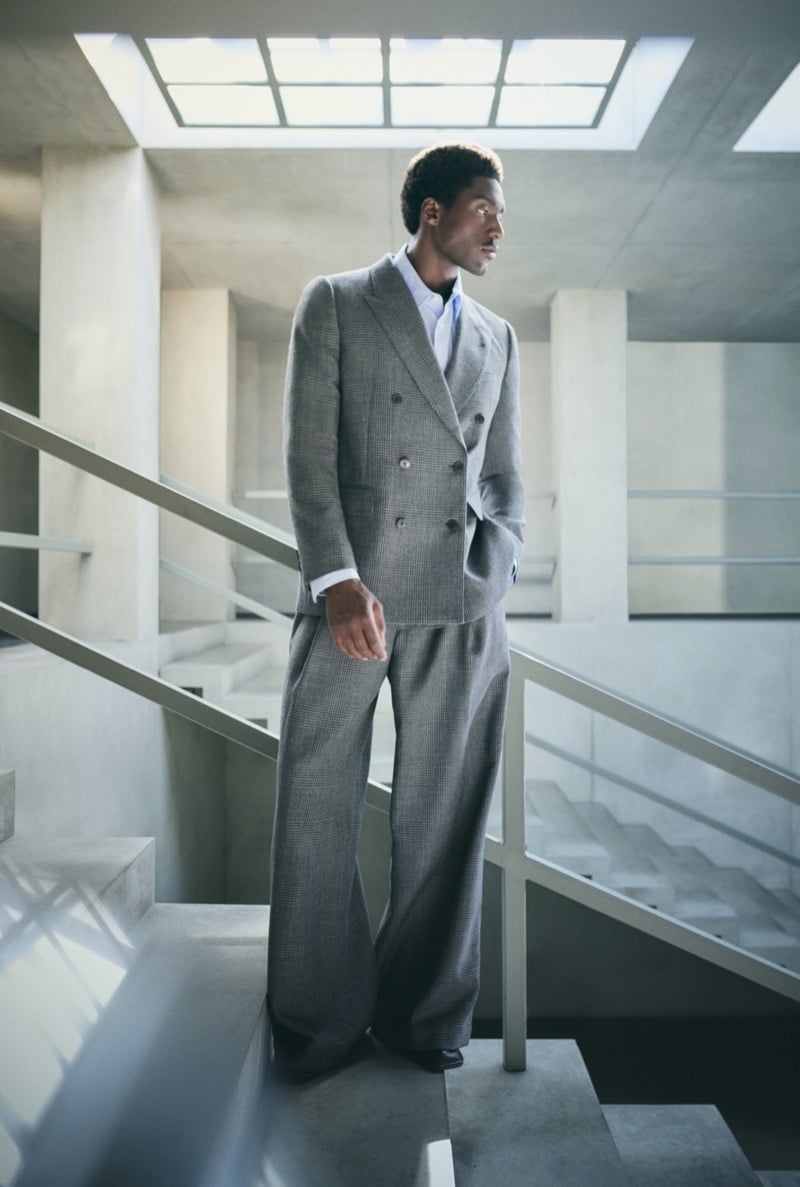
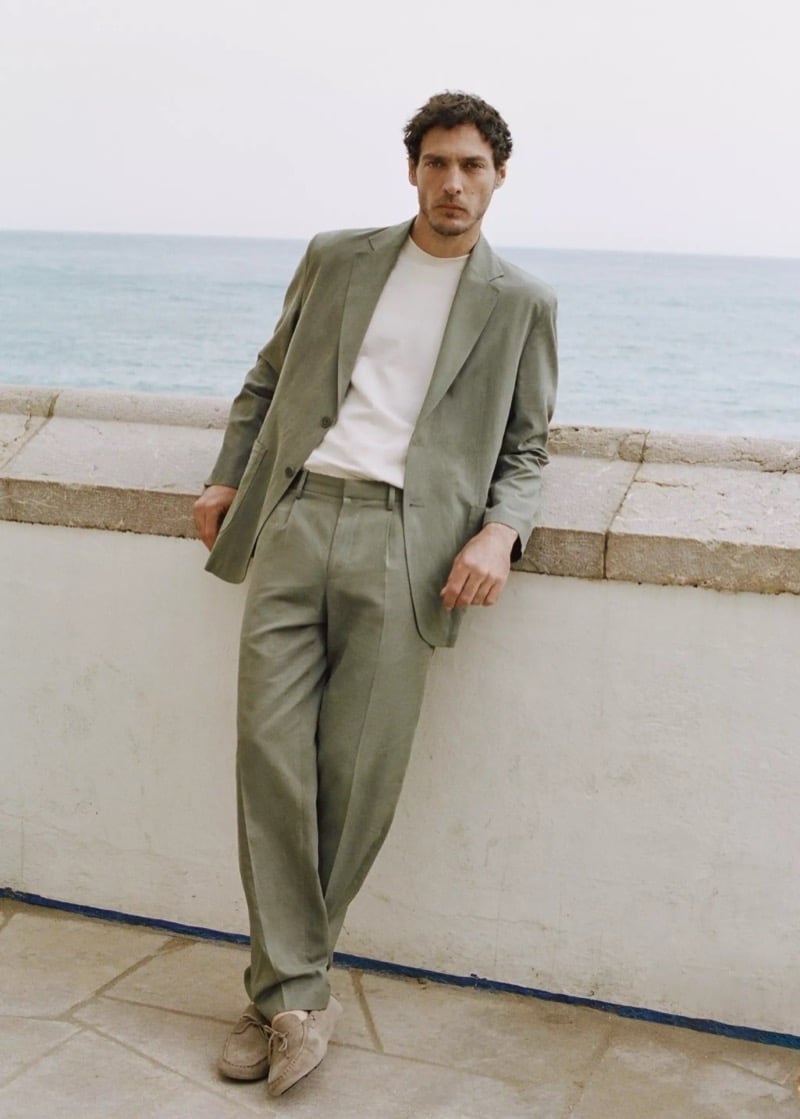
Mytheresa’s fall 2024 office edit demonstrated that breadth could coexist with the conventions of a double-breasted suit and tie. Mango’s spring 2026 edit offered another route, wearing a relaxed suit over a white T-shirt with suede shoes. The distinction matters. Relaxed tailoring could accommodate an office or an afternoon by the sea; it did not always mean abandoning formality. It gave men more room to decide how much formality the occasion required.
Workwear & Vintage Americana
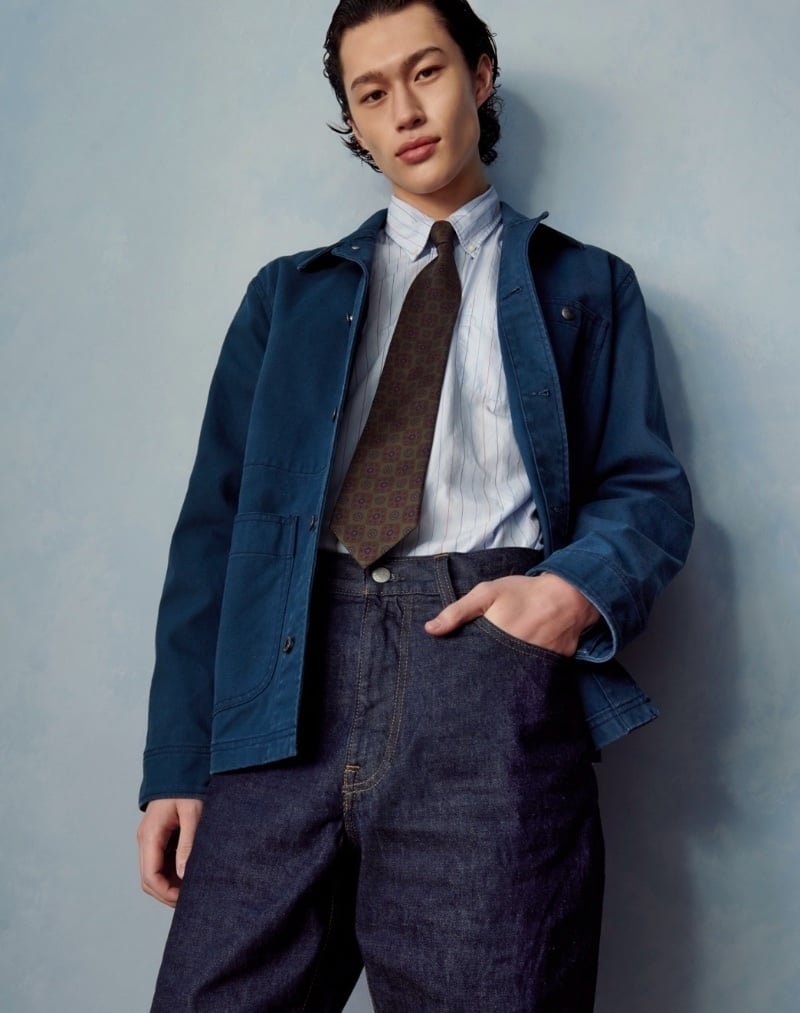
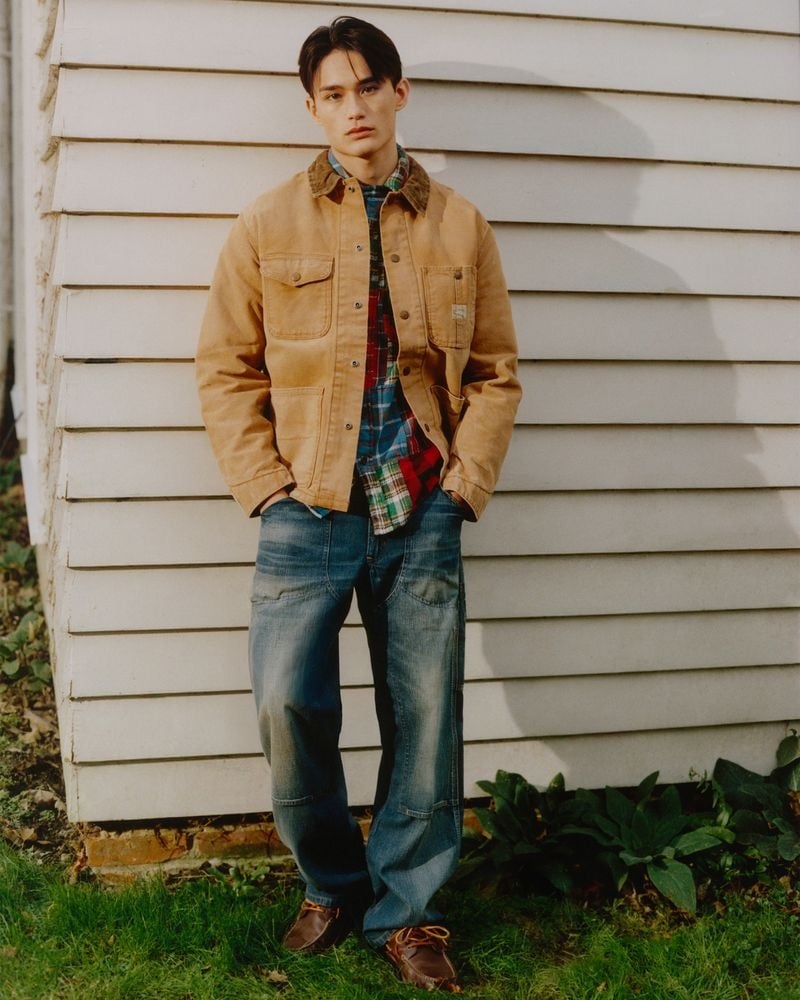
Chore jackets and worn-looking denim offered a different kind of reassurance. Their appeal came partly from practical design and partly from the suggestion that clothes could improve through use. A faded seam or softened jacket could make an outfit feel less newly assembled.
J.Crew’s January 2023 styling placed a Wallace & Barnes chore jacket over a shirt and tie, allowing workwear to interrupt a more conventional smart outfit. Polo Country’s 2025 Mr Porter edit leaned into patchwork checks and distressed jeans beneath a corduroy-trimmed jacket. These were newly produced garments drawing on older clothes, a distinction worth preserving alongside interest in actual vintage. The 2020s did not discover Americana. They continued to find uses for its pockets, durable fabrics, and signs of wear, including wear supplied at the factory.
Cuban-Collar Shirts
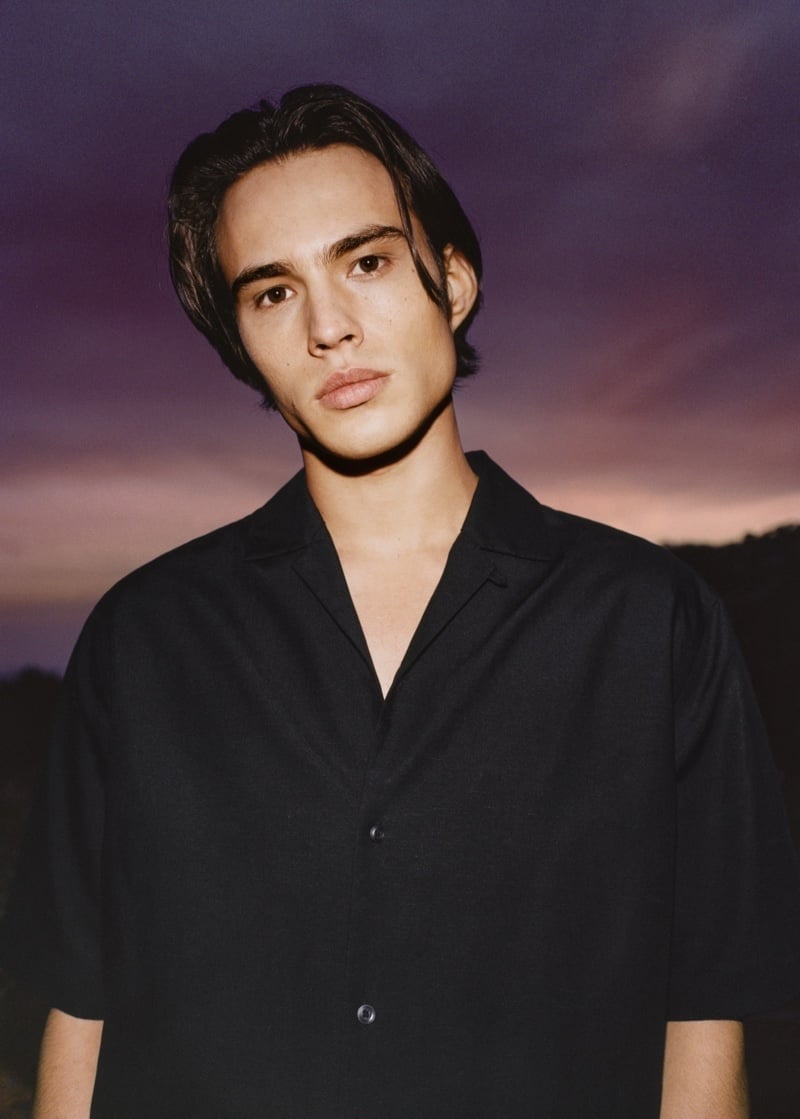
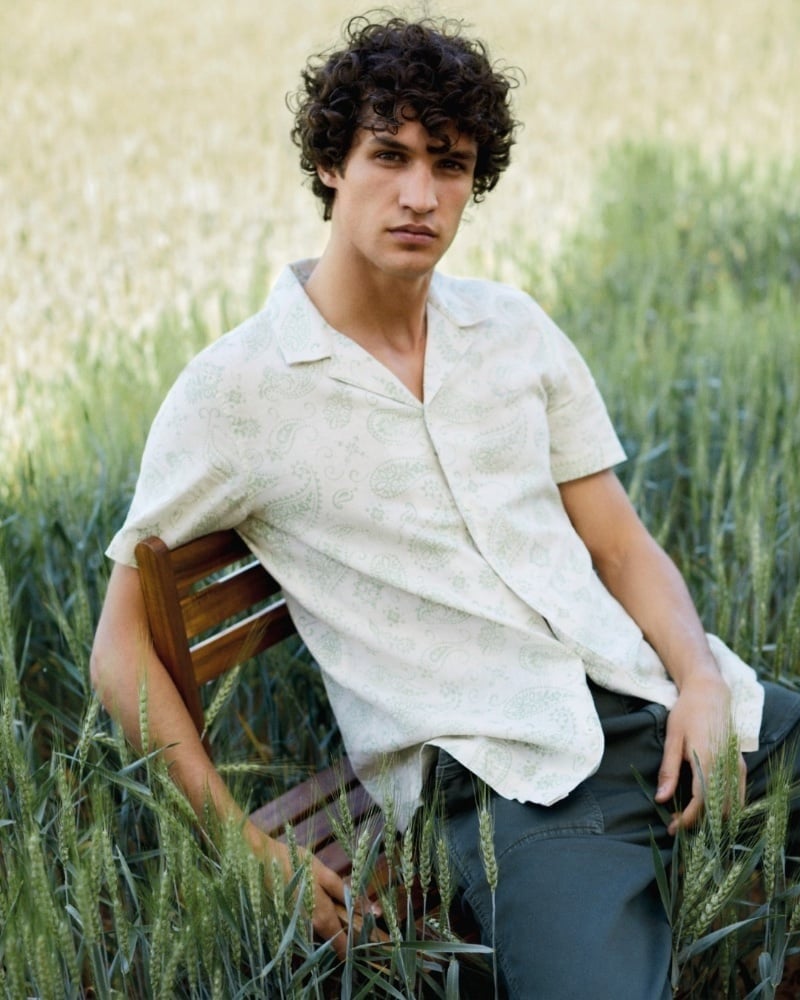
The Cuban collar offered another way to relax the shirt. Its open neckline and flat, spreading collar gave a short-sleeve button-down an immediate sense of leisure. The shape was established well before the 2020s; its usefulness during the decade came from how readily it worked across different summer wardrobes.
Mango’s 2022 edit showed the appeal of a plain black version, letting the neckline supply the detail. Pepe Jeans took a more decorative approach for pre-fall 2023 with pale paisley. Both retained the ease of a tee while giving the wearer a collar and a more defined shape. The same basic shirt could accommodate a quiet dinner or a printed holiday outfit.
Crochet & Open-Knit Shirts
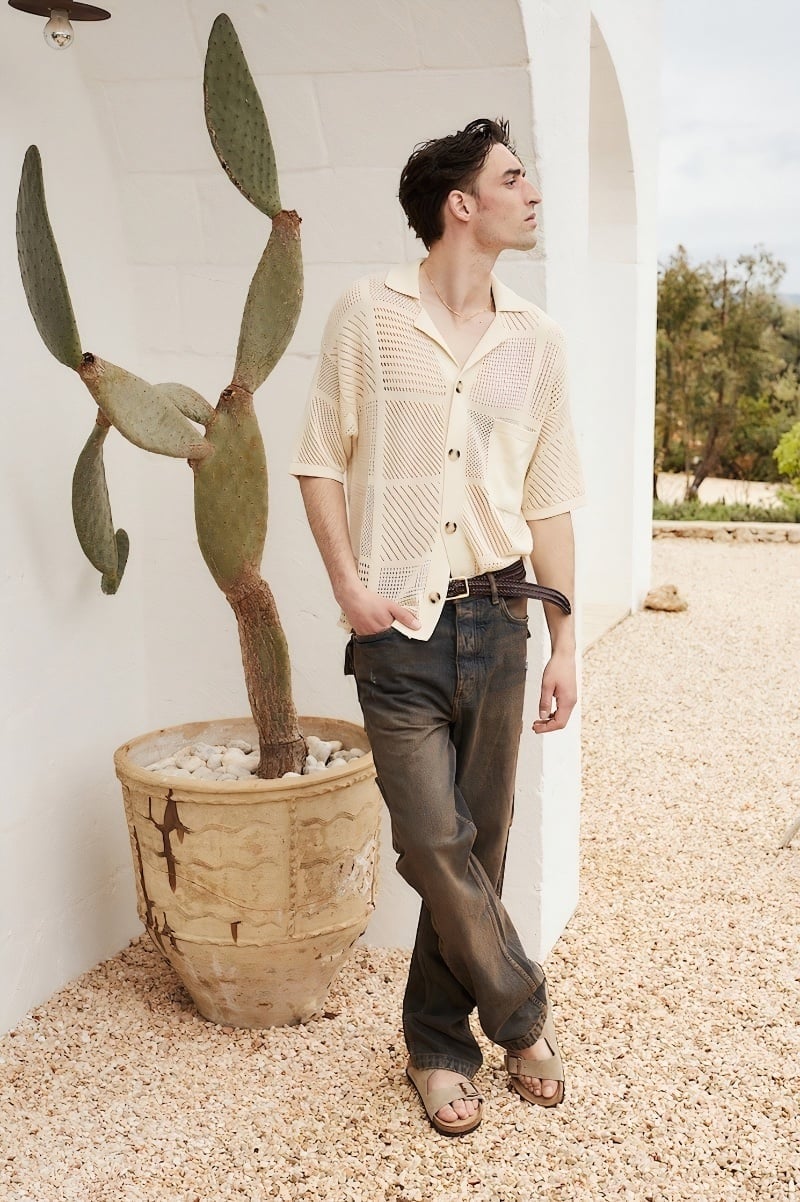
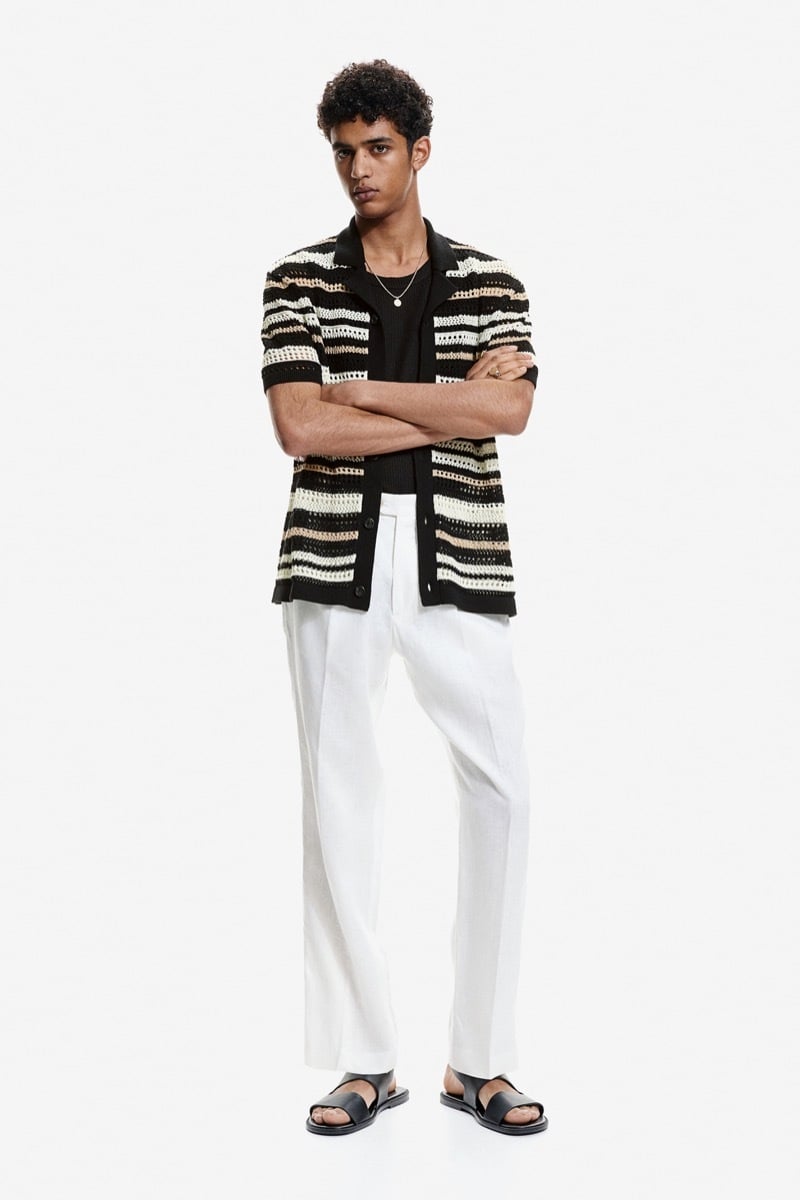
Crochet shirts gave summer dressing an alternative to the flat surface of a cotton tee or button-down. Pattern could come from the construction itself, with openings that revealed a tank underneath or glimpses of skin. The shirt remained easy to wear with trousers, even as its texture changed the outfit.
LuisaViaRoma’s summer 2023 styling showed a pale crochet shirt with worn-looking jeans. H&M’s 2024 resort range brought crochet-look construction into a high-street wardrobe, layering a striped shirt over a black tank and wide white trousers. Actual crochet and knits made to resemble it are different techniques, but both contributed to the visible appetite for patterned, open surfaces. This was decoration available in an ordinary shirt, not something that required a red-carpet invitation.
Sheer Shirts
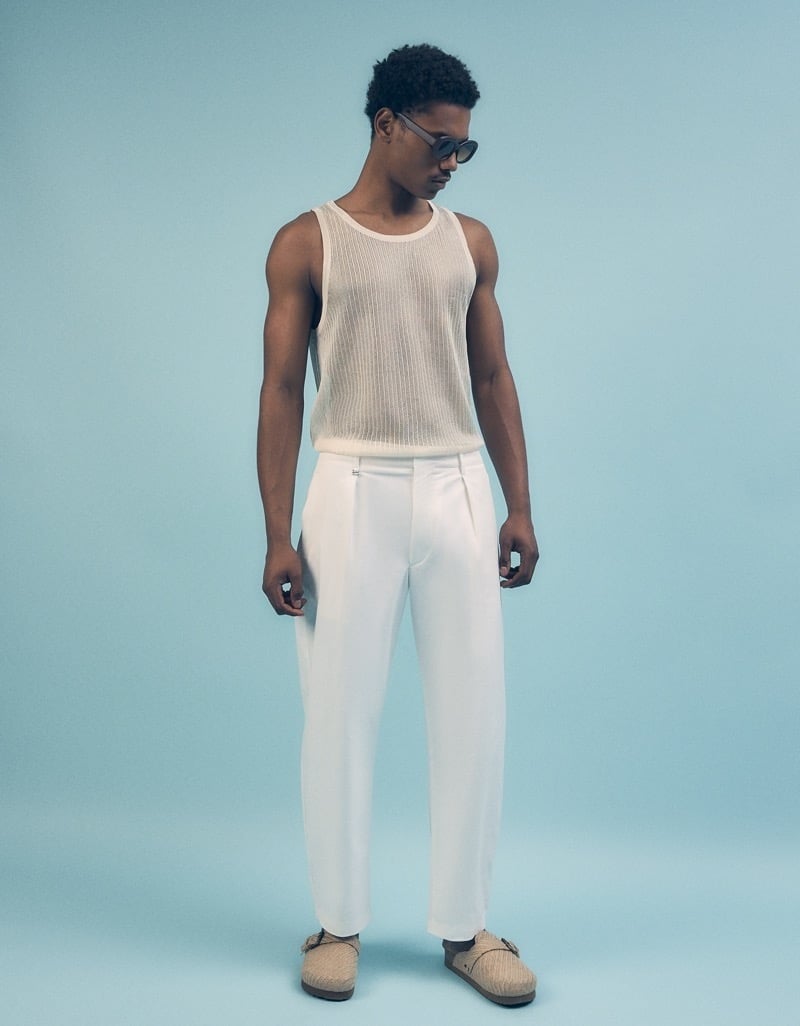
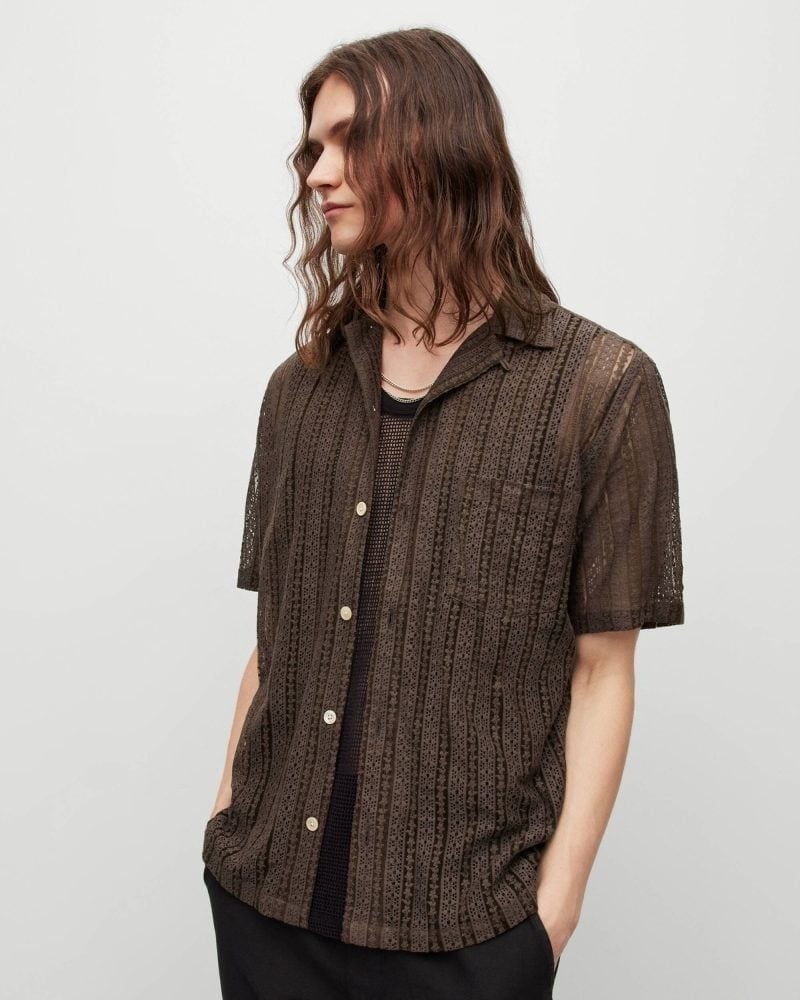
Transparency made the relationship between clothes and body more deliberate. A sheer shirt could reveal an undershirt, suggest the torso beneath it, or expose skin directly. How much showed depended on both the fabric and the styling.
AllSaints‘ Cala shirt in 2023 retained the recognizable shape of a short-sleeve collared shirt while allowing a black layer to show through. Bershka’s summer 2024 styling offered a pale, translucent tank with tailored white trousers. Those retail interpretations made sheer clothing part of an accessible summer vocabulary. The interest lay in adjusting exposure through a garment men already knew how to wear.
Pearls in Everyday Styling


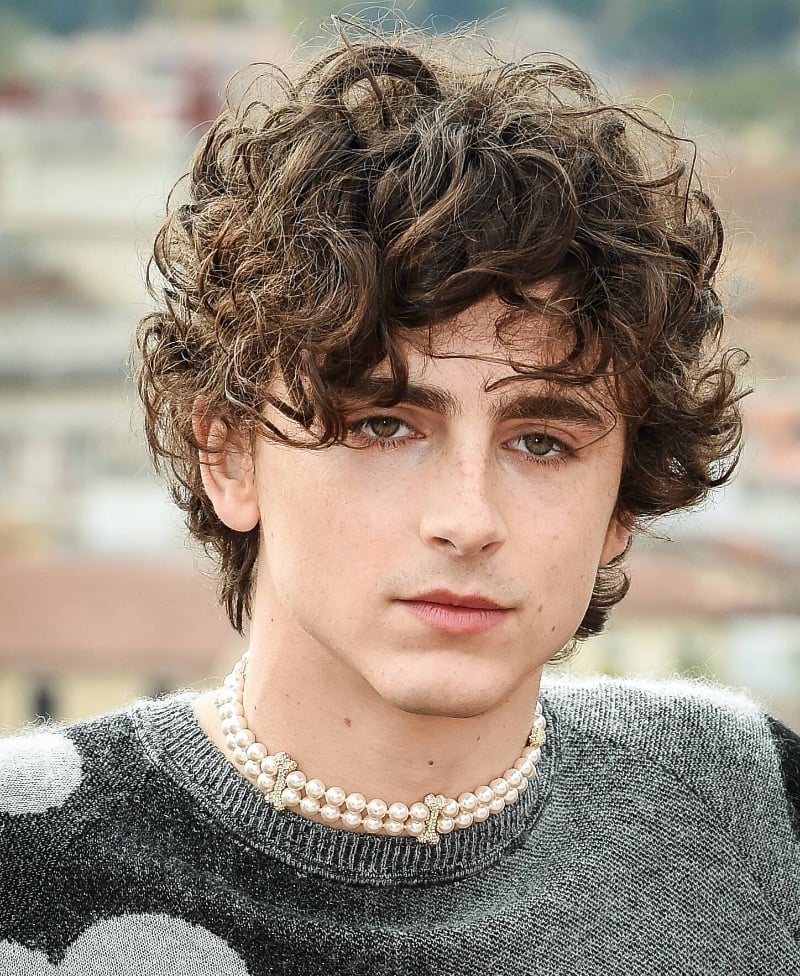
Pearls brought ornament to a smaller scale. A short necklace against a T-shirt or a bracelet beneath a rolled sleeve could alter an otherwise straightforward outfit. Their associations with feminine jewelry supplied some of the tension, but the act of wearing them could be quite casual.
The contrast between a Dower & Hall pearl bracelet styled with a striped shirt and the necklaces seen on entertainment figures illustrates that range. Pearls could accompany an expressive public image or become a small personal detail in a daily wardrobe. Men had worn them long before the 2020s. Their relevance here is the variety of contemporary settings in which they became a plausible choice.
Co-ord Sets
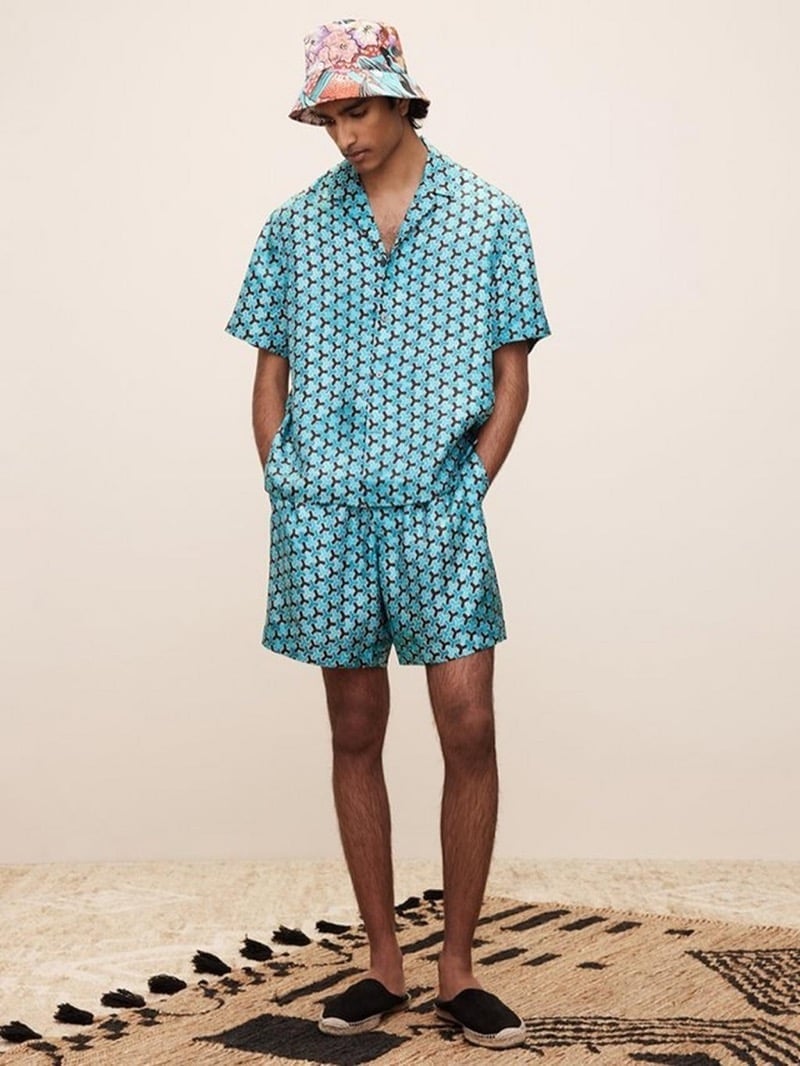
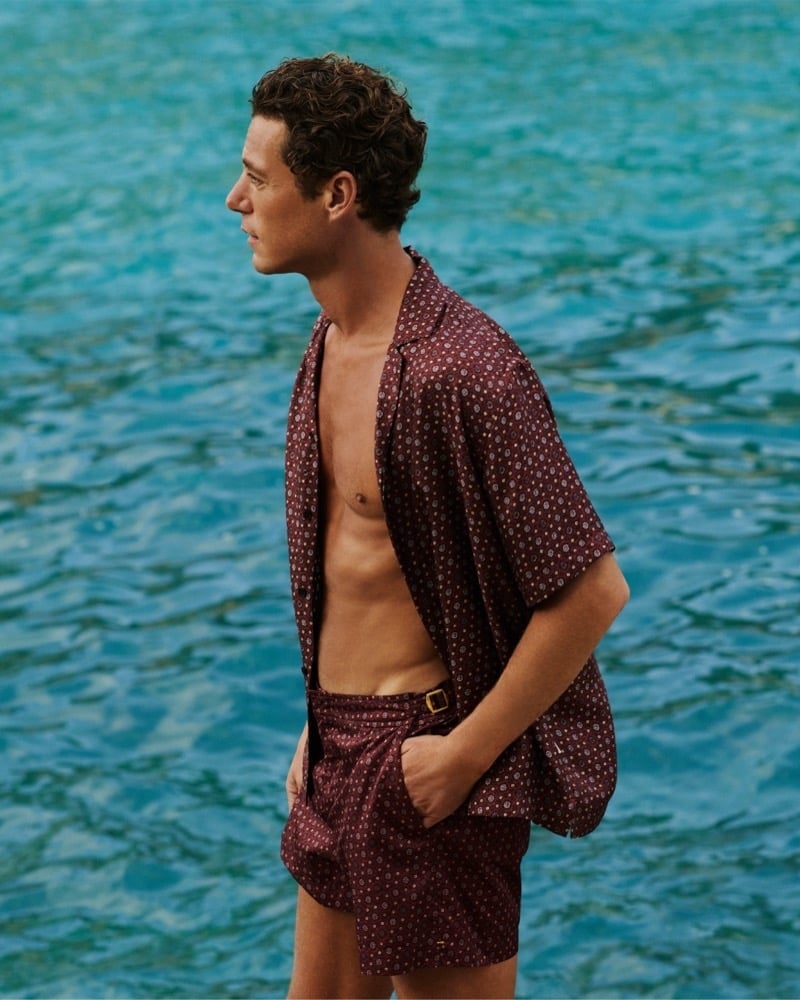
Matching shirt-and-short sets offered an answer to a basic summer question. What goes with the shirt? The shorts made from the same fabric. A repeated print could turn a simple combination into a complete outfit, leaving the wearer little coordination to resolve.
Banana Republic’s 2025 collaboration with The White Lotus used geometric printed separates to make that holiday identity explicit. Orlebar Brown’s spring 2026 offering showed the same principle through a patterned shirt and swim shorts. These sets had a different purpose from lockdown sweats, but shared their ready-made coherence. Matching clothes could signal an afternoon away from responsibilities as readily as a day spent at home.
The '90s & Y2K Revisited
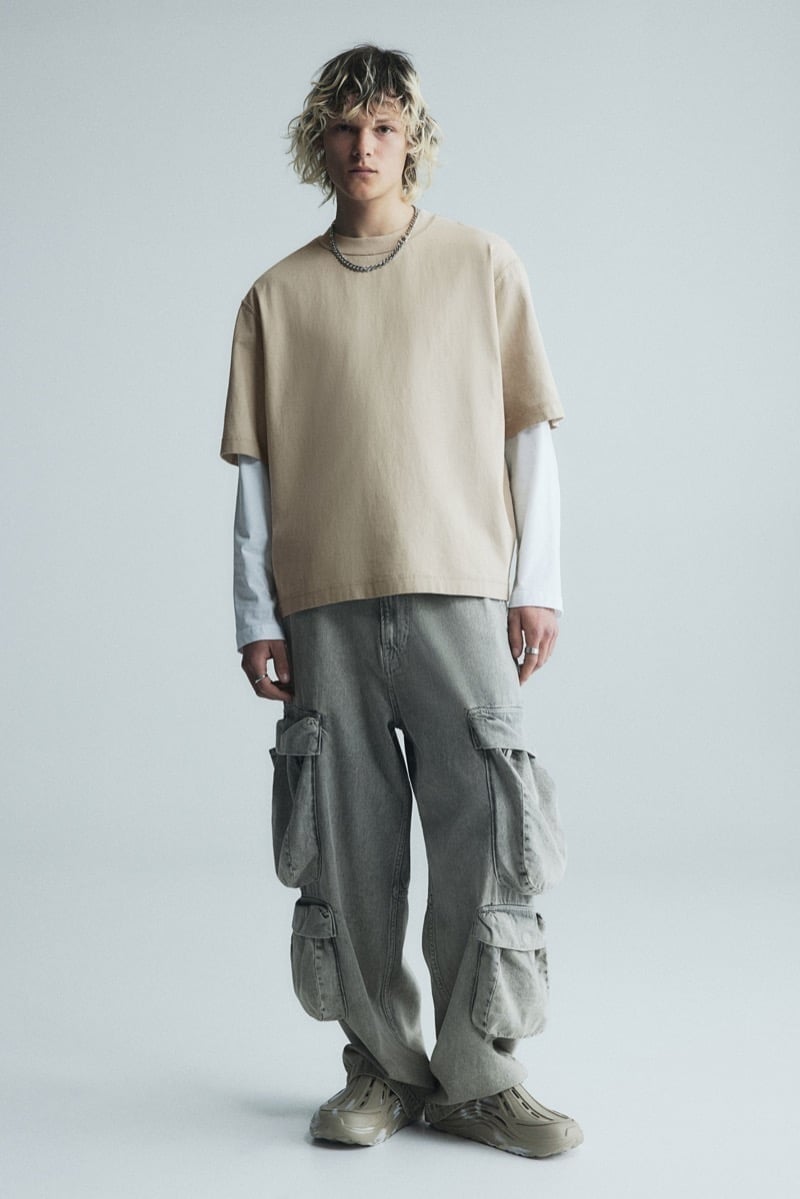
Nostalgia supplied references across the decade, though it rarely produced a faithful reconstruction. H&M’s 2024 skater styling combined a boxy T-shirt with a longer sleeve underneath and voluminous cargo jeans, recalling the overlap between late-’90s skate clothes and early-2000s casual dressing.
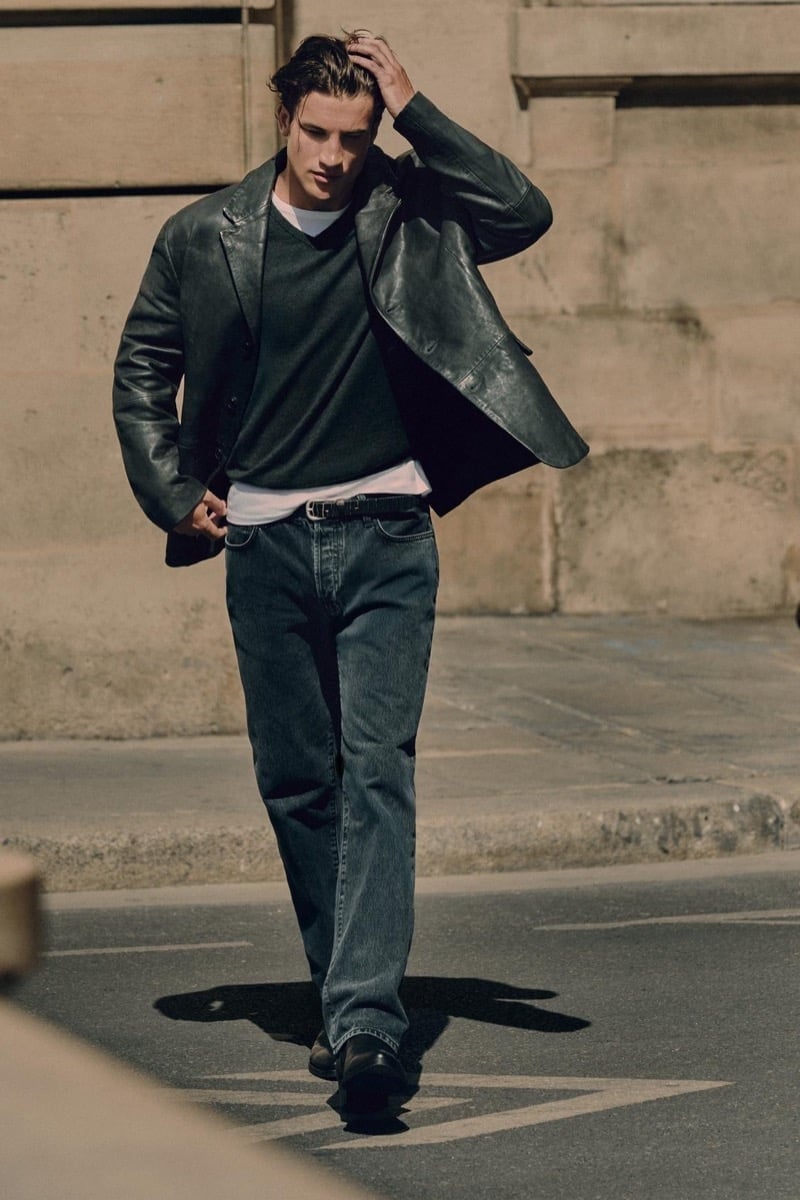
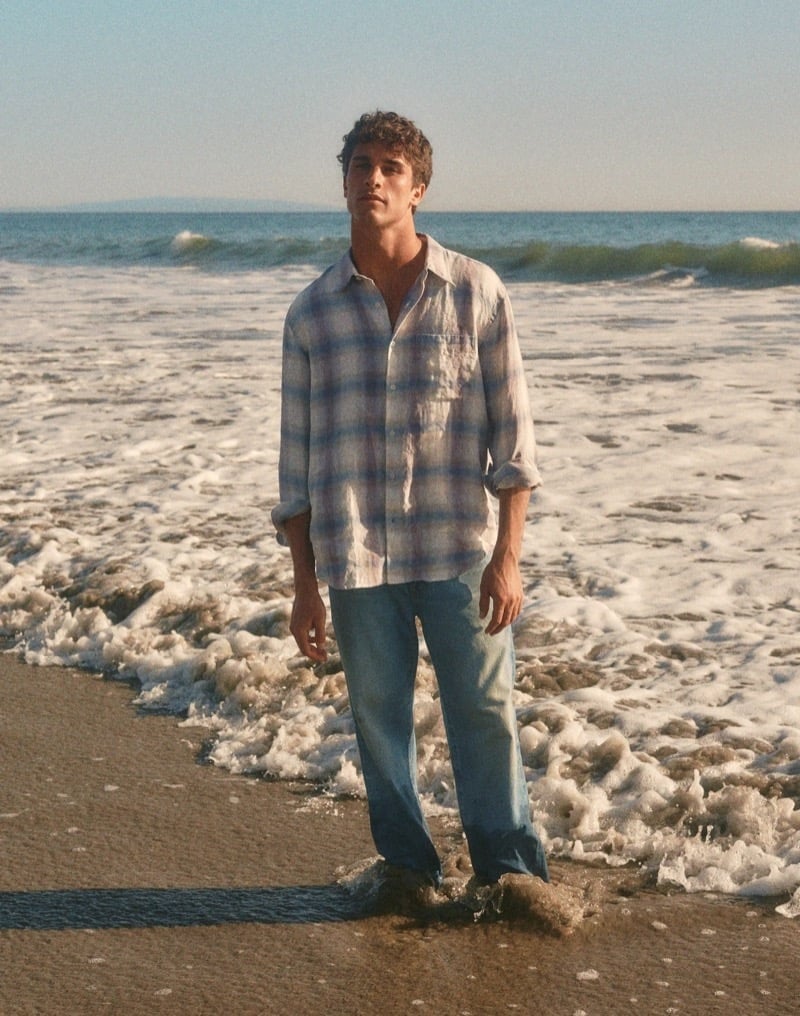
Other versions of the ’90s had little to do with skate parks. Zara’s 2026 90’s Archive revisited the leather blazer, worn over a V-neck sweater and straight jeans. Madewell’s summer 2026 imagery suggested a coastal interpretation through faded denim and loose plaid shirting. Together, they show why the eras should not collapse into one catchall label. A roomy pair of jeans could participate in several histories. The accompanying clothes helped determine which one came into view.
Chunky Sneakers
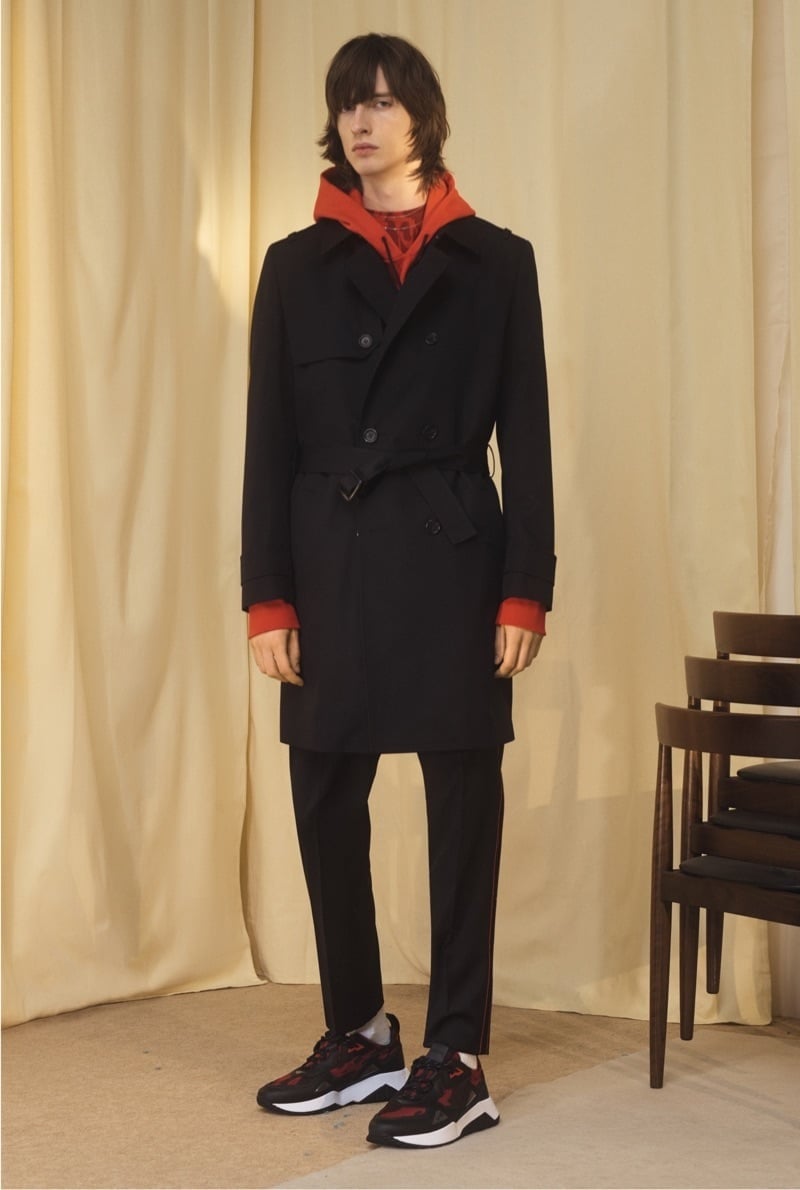
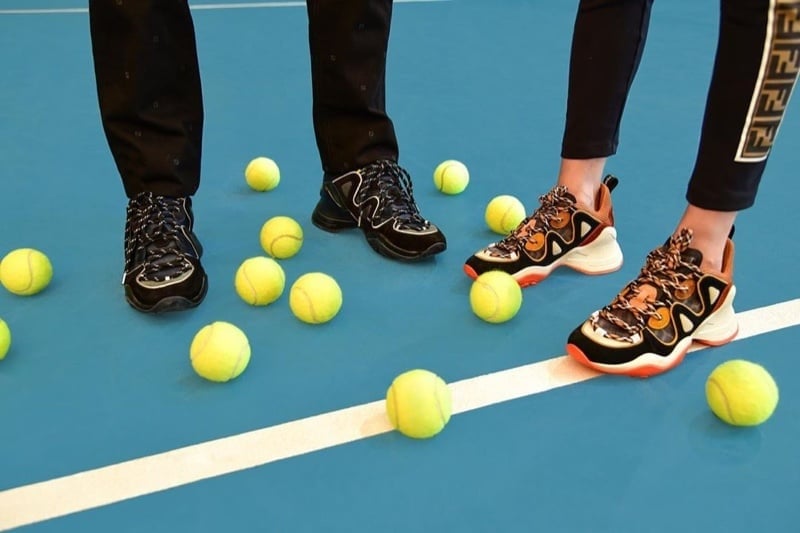
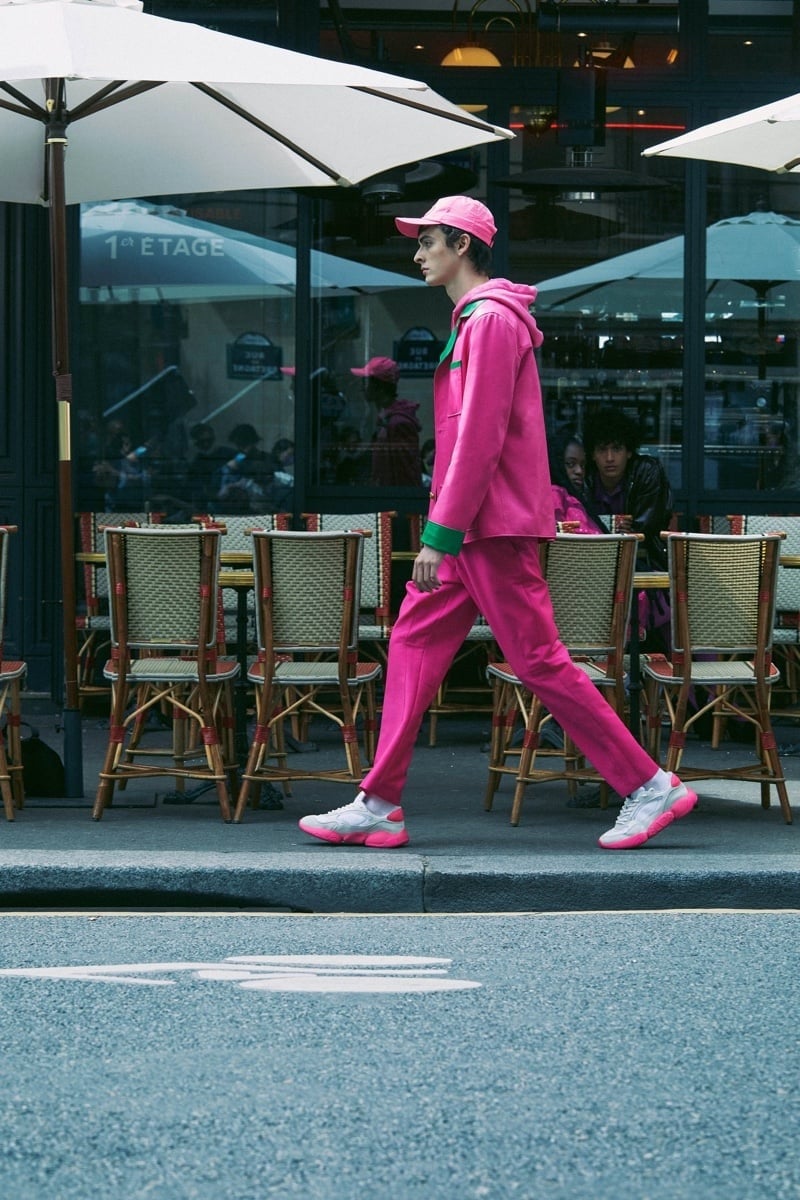
Chunky sneakers entered the decade with momentum already behind them. HUGO’s cruise 2020 lookbook, released in 2019, showed thick-soled sneakers beneath a trench and hoodie. Valentino’s resort 2022 collection continued the combination of tailoring and sportswear, adding sculpted sneaker soles to a vivid pink outfit. The footwear enlarged the base of the silhouette, making the shoe difficult to treat as an afterthought.
Designer Slides
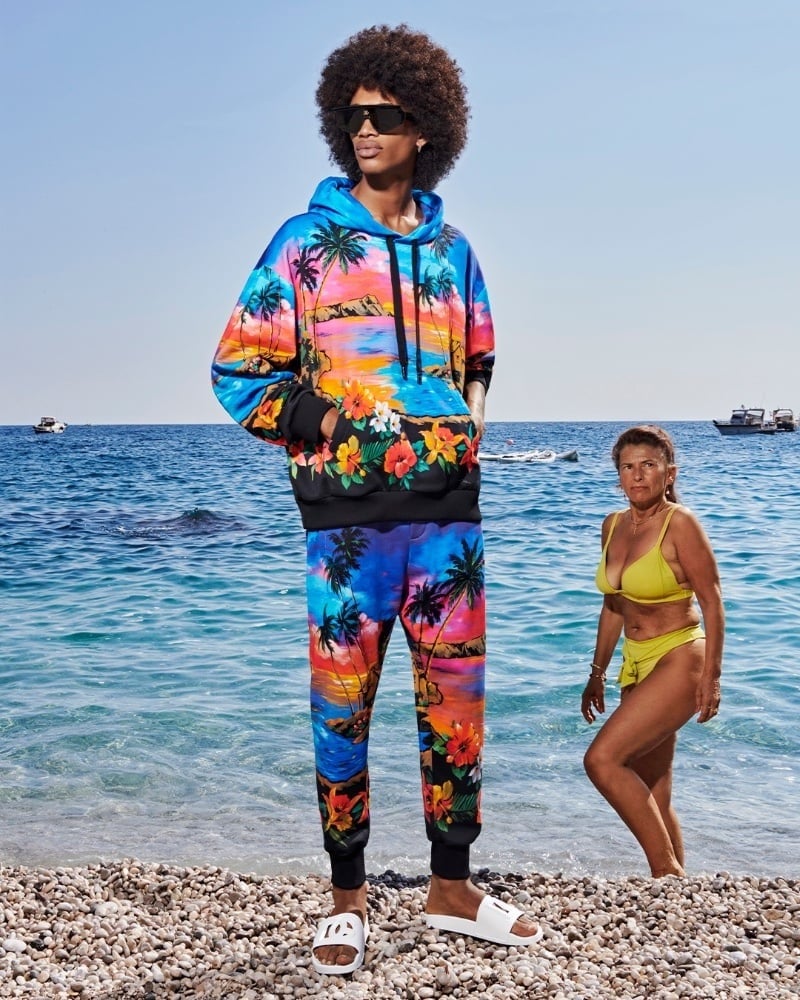
Designer slides occupied the more relaxed end of the same wardrobe. Dolce & Gabbana styled white slides with a tropical-print sweat set for spring-summer 2023, taking an easy slip-on shape into a coordinated designer look. Sneakers and slides served different purposes, but both demonstrate how casual footwear could determine the character of the clothes above it.
A Decade Still Taking Shape
The eventual shorthand for 2020s menswear may look different by the decade’s end. For now, some of its clearest changes can be seen in the distance between a trouser leg and the body, the texture of a summer shirt, and the shoes worn beneath a suit. They register in the experience of getting dressed as much as in a photograph.