A dark suit gets surprisingly little practice in many men’s wardrobes. It comes out for weddings and the occasional evening invitation, then returns to its garment bag until the next event requires a tie. Formal dressing feels easier when that suit becomes an outfit you know how to wear.
Formal attire for men usually means a dark suit and tie or a tuxedo, depending on the invitation. The distinction matters: “formal” often allows either, while explicit black tie calls for a tuxedo. From there, the choices become more personal, from the shape of a collar to how much color appears above the jacket button.
Formal Attire for Men

The appeal of formal clothing is partly that it settles several decisions at once. Matching trousers and a jacket establish the silhouette; a white shirt gives the face a clear frame. A tie introduces the first real choice of mood.
For an invitation marked formal or black tie optional, a dark suit with a silk tie and leather dress shoes is a dependable starting point. A tuxedo is also appropriate for black tie optional, especially in the evening. Emily Post’s wedding-attire guidance allows a dark suit or tuxedo for formal weddings, with a tuxedo required when the invitation specifies black tie.
White tie is a separate proposition, with an evening tailcoat and white bow tie among its requirements. If the wording is vague, a quick question to the host is more useful than trying to decode the venue’s chandeliers.
The Suit

A suit is the workhorse of formal attire, and its strength is the uninterrupted line of matching cloth. A two-piece suit can feel entirely complete. A waistcoat adds another layer of tailoring, particularly useful when the jacket comes off later in the evening.
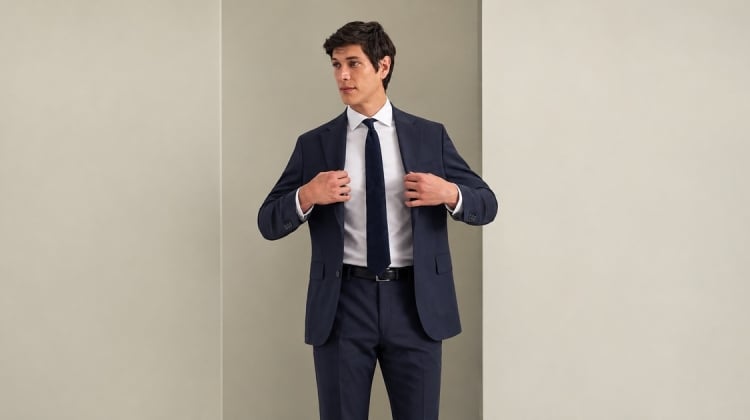
Deep navy and charcoal are practical choices for a suit that has to attend more than one type of event. A white shirt and dark silk tie give either an evening character, even if the same suit spends its weekdays at the office. Smooth cloth and a subtle pattern make that transition easier.
The Tuxedo

A tuxedo announces an evening set apart from the usual calendar. Silk-faced lapels catch the light differently from the body of the jacket, while the matching trouser stripe continues that detail down the leg. Traditional tuxedo trousers use side adjusters or braces, leaving a clean waist.
For galas or black-tie weddings, black or midnight blue offers a dependable foundation. Add a white evening shirt and black bow tie, then black patent shoes or carefully shined black calfskin Oxfords. Those details work together; substituting a black business suit changes the outfit’s level of formality.
The Blazer

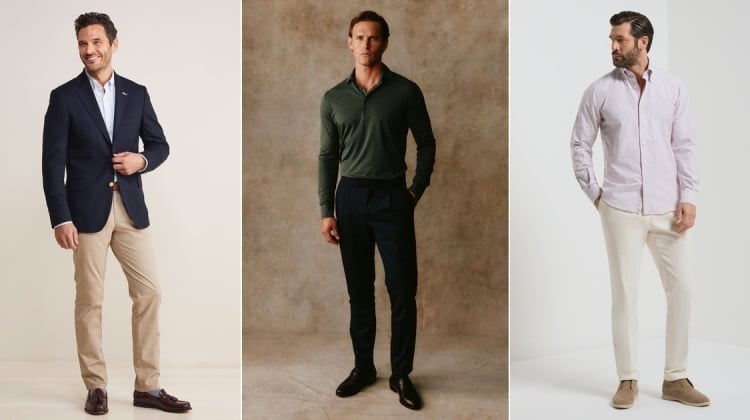
The navy blazer has its own social life, from club lunches to casual Fridays at the office. With contrasting trousers, it brings some of tailoring’s structure to an outfit that feels less ceremonial.
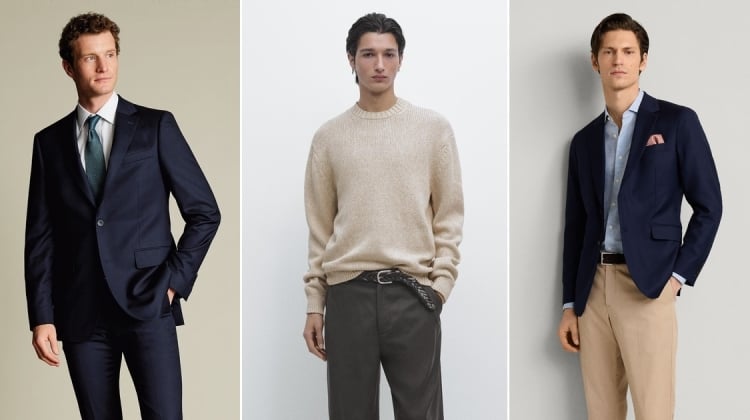
That makes it a useful point of comparison. A blazer works when the invitation welcomes separates, while a matching dark suit provides the unity generally expected at a formal evening event. Both have lapels; the complete outfit tells you where each belongs.
The Sport Coat

The sports coat is the most relaxed of these conventional tailored options. Its texture is part of the attraction: herringbone and other patterned cloths give the jacket enough interest to hold an outfit together over simple trousers.
It belongs naturally to daytime gatherings and celebrations with a relaxed dress code. For formal evening invitations, the continuous cloth of a suit creates a more appropriate finish. Keep the sport coat for occasions that let its ease be an advantage.
The Dinner Jacket

Velvet gives evening clothes a different type of richness, absorbing light in one direction and catching it in another. A colored dinner jacket can make a traditional outfit feel more individual, particularly when the shirt and trousers remain restrained.
The terminology can cause confusion. “Dinner jacket” may mean the tuxedo jacket itself, or a contrasting evening jacket worn with formal trousers. Its suitability depends on the style and the invitation. Colored velvet is easiest to place at creative evening events; black or midnight blue is more dependable for conservative black tie. For cocktail parties or intimate dinners, velvet can also work with tailored separates when the dress code allows.
Fashion Jackets & Cropped Tailoring

A cropped jacket changes the relationship between the torso and the trousers. Worn with a higher waistband, it can give tailoring a youthful, fashion-led silhouette. Hybrid cuts offer similar opportunities to experiment with different types of jackets.
These choices suit celebrations where personal expression is part of the brief. For a traditional formal invitation, conventional jacket length and matching trousers make the outfit easier to place. Experimentation works best when everyone agrees on the occasion.
Choosing the Right Fit & Fabric

A suit should let you forget about its fit once you leave the mirror. The shoulders should sit smoothly, the lapels should lie flat, and the jacket should close comfortably. Trousers need enough ease through the thigh to hang cleanly when standing and feel comfortable when seated.
Try the outfit sitting down, too. Formal occasions tend to involve a meal, and a jacket that looks excellent for thirty seconds may feel quite different by the main course. A fitted dress shirt should follow the body while allowing movement, with a collar that stays comfortable when fastened.
Fabric helps determine how the suit behaves. Fall calls for medium-weight materials in many climates, though an indoor reception may favor lighter wool. Flannel gives tailoring a soft surface and seasonal warmth. Smooth worsted wool offers a more conventional formal finish.

For summer heat, lightweight wool can maintain the suit’s shape while keeping the outfit comfortable. Linen blends bring more visible texture and a willingness to crease, qualities that feel natural at relaxed daytime celebrations.
The sand suit shows that lighter mood. At a formal evening event, a dark lightweight suit is usually the more dependable choice. Choose the fabric for the temperature and the color for the invitation.
Black Suits

Black gives tailoring a certain severity, especially against a white shirt. That can be an asset at formal evening occasions, where a dark silk tie keeps the effect controlled. The same restraint also suits solemn occasions like funerals.
A black suit is appropriate when the dress code permits suits. For black tie, the tuxedo’s silk details and evening accessories establish the required formality.
Navy Suits

Navy is an accommodating first choice for occasion dressing. A deep shade looks assured with a white shirt and black shoes, while a change of tie can move it from a daytime wedding to an evening reception.
Texture gives that color a different personality. The pictured flannel feels softer and more seasonal; smooth navy wool has a more conventional evening character. If one suit must cover most of the calendar, the latter is easier to adapt.
Gray Suits

Gray suits reward attention to shade. Charcoal has the depth needed for formal evening dressing, while lighter gray takes more naturally to daylight and warmer weather.
A white shirt keeps either version clear and direct. With charcoal, a dark tie creates a restrained evening outfit; lighter gray gives softer colors more opportunity. Choose the suit for the occasion first, then let the accessories follow its lead.
Spread-Collar Shirts

A spread collar opens up the space around the tie, making it a useful partner for a fuller knot. The proportions should still feel comfortable: thick silk can fill a collar quickly, while a lighter tie may suit a smaller knot.
For a formal suit, white is the simplest shirt choice. It gives a patterned tie definition and lets the jacket’s color do its work. Where the cut allows, the collar points should sit beneath the lapels.
Point-Collar Shirts

The point collar directs the eye down toward the tie and often works well with a compact four-in-hand knot. Its appeal is straightforward: a clear vertical line that complements a tailored jacket.
Both point and spread collars can accompany formal suits. With a tuxedo, choose the shirt as part of the evening outfit; a turndown collar is a conventional black-tie option. White tie requires its own specific shirt and collar arrangement.
Formal Wedding Attire for Men

Wedding dressing is an exercise in joining the celebration. The couple establishes the level of formality; your choices give the outfit its character. Formal or black tie optional commonly permits a dark suit and tie, while black tie calls for a tuxedo.
A brighter blue suit can feel right at a daytime celebration when the instructions welcome color. Season and setting then help refine the cloth. Lighter tailoring may be acceptable for a beach wedding, but the beach itself grants no exemption from a stated black-tie dress code. The invitation has the final word.
Groomsmen & Daytime Wedding Suits

Groomsmen have the advantage of a defined brief. Follow the couple’s requested outfit and confirm the details early, especially when rentals and purchased pieces are involved. A trouser hem or shoe choice becomes much easier to resolve several weeks before the photographs.
For guests, tan tailoring suggests a daytime approach that works when the hosts welcome lighter suits. “Garden formal” deserves a little clarification, since couples use the phrase differently. Confirm the expected level of tailoring, then choose shoes suited to the paths or lawn.
Wedding Themes & Color

A burgundy suit has enough personality to shape the whole outfit. At a creative celebration, a simple shirt and restrained accessories let that color become the focus. Traditional formal receptions usually favor darker, more conventional tailoring.
Treat a wedding theme as a cue once the dress code is settled. Guests can acknowledge the season through a tie or pocket square, keeping an individual look while fitting the occasion. Matching the wedding party’s colors is something to do when asked.
Choosing Formal Shoes

The shoes determine how convincingly the outfit reaches the floor. Selecting the proper footwear means considering the occasion alongside the suit: black leather Oxfords work reliably with dark formal tailoring, while dark brown can soften navy or gray when the dress code allows.
For black tie, choose black patent shoes or well-shined black calfskin Oxfords. Dark dress socks should cover the leg when seated. Try new shoes well before the event; they should be ready for the evening by the time you are.
Ties

A tie is where a conventional dark suit starts to reveal its wearer. Small patterns and deep colors feel at home at formal events, while a larger print introduces a more sociable mood. Silk supplies enough sheen to register against wool.
Keep its width in conversation with the lapels and let the tip reach the waistband. A knot that suits the collar will look more assured than an elaborate one chosen for its own sake. For conventional black tie, the black bow tie belongs to the tuxedo’s established arrangement.
Pocket Squares


A white linen pocket square gives a dark suit a clean finishing detail. Silk has a softer drape and more sheen, lending itself to folds that feel a little less exact.
Let the square relate to the tie through color or tone. Variation gives the outfit more character than an exact match, especially when the tie already has a pattern. That small piece of cloth should feel like a choice you made.
Cufflinks


Cufflinks make a small gesture feel personal. Simple metal styles are easy to wear repeatedly, while stone can pick up a color from the tie or introduce a detail that matters only to the wearer.
They require compatible cuffs, most commonly French cuffs. A button-cuff shirt can also accompany a formal suit, so choose the shirt you enjoy wearing and let its construction determine the fastenings.
Watches

With a formal suit, the wristwatch should fit comfortably into the outfit, physically as well as visually. A slim case slips beneath the cuff and keeps the line of the sleeve intact.
The pictured chronograph takes a sportier approach. For traditional evening dress, a discreet dress watch or an uncovered wrist keeps the effect restrained. At a suited event, there is more latitude for personal preference.
Coordinating Accessories

Accessories work most easily when one element leads. A checked suit already supplies plenty of detail, making a quieter tie a useful companion. Plain dark tailoring gives neckwear more freedom to introduce a pattern.
Related metal finishes can add continuity, though exact matching is a preference. The more useful question is whether the pieces belong to the same occasion. A restrained watch and simple cufflinks support traditional evening dressing; more playful choices suit a celebration that welcomes them.
Putting the Outfit Together

Wear the entire outfit before the day, including the actual shirt and shoes. Fasten the collar and tie, then sit down in it. That is when an awkward waistband or a sleeve that catches on the watch becomes apparent, while there is still time to fix it.
A suit you know how to wear feels different from one brought out under duress. The right fit lets you move naturally, and a few personal details keep the clothes recognizably yours. Once the invitation is answered, you can get on with the evening.