What Are Dress Shoes?
Dress shoes are footwear designed primarily for suits, tailoring, business attire, and other occasions where a more formal shoe is appropriate. They are typically made from leather or suede and distinguished from casual footwear by finer shapes, less bulky construction, and traditional details such as leather soles, closed or open lacing, and restrained decoration.
The different types of dress shoes vary considerably in formality. Oxfords and Derbies differ primarily in their lacing systems, while loafers, monk straps, and dress boots approach the category in different ways. Toe shapes, broguing, leather, soles, and construction further distinguish men’s dress shoes, creating options suited to everything from business suits and black tie to more casual tailoring.
Types of Dress Shoes for Men
Men’s dress shoes come in several distinct styles, with differences in lacing, construction, shape, and detailing determining how each pair looks and where it is typically worn.
Oxford Shoes

The Oxford shoe is distinguished by its closed lacing system, with the eyelet tabs sewn beneath the vamp for a clean, close-fitting appearance. Leather Oxfords are among the most versatile shoes, with black and dark brown pairs commonly worn with business suits and formal tailoring. Patent leather Oxfords occupy the dressier end of the spectrum and are traditionally paired with eveningwear.
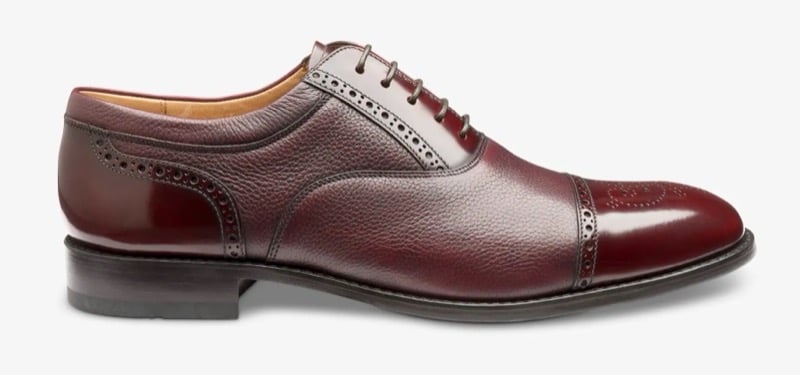
The style can also vary considerably through its detailing. Plain-toe and cap-toe Oxfords tend to appear more formal, while broguing introduces a decorative element that works particularly well with less formal tailoring. This range allows the Oxford to move from a business meeting to formal occasions depending on its leather, color, and finish.
Wholecut Oxford

A wholecut Oxford, sometimes called a one-piece Oxford, is made with an upper cut from a single piece of leather. With few visible seams beyond the heel and the Oxford’s characteristic closed lacing, the construction creates an especially clean appearance.
Producing a wholecut requires a large piece of leather and careful shaping to form the upper with minimal seams. The resulting shoe sits at the dressier end of the Oxford family, particularly in black or dark brown leather, and pairs naturally with formal suits and evening attire.
Derby (Blucher) Shoes

Derby shoes are defined by open lacing, with the quarters and eyelets positioned over the vamp rather than closed beneath it as on an Oxford. This construction generally provides more room across the instep and gives the Derby a slightly less formal appearance. A slim black leather pair can accompany business tailoring, while brown suede, broguing, or a heavier sole works naturally with separates, chinos, and denim.

Blucher dress shoes are so closely related to Derbies that the names are frequently used interchangeably, particularly in modern retail. Traditionally, the distinction lies in how the open lacing is constructed. A Blucher uses smaller eyelet pieces sewn onto the vamp, while a Derby has larger quarters extending around the sides and heel.
In practical terms, both styles occupy similar territory among the types of men’s dress shoes. Sleeker leather versions work with suits and semi-formal attire, while substantial soles and textured leathers move easily into casual tailoring.
Brogues & Wingtips

Brogue shoes are identified by their decorative perforations, which can appear on Oxfords, Derbies, and other dress shoe styles. Broguing ranges from restrained quarter and semi-brogues to heavily decorated full brogues. The detail developed from footwear worn in Scotland and Ireland, where perforations were associated with shoes made for wet rural conditions, before entering fashionable men’s footwear.

Wingtips are closely related to brogues, but the terms describe different features. Wingtip refers to the W-shaped toe cap extending toward the sides of the shoe, while brogue refers to the decorative perforations. Most traditional wingtips are full brogues, which explains why the names are frequently treated as interchangeable.
Both details can appear on Oxford and Derby constructions. Sleeker leather versions work with business tailoring, while heavier broguing, suede, and substantial soles suit tweed, flannel, chinos, and denim.
Monk Strap Shoes

Monk straps replace laces with one or two buckled straps across the instep, giving them a distinctive place among traditional men’s dress shoes. Single monk straps tend to have a cleaner appearance, while double monk strap shoes introduce additional hardware and became particularly prominent in menswear during the early 2010s.
Their level of formality depends on the leather, shape, and detailing. A dark leather monk strap works easily with tailoring, while suede, lighter colors, and heavier soles lend themselves to more casual combinations with trousers, chinos, and denim.
Loafers

Loafers are slip-on shoes that span a broad range of men’s dress. Their character depends heavily on the design across the vamp, with penny, tassel, kiltie, and horsebit loafers among the best-known variations. The horsebit loafer has been particularly associated with Gucci since the house introduced its version in 1953.
Their laceless construction also makes loafers natural warm-weather shoes, which helps explain the continuing question of wearing loafers with or without socks. Sockless styling works particularly well with casual trousers and summer tailoring, while socks allow leather loafers to move more easily into business and dressier outfits.
Penny Loafers
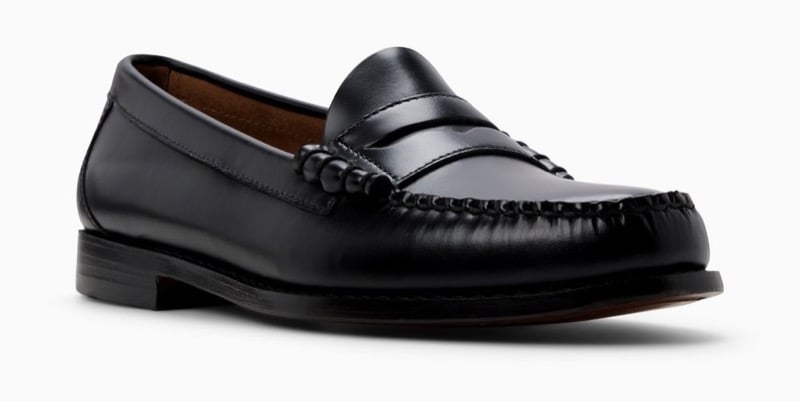
Penny loafers are identified by a leather strap across the vamp with a small cutout at its center. The style developed from Norwegian slip-on shoes and became closely associated with American Ivy League dress during the mid-20th century. Leather penny loafers work with tailoring, chinos, and denim, while suede versions move further into casual dress.
Tassel Loafers

Tassel loafers are distinguished by leather tassels positioned across the vamp. The style emerged in American menswear during the mid-20th century and became particularly associated with business and Ivy League wardrobes. Sleek leather versions can accompany suits and tailored trousers, while suede offers a more casual interpretation.
Kiltie Loafers
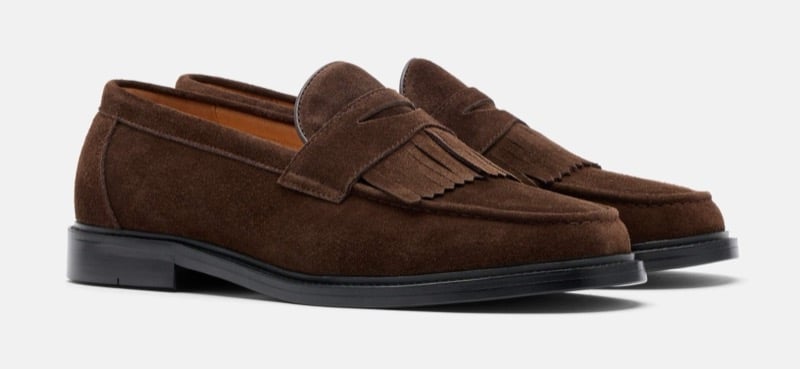
Kiltie loafers feature a fringed leather panel across the vamp, a detail derived from the kiltie tongue also found on some lace-up shoes and traditional golf footwear. The fringe creates a more decorative appearance than a penny loafer and is sometimes combined with tassels, producing a shoe with several layers of detailing.
Opera Pumps

The Opera Pump is a low-cut slip-on evening shoe traditionally made from patent leather and finished with a flat grosgrain or silk bow on the vamp. Also known as the court shoe, it developed from formal court footwear and remains one of the most specialized types of men’s dress shoes.
Opera pumps are traditionally worn with black tie and white tie, where their glossy finish complements the silk facings of evening clothes. Although patent leather Oxfords are now a more common choice with a tuxedo, the Opera Pump remains closely associated with the established conventions of formal evening dress.
Dress Boots

Dress boots extend above the ankle while retaining many of the conventions associated with dress shoes. Leather and suede uppers, slimmer lasts, and relatively refined soles distinguish them from work and hiking boots. The category includes lace-up boots as well as Chelsea and Chukka styles that can move between tailoring and casual dress.
Plain-toe, cap-toe, and brogued lace-up boots offer varying levels of formality, while sole construction also changes their character. Dark leather and slimmer soles work particularly well with suits and tailored trousers, while brown leather, suede, and heavier rubber soles suit more casual clothing.
Chelsea Boots

Chelsea boots are defined by elastic side panels and a laceless design. Their origins reach back to Victorian Britain, but the style became particularly associated with men’s fashion during the 1960s, when closely fitted versions were adopted by musicians and the Mod scene.
Today, Chelsea boots range from slim leather versions suited to tailoring to suede and heavier-soled designs worn with denim and casual trousers. Black leather offers the dressiest option, particularly with a narrow toe and thin sole, while brown leather and suede move the boot toward more relaxed dressing.
Chukka Boots

Chukka boots traditionally feature two or three pairs of eyelets and relatively simple uppers. Suede and calfskin are common choices, while thin leather soles create a dressier profile than the heavier rubber or crepe soles found on casual versions.
The simple design of Chukka boots works particularly well with tailored separates, chinos, and denim. Sleeker leather Chukkas can also accompany less formal suits, while suede versions have strong roots in mid-century casual menswear.
Dress Shoe Details & Construction
Understanding men’s dress shoe styles also means looking beyond the basic categories. Toe designs, broguing, lacing systems, leather, and construction methods distinguish the various types of dress shoes and can affect their formality, fit, and durability.
Toe Types
Toe design can change the formality and appearance of different dress shoe styles. Plain toes offer the simplest finish, while cap toes add a horizontal seam across the front of the shoe. Medallions introduce decorative perforations, while apron and moc toes use visible seams to define the forefoot.
Plain Toe

The plain toe has no seams, perforations, or other decoration across the front of the shoe, leaving the shape of the last and the leather itself as the main visual features. Common on Oxfords and Derbies, the design can appear particularly formal in polished black leather, while brown leather and suede versions work easily with less formal tailoring.
Cap Toe

The cap toe is defined by a horizontal seam across the front of the shoe, traditionally created by stitching an additional piece of leather over the toe. Common on Oxfords and Derbies, the design is particularly associated with business footwear. A black cap-toe Oxford remains one of the standard choices for conservative suits, while brown versions can move easily into less formal tailoring.
Medallion Toe
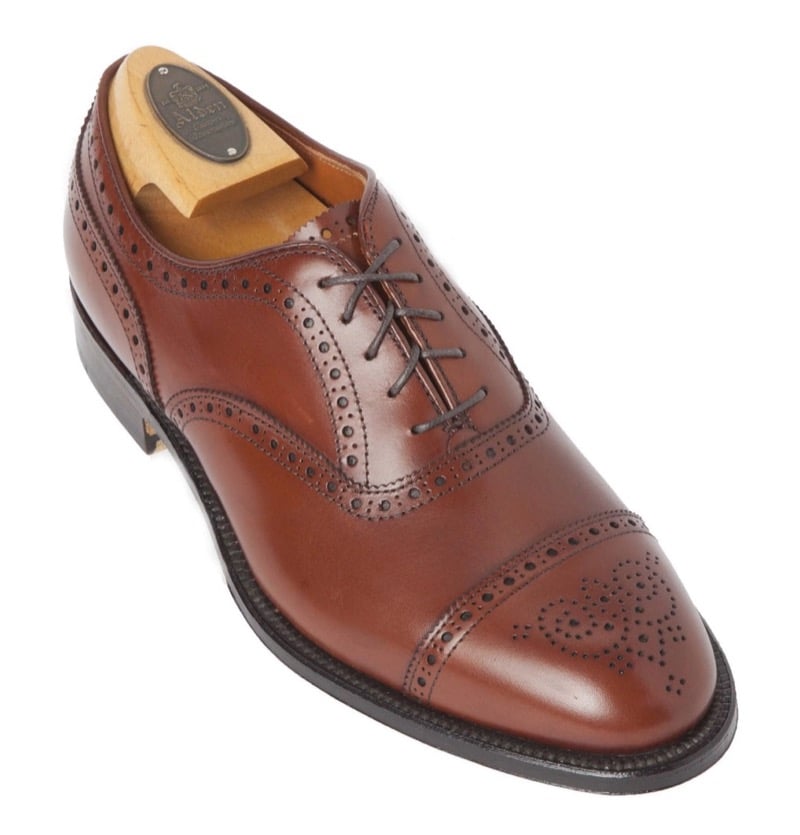
A medallion toe features a decorative pattern of small perforations punched into the leather at the center of the toe. Unlike broguing that follows seams and edges, the medallion forms a self-contained design and can appear on plain-toe, cap-toe, and other dress shoes. The pattern adds decoration while preserving the underlying shape of the toe.
Apron & Moc Toe
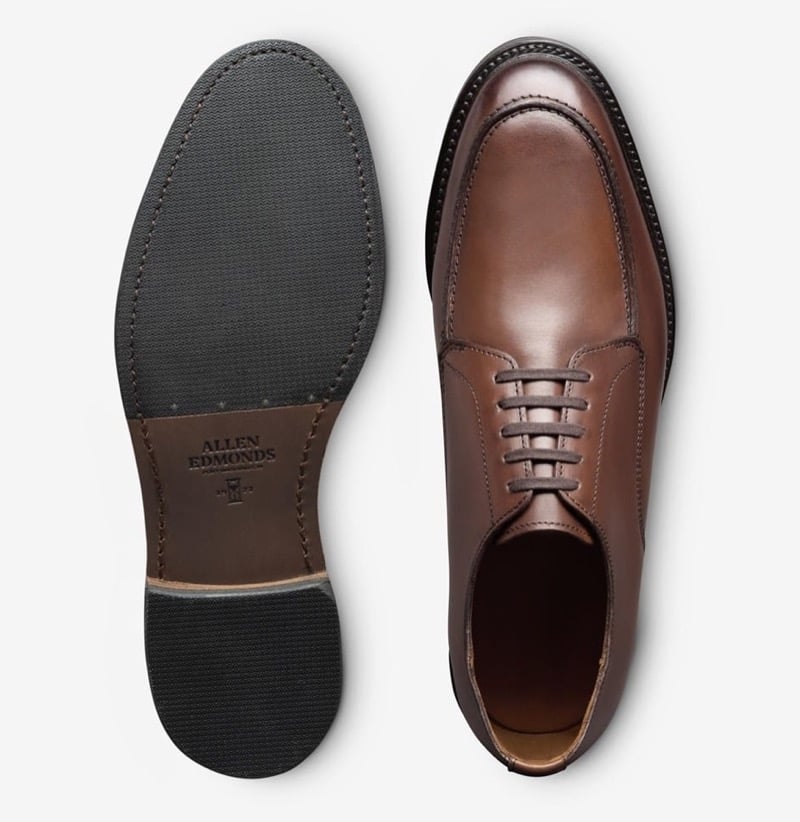
An apron toe is defined by a seam that follows the perimeter of the forefoot, creating a distinct panel across the top of the shoe. The detail is common on Derbies and loafers and can range from fine stitching to a more pronounced raised seam.
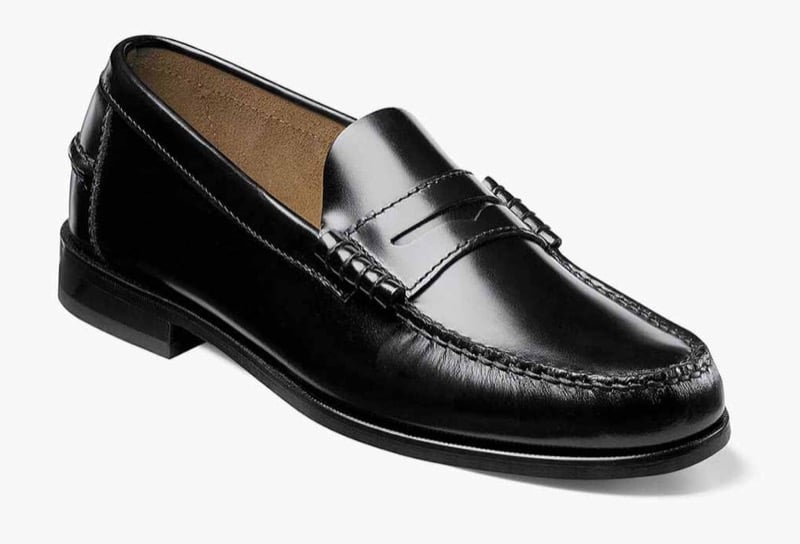
A moc toe uses similar stitching inspired by moccasin construction, although the term is now applied broadly to shoes with a visible seam around the toe and forefoot. On dress shoes, finer leather and less substantial stitching distinguish the look from the heavier moc toes commonly found on work boots.
Construction Techniques
Construction influences how a dress shoe looks, feels, and can be repaired over time. Goodyear welting is known for durability and easier resoling, while Blake stitching allows the sole to sit closer to the upper for a slimmer, more flexible shoe. Other construction methods offer different tradeoffs in weight, flexibility, water resistance, and longevity.
Goodyear Welt

The Goodyear welt construction uses a strip of leather or synthetic material called a welt to connect the upper to the insole and outsole. Developed as a mechanized version of traditional hand welting in the 19th century, the method creates a durable shoe that can be resoled repeatedly, potentially extending its useful life for years.
Blake Stitch

The Blake stitch passes through the outsole, upper, and insole, eliminating the external welt used in Goodyear construction. The technique allows the sole to sit closer to the upper, resulting in a slimmer and generally more flexible shoe. Blake construction has long been associated with Italian shoemaking and is commonly used across both formal and casual dress shoe styles.
Norwegian Welt

The Norwegian welt is a heavy-duty construction distinguished by visible stitching around the perimeter of the shoe. The upper is turned outward and stitched to the insole and welt before the outsole is attached, creating a substantial edge and greater resistance to water than many lighter construction methods. It is commonly found on boots, Derbies, and other footwear intended for wet weather or frequent outdoor wear.
Cemented
Cemented construction attaches the outsole directly to the upper with adhesive instead of stitching or a welt. The method allows for lighter, more flexible shoes and is widely used in mass-produced footwear because it is faster and less expensive than welted construction. Cemented dress shoes can have slim profiles, although they are generally more difficult to resole than Goodyear-welted or Blake-stitched shoes.
Sole Types
The sole affects a dress shoe’s appearance, comfort, traction, and durability. Leather soles remain closely associated with traditional formal footwear, while rubber soles provide greater grip and resistance to wet conditions.
Single & Double Leather Soles

Single leather soles have a slimmer profile and are commonly used on formal dress shoes, where their reduced bulk complements a finer last. Their smooth surface offers limited traction on wet or slippery ground.
Double leather soles use two layers of leather for additional thickness, durability, and insulation. They are often found on Derbies, brogues, and other less formal types of men’s dress shoes, where a more substantial sole suits the heavier proportions of the shoe.
Rubber & Studded Rubber (Dainite) Soles

Rubber soles provide greater traction and water resistance than traditional leather soles, making them practical for wet weather and frequent walking. They range from thin rubber soles that preserve the profile of a dress shoe to heavier lugged versions used on more casual Derbies, brogues, and boots.
Studded rubber soles, particularly those made by British manufacturer Dainite, offer another option for dress footwear. Their recessed circular studs provide grip while maintaining a relatively low profile, allowing them to work with Oxfords, Derbies, brogues, and dress boots where a heavy tread would appear too casual.
How to Choose Men’s Dress Shoe Styles
The different types of dress shoes are easier to understand once their defining features are separated. Closed or open lacing distinguishes Oxfords from Derbies, broguing changes the level of decoration, and details such as toe design, leather, sole, and construction influence formality and durability.
These differences also explain why dress shoe types continue to serve different purposes. A black Oxford remains closely tied to formal tailoring, loafers bridge tailored and casual wardrobes, and dress boots offer more coverage for colder weather. Knowing these distinctions makes it easier to choose footwear according to the clothes, occasion, and practical demands involved.