A black suit with brown shoes can work, but the occasion gets the first vote. Black footwear remains the dependable choice for conservative settings, while brown introduces a more relaxed note. The shade matters, too. Deep chocolate sits quietly against black trousers; tan draws attention straight to your feet. Start with the dress code, then choose the degree of contrast you want. The goal is to make the shoes look like part of the outfit, not the only pair you could find.
Black & Brown Together

The objection to brown shoes concerns the formality of a black suit, not a universal ban on mixing the colors. Brown footwear is well established with navy and gray tailoring. Black suits create a stricter backdrop, so the difference between a slim chocolate derby and a chunky tan brogue becomes especially noticeable.
Treat brown as a deliberate way to relax the suit. A restrained shoe shape and well-fitting trousers help the combination look intentional. Brown suede loafers can work in a fashion-led outfit, but that styling choice does not make them appropriate for traditional evening dress.
When Can You Wear a Black Suit With Brown Shoes?

Dinners and relaxed social events give this combination more room than conservative business occasions. At a wedding, follow the stated dress code and any guidance from the couple. If you are expected to blend into a formally dressed group, black shoes are the easier decision.
For formal wear, distinguish a suit from a tuxedo. Brown shoes are not a substitute for the black footwear expected with traditional black tie. An office that allows casual clothes may allow brown shoes with black tailoring, but its actual conventions matter more than the label on the dress code.
How to Match Black Trousers & Brown Shoes

Black trousers worn as separates offer more flexibility than a matching suit. A textured jacket or knit can pick up the warmth of brown footwear, making the contrast feel connected to the rest of the clothes. With a full black suit, keep the shoe shape relatively simple and check that the hem falls cleanly over it.
Try Light Brown Shoes
Light brown creates a strong contrast against black. It is an expressive option for casual tailoring, not the automatic best choice for every black suit. Suede softens the effect, while smooth tan leather makes the difference in color more pronounced.
If the shoes dominate the outfit, try them with black chinos or jeans instead. Their lighter tone often feels more at home with casual fabrics than with a formal-looking suit.
How to Wear Tan Shoes
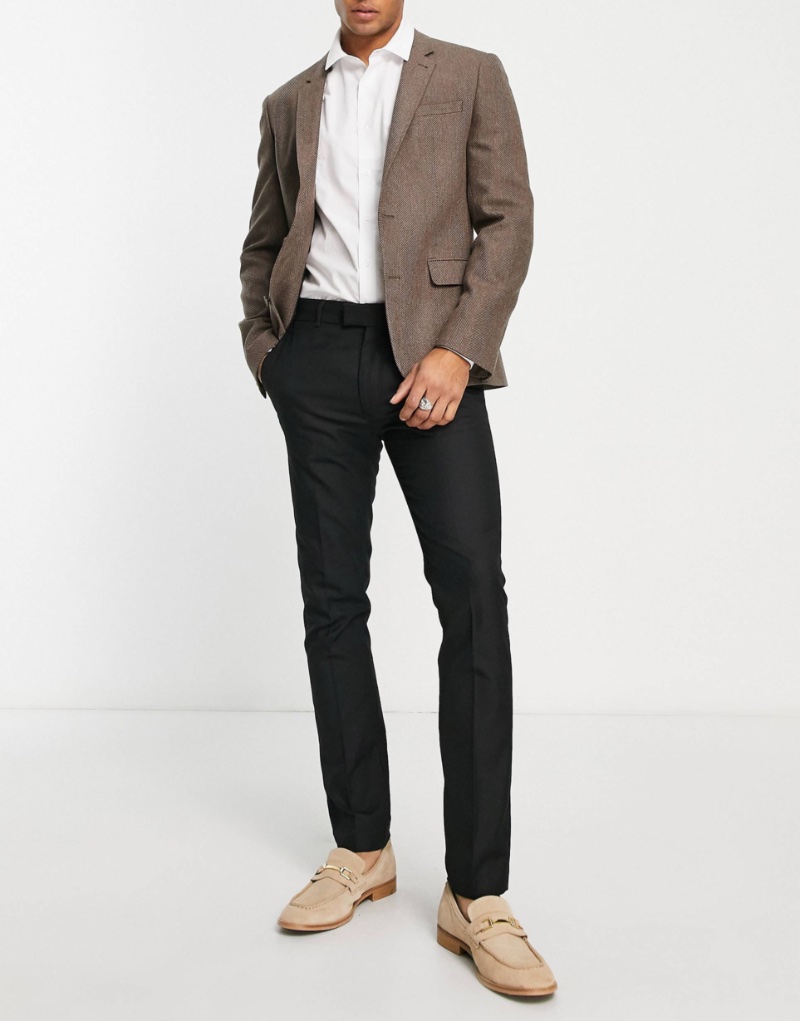
Tan loafers work particularly well when black trousers are part of a separates outfit. A brown or taupe jacket gives the shoes something to relate to above the waist. That is a different proposition from adding pale footwear to an otherwise formal black suit.
Keep the trousers long enough to meet the shoes naturally, or choose a deliberate ankle-length hem for a relaxed look. A trouser leg that bunches over a low loafer makes the outfit feel less resolved.
Choose Dark Brown Dress Shoes

Deep brown offers a quieter transition from black trousers than tan does. A slim derby or oxford is a useful starting point when you want the warmth of brown and a restrained silhouette.
Details still affect the result. Heavy soles and extensive broguing pull the outfit toward casual dress, even when the leather is dark. Choose the whole shoe, not just its color.
Use Texture to Control Contrast
Smooth leather gives black tailoring a dressier finish; suede introduces a softer surface. Neither material needs an exact match elsewhere in the outfit. Look at the balance in daylight, especially when choosing between very dark brown and a warmer reddish shade.
Does the Color of Your Dress Shirt Matter?
A white shirt keeps the outfit clear and lets the footwear supply the contrast. Pale blue offers another straightforward option. A black shirt creates a more tonal upper half, which can make lighter shoes seem even brighter.
If you add a tie, a muted brown or burgundy can relate to the shoes. An exact color match is optional; avoid turning every accessory into the same swatch.
Brown Boots for Casual Occasions

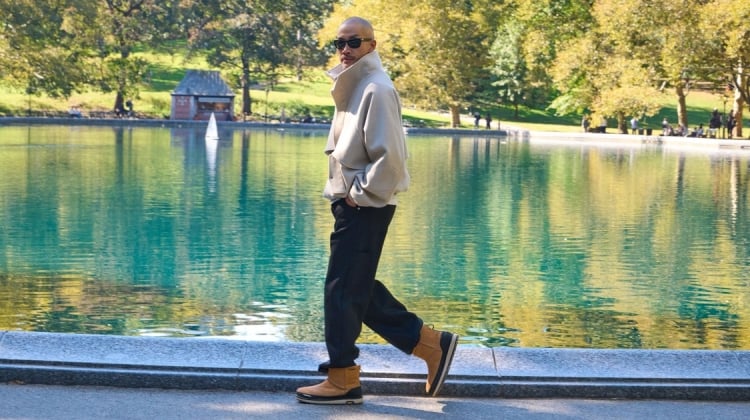
Brown Chelsea boots can give black trousers a relaxed direction, particularly with a sweater. Choose a slim shaft that fits beneath the trouser leg and a sole proportionate to the tailoring. The H&M outfit illustrates the point through knitwear and a clean ankle line, not a matching suit jacket.
Suede and textured leather suit casual outfits. Smoother leather can look dressier, but a boot’s shape and sole still matter. A heavy work boot changes the character of a black suit far more than a slim Chelsea boot does.
Coordinate Your Leather Accessories


A brown belt can connect the shoes to the upper half of the outfit, particularly when the jacket is open. Aim for a similar depth of color; the leather does not need to come from a matching set.
If your trousers have side adjusters, leave the belt out. A brown watch strap is another optional connection, not a requirement. The shoes can be the outfit’s only brown leather item.
Let Your Socks Tie Your Look Together

Black dress socks are the simplest choice with black trousers and brown shoes. They extend the trouser line and keep the color change at the shoe. Choose a length that covers your leg when seated if you want a conventional tailored finish.
For more color, try muted burgundy or charcoal. A subtle pattern can pick up a tone in the shirt or tie. With loafers and casual tailoring, no-show socks offer a bare-ankle effect; visible fine-gauge socks remain an equally valid styling choice.
Let the Occasion Decide
If brown shoes are the starting point and you are still choosing a suit, navy or gray will usually offer more flexibility. If the black suit is already in your wardrobe, begin with dark brown footwear for a quieter contrast. Save tan for occasions where the shoes can attract attention, and keep black footwear ready for the invitations that leave little room for interpretation.