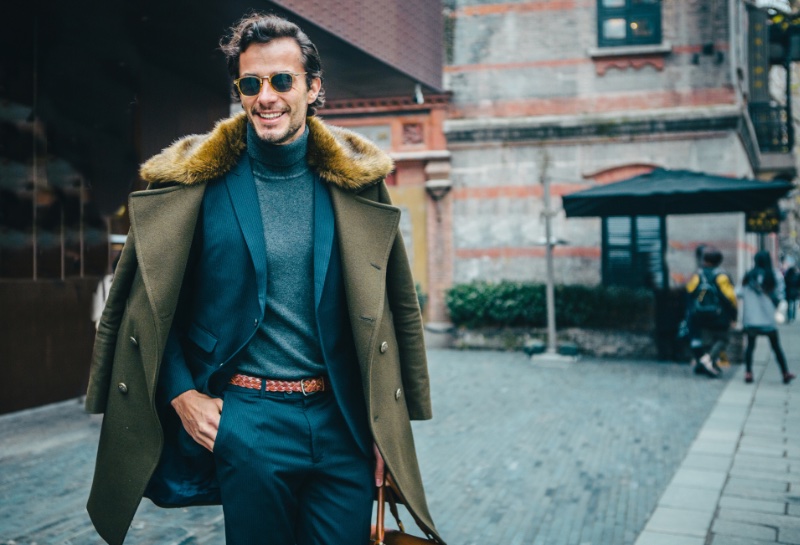
Belts serve a practical purpose, but they also affect how an outfit comes together. A smooth leather belt complements a formal outfit, while canvas and braided styles bring texture to everyday clothes. The differences come down to material, construction, and fastening. Knowing those details helps you choose a belt that looks at home with your trousers instead of becoming an afterthought.
Types of Belts for Men
Some belt types take their names from their materials, others from their buckles or intended use. These categories overlap. A leather belt, for example, can also be reversible, braided, or designed for dress trousers.
Leather Belts
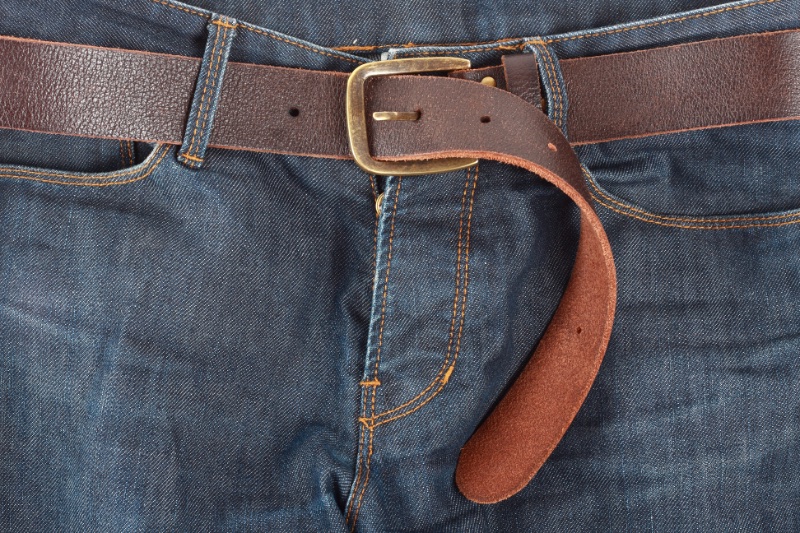
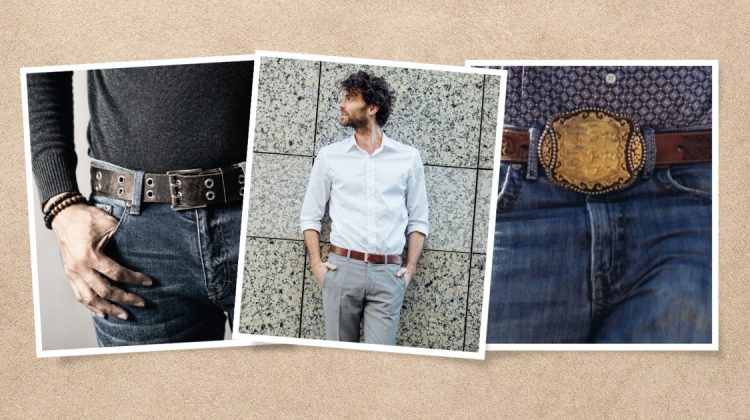
A leather belt is a versatile wardrobe staple, though its finish and width determine where it works best. Smooth, narrow styles suit tailoring, while wider straps and heavier buckles look more at home with jeans.
For everyday wear, choose leather that complements the character of your shoes. A textured brown belt works naturally with boots, while a simple black version suits dressier footwear.
Dress Belts
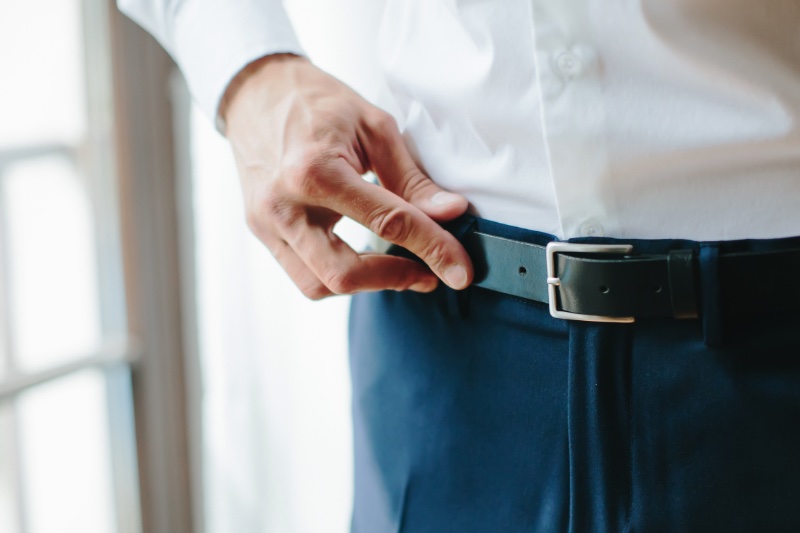
Dress belts typically have a narrow strap, a smooth finish, and a discreet buckle. Their proportions complement dress trousers instead of drawing attention to the waist.
Coordinate the leather with your shoes for a consistent look. Black leather is a dependable choice with black dress shoes; brown works with corresponding shades of brown footwear. Traditional tuxedo trousers use side adjusters or braces, so a belt generally belongs with a suit instead.
Suede Belts
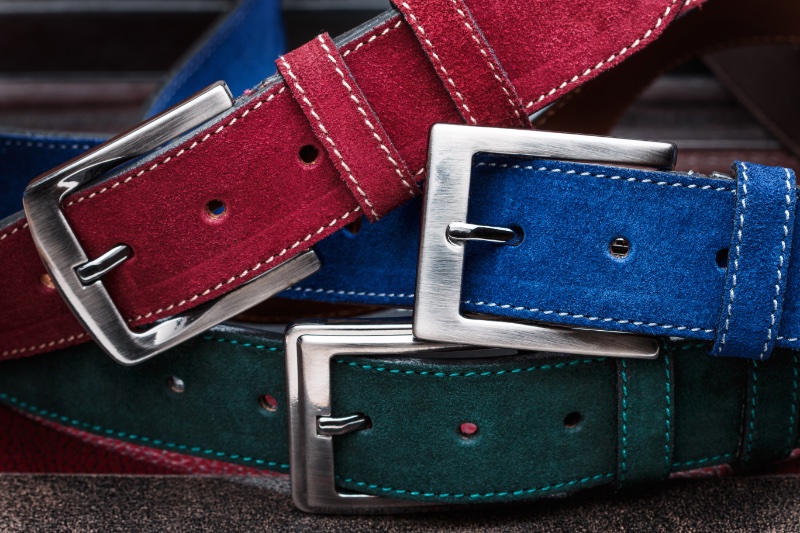
Suede belts introduce a softer texture than smooth leather, making them useful for casual and business-casual outfits.
Wear one with chinos, corduroy pants, or a relaxed blazer. The texture works especially well alongside suede shoes, though an exact color match is less important in casual dressing.
Reversible Belts
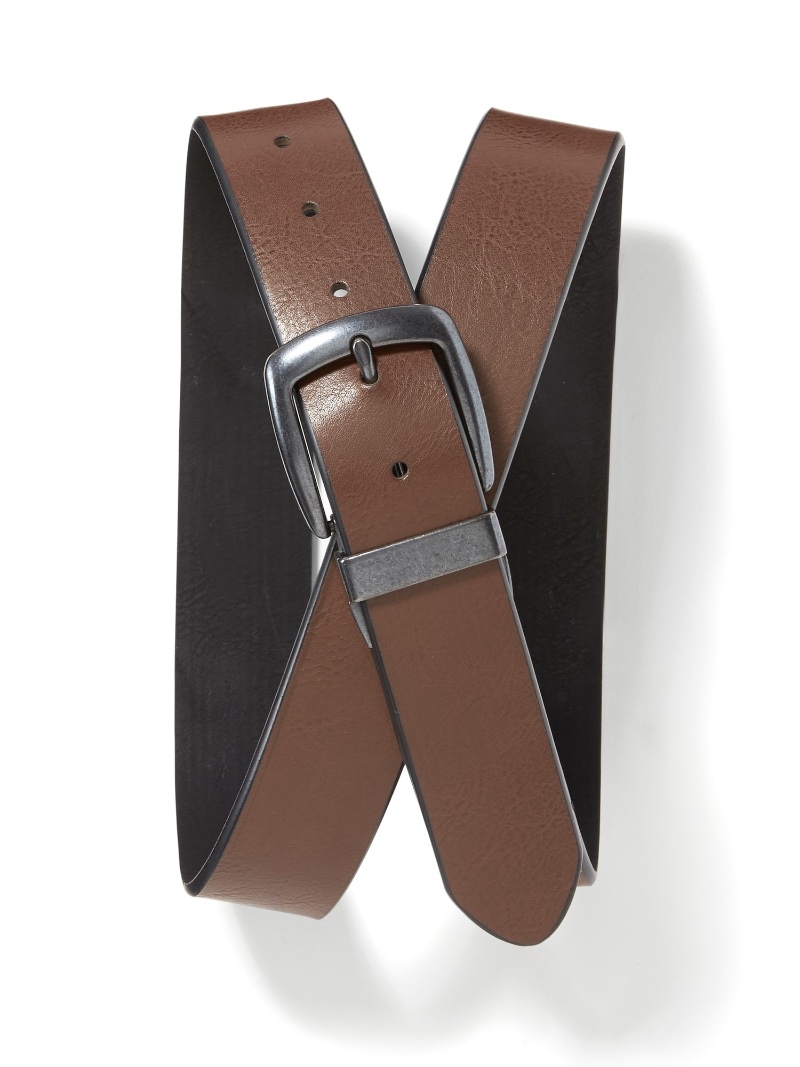
Reversible belts offer two colors or finishes on a single strap, usually with a buckle that rotates or detaches. A black-and-brown version can cover several outfits, making it useful for travel or a small wardrobe.
Check both sides before buying. Each should work with clothes and shoes you already own, and the buckle should feel secure in either position.
Double Prong Belts
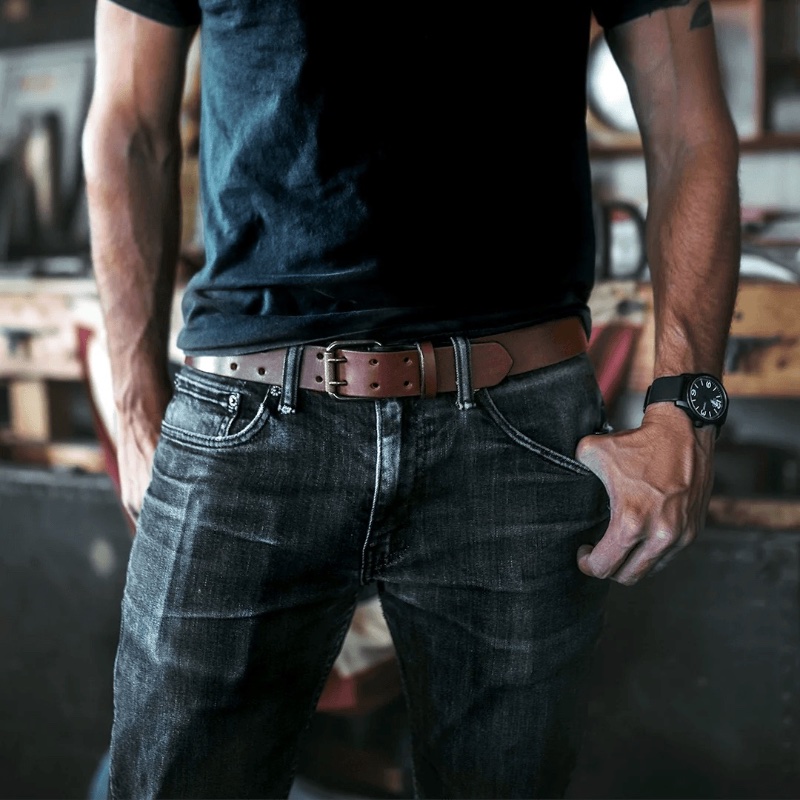
Double-prong belts use two buckle pins and corresponding rows of holes. The fastening gives them a heavier visual character than a conventional single-prong belt.
They work best with jeans for a rugged look or other casual trousers. Strap width and buckle size matter here; a broad double-prong design can overwhelm fine tailoring.
Canvas/Web Belts
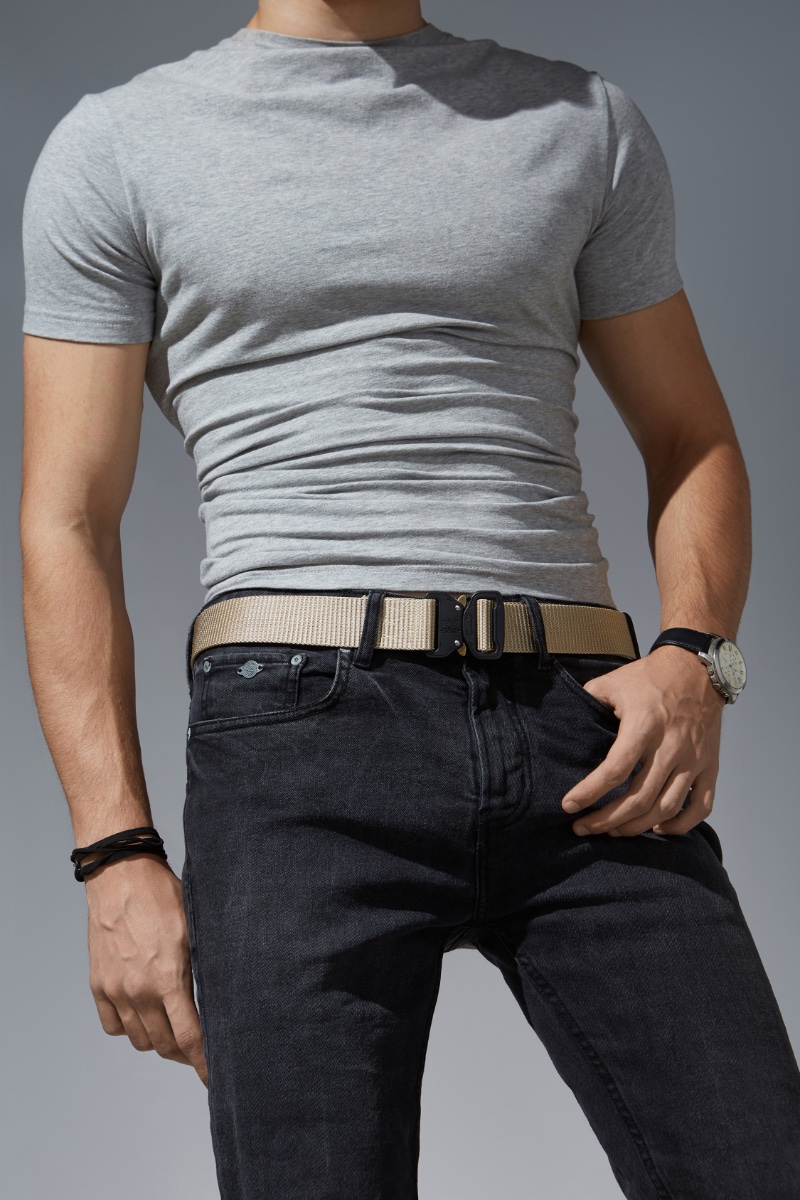
Canvas and web belts use woven straps, often made from cotton or nylon. Canvas describes a fabric, while webbing refers to a strong woven construction, so the terms are related but not interchangeable.
Their connection to military utility and practicality helps explain their straightforward design. Wear them with jeans, cargo pants, or shorts, choosing a fastening that adjusts easily and holds securely.
D-Ring Belts
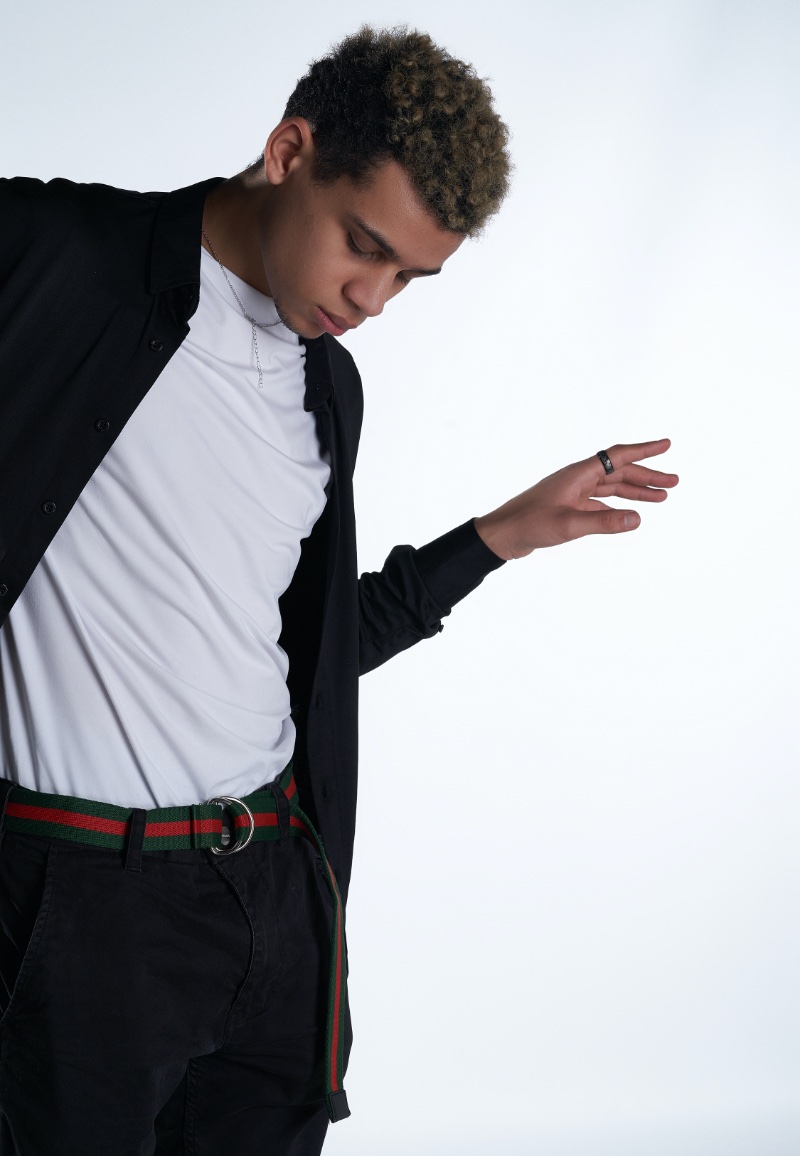
D-ring belts fasten by threading the strap through two rings, then back between them. This allows adjustment along the strap instead of at fixed holes.
Usually made from fabric, they suit casual trousers and shorts. A simple solid color keeps the look understated, while stripes can make the belt a focal point.
Woven Belts
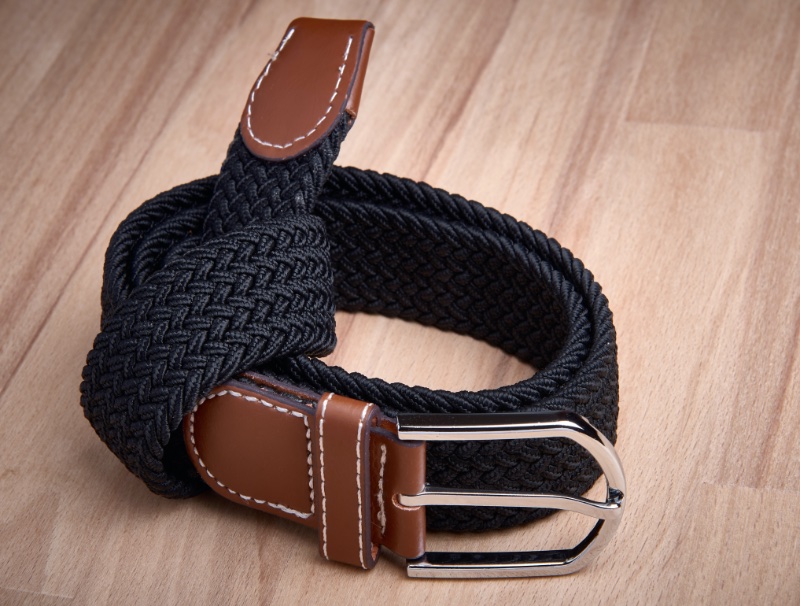
Woven belts add texture and are generally suited for casual wear. Some incorporate elastic for stretch, while others use nonstretch fibers.
They work well with shorts or chinos, especially when a smooth dress belt would look too formal. Check the construction if comfort is the priority, since a woven appearance alone does not guarantee flexibility.
Braided Belts
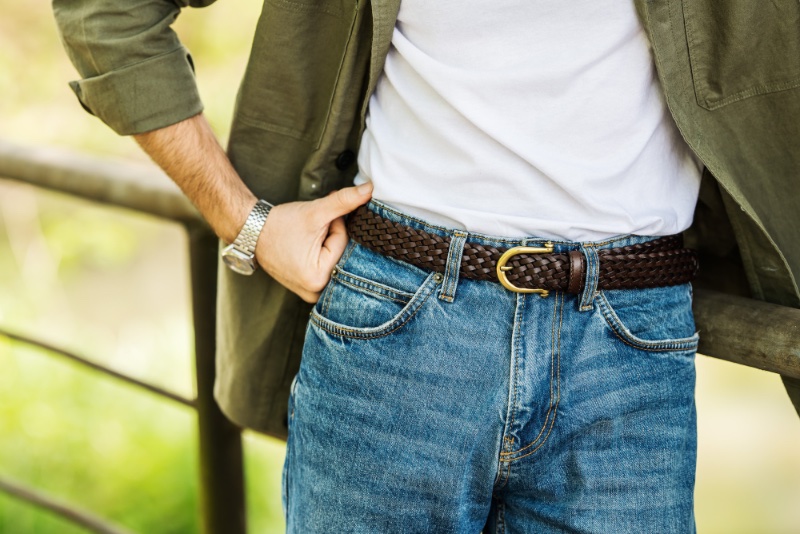
Braided belts interlace strips of leather or other materials to create their pattern. Many allow the buckle pin to pass between the strands, giving more adjustment options than a strap with fixed holes.
Fabric versions suit relaxed weekend clothes, while braided leather can be paired with slacks or jeans and loafers. Leather braiding adds flexibility, but it should not be confused with the stretch of an elastic belt.
Ribbon Inlay Belts
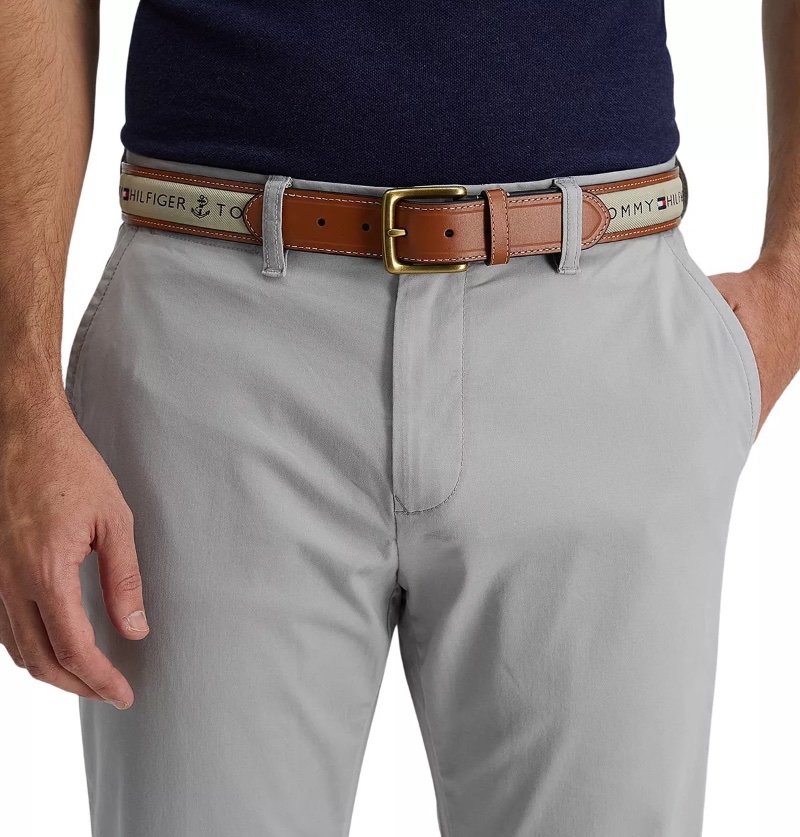
Ribbon inlay belts feature a decorative strip set along the strap, often with leather edging or backing. Stripes and repeating motifs connect them to preppy dressing.
Wear one with chinos and a polo shirt, letting the ribbon supply the pattern. A simple shirt gives a more decorative belt room to stand out.
Ratchet Belts
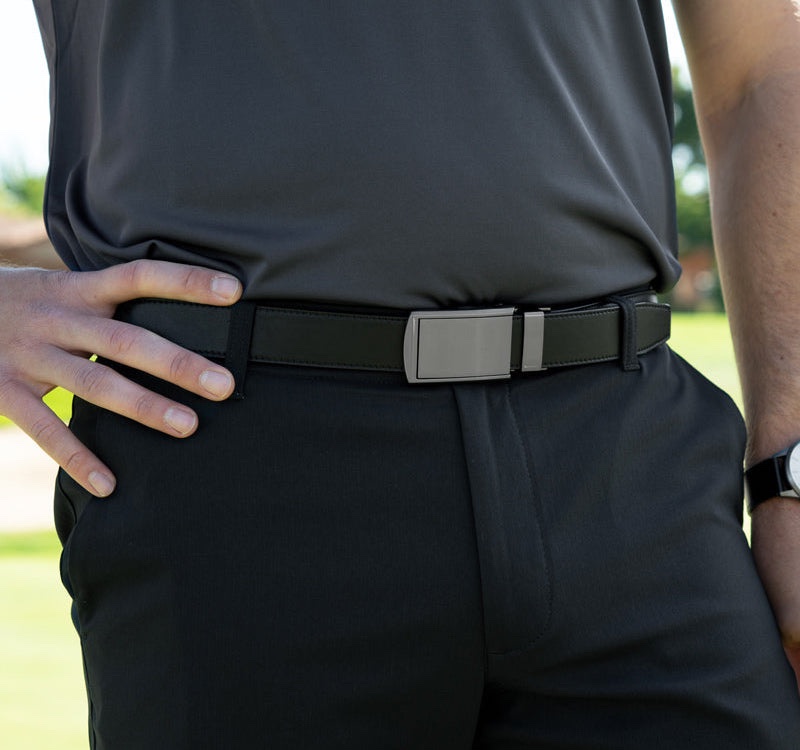
Ratchet belts use a track and locking buckle instead of a conventional pin and holes. The mechanism allows small adjustments, which can make it easier to find a comfortable fit.
Their formality depends on the strap and buckle. Smooth leather with a compact buckle can suit office trousers, while larger hardware looks more casual. Check how the release operates before buying.
Snap Belts
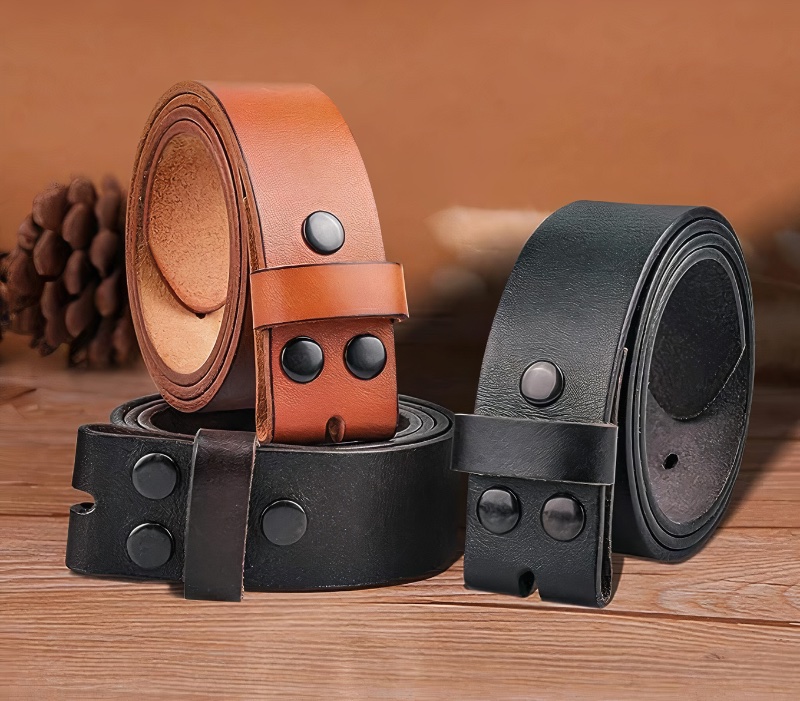
Snap belts have fasteners near the buckle attachment that allow the buckle to be removed and replaced. The snaps usually secure the folded end of the strap; they are separate from the fastening used to close the belt around the waist.
This construction is useful if you like changing buckles, particularly with Western styles. Check that the strap width and attachment fit the replacement buckle.
Western Belts
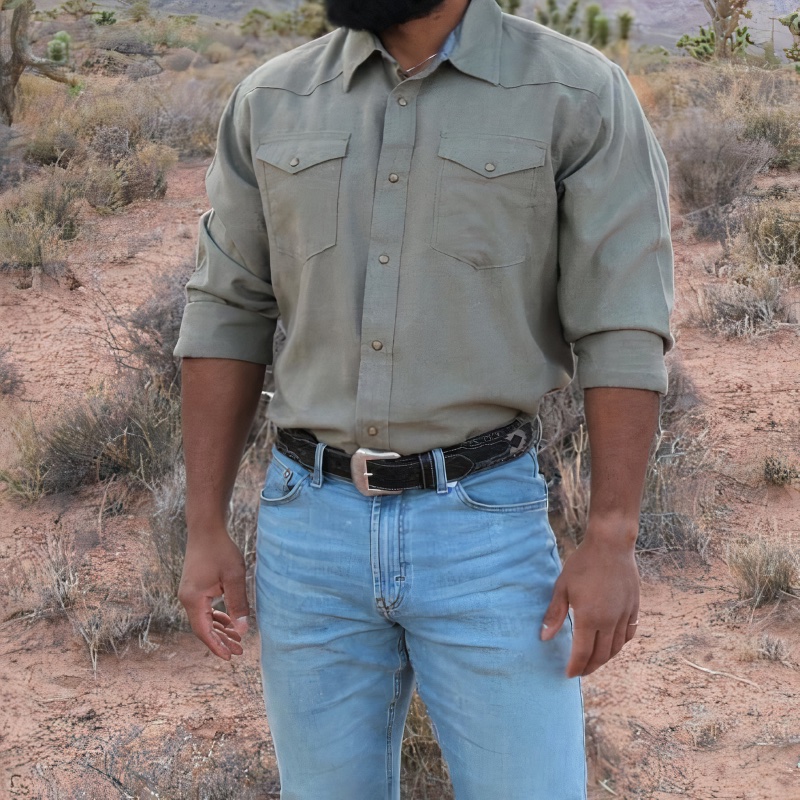
Western belts often feature tooled leather, engraved hardware, or decorative buckles. They have strong associations with cowboy dressing, but a full Western outfit is optional.
Wear one with denim and a simple shirt to give the detailing attention. Cowboy boots strengthen the connection, while a smaller buckle offers an easier entry point for everyday wear.
Duty Belts
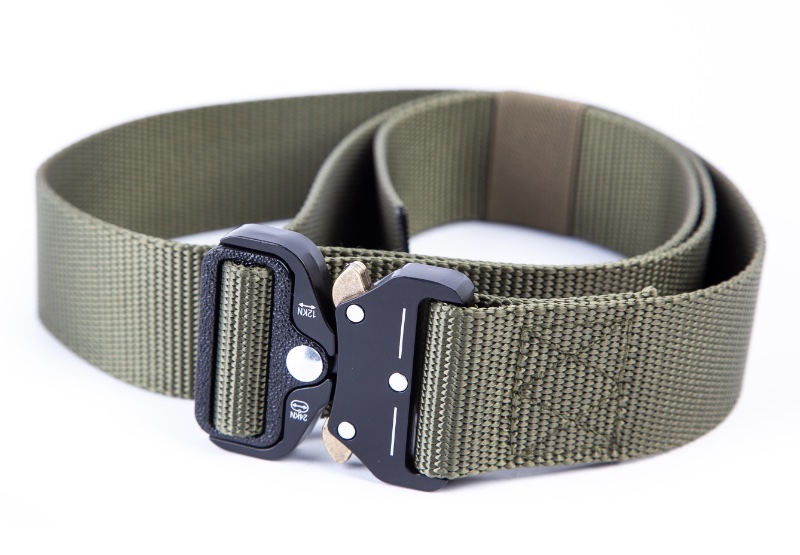
Duty belts are designed to hold equipment for work, particularly in law enforcement and security. Their rigid construction supports attached pouches and holders for items such as radios or flashlights.
They serve a different purpose from an everyday trouser belt. Choose one according to the requirements of the job and the equipment it must support.
Sports Belts
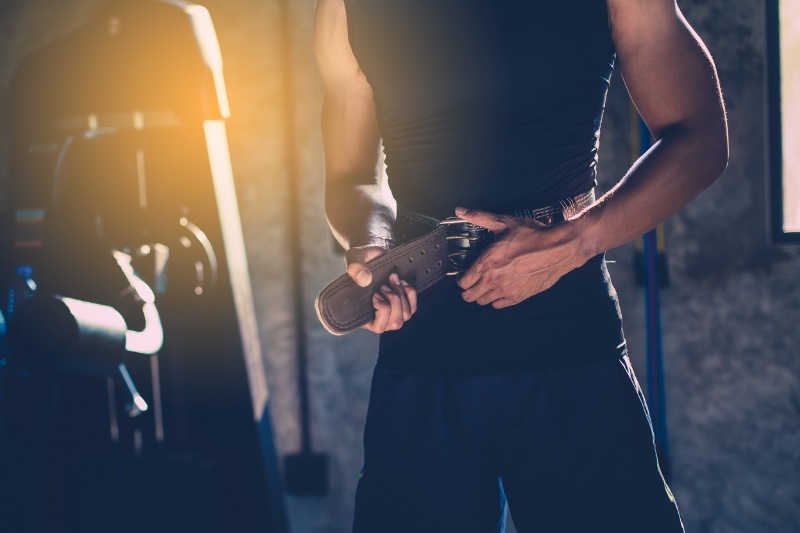
Sports belts vary according to the activity. A golf belt may resemble an everyday clothing accessory, while a weightlifting belt has a specialized construction and purpose.
Treat these as activity-specific equipment instead of interchangeable wardrobe belts. The right choice depends on the sport and how the belt will be used.
Understanding Belt Basics
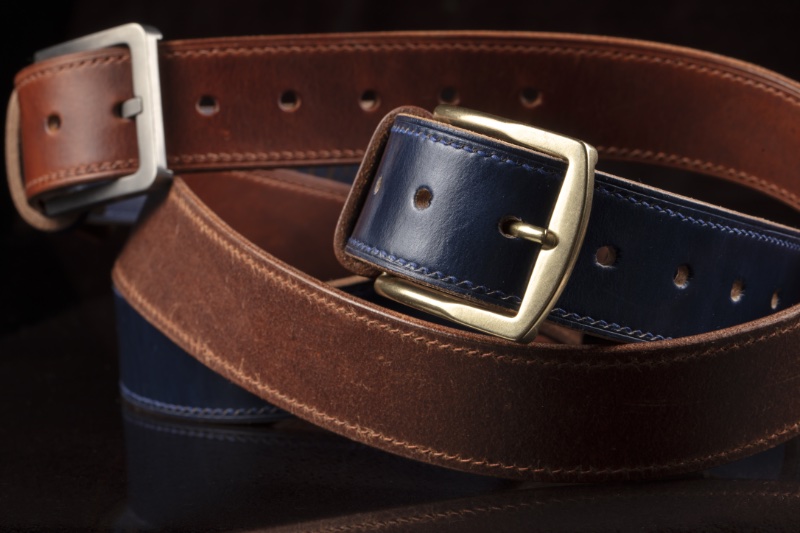
A belt should fit the trouser loops, fasten comfortably, and leave a manageable length of strap beyond the buckle. The material and hardware should also suit the clothes around it.
When choosing a size, follow the maker’s measuring instructions. Belt sizing varies, so measuring a belt that already fits, from the buckle’s specified starting point to the hole you use, is often more useful than relying on your trouser size alone.
Essential Elements of a Belt
- Strap: The main length of leather, fabric, or other material. Its width affects which trouser loops it fits and how formal it looks.
- Buckle: The mechanism that fastens the belt and allows you to adjust its fit.
- Keeper or Loop: The small loop near the buckle that holds the loose end of the strap against the belt.
Choosing a Belt That Fits Your Wardrobe
Start with the trousers you wear most. Fine tailoring calls for a discreet strap and buckle; denim can take heavier leather and more assertive hardware.
Once those everyday needs are covered, texture becomes the interesting part. Braided leather can loosen up tailoring, while a ribbon belt gives plain chinos a preppy turn. The best addition is the one that gives clothes you already wear a different mood.