The different types of sunglasses for men can change the character of an outfit faster than most accessories. Thin metal aviators suggest something different from thick acetate frames, even when both accompany the same white T-shirt. Styles range from rounded wire frames to sweeping shields, with plenty of overlap between shape, construction, and size. Knowing those distinctions makes browsing the best sunglasses brands more useful, especially when the question is which pair belongs with the clothes you actually wear.
Types of Sunglasses for Men

Some names describe a lens shape; others identify a frame detail or a particular branded design. A pair can be round, rimless, and oversized at once. These categories offer a vocabulary for comparing sunglasses, not a fixed set of mutually exclusive styles.
Classic Styles
These established designs remain useful reference points, whether you prefer fine metal frames or heavier acetate.
Aviator Sunglasses

Aviator sunglasses typically combine teardrop lenses with thin metal rims and a double bridge. Their broad lenses give them a more expansive look than small round frames, while the fine metal keeps the outline relatively light. With a leather jacket they lean into their aviation associations; with a shirt and tailored trousers, they feel less literal.
Wayfarers

Wayfarers have a thick frame and a roughly trapezoidal lens shape, usually with a pronounced upper edge. Introduced by Ray-Ban, the design has become a reference point for angular sunglasses. Its appeal lies partly in that solid outline, which gives a simple outfit a clear focal point. Check the frame’s width and tilt, since variations can sit quite differently on the face.
Clubmasters
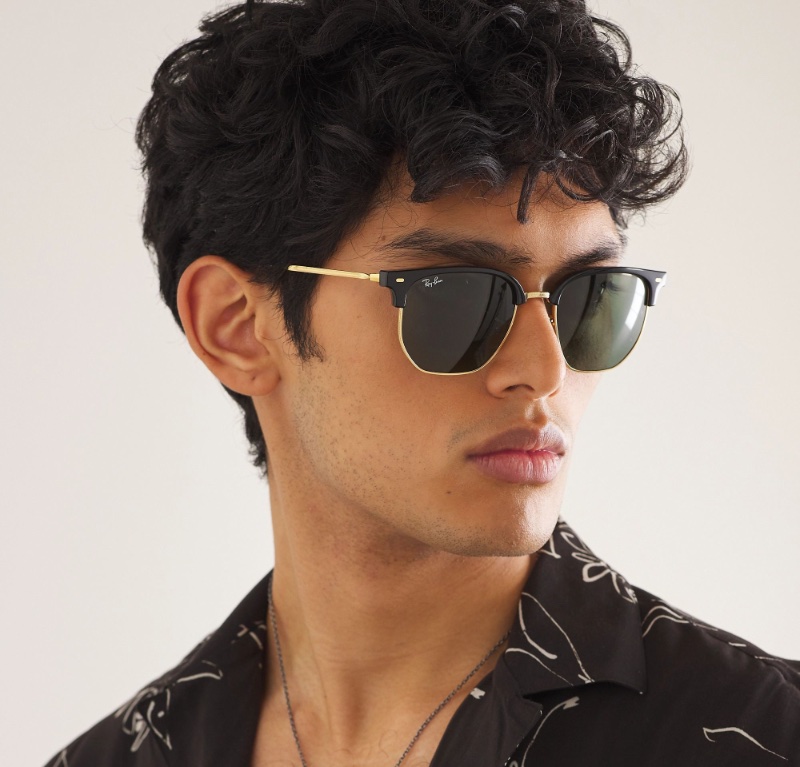
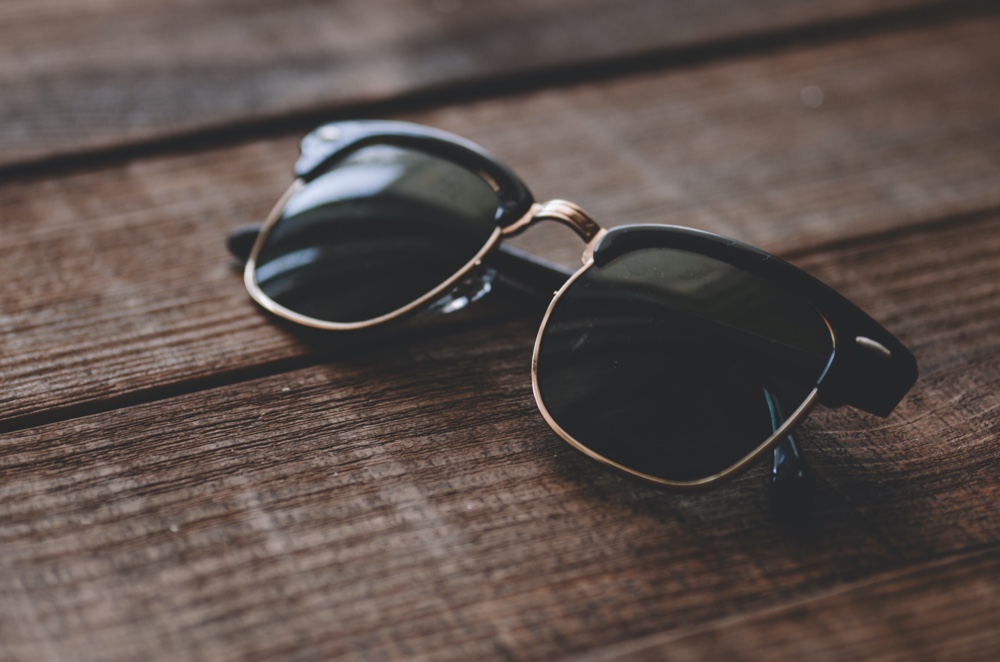
Clubmaster is Ray-Ban’s name for a particular browline design, recognizable by its heavier upper rim and fine metal lower rim. It belongs to the browline family discussed below, not an entirely separate construction category. That contrast between thick and thin works well with tailoring, but a knitted polo or denim jacket makes an equally convincing companion.
Round Sunglasses

Round sunglasses put curves ahead of angles. A thin wire frame gives the shape a lighter appearance, while thick acetate makes the same outline more assertive. Small lenses can introduce a period reference; a larger diameter changes the proportions considerably. Try both before deciding that round frames do or do not suit you.
Angular Frames & Bridge Details
These designs emphasize the upper edge of the frame, the lens outline, or the space above the nose.
D-frames

D-frame sunglasses generally have a relatively straight upper edge and a curved lower outline, resembling a sideways letter D. The term covers considerable variation, including shapes that overlap with wayfarer-style frames. A broad D-frame can give a T-shirt or open-collar shirt a stronger outline, though width alone tells you little about its fit or sun protection.
Flat-top Sunglasses

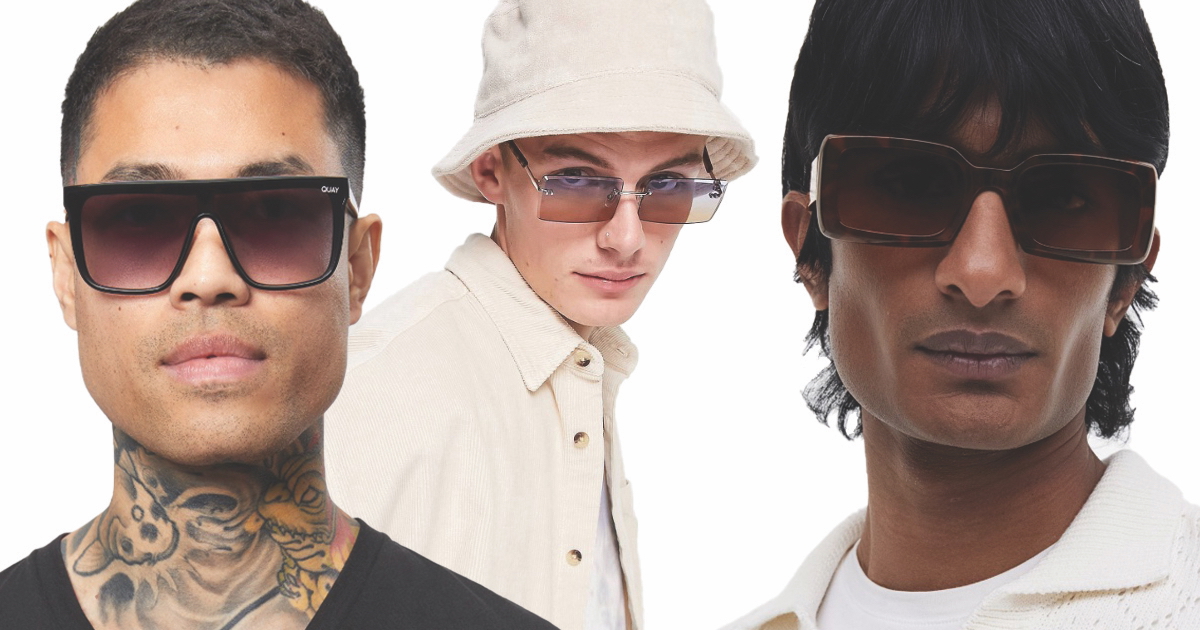
Flat-top sunglasses draw a straight line across the brow. That horizontal edge gives the frame much of its character, especially when the rims are thick.
The effect depends on scale. A shallow frame can look compact and graphic; a deep, broad version becomes the dominant accessory. Keep that relationship in mind when trying them with a hat or a high collar.
Rectangular Sunglasses
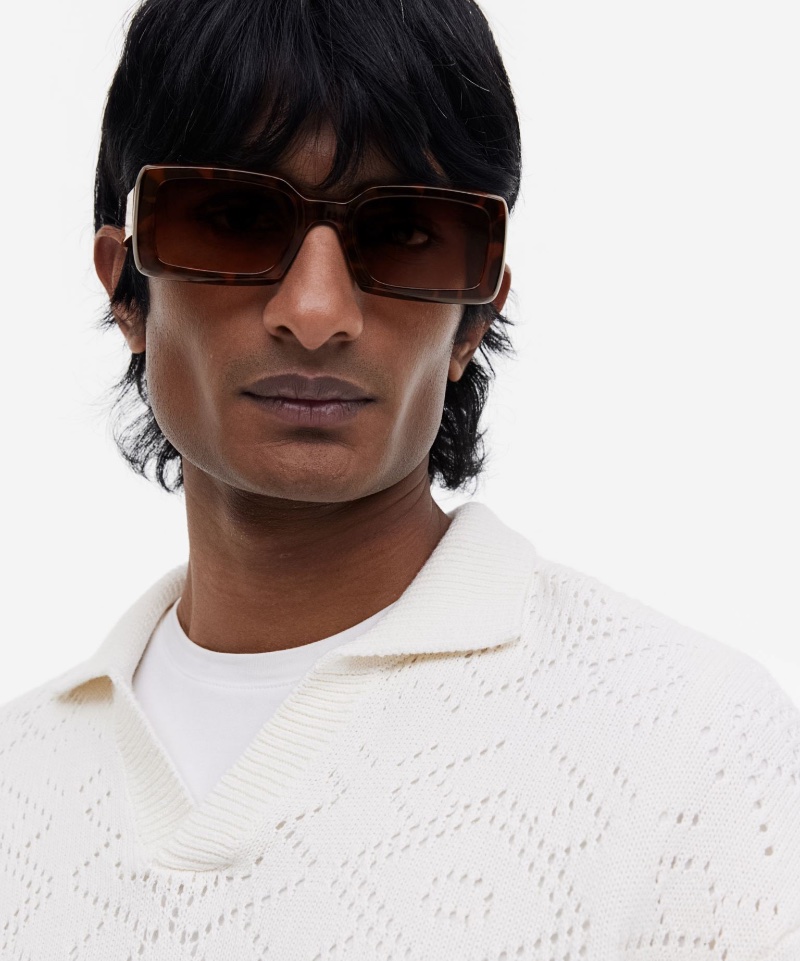
Rectangular sunglasses have lenses that are wider than they are tall, with angular or softly rounded corners. Narrow versions expose more of the surrounding face, while deeper frames offer a larger lens area. The shape can introduce a horizontal counterpoint to a long face, but frame width and bridge fit matter more than a rigid face-shape formula.
Double Bridge / Brow Bar Sunglasses

A double bridge adds a second connection above the bridge over the nose. It is a frame detail that appears on aviators, round sunglasses, and other shapes.
The upper bar draws attention to the center of the frame. Fine metal versions can be discreet; a thick acetate bar changes the whole expression. Judge the complete design, since the extra bar alone does not establish comfort or durability.
Vintage & Retro Styles
A period association can be part of the appeal, though frame size and styling determine how strongly it registers.
Browline Sunglasses

Browline sunglasses emphasize the upper rim, often combining a thick plastic brow with a fine metal rim below. Clubmasters are a well-known example of this broader family.
The heavier top edge frames the eyes while leaving the lower half visually lighter. It can complement a collared shirt, but there is no reason to reserve the design for formal clothes.
Teashade Sunglasses

Teashades are small round sunglasses, commonly made with thin metal rims. Often associated with John Lennon, they sit within the wider round-frame category. Their compact proportions are the defining feature, so check where the lenses sit in relation to your eyes. The look may be appealing even when a larger round frame proves more practical for everyday coverage.
Sport-Inspired Styles
Curved frames and continuous lenses give these sunglasses their athletic associations. Fashion versions and purpose-built sports eyewear can look similar while offering different performance.
Wraparounds
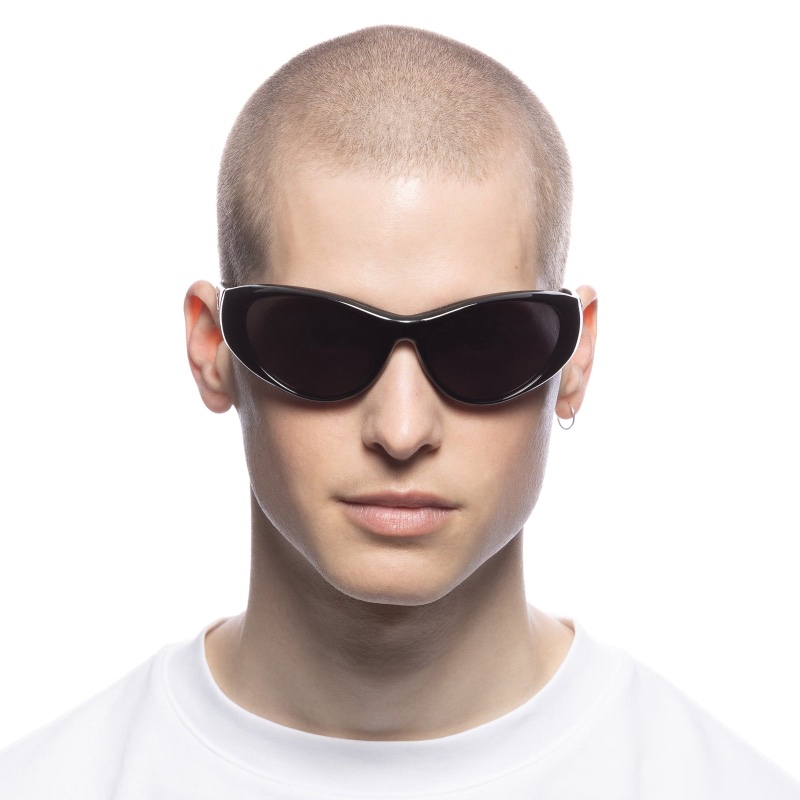
Wraparound sunglasses curve toward the sides of the face, reducing the open space around the lenses. Their close profile can suit active use, but fit, lens specification, and the intended activity still need checking. A fashion wraparound is not automatically protective sports equipment.
Shield Sunglasses

Shield sunglasses use one continuous lens across both eyes. Some curve closely around the face; others form a flatter, oversized visor.
That uninterrupted surface gives shields their graphic impact. It does not guarantee a secure fit or a particular level of UV protection, so assess the nose support and temples as carefully as the lens.
Statement Shapes & Constructions
Upswept corners, enlarged proportions, and exposed lens edges each change how a frame relates to the face.
Cat Eye Sunglasses

Cat eye sunglasses lift at the outer corners, creating an upswept outline. The effect ranges from a slight flick to an exaggerated point. A narrow version can add tension to a restrained outfit, while a broader frame makes the shape more theatrical. The useful distinction is how strongly you want those corners to register.
Oversized Sunglasses

Oversized describes scale, not a single shape. Aviators, squares, and round frames can all be oversized relative to the wearer. Larger lenses may increase coverage, but the frame should still sit securely on the nose and behind the ears. If it slides whenever you look down, the proportions are doing more work than the fit.
Frameless/Rimless Sunglasses
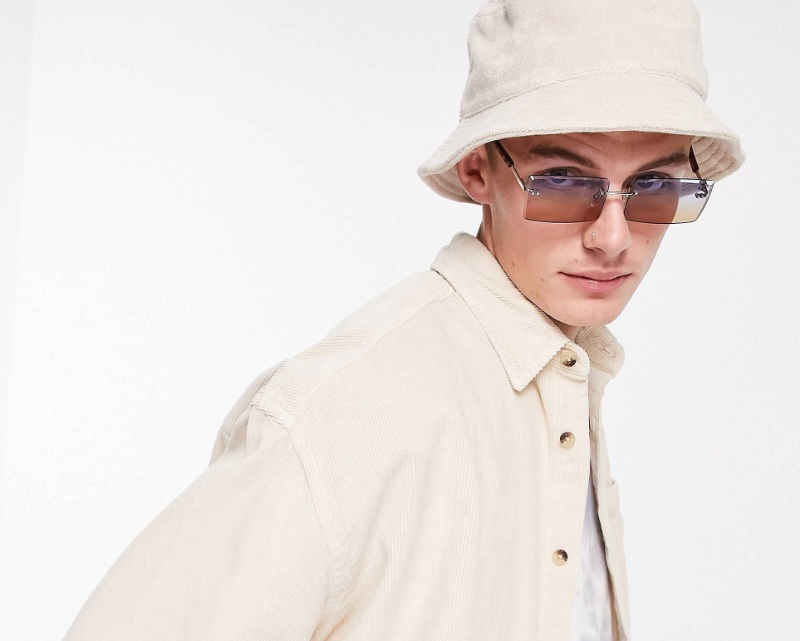
Rimless sunglasses attach the lenses directly to the bridge and temples, leaving the lens edges exposed. The result gives the lens shape and tint more visual importance.
They come in various shapes, from small rectangles to broad shields. Handle them carefully and follow the maker’s adjustment advice, particularly around the attachment points.
The Anatomy of Men’s Sunglasses

The parts that touch your face deserve as much attention as the outline in the mirror.
- Top bar: An additional connection above the nose bridge, found on some designs.
- Bridge: The section between the lenses that sits over the nose. Its shape helps determine where the frame rests.
- Nose pads: Separate pads or molded contact points that support the frame on the nose. Adjustable pads can help refine the fit.
- Frame rim: The material surrounding all or part of each lens.
- Temples: The arms extending along the sides of the head toward the ears.
- Temple tips: The ends of those arms, sometimes covered with another material for comfort.
- Hinges: The mechanisms that allow the temples to fold.
- Endpieces: The outer sections of the frame front where the temples connect through the hinges.
Try the sunglasses for more than a quick glance. Pressure at the temples, slipping at the bridge, or contact with the cheeks can become irritating over a longer day.
Choosing the Right Frame for Your Sunglasses

A frame should work with your features and stay comfortable in use. Face shape offers a starting point, but it cannot account for every difference in bridge height or head width.
Types of Frame Styles
- Full-rim frames: Material surrounds the entire lens edge, giving the outline a clear definition.
- Semi-rimless frames: A rim surrounds only part of each lens. This construction differs from a browline frame that retains a fine lower rim.
- Rimless frames: The bridge and temples attach directly to the lenses, leaving the edges exposed.
Materials Used in Frames
- Molded plastic: A broad category covering materials with different weights, flexibility, and prices. Compare the actual frame instead of judging by the label alone.
- Acetate: A plastic used for richly colored and patterned frames, often with layered effects. Thickness and construction influence weight.
- Metal: Options include stainless steel and titanium, with performance varying by alloy and design. Fine metal frames can offer a lighter visual outline.
- Natural materials: Wood and buffalo horn appear in specialist eyewear and may require particular care. Tortoiseshell-pattern acetate describes an appearance, not a requirement for genuine shell.
Considerations for Selection
- Fit: The frame should stay level and secure, with comfortable contact at the nose and ears.
- Daily use: Choose for the activities involved, including any need for certified sports protection.
- Budget: Check lens specifications and construction before treating a higher price as evidence of better protection.
- Wardrobe: Try the frame with clothes you wear regularly. A pair that only works with an imagined holiday wardrobe may spend most of the year in its case.
Lens Options for Men’s Sunglasses

Lens material, tint, and treatments serve different purposes. For sun protection, look for a clear specification stating 100% UVA and UVB protection or UV400. Lens darkness, price, and polarization do not establish UV protection by themselves. If you need a prescription, an eye exam can help establish the correction required.
Lens Materials & Clarity
- Optical glass: Glass can offer good optical clarity and scratch resistance, though it is heavier and less impact-resistant than some alternatives.
- Plastic lenses: Performance varies by material. Check the stated UV protection and available scratch-resistant treatments.
- Polycarbonate: A lightweight, impact-resistant option used in many sports and everyday frames. A lens material alone does not make the complete pair suitable as safety eyewear.
- SR-91 lenses: A proprietary lens material used in certain eyewear ranges. Compare the manufacturer’s specifications for the particular pair.
Lens Colors & Tints

Different lens colors alter the view as well as the appearance of the sunglasses. Their effects depend on the specific tint and how much visible light the lens transmits.
- Gray: Often chosen for relatively neutral color perception.
- Yellow/orange: Can change perceived contrast, though a pale tint may offer little relief in strong sunlight.
- Brown/amber: Adds a warmer cast to the view and may emphasize contrast.
- Green: Offers an alternative to gray or brown, with results varying by formulation.
- Purple/red: Can noticeably alter color perception, so try the lenses before choosing them for everyday use.
- Blue: May refer to the lens tint or a reflective surface coating. Check which one you are buying.
Lens Treatments & Features
These features are not all coatings, and they should be assessed separately from UV protection.
- Polarized lenses: Reduce glare from reflective surfaces such as water and roads. They can also affect the visibility of some screens.
- Photochromic lenses: Change darkness in response to light conditions. Many respond mainly to UV light and may darken less behind a car windshield.
- Gradient lenses: Have a darker upper section and lighter lower section. Check whether the overall tint suits the intended conditions.
- Mirror or flash coatings: Add a reflective finish. A mirrored appearance alone does not confirm UV protection.
Finding Your Everyday Pair

Start with the clothes and situations that account for most of your week. A fine metal frame may feel right with tailoring, while thicker acetate can give casual clothes a stronger outline. Neither choice needs to become a rule.
Once the shape feels right, check the fit and lens specifications. The pair you keep reaching for should be comfortable enough to wear for hours, not merely convincing for a few seconds in the mirror.