Levi Strauss and Jacob Davis invented modern blue jeans, receiving their patent for rivet-reinforced work pants on May 20, 1873. Davis, a Reno tailor, devised the reinforcement; Strauss, his San Francisco fabric supplier, joined him to patent and produce it. Denim trousers predated their partnership, but those metal rivets mark the beginning of modern jeans. The history of jeans starts with pockets that needed to survive a working day. The arguments about who should wear them came later.
History of Jeans

Few garments have moved so freely between hard labor and expensive leisure. Jeans have dressed men doing physical work and men paying handsomely to look as though they might. Along the way, the same trousers have suggested teenage disobedience and become perfectly acceptable dinner attire. Their construction explains their longevity. Their wearers explain everything else.
Before 1873: Where Denim Began


Denim’s name is commonly linked to “serge de Nîmes,” a textile associated with Nîmes, France, while “jean” has an association with Genoa, Italy. The tidy story of French weavers accidentally inventing modern denim makes the history sound simpler than the evidence allows.
As historian Lynn Downey explains in A Short History of Denim, fabrics called jean and denim once differed in composition and weave. Their names traveled as textile production developed.
Classic blue denim combines indigo-dyed warp threads with lighter weft threads in a twill weave. That gives jeans their diagonal surface and contrasting underside, visible whenever a man turns up his cuffs. Long before that cuff became a styling decision, the fabric offered strength for working clothes.
1873: Who Invented Blue Jeans?


Jacob Davis approached trousers as a tailor with a problem to solve. His customers needed work pants that held together under strain, particularly around the pockets. Metal rivets reinforced those vulnerable points.
Levi Strauss supplied Davis with cloth through his San Francisco wholesale business. When Davis sought a partner to help secure a patent, he approached Strauss. Their patent for an “Improvement in Fastening Pocket-Openings” was granted on May 20, 1873.


That is the date generally recognized as the invention of blue jeans. The patented advance was the reinforcement, building on trousers and fabrics already in use.
The company’s historical account credits Davis with the idea and Strauss with joining him to bring it into production. Davis supplied the tailoring solution; their partnership gave it a business.
Levi’s & the 501

Levi’s began producing riveted work pants in 1873. The 501 designation arrived in 1890, attaching a number to a garment that would eventually become a reference point for how jeans should fit.
Early customers called them “waist overalls.” The name suited their purpose. These were trousers bought to work in, with details that developed over time as the company refined the product. The fashion credentials accumulated through use.
1900s–1920s: A Working Wardrobe

At the beginning of the twentieth century, denim belonged to men whose clothes took a beating. Farmers and industrial workers valued trousers that tolerated abrasion, with pockets reinforced for repeated use.
That workwear heritage remains legible in contemporary jeans. Visible stitching and rivets still suggest reliability, even when the most demanding part of their day is a commute. Men’s fashion has a long appetite for useful details, particularly once their original usefulness becomes optional.
Lee Enters the Picture
Lee began as the H.D. Lee Mercantile Company in Kansas in 1889. Its move into clothing manufacturing followed in 1912, establishing the workwear business that would shape its identity.
The distinction matters: founding a company and making its first jeans are separate milestones. Lee’s official history traces a business responding to working customers, adding another influential name to American denim.
1930s–1940s: The Cowboy Becomes an Ideal


Hollywood Westerns gave jeans a life beyond the job. On screen, denim belonged to men who appeared self-reliant and at ease outdoors. City dwellers could borrow something of that identity simply by getting dressed.
Dude-ranch holidays brought affluent visitors into Western clothing, helping turn ranch necessities into leisure purchases. Cowboy style offered an appealing proposition: a man could dress for independence even when he was on an organized holiday.
Wrangler’s Western Beginning
Wrangler launched its Western jeans under Blue Bell in 1947. Cowboys and rodeo riders helped shape clothing intended for riding, giving the brand a specific relationship to Western life.
Its official chronology places that launch in the postwar years. Wrangler’s predecessor had earlier workwear roots, but the jeans brand belongs to this later chapter. By then, denim could serve both the working cowboy and the man attracted to his image.
1950s: Jeans Acquire an Attitude

In the 1950s, jeans became entangled with the anxiety surrounding teenagers. James Dean in Rebel Without a Cause and Marlon Brando in The Wild One gave denim an association with young men unwilling to behave as expected.
A T-shirt and jeans made a persuasive uniform. The clothes were simple enough to copy, while the attitude supplied the attraction. Against the expectations attached to conventional adult dress, their informality could feel pointed.
Women were also expanding denim’s audience, building on its earlier use for work and leisure. Jeans were becoming clothes people chose for the lives they wanted to lead.
1960s: Making Jeans Personal

The 1960s move toward casual dress brought denim further into student life and counterculture. Jeans’ working associations could express solidarity, while their informality suited a generation questioning established expectations.
Customization made a widely available garment feel individual. Embroidery and patches gave the owner a hand in the result. Fading also became part of the attraction: a pair acquired character through being worn.
That relationship would prove commercially valuable. Eventually, manufacturers would sell the appearance of a history alongside the trousers themselves.
1970s: Flares Meet Designer Denim

The 1970s enthusiasm for flared jeans changed the silhouette from the knee down. Hems spread over footwear, giving even a straightforward shirt-and-jeans outfit a more theatrical line.
Denim was also moving into designer fashion. The Museum at FIT’s Denim: Fashion’s Frontier traces its appearance in designer collections and the late-decade appetite for European jeans, including Fiorucci.
A garment associated with rejecting convention was becoming a desirable label purchase. Fashion had found a way to charge for the distinction. The back pocket offered particularly convenient advertising space.
1980s: The Label & the Wash

Designer jeans became a major proposition in the 1980s, with advertising selling a body-conscious image alongside the trousers. The label helped tell other people which jeans a man had chosen.
The finish became equally expressive. Stonewashing and acid washing offered wear and dramatic surface effects from the first outing. For men dressing in the 1980s, buying jeans increasingly meant choosing how much attention they should attract.
Denim’s appeal now included the possibility of looking carefully selected and thoroughly knocked about at the same time.
1990s: The Fit Gets Bigger

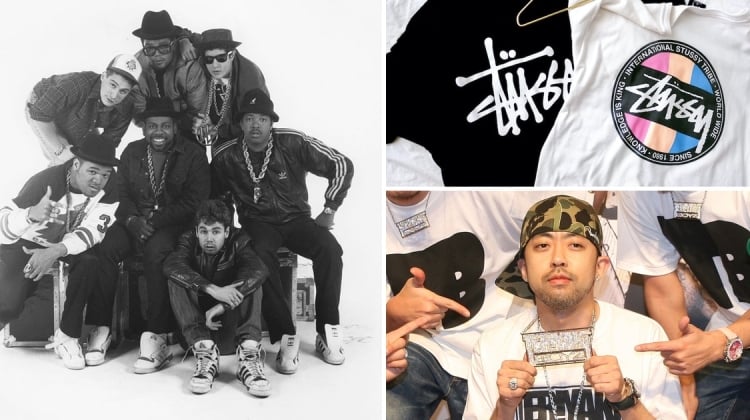
The 1990s embraced looser proportions, with hip-hop helping make oversized jeans a defining expression of youth style. Skate culture added its own attachment to broad cuts and casual dress.
Grunge approached denim through worn clothing and a secondhand sensibility. These wardrobes shared informality, but they communicated different allegiances. The fit, condition, and clothes worn with the jeans helped place the wearer within a scene.
FIT’s history of 1990s fashion documents those competing influences. Denim had become common enough that the particular pair mattered more than the decision to wear jeans at all.
2000s: Bootcuts, Low Rises & the Skinny Turn

Men’s 2000s style gave denim several competing ambitions. Bootcuts spread over shoes, rises dropped, and heavily treated washes made a new pair look busy before its owner had done anything.
Premium denim encouraged closer attention to labels and fit. Later in the decade, skinny jeans gained momentum through rock and indie fashion, pulling the silhouette in the opposite direction.
FIT’s 2000s fashion timeline places that narrowing cut within wider changes in menswear. The effect extended beyond the trousers. A close leg made the choice of shoe particularly conspicuous, changing the balance of the whole outfit.
2010s: Skinny Jeans Become Routine

During the 2010s, skinny jeans moved into everyday wardrobes. Stretch fabrics made close cuts easier to wear, helping a silhouette associated with particular music scenes reach a much broader customer.
Levi’s 519 Extreme Skinny Jeans show how readily an established denim name could respond. The distance from early work pants was visible in the leg, even as the pockets and rivets maintained the family resemblance.
What once looked like a commitment to a scene became a routine purchase. Fashion’s most successful provocations often end up on the everyday rail.
2020s: Choosing a Denim History

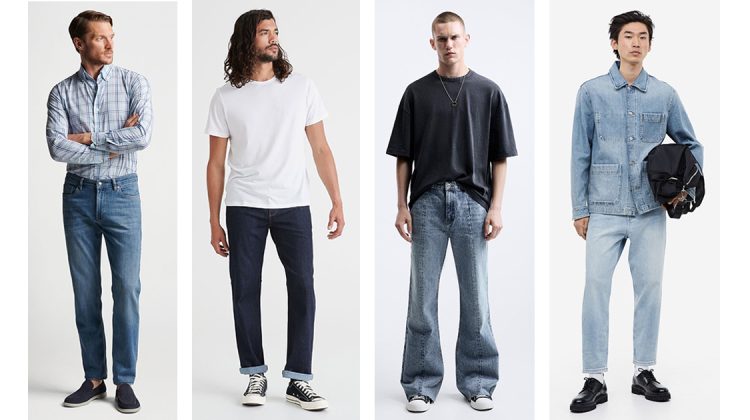
Renewed interest in straight and wide-leg jeans has expanded the conversation beyond the skinny fit. Earlier decades now offer several ways to dress, sometimes hanging beside one another in the same shop.
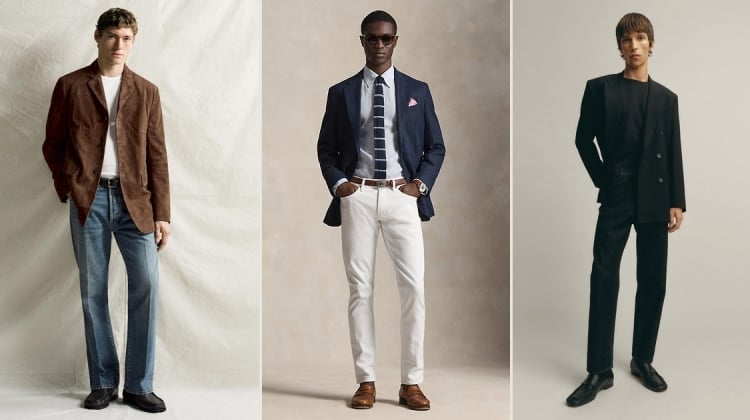
The different types of jeans let a man choose the proportions that suit him and the associations he enjoys. A straight leg can draw on workwear; a broad cut can suggest skate style or hip-hop.
The pockets still need to hold together. What the trousers say about their owner remains open to interpretation.