The clothes Marlon Brando wore in his early films were not selected to be fashionable. They were selected to be true. A tank top for a man who couldn’t afford more. A leather jacket for a biker who lived outside polite society. Worn denim for a dockworker with nothing to prove to anyone. That each of these looks went on to shape how men dressed for the following seven decades says something about what fashion actually responds to, and it isn’t design. It’s the appearance of authenticity worn by someone physically capable of making it matter.
Why Young Marlon Brando’s Style Still Matters
Brando’s early career, roughly 1950 to 1961, produced a set of images that kept circulating long after the films themselves faded from weekly conversation. The photographs still appear because they solved something that styled fashion shoots keep trying to solve and rarely do. The clothes look like they belong to the person wearing them.
The White Tank Top
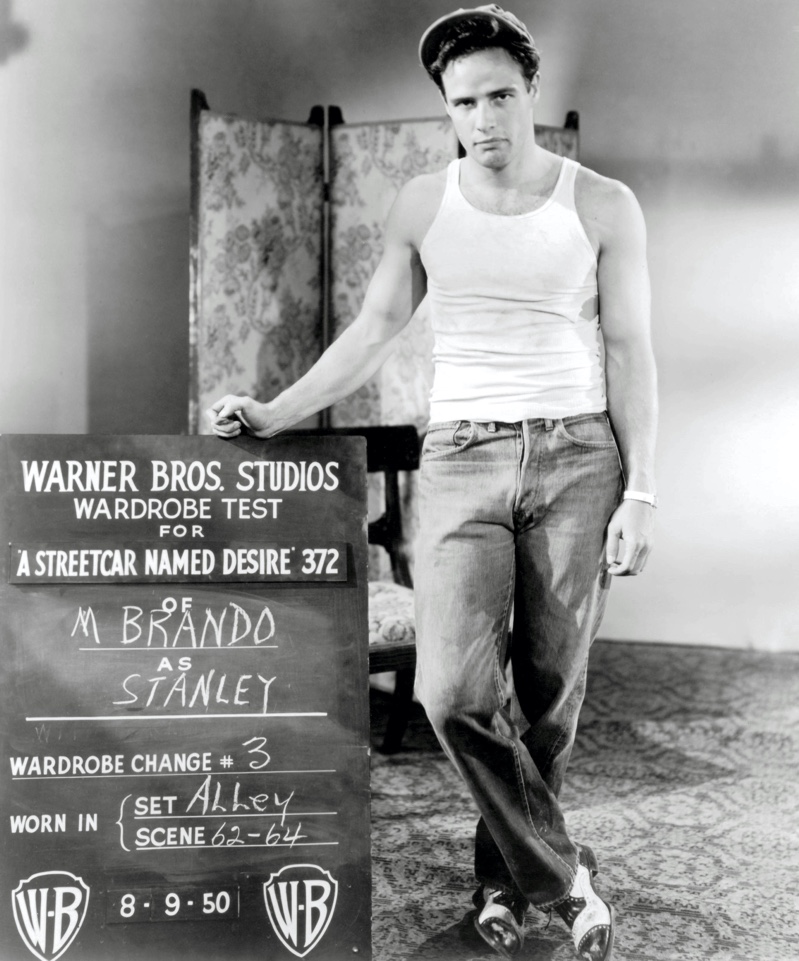
The Warner Bros. wardrobe test photograph from August 1950 documents Brando as Stanley Kowalski for A Streetcar Named Desire: white ribbed tank, dark jeans, two-tone Oxford shoes, a clapperboard reading wardrobe change number three, scenes 62 to 64. The studio filed it as inventory. What it shows is a man in an undershirt, trousers, and shoes that belong to someone who works with his body for a living.
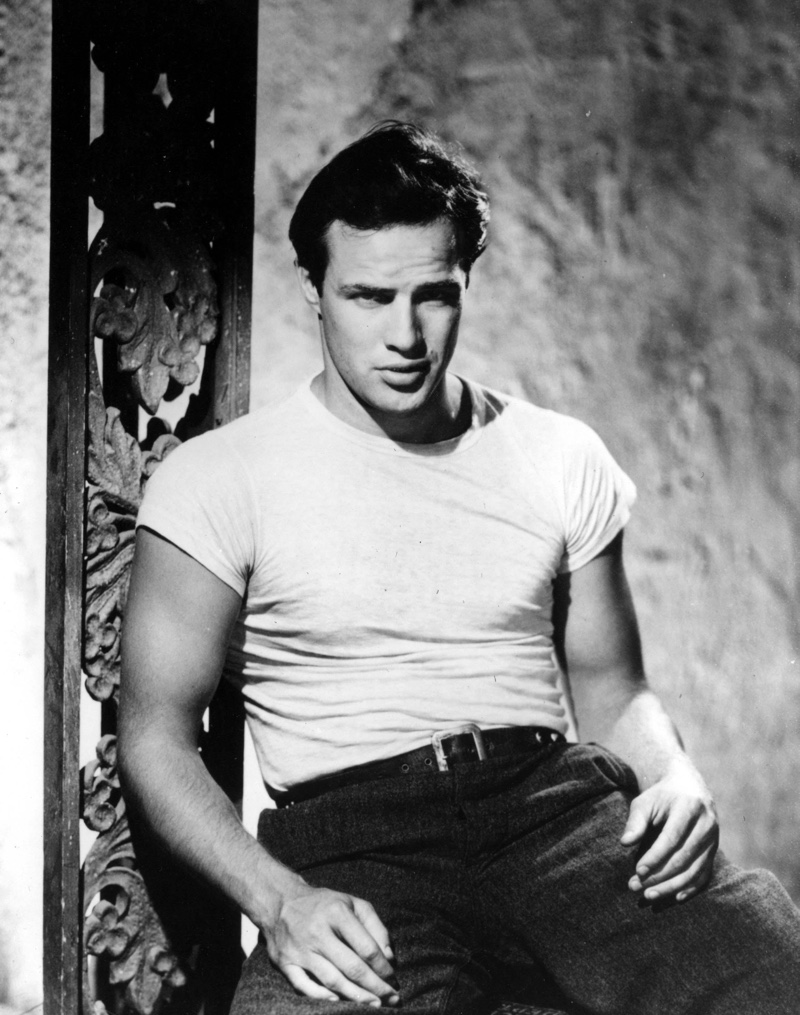
The tank top in 1950s American fashion was an undergarment. It went beneath the dress shirt, out of sight. Brando wore it as the complete outfit because Kowalski would. The character’s physicality, from the wide shoulders to the visible muscle across the chest made the garment work differently than it had before.
It stopped presenting as poverty or undress and started reading as a specific, charged kind of masculine presence. The fashion industry would spend the next several decades trying to manufacture that charge through campaigns, and the original photograph is still more convincing than most of them.
The Leather Jacket
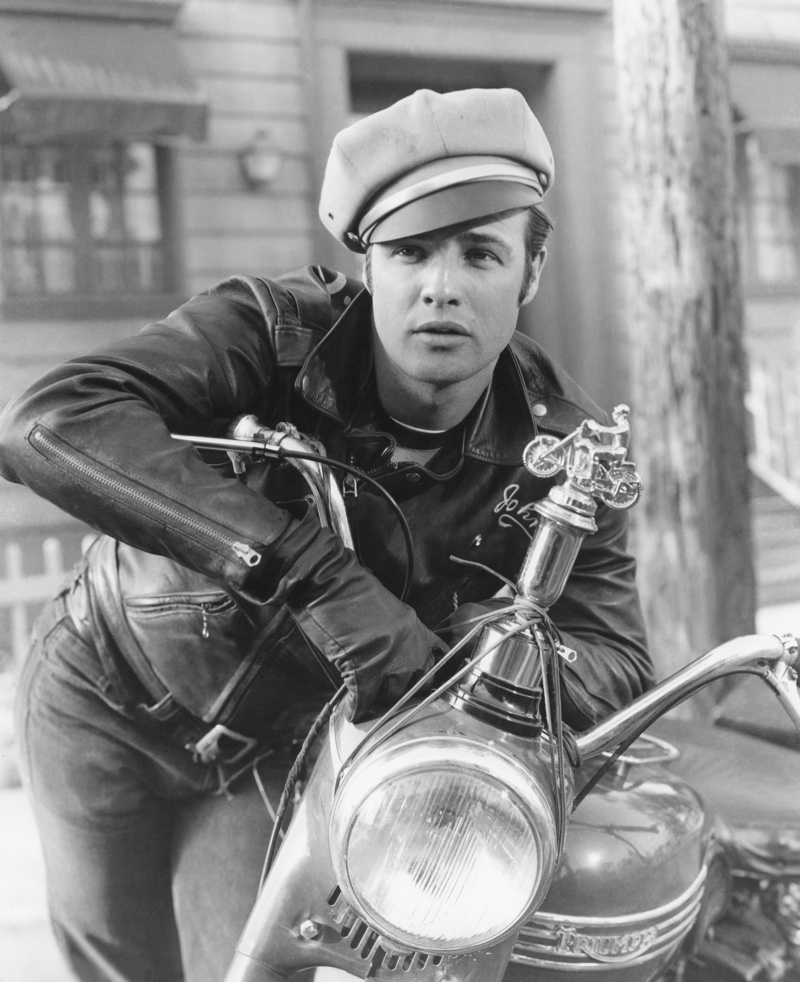
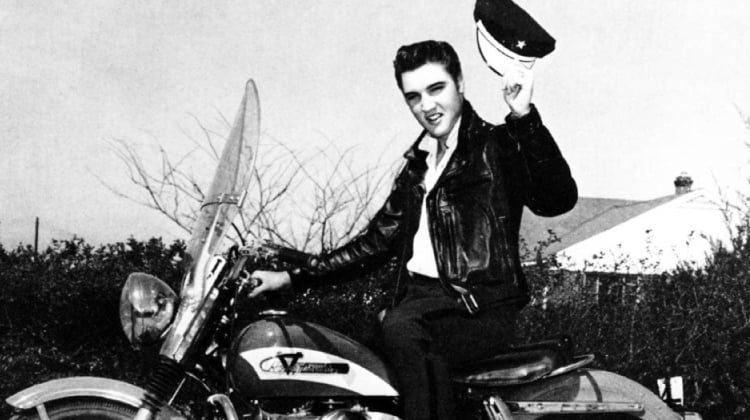
In The Wild One (1953), Brando plays Johnny, the leader of a motorcycle gang who rolls into a small California town and does not particularly explain himself. The costume department put him in a Perfecto-style black leather jacket over a white tee, dark jeans, and a peaked motorcyclist’s cap worn slightly off-center. The jacket belongs to the character. It is Johnny’s, not Brando’s, which is exactly why images from this film keep appearing in menswear conversations that have nothing to do with biker culture.
The leather jacket had existed before The Wild One. Military surplus jackets circulated after the war, and motorcycle clubs had their own dress codes already established. What the film added was a face. Johnny’s jacket compressed a specific postwar restlessness into a single garment.
It captured the unease of young men who returned from war and found civilian life too small, too ordered, and too willing to ignore what they had seen. The physical presence of the man wearing it made that compression visible. The jacket became a shorthand for a set of attitudes that audiences recognized even when they could not name them.
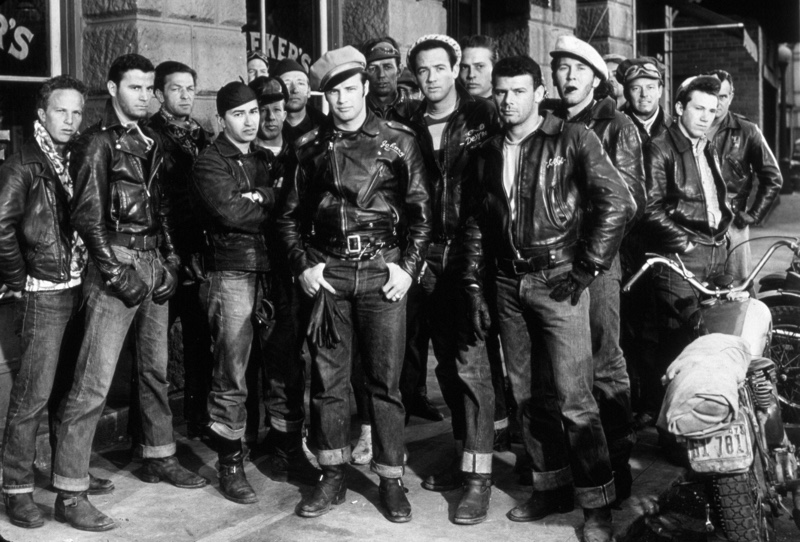
The gang photograph is useful as contrast. The same leather jackets appear across every man in the frame, the same jeans, similar caps. Brando stands among them and the image still settles on him. The clothes are identical. The difference is how he occupies them, with shoulders forward, weight shifted, and hands loose at his sides. The jacket functions as a statement because the body inside it functions as a statement. That relationship between garment and physical presence is what the film preserved and what every subsequent leather jacket campaign inherits.
Off-Duty
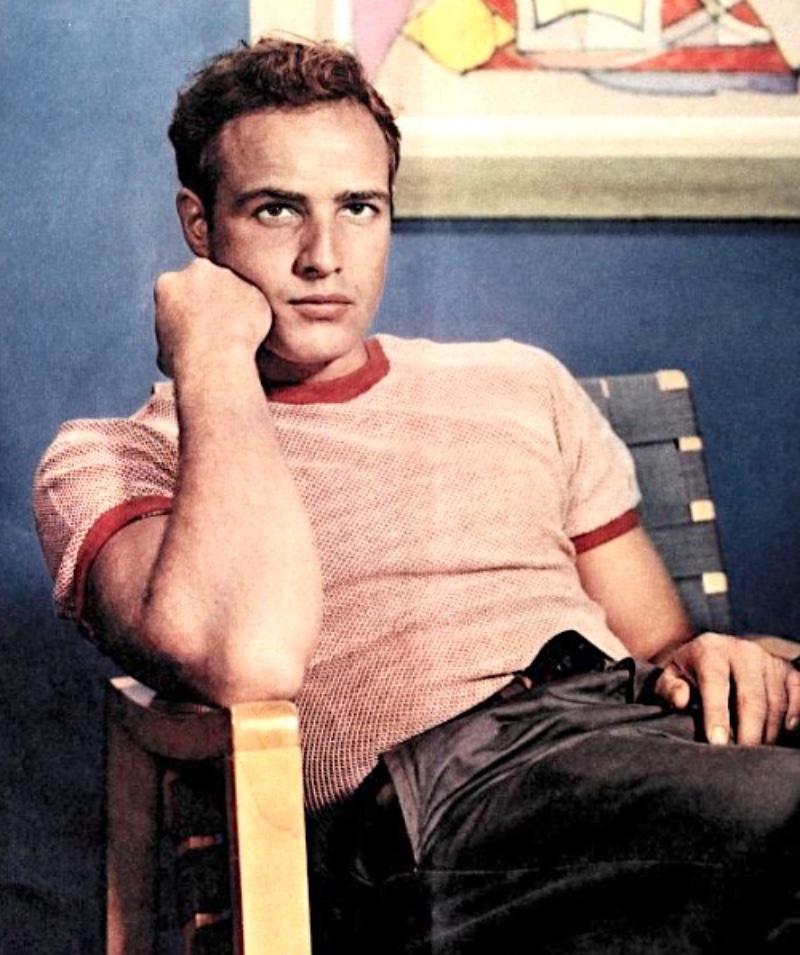
The 1950 color photograph of a young Brando in a red-trimmed ringer tee, dark trousers, seated in a slatted chair, was taken outside a film context. No character, no set, no narrative. The tee is a lightweight knit with a close crew neck and short sleeves that sit at the middle of his upper arm. The trousers are plain and dark. He is looking slightly past the camera.
The photograph circulated anyway, and continues to circulate, because the casual ease it captures proved harder to manufacture than any of the film looks. Off-duty images of actors from this period often show them dressed for the occasion of being photographed.
This one does not. The ringer tee worn as a complete outfit, the trousers worn at the natural waist, the absence of any accessory or finishing detail. The image captures a person who got dressed without considering how he would look. The style guides and menswear editorials that attempt to recreate this quality through careful selection of basics are, in some sense, all trying to photograph this photograph.
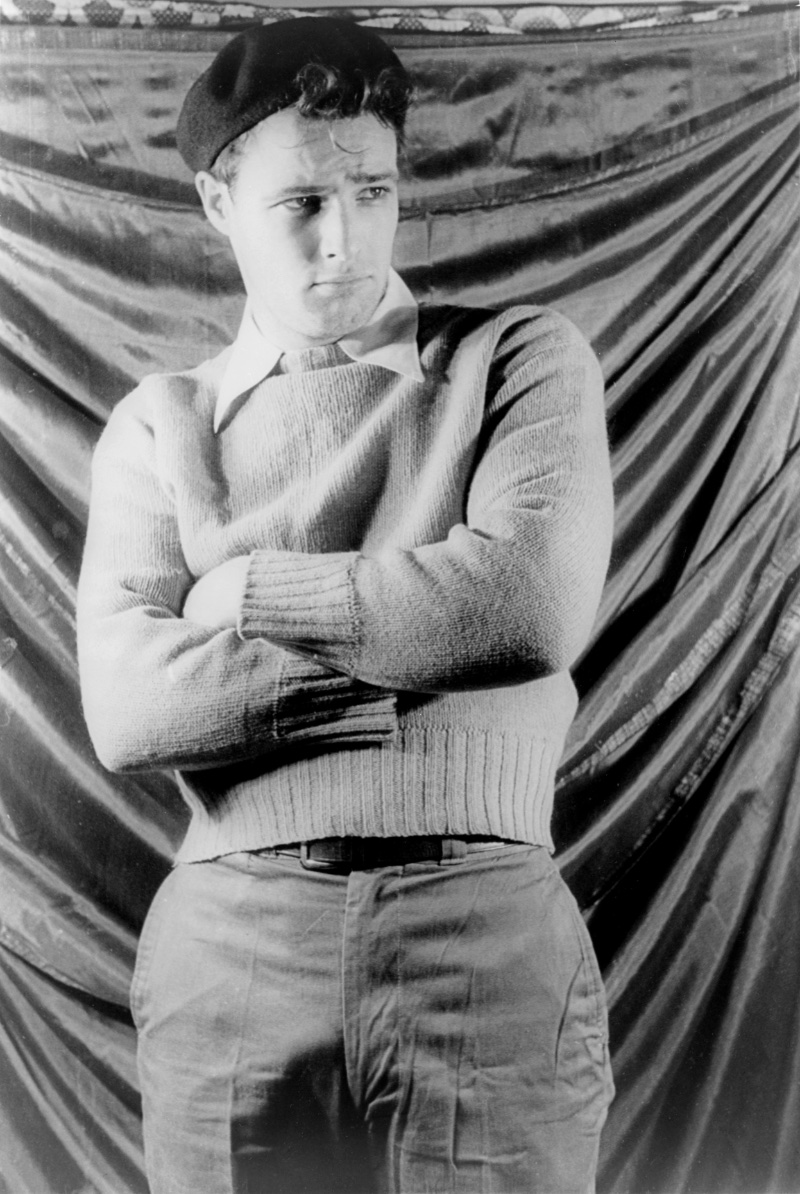
The 1948 portrait in a beret and ribbed knit sweater with arms crossed belongs to the same casual register and shows a different angle on it. The sweater is a thick-knit crewneck, the beret worn flat on his head. Both garments are working-class European in origin, worn by an American actor before his first major film. The styling is accidental in the sense that no one appears to have thought about it very hard, and the image has aged better than most things that were thought about hard.
On the Waterfront
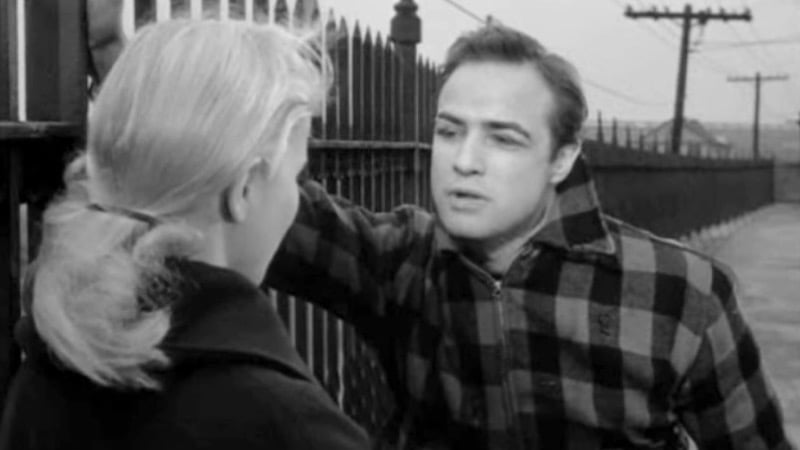
Terry Malloy in On the Waterfront (1954) wears a checked zip-front jacket that’s close-cut and functional enough to appear as working clothing instead of weekend casual wear. The jacket conveys the same sentiments as the flannel shirt. In American fashion, flannel has a particular history. It’s been workwear repackaged as leisure, then repackaged again as heritage, then repackaged again as something else.
The specific garment Malloy wears has none of that history attached. It is a worn jacket that belongs to a dockworker. What the film did was attach Brando’s physical specificity to it, the same mechanism that operated in Streetcar and The Wild One, so that the jacket and the person became difficult to separate in the cultural memory of the film. Workwear becomes desirable in fashion when it appears to be worn by someone who has no interest in its desirability. Terry Malloy is that argument at full length.
One-Eyed Jacks
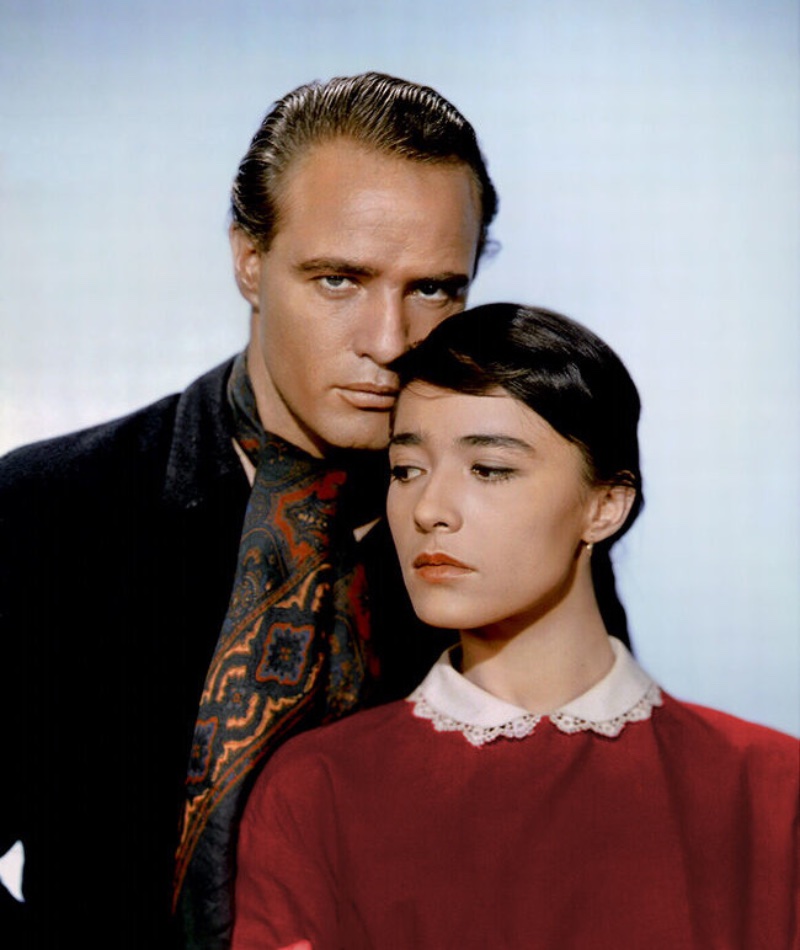
The color promotional photograph from One-Eyed Jacks (1961) shows Brando in a dark suit jacket with a wide-knotted paisley tie in amber, rust, and green, hair slicked back, standing close behind Pina Pellicer. The clothes are formal by the standards of everything else in this set of images, and the transition is abrupt. This is not a version of any look that preceded it.
The photograph is worth including here because it complicates the pattern. The case for Brando as a style figure rests partly on his early identification with working-class clothing, but the One-Eyed Jacks image shows that the quality the earlier photographs possessed was not dependent on the clothes being casual or rough.
The jacket and the scarf work for the same reason the tank and the jeans worked. The person wearing them appears to have no stake in being assessed for what he has on. That indifference, whether it was performed or natural, was the consistent element across eleven years of photographs and four distinct wardrobes.
The tension the fashion industry has never resolved is that the quality it keeps attempting to reference in Brando’s early looks was a byproduct of method acting, not styling. The method required him to believe he was the character, which meant believing the clothes were his. Fashion can select the garments. It cannot manufacture the belief.
What Fashion Borrowed from Young Marlon Brando
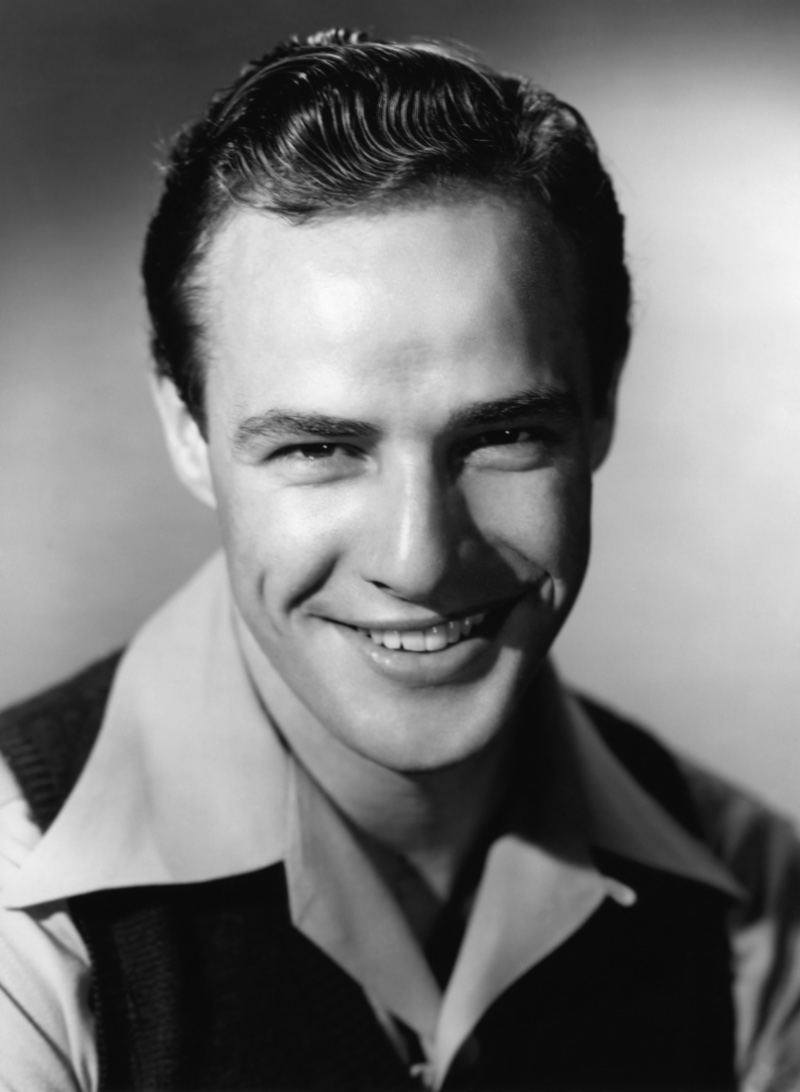
The promotional photograph from The Men (1950) shows Brando smiling, a two-tone casual shirt open at the collar, hair combed back from his face. It is the rare image from this period in which he appears to be enjoying being photographed, and it is the least referenced of all of them.
The fashion industry’s appetite for young Brando runs almost entirely toward the brooding images. The smiling one, the photograph in which he most resembles a person rather than an archetype, is the one that circulates least. That preference suggests what the fashion world was actually borrowing from him. Not his face, but the archetype itself, the figure who appears too absorbed in something else to notice the camera at all.