Business professional attire for men means a conservative matching suit in navy, charcoal or gray, worn with a dress shirt and tie. Leather dress shoes and minimal accessories complete the outfit. It's one of the more reassuring office dress codes: the broad decisions have already been made, leaving you to get the fit right and choose a tie you actually like. A striped shirt or a particular shade of burgundy can say plenty when the rest of the outfit is this controlled.
Business Professional Attire Men
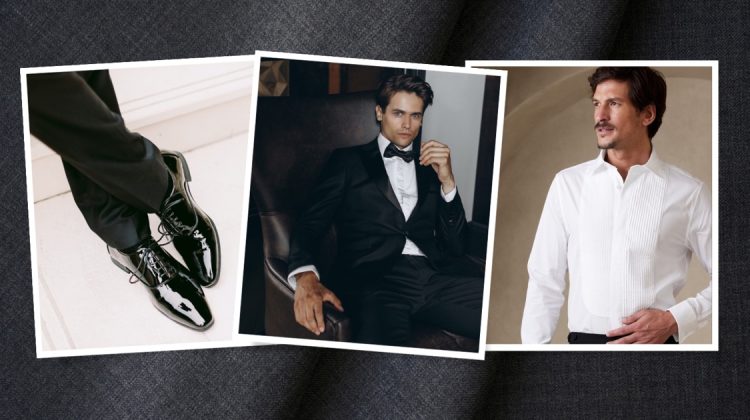
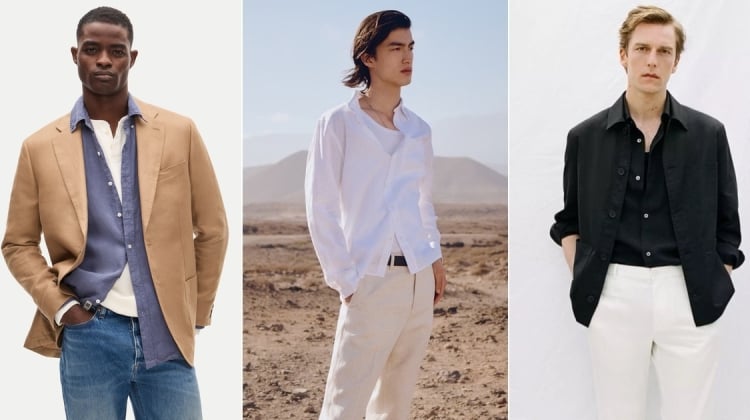
The suit still has a job to do. Matching tailoring establishes a shared level of formality for client meetings and afternoons at your desk, while proportions and the way you wear the clothes allow for individuality. In the commonly used five-level dress-code ladder, business professional sits one step below business formal, followed by business casual, smart casual and casual. Business formal calls for the most restrained suit-and-tie combination; business professional allows more latitude with shirts and patterns. A tuxedo belongs to an explicitly stated evening dress code.
The distinction between business casual and business professional becomes clearest at the jacket and trousers. A matching suit signals business professional, while a blazer and contrasting pants usually move the outfit toward business casual. Employers interpret these labels differently, so the company’s written policy takes priority over assumptions about what everyone wears to work now.
Business Professional Outfit Examples
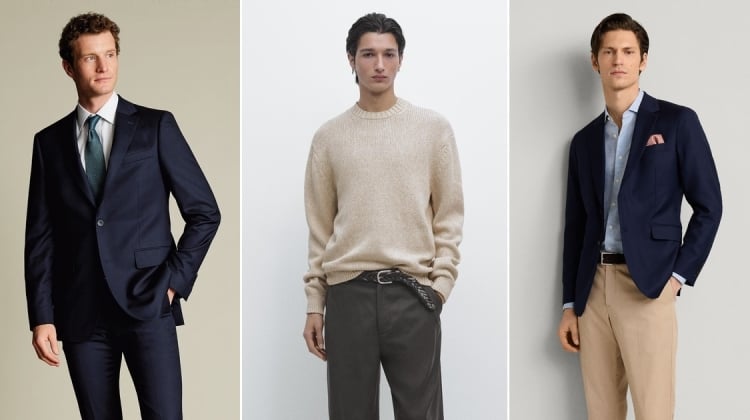
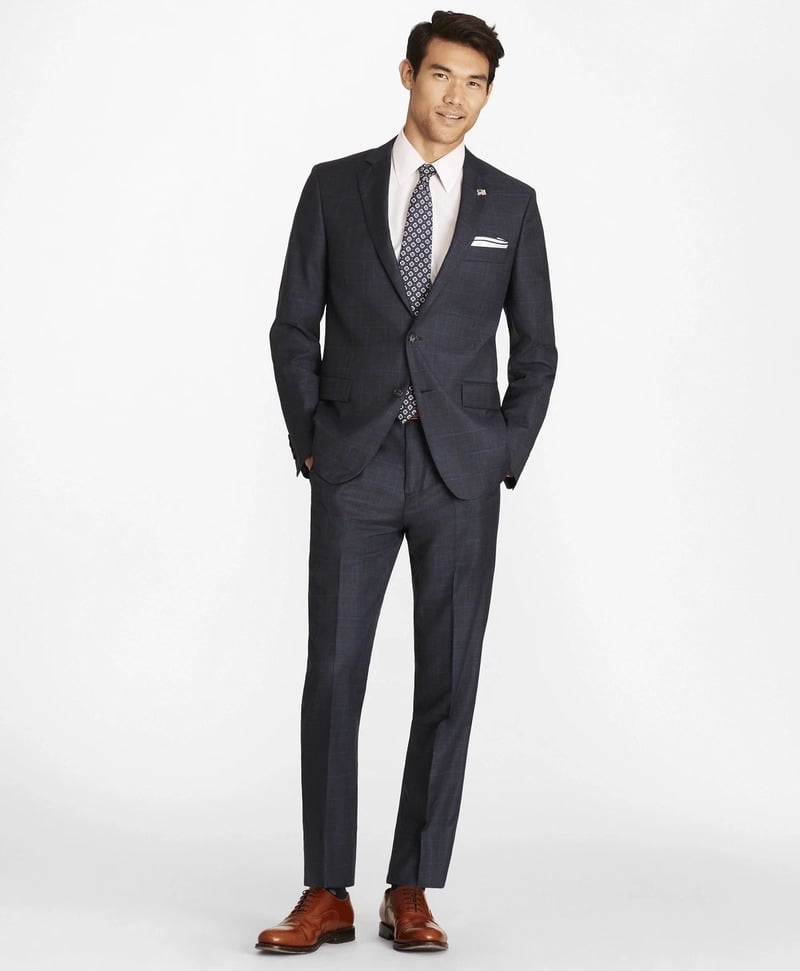
A working wardrobe can begin with one dependable suit. The next purchase should offer a useful change, whether that means gray after navy or a discreet stripe after solid cloth. These four combinations show how much variation fits inside the same dress code.
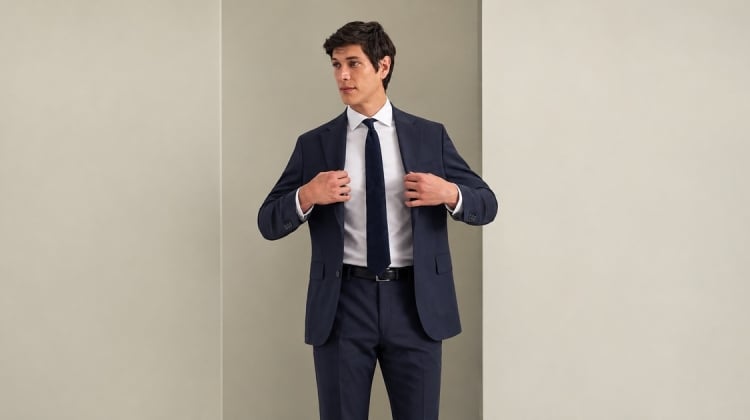
Navy Suit, White Shirt & Navy Tie
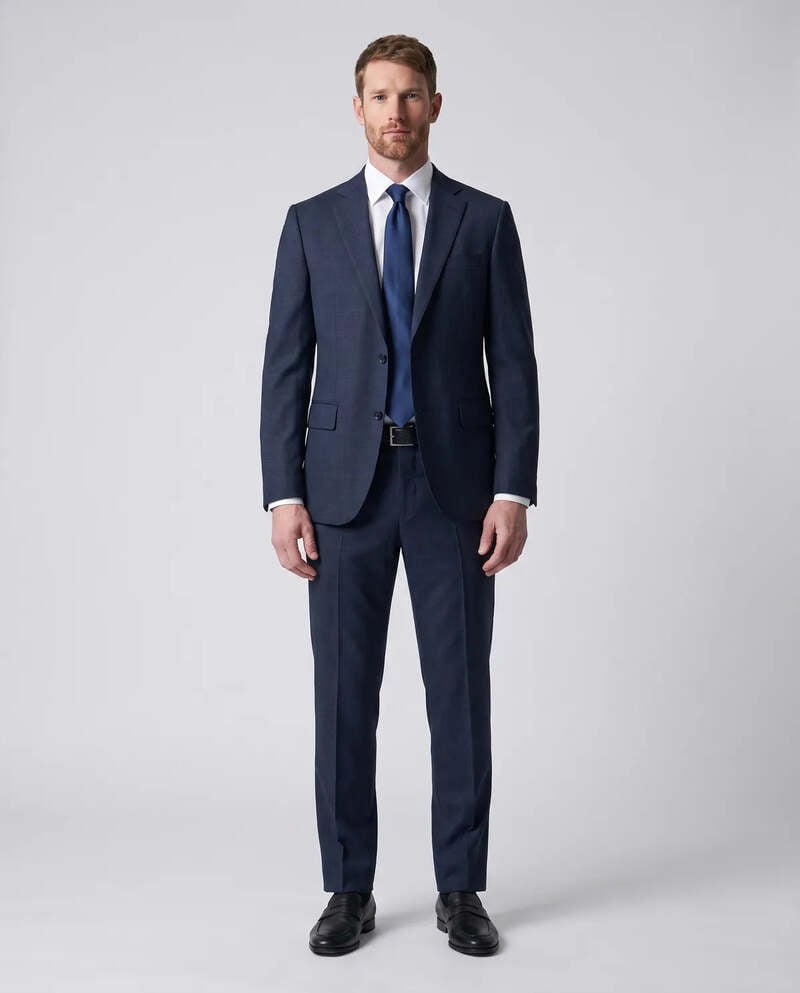
The navy suit and white shirt have survived generations of office life for practical reasons. They are easy to combine, suit a wide range of occasions and leave the face as the focus. A solid navy tie keeps the effect particularly restrained.
Black leather loafers give this version a traditional finish. For a conservative interview or significant client meeting, black Oxfords take the formality a step further. Once that foundation is established, a burgundy tie or a discreet stripe offers an easy change. There is little pressure to reinvent the outfit every Monday.
Gray Suit, Striped Shirt & Patterned Tie

Gray gives office tailoring a different expression. This medium shade feels lighter than navy, allowing the blue striped shirt and red tie to register more clearly. The plain suit holds the combination together while the patterns supply its character.
The trick is scale. Fine shirt stripes can sit comfortably beside a small tie motif because each remains easy to distinguish. Dark leather loafers suit an office accustomed to this interpretation of tailoring; lace-ups make it more conservative. Charcoal offers the same versatility with greater formality.
Navy Pinstripe Suit & Blue Shirt

Pinstripes bring some of the old office uniform into the present. A narrow stripe gives the suit definition, particularly when the cut is straightforward and the shirt is solid. Blue keeps the contrast gentle enough for daily wear.
The patterned tie works on a smaller scale than the suit’s stripes, giving the eye a clear distinction between them. Brown leather shoes soften the overall effect; black makes it more formal. With this much happening in the cloth, accessories can take a quieter role.
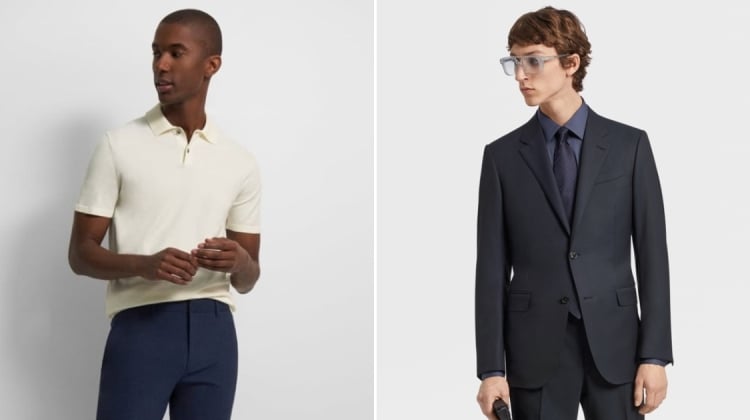
Tonal Navy Suit, Shirt & Tie

A dark shirt makes navy tailoring feel more deliberate and fashion-conscious. Closely related shades bring the jacket’s shape forward, while the tie introduces a subtle change in texture. It is a useful approach for someone who wears suits often and wants another way to inhabit them.
This combination suits an established workplace where dark shirts are accepted. For a first interview or an unfamiliar client, white or light blue is the dependable choice. The darker version shows how much the shirt alone can change a suit’s character.
Dress Shoes

Shoes establish the register of a suit before most people notice its finer details. Black leather Oxfords give navy and charcoal their most dependable business finish. Dark brown lace-ups also work with navy and many gray suits, depending on the office.
Among dress shoes, leather loafers offer a slightly more relaxed option. Their suitability depends on the workplace, making lace-ups the safer first purchase. Wear socks that cover the leg when seated, and give the shoes the same attention as the tailoring. Scuffed uppers are surprisingly effective at undoing an otherwise careful outfit.
Accessories

Business dress gives small accessories more influence. A watch and a simple leather belt may be enough, particularly when a patterned tie already supplies the interest. When choosing a belt, keep its color close to the shoes and its buckle modest.
A white pocket square adds a traditional touch if you enjoy wearing one. French cuffs call for cufflinks; ordinary button cuffs are equally appropriate for daily office life. The pictured chronograph is a noticeable accessory, while a slim watch makes an easier companion to a fitted shirt cuff.
Business Professional Without a Suit
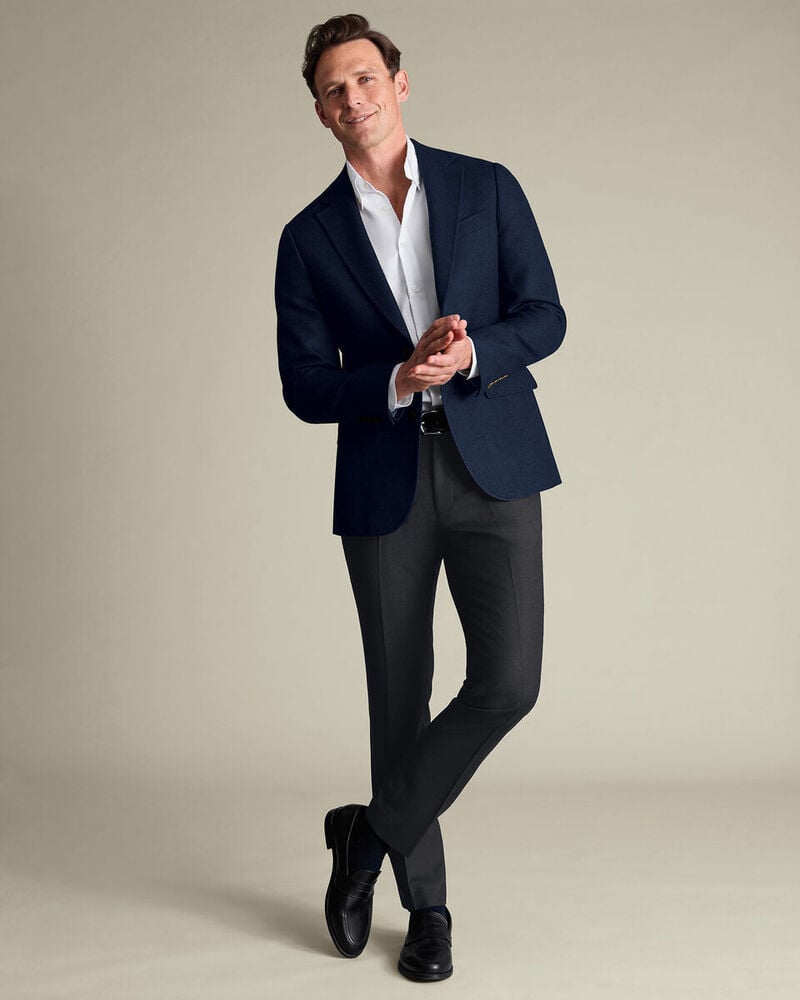
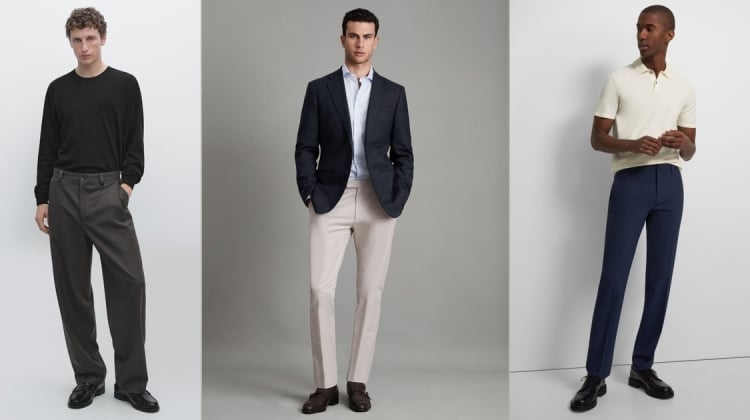
Some offices have kept the language of business professional dress while relaxing the suit requirement. In that setting, a navy blazer and gray tailored trousers offer a convincing alternative. The contrast makes the combination look intentional, and the jacket retains enough structure for office life.
The white open-collar shirt and black loafers pictured here place the outfit toward business casual. A tie and leather lace-ups increase the formality, although separates still depend on the employer’s approval. An interview invitation that says only “business professional” calls for the matching suit.
A blazer’s texture can help distinguish it from a suit jacket. Choose trousers with a tailored finish and enough color contrast to make the relationship clear. Trying to match two slightly different navies usually draws attention to the difference for the wrong reason.
Casual Friday


Casual Friday is a local custom, and the office sets its limits. An open collar or tailored chinos may be welcome under its business casual dress code. Sneakers with a suit represent a further relaxation, even when the shirt and tie remain. Let the day’s appointments guide the decision; a client meeting can put the usual leather shoes back in service.
Business Professional Rules & Common Mistakes

Fit is where an ordinary suit starts to feel like your own. Smooth shoulders and a jacket that closes comfortably matter more than an impressive label, while trousers should hang cleanly at a length suited to their cut and your shoes. Begin with a versatile two-piece suit in a dark color, budgeting for alterations and footwear. A small wardrobe of compatible pieces is easier to wear than a collection assembled around isolated bargains.
White and light-to-medium blue shirts simplify daily dressing, with collars that accommodate a tie comfortably and enough length to stay tucked when seated. A tie should relate to the jacket’s lapel width and reach approximately to the waistband; restrained stripes and small patterns let you repeat a suit through the week while keeping the combination coherent at a glance.
Routine maintenance keeps the wardrobe useful. Brush the jacket and address visible wrinkles before wearing it, rotating suits between wears when possible. Check trouser hems as well as shoe soles so the details receive the same attention as the initial fit.
Grooming & Final Checks

Practical grooming follows the same principle as the clothes: establish a routine you can maintain. Keep hair and facial hair in shape, nails clean and fragrance light enough for a shared office. A final check for lint and a shirt collar sitting correctly completes the preparation.
Over time, the suit becomes less of a prescribed outfit and more of a working wardrobe. You learn which cut feels comfortable through a long meeting and which shirts make your favorite tie look its best. That is where business professional dress becomes personal, through choices that satisfy the office and feel like your own.