Chinos are lightweight cotton twill trousers with military origins, sitting between jeans and dress trousers in formality. For men, their appeal is that flexibility: the same pair can look at home with a faded T-shirt or a button-down shirt and loafers.
What Are Chinos for Men?

Chinos are casual trousers made from cotton twill, often with slanted front pockets and welt pockets at the back. Their smooth surface and discreet stitching give them a dressier appearance than most jeans, even when the two share a similarly relaxed cut.
Among the different types of pants, chinos occupy particularly useful territory. They can bring a little discipline to a sweatshirt or take the stiffness out of a blazer. Much depends on the cloth and cut. A washed, wide-leg pair has a different personality from slim navy chinos with a pressed crease.
Chino Fabric & Military History

Cotton is the fiber; twill is the weave, recognizable by its diagonal lines. “Cotton chinos” and “twill chinos” therefore usually describe the same thing. Traditional versions use cotton, while modern blends may add elastane for stretch or other fibers to change how the cloth performs.
Weight changes the effect. Lightweight chinos feel easy in summer, while denser twill holds a fuller leg more convincingly and suits heavier shoes. Stretch can help with movement, though a comfortable cut should do most of that work.
The military connection predates the office dress code. Cotton twill trousers served as practical warm-weather uniform clothing, and khaki versions became part of American military dress. Their civilian life took them into collegiate wardrobes and, eventually, the business casual workplace. That progression helps explain why chinos can suggest Ivy League tradition in one outfit and utilitarian simplicity in another.
Chinos vs. Jeans

Chinos and jeans are closer relatives than their reputations suggest. Both commonly use cotton twill. Traditional blue denim, however, combines dyed warp yarns with lighter weft yarns, producing its characteristic blue face and lighter reverse. Chino cloth generally has a more uniform color.
Construction supplies the other clues. Jeans usually have five pockets, visible stitching, and metal rivets. Traditional chinos have inset pockets and quieter seams, giving the trousers a smoother appearance. Five-pocket chinos borrow from denim, so they tend to feel more casual.
For everyday dressing, the distinction is useful. Jeans bring texture and a workwear association; chinos let the shirt or jacket set more of the tone. A blue Oxford shirt and tan chinos read as collegiate, while the same shirt with faded denim feels more rugged.
Chinos vs. Khakis

Chino describes a cloth and a trouser style. Khaki primarily describes a sandy brown color, though Americans also use “khakis” to mean casual cotton trousers in that shade.
A pair can be both. Tan cotton twill chinos qualify as khakis; navy chinos belong to the same trouser family in another color. Retailers sometimes draw distinctions around weight or cut, but those conventions vary. When choosing khaki pants, the actual fabric and fit tell you more than the label.
How Chinos Should Fit

Fit determines whether chinos look relaxed, tailored, or simply the wrong size. Start with a waistband that sits securely and pockets that lie flat. Pulling across the front, flaring pockets, or a seat that feels restrictive when sitting all suggest that another cut would serve you better.
Slim fit: A close line through the seat and thigh, usually finishing with a narrow hem. Slim chinos work well with lighter footwear, provided the fabric falls freely instead of clinging to the calves.
Straight fit: A relatively consistent line from knee to hem. This is an easy starting point for men who want some shape through the leg and enough width to sit naturally over loafers or sturdier shoes.
Tapered fit: A leg that narrows toward the ankle. Taper can appear on several cuts, including styles with extra space through the thigh, making it useful for men who want a fuller upper leg and a narrower opening.
Relaxed fit: A fuller cut through the seat and leg. A higher rise and tucked shirt can give relaxed chinos definition, allowing the volume to look deliberate.
Pleated chinos: Pleats introduce fullness at the front and influence how the trousers fall. They can accompany a tapered or wide leg, so think of them as a construction choice within a fit.
Your proportions matter more than a body-type formula. Fuller thighs may suit a relaxed tapered cut, while a straight leg can balance a heavier shoe. Check the hem with the footwear you actually wear. A slight break is versatile; a shorter hem gives the shoes more attention.
What to Wear with Chinos
Chinos respond to their surroundings. Wear them with a sweatshirt and they take on the ease of sportswear. Add a tucked shirt and leather shoes, and their tailored details become more apparent.
Casual
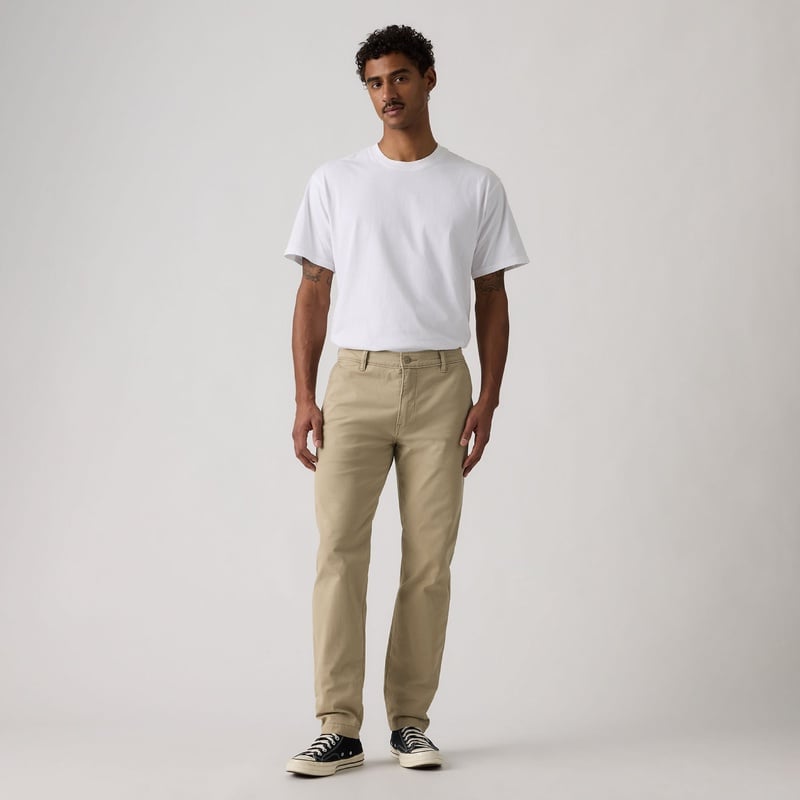
For casual wear, washed chinos and a heavyweight T-shirt have an appealing simplicity. A straight or relaxed leg keeps the combination easy, with canvas sneakers underneath. A chore jacket adds texture when the weather turns, particularly over chinos with a softer, worn finish.
Smart Casual
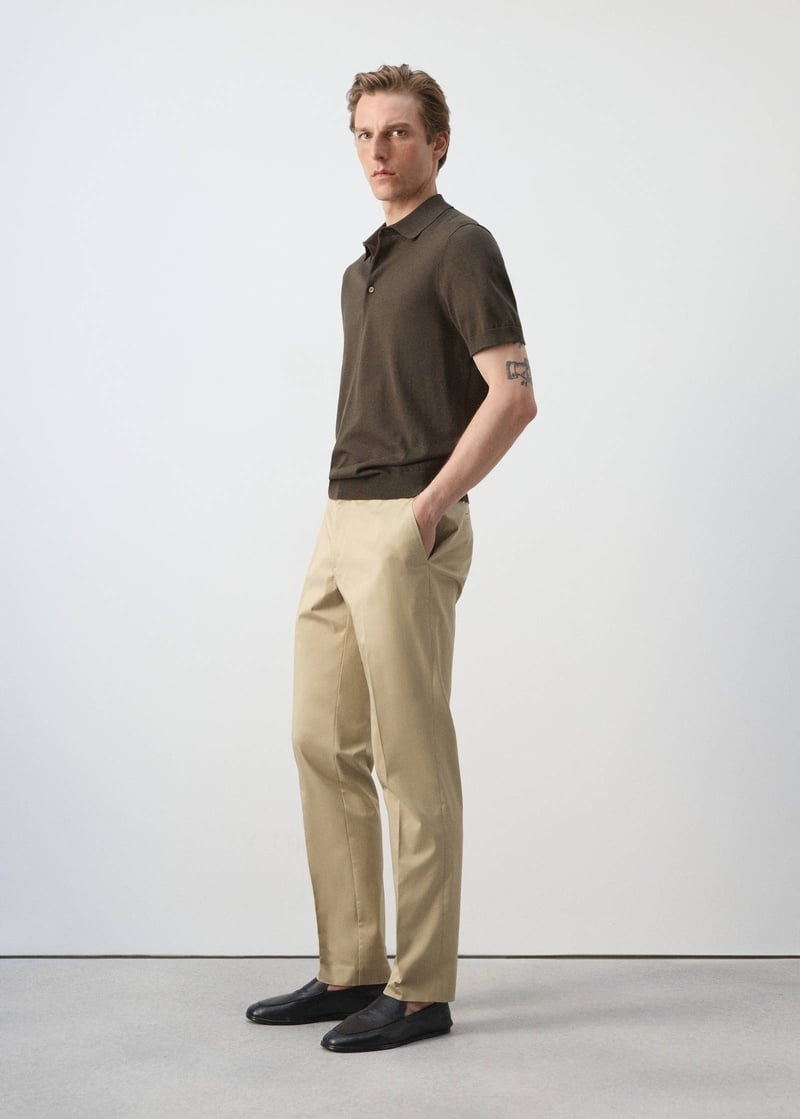
For smart casual, knitwear does much of the work. A knitted polo gives cotton trousers some texture and a defined neckline; suede loafers continue that softer approach. With a fuller trouser leg, a sweater that ends near the waistband keeps the proportions in focus.
Business Casual
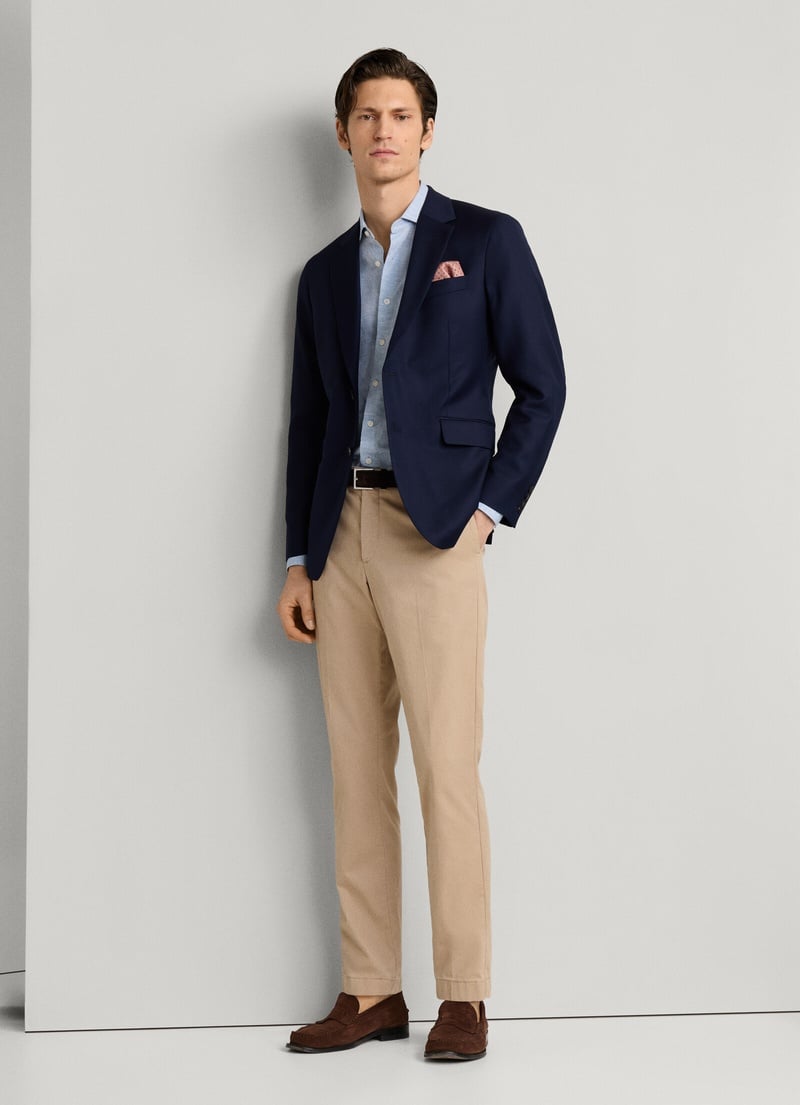
For business casual, smooth-finished chinos and an Oxford shirt remain a dependable combination. Leather loafers sharpen the effect, while an unstructured blazer suits days that call for a jacket. The office sets the limits of business casual, so take your cues from the people and expectations around you.
Chinos can look dressed, but formal and semi-formal invitations generally call for the appropriate suit or eveningwear. Their strength lies in everyday situations where a little tailoring feels welcome.
What to Wear with Tan Chinos

Tan chinos come with collegiate associations, and a blue Oxford shirt puts them to use. Tucked into a straight-leg pair with brown loafers, it is a combination whose proportions matter more than any clever addition. A slightly fuller leg can make it feel especially assured.
A black knitted polo takes tan in another direction. The contrast gives the sandy shade definition, with black loafers making the outfit feel connected from top to bottom. For casual days, a white T-shirt and canvas sneakers let the trousers relax.
What to Wear with Navy Chinos

Navy chinos are an easy companion for an off-white sweater. The lighter knit brings some softness to the dark trousers, particularly with brown suede shoes. A light blue shirt gives the same pair a more conventional office character.
When adding a blazer, gray or brown establishes a clear separation. Navy on navy can also work when the textures differ noticeably, such as a textured knit jacket over smooth cotton trousers. The distinction helps the outfit read as intentional separates.
What to Wear with Olive or Green Chinos

Olive brings the military history closer to the surface, especially in heavier twill with a fuller leg. A white T-shirt and suede boots suit that practical character, while a navy sweater steers the trousers toward quieter everyday dressing.
Lighter green chinos feel softer with an ecru shirt. Keep the surrounding colors restrained and the green becomes an easy part of the outfit. A simple leather belt can provide enough definition when the shirt is tucked.
What to Wear with Brown Chinos
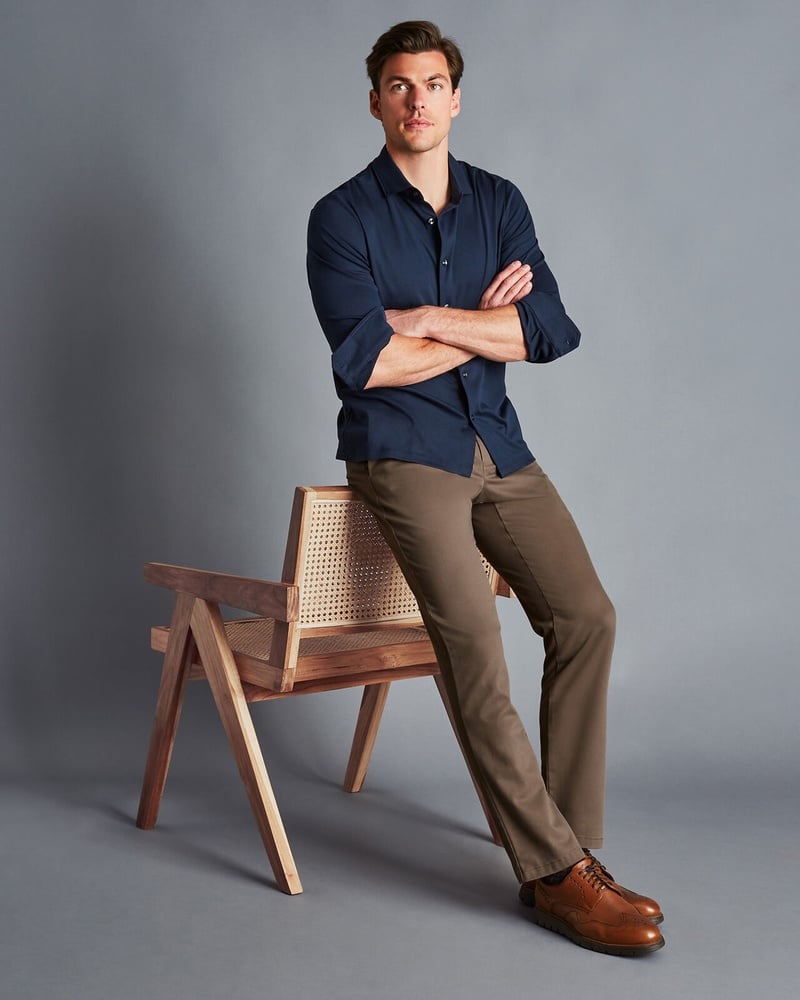
Brown chinos reward a little attention to texture. Blue chambray brings brightness and a casual workwear connection, while a cream sweater makes the trousers feel particularly suited to cooler weather.
Shoes can stay within the brown family as long as the shades have some separation. Dark loafers anchor tobacco-colored chinos; lighter suede lifts chocolate brown. Black leather also works with deeper browns, especially when a black polo or sweater connects the combination.
What to Wear with Black Chinos
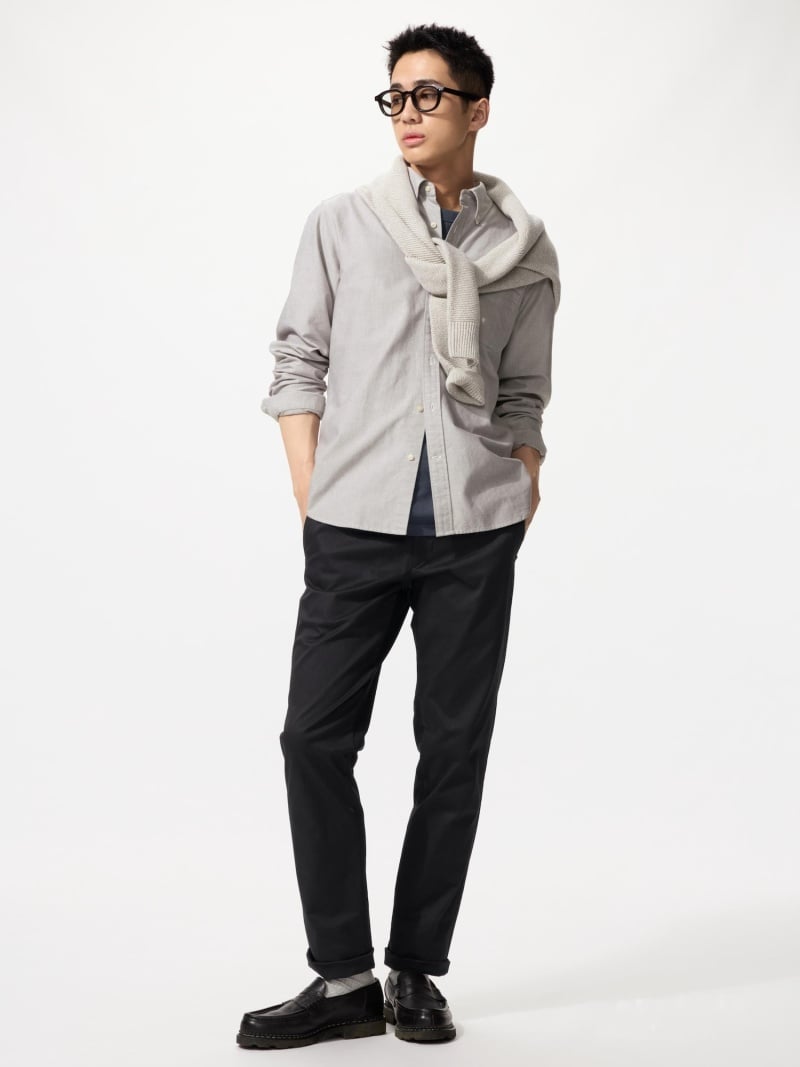
Black chinos put the emphasis on shape. With a white T-shirt and black loafers, a straight leg has a graphic simplicity. A gray sweater softens the contrast while keeping the outfit restrained.
An all-black combination benefits from differences in texture. Washed cotton beneath a saturated black knit can look deliberate, particularly when the trousers fall cleanly over the shoes. The finish of each piece becomes more noticeable when color offers little distraction.
What to Wear with Gray Chinos
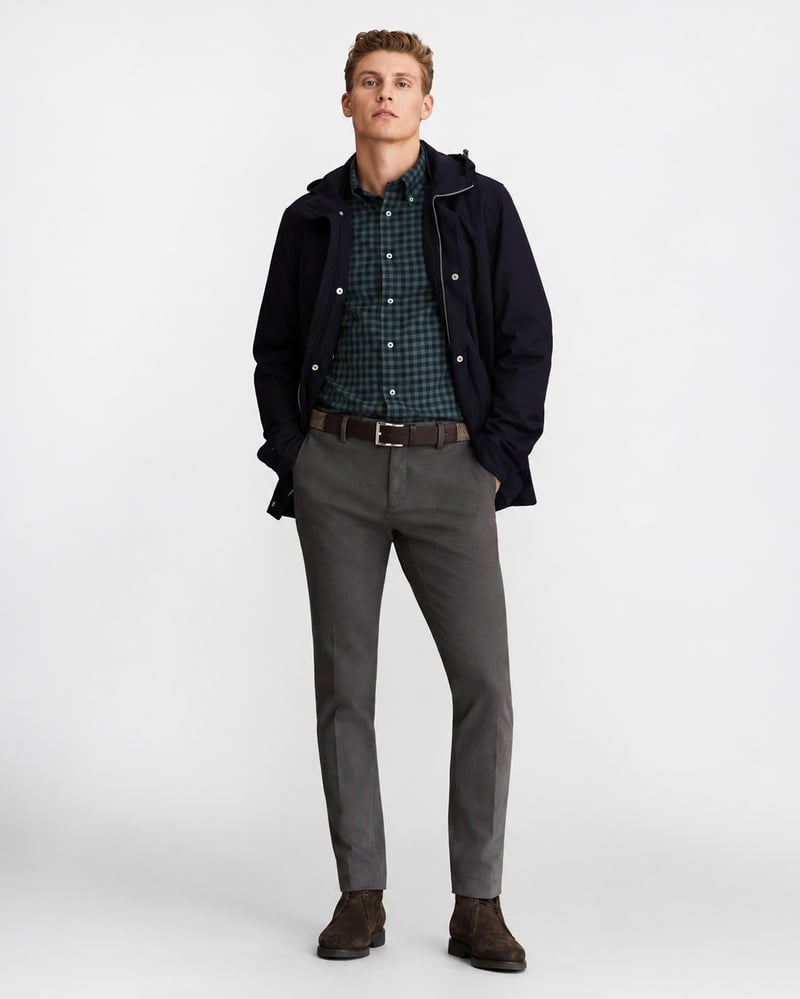
Gray chinos make an easy foundation for navy knitwear. A polo and brown loafers give the combination enough definition for a casual dinner, while a burgundy sweater brings warmth to cooler-weather dressing.
Shade changes their character. Light gray feels relaxed with white sneakers; charcoal looks closer to dress trousers, especially with a crease and black leather shoes. Choose according to the clothes you want them to accompany.
What Shoes to Wear with Chinos

The relationship between hem and shoe matters as much as the footwear itself. A narrow opening tends to suit a slimmer shoe, while a fuller leg can balance a heavier sole. The fabric should fall cleanly, with enough clearance to avoid bunching over the shoe.
Sneakers: Canvas styles emphasize the casual side of chinos, while simple leather sneakers feel a little dressier. White creates contrast; off-white often sits more softly against tan or olive.
Loafers: Penny loafers draw on the collegiate history of chinos. Suede feels relaxed, while smooth leather gives a tucked shirt and cotton trousers more definition.
Derbies: Open-laced shoes offer an easy step up from sneakers. A rounded toe and a moderate sole suit the everyday character of chinos, especially in straight or relaxed cuts.
Boots: Suede chukkas work naturally with lighter twill. Heavier leather boots benefit from denser cloth and a trouser opening wide enough to fall over the shaft.
Oxfords can accompany dressier chinos, though the finish of the cloth should support the shoe. Smooth, pressed cotton makes more sense with formal footwear than a heavily washed pair does.
How to Care for Chinos

The care label has the final say, particularly with stretch blends or special finishes. Where machine washing is permitted, turn chinos inside out and wash with similar colors. Lower temperatures can help limit fading and shrinkage.
Check the label before tumble drying. Cotton can shrink with heat, and stretch fibers may require extra care. Air-dry when recommended, then press at the appropriate setting, paying attention to pocket edges and seams.
A center crease changes the mood of the trousers. Keep it for a more tailored effect, or press them flat for casual wear. Chinos are accommodating that way: sometimes the difference between office trousers and Saturday trousers is a shirt, a pair of shoes, and a few minutes with the iron.