Sweaters have a way of suggesting a whole wardrobe. The crew neck belongs as easily with jeans as a collared shirt; the cardigan can suggest a campus library or a weekend off. Much of that character begins with the neckline and the knit.
The different types of sweaters for men range from simple pullovers to textured fisherman knits. Their shapes tell only part of the story. Fabric and fit determine whether a sweater becomes a light everyday layer or something you reach for when the temperature drops.
A Brief History of Sweaters
The sweater’s place in menswear owes much to work and sport. Knitted layers provided warmth for outdoor workers and became part of leisure dressing, giving a practical garment a life beyond the job.
By the 1920s, knitwear had become part of everyday menswear. That movement between utility and leisure still shapes the sweater, from a heavy wool pullover to a fine cardigan worn beneath tailoring.
Types of Sweaters for Men
Some sweater names describe a neckline; others refer to a stitch or fastening. The categories overlap. A crew neck can also be a cable knit, while a cardigan can have a shawl collar.
Crew Neck Sweater

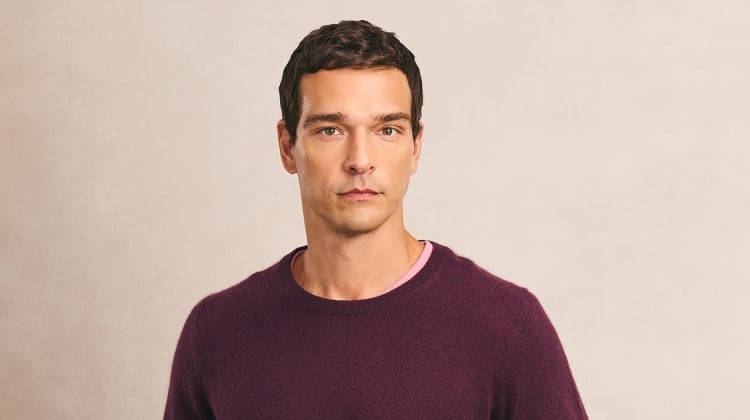
The crew neck sweater is defined by its round neckline, which sits close to the base of the neck. Its straightforward shape gives the knit itself room to register, whether that means fine cotton or thick wool.
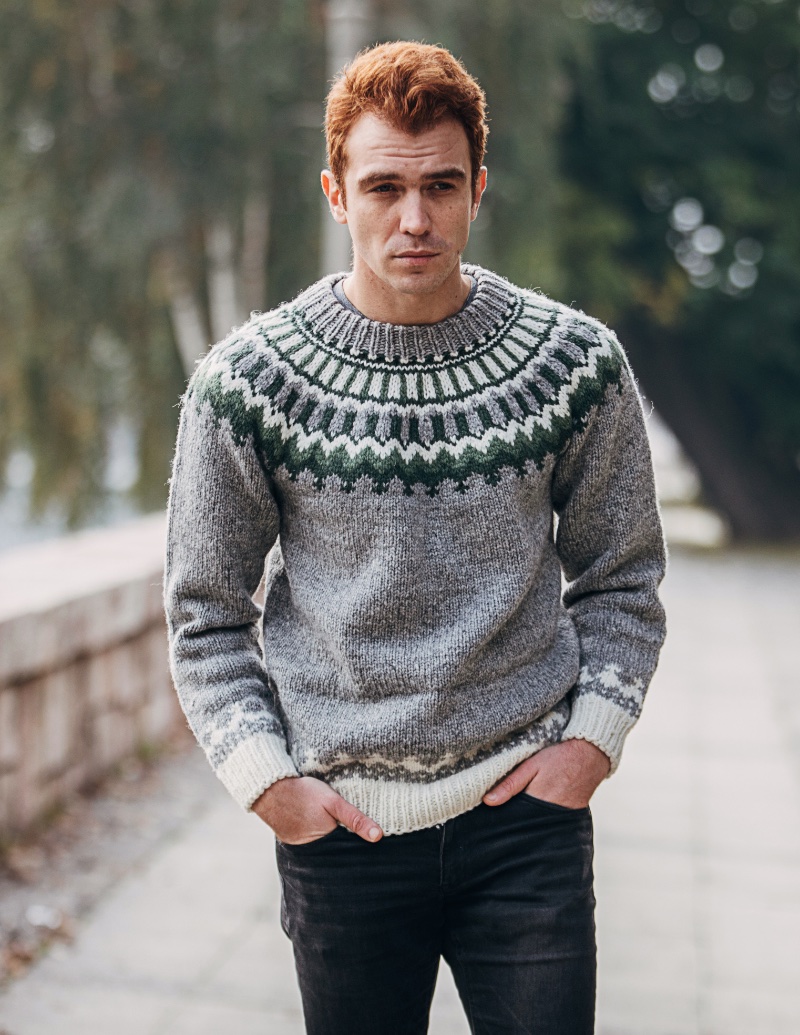
Gray and navy keep its character restrained. A Fair Isle pattern or a strong color moves the same basic shape toward something more expressive.
Sweater Vest

The sweater vest has longstanding associations with granddad’s wardrobe, but the sleeveless cut has a usefulness beyond nostalgia. It adds warmth through the body and leaves shirt sleeves free of another knitted layer.
Argyle and cable stitches emphasize the vest’s traditional character. A plain knit lets its proportions do more of the talking, especially in a roomy cut.
V-Neck Sweater

The V-neck sweater opens up the neckline, leaving room for a shirt collar and tie. That makes it a natural part of a business-casual ensemble, though its character changes with the depth of the V.
A shallow opening keeps the effect restrained. A deeper V exposes more of the chest or shirt beneath it, making the neckline a more prominent part of the outfit.
Turtleneck

The turtleneck or rollneck has a high collar that folds over itself. In a fine gauge, it has the clean line to sit beneath tailoring; in a heavy knit, it suggests colder weather and a roomier coat.
The distinction is more than visual. A thick folded collar holds considerably more fabric around the neck, so comfort matters as much as the silhouette.
Cable Knit Sweater

The cable knit sweater takes its name from raised, twisting stitch patterns. The surface gives even a single-color knit depth, making texture the main attraction.
Wool and wool-blend versions are common in winter wardrobes, while cotton offers the same stitch work in a lighter form. A cable pattern alone does not tell you how warm a sweater will be.
Shawl Collar Cardigan

The shawl collar cardigan has a broad, curved collar that continues into the front opening. It gives the cardigan more weight around the neck and some of the framing associated with a jacket.
Heavy versions can serve as outerwear in mild weather. The fit should leave room for a shirt underneath, with buttons that close easily across the chest.
Shawl Collar Sweater

The shawl collar pullover sweater brings that curved neckline to a pull-on shape. A short button fastening sometimes breaks up the collar, offering a little adjustment at the throat.
The result is less open than a cardigan and more enclosed than a crew neck. A relaxed fit suits its easy character, provided the sleeves and hem fall where intended.
Cardigan

The cardigan opens at the front, usually with buttons. Men have embraced the cardigan in guises that range from a fine office layer to an oversized knit with the proportions of a jacket.
Its reputation for being conservative tells only part of the story. Gauge and volume can make the same basic design look academic, casual, or deliberately slouchy.
Fisherman Sweater

The fisherman sweater draws on the texture and weight of knitted workwear. An Aran sweater, associated with Ireland’s Aran Islands, is one recognizable example, often combining cables with other raised stitches.
The name now covers interpretations in different fibers and weights. A cotton fisherman-style sweater offers the look of a traditional wool knit, but it will not necessarily offer the same warmth.
Half-Zip & Quarter-Zip Sweaters

Half-zip and quarter-zip sweaters have a zipper extending down from a standing collar. Its length varies, but the principle is the same: a pullover with an adjustable neckline.
Closed, the collar gives more coverage around the throat. Open, it creates space for a shirt and lends the sweater some of the ease of sportswear.
Mock Neck Sweater

The mock neck sweater stops between a crew neck and a turtleneck. Its short collar stands upright instead of folding over, creating a higher neckline with less fabric at the throat.
That smaller collar is its main appeal. It gives a plain knit a more defined outline while avoiding the bulk of a full rollneck.
Henley Sweater

The henley sweater is identified by a short button placket beneath a collarless neckline. The fastening interrupts the front of the knit and gives an otherwise simple pullover a casual character.
Like the henley shirt, it sits comfortably in a workwear-influenced wardrobe. Ribbed versions emphasize that connection through texture.
Full-Zip Sweater

The full-zip sweater opens from collar to hem, giving it the convenience of a jacket. It is especially useful as a layer you expect to take off during the day.
Fine knits sit easily beneath a coat, while heavier versions can take the place of light outerwear. A smooth zipper line helps the front retain its shape.
Hooded Sweater

The hooded sweater borrows the relaxed shape of a hoodie and interprets it in knitwear. The hood may be the recognizable feature, but the knitted construction distinguishes it from a conventional sweatshirt.
A chunky wool blend gives the shape a winter character. A light cotton knit feels closer to a casual pullover, with the hood adding volume at the back of the neck.
Understanding Sweater Fit

Sweater fit begins with the intended silhouette. On a conventional cut, shoulder seams sit near the edge of the shoulder. On a relaxed design, dropped seams are part of the shape, not automatically a sign that the size is wrong.
Sleeves generally finish around the wrist, and the hem covers the waistband. Cropped and oversized cuts change those proportions deliberately. The useful test is movement: the knit should let you sit and raise your arms comfortably, with no strain across the chest.
Decoding Sweater Fabrics

The fabric of your sweater helps determine when you will wear it. Cotton suits lighter layers, while wool is valued for insulation. A dense knit and a loose, airy one can feel quite different even when their fiber labels match.
Cashmere is prized for softness, though the quality of the yarn and construction still matters. Acrylic and polyester can alter a blend’s price and performance; neither guarantees breathability. The care label deserves attention before the first wash.
Preparing for Sweater Weather

A sweater’s name is a useful starting point, but it is only shorthand. Two crew necks can serve different wardrobes when one is a fine layer for tailoring and the other is a heavy weekend knit.
The better choice comes down to the shape you like and the warmth you need. Once those are right, the difference between a cardigan and a pullover becomes a matter of character.