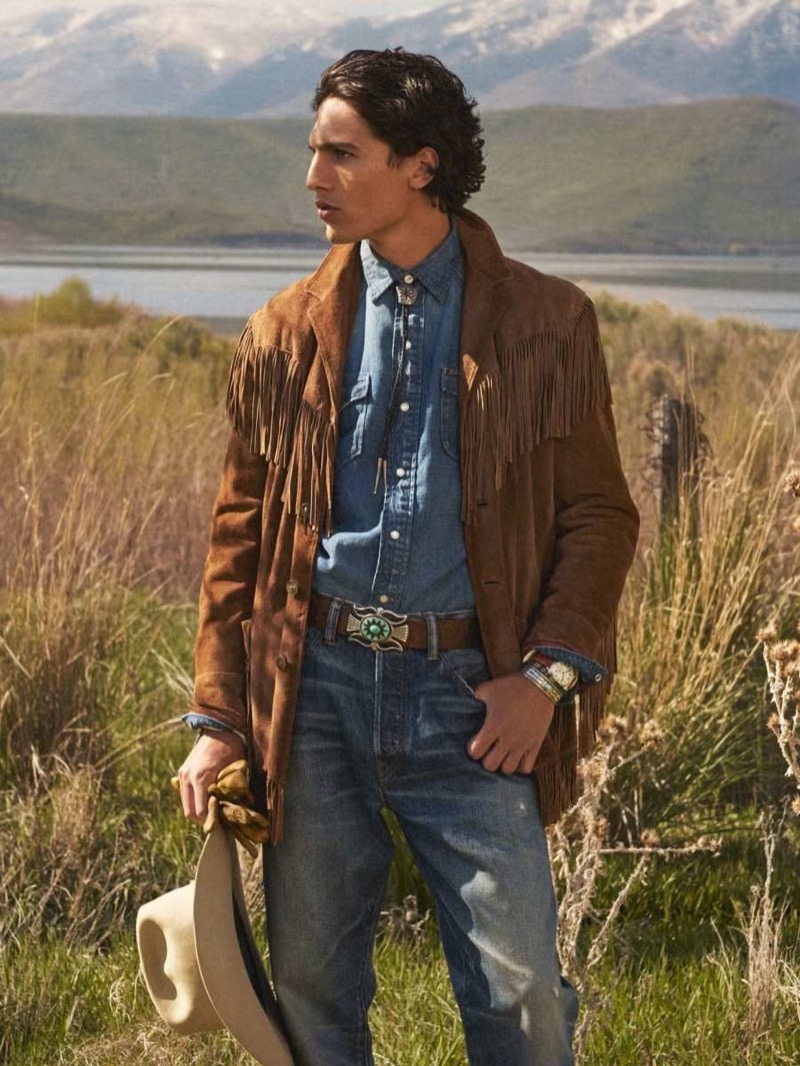
Ralph Lauren launched his namesake corporation in 1967 in New York with a line of men’s neckties, then named his first full menswear collection Polo in 1968. The proposition was narrow at first and clear in shape. Lauren’s ties were wider and more colorful than other ties on the market and they soon found a niche, first in small menswear stores and later in the fashionable Bloomingdale’s department store.
The early descriptor that stuck came from trade paper DNR, where editor Buffy Birrittella began codifying what she called “the Lauren Look,” describing his white linen belted-back suit as “a look straight off Gatsby’s lawn.” That phrase, more than any campaign, fixed how the brand was read by the press in its first decade.
Menswear is the spine of the house, not a side category. From the 1968 expansion into shirts, sport coats, slacks, and suits, the design language pulled from British country dress, Ivy League tailoring, and American sportswear in roughly equal measure.
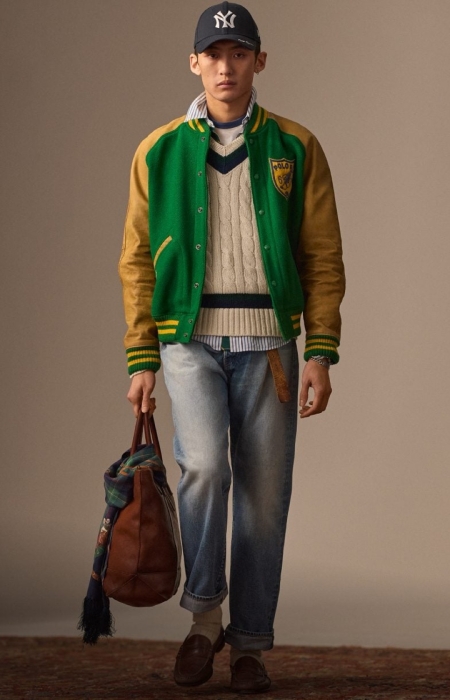
The work draws heavily on the aesthetics of the British aristocracy, country life and traditional craftsmanship, and the brand consistently incorporates English country style, including cricket sweaters, equestrian themes and collaborations with traditional British mills.
The 1972 cotton mesh Polo shirt, the oxford-cloth Easy Suit, tweed jackets, and tartan tailoring became the recurring vocabulary. Culturally, the label sat next to Brooks Brothers in reference points and alongside Calvin Klein and Tommy Hilfiger in the American designer cohort that defined the 1980s and 1990s.
In 1974, Lauren outfitted the male cast of the film The Great Gatsby in costumes from his Polo line, a 1920s-style series of men’s suits and sweaters, and designed a pink suit for Robert Redford’s Jay Gatsby. Industry recognition followed quickly, and over time he collected the CFDA awards for Lifetime Achievement in 1991, Womenswear Designer of the Year in 1995, and Menswear Designer of the Year in 1996 and 2007, along with its Fashion Legend Award in 2007.
The company scaled through licensing, retail, and category expansion. It entered the European market and went international in 1981 with the opening of the first freestanding store for an American designer on New Bond Street in London, and in 1986 Ralph Lauren opened his first flagship in the Rhinelander mansion on Madison Avenue and 72nd Street in New York.
Sub-labels followed, including Polo Sport in 1992, Ralph Lauren Purple Label in 1995, and Lauren Ralph Lauren in 1996. Leadership has shifted at the top of the corporation while Lauren himself stayed in the creative seat. Stefan Larsson was named CEO in 2015 and Lauren stayed on as executive chairman and chief creative officer, Larsson left the role effective May 2017 due to differences with Lauren, and Patrice Louvet was named President and CEO that same month.
Today, the brand sits across a wide price ladder, from the Polo line in department stores to Purple Label tailoring and the runway Collection. Its customer base runs from preppy-leaning students and Wall Street commuters to the hip-hop and streetwear collectors who absorbed the label in the 1990s.
The most visible of those collectors were the Lo Lifes, a Brooklyn subculture that took its name from “Polo” and dressed in the brand from head to toe. Active in the 80s and 90s, the group revolved around Polo Ralph Lauren as both wardrobe and identity. That double readership, country club and corner store, is the position the house still occupies.
From the Archive
June 17, 2026
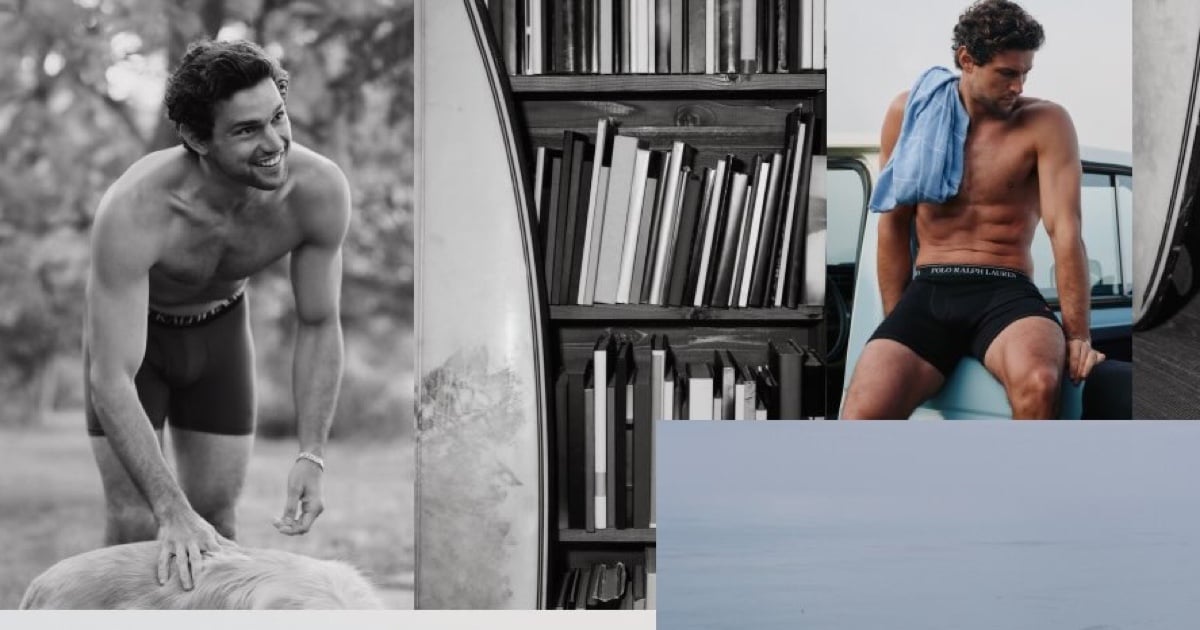
Polo Ralph Lauren Pulls Its Essentials Into the Open Air
Ralph Lauren surrounds its latest underwear styles with sun, surf, and an enduring American fantasy.
May 20, 2026
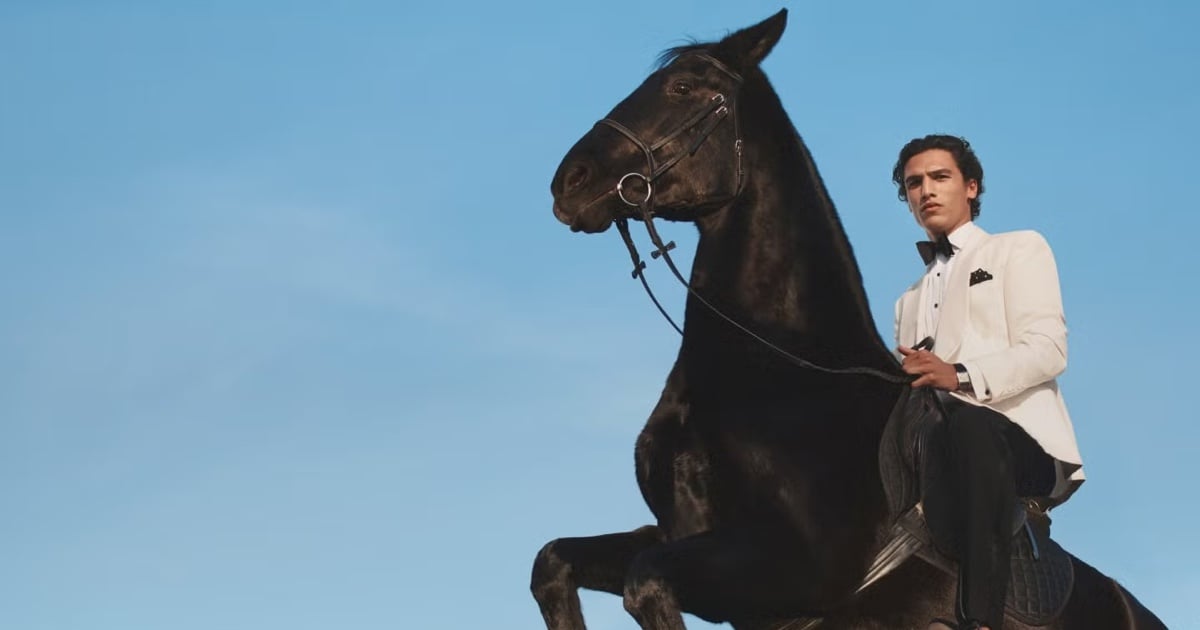
Ralph Lauren Spring 2026 Sharpens the Fantasy of Affluent Escape
David Sims photographs Ralph Lauren’s spring-summer 2026 campaign across sailboats, coastal roads, and whitewashed villas, bringing Polo, Purple Label, and Polo Sport together.

May 14, 2026
Ralph Lauren Purple Label Cuts Spring 2026 to a 1940s Proportion
Peak-lapel jackets and high-rise pleated trousers give Ralph Lauren Purple Label the confidence of an era when a man’s suit made the entire impression.
February 1, 2026
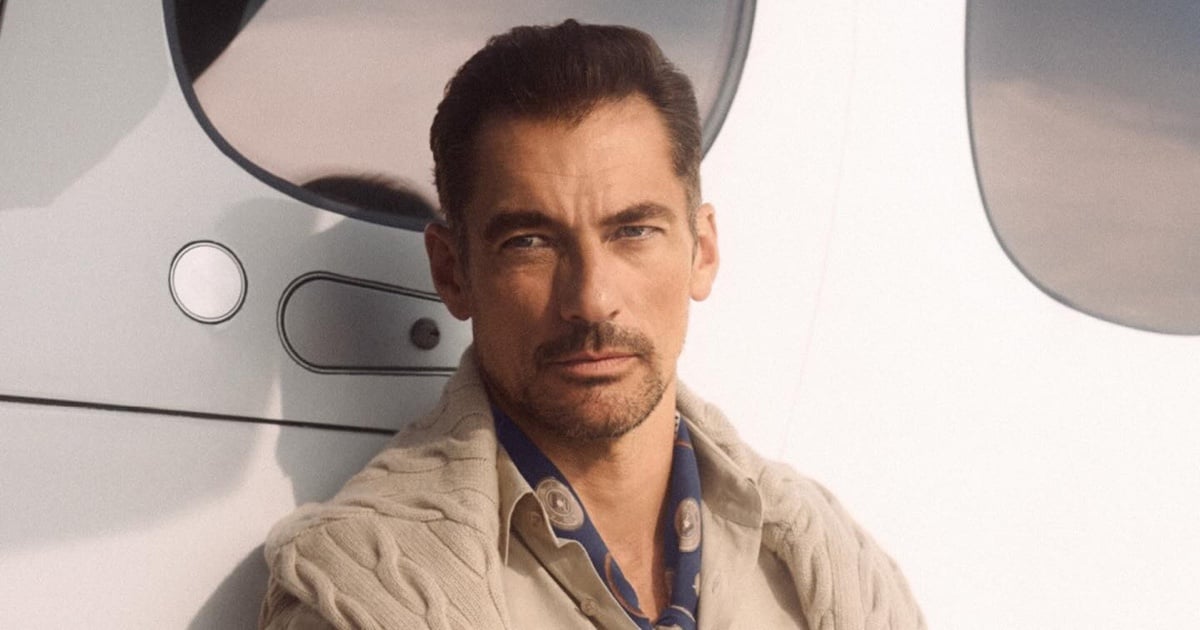
David Gandy Dons Ralph Lauren for Pre-Spring Travel
David Gandy lands on the tarmac for Ralph Lauren Purple Label pre-spring 2026, with a wardrobe pitched at the modern voyager.
October 9, 2025
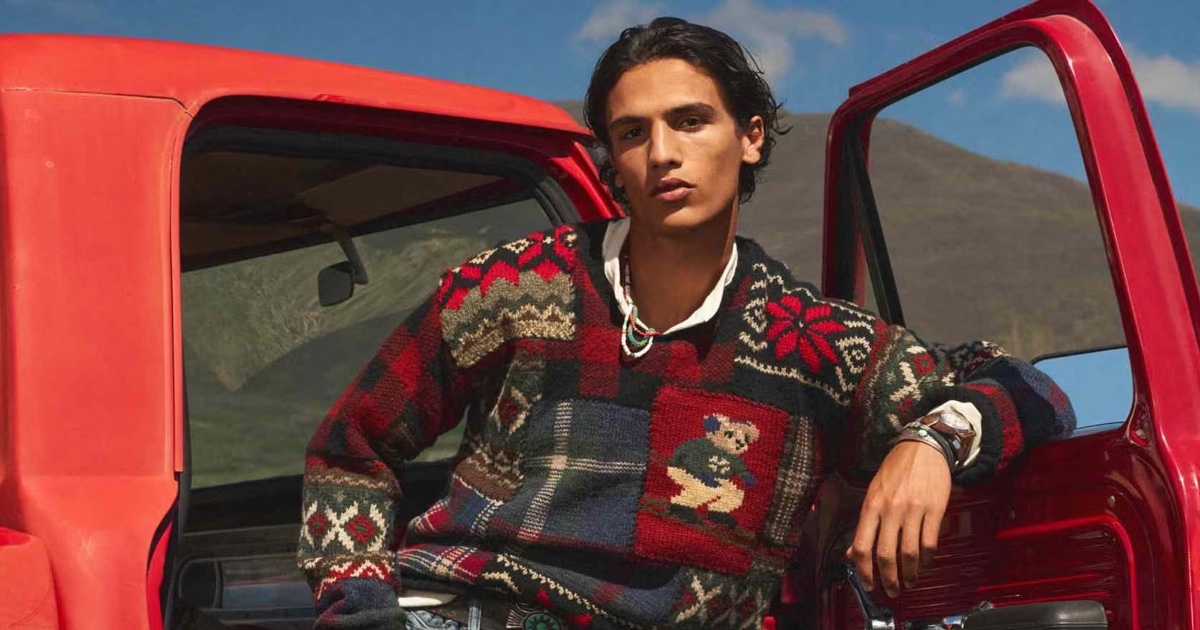
Ralph Lauren Fall 2025 Returns to the West
Ralph Lauren’s fall-holiday 2025 collection feels like a homecoming. It circles back to the American West, the landscape that has

September 30, 2025
Polo Ralph Lauren Takes to Tokyo with Friends & Great Style
Polo Ralph Lauren’s new project, Polo Originals and Friends, gathers working creatives in Tokyo to show how Polo’s menswear plays
August 26, 2025
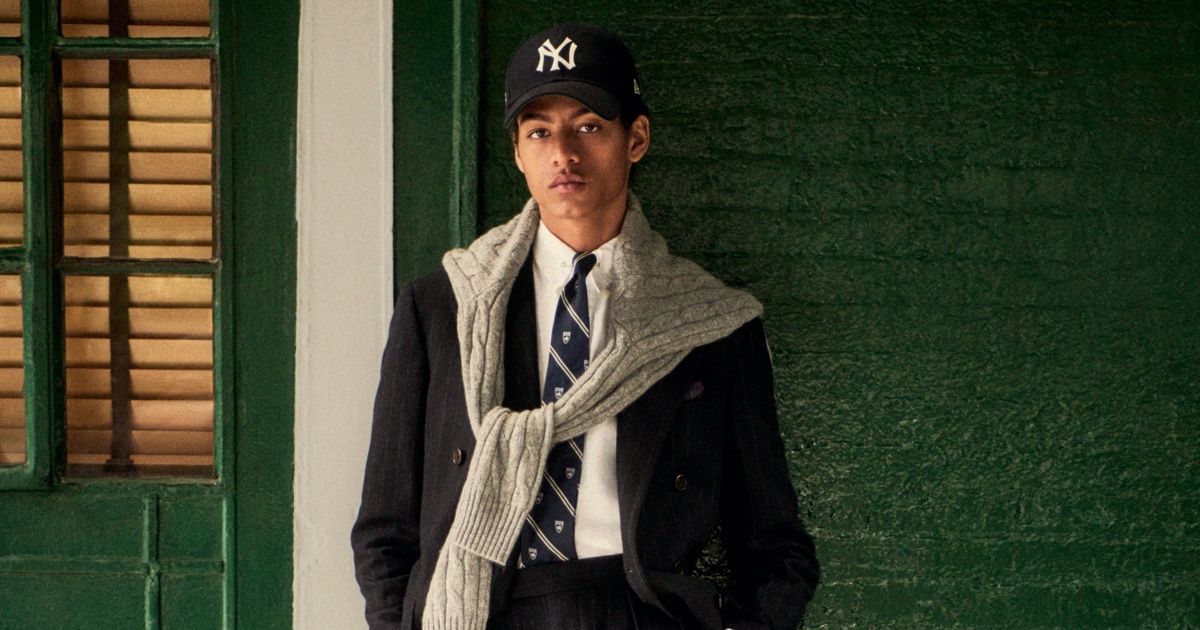
Polo Ralph Lauren Heritage Icons Channel Classic Collegiate
Polo Ralph Lauren’s fall 2025 Heritage Icons campaign places the brand’s signature aesthetic back on familiar ground. New York stands
July 22, 2025
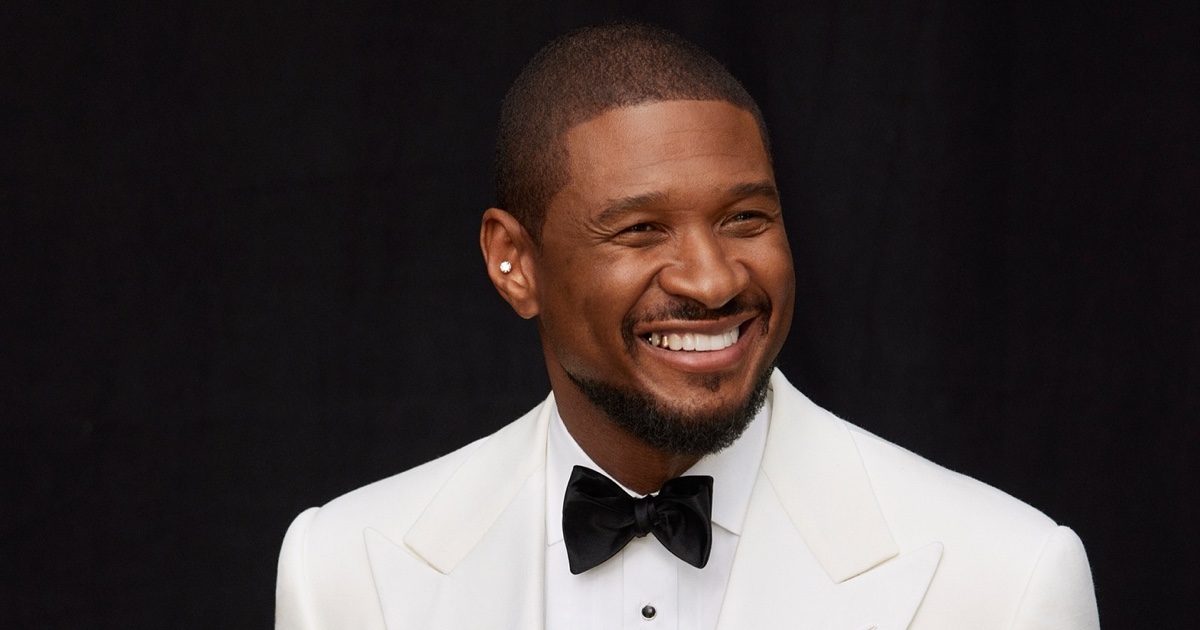
Usher Brings Star Power to Ralph’s Club New York Campaign
Usher takes the lead in his latest role as the face of Ralph’s Club New York Eau de Parfum. The
July 11, 2025
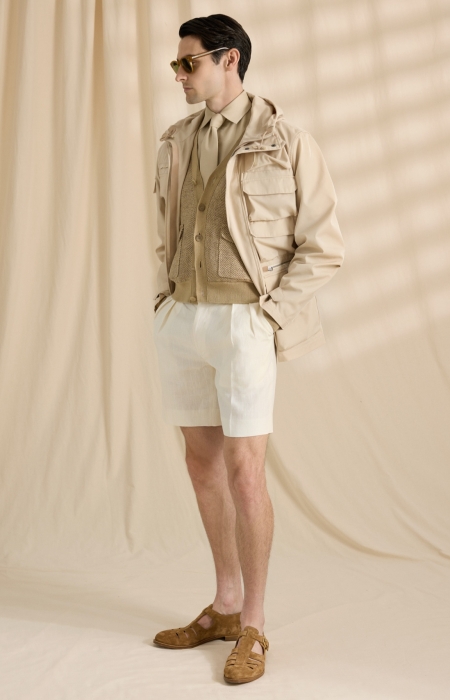
Ralph Lauren Purple Label Charts a Course for the Voyager
Few designers are as fluent in the language of aspiration as Ralph Lauren. With Purple Label spring 2026, he delivers
May 20, 2025
Polo Ralph Lauren’s Heritage Icons Channel West Village Cool
Polo Ralph Lauren introduces its Heritage Icons collection with a clear nod to New York’s West Village, where tradition and