Great Gatsby outfits started on the page, where F. Scott Fitzgerald gave his character a pink suit and a gold tie, and two Hollywood adaptations turned those descriptions into the most referenced menswear moments in American cinema. Jay Gatsby’s wardrobe has outlasted every other piece of the novel The Great Gatsby. Robert Redford wore the role in 1974 with Ralph Lauren on his back. Leonardo DiCaprio took it up in 2013 in Brooks Brothers. Between the two films, every essential element of 1920s fashion for men got its screen moment, from the cream three-piece suit to the silk pocket square.
How to Build a Great Gatsby Outfit
The 1920s sat at a turning point in menswear, when Edwardian stiffness gave way to the softer shoulders and higher waists that defined the next three decades. Gatsby, in both versions, captures that shift at its most photogenic.
The cream three-piece suit, the peak-lapel dinner jacket, the contrast-collar shirt, the two-tone spectator shoe. These pieces still work because the proportions behind them still hold. What follows breaks down the key looks from both films and translates each one into modern dressing.
The Great Gatsby Silhouette

Before any specific suit or shirt, the Gatsby look starts with a shape. Both films share it. A suppressed waist, a chest that follows the body’s natural line, and trousers that sit high on the hip with a clean, uncuffed hem. The jacket tapers at the middle and opens slightly at the lower button, creating a V that draws the eye upward. Shoulders stay soft and natural in both the 1974 and 2013 versions, though DiCaprio’s sit slightly wider to match the Luhrmann production’s maximalist energy.
The three-piece suit is the default. Nearly every important scene in both films puts the lead in a waistcoat, and that third layer is what separates the Gatsby silhouette from a standard two-piece. The waistcoat pulls the torso into a single column, eliminates the visual break a belt creates, and gives the suit a verticality that two pieces alone cannot produce. The color palette stays within a narrow range. Cream, ivory, pale pink, light gray, camel, and navy. Patterns appear as pinstripes and windowpanes, always on dark grounds. Solids dominate the daytime scenes, and the formal sequences shift to black and white.
Suits
Cream Suit
Fitzgerald put Gatsby in pink. Both films gave him cream. It is the single most recognizable outfit from either adaptation, and the one most worth getting right. Redford’s version, designed by Ralph Lauren, is a soft-shouldered three-piece in what appears to be a tropical-weight wool, cut with notch lapels, a single vent, and pleated trousers that break once above white oxfords. The waistcoat is double-breasted with cloth-covered buttons, worn tight to the body, and the smooth front panel it creates gives the outfit its clean vertical line.
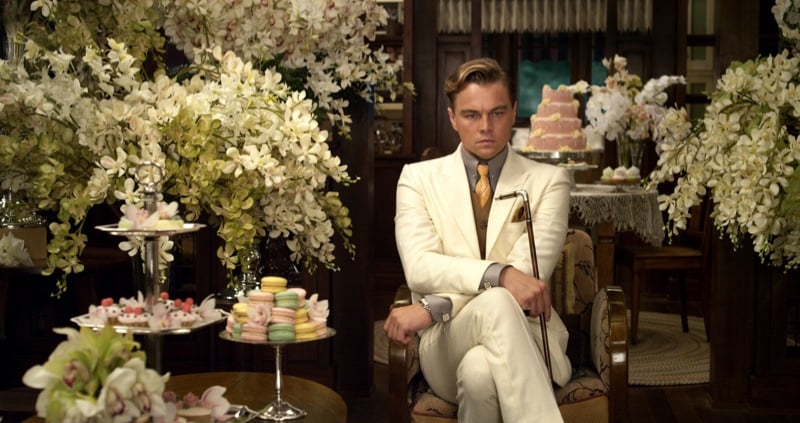
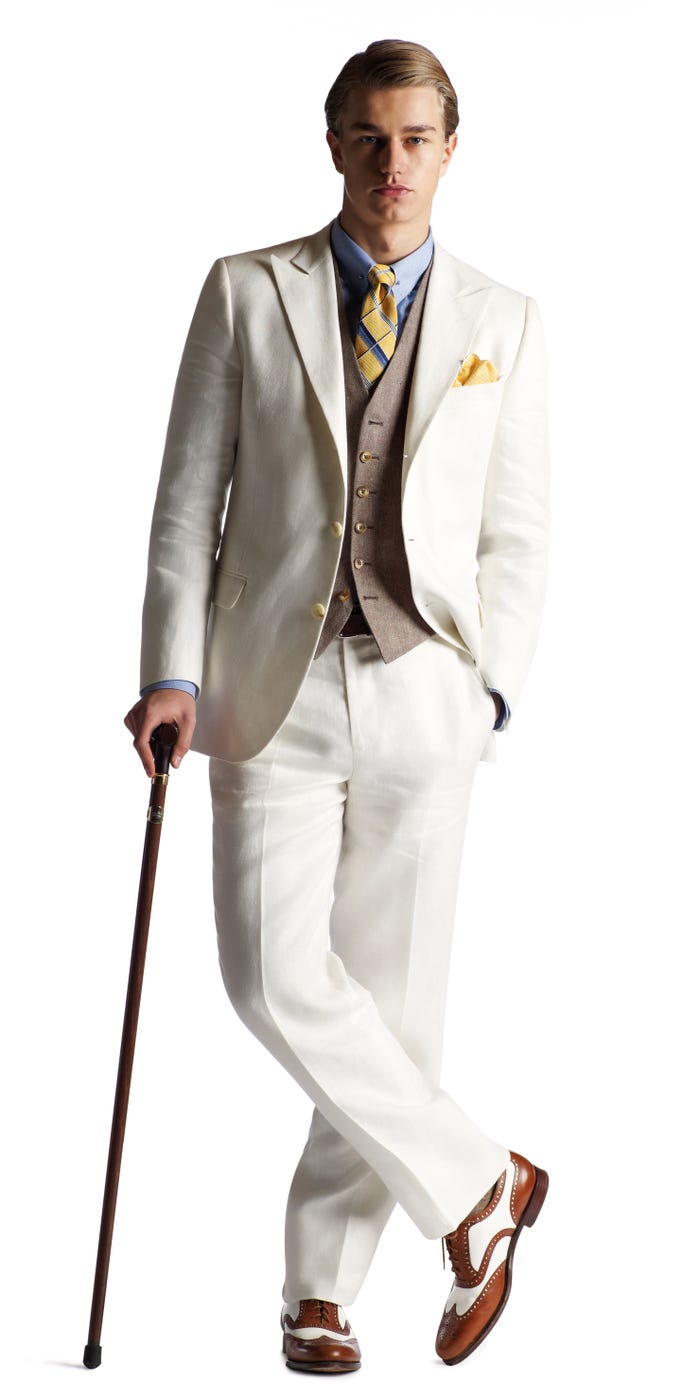
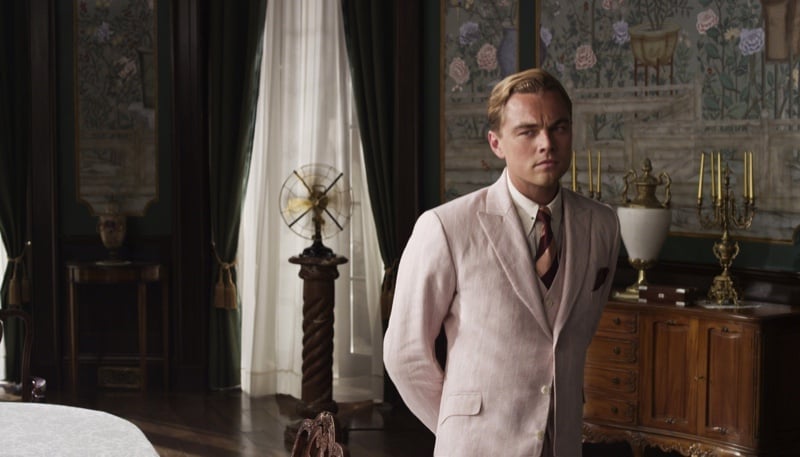
DiCaprio’s cream suit in the 2013 film runs warmer and looser. The fabric has the faint crumple that natural linen picks up in heat, and the jacket’s peak lapels, fuller chest, and longer skirt push the proportions past Redford’s trimmer cut. The waistcoat underneath sits a tone darker than the jacket, adding depth to what could otherwise flatten into a single block of color. A gold silk tie and a pointed pocket square complete the look.
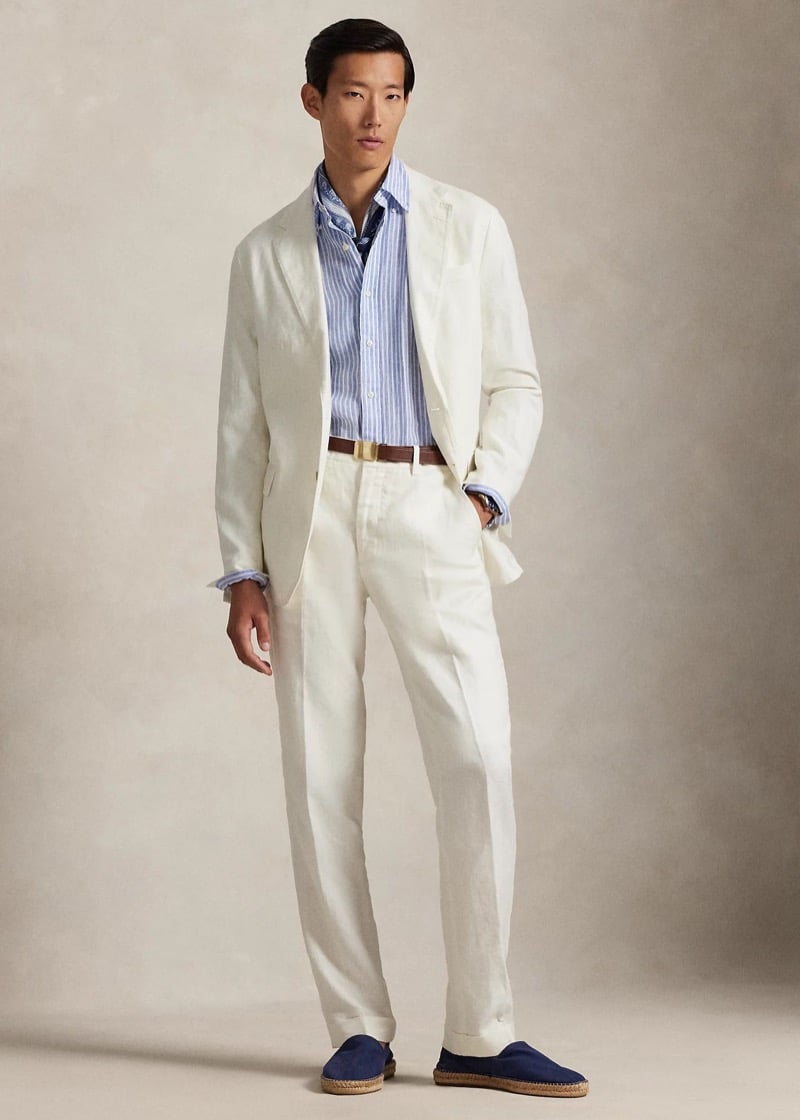
For modern wear, the cream suit belongs at summer weddings, garden parties, and any warm-weather event that calls for a step above business casual. Look for lightweight construction in linen, cotton, or a tropical wool blend. Peak lapels push the outfit closer to the Gatsby archetype, but notch lapels work when the waistcoat is doing the heavy lifting. Fit matters here more than anywhere else. Cream fabric magnifies every flaw in tailoring, so the jacket’s waist suppression and the trouser’s rise need to be right. A pale blue shirt and a silk knit tie in gold or burgundy keep the outfit grounded.
Pinstripe Suit
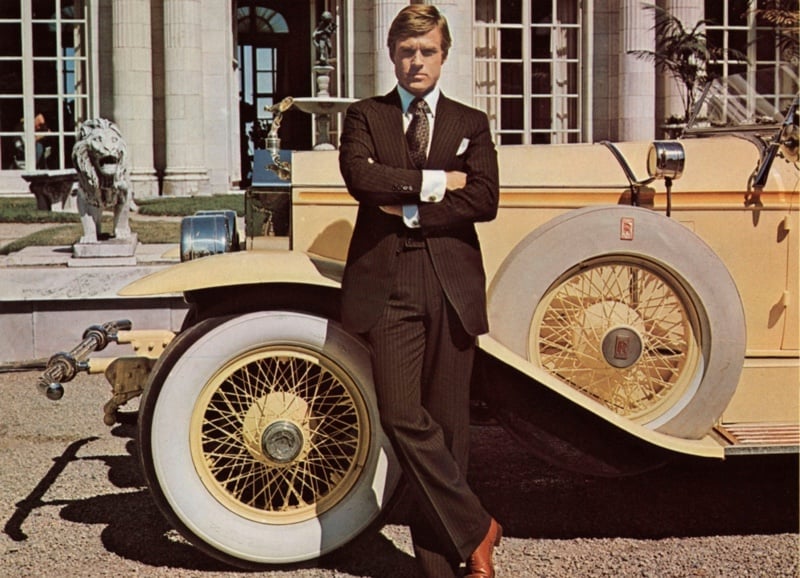
Redford’s pinstripe is the suit Gatsby wears when he is working. The fabric is a mid-weight worsted with a chalk stripe spaced about an inch apart, and the cut follows the same suppressed-waist, natural-shoulder template as the cream suit.
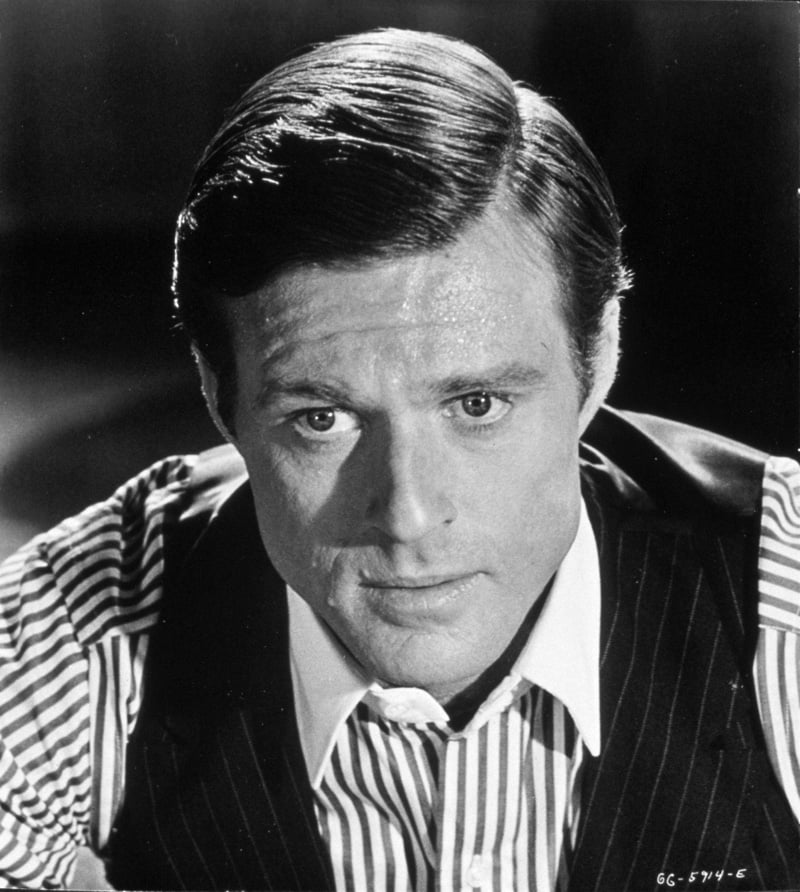
What separates this look is the shirt underneath. A bold blue-and-white Bengal stripe with a white contrast collar. The combination of suit stripes and shirt stripes sounds busy on paper. On screen, it works because the scale differs. The suit’s stripes are thin and widely spaced. The shirt’s are thicker and tighter. That contrast in proportion is the lesson worth taking.
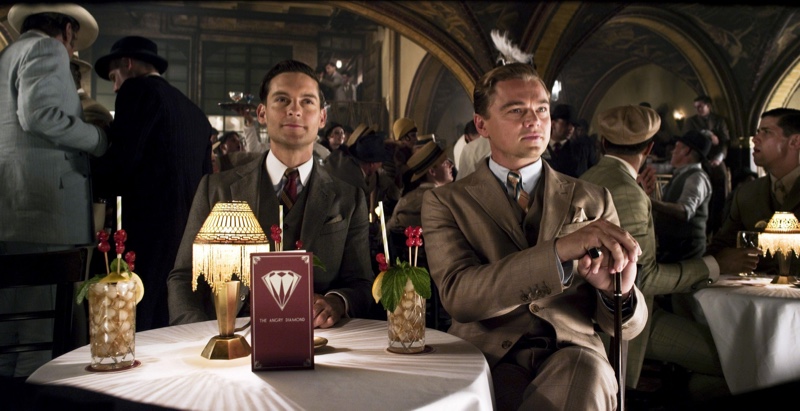
DiCaprio’s version of the patterned suit appears in the 2013 speakeasy scene. A brown windowpane three-piece, worn with a dark tie and a point-collar shirt. The 2013 film favors earth tones where the 1974 film favors dark neutrals, but the underlying geometry is the same. Patterned suits deliver the most when the pattern is fine enough to collapse at a distance and reveal itself only up close.
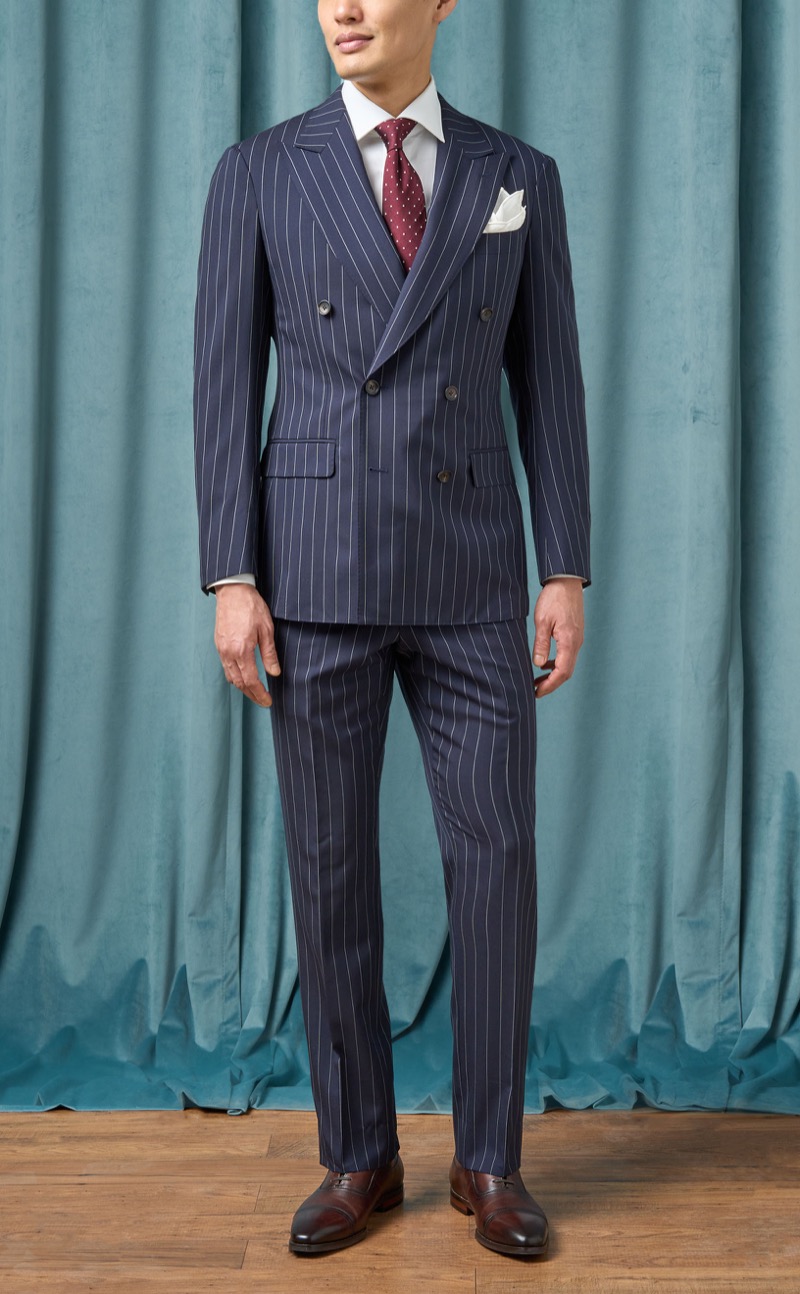
For a modern take, a navy chalk-stripe suit from Suit Supply or Spier & Mackay translates directly. Pair it with a solid white shirt if the stripe pattern is bold, or a tonal striped shirt if the suit’s stripes are subtle. A burgundy or forest-green tie in printed silk keeps the formality appropriate for an office or a dinner.
Tuxedo
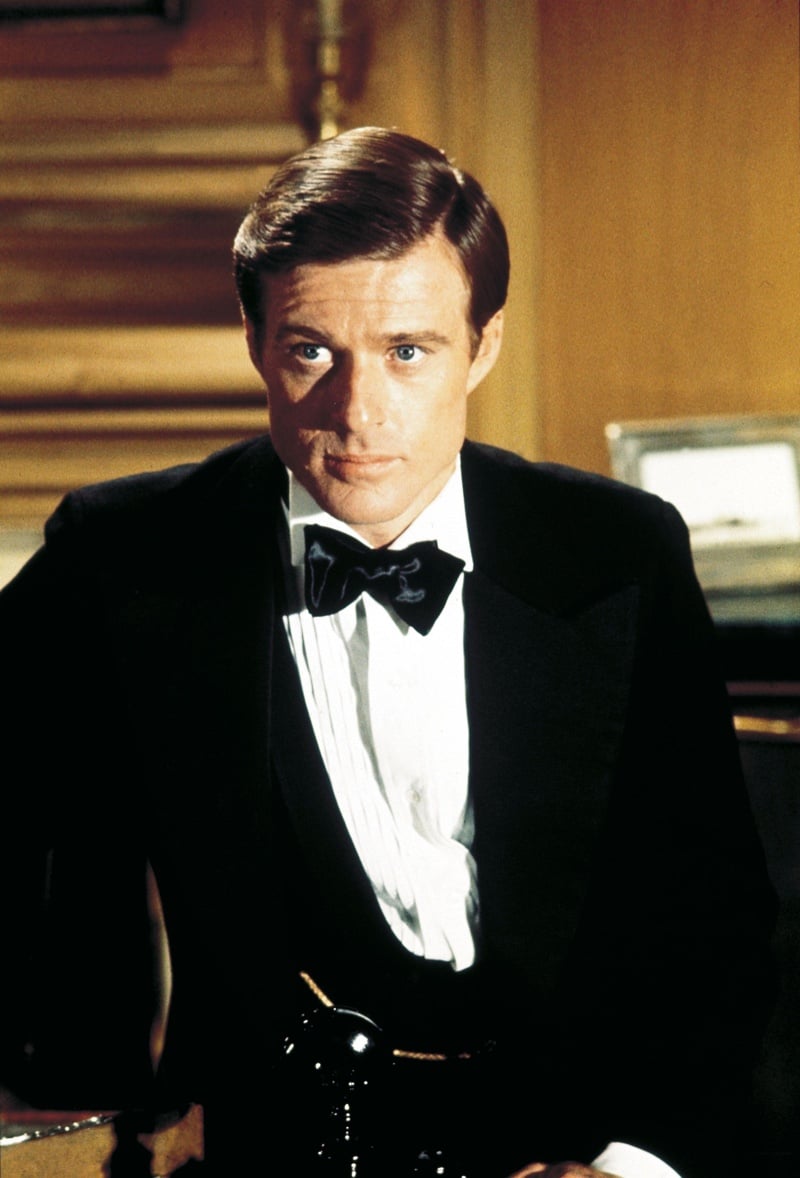
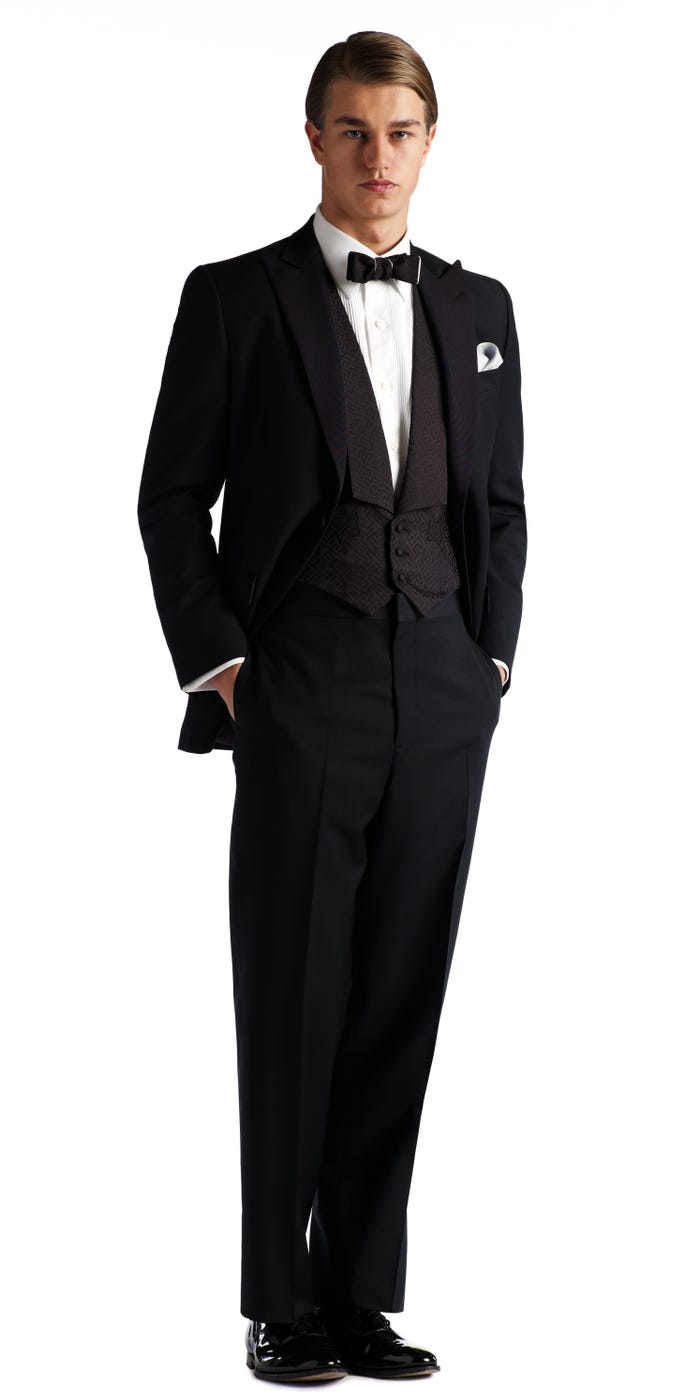
Gatsby’s eveningwear is where both films go formal, and the results land in different territory. Redford’s tuxedo follows the conventions that governed eveningwear in the 1920s, when black tie was still a fresh alternative to white tie and the rules were straightforward. A black single-breasted dinner jacket with grosgrain peak lapels, a white pleated-front dress shirt, a black silk bow tie, and a white pocket square. The fit is trim, the proportions are clean, and the look holds up completely on its own terms.
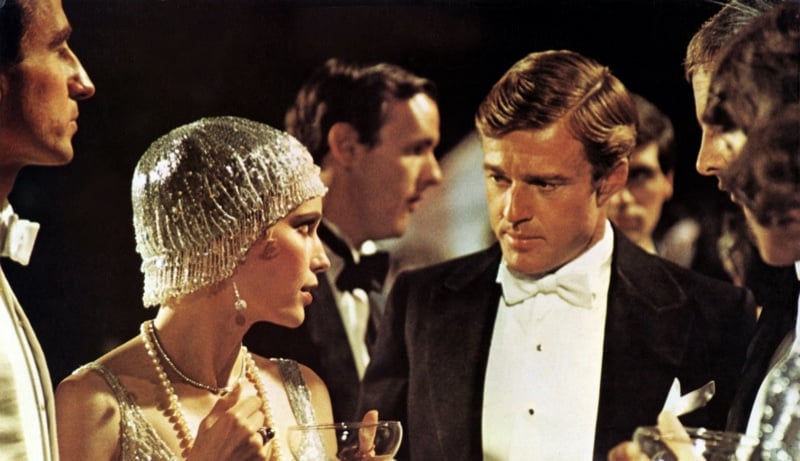
The 1974 film also gives Redford a white-tie moment. Tails, a wing-collar shirt, and a white bow tie at Gatsby’s party. That sequence, with Mia Farrow in silver beside him, produced one of the most reproduced formalwear images of the 1970s.
For today, the Gatsby tuxedo is best referenced through a midnight navy or black dinner suit with peak lapels and a grosgrain or satin facing. A self-tie bow tie is essential. The pre-tied versions produce a symmetry that looks manufactured. White pocket square, plain-front or pleated dress shirt, and black patent or highly polished cap-toe oxfords finish the job. Skip the cummerbund unless the event specifically calls for one. A well-fitted waistcoat in matching black serves the same function and sits closer to the Gatsby look.
Details
Shirts & Collars
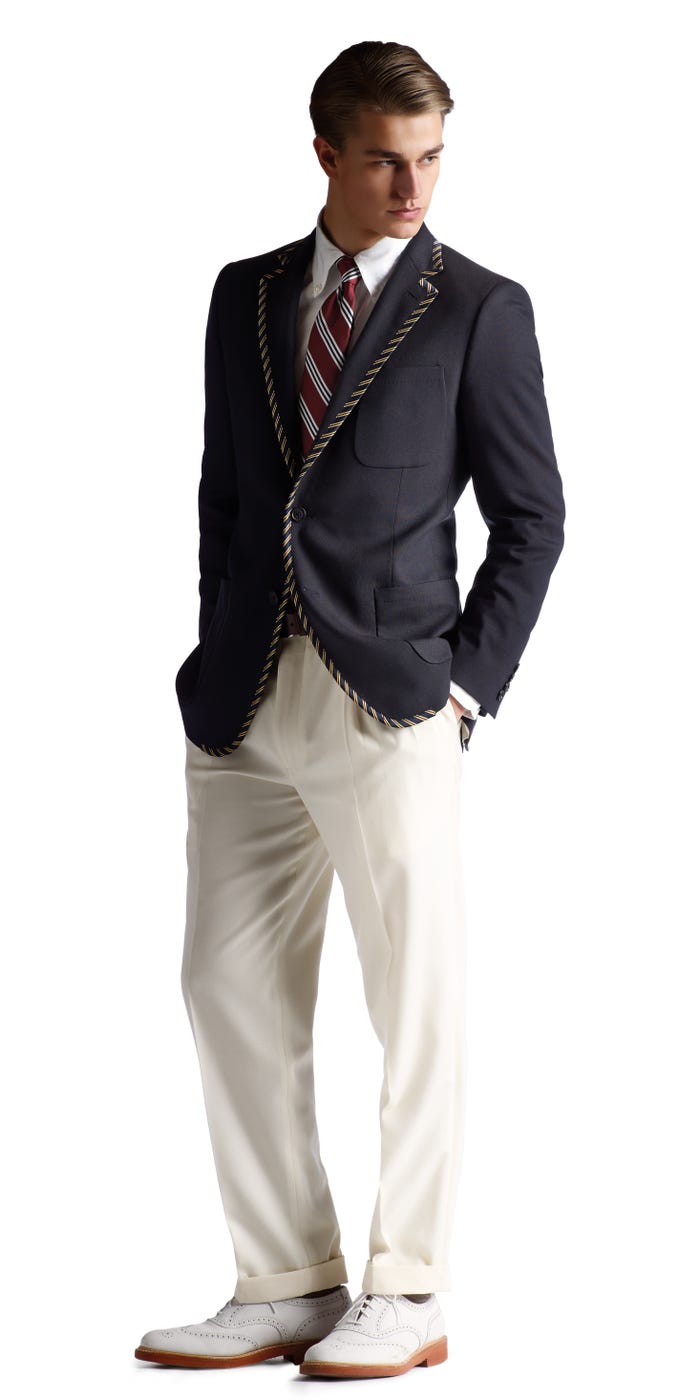
The 1920s were the last decade when collar styles still varied wildly from man to man. Gatsby’s shirts reflect that range. Redford wears a club collar in the pink-waistcoat scene, a rounded shape that shortens the visual line of the face and softens the transition between shirt and tie. In the pinstripe-suit sequence, he switches to a contrast-collar striped shirt. A white spread collar sits against a blue-and-white body, creating a frame for the tie knot that works even in shirtsleeves.
DiCaprio’s shirts run more conservative in collar shape but bolder in color. His speakeasy scene puts him in a tan point-collar shirt under a matching suit, while the cream suit appears with a white spread collar. The 2013 film also features spearpoint collars on supporting characters, a period-correct choice that creates a narrow, elongated opening for the tie.
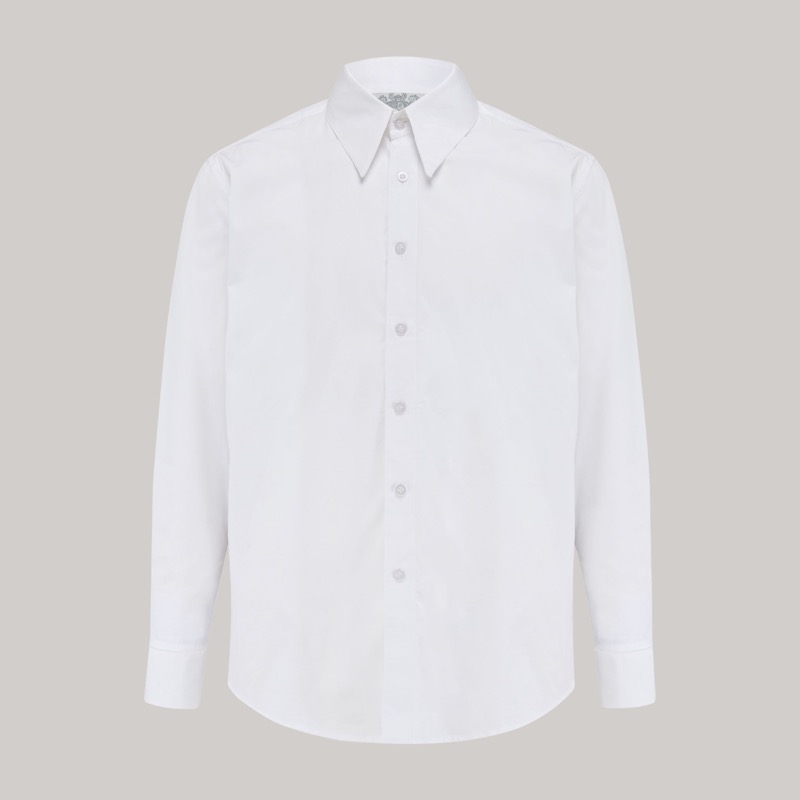
For modern use, a club collar or a spearpoint collar is the fastest way to pull an outfit toward 1920s territory. Collar pins and bars, which both films use, add the same signal in a more adjustable format. A white shirt with a contrast collar in blue or pink picks up Redford’s pattern play and works under a navy or gray suit.
Both Redford and DiCaprio wear their hair swept back and parted, and that grooming choice matters as much as any garment. 1920s hairstyles for men followed the same discipline as the clothes. Slick, controlled, side-parted, and close to the head, the style keeps the focus on the collar and tie.
Ties & Pocket Squares
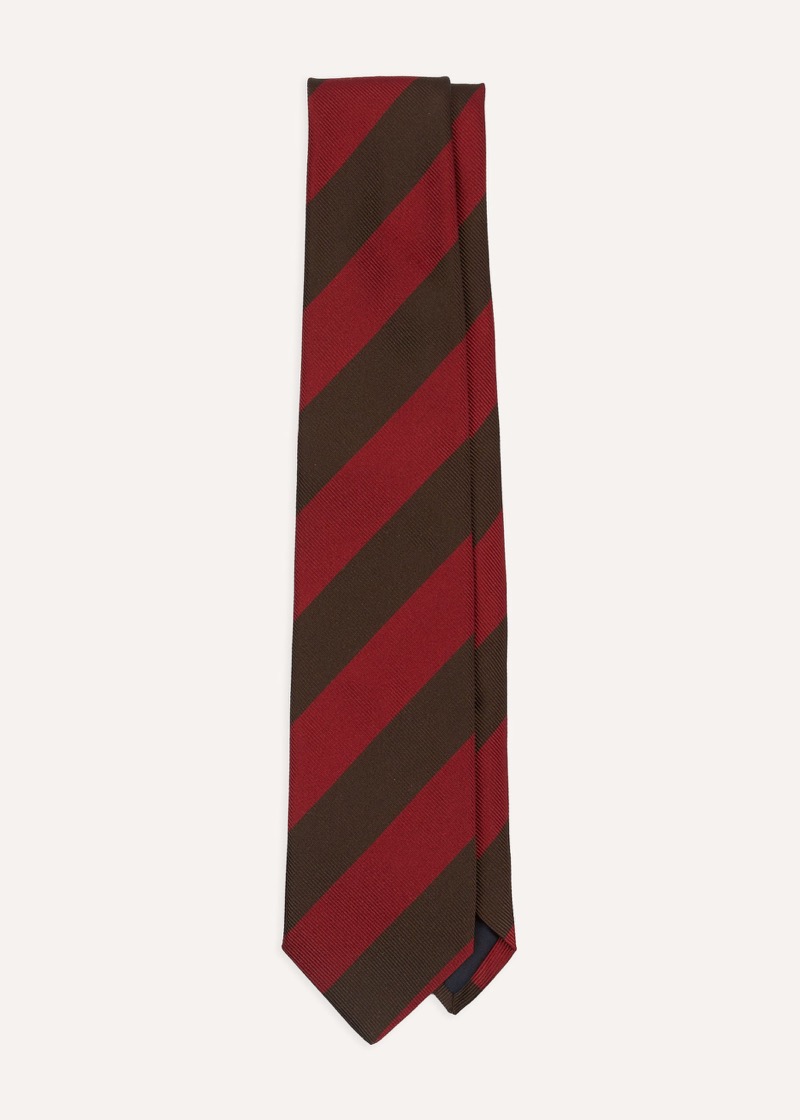
Gatsby-era ties were narrower than modern standards, typically two to two and a half inches wide, in silk with repp stripes, geometric prints, or solid jewel tones. Both films stick to the four-in-hand knot, which is period-accurate. The Windsor knot gained popularity only in the 1930s, and its bulk fights the slim proportions of a 1920s collar opening. DiCaprio’s gold silk tie in the cream-suit scene is the standout piece. It picks up the warm tone of the suit and pulls the entire outfit into a single temperature.
The patterns worth knowing are repp stripes, which run diagonally in two or three colors, and geometric art deco prints, which use interlocking shapes in muted tones against a dark ground. Macclesfield silk, woven with a small all-over pattern in silver or cream on a dark base, was common in the 1920s and remains the most underused option for modern Gatsby dressing. For a first purchase, a navy or burgundy repp stripe in a 2.5-inch width covers formal and business settings. A second tie in a gold or champagne solid silk, modeled on DiCaprio’s cream-suit pairing, handles everything warm-weather.
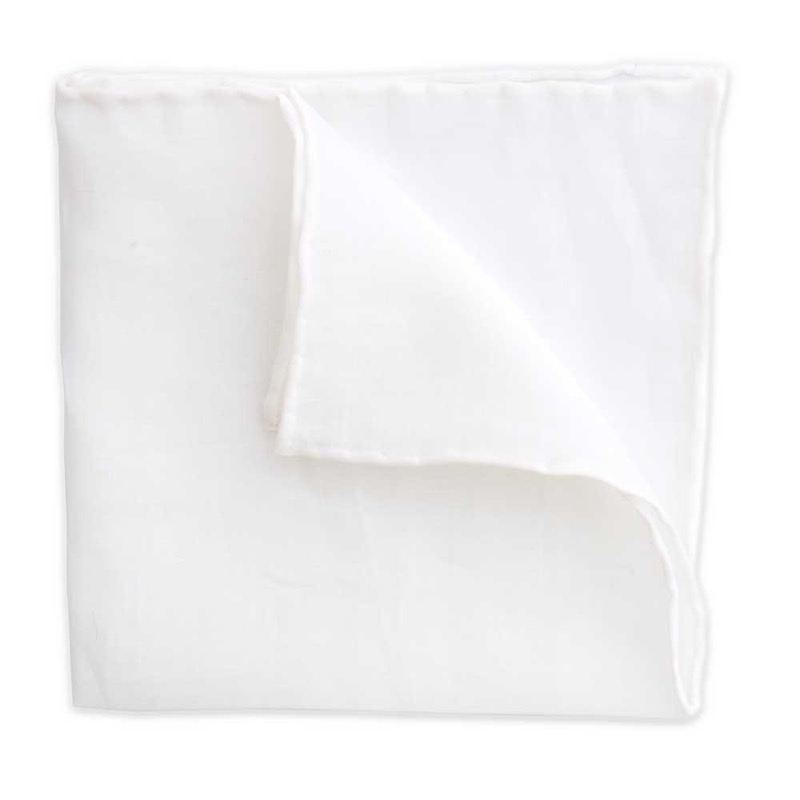
Pocket squares in both films are white linen, folded into points or a straight edge. The 1920s pocket square sat higher in the breast pocket than current fashion typically places it, with more fabric visible above the welt. A white linen square with hand-rolled edges remains the most versatile option and the most accurate to the period.
Waistcoats
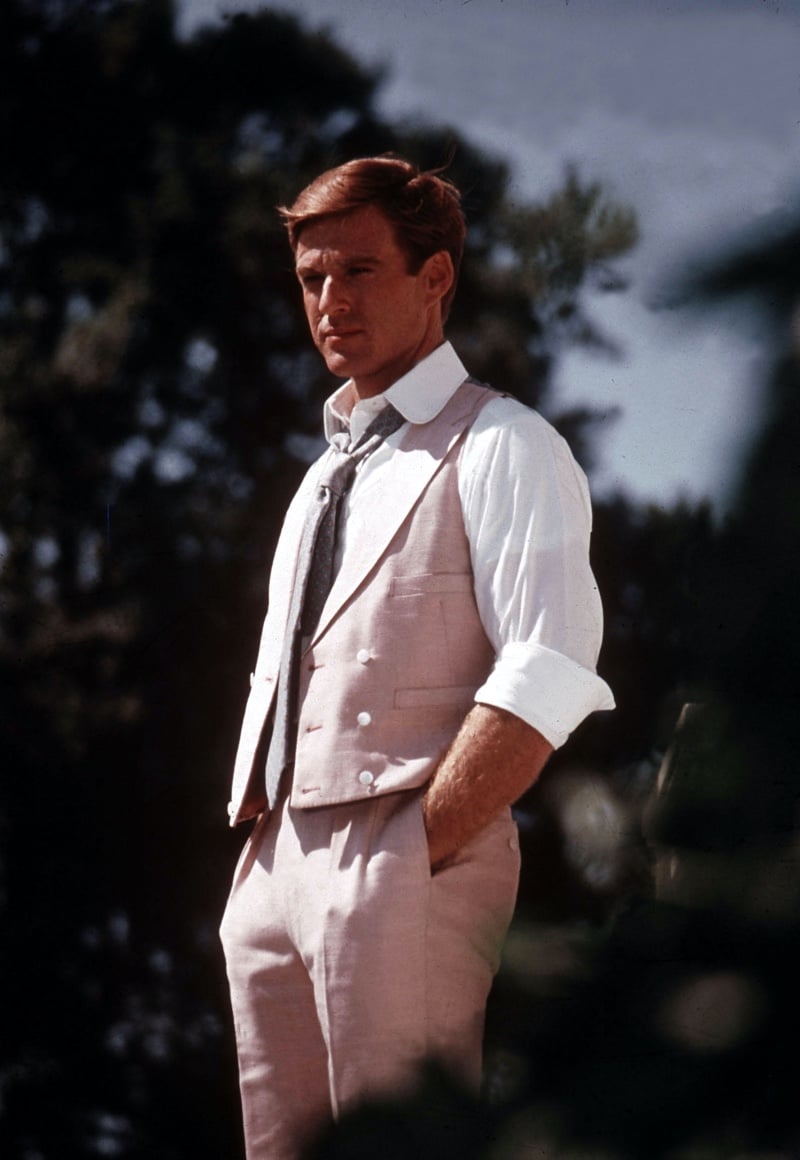
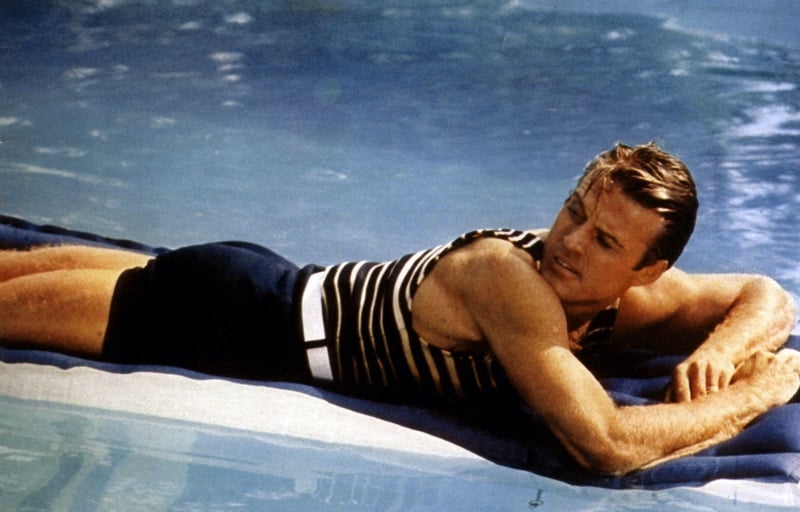
The waistcoat does more work in a Gatsby outfit than any other single piece. Redford’s pink double-breasted version, worn with the jacket off and shirtsleeves rolled to the forearm, is one of the film’s defining images. The waistcoat is cut high, covering the shirt placket to the second button, and sits close to the body with a slight pull at the lowest closure. Its fabric appears to be a lightweight linen in pale pink, and the double-breasted front with pearl buttons gives it enough visual weight to function as the outfit’s centerpiece even with the jacket gone.
DiCaprio’s waistcoats tend toward matching or tonal fabrics, playing a supporting role to the jacket. The exception is the cream suit, where the waistcoat sits a shade darker and adds a layer of visual separation between jacket and shirt.
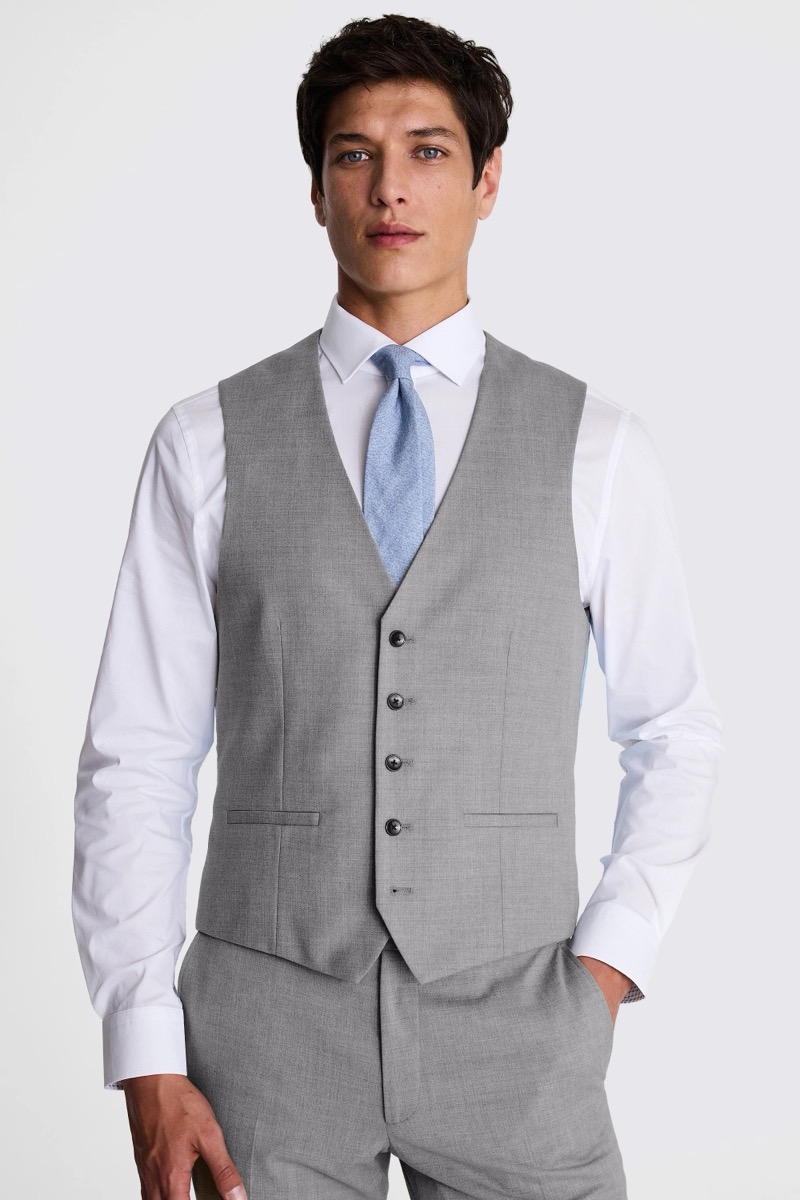
For modern wear, a waistcoat in a contrasting color or fabric turns a two-piece suit into something closer to the Gatsby template. Pair a navy or charcoal suit with a tan, cream, or light gray waistcoat for the strongest effect. The fit should be snug. A waistcoat that gaps at the chest or bunches at the waist defeats the purpose of wearing one. The bottom button stays open, following the convention established in the Edwardian era that both films honor.
Shoes
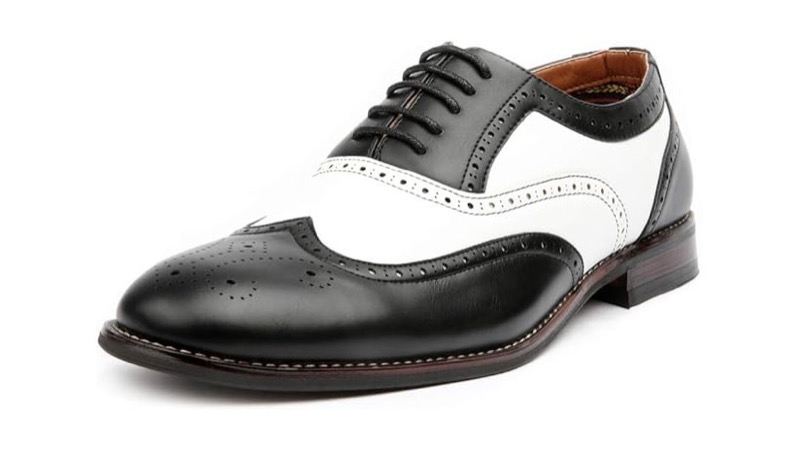
Two-tone spectator shoes are the definitive Gatsby footwear. The style, a lace-up oxford with contrasting panels in white and tan or white and brown, reached peak popularity in the 1920s and has remained in production ever since. Redford’s white oxfords in the cream-suit scene take the tonal route. Same shoe, single color, keeping the outfit from tipping into fancy dress.
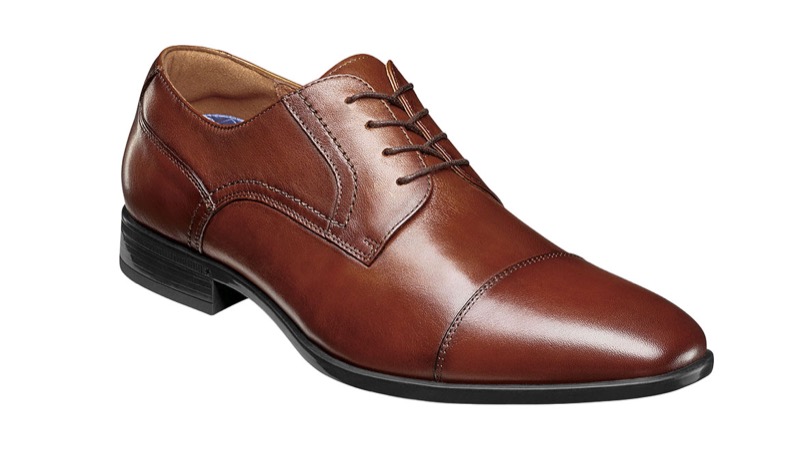
For a modern Gatsby-inspired outfit, cap-toe oxfords in tan or cognac cover the most ground. White bucks work for summer events, particularly paired with a linen suit. Spectator shoes remain available from shoemakers like Carmina and Allen Edmonds, and a pair in brown and white fits a garden-party look or a warm-weather wedding. Loafers, while not period-accurate, work for 1920s-influenced casual dressing if the shape is sleek and the leather is clean.
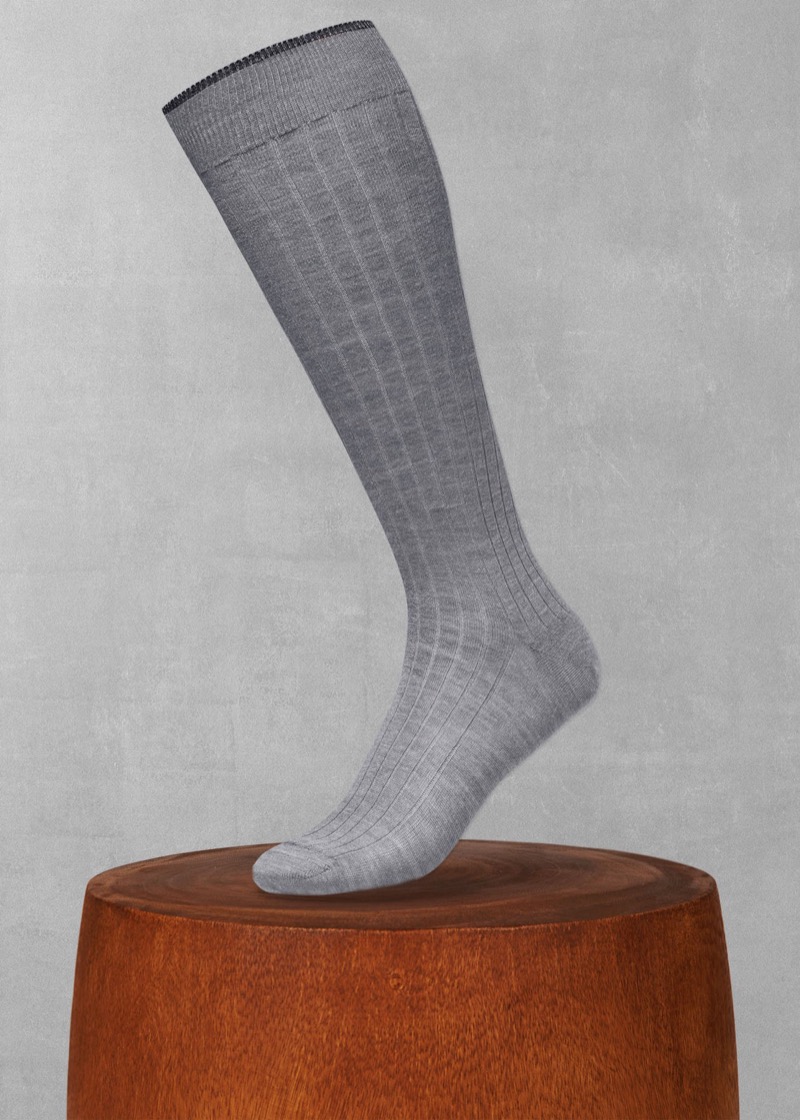
Socks matter more in a 1920s-inspired outfit than in most modern dressing, because the trouser hem sits higher and exposes more ankle when seated. The period standard was ribbed silk or fine wool in a solid color that matched or complemented the trouser. Navy, charcoal, cream, and burgundy cover the main suit pairings. Bare ankles and no-show socks belong to a different era entirely. A ribbed cotton or merino sock in a solid tone is the simplest modern substitute and keeps the trouser-to-shoe line clean.
Accessories
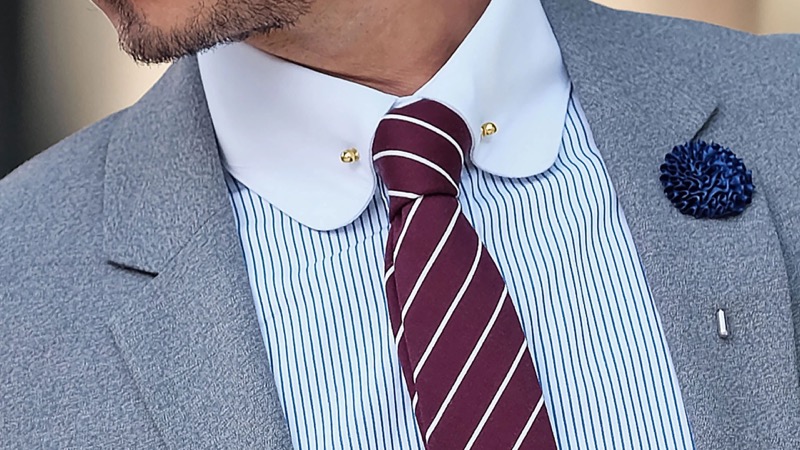
Collar pins and collar bars appear throughout both films and are the single fastest way to signal a 1920s reference. A simple gold or silver bar, clipped between the collar points to lift the tie knot, adds dimension to an otherwise standard dress shirt.
Cufflinks should be understated. Mother-of-pearl, enamel in navy or burgundy, or plain polished metal all fit the period. Novelty cufflinks and oversized statement pieces work against the Gatsby silhouette’s clean proportions.
For watches, a dress watch on a leather strap in brown or black keeps the wrist line slim. Metal bracelets and oversized sport dials compete with the shirt cuff and break the tapered line that both films maintain from shoulder to hand.
Gatsby for Every Occasion
Summer Wedding
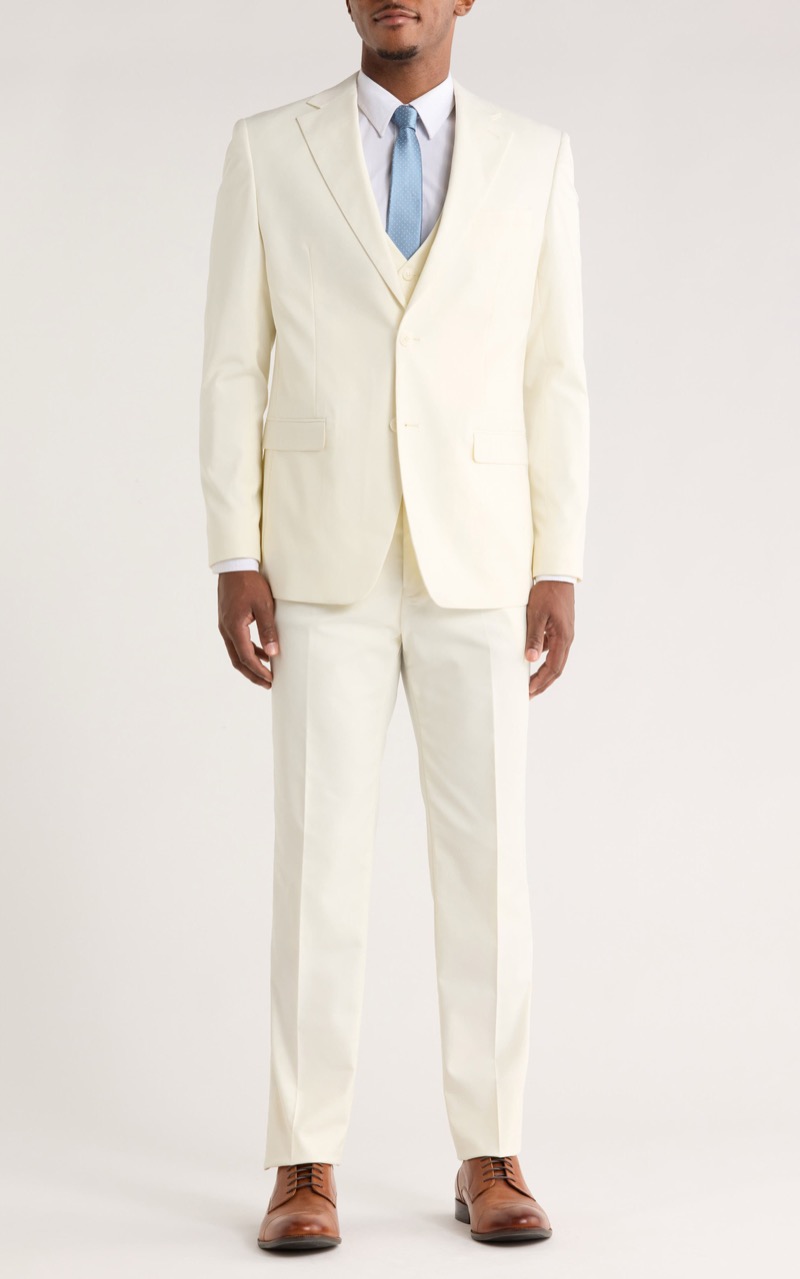
Start with the cream or ivory suit. A three-piece in linen or tropical wool gives the right weight for outdoor heat and the right formality for a ceremony. Pair it with a pale blue or white shirt, a silk knit tie in champagne or dusty rose, and tan cap-toe oxfords or suede loafers. The waistcoat is the piece that separates this from a generic summer suit, so keep it on even if the jacket comes off during the reception.
Evening Party
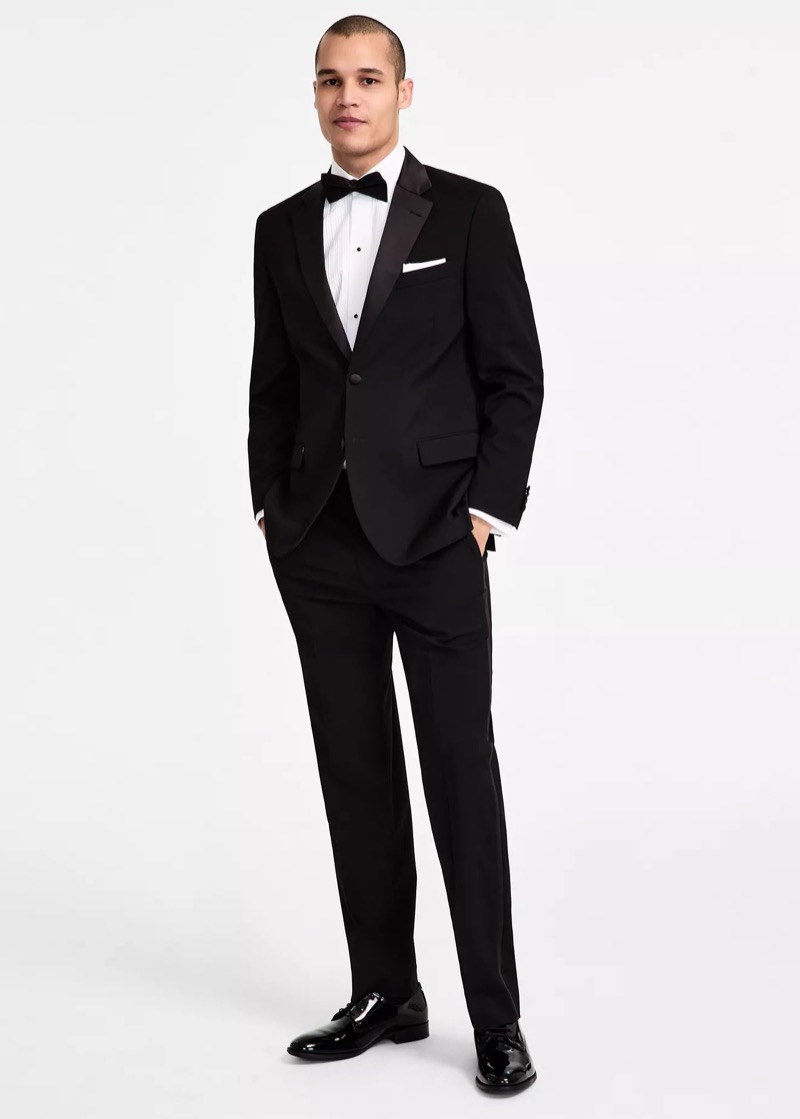
Follow Redford’s tuxedo lead. A midnight navy or black dinner suit with peak lapels, a white dress shirt, a self-tie black bow tie, and a white pocket square covers every formal event from galas to holiday parties. For a 1920s touch, add a collar pin or switch to a wing-collar shirt, though the latter limits the outfit’s range beyond that single event.
Smart Casual
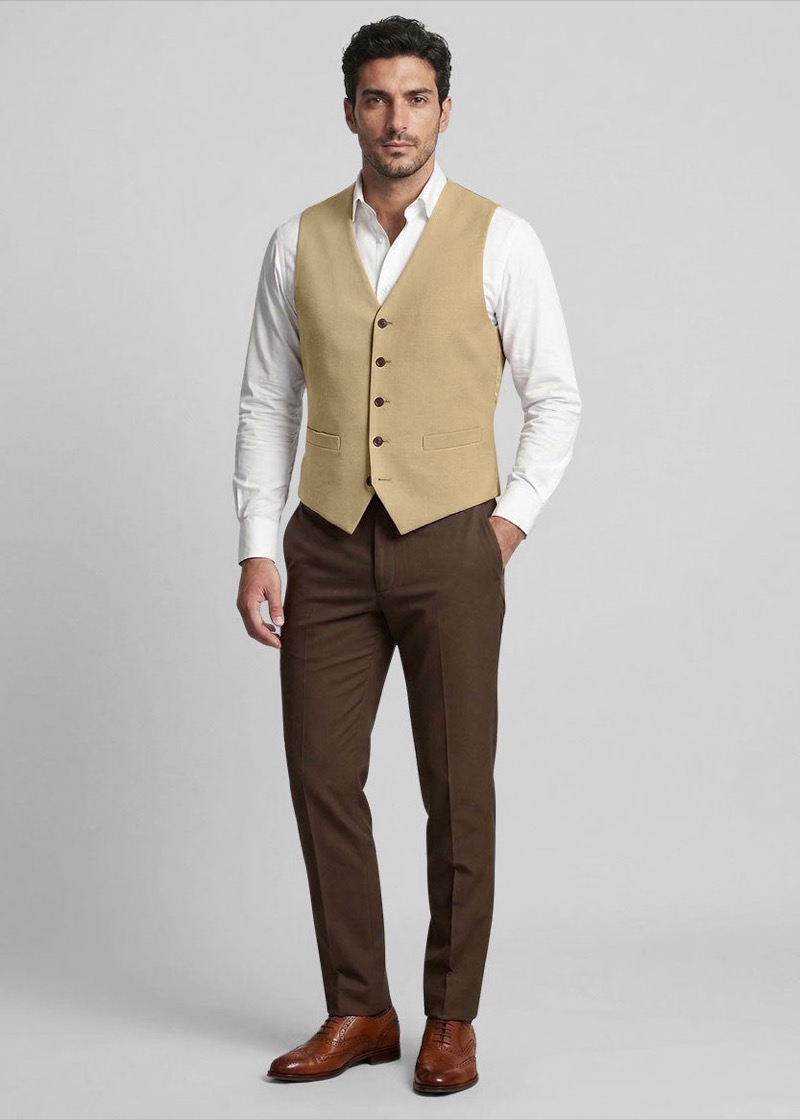
The pink-waistcoat look, stripped down. Pair a contrasting waistcoat with tailored chinos or flannel trousers, a spread-collar shirt with the top button open, and spectator shoes or clean white leather sneakers. This formula works for dinner reservations, art openings, and Saturday events that fall between dressy and relaxed.
Business
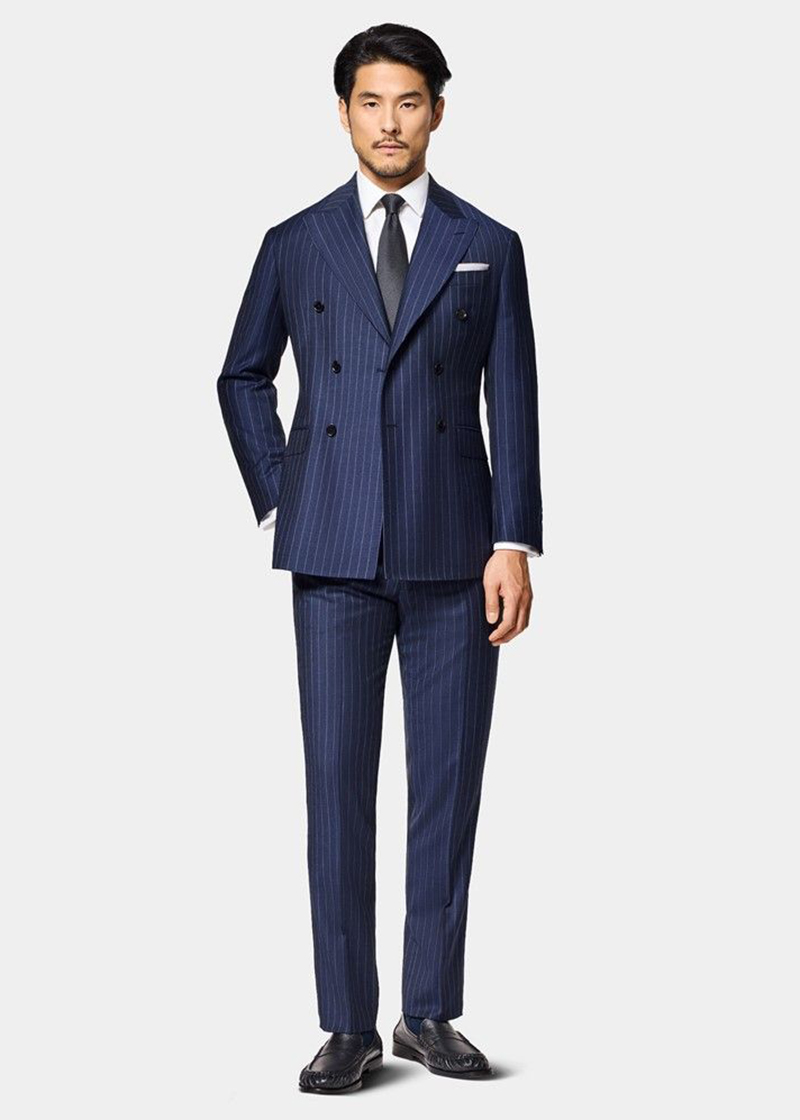
Redford’s pinstripe suit translates directly to the office. A navy chalk-stripe or glen plaid suit, a white or light blue shirt, and a burgundy or dark green silk tie create a look that is pulled-together and slightly vintage in its attention to the collar and the knot. Cap-toe oxfords in dark brown or black keep the base professional.
Common Mistakes
The line between Gatsby-inspired dressing and costume-party cosplay sits in the fit and the fabric. A cream suit in lightweight wool or linen, tailored to the body, looks like a man who dresses well. The same shape in shiny polyester satin, bought off a rack at a costume shop, looks like a man headed to a themed birthday. The difference is construction, and it shows in every photograph.
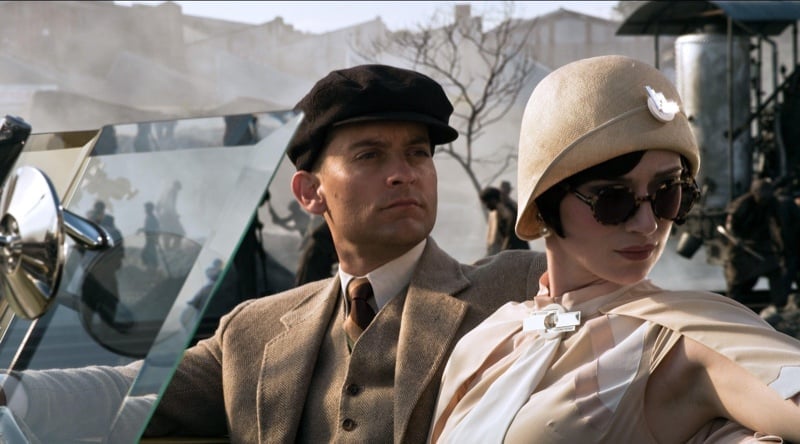
Fedoras and newsboy caps appear in both films, but they belong to the era as props, not to a modern Gatsby outfit. Adding a hat to a 1920s-inspired suit tips the balance from reference to reproduction. Let the suit, shirt, and tie do the talking.
Clip-on bow ties, plastic collar stays, and rhinestone cufflinks fall into the same trap. The Gatsby look depends on real materials. Silk ties, metal collar pins, linen pocket squares. Substituting costume-grade accessories undercuts the tailoring they sit next to. If the budget is limited, spend it on the suit and the shirt and leave the accessories for later, when the core pieces are right.
Over-accessorizing is the other common misstep. Gatsby’s wardrobe in both films works because each piece is visible. Stack a collar pin, a tie bar, a pocket square, a lapel pin, a watch chain, and cufflinks on the same outfit, and the individual details disappear into noise. Pick two or three accent pieces per outfit and give each one room to land.
Where to Shop
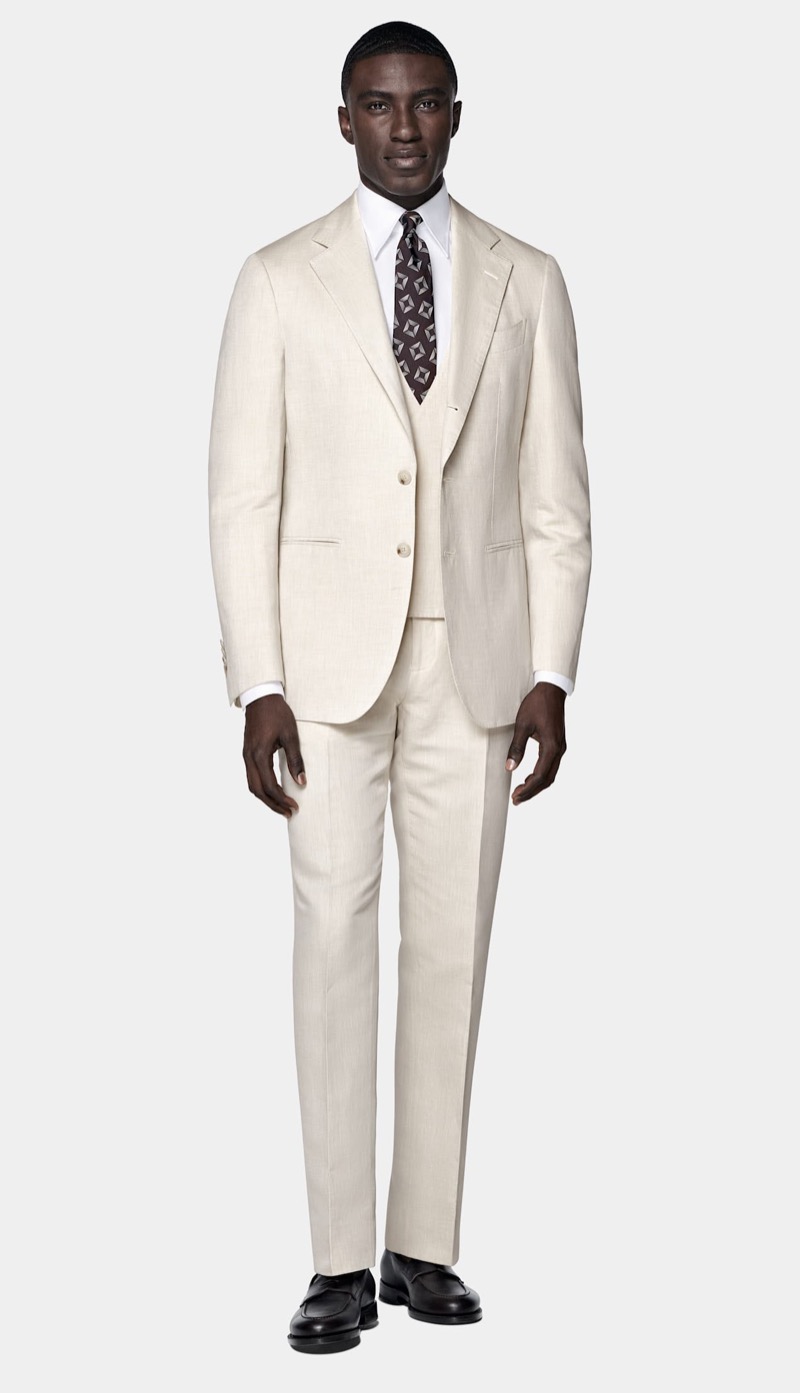
A Gatsby-inspired wardrobe draws from the same sources as any strong suit collection. Suit Supply and Spier & Mackay offer three-piece suits in the right weight and silhouette at accessible prices, and their linen and tropical wool options cover the cream and navy suits directly. For ties, Berg & Berg and Drake’s produce silk knits and printed silks in the narrow widths and patterns that match the period. Pocket squares from the same makers come in white linen with hand-rolled edges, the only pocket square either film uses.
Shoes are worth the investment. Carmina and Septieme Largeur make spectator oxfords and cap-toes in the shapes that fit a 1920s silhouette. Allen Edmonds covers the same ground at a lower price point and offers white bucks seasonally. For shirts, a made-to-measure option from Proper Cloth or Luxire allows club-collar and spearpoint-collar specifications that off-the-rack makers rarely stock.
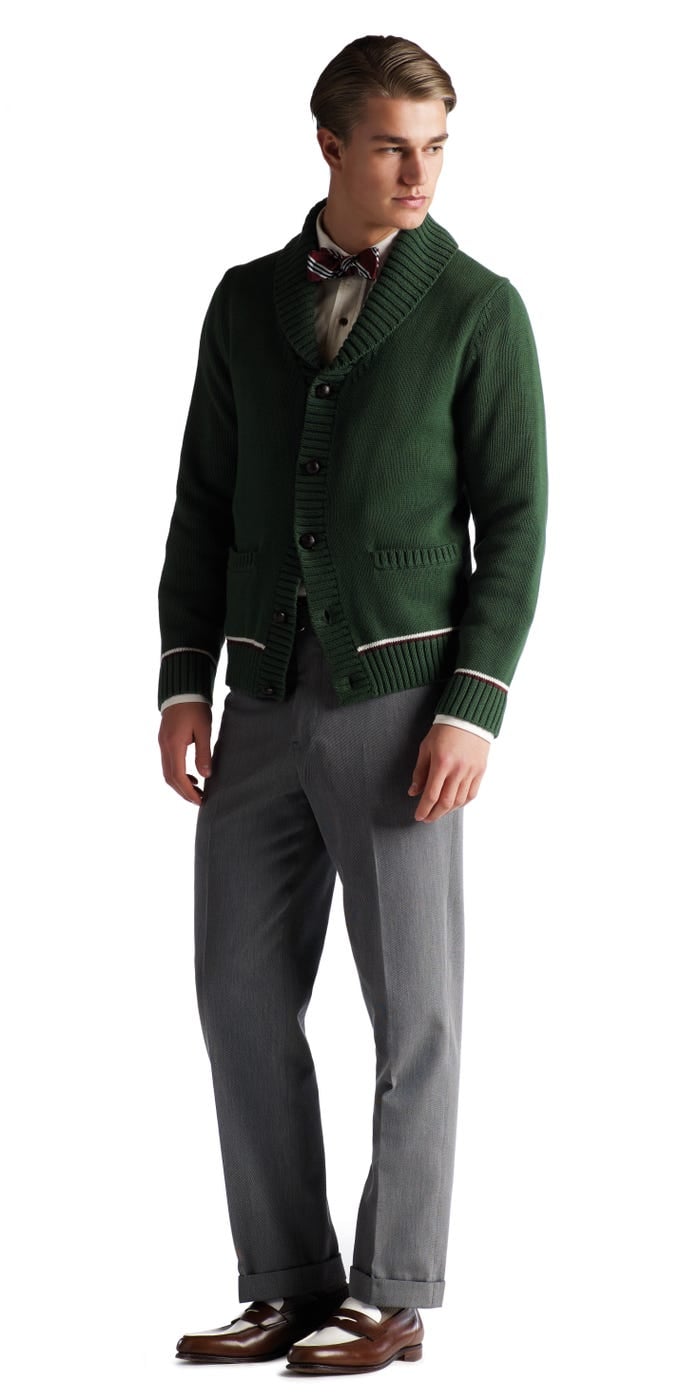
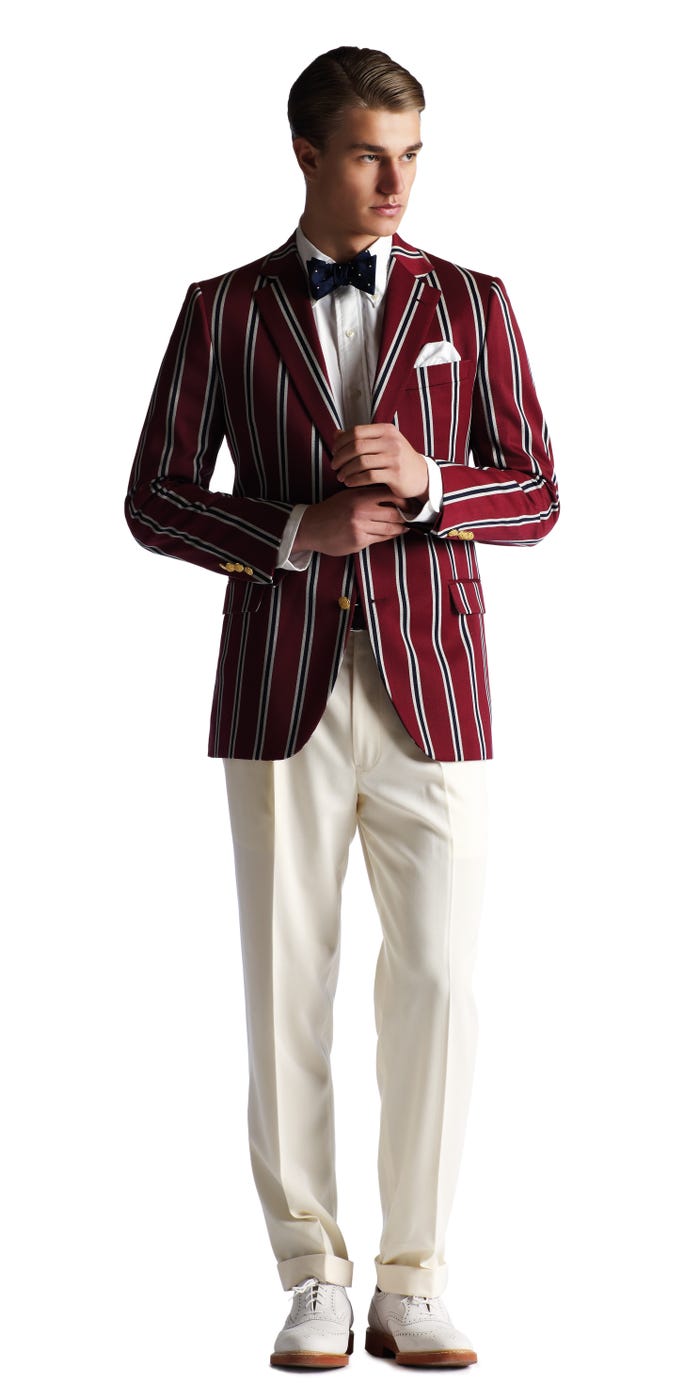
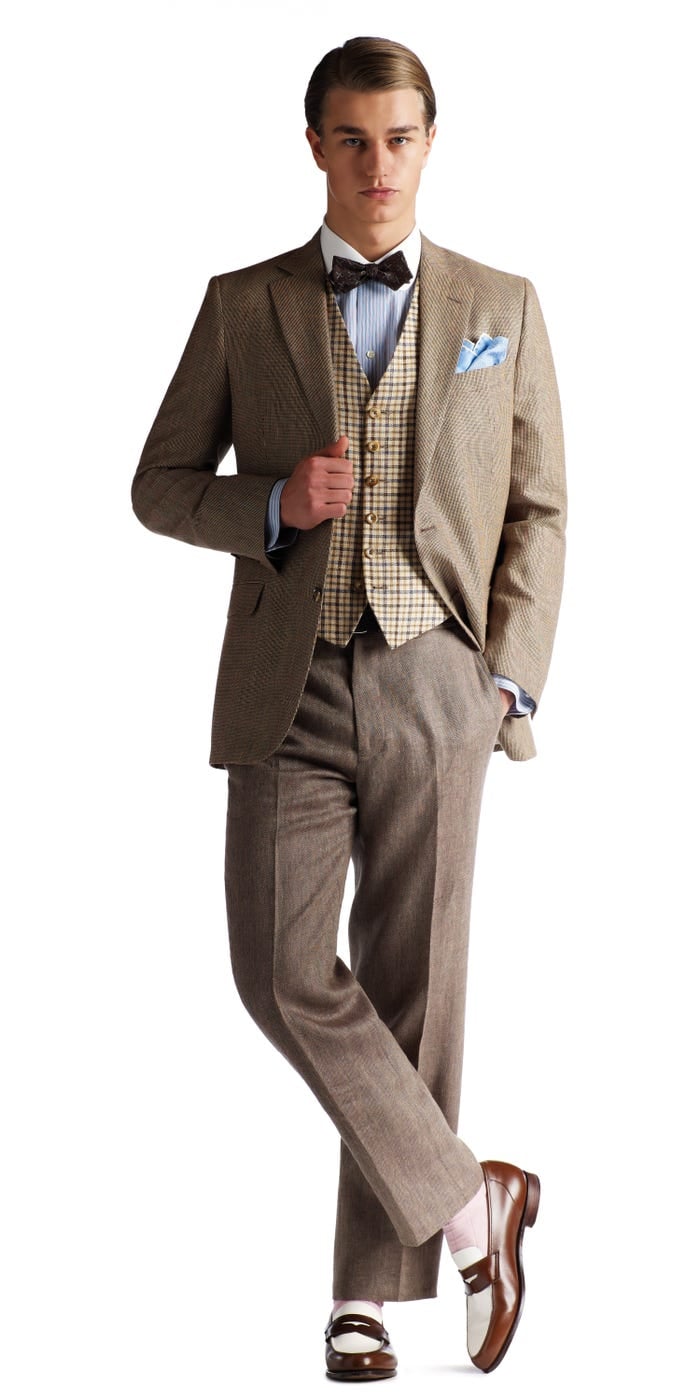
Inspiration: Brooks Brothers 2013 The Great Gatsby Collection
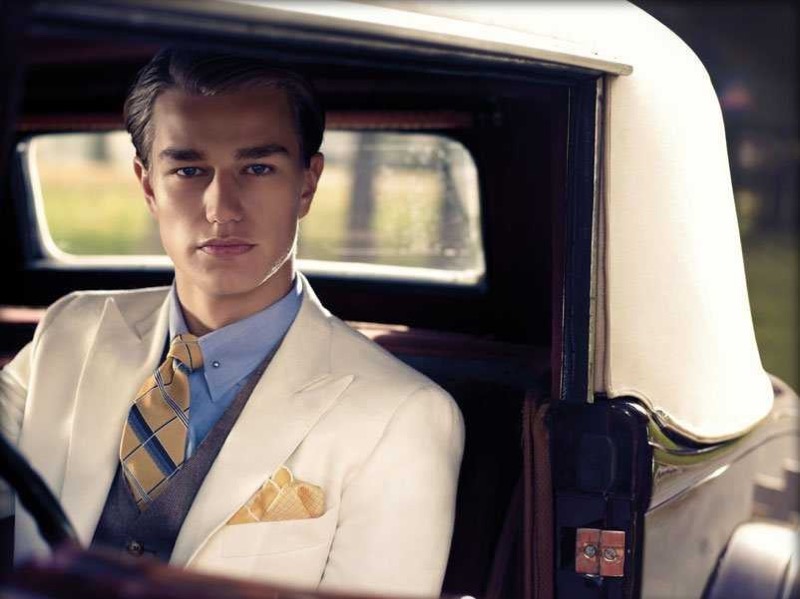
Brooks Brothers collaborated on the menswear for the 2013 film and remains the most direct connection to Gatsby’s on screen wardrobe. Their mainline suits and dress shirts still sit in the Ivy-adjacent proportions that translate well into 1920s-inspired dressing.