A western shirt has a certain confidence built into it. The pointed yoke broadens the shoulders, the chest pockets give the front some purpose, and pearl snaps add a flash that ordinary buttons rarely manage. Even in plain denim, it suggests a man with somewhere more interesting to go than the office.
Washed denim belongs easily with everyday jeans, while contrast piping and embroidered flowers suggest someone who might know the band’s next song. The appeal lies in that range, from working clothes to clothes made for an entrance.
Western Shirts
What Defines a Western Shirt?

The yoke usually gives the game away. This shaped panel crosses the shoulders, often dipping into points across the chest or back. It gives a soft shirt some architecture and directs attention toward the upper body. The effect survives even when the fit is loose.
Chest pockets contribute their own character. Pointed flaps look purposeful; sawtooth versions turn that outline into decoration. Smile pockets take a more theatrical approach, their curved openings sometimes framed by piping and embroidered arrowheads. Each treatment belongs to the western vocabulary, though a shirt only needs a few of these details to speak it.
Snaps are another signature, particularly pearlescent ones. Buttons also appear, and embroidery is optional. The identity comes from the combination. A plain cotton shirt with shaped yokes can look thoroughly western long before anyone adds a cactus.
That distinction matters when shopping. Decoration determines how loudly the shirt speaks, while its construction establishes what it is.
A Brief History of the Western Shirt


Western shirting brings together two persuasive ideas about men’s clothes: they should do a job, and they should make the wearer look like somebody. Practical details account for part of its appeal. The romance of the American West supplies the rest.
Denver-based Rockmount Ranch Wear, founded by Jack A. Weil in 1946, helped establish the snap-front shirt as a western signature. The company’s history credits Weil with introducing snaps to western shirts, alongside designs featuring sawtooth pockets and diamond-shaped fasteners.
The result offered a recognizable identity down to the cuffs. That is an impressive amount of character for a garment that still works with an ordinary pair of jeans. Embroidery and contrast panels push it toward performance clothes; plain denim brings it back to daily wear. Both belong to the same tradition.
Pearl Snap Shirt
What Is a Pearl Snap Shirt?

A pearl snap shirt fastens with press studs topped by a pearlescent finish, typically imitating mother-of-pearl. The two halves press together and pull apart. “Pearl” describes the decorative face, so the name alone does not guarantee genuine shell.
On western shirts, the snaps often continue from the front to the pocket flaps and cuffs. Repetition is part of their appeal. A row of small, bright fasteners gives washed denim a little jewelry of its own.
Pearl snap shirt and western shirt overlap as descriptions. The first identifies the fastening; the second refers to the broader design. Yokes and shaped pockets help establish the western connection. The snaps provide some of its pleasure, particularly when they stand out against black fabric.
Denim Western Shirts

Denim is where the western shirt feels most at ease. The fabric softens with wear, while the yokes and pockets retain enough definition to distinguish it from the other blue shirts in the wardrobe. It can look a little weathered and still look entirely itself.
Worn with jeans, it becomes a question of how much denim you want people to notice. A washed blue shirt above deep indigo jeans separates the two pieces. Similar shades create a longer, more continuous line, especially with the shirt tucked in. Neither approach requires a rule about how many shades apart they should be.
Weight makes a practical difference. Lightweight denim slips comfortably beneath a jacket. A heavier shirt has more authority as an outer layer, worn open over a T-shirt with the cuffs casually turned back.
Black & White Western Shirts

Black gives western details an evening disposition. White piping becomes a graphic line across the shoulders, while pearl snaps catch the light against the fabric. A tonal version is quieter, relying on the cut of the yoke and pockets to establish its identity.
With black jeans, the effect is lean and slightly severe. Faded blue denim relaxes it. Tailored trousers take a black western shirt somewhere dressier, particularly when the decoration is limited to the fasteners.
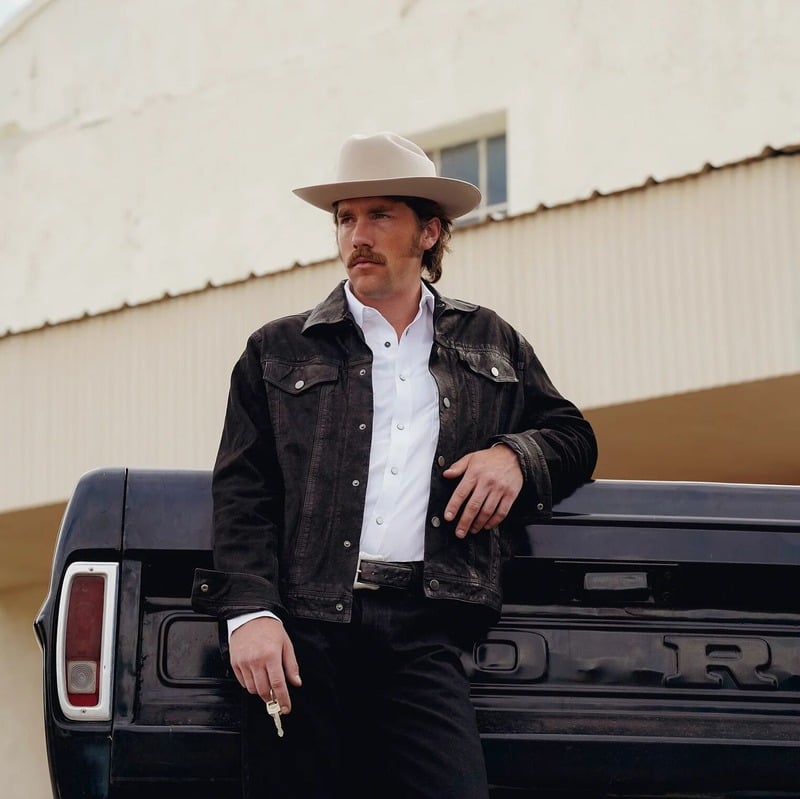
White offers a different type of confidence. The construction becomes easier to read, and the shirt can feel almost dressy until the pocket flaps reveal its loyalties. Blue jeans bring that contrast into focus. Charcoal trousers make more of its clean surface and shaped seams.
Opacity deserves attention here. A lightweight white shirt may show the undershirt beneath it, so that extra layer becomes a visible part of the decision.
Embroidered & Statement Western Shirts

An embroidered western shirt understands the value of being noticed from across a bar. Flowers spread across the shoulders, piping traces the chest, and contrast panels give the body a stronger outline. The decoration is part of how the shirt dresses the wearer.
Plain trousers let that workmanship register. Jeans give it an everyday foundation, while tailored trousers bring out its relationship to stagewear. Boots strengthen the western reference; loafers introduce a more urbane note.

Satin and velvet achieve some of the same drama through their surfaces. Light moves across them, making even a single-color shirt feel expressive. These are clothes for a man who enjoys getting dressed. The rest of the outfit can be relatively straightforward.
Choosing the Fit & Fabric

A western shirt already directs attention to the chest, so pulling between the snaps is particularly conspicuous. The front should lie flat, and the shoulders should allow you to reach forward comfortably. A close fit works when the shirt moves with you.
The hem tells you something about its intended life. Long tails stay tucked beneath a belt. A shorter, gently curved hem works loose over jeans. Try it with the trousers you actually wear, since the rise changes how much shirt sits above the waistband.
Fabric gives the same design very different manners. Soft cotton is easy against the skin; denim holds its outline. Velvet brings weight and a more dressed-up mood. Choose according to how you expect to wear it, then check the care label before becoming attached.
Even stitching and secure snaps deserve more attention than an impressive price tag. You will encounter those details every time you get dressed.
How to Wear a Western Shirt with Jeans
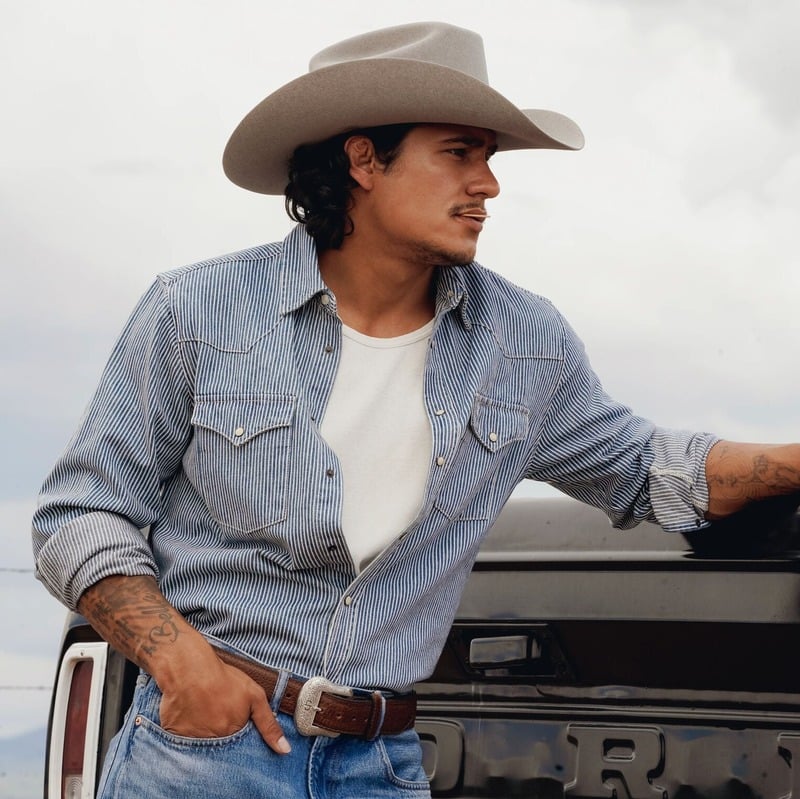
A western shirt and jeans share enough history to look convincing together with very little intervention. Proportion supplies the interest. Straight-leg denim gives the outfit a workwear foundation, while a closer cut sharpens the line beneath a tucked shirt.
The belt becomes more noticeable once the shirt is tucked in. A plain leather strap keeps attention on the yoke and snaps. An ornate buckle makes the waist part of the story, particularly with cowboy boots below.
That fuller expression of cowboy style has its own appeal. For everyday wear, a denim western shirt can also take the place of the casual shirt you would normally reach for. Its details do enough to change the outfit.
Wearing a Western Shirt with Tailoring

Under a blazer, a western shirt introduces a useful streak of independence. The collar remains visible above the lapels, and the snaps interrupt the familiar arrangement of jacket and shirt. A small change can alter the whole impression.
Washed denim is especially persuasive with textured tailoring. Both fabrics have enough character to look comfortable together. Smooth cotton creates a dressier result, particularly when the shirt’s decoration is restrained.
Fit matters through the sleeves and waist, where excess fabric can collect beneath the jacket. Once those proportions work, the combination suits dinners and occasions that allow some personal interpretation. The invitation still determines how far that freedom extends.
Layering a Western Shirt

Worn open over a T-shirt, a western shirt takes on some of the ease of a light jacket. Heavier cotton and denim hold the front open, giving the layers a clearer outline. A close-fitting T-shirt keeps the shape from becoming bulky.
Knitwear reveals a different side of it. A cardigan frames the snaps, making those small fasteners the most visible western detail. Beneath a jacket, the collar does more of the talking.
The hem changes the attitude, too. Letting it show below a short jacket gives the outfit a casual looseness. Tucking it in defines the waist and gives the outer layer a stronger shape. The same shirt can serve both purposes if its length allows.
Accessories & the Western Look

A western shirt makes accessories unusually consequential. Add a large buckle and a cowboy hat, and the outfit declares its allegiance. A plain belt leaves more of the interpretation to the shirt.
The fuller look works when the pieces feel like they belong to the wearer. The same is true of a quieter approach, with pearl snaps above everyday trousers and shoes that have already seen some use.
Often, the most convincing choice is the shirt you can imagine reaching for again next week. Its western details bring the character. Wearing it regularly makes that character your own.