The trench coat has dressed officers and detectives, then accompanied less dramatic journeys to the office. Its appeal survives the change of scene. Throw one over a sweater and jeans, and the long lapels give the outfit a sense of occasion. Fasten the belt, and the same coat takes on the discipline of a uniform.
The different types of trench coats play with that balance. A short cotton version slips into an everyday wardrobe; a long leather trench asks for a little more commitment. Length and fabric decide how much of the coat’s history you bring along when you leave the house.
Types of Trench Coats
Among the various types of coats, the trench is particularly recognizable from a few details. The traditional version has an overlapping front and a waist belt, with flaps and straps recalling its military use. Modern designs vary the formula, starting with the way the coat closes.
Double-Breasted Trench Coats
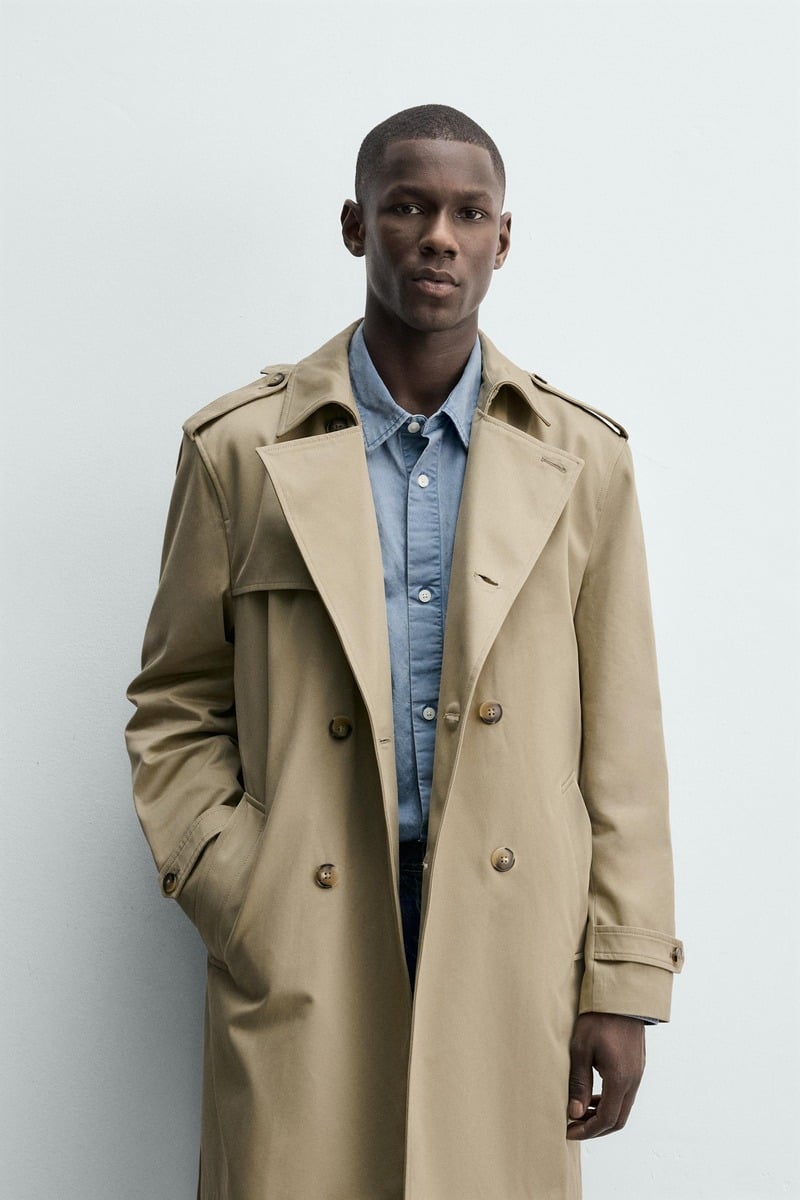
A double-breasted trench coat has two rows of buttons and overlapping front panels, giving the chest more visual weight. Belted, it draws the waist into focus. Worn open, the lapels spread and the coat becomes a more relaxed proposition.
That flexibility explains its usefulness beyond tailoring. Over a sweater and jeans, the military details bring some structure to casual clothes. Wider trousers continue the coat’s volume, while a narrower leg lets the trench dominate the silhouette. Neither combination requires a detective’s hat.
Single-Breasted Trench Coats

A single-breasted trench coat closes with one row of buttons, giving the front a simpler line. Designs that also omit the belt or shoulder tabs move closer to a conventional raincoat, with the emphasis falling on length and cloth.
There is still plenty of scope for character. An oversized single-breasted trench can swing around the legs, while a shorter version behaves more like a jacket. The quieter fastening also gives a patterned sweater or a crossbody bag less to compete with.
Trench Coat Details
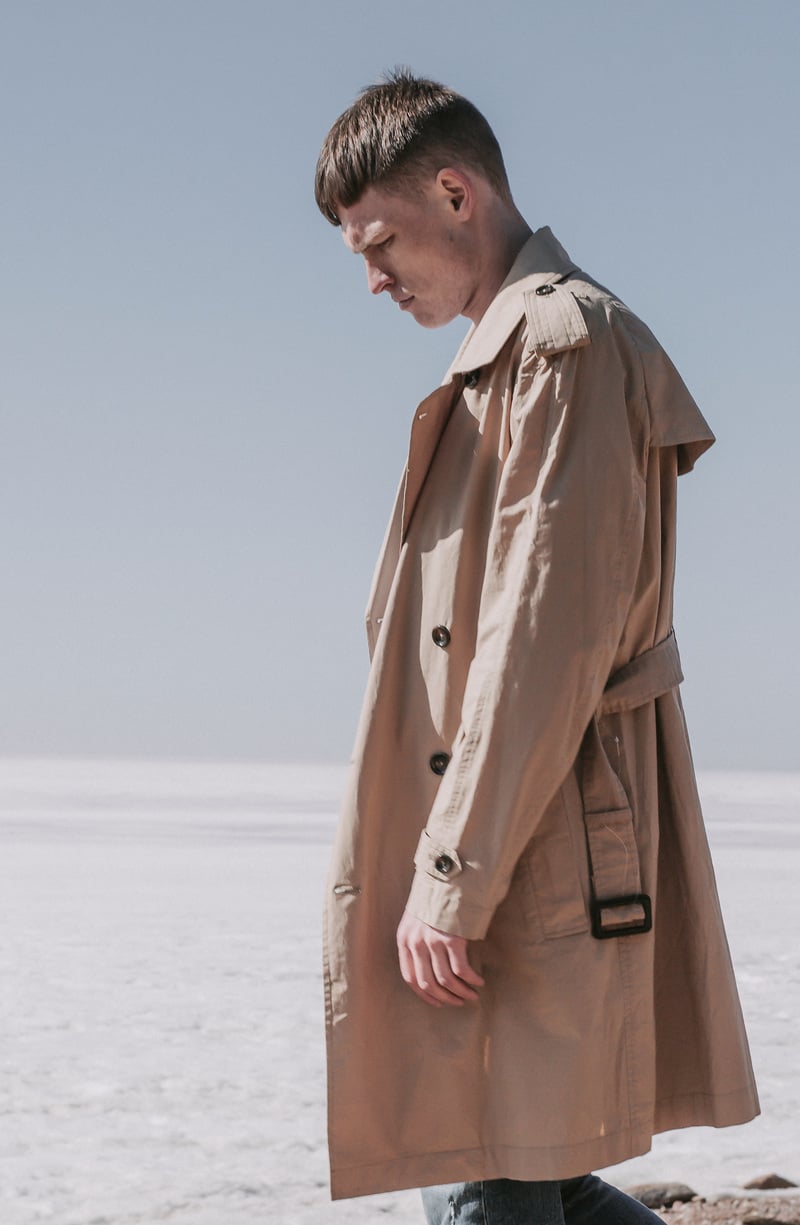
The trench’s shoulder tabs and cuff straps once answered practical requirements; now they help decide how much uniform you see in the coat. Keep the full set, and the military reference is unmistakable. A simpler design directs attention toward the fabric.
The belt does the most noticeable work. Buckled, it gives the coat a defined waist; loosely tied, it gathers the cloth into softer folds. Securing it at the back keeps the front open and the ends out of the way, especially when the trench is worn over knitwear.
Flaps & Weather Protection
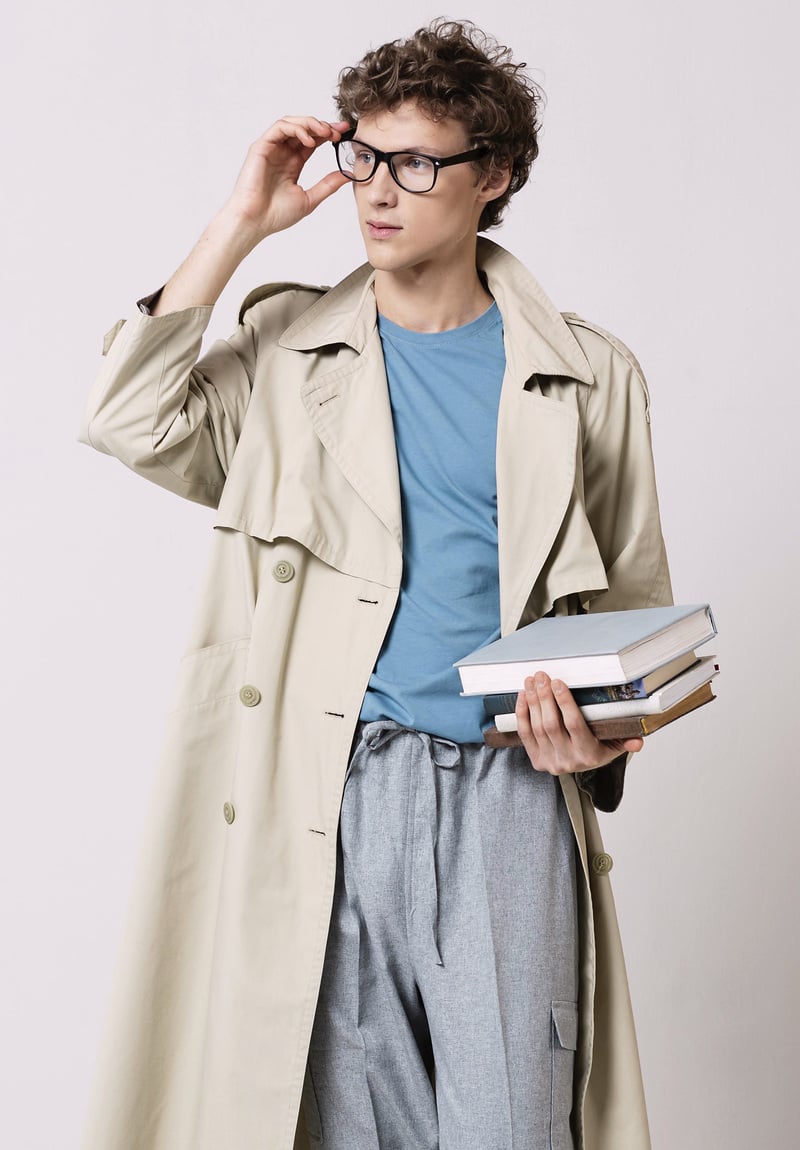
The flap across the chest and the rain shield across the upper back give a traditional trench its layered outline. Their arrangement varies between designs, with the collar and adjustable cuffs adding further coverage against the weather.
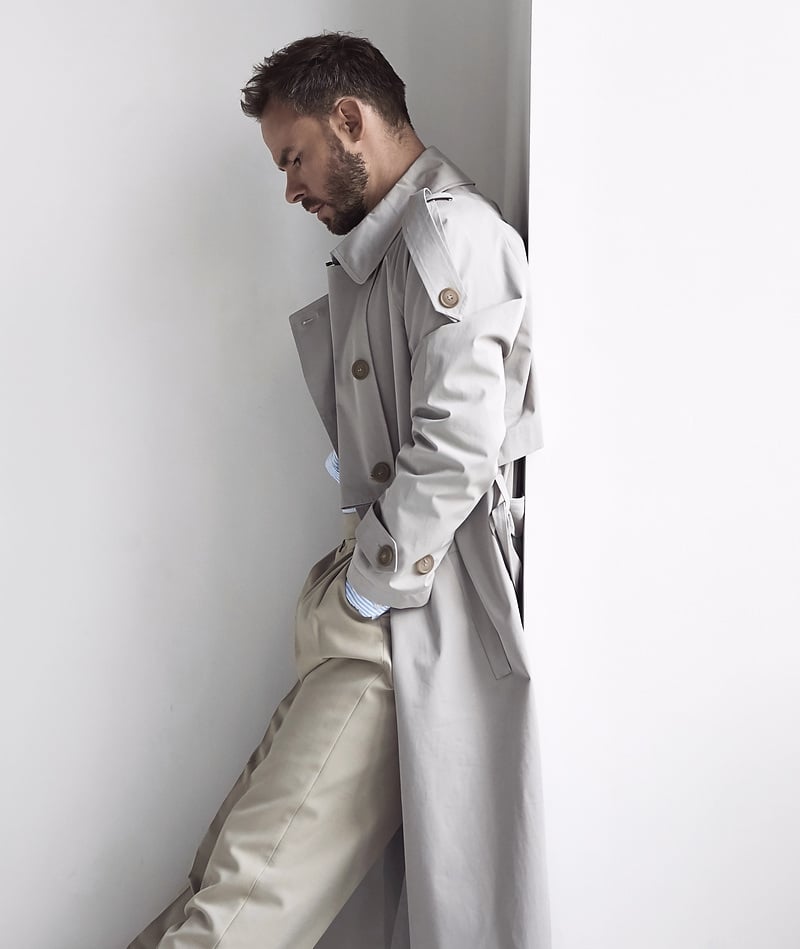
These details explain why even a plain beige trench can hold an outfit together. Over a T-shirt, the flaps and lapels supply enough interest of their own. The clothes beneath can remain uncomplicated.
Vents & Movement
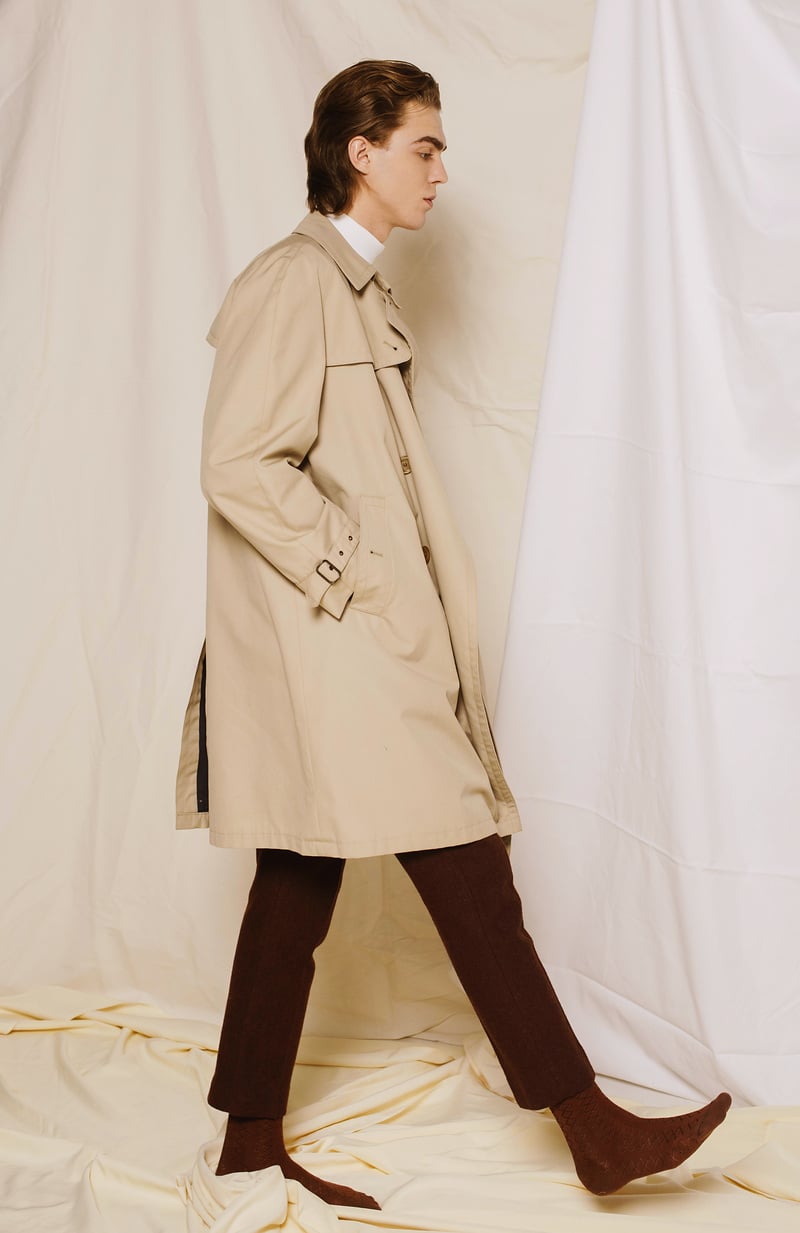
A back vent lets the lower coat open as you walk or sit. On a longer trench, that movement is part of its attraction: the skirt follows your stride instead of binding around the legs.
The fit becomes apparent in motion. A vent that falls closed when you stand and opens naturally as you walk is doing its job. Persistent pulling across the hips suggests a different size or cut would suit you better.
Linings & Layering
A smooth lining lets the trench slide over a jacket or sweater, making a difference every time you put it on. Insulated liners have a separate purpose, adding warmth; some can be removed as the weather changes.
A detachable liner is worth trying in place before buying. It takes up space through the body and sleeves, particularly over heavier knitwear. The useful coat is the one that accommodates the clothes you actually wear beneath it.
Trench Coat Fabrics
Gabardine

Gabardine gives the traditional trench much of its character. The tightly woven twill helps the lapels hold their shape and gives the belt something to gather. In navy, as the A.P.C. example shows, that structure looks entirely at home above faded jeans.
The name describes a fabric made in several fibers, including cotton and wool. The particular gabardine, its weight, and any protective finish determine how the coat behaves. For a trench intended for regular rain, look for the maker’s stated level of protection.
Leather

A leather trench coat makes the long silhouette more assertive. Light catches the surface differently as the coat moves, and a tied belt creates deeper folds through the waist. Even a simple outfit takes on some of that attitude.
A fine sweater and straight trousers give the leather space to lead. There is a practical commitment, too: weight and the leather’s care requirements become more noticeable across a coat of this length. Treat moisture according to the maker’s guidance, as you would with any leather outerwear.
Cotton Drill & Twill

Cotton drill is part of the twill family, with a diagonal weave and an association with work clothes. In a trench, cotton twill can give the military shape a more everyday character, particularly when the hem is shorter.
The Valentino Garavani example brings the proportions closer to a jacket. More of the trousers remain visible, and the belt sits within a compact silhouette. The cloth’s weight and finishing still matter; two cotton twill coats can feel quite different on the body.
Cotton Serge

Serge is another twill, made in different fibers and weights. The Fursac cotton trench uses it for a relatively simple belted design, allowing the long front and lapels to establish the shape.
For the wearer, the distinction is best understood through the finished coat. A lighter cloth moves more readily, while a denser version creates a firmer outline. Fiber content and lining help determine which belongs in your wardrobe, particularly if you plan to wear it across changing seasons.
Trench Coat Colors
Khaki & Beige

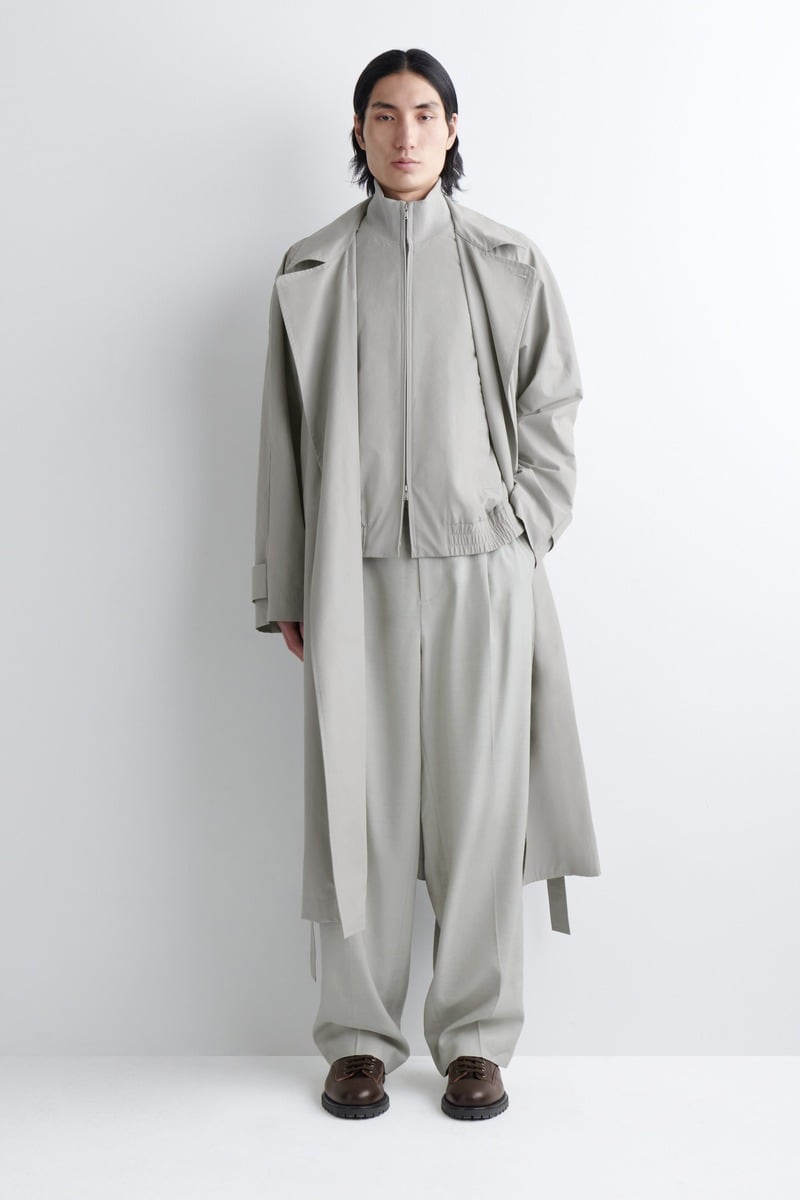
Khaki and beige bring the trench’s history closest to the surface. A lighter coat also frames darker clothes particularly well, giving navy trousers and black shoes a clear outline beneath the hem.
Denim and a plain sweater take it straight into a casual occasion. The shade changes the impression: a yellow-toned tan feels warmer, while gray-beige has a cooler cast. Hold each against the clothes you wear most often, especially near the face.
Black
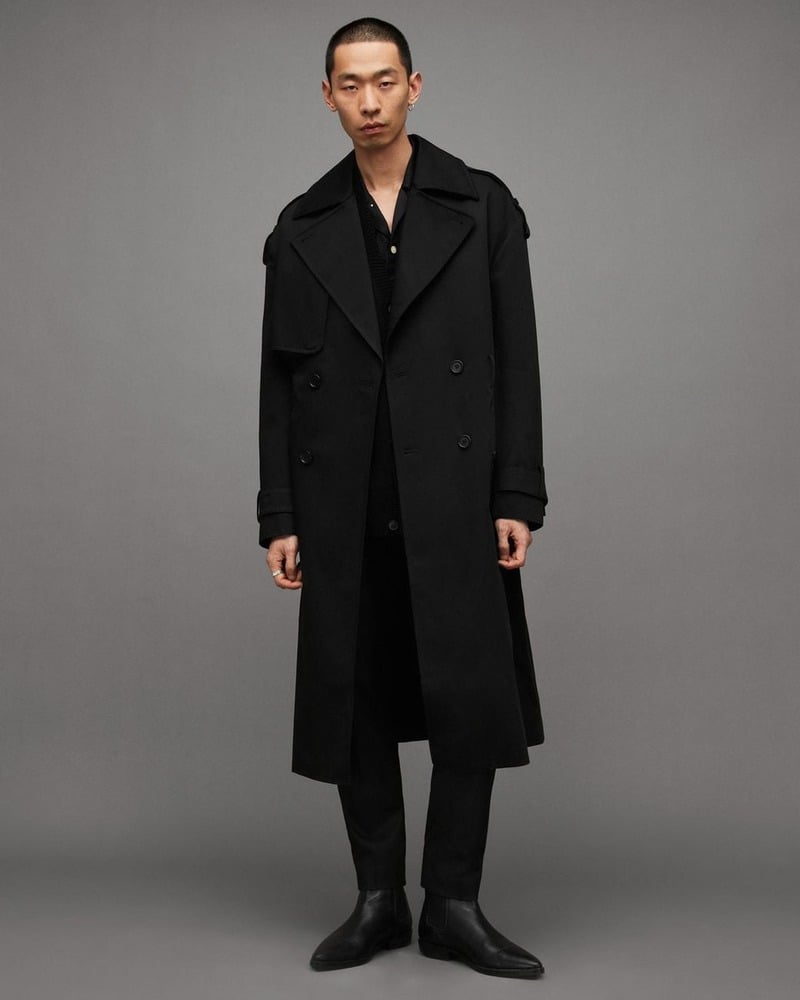
A black trench makes more of the silhouette. Worn over black trousers and knitwear, it creates a continuous line, with the open front revealing differences in texture. Leather shoes add another surface to the mix.
For the minimalist and understated, that is often enough. The cut supplies the distinction, whether through a close waist or a wider, longer skirt. Black gives both a certain severity, which a soft sweater can temper.
Blue & Navy
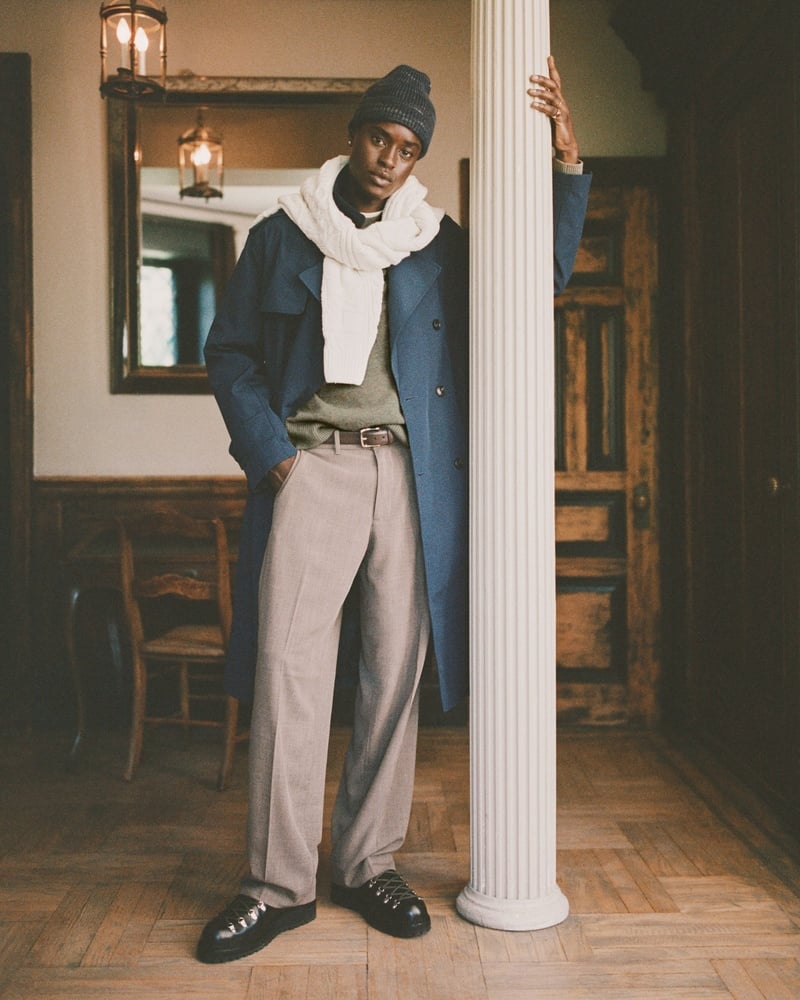
Navy has an easy relationship with the clothes many men already own, particularly gray tailoring and denim. It retains some of the trench’s formality while feeling less stark than black.
A brighter blue puts more emphasis on the coat itself. Over a black T-shirt or a neutral sweater, it becomes the main color in the outfit. The choice comes down to how prominently you want the trench to feature in your daily rotation.
Green & Olive

Olive connects the trench to its military ancestry and sits comfortably beside washed denim or brown footwear. It also has enough depth to work as an alternative to navy in a casual wardrobe.
The London Fog example shows how muted green can serve as a neutral. A lighter sweater separates the coat from the layers beneath, while darker trousers keep the lower half grounded. Slight variations in earthy shades make the combination more interesting than an exact match.
Brown
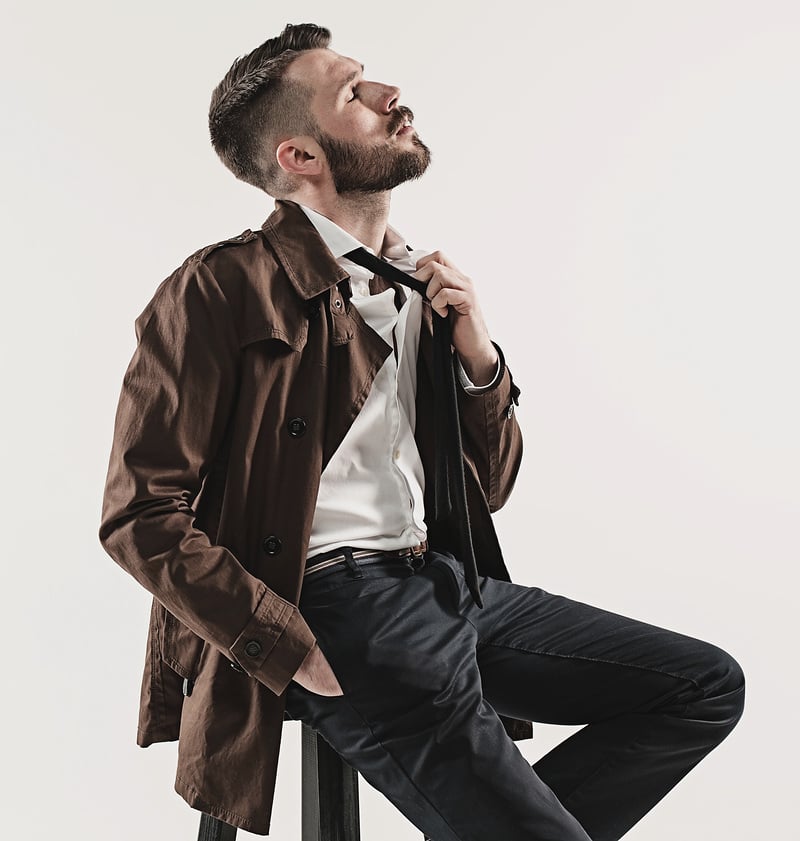
Brown changes the trench’s character through warmth, particularly against cream knitwear or blue jeans. In leather, the surface adds depth as it folds and catches the light.
A dark brown trench can also work over navy tailoring for a formal outfit in a business setting. The fabric and finish guide the level of formality, along with the occasion. A soft, weathered leather coat tells a different story from a smooth cotton version.
How a Trench Coat Should Fit
Length
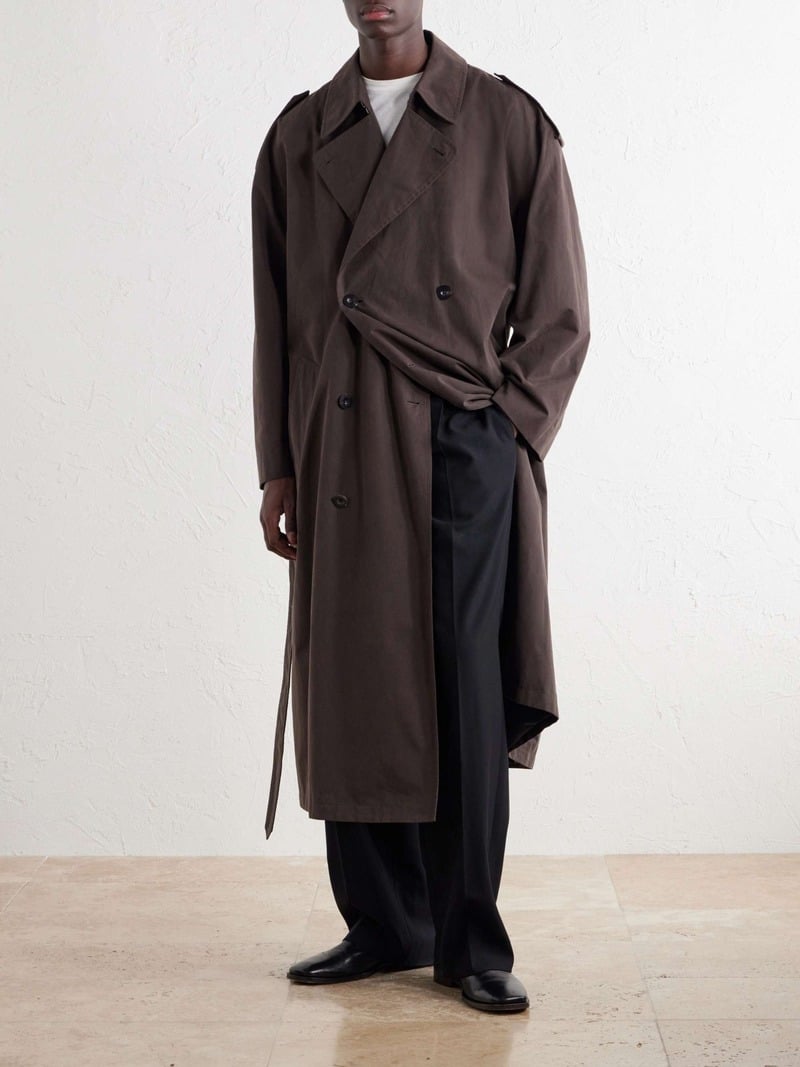
Length decides how much of the outfit the trench becomes. A thigh-length coat leaves the trousers in full view and is convenient for frequent sitting. Below the knee, the fabric’s movement becomes a larger part of the appeal.
Your height is one consideration alongside trouser width and footwear. A long coat can work on a shorter man when the overall proportions hold together. Over tailoring, the practical starting point is a hem that covers the suit jacket.
Shoulders
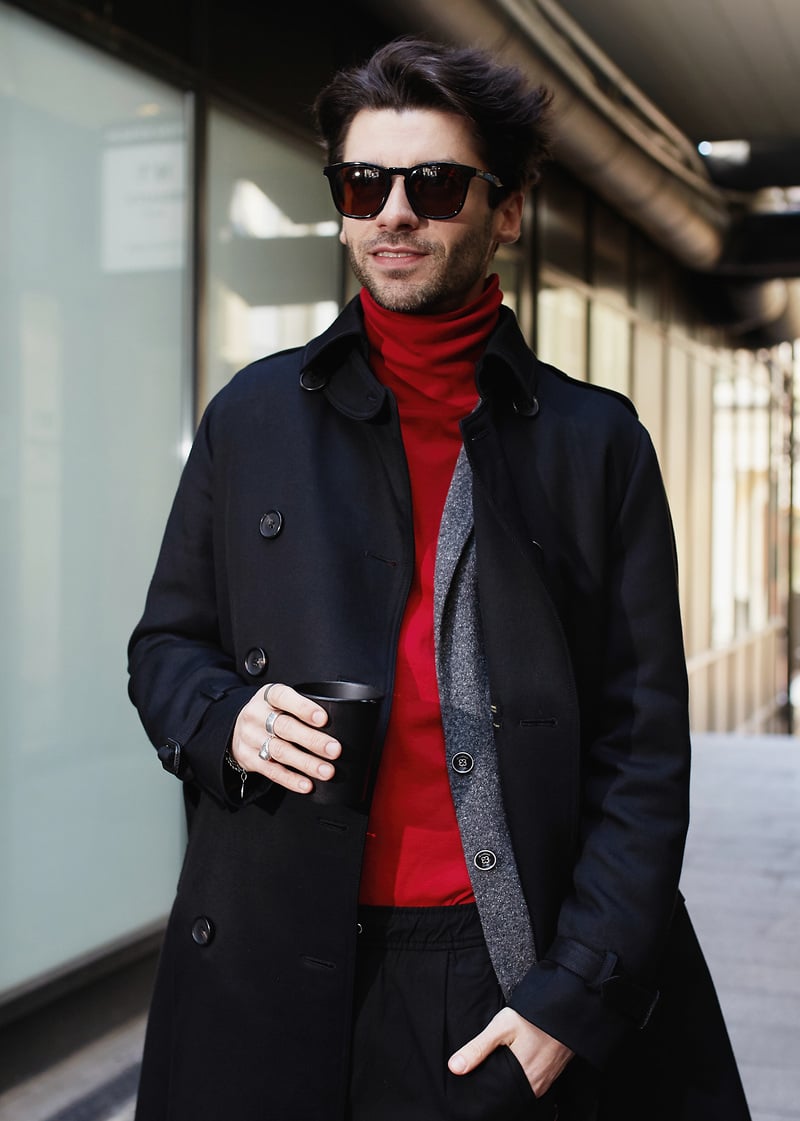
A trench should fit over the life you dress for. If that includes tailoring, try it on with a jacket. A coat cut to accommodate a suit jacket needs enough space through the upper sleeves and back for both layers to sit comfortably.
Set-in sleeves give you a visible shoulder seam, while raglan sleeves run diagonally toward the collar. Each creates a different shoulder line. Reaching forward and bending your arms will tell you more about comfort than measuring a fixed distance beyond the shoulder.
Chest & Body
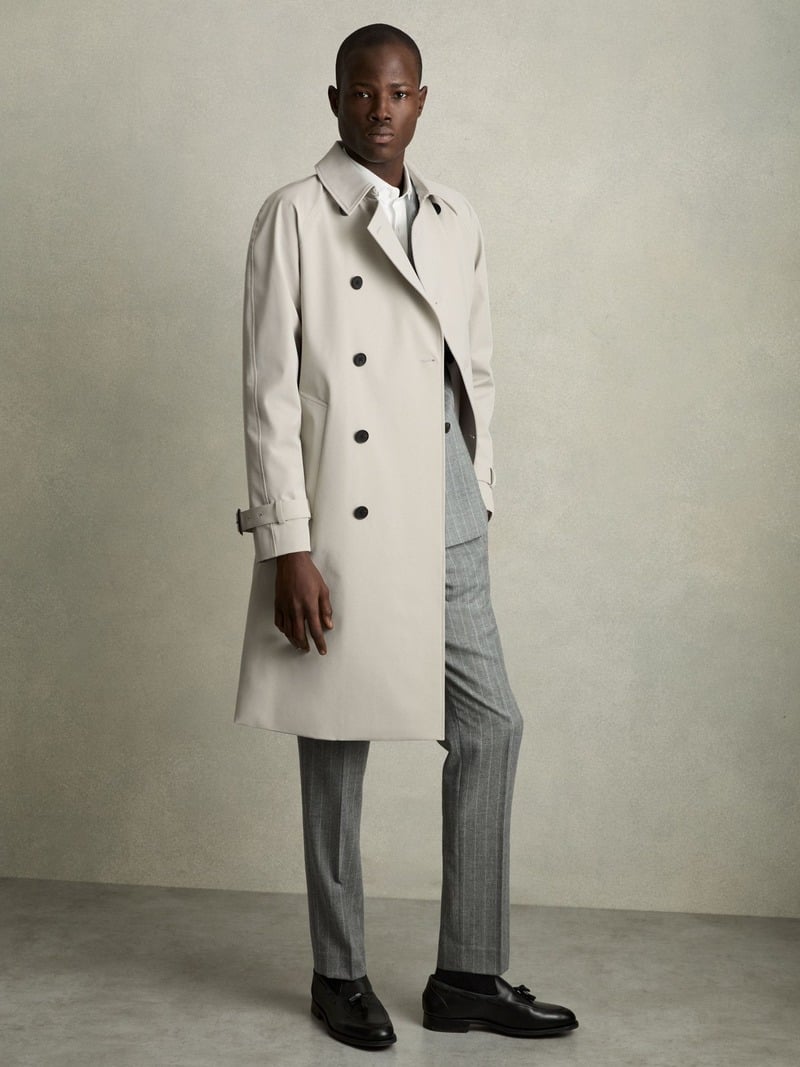
Fasten the buttons and sit down. The front should lie smoothly over your usual layers, with enough space to move. Pulling between the buttons is a useful sign that the coat needs a different cut or size.
A relaxed trench will have more fabric through the body by design. That volume should fall naturally, with the belt available to draw it in. Choosing a fuller cut produces a different result from simply buying a narrow coat several sizes larger.
Sleeves
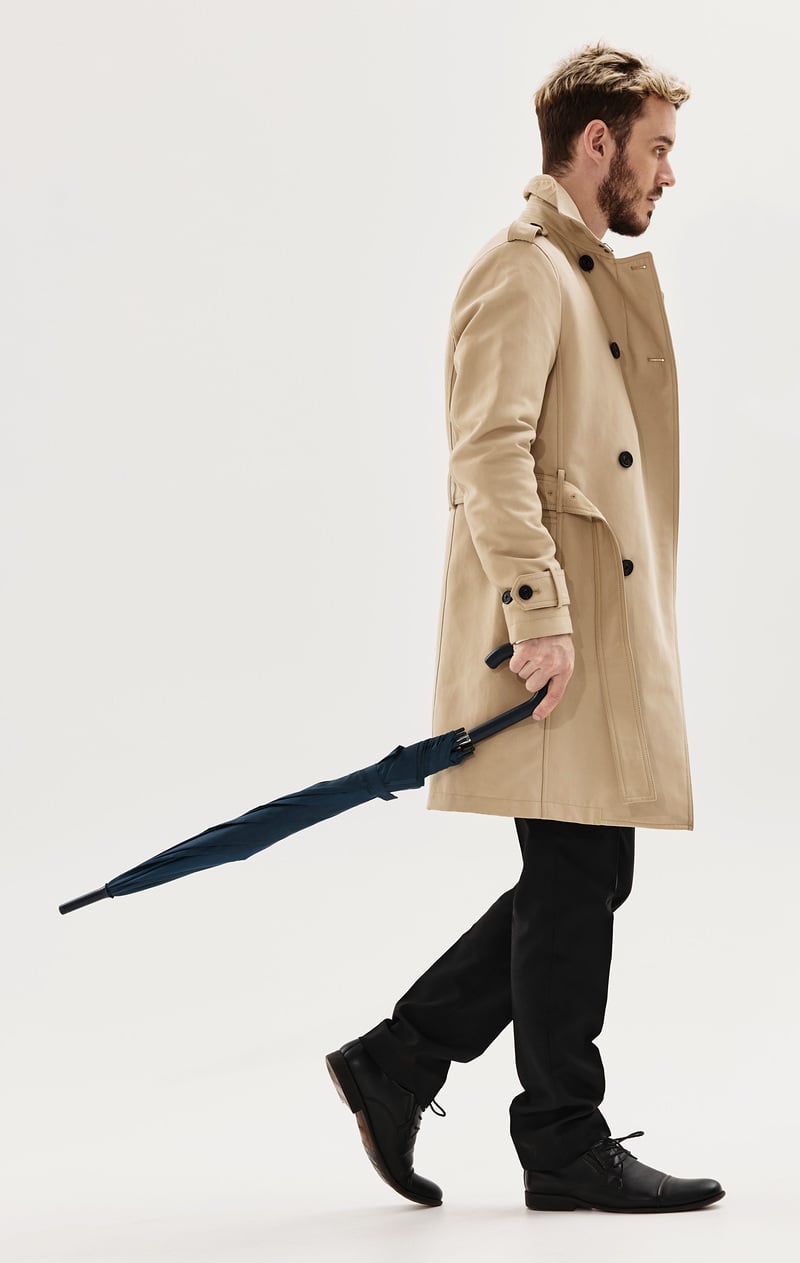
The trench’s sleeves should cover the shirt or jacket underneath, finishing around the wrist to the base of the hand as the design allows. Check the length over your usual layers, then see how it changes when you bend your arms.
Cuff straps can complicate shortening, so an alteration is worth discussing before buying. Getting the proportions right at the outset leaves a tailor less to negotiate later.
How to Wear a Trench Coat
Business Casual
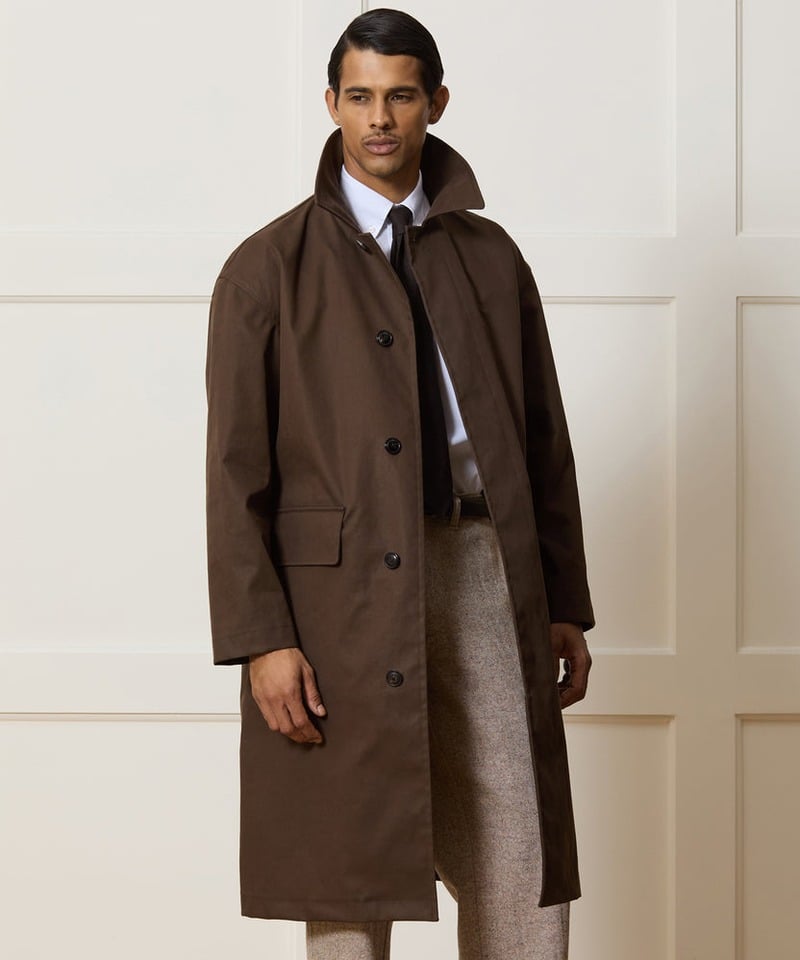
The trench understands the commute. Over a shirt and tailored trousers, its long front gives ordinary office clothes a more defined shape, particularly when you leave it open. Loafers or lace-up shoes make the combination perfect for business casual settings.
The outfit beneath still deserves attention. A trouser waistband that sits comfortably and a shirt that works with it make the transition indoors straightforward. The coat can improve the entrance; it eventually has to come off.
Over a Suit
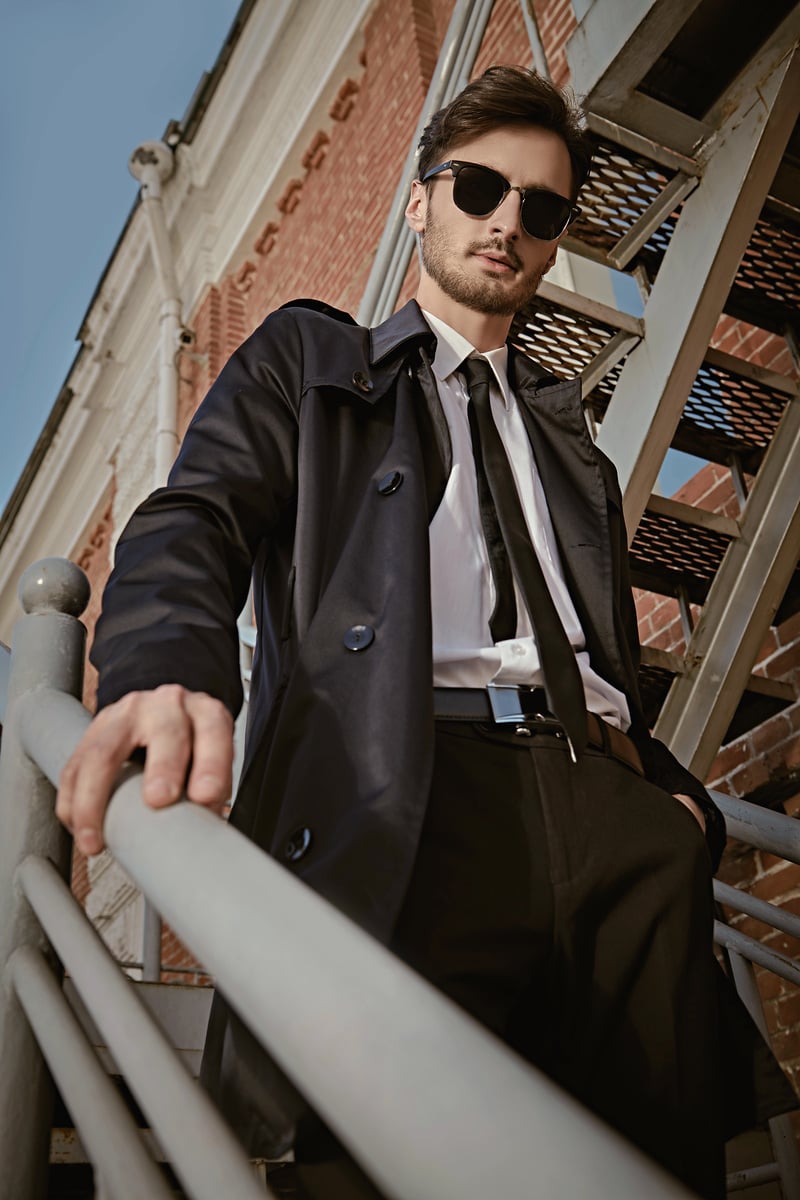
A trench brings some weather protection and a different texture to tailoring. Beige creates contrast against a navy suit, while a darker coat keeps the outline more continuous. Both benefit from enough space through the shoulders for the jacket to sit naturally.
Length matters here, too. The trench should cover the jacket, giving the layers a clear order. For a formal evening event, follow the dress code when choosing outerwear; a black trench alone does not settle the question.
Casual Knitwear

A crewneck takes some of the ceremony out of a belted trench. The coat’s military details remain visible, but soft knitwear and jeans make the combination feel suited to an ordinary day.
Trousers and shoes decide where it goes next. A straighter leg with boots gives a long coat enough weight beneath it; sneakers take the same idea in a more casual direction. Let the hem move, especially when the trench has been cut with a fuller skirt.
Colder-Weather Layers
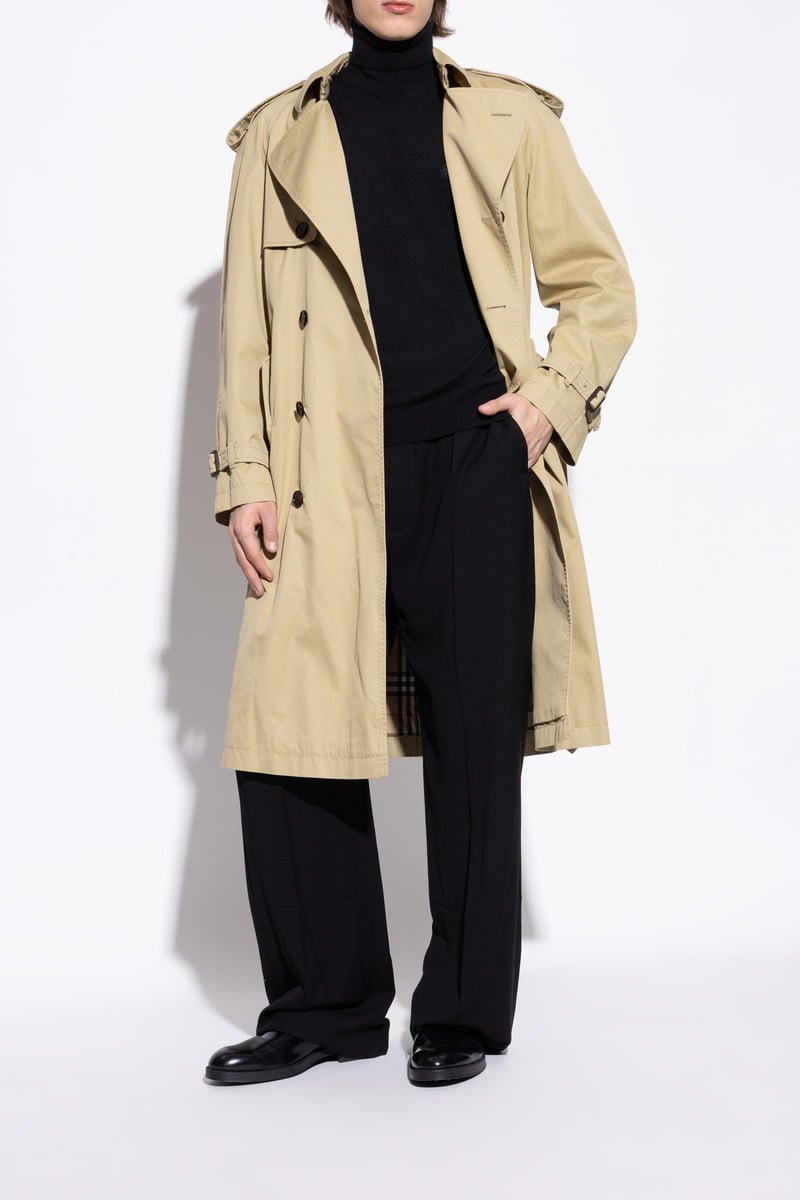
A turtleneck fills the neckline of an open trench, replacing the shirt-and-tie association with something softer. Keeping the sweater close in color to the trousers creates a long line beneath a contrasting coat.
It is a useful combination for cooler days, with warmth determined by the coat’s cloth and lining as much as the knitwear. A lightweight cotton trench has its season. When temperatures fall further, insulation becomes the priority.
Military Origins & Rain Protection


The trench’s origins in the military grew out of an earlier history of weatherproof outerwear. Aquascutum and Burberry supplied British officers, with the recognizable trench taking shape during World War I. Thomas Burberry had developed gabardine in 1879, decades before the conflict.
The debate over the first inventor is less settled than the coat’s status today. Its design evolved through practical needs, and the overlapping front and adjustable details survived the move into civilian dress. Much of what looks stylish now began as a solution to an uncomfortable day outdoors.
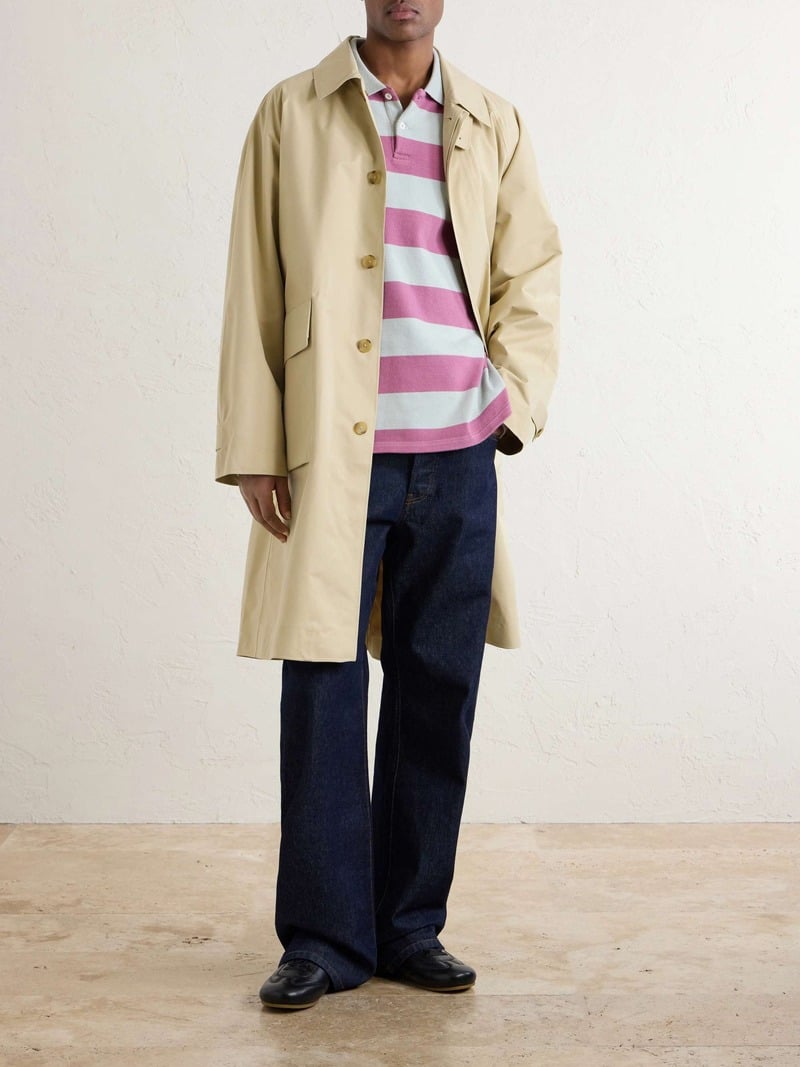
That history sets an expectation worth checking against the modern garment. Burberry describes its traditional gabardine coats as shower-resistant. Waterproof performance depends on the finished construction, so the trench silhouette itself is only part of the story.
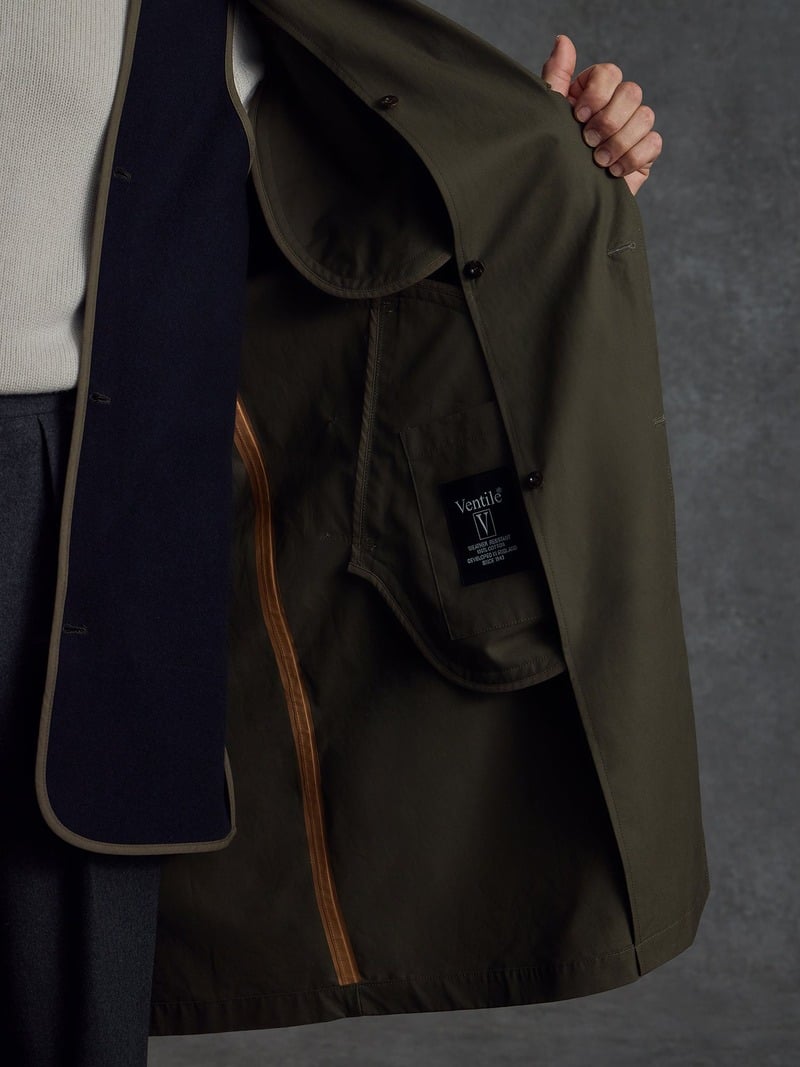
The long hem provides coverage, while the collar and cuffs help close the coat against the weather. For prolonged rain, check the stated protection and keep an umbrella to hand. Follow the maker’s instructions for cleaning and maintaining any water-repellent finish.
Different Approaches to the Trench

Polo Ralph Lauren brings its belted trench into the company of sportswear. The contrast is persuasive because the coat retains its traditional details while the clothes beneath loosen the mood. Its connection to a preppy aesthetic comes through the whole outfit.

Prada changes the emphasis with a checked version. Pattern takes over the long front, while the trousers and sweater give it a relatively quiet setting. The shape remains recognizable even as the surface takes it somewhere else.
A trench allows that degree of choice. Some men will want the belt fastened over a suit; others will leave it open over yesterday’s jeans. The most convincing version looks as though it belongs to the wearer, with the history in the details and the daily life in the clothes beneath.