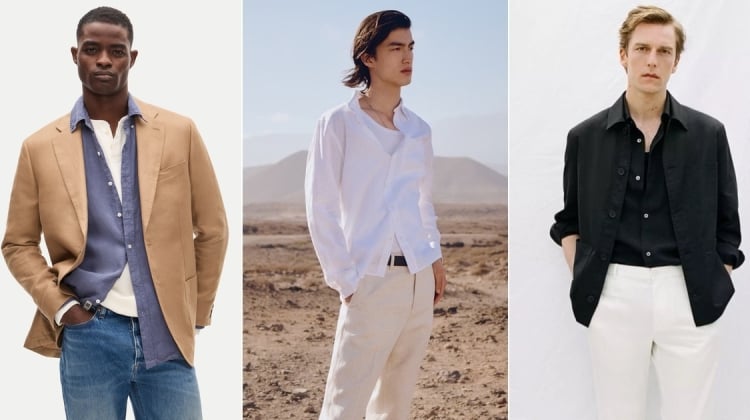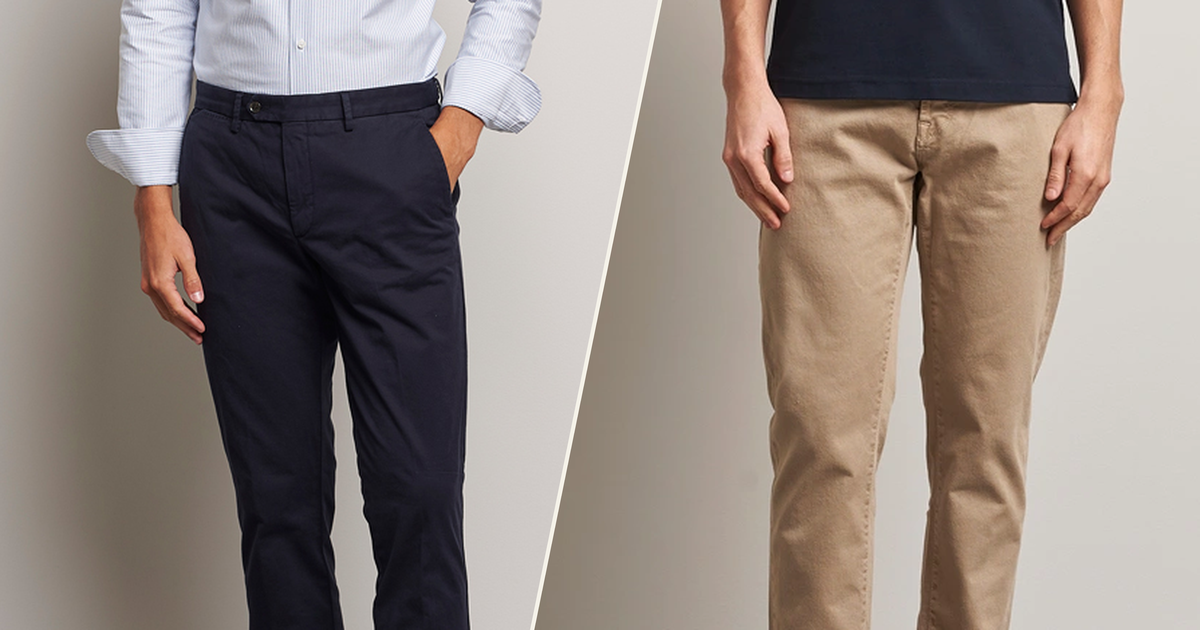
Few trousers have spent as much time in an office as khakis, which makes the confusion over their name amusing. Ask for chinos and you might be handed the same tan cotton pants. Menswear has turned an everyday purchase into a vocabulary test.
Chinos and khakis overlap. Chinos typically describe cotton-twill trousers with a smooth finish; khakis usually mean tan casual trousers, often in sturdier fabric. There is no industry standard separating them. How the pants hang and where you wear them matter more.
Chinos vs Khakis
The Difference at a Glance
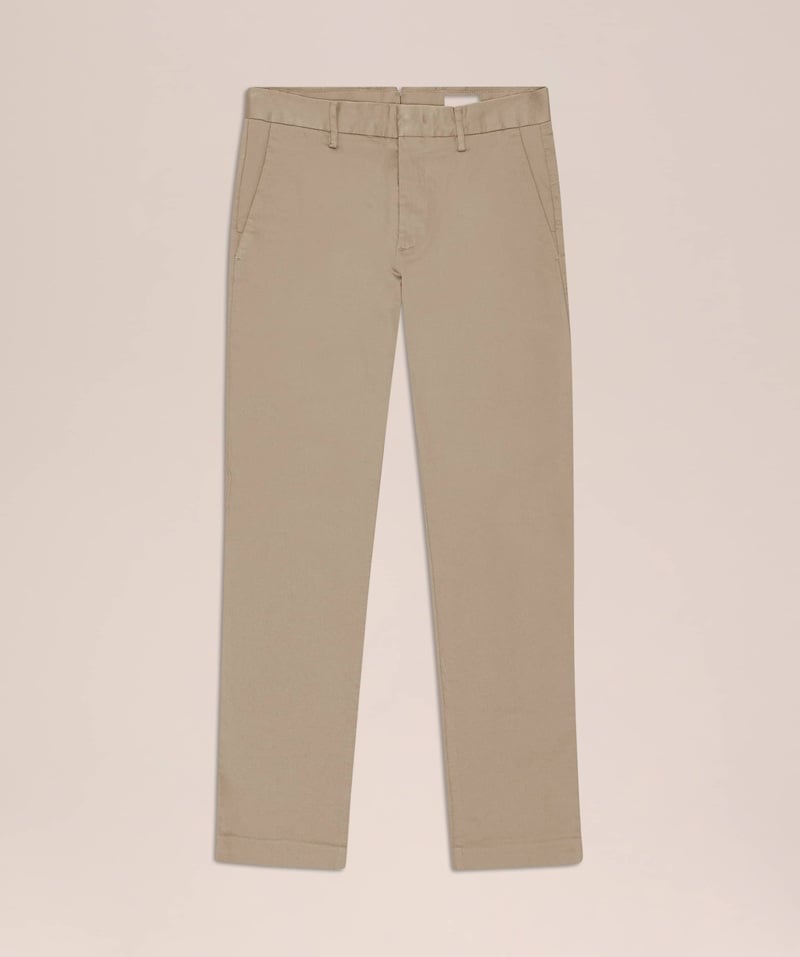
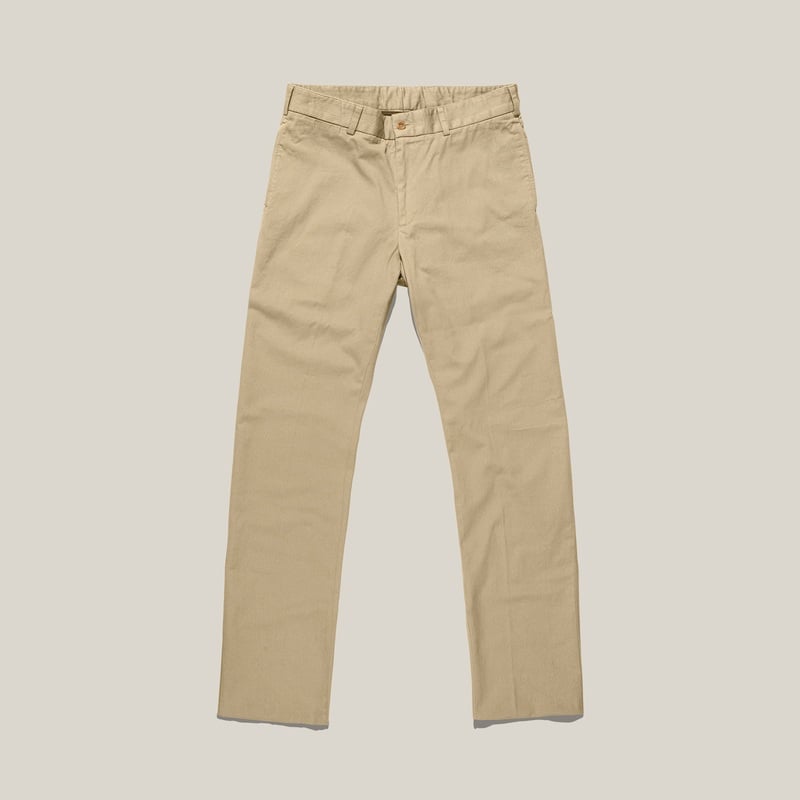
Chinos usually take their identity from the cloth and trouser style. Khakis take theirs first from a color, then from the casual cotton pants associated with it. A tan chino can belong to both categories.
| Feature | Chinos typically | Khakis typically |
|---|---|---|
| Fabric | Smooth cotton twill or a cotton blend | Cotton twill, often with a sturdier feel |
| Weight | Light to medium, with heavier versions available | Medium to heavy, with lightweight versions available |
| Color | Navy, olive, gray, tan, and many others | Tan, beige, or dusty brown |
| Details | Discreet stitching and simple pockets | Sometimes more visible stitching or utility details |
| Fit | Slim, straight, relaxed, or pleated | Slim, straight, relaxed, or pleated |
| Usual impression | Casual through business casual | Casual through business casual |
These are common retail tendencies. Heavy navy chinos and lightweight khakis can reverse expectations about weight. Pleats appear in both categories and describe the cut.
Are Chinos & Khakis the Same Thing?
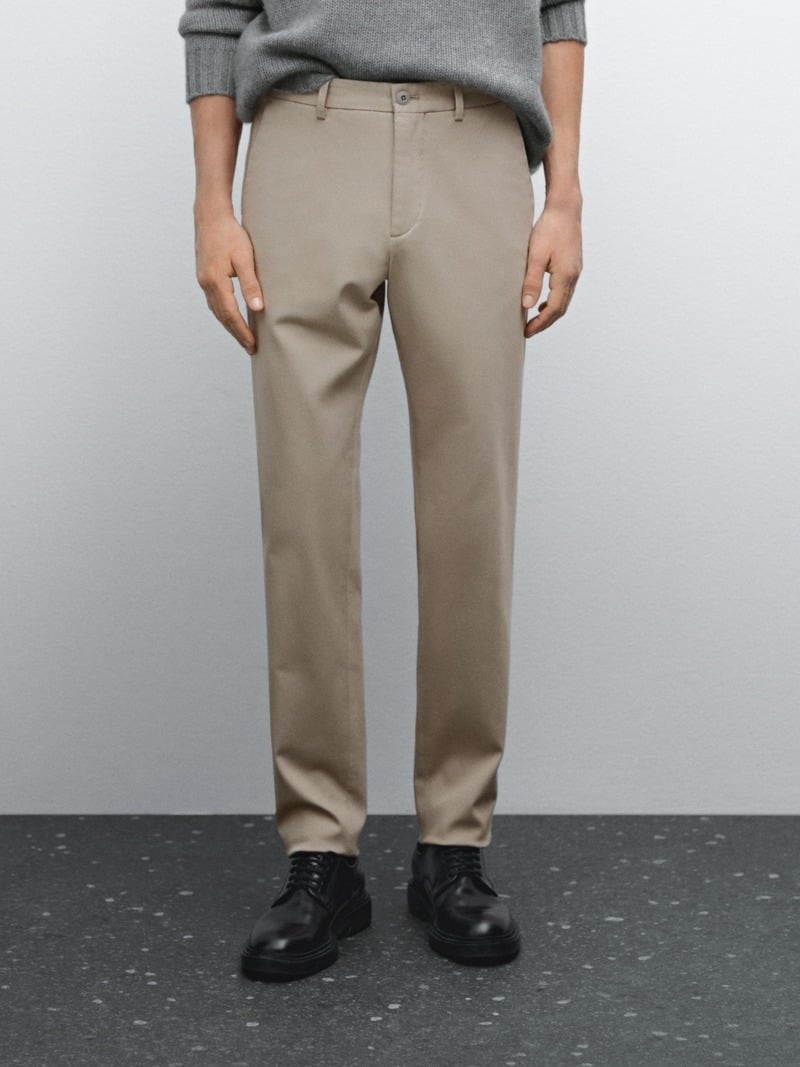
Sometimes, yes. Tan cotton-twill chinos can accurately be called khakis. The confusion comes from treating two overlapping terms as mutually exclusive categories. American dress codes have blurred the distinction. “A shirt and khakis” means looking presentable at work, even when the trousers are sold as chinos. The phrase describes a level of dress as much as a garment.
Some retailers use chino for a smoother, dressier trouser and khaki for a rugged version. Others use the names interchangeably. Rules about hidden stitching or mandatory flat fronts offer more certainty than the clothes support. Examine the pants themselves. A smooth surface and discreet pockets work well with a jacket; washed fabric and pronounced seams suit casual outerwear. Construction supplies the styling clues.
What Are Khakis?
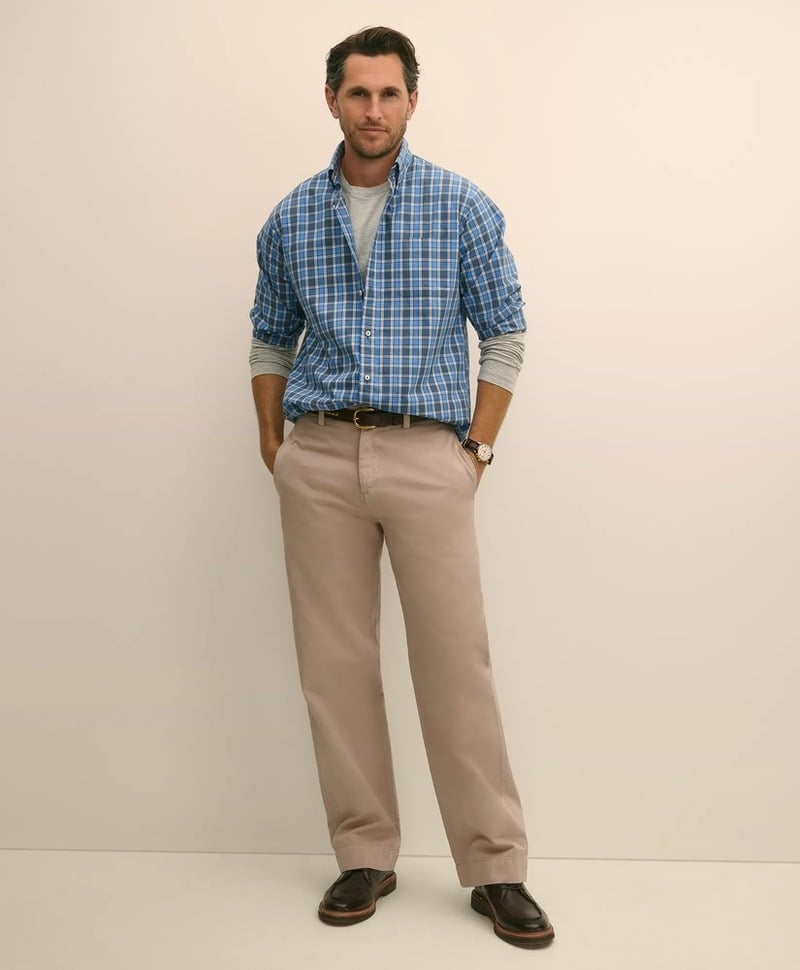
Khakis are usually tan cotton trousers, ranging from sandy beige to deeper brown. The color gives navy jackets contrast and looks natural beside brown leather, linking tailoring and casual clothes. Their origins are practical. Khaki comes through Hindi and Urdu from a Persian word associated with dust. British Indian Army units adopted khaki-colored uniform cloth in the mid-19th century. The muted shade helped soldiers blend into their surroundings, a development described by the National Army Museum.
A full leg and pleats suggest military origins; a tapered flat-front pair looks ready for an office security badge. The color connects them, even when their proportions suggest different wardrobes. Heavier cotton gives khakis structure and works well with textured jackets. A lighter cloth feels easier in warm weather. The khaki pants roundup covers the choices.
What Are Chinos?
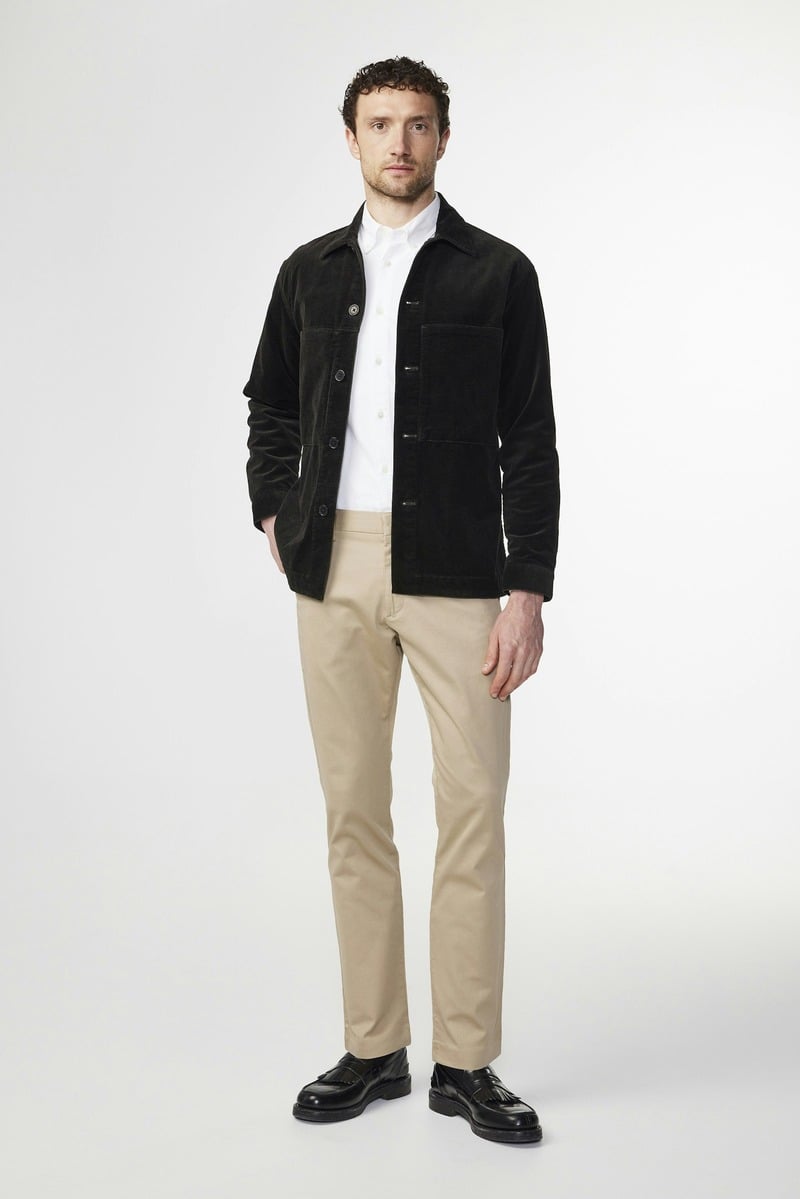
Chinos are made from chino cloth, traditionally a cotton twill with diagonal ribs that can be barely visible on smoother fabric. Modern versions often include stretch fibers or other blends. Cotton and a structured cut make chinos adaptable. Navy chinos can look businesslike with leather shoes, then relaxed with canvas sneakers. The chino pants guide covers fits and styling.
The name is often traced to the Spanish word chino, meaning “Chinese,” although the clothing etymology is disputed. Merriam-Webster lists the origin as unknown. The cloth’s military association is better established than the tidy naming story often attached to it. Chinos come in full, pleated cuts as well as slim office shapes. Proportion changes their attitude: a fuller pair invites a tucked knit and loafers, while a narrow cut suits a closer-fitting shirt.
When to Wear Each
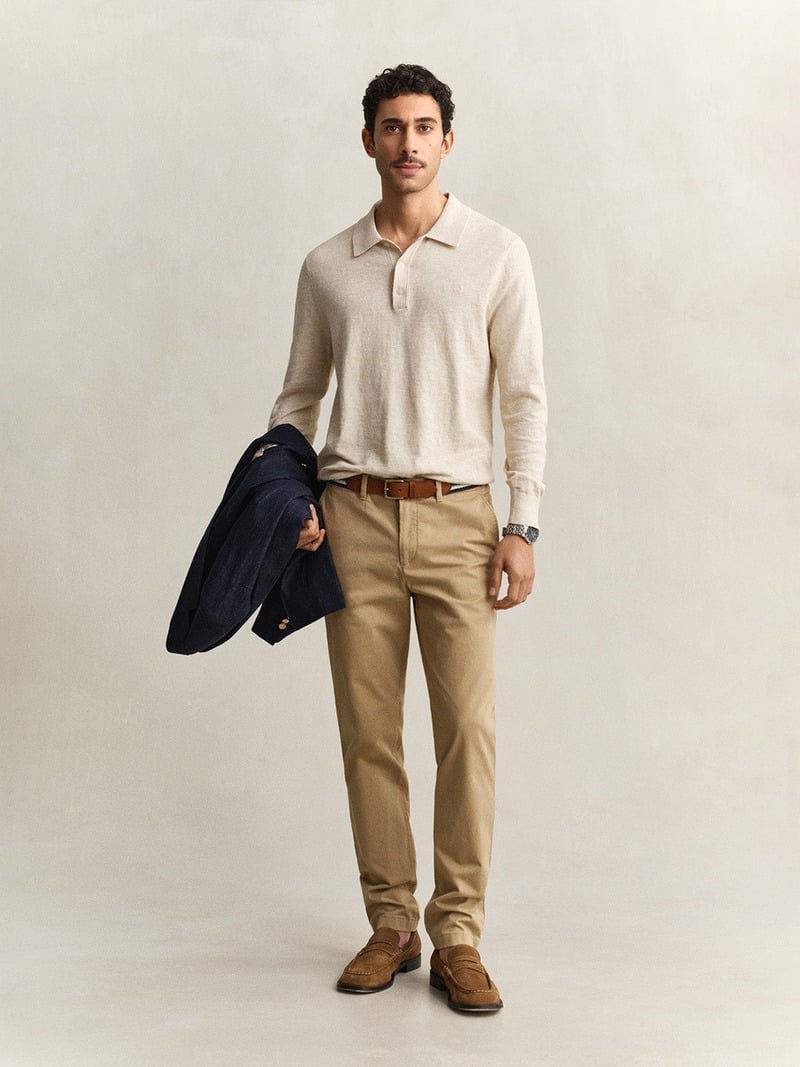
Tan chinos with a cream knitted polo and brown loafers can move from a relaxed office to dinner. The tucked knit defines the waist, with a navy jacket ready for appointments. Let any stated dress code lead; this combination suits many business-casual settings, while a formal invitation calls for dress trousers.
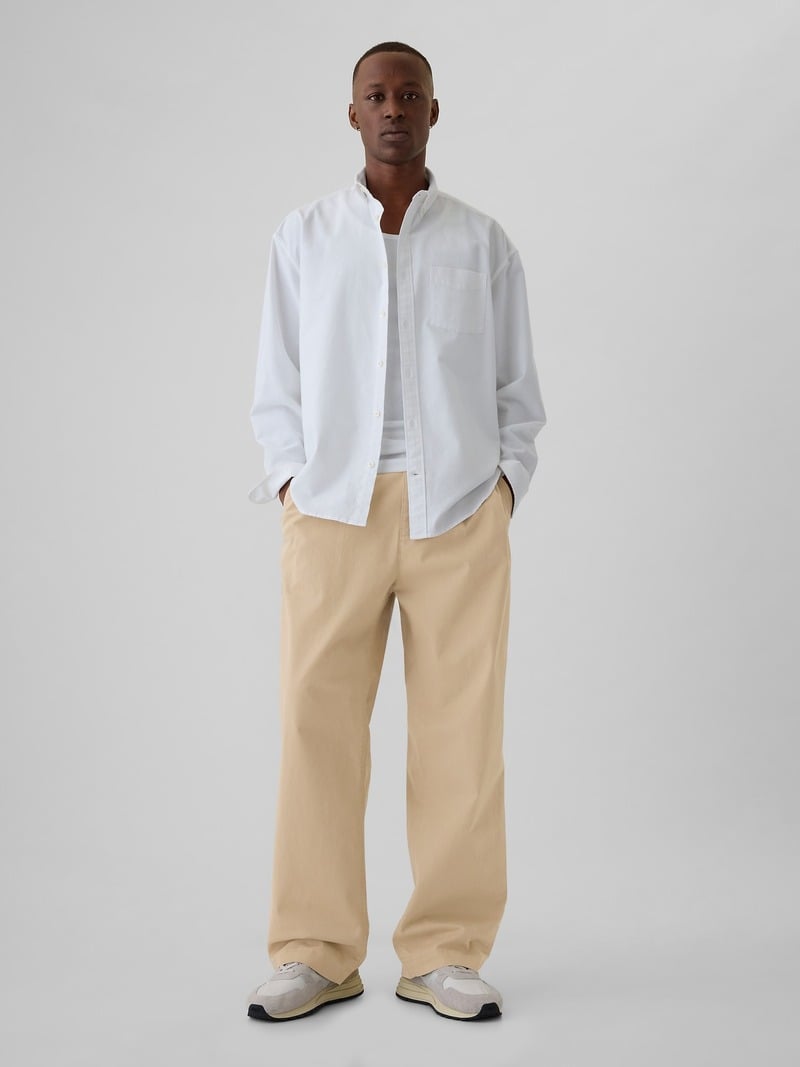
An open white shirt and tank top take pleated khakis into summer. The fuller leg balances the loose shirt, with sneakers keeping things casual. Tan cotton adds warm contrast to the white layers. Choose by fabric as temperatures change. Lightweight khakis can suit July; heavyweight chinos can suit November. Check the cloth’s thickness and density as well as its cotton content.
Are Khakis & Chinos Business Casual?
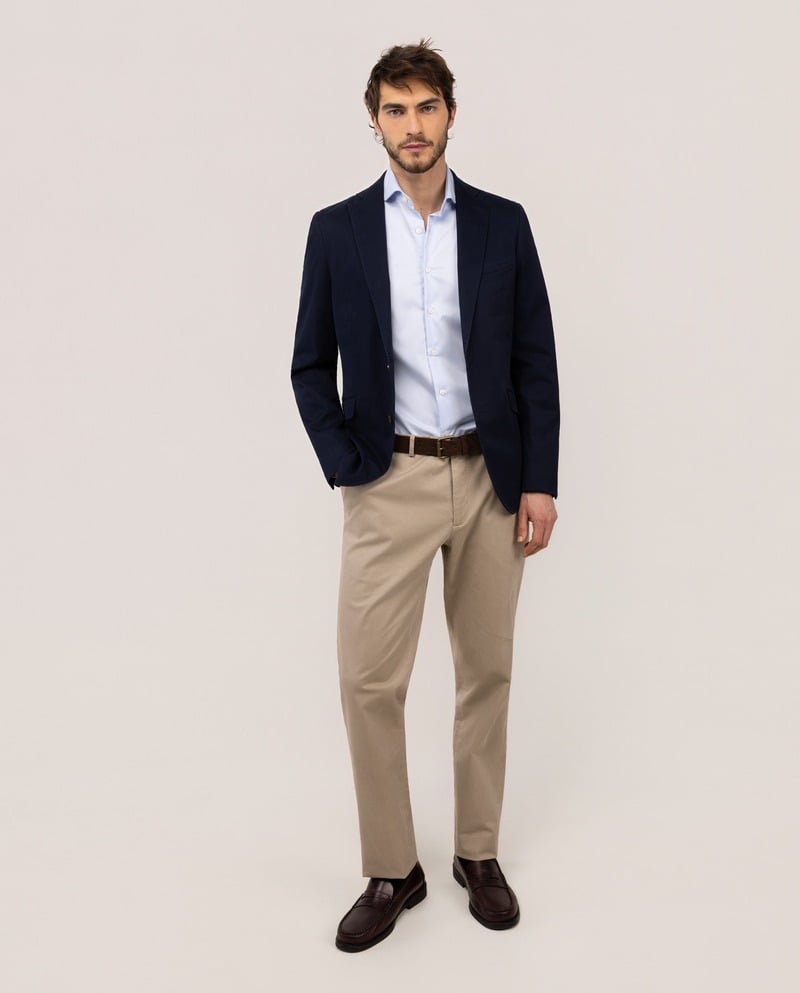
Yes, both can be business casual, depending on the pair and workplace. Khakis with a light blue shirt, navy blazer and brown loafers follow an established office formula. Smooth fabric helps them sit comfortably alongside tailoring, while a tidy fit and minimal bunching over the shoes keep the finish clean.
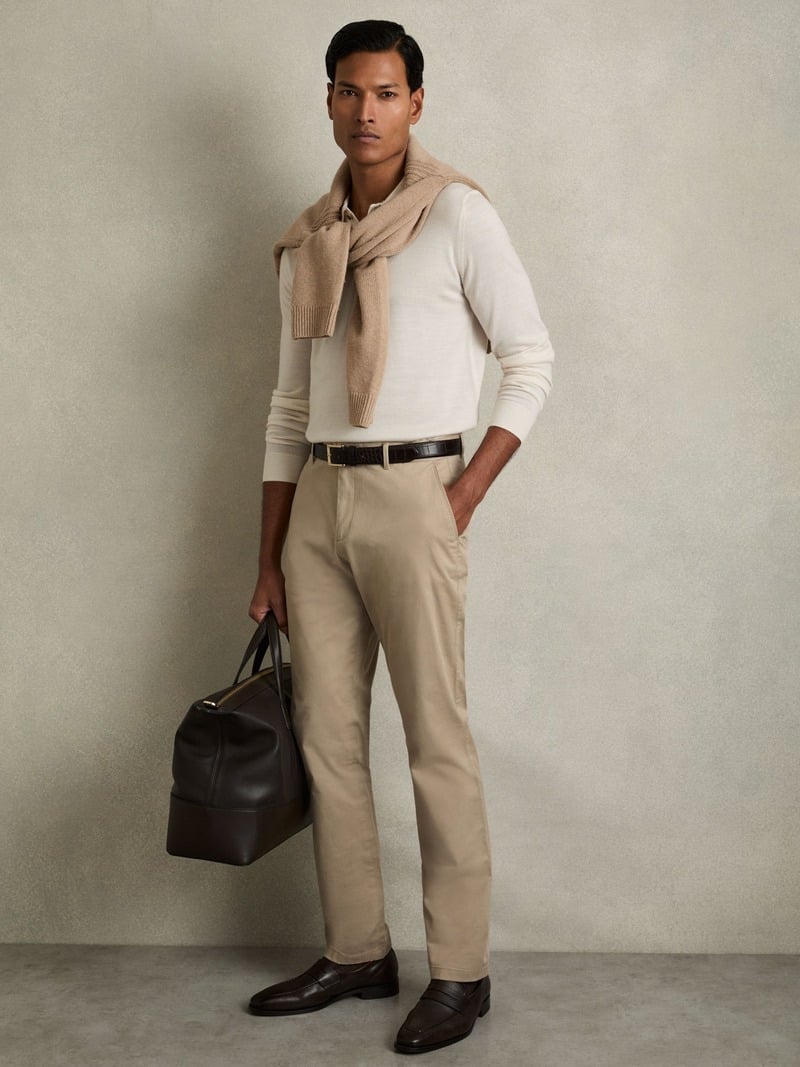
Stone chinos and a tucked cream shirt suit workplaces where a jacket is optional. Dark loafers and a matching belt define the soft neutral colors; a sweater over the shoulders adds a relaxed note. A straight fall and discreet pockets keep the trousers suitable for daytime appointments. For interviews or important meetings, check the dress code first.
Chinos vs. Khakis vs. Slacks
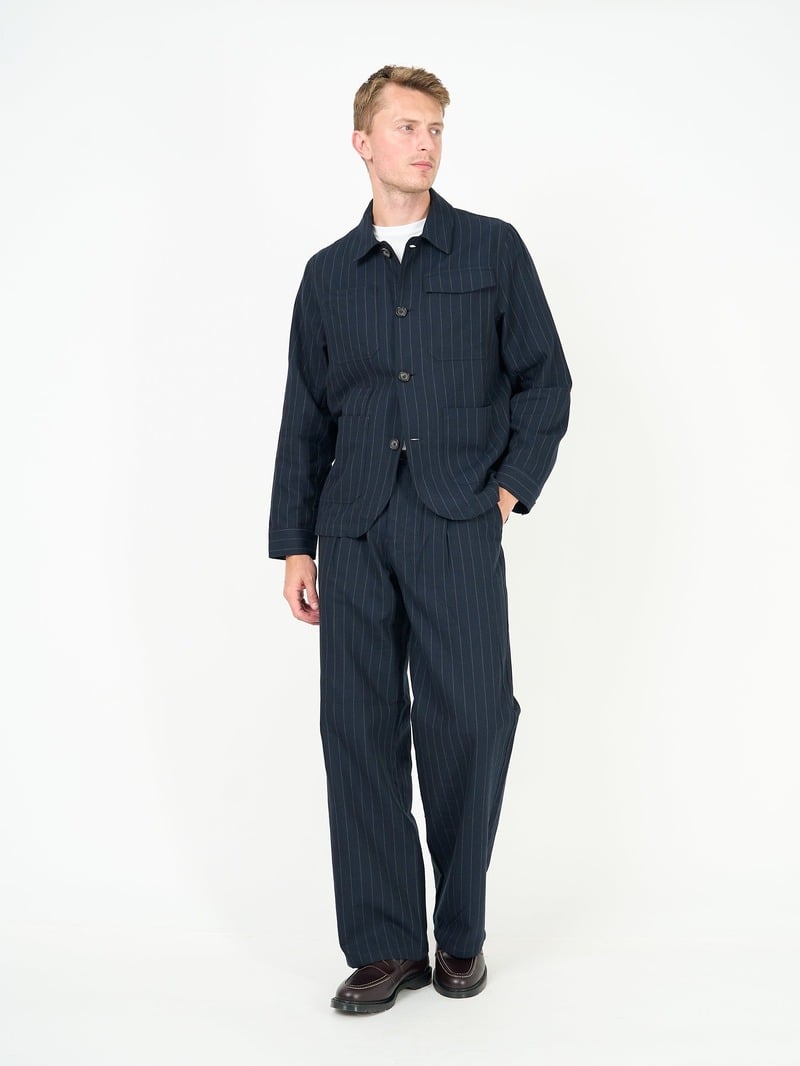
Slacks is a broader term commonly used for dress trousers. In shopping language, it often suggests wool or a wool blend, with a more fluid drape than casual cotton. Chinos and khakis sit between jeans and dress trousers. Cotton looks more relaxed than tailored wool, even with a jacket. Color also matters: tan trousers create more contrast beneath a dark jacket than navy chinos do.
Wool trousers suit dressier appointments; cotton often feels more natural for an ordinary office day. Pressing a crease into chinos or khakis adds definition, although the cloth still determines how they move. Wool tends to drape; heavier cotton holds its shape. That distinction tells you more about the outfit than the word “slacks.”
Chino Outfit Ideas
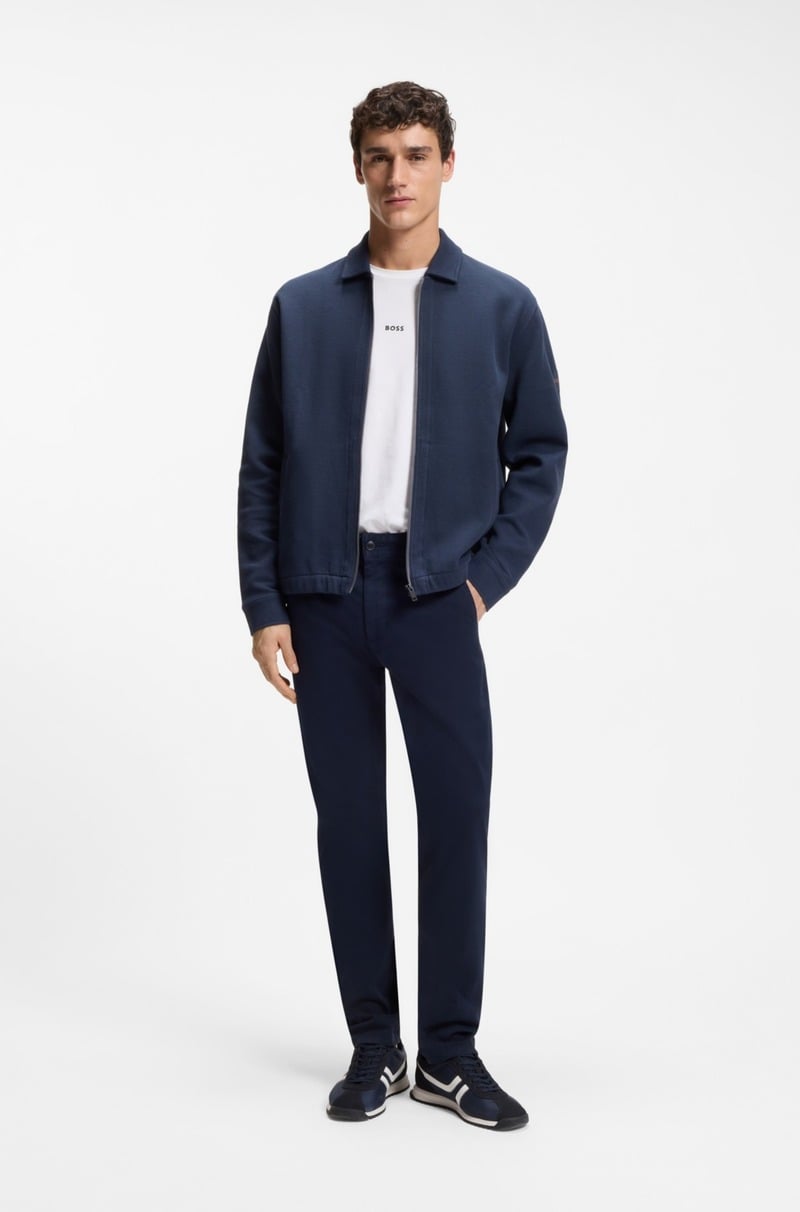
Navy chinos and a matching zip jacket give casual dressing some coordination. A white T-shirt breaks up the darker layers, while navy sneakers extend the line to the shoes. The jacket’s waistband-length cut keeps the proportions balanced, offering an alternative to denim for a day in town.
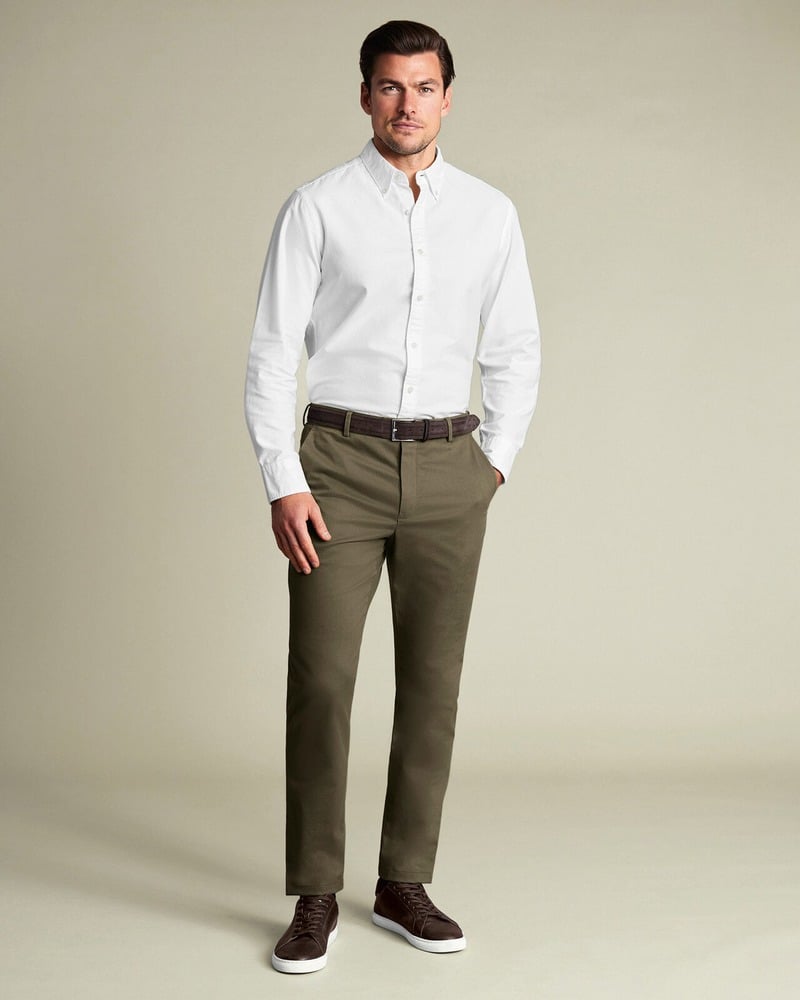
Olive chinos bring color to a white Oxford shirt. Tucking the button-down defines the waist, while brown leather sneakers take the combination toward the weekend. A hem close to the shoe keeps the trousers falling cleanly and balances the proper shirt with easy footwear.
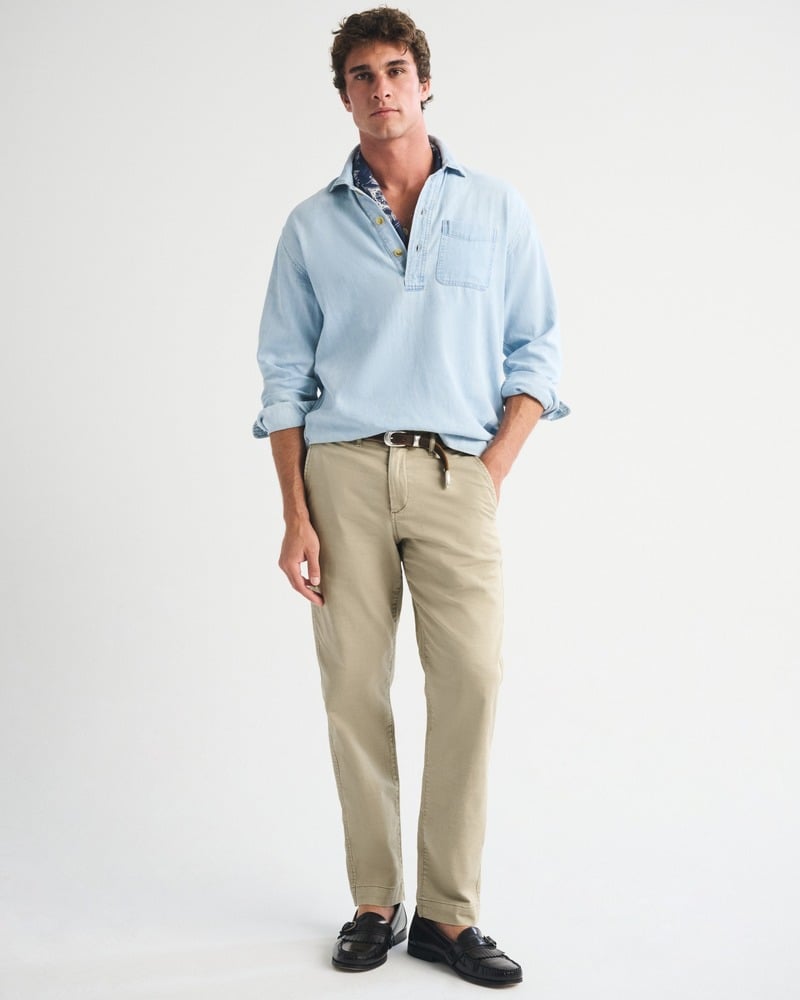
A light blue popover gives beige chinos a leisurely attitude. The open neckline and rolled sleeves keep the shirt relaxed, while black tassel loafers add definition. A partial tuck reveals the belt and controls the shirt’s volume; the patterned neckerchief lends a personal touch for lunch outside.
Khaki Outfit Ideas
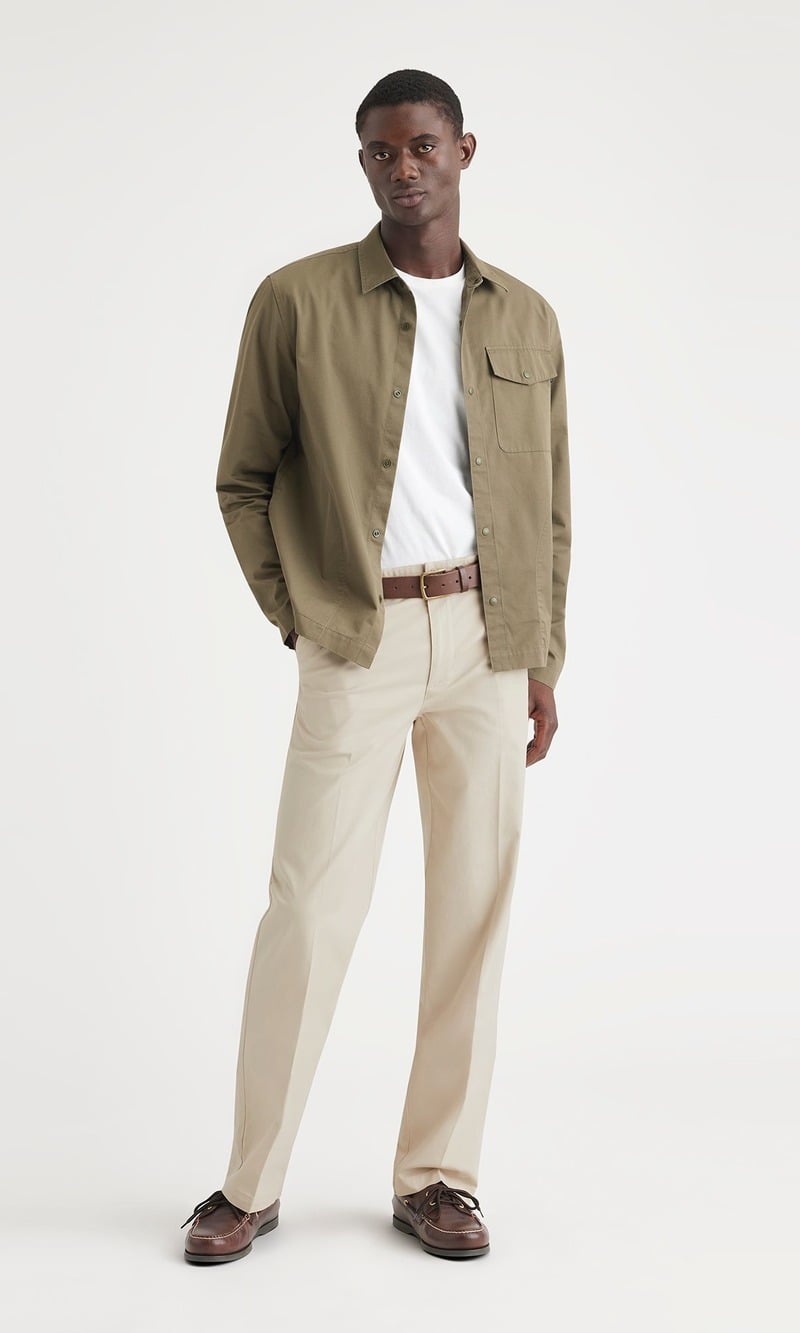
Khakis and an olive overshirt draw on casual menswear’s practical side. A white T-shirt lightens the layers, with brown boat shoes taking them toward the weekend. The straight leg balances the overshirt’s width, while tucking the T-shirt reveals the belt and defines the waist.
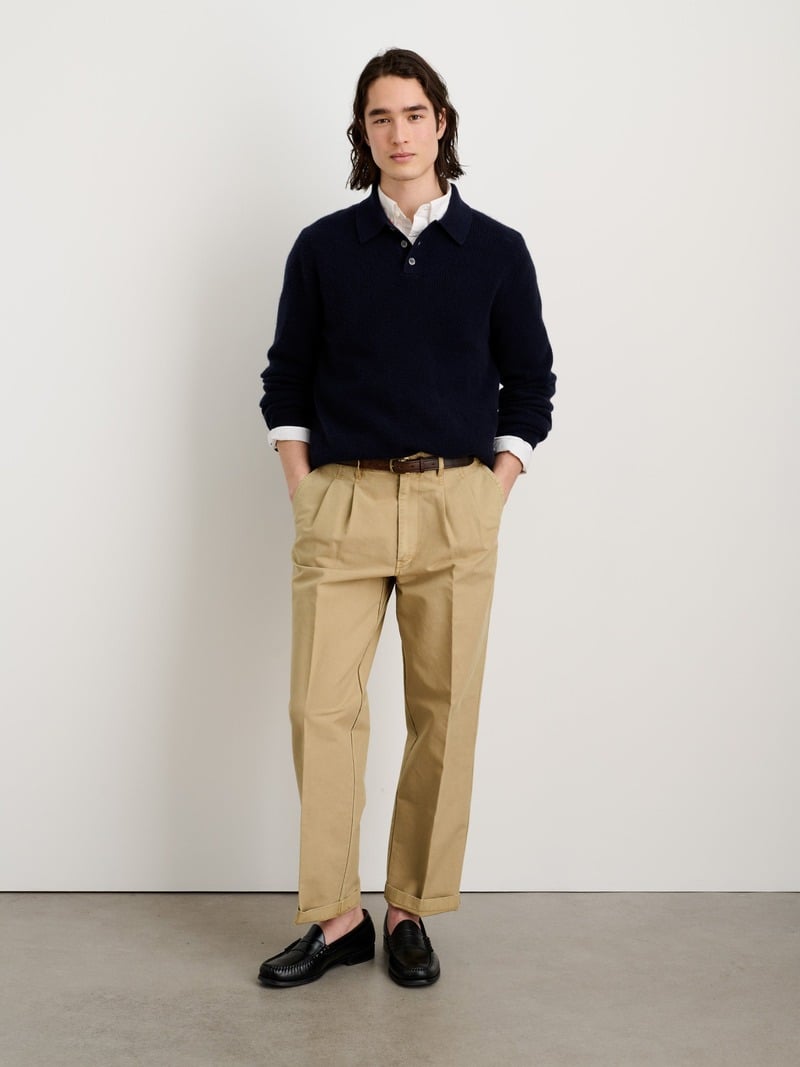
Pleated khakis give a navy collared sweater a fuller foundation. A white shirt defines the neckline and cuffs; black loafers give the washed cotton a dressier finish. Tucking the sweater reveals the pleats, while cuffed hems emphasize the trouser shape. The result suits cooler days when you want an alternative to jeans.
Choosing Your Pair
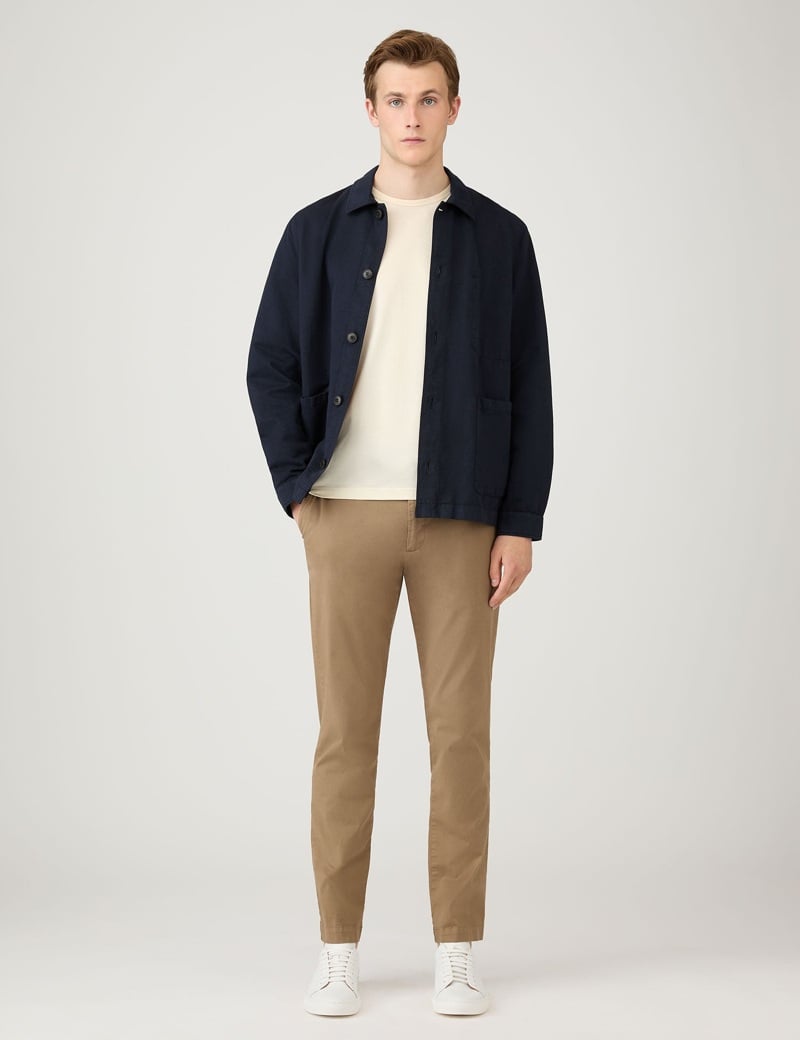
The label gets you to the right rack; the trousers do the rest. Judge how the fabric falls and how the cut works with your clothes. Tan cotton can look ready for work beneath a blazer or at ease with a chore jacket and sneakers. Get those details right, and the name becomes a smaller concern.