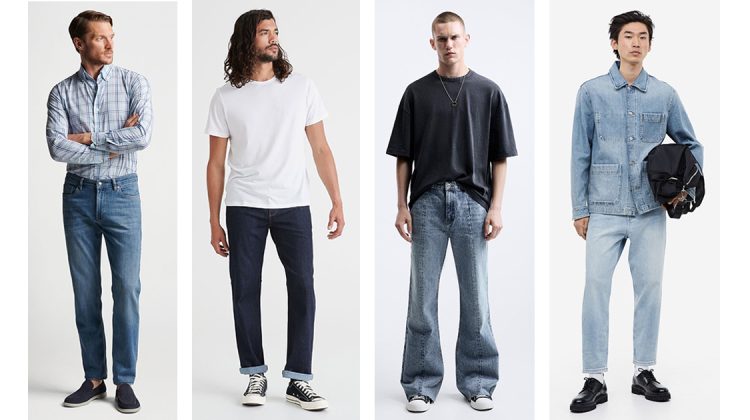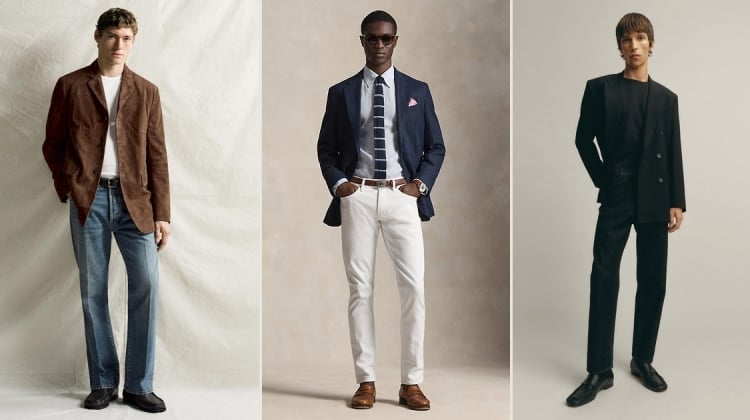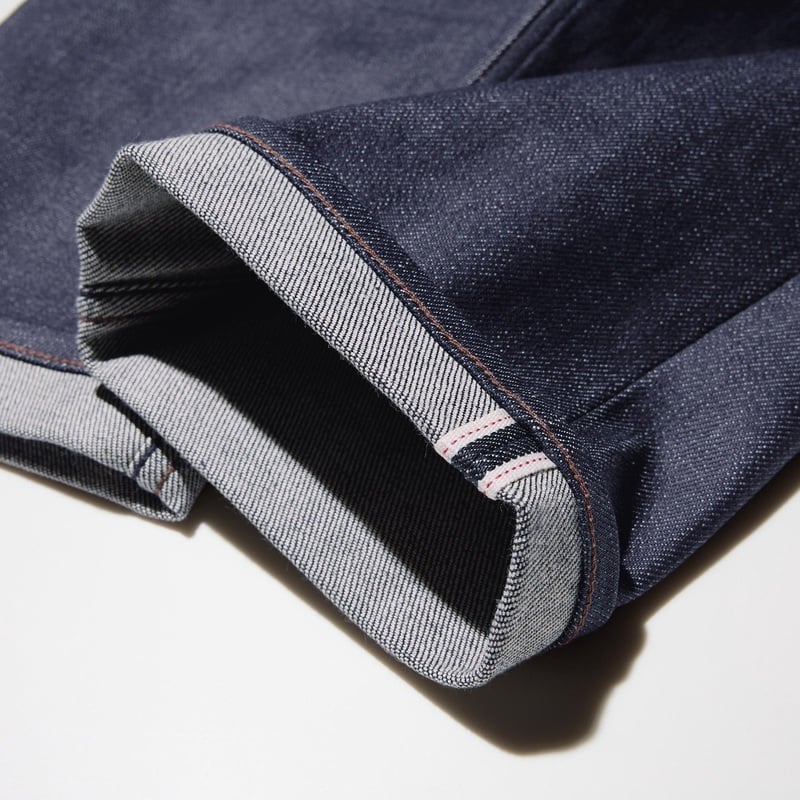
Menswear can invest a surprising amount of meaning in an inch of fabric. Turn up the cuff of certain jeans and a narrow woven stripe appears, announcing something about how the denim was made. To an enthusiast, it is a detail worth paying for. To everyone else, the price tag may require an explanation.
Selvedge denim connects an everyday garment to a particular weaving tradition. The attraction is understandable: jeans become more interesting when you can see evidence of their making. Whether that interest deserves a larger share of your clothing budget depends on what comes attached to the stripe.
What Is Selvedge Denim?
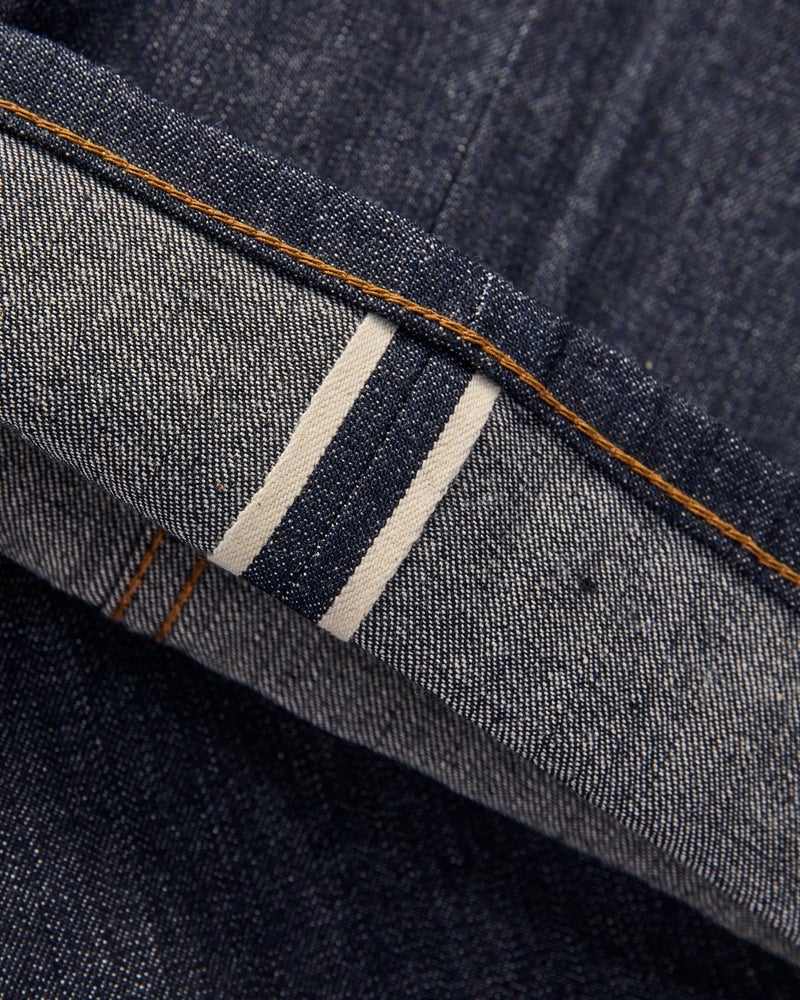
Selvedge denim is denim with a self-finished edge, traditionally woven on a narrow shuttle loom. The name comes from “self-edge.” As the crosswise yarn travels back and forth, it turns at the sides of the cloth, forming a bound edge that resists unraveling. Levi’s explains the same construction in its selvedge reference.
Jeans makers can preserve that edge along the outer leg seam. Turn up the hem and it becomes visible inside the cuff, often as a light band interrupted by a colored thread. Red is the best-known version, although identification colors vary.
What are selvedge jeans? Jeans made from this fabric. The term identifies a feature of the cloth; the cut determines how the trousers sit on your body, and finishing helps determine how they feel. That leaves plenty of possibilities. Selvedge can be lightweight and soft, or heavy enough to make the first few wears an undertaking. Its finished edge provides a clue to production. The rest of the jeans deserves equal attention.
How Selvedge Denim Is Made
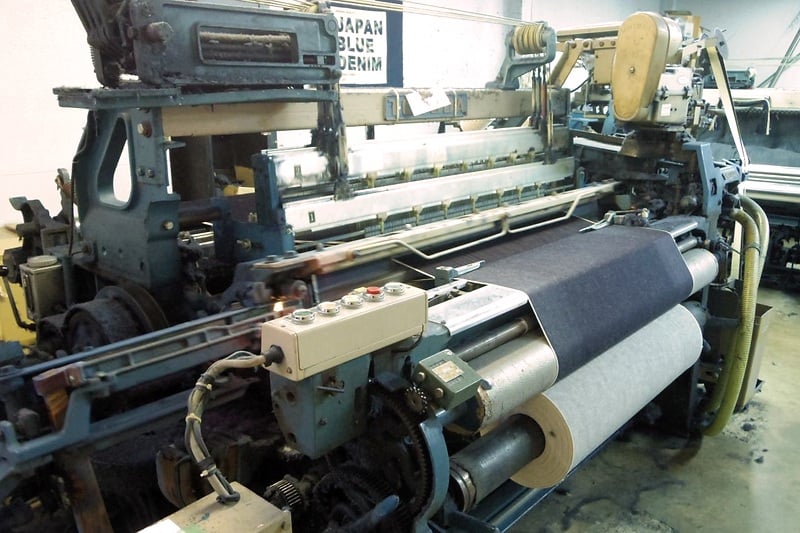
Denim’s diagonal twill comes from interlacing lengthwise warp yarns with crosswise weft yarns. In conventional blue denim, the warp is typically indigo-dyed and the weft lighter. A shuttle loom takes the weft across the warp and back, forming a self-edge at each side. The detail displayed at the cuff starts as a practical feature of weaving.
Modern shuttleless looms insert the weft through other mechanisms, such as a projectile that propels yarn across the fabric. They efficiently produce wider cloth, handling its edges differently from shuttle weaving. Width varies by equipment and specification, so production method is the more reliable authenticity test. Narrow selvedge cloth also limits how jeans makers arrange pattern pieces when preserving the woven edge along the outseam.
The loom helps shape the fabric’s character, but yarn and finishing also influence its surface. Two selvedge denims woven on traditional equipment can look and feel quite different, even when their cuffs share the same identifying stripe.
Selvedge vs. Regular Denim
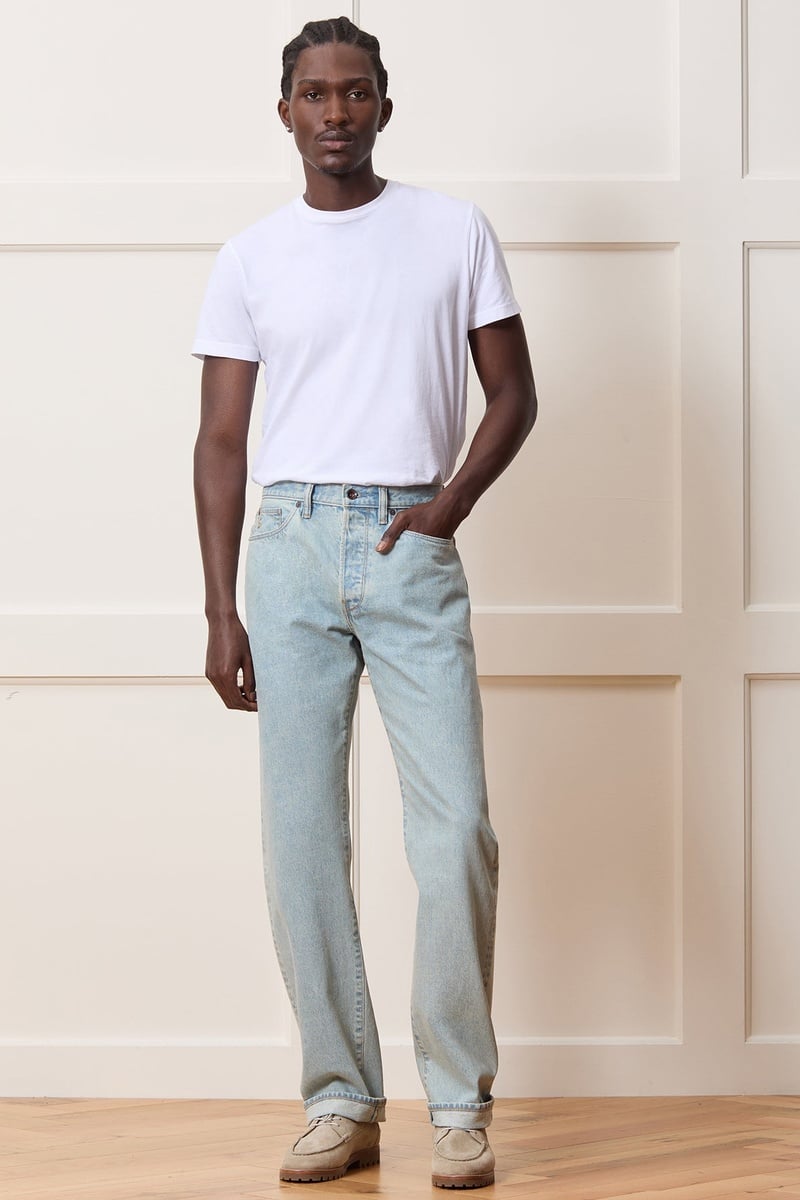
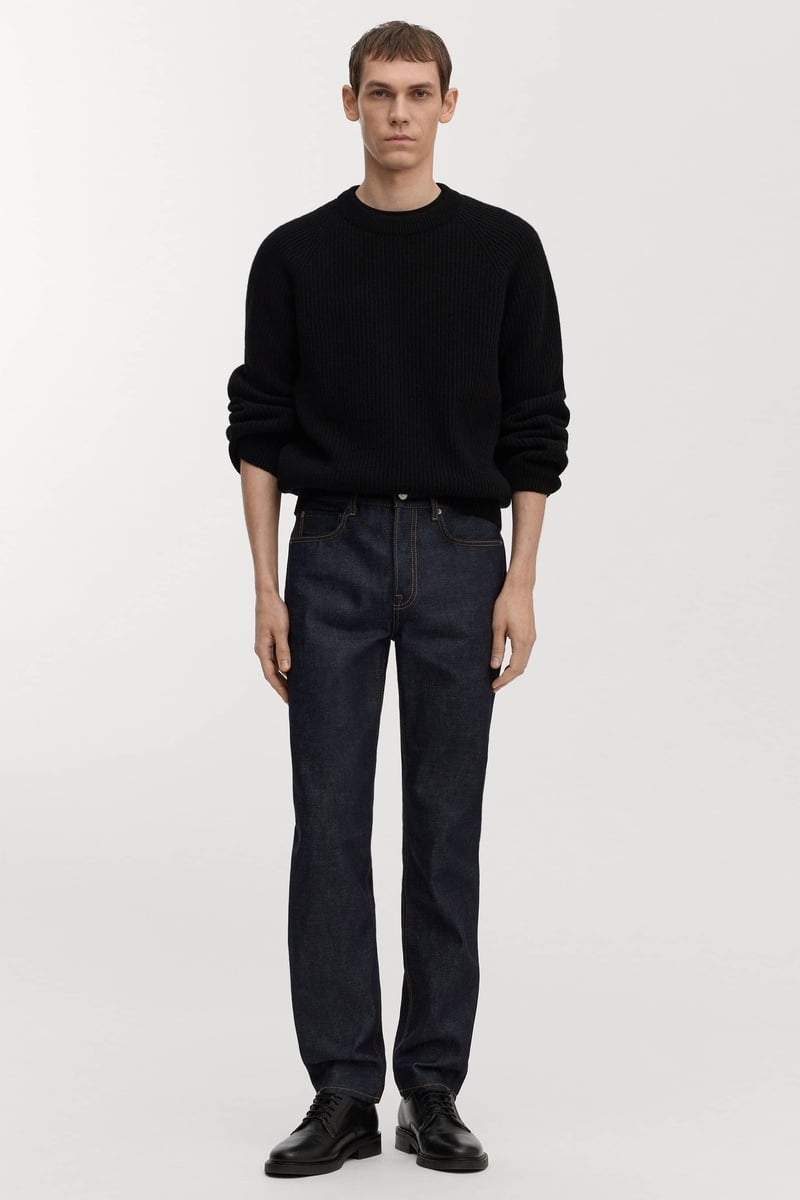
In this comparison, “regular denim” generally means non-selvedge denim. Both can become jeans that survive years of wear, and both can be disappointing when the fabric or construction falls short.
| Feature | Selvedge denim | Non-selvedge denim |
|---|---|---|
| Fabric edge | Self-finished edge, traditionally from shuttle weaving | Cut garment edges commonly secured with overlock stitching |
| Production | Associated with narrow shuttle looms | Commonly produced on wider shuttleless equipment |
| Inside the cuff | May show the preserved woven edge along the outseam | Usually shows an overlocked seam allowance |
| Surface | Can be smooth or textured | Can be smooth or textured |
| Finishing | Available raw or washed | Available raw or washed |
| Price | Often includes a premium for production and positioning | Available across a broad price range |
| Durability | Depends on fabric, construction, fit, and care | Depends on those same factors |
Overlock stitching wraps thread around a cut edge to control fraying. You will recognize it inside many garments. Selvedge achieves its finished border during weaving, which gives the exposed seam allowance a particularly satisfying appearance. That satisfaction explains part of its appeal. Menswear enthusiasts have long appreciated details that reveal themselves only to the wearer or another attentive observer.
Longevity involves a broader assessment. The knees and crotch experience abrasion regardless of the outseam’s construction. A suitable fit reduces strain, while the fabric and sewing determine how the garment handles repeated use. Admire the edge, then inspect the places that will do the hardest work.
Selvedge vs. Raw Denim
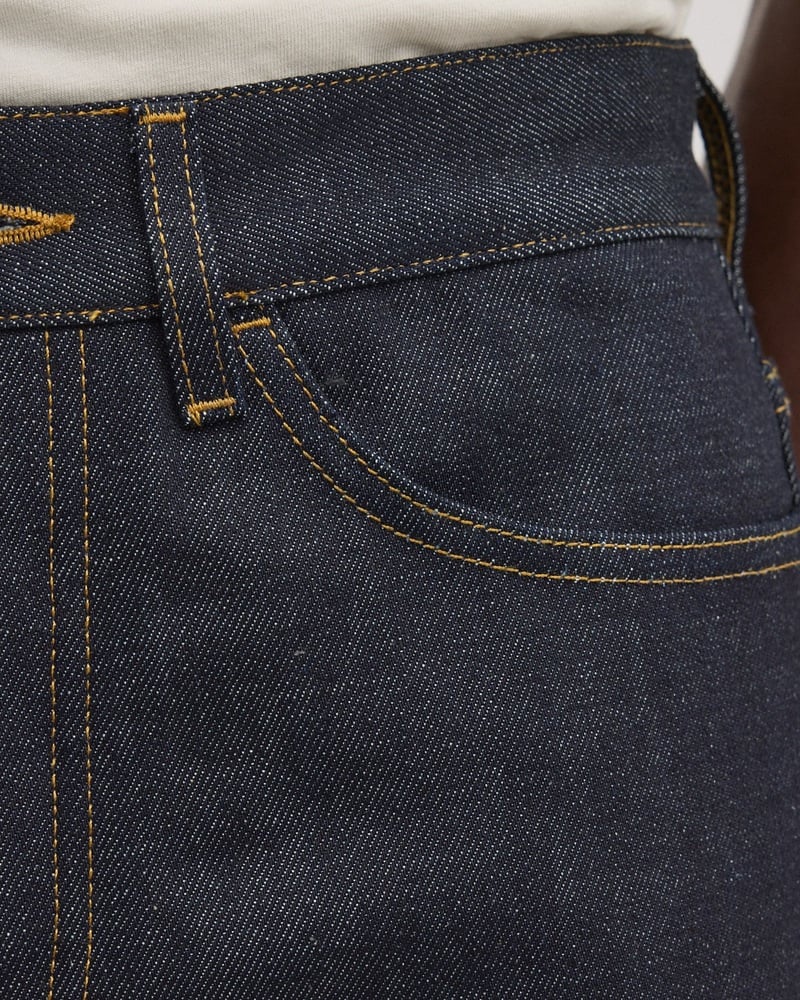
Selvedge describes the edge and weaving. Raw describes denim sold in its unwashed state. They answer separate questions, even though they frequently appear on the same label. Their association makes sense. Someone interested in traditional cloth may also enjoy developing wear patterns through use. The resulting jeans offer both a production story and the prospect of becoming increasingly personal.
Both selvedge and non-selvedge fabrics can become raw denim. Equally, either can be washed before reaching the shop. A washed selvedge pair retains its woven edge after washing. Raw non-selvedge denim offers an unwashed starting point through a different construction. Color alone offers little help in telling them apart.
Sanforization adds another term to the conversation. It is a preshrinking process, and raw denim can be sanforized. An unwashed finish therefore tells you only part of what you need to know about shrinkage. Before choosing a size, establish whether the jeans are sanforized or unsanforized and whether they have already been washed. Those answers have more immediate consequences for your waistband than the color of the selvedge thread.
How to Tell If Your Jeans Are Selvedge
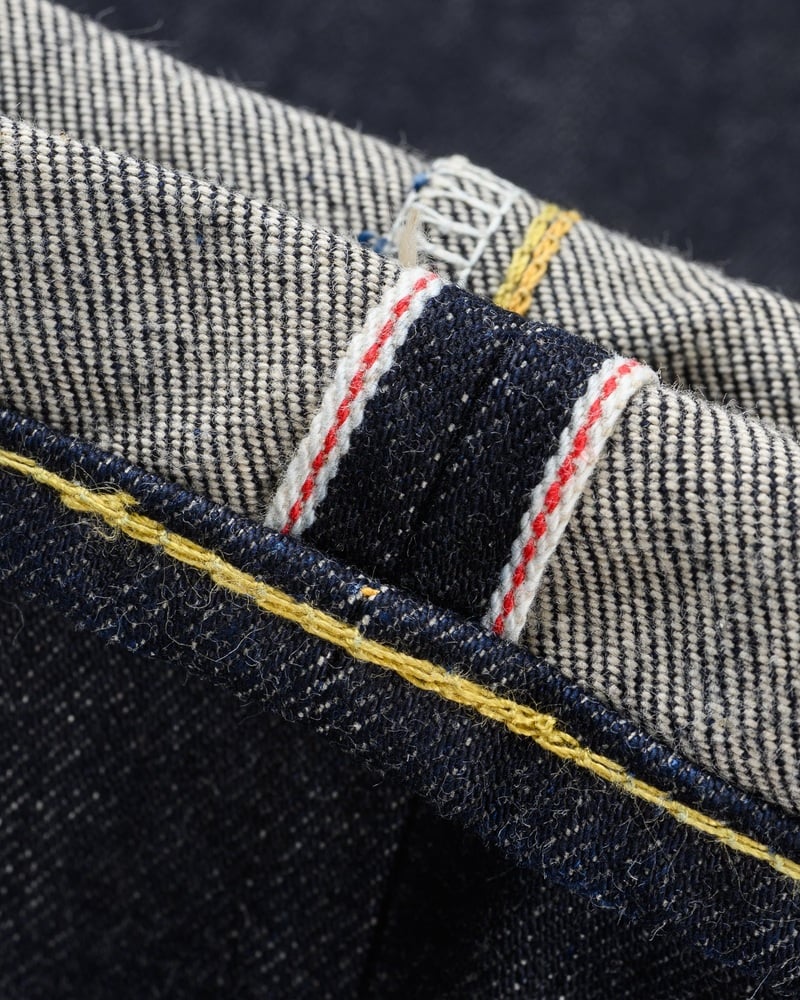
Turn up a cuff and locate the outer leg seam. Open the seam allowances enough to see their edges clearly. A typical selvedge construction reveals narrow finished bands along the denim panels. There may be a colored identification thread within them. Look closely at the relationship between the band and the fabric: the woven border should form part of the denim itself.
Overlocking looks different. Its stitches wrap around a cut edge, creating a visible covering that secures the yarns after cutting.
The complication is decorative tape made to resemble a selvedge stripe. A red line can suggest the appearance while telling you little about the cloth. Check whether you are looking at an additional strip sewn onto the seam allowance, with separate edges and attachment stitching.
For secondhand purchases, an opened-outseam photograph is more useful than an artfully rolled cuff. Ask for a clear fabric description as well. The seller should be able to show the detail being advertised. Red is also optional. Other identification colors exist, and some woven edges offer little contrast. Follow the construction first. A particular thread color has never been the whole story.
Why Japanese Selvedge Denim Gets So Much Attention
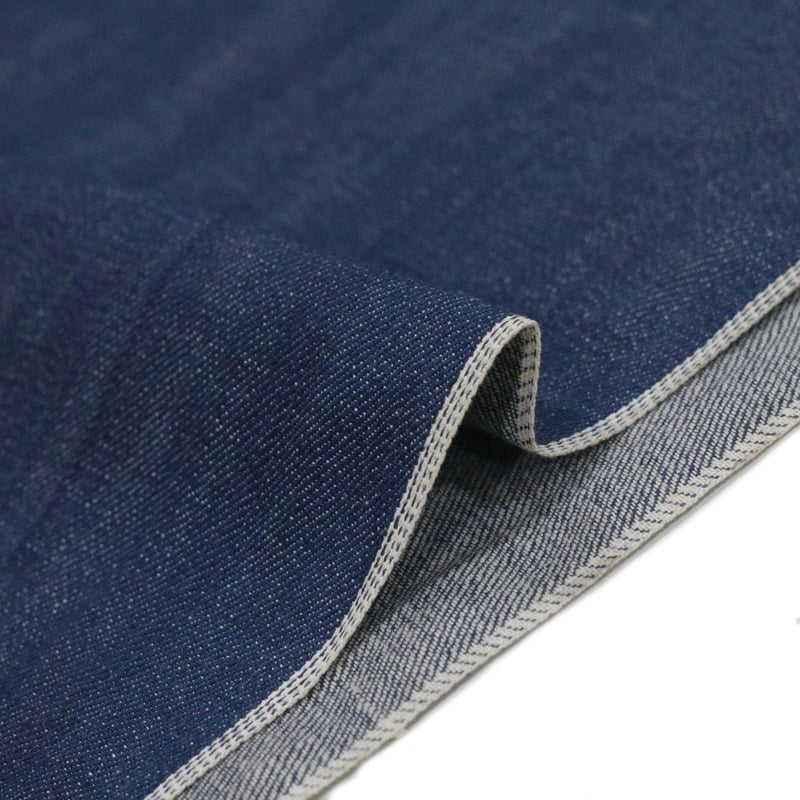
Japanese selvedge denim appeals to men who enjoy treating fabric as part of the design. Texture becomes something to examine, and the mill can attract as much interest as the label at the waistband. There is a practical basis for that curiosity. Yarn choices influence the surface, while dyeing and finishing shape the color and feel. A cloth can pursue the appearance of vintage denim or develop a more pronounced texture of its own.
Specific provenance helps turn enthusiasm into useful information. For example, Todd Shelton identifies Kuroki Mills in Okayama as its selvedge supplier in its brand facts. Naming the mill gives a buyer something concrete to investigate.
American weaving belongs in the conversation too. Cone Denim records the closure of its White Oak operation in 2017 in its company timeline. When White Oak fabric appears in a description, its date and provenance help explain what is being offered.
Fabric origin and garment origin also deserve separate attention. Denim woven in Japan may be cut and sewn in another country. “Japanese fabric” identifies the cloth’s source; “made in Japan” concerns the garment’s manufacture. The most informative description explains both. Geography becomes more useful when it leads to a particular fabric and an identifiable maker.
Why Selvedge Denim Costs More
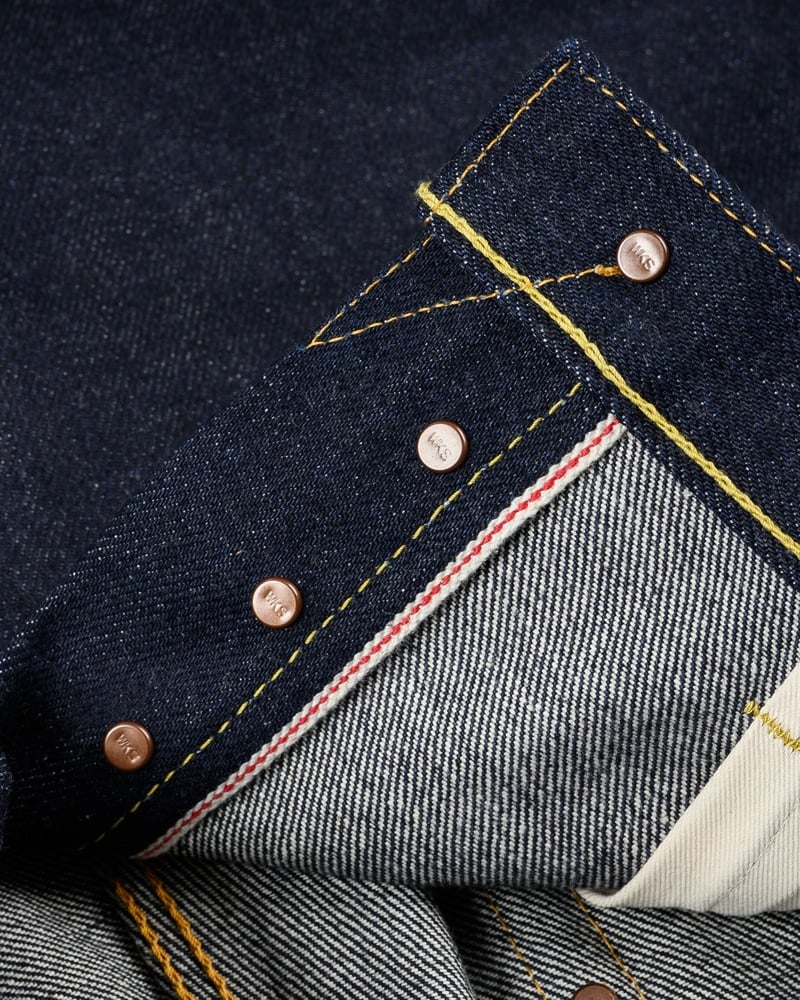
Some of the premium begins before the fabric reaches the cutting table. Traditional narrow-loom production has different output economics from wider, high-volume weaving. Preserving the finished edge can also limit cutting arrangements.
Other costs arrive through the cloth itself. More expensive yarns or elaborate dyeing increase the investment, and detailed sewing adds labor to the finished garment. Smaller production runs can push the price further. A label’s reputation enters the calculation as well. Heritage has commercial value in menswear, especially when an everyday object acquires the language of collecting.
The useful question is what a particular pair offers for the asking price. A named mill and clear fiber composition help explain the material. Detailed measurements make the cut easier to assess. Close photographs reveal more about sewing than an atmospheric image of old machinery. An attractive cuff can start the conversation. The price becomes more persuasive when the rest of the description supplies equally specific answers.
Is Selvedge Denim Worth It?
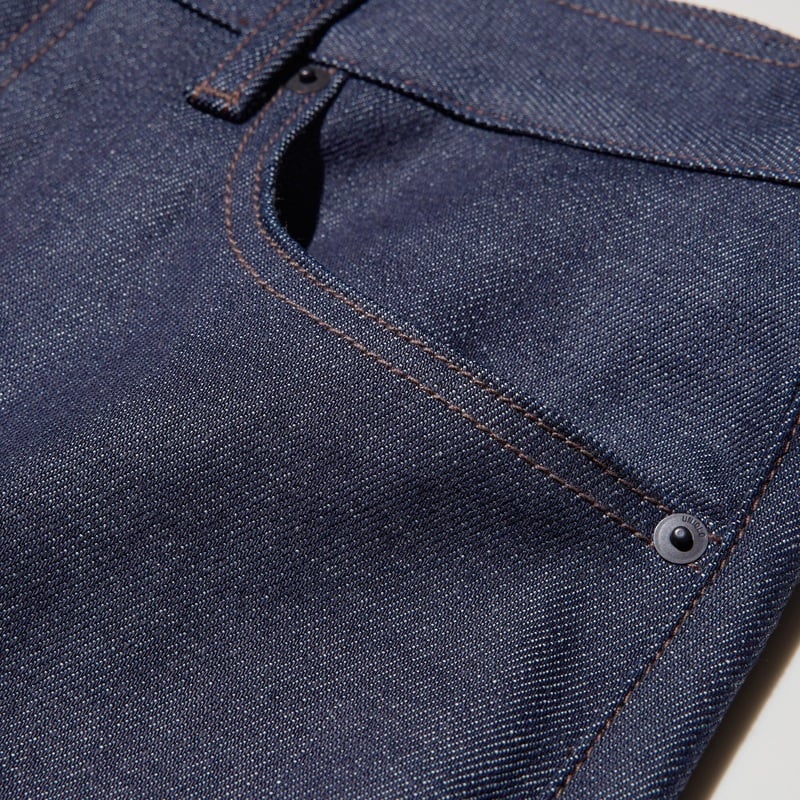
Selvedge can justify its premium when you enjoy the fabric and weaving tradition, and the jeans suit your body and daily life. Vintage appeal, tactile differences, and a carefully finished interior all offer legitimate pleasures. For everyday wear, a comfortable rise and the right leg shape prove their value long before anyone notices the hem.
Try the jeans sitting down and bending your knees, checking the waistband and freedom of movement through the thighs. Think about the cloth in use, too. Heavy rigid denim demands more commitment, especially in warm weather; lighter or washed selvedge may better suit your habits. A prestigious mill offers limited consolation during a restrictive commute.
Judge durability through the material, sewing, and fit, since traditional weaving alone tells you little about years of service. The strongest purchase is a pair you would still choose with the cuffs turned down.
How to Wear Selvedge Jeans

A selvedge edge invites cuffing, which makes proportion especially important. One turn-up can give a straight leg a defined finish above boots or loafers. Several thick folds introduce weight at the ankle and can shorten the line of the trousers.
Choose the hem according to the silhouette and shoe. A wider opening can accommodate more visual weight below it. A narrow opening often benefits from a smaller cuff and lighter footwear. Hemming remains an equally valid choice. The fabric retains its appeal when the stripe stays inside, and an uninterrupted leg can suit a cleaner trouser shape.
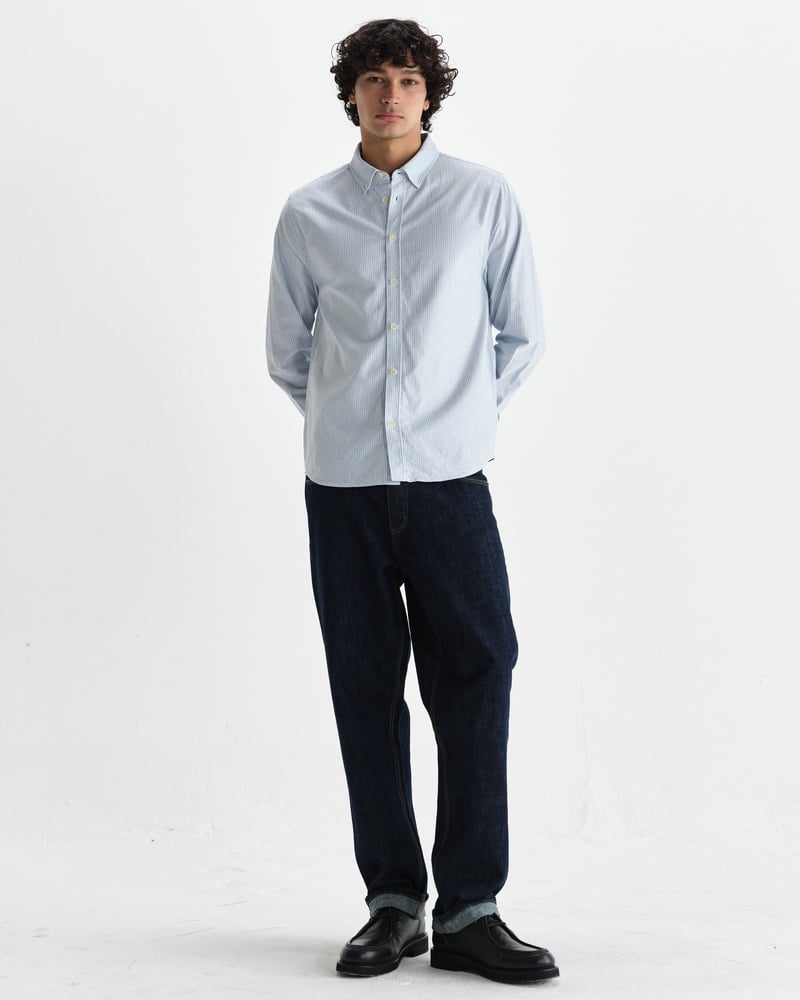
Dark denim and an Oxford shirt have an easy relationship because both sit comfortably between casual and more dressed clothing. The shirt brings structure, while the jeans keep the combination grounded in everyday use. Knitwear changes the balance through texture. A soft sweater against firmer denim creates interest that becomes apparent at close range, which suits the quiet appeal of selvedge itself.
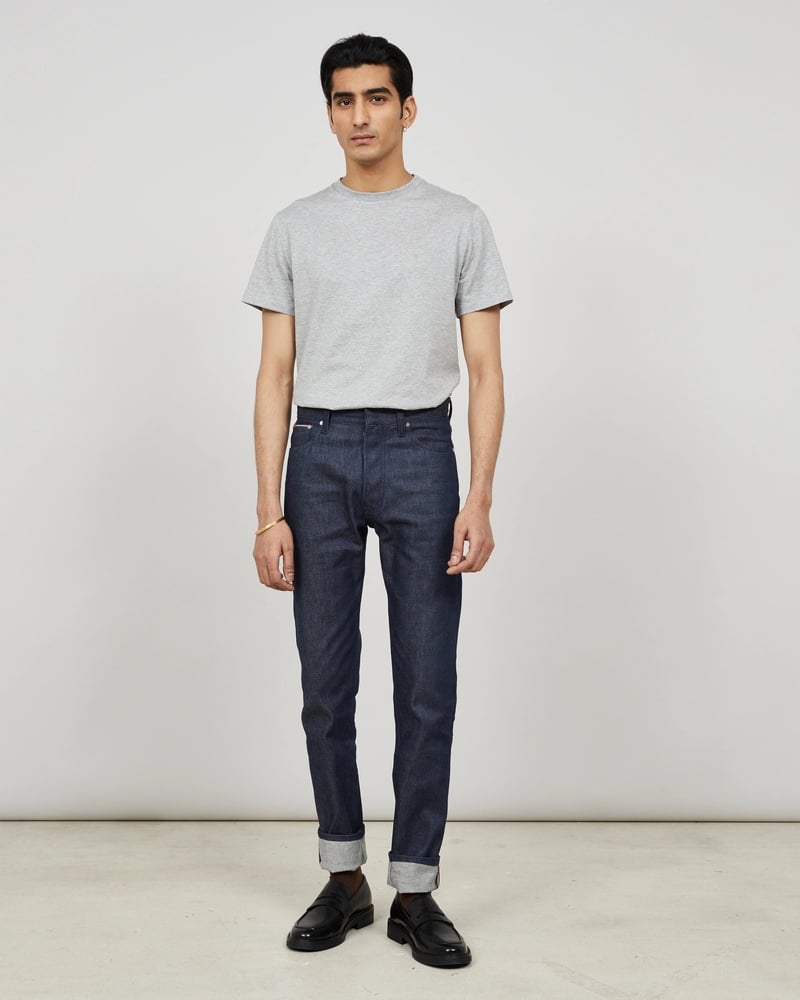
With a T-shirt, the cut of the jeans becomes more exposed. Pay attention to where the shirt ends. A shorter hem reveals the rise, while a longer one shifts the apparent proportions of the body. As the denim fades, adapt to its increasingly casual character. The most convincing wear comes from ordinary life. Jeans look personal when they participate in it.
Selvedge or Selvage?
Selvedge and selvage name the same fabric edge. Both spellings appear in denim descriptions and mill terminology. Choose the fabric by its specifications and feel. The spelling offers no shortcut to quality. For all the attention given to that narrow stripe, its appeal is easy to understand. It lets you see a little of how your clothes were made. Whether you show it to everyone else is a question for the hem.