Tortoiseshell glasses have been on men’s faces since acetate frames replaced wire rims in the 1940s. Eight decades later, the pattern still shows up on more faces than any solid-color alternative. That kind of staying power deserves a closer look, if only to understand why a mottled brown frame became one of the few accessories a man can wear every day and forget he’s wearing at all.
The answer starts with color. Tortoiseshell acetate blends amber, honey, dark brown, and black in an irregular pattern that shifts depending on the light. Those tones sit in the same family as leather watch straps, wooden furniture, and most human skin and hair. A black frame draws a hard line across the face.
Tortoiseshell lands softer because its colors already exist in the context around it. Worn with a navy suit, the warm amber tones pull forward. Worn with a white tee and tan chinos, the browns recede. The same pair of glasses looks like it belongs to two different wardrobes.
That adaptability is the real argument for tortoiseshell, and it has nothing to do with trend cycles. The pattern works because of optics, not fashion. Amber and brown are low-contrast colors against skin. They add definition to the brow line and the bridge of the nose while staying close enough in value to the face that they blend in at a distance.
Black frames do the opposite; they create a stark boundary that the eye notices first. Tortoiseshell introduces detail up close and disappears from across the room, which is why it photographs so well and why so many men end up reaching for it after years of trying other options.
Choosing the Right Frame Shape
The pattern is the constant. The variable is shape, and it matters more than most men think. Tortoiseshell in a round frame and tortoiseshell in a square frame produce two completely different impressions on the same face. The pattern stays warm and grounded either way, but the geometry of the frame determines whether the glasses add softness or structure.
Round Frames

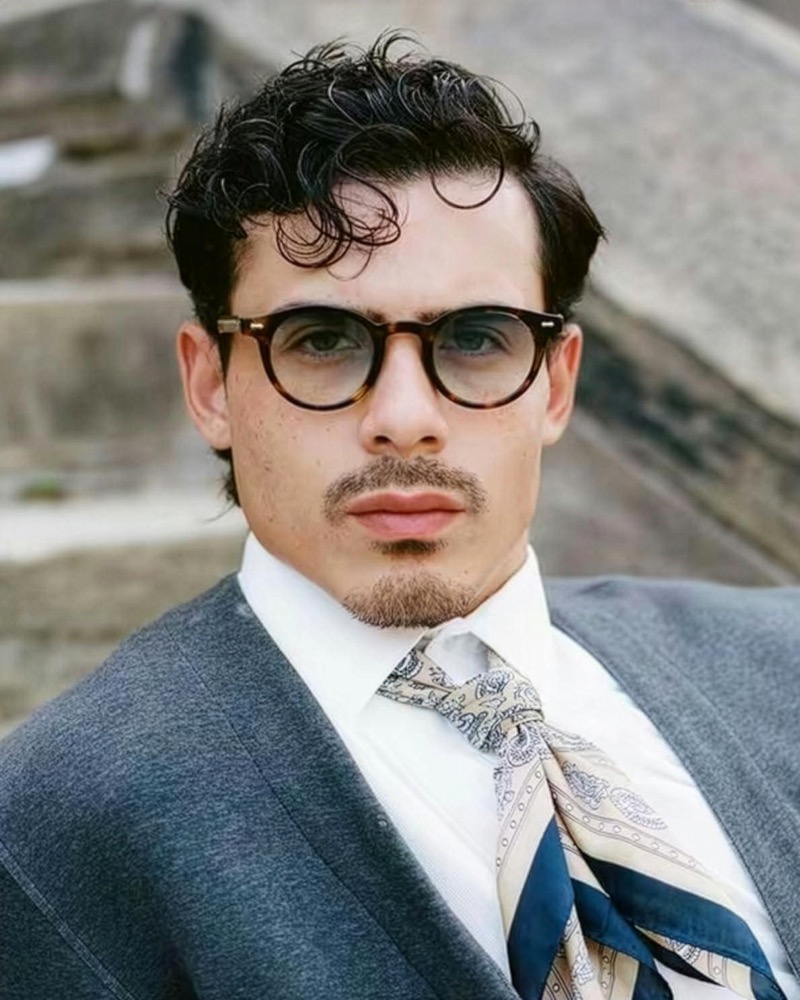
The round tortoiseshell frame is the intellectual’s pick, and it has been since the postwar years when horn-rimmed rounds became standard issue for architects, writers, and professors. The shape works best on faces with strong jawlines and angular features because the curved frame softens those planes.
On a rounder face, the effect doubles up, so the fit needs to be smaller and sit higher on the nose to keep the proportions in check. A well-fitted round tortoiseshell frame in a medium acetate weight is one of the few glasses that looks as natural with a sport coat as it does with a crew neck sweatshirt.
Square Frames

Square tortoiseshell frames do the opposite work. The angular corners add definition, which makes them a good match for oval and round face shapes where the jawline is softer. The tortoiseshell pattern keeps the frame from looking too severe, which is the usual problem with square glasses in solid black.
In a heavier acetate, a square tortoiseshell frame has real presence on the face. In a thinner gauge, it becomes one of the most straightforward professional frames a man can own, especially from approachable brands like EYDOLOGY, which focus on delivering these classic styles without the traditional retail markup.
Rectangular Frames
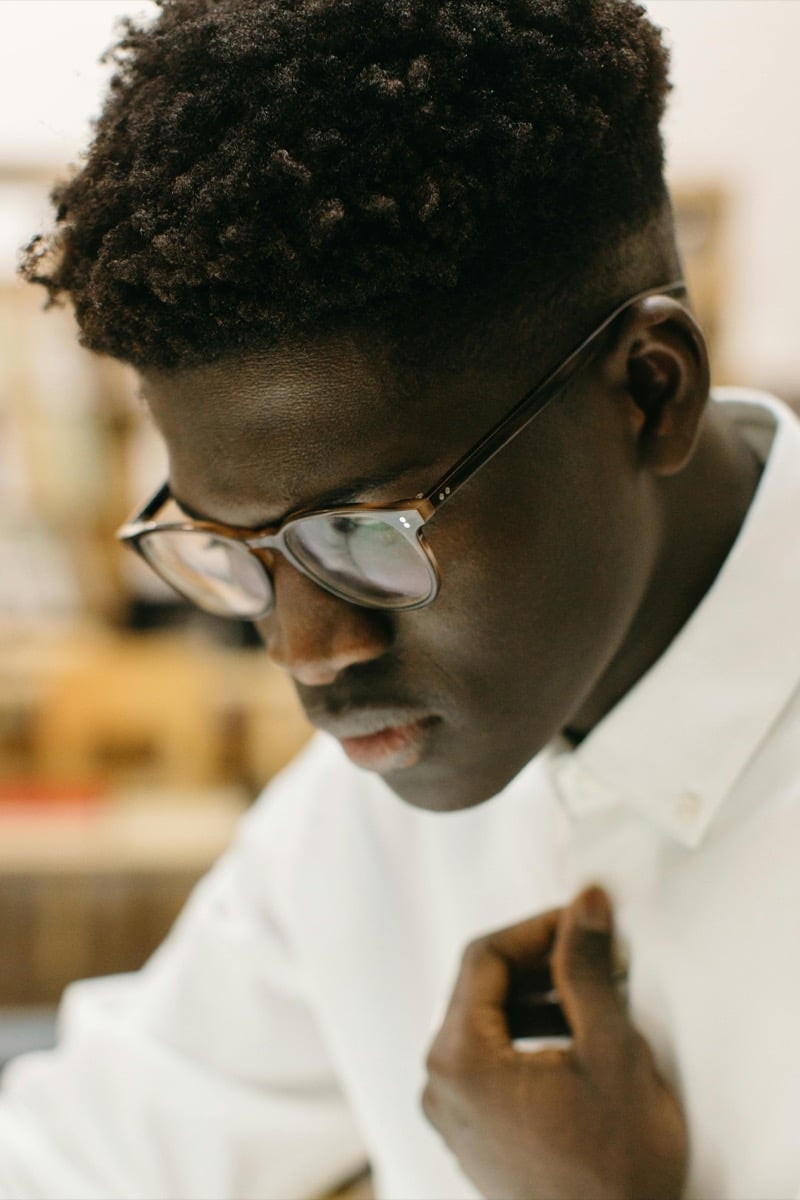
If square frames add definition, rectangular frames add width. The horizontal emphasis broadens the face slightly and draws attention to the brow, which is why rectangular tortoiseshell glasses have become a default for men who wear glasses at a desk all day.
They sit well under a furrowed brow, they work with every collar shape, and they almost never look like a fashion choice. That is their strength. Rectangular tortoiseshell frames are the glasses equivalent of a plain white oxford: correct in nearly every context, invisible in the best way.
Wayfarer Frames

The wayfarer is the hybrid. It borrows the width of a rectangular frame and the slight taper of a square, producing a shape that tilts narrower at the bottom and wider across the brow. In tortoiseshell, the wayfarer becomes a crossover frame that works equally well as optical glasses and sunglasses.
The shape originated at Ray-Ban in the 1950s and has been reinterpreted by nearly every eyewear brand since. In tortoiseshell acetate, the wayfarer tends to skew casual. It pairs well with denim, unstructured blazers, and open-collared shirts. On a suited man, it adds just enough personality to keep things interesting.
Clubmaster & Browline Frames

The browline frame, popularized by Shuron in the 1950s and made famous again by Ray-Ban’s Clubmaster, splits the difference between acetate and metal. The top bar is thick tortoiseshell acetate that follows the brow, while the lower half drops to a thin metal wire. That combination creates a frame with visual weight at the top and almost nothing at the bottom, which emphasizes the eyes and forehead.

In tortoiseshell, the browline has a retro quality that pairs well with tailored clothing and side-parted hair. It also reads older and more formal than most other frame shapes, so it suits men who want their glasses to signal something specific.
Aviator Frames

Tortoiseshell aviators are the outlier in this group. The aviator shape was designed for military pilots in the 1930s, and its oversized teardrop lens and double bridge are associated with metal frames and mirrored lenses. Translating that shape into tortoiseshell acetate does something unexpected: it slows the frame down.
The warm, organic pattern removes the aviator’s utilitarian edge and replaces it with something gentler. A tortoiseshell aviator works best as a summer frame, paired with linen shirts and relaxed trousers, where its size feels proportional to the looseness of the outfit.
Bold & Chunky Frames
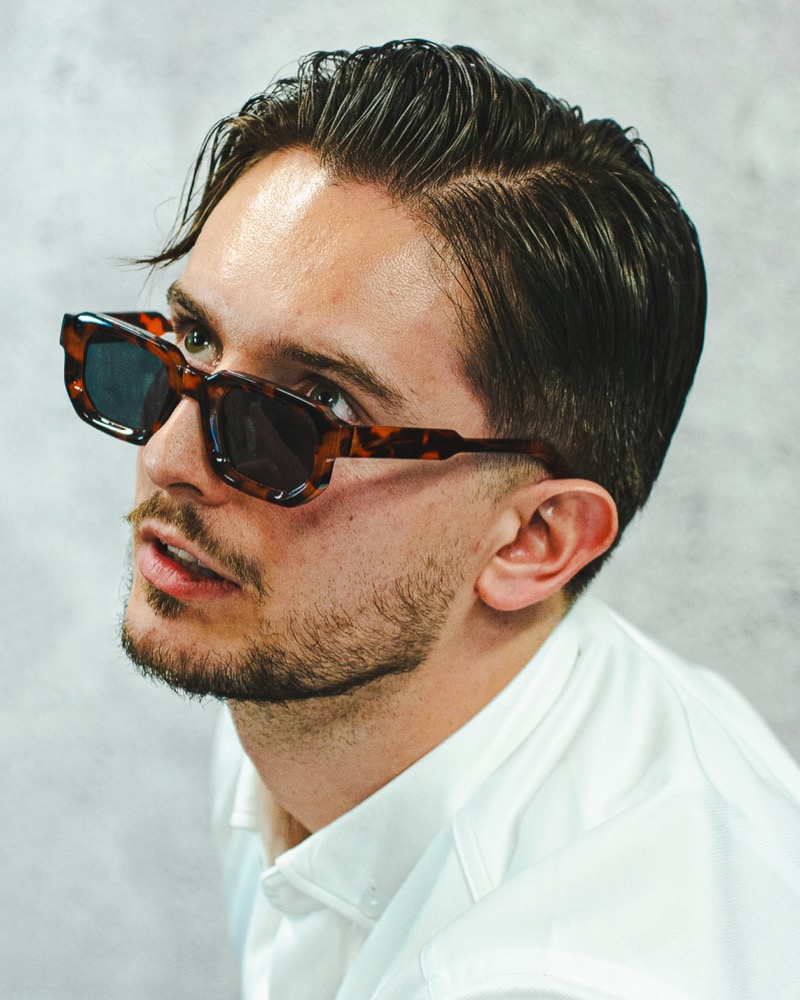
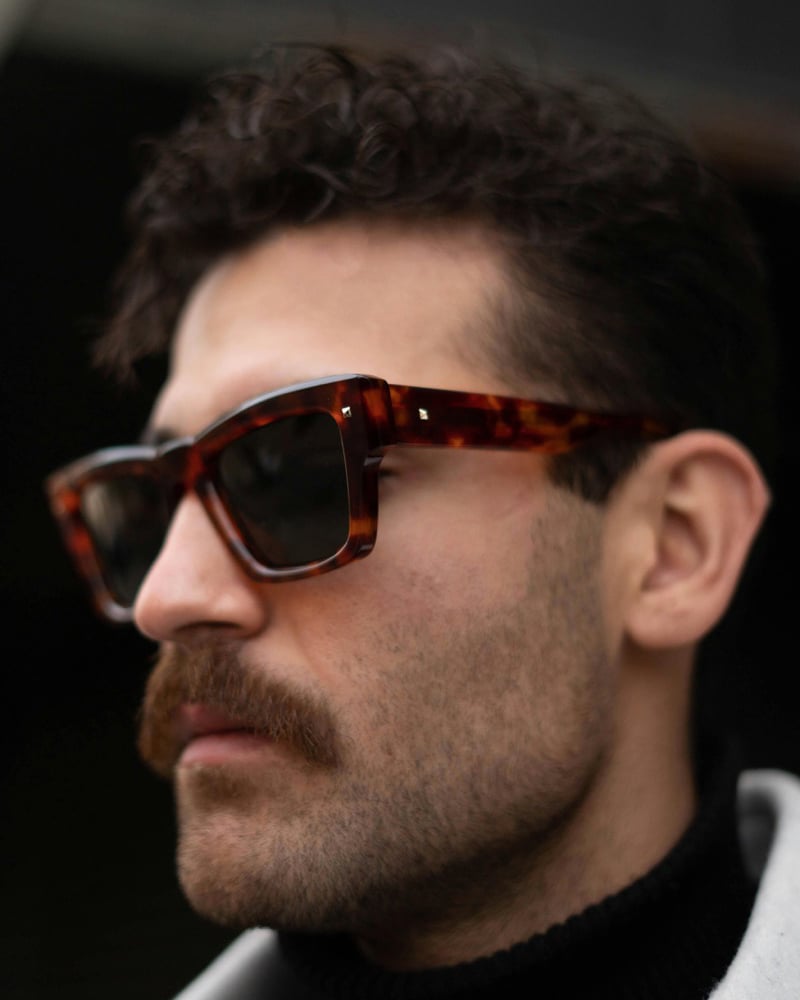
Thick acetate tortoiseshell frames are the loudest option in the group, and they are having a moment. The heavier the frame, the more visible the tortoiseshell pattern becomes, because a wider surface area lets the amber and brown swirls develop more contrast. Bold frames sit well on larger faces and on men with facial hair, where a thicker frame balances the visual weight of a beard or mustache.
The tradeoff is that a chunky tortoiseshell frame dominates the face in a way that thinner styles do not. It becomes the first thing people notice, which means the rest of the outfit should stay simple. A heavyweight tortoiseshell frame with a plain dark crew neck is one of the strongest combinations in men’s eyewear right now.
Finding Your Fit

Frame shape is the first decision. The second is proportion, and it is the one most men get wrong. A frame that is too wide sits past the temples and makes the face look narrow. A frame that is too narrow pinches the face and draws attention to its width. The right tortoiseshell frame aligns with the widest point of the face so that the temples of the glasses and the temples of the head are roughly parallel.
Skin tone matters too, though less than most guides suggest. Tortoiseshell’s mix of warm and cool tones (the amber is warm, the dark brown and black are cool) gives it a built-in versatility that solid-color frames lack. Men with lighter skin tend to look best in lighter tortoiseshell with more amber and honey. Men with deeper skin tones can wear the full range, from light golden tortoiseshell to dark, nearly black patterns where the amber appears only in flashes. The key is contrast: the frame should be visible on the face from a few feet away, but it should blend rather than clash.
For men with beards, the frame needs enough visual weight to hold its own above the jawline. A thin tortoiseshell frame above a full beard looks like an afterthought. A medium-to-thick acetate frame, particularly in a round or square shape, sits in proportion with facial hair and keeps the upper and lower halves of the face in balance.
The Sunglasses Question
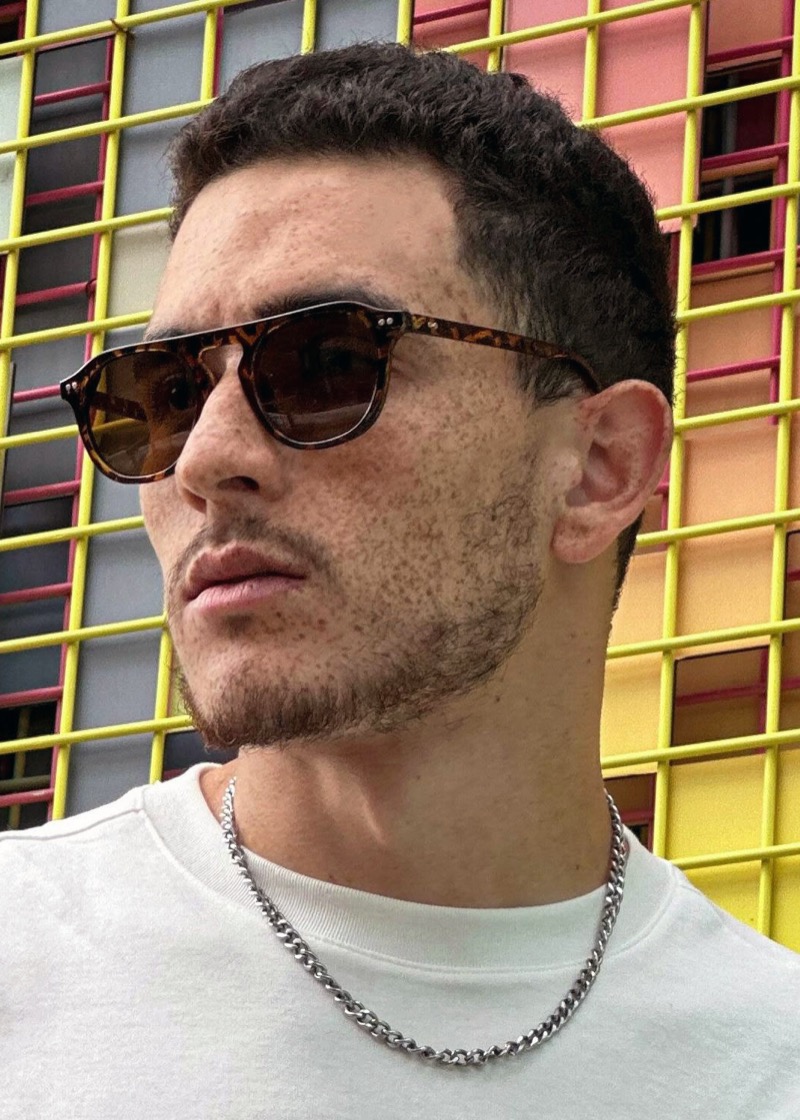
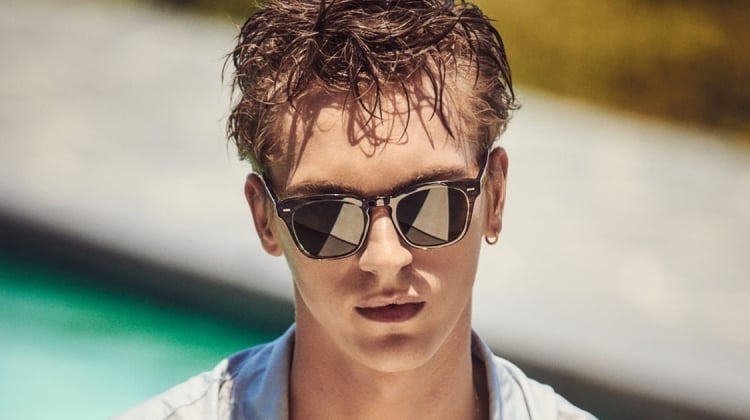
Everything above applies to tortoiseshell sunglasses as well, with one adjustment. When dark lenses hide the eyes, the frame becomes the entire statement above the cheekbone. That means the tortoiseshell pattern does more work in sunglasses because it is the only visible element on the upper face. A round tortoiseshell sunglass frame has more personality than a round tortoiseshell optical frame for this reason.
The most versatile tortoiseshell sunglasses tend to be wayfarers and square frames, because their geometry is neutral enough to work with everything from a suit to swim trunks. Clubmasters and browlines are sharper and more specific, which makes them better for men who know the context they are dressing for. Aviators in tortoiseshell are a niche choice, but in the right setting, with relaxed summer clothes and an unhurried afternoon, they are hard to beat.

No other frame pattern offers this range. Black is too stark, clear acetate is too trendy, and colored frames commit you to a palette. Tortoiseshell sits in the middle, warm enough to add character but neutral enough to disappear when the outfit calls for it. The best pair of tortoiseshell glasses a man can own is the pair he stops thinking about ten minutes after he puts them on, which is the whole point. A good frame gets out of the way. Tortoiseshell has been getting out of the way longer than any alternative on the shelf, and it still looks better doing it.