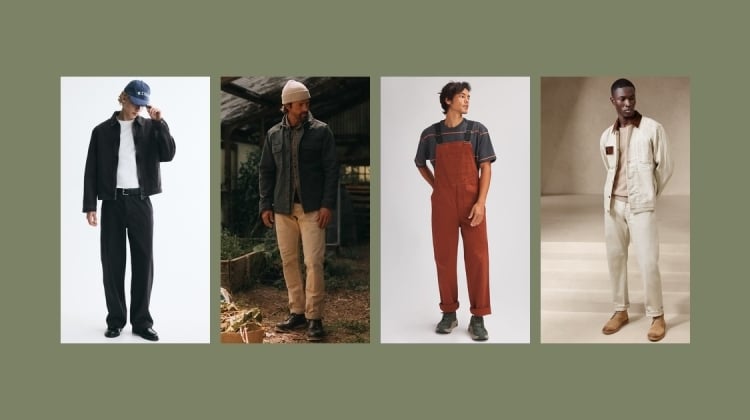
Quiet luxury has an amusing ambition. It asks expensive clothes to look as though their price never entered the conversation. In the world of men’s fashion, that can mean a suede jacket whose appeal becomes clear up close, or trousers whose cut makes a simple shirt look better.
The effect depends on restraint, but it is hardly anonymous. Removing the logo leaves other clues, from the softness of a shoulder to the way a coat falls. For those who recognize them, these details can say quite a lot.
Quiet Luxury
Quiet luxury describes understated clothing with an emphasis on fabric and construction. It overlaps with minimalism, though a minimal outfit can be assembled at almost any price. Luxury adds the promise of something exceptional beneath that simple exterior.
Its preference for lasting clothes also overlaps with slow fashion. Buying fewer pieces and wearing them for longer gives the two common ground. A muted palette, however, offers no evidence about how responsibly a garment was made.

Mark Zuckerberg illustrates the idea through a near-uniform of gray T-shirts and jeans. On appearance alone, the clothes reveal little about the fortune behind them.
His shirts have been rumored to be custom tees from Brunello Cucinelli. That possibility is what makes the example interesting. Almost anyone can wear the silhouette, even if the particular shirt belongs to a very different budget.

Kendall Roy, played by Jeremy Strong in HBO’s Succession, gives discretion a more anxious edge. His wardrobe demonstrates the trend’s understated elegance, yet the character rarely seems free of the need to prove himself.
That tension suits quiet luxury. A jacket can avoid obvious branding and still announce membership in a very expensive club. The audience simply has to know what it is looking at.
The Appeal

Part of the attraction is the ease of clothes that cooperate. Soft tailoring sits comfortably beside knitwear, while restrained colors allow a jacket to move between several outfits. Getting dressed becomes less of a negotiation.
There is visual pleasure here, too. When decoration recedes, the shape of a collar or the fall of a trouser leg becomes easier to appreciate. Simple clothes give small decisions greater consequence.
Then there is the status question. Discretion can feel more exclusive than a visible logo because fewer people recognize it. Quiet luxury may lower the volume, but it does not necessarily lose interest in being noticed.
Quiet Luxury Brands

Loro Piana and Brunello Cucinelli are reference points for luxury that looks relaxed. Knitwear and soft tailoring suggest a wardrobe in which comfort receives as much attention as appearances. Zegna approaches similar territory through the relationship between tailoring and casual clothes.
The distinctions matter. Quiet luxury is broad enough to accommodate both a leisurely weekend wardrobe and clothes that still retain something of the office.

The Row makes proportion central to its appeal. A longer coat or fuller trouser can change the attitude of an outfit even when its components seem conventional. Jil Sander brings a more architectural approach to minimalism, while Bottega Veneta gives leather goods an identity through surface and construction.
Margaret Howell offers another useful interpretation. Practical shirts and relaxed trousers suggest that understatement can belong to daily life as readily as a private retreat.
These labels are most useful as different perspectives on dressing. Treating them as interchangeable sources of expensive basics misses much of what makes their clothes interesting.
The Role of Eco-Friendly & High-Quality Materials

Fabric does much of the talking in quiet luxury. With little decoration to distract the eye, a sweater depends on its texture, and a jacket on how its material responds to the body.
Natural fibers are common, but their names are only a starting point. Two cashmere sweaters can differ considerably in feel and construction. Cotton can become a light summer shirt or something with enough weight to hold a firmer shape.
Environmental claims deserve the same attention to detail. Organic cotton does not mean every stage of production is chemical-free, and an expensive garment is not automatically a responsible purchase.

Linen brings a useful informality to this aesthetic. Its creases soften the effect of tailoring, making a shirt or suit feel less ceremonial. Expecting it to remain perfectly smooth defeats some of its charm.
Cashmere offers a different pleasure through softness and warmth. Its appeal is easy to understand, though sourcing and care still matter. A delicate sweater that seldom leaves the drawer has limited value as an everyday luxury.
The strongest connection between quiet luxury and sustainability comes through continued wear. Good construction and repairable garments help, but the owner has a role in that promise, too.
How to Incorporate Quiet Luxury into Personal Style

Begin with proportion. A shirt needs enough room to sit comfortably, while trousers should fall in a way that suits the shoes beneath them. These relationships make an outfit convincing before anyone checks the labels.
For warmer weather, a linen shirt and relaxed trousers provide a useful foundation. An open collar can make tailoring feel less formal; a tucked shirt gives the same clothes more definition.
Beige, khaki, and white work well with linen, but quiet dressing has room for more than pale neutrals. Navy offers contrast, while green or burgundy can introduce color at a lower volume.
In cooler weather, think about how layers sit together. A fine knit works beneath a jacket; a heavier sweater may look better under a roomier coat. Cashmere is one option, though a good wool sweater can serve the wardrobe just as well.
A navy or gray suit is useful when tailoring belongs to your routine. A trench coat is a classic, and its appeal changes with its proportions. A longer, fuller cut has a different attitude from a short, close-fitting version.

The Giorgio Armani look also offers a reminder that luxury need not mean a suit. Leather introduces texture and a certain commitment, particularly in a jacket that needs regular wear to become your own.
Keep that relationship with the clothes personal. A fine sweater can sit beside old jeans, and a tailored coat can work over a sweatshirt. Too much coordination risks making an understated wardrobe look like a display.
The best additions give existing clothes more possibilities. That is a more useful ambition than assembling an entirely new identity at the checkout.
The Future of Quiet Luxury

Quiet luxury gives a memorable name to clothes that often predate the phrase. Soft tailoring and discreet knitwear do not depend on being declared a trend to remain appealing.
Their future lies partly in that independence. A jacket that works with your wardrobe has a reason to stay even when fashion turns its attention to something louder.
What may change more quickly is the appeal of looking wealthy. Once the social aspiration loses its novelty, the clothes have to offer something beyond the suggestion of an expensive life.

The connection to old money sensibilities explains some of the fascination with discretion. Yet the Boglioli look suggests a more enjoyable direction. A suit can accommodate a bright cap and a hoodie; restraint leaves room for a little irreverence.
Quiet Luxury Beyond the Label
Quiet luxury becomes more interesting when it stops being an exercise in looking expensive. The clothes offer plenty to appreciate on their own, from the ease of soft tailoring to the pleasure of a sweater worn often enough to become a favorite.
A wardrobe gains character through those attachments. Eventually, the most persuasive sign of good taste may be how naturally the clothes belong to the person wearing them.