Elvis Presley changed what a young American man could wear in public. Long before the white jumpsuits, he turned up on television in a windowpane-checked jacket with his hair piled four inches high, and the country decided that was a problem. His clothes from the next two decades still turn up in grooming campaigns, fashion shoots, and runway collections. Elvis Presley’s fashion helped menswear get comfortable with putting on a show.
8 Elvis Outfits That Capture His Style
What Elvis wore between 1956 and 1973 keeps finding its way back into men’s wardrobes. The catalog may be small, but it gets plenty of repeat visits. Camp collars return for summer, concho belts turn up in heritage denim campaigns, and a magazine puts another man in black leather. Even the cable-knit and greased pompadour arrive with a history. Elvis helped write the part before the next man put on the clothes.
The Windowpane-Checked Jacket, 1956
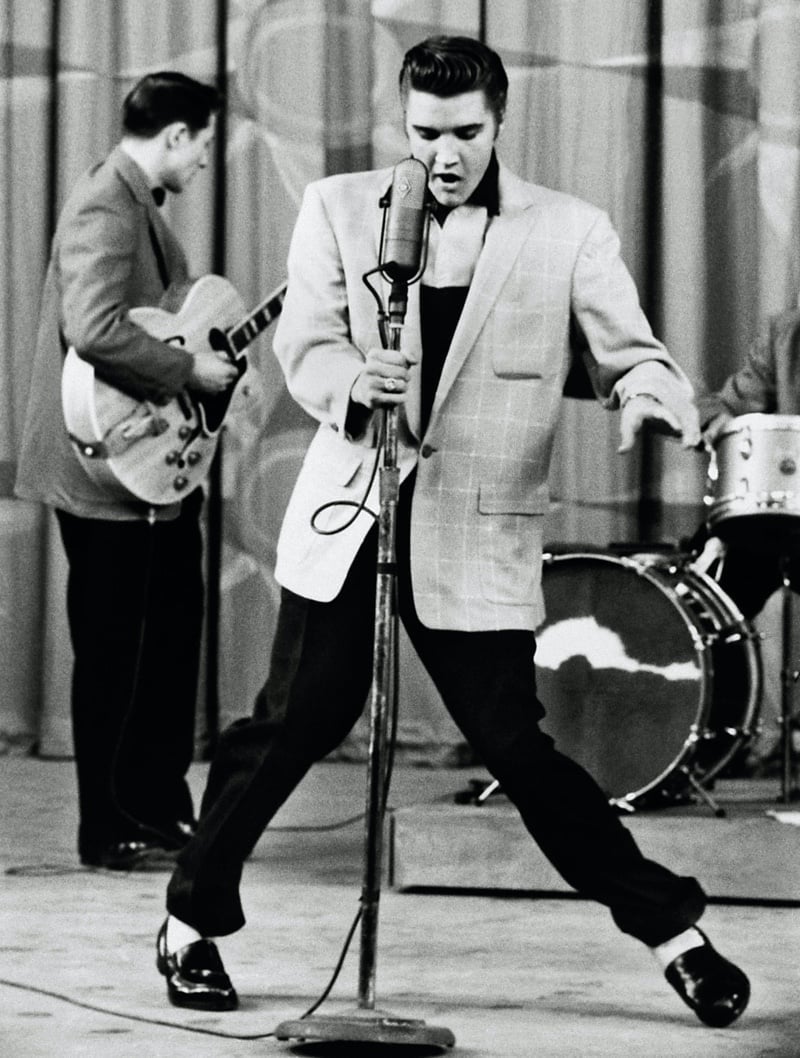
This is the look that scared parents. On stage in 1956, Elvis wore a light windowpane-checked sport coat with patch pockets, slim dark trousers, and loafers with white athletic socks turned down at the ankle. The socks gave the game away. Grown men wore dress hose. These belonged to a teenager, and turning them down made sure the loafers got noticed.
The jacket had a suburban department-store cut, boxy at the shoulder and long through the body. Add Elvis’ crouch and leg kick, and ordinary tailoring became a pop image. A windowpane jacket with dark trousers and loafers has owed something to that performance ever since, even when its wearer has never thought about the connection.
The Cable-Knit Sweater, 1956

Off stage that same year, Elvis sat for a photograph in a heavy cable-knit pullover, its ribbed collar turned up around his neck. Plaited cables ran down the chest of a sweater with thoroughly preppy credentials. It’s the most collegiate thing he wore on camera, and it gets a fraction of the attention paid to the leather.
Above the collar sat a pompadour made for the stage. The sweater belonged to an Ivy League weekend. Bringing them together was a newer idea in 1956 than it sounds today, opening the way for rock stars who wanted to look educated and the ivy-leaguer who wanted to look dangerous. Ralph Lauren built a career around that tension. He was watching Elvis.
Jailhouse Rock Prison Stripes, 1957

The title number in 1957’s Jailhouse Rock gave Elvis one of pop culture’s most reproduced outfits. His black-and-white prison shirt bore the inmate number 6240 beneath a dark uniform jacket with white contrast stitching. Matching trousers and black leather dress shoes finished the look. MGM’s wardrobe department assembled the costume. Elvis took lasting ownership of the image.
The prison stripes became shorthand for American outlaw charm. Halloween shops still trade on the image, and brands printing striped tees under the heading of rockabilly are borrowing the same vocabulary. The jacket gives the outfit its discipline. Contrast-stitched seams define its shape and keep the striped shirt from taking the whole thing into cartoon territory. The shirt supplies the costume reference. The jacket makes it work as clothes.
The Hawaiian Shirt in Blue Hawaii, 1961
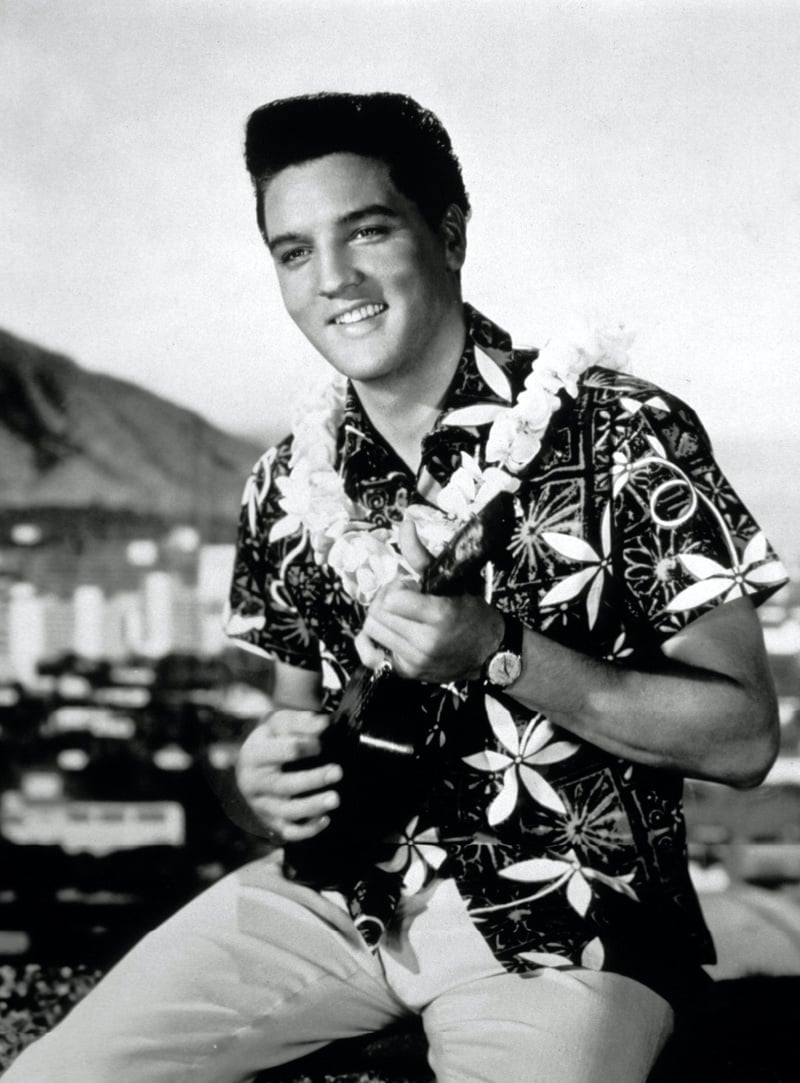
For Blue Hawaii in 1961, Elvis wore a Hawaiian shirt with large white florals and light cotton trousers, adding a white lei and a ukulele. The shirt belonged to the Alfred Shaheen era of Hawaiian dressing, with heavy rayon, block-printed flowers, a camp collar, and a boxy cut. The film helped give mainland America its picture of vacation dressing, along with a softer version of postwar masculinity.
The Cuban-collar shirt’s career as summer menswear owes plenty to Blue Hawaii. The camp collar has returned to fashion at least four times since, and the image is there each time. A designer can leave Elvis out of the credits. The resemblance survives.
All-Black in Girls! Girls! Girls!, 1962
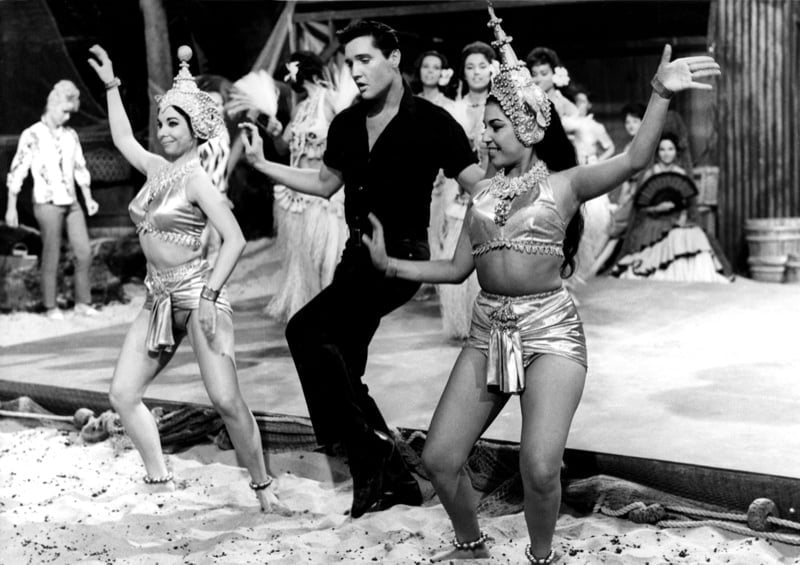
Elvis’ all-black outfit in Girls! Girls! Girls! (1962) sits at the margins of his style history and close to the center of contemporary menswear. He wore a short-sleeve camp-collar shirt, open two buttons, tucked into straight, flat-front trousers. Behind him, dancers in gold costumes performed a stylized Polynesian number. All that decoration made his simple clothes look sharper.
It’s the template for the all-black summer look that designers from Tom Ford to A.P.C. have since sold under different names. Black on black in short sleeves takes more attention than it appears to. The cotton has to sit properly, the trousers need a clean break over the shoes, and the belt should blend in. Against a set painted gold and blue, Elvis let the silhouette do the work.
The White Shirt & Silver Concho Belt in Stay Away, Joe, 1968
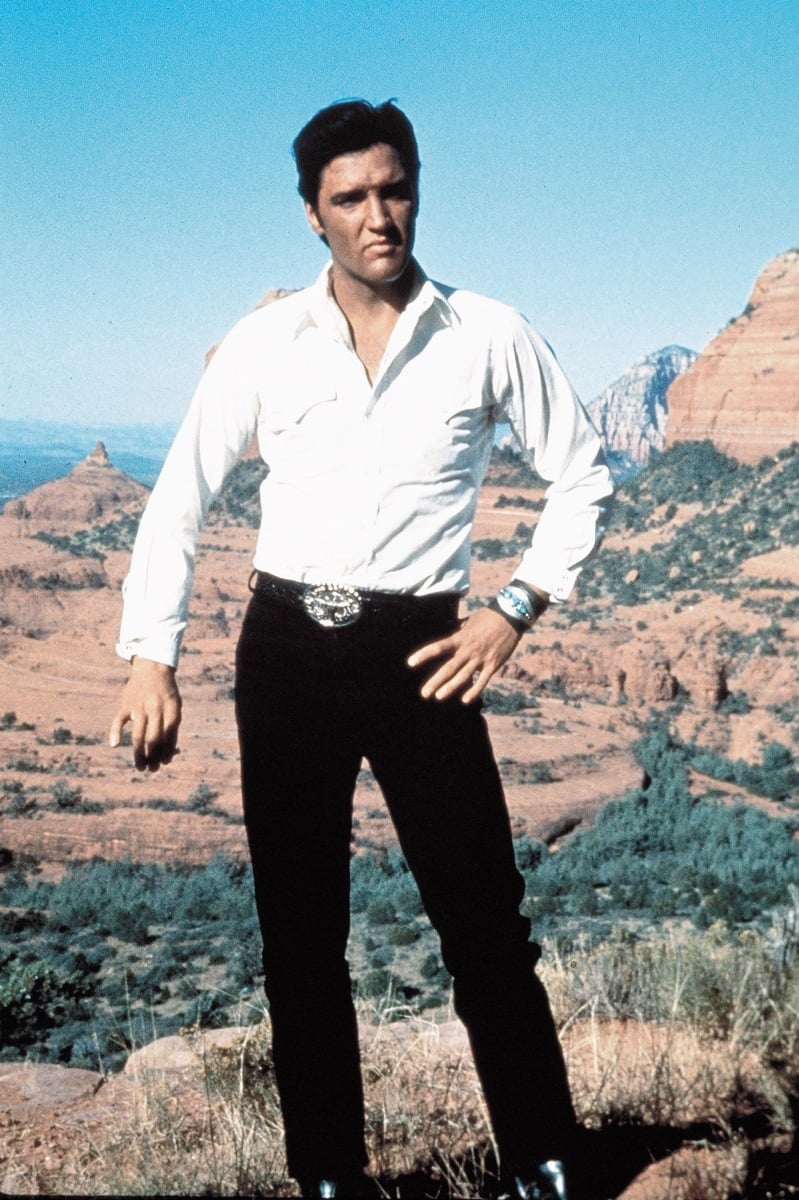
In publicity stills for the 1968 western Stay Away, Joe, Elvis stood against Arizona’s red rocks in a white western-yoke shirt and straight black trousers. He rolled the sleeves to his forearms and wore a wide leather belt with a large Southwestern concho buckle. A Navajo-style silver cuff finished the outfit at his left wrist.
It’s the look the estate rarely markets, and the one that has aged best as clothing. Its context is less comfortable. Elvis played a half-Navajo character in a film built around Hollywood’s 1968 idea of Native American life. The belt and silver cuff borrowed from a culture the movie flattened.
The clothes survived that complication because they had lives of their own. The shirt, belt, and cuff belong to the heritage wardrobe associated with Double RL, Kapital, Buck Mason, Wythe, and smaller American labels. The film’s politics stayed in 1968. The silverwork went on to a longer afterlife.
The Black Leather of the 1968 Comeback Special
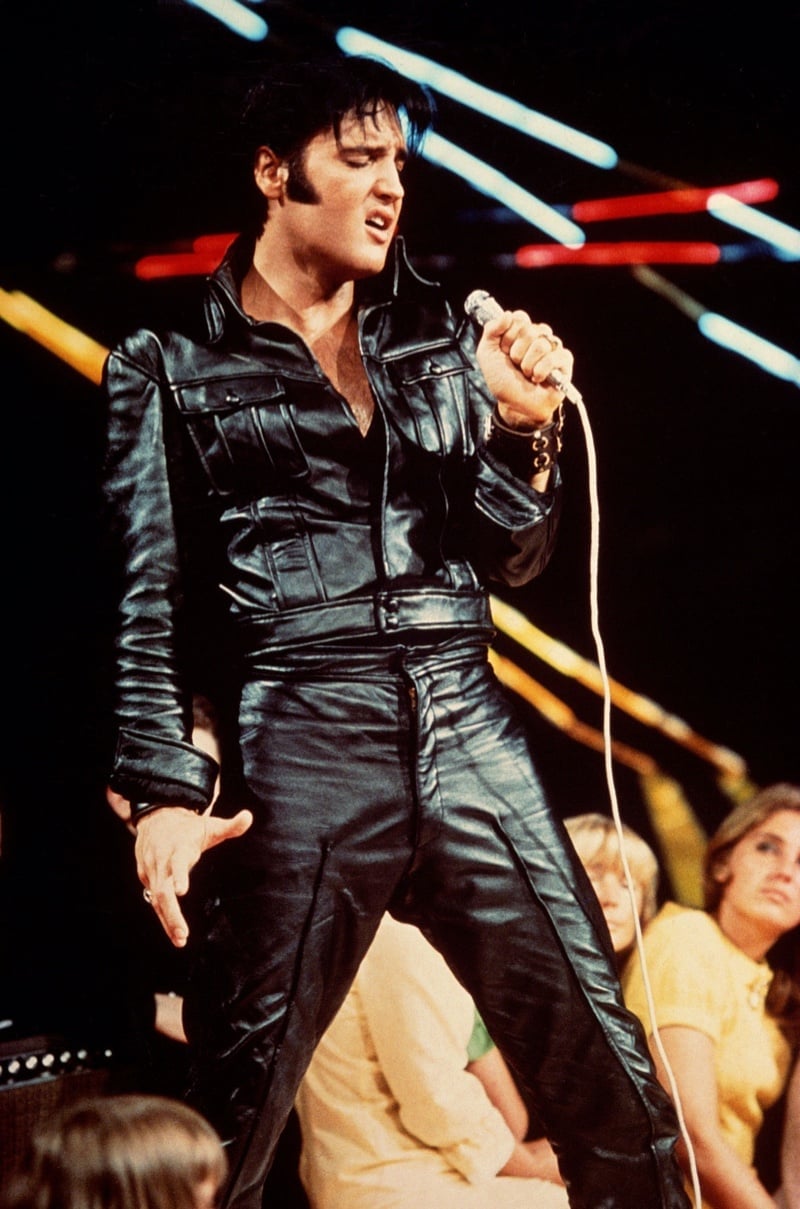
Seven years after Blue Hawaii, Elvis walked onto a small NBC stage in black leather with a career to reclaim. His last live performance had been in 1961, and the industry had come to see him as a soundtrack singer. Fitted leather jacket, matching trousers, boots underneath. He looked ready to dispute the assessment.
Bill Belew designed the suit, drawing on motorcycle cops and prizefighters. You can see those sources in the chest zips and the set of the shoulders. The outfit helped rescue Elvis’ career and gave solo stars a black-leather benchmark, from George Michael on the Faith tour to the shoot seemingly every GQ cover subject gets sent to once a decade. The 1968 special remains the definitive version.
The White Jumpsuit, 1973
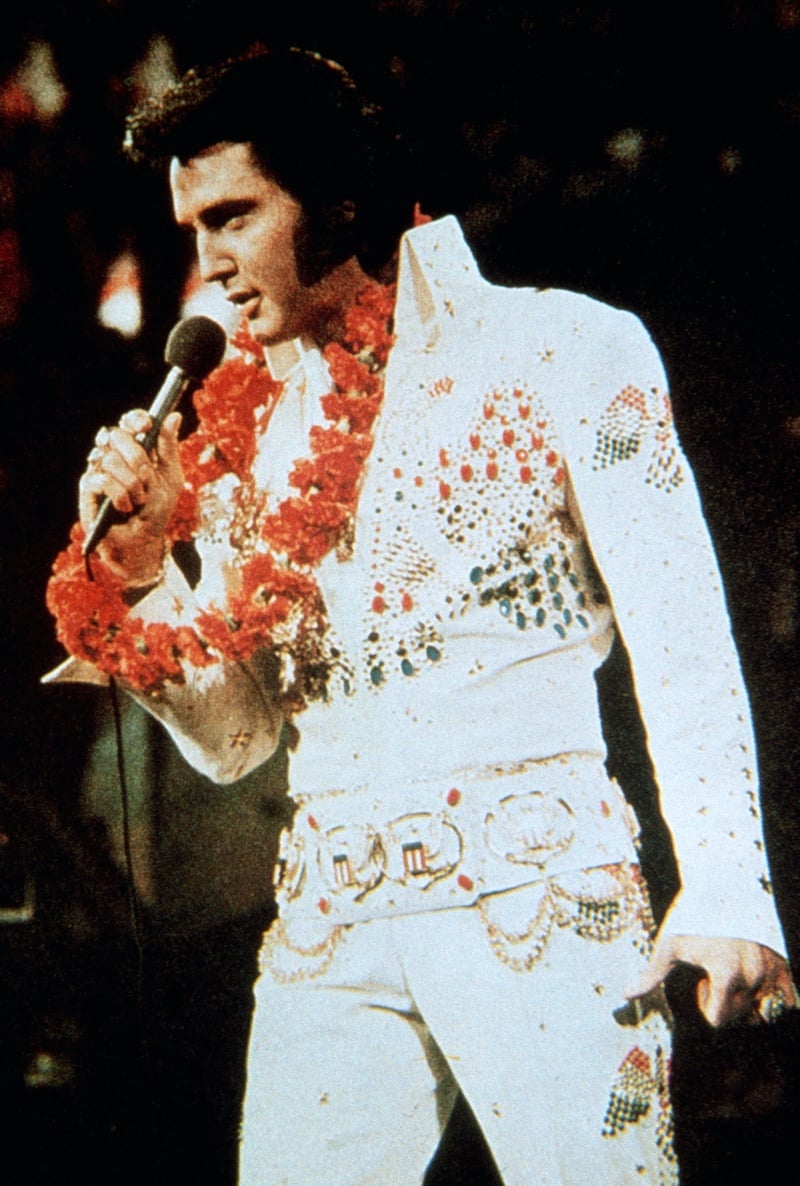
The white jumpsuit is the outfit everyone remembers. In January 1973, Elvis wore white wool gabardine embroidered with American eagles and flowers in red, gold, and turquoise stones. His studded belt had the width of a boxing championship belt, and a red carnation lei hung at his neck. Aloha from Hawaii sent the whole spectacle to more than forty countries. It’s arguably the most-watched piece of American menswear in history.
Belew chose white so the camera could pick up the decoration. Elvis committed to every bead. He wore embroidery the way an Elizabethan courtier wore slashed velvet, this time for an audience estimated at a billion. Sequined concert wardrobes have been working in the space that jumpsuit cleared ever since.
When the Image Got Away From the Man
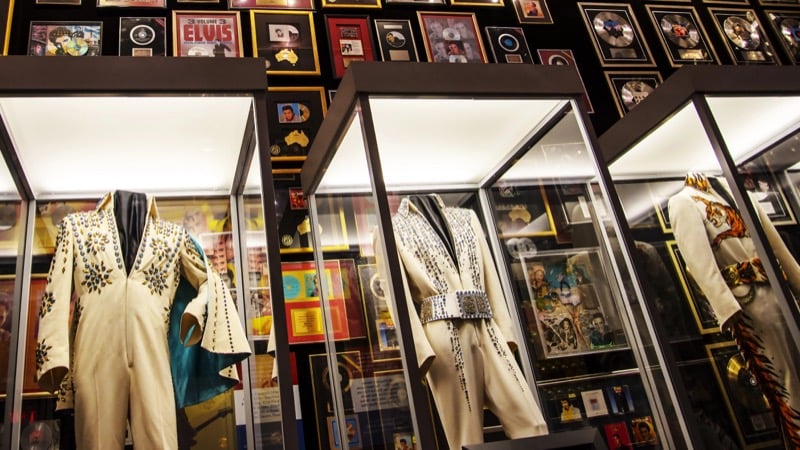
By the mid-1970s, the jumpsuit was becoming a costume. Elvis’ body was changing, while the industry around him kept reproducing the silhouette in different sizes and sending it back on the road. The image was starting to run the show.
When Elvis died in August 1977, impersonators were already giving the rhinestone suit a second life. Within a decade, the look had become fully detachable from the man. Anyone could put on the pompadour wig, sideburns, and white jumpsuit and be recognized as Elvis. The image had outlived its source.
The rest of his wardrobe paid for that instant recognition. Windowpane jackets, Jailhouse Rock stripes, black leather, and the white-shirt-and-concho combination spent decades in the costume aisle of the retail imagination. The American heritage revival of the 2010s helped bring them back as menswear. Getting there meant taking off the tribute act and letting the clothes be clothes again.
Elvis’ Hair, Which Is Its Own Argument
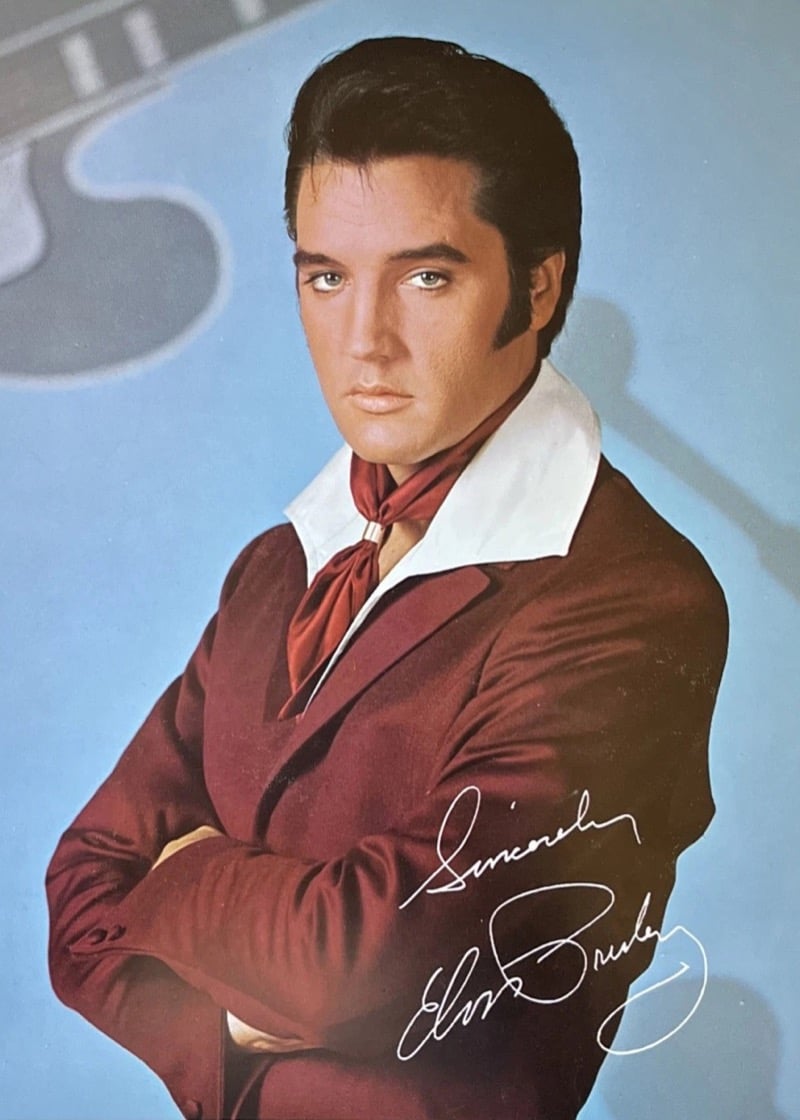
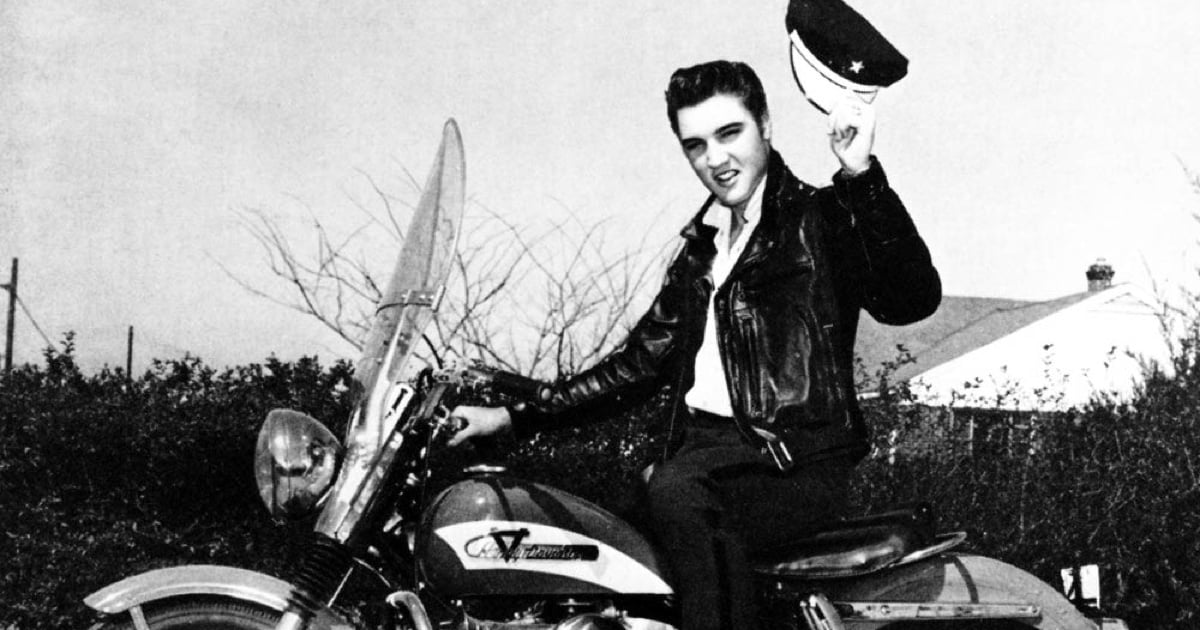
Then there’s the hair. Elvis’ pompadour, dyed jet black from its original dark blond, was the most-imitated male hairstyle of the 20th century. He wore it high and heavily pomaded, with sideburns that could reach his jaw. Greasers, rockabilly revivalists, and the dancers of Tokyo’s Yoyogi Park have kept returning to the combination. Few haircuts come with such recognizable company.
The pompadour has stayed in the barbershop vocabulary for seventy years because its structure is straightforward. Keep length on top, cut the sides short, and style the front forward and up. Products changed, from paraffin and rose oil through Brylcreem to matte clay and sea-salt spray. The shape held.
How to Channel Elvis Presley’s Style
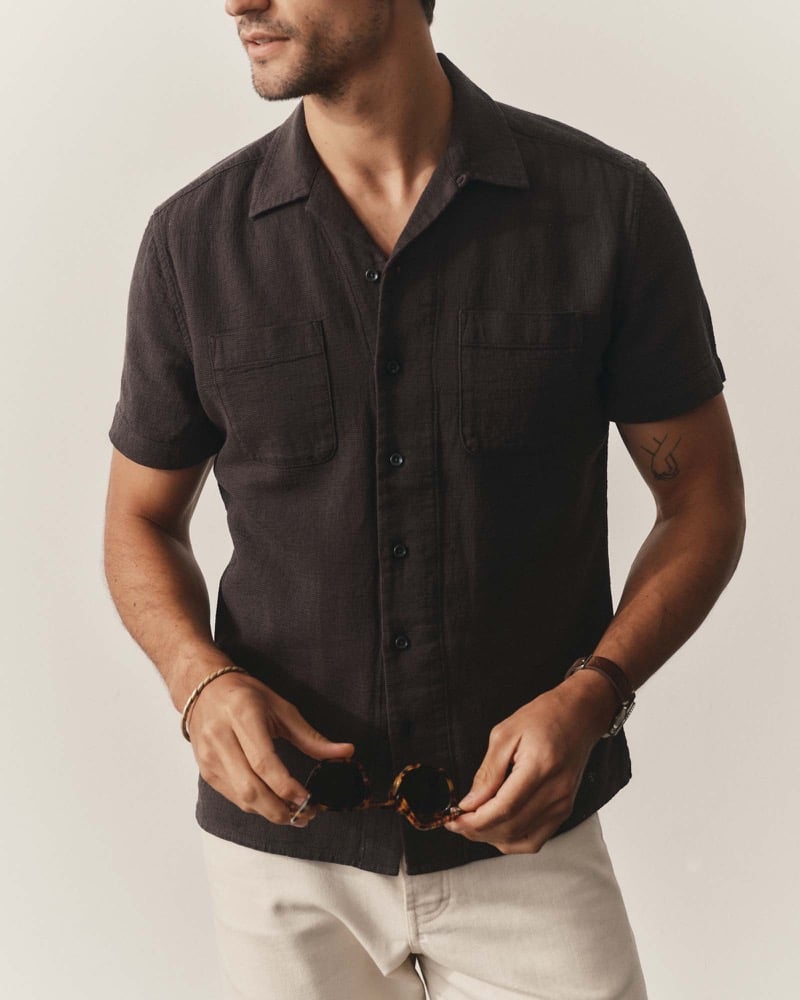
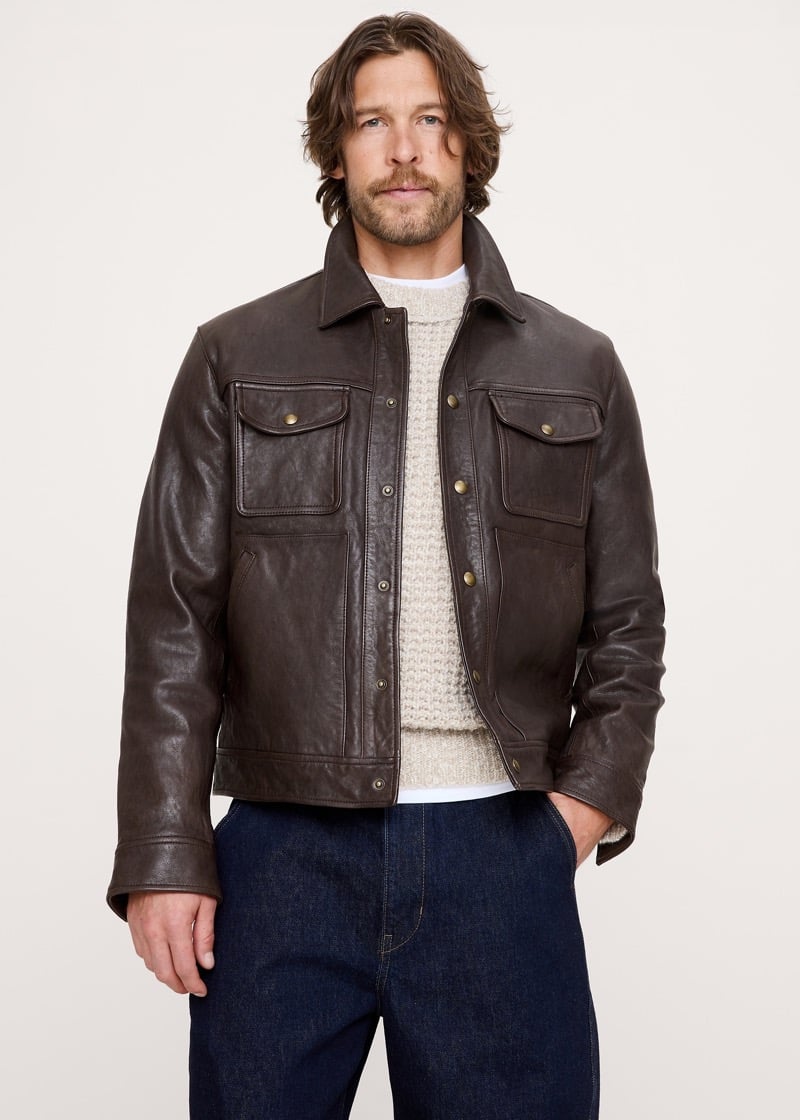
Most of the useful pieces are already part of everyday menswear. Western-yoke shirts, printed camp collars, heavy cable-knits, fitted leather jackets, flat-front trousers, and dark loafers account for six of these eight looks. You can borrow quite a bit of Elvis before you reach for a jumpsuit. That one can stay on stage.
What you’re borrowing is permission to be a little too much. The cable-knit is heavier than necessary. The Hawaiian print is brighter than a postcard, the leather jacket closer-fitting than comfort might suggest. The concho buckle takes up more space than the rest of the outfit requires. Elvis understood the appeal of pushing an ordinary piece a little further.
Those clothes survived because Elvis showed that performance and seriousness could belong to the same man. Ralph Lauren can sell a concho belt as American heritage because the market has caught up to that idea. The belt has lost little of its original volume. What connects these outfits is the attitude of a man who knew the camera would be on him. He dressed for the lens before he dressed for the people around him.