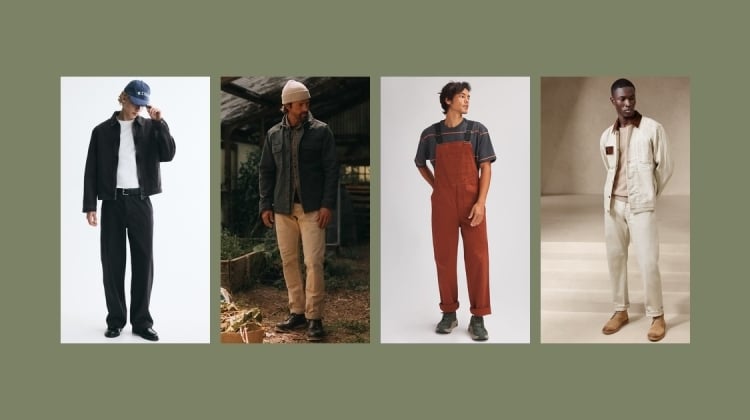
Ivy League style brings tailoring into everyday life. An Oxford cloth button-down works under a soft-shouldered jacket; khakis and loafers keep the combination easy enough for a day spent on foot. Often shortened to Ivy style, the look grew out of American college wardrobes and became a defining influence on mid-century menswear.
Its appeal reaches well beyond a university affiliation. The interesting part is how clothes associated with an elite came to serve people with very different lives, from jazz musicians to Japanese students. The wardrobe endured because its wearers kept finding new uses for it.
What Is Ivy League Style?
Ivy League style combines softly constructed tailoring with collegiate sportswear. Button-down collars, natural shoulders, straight-cut trousers, and loafers give it a recognizable shape. Texture matters as much as the garment itself, whether it comes from an Oxford shirt’s basket weave or a wool sweater’s fuzzy surface.
Ivy Style vs. Preppy Style
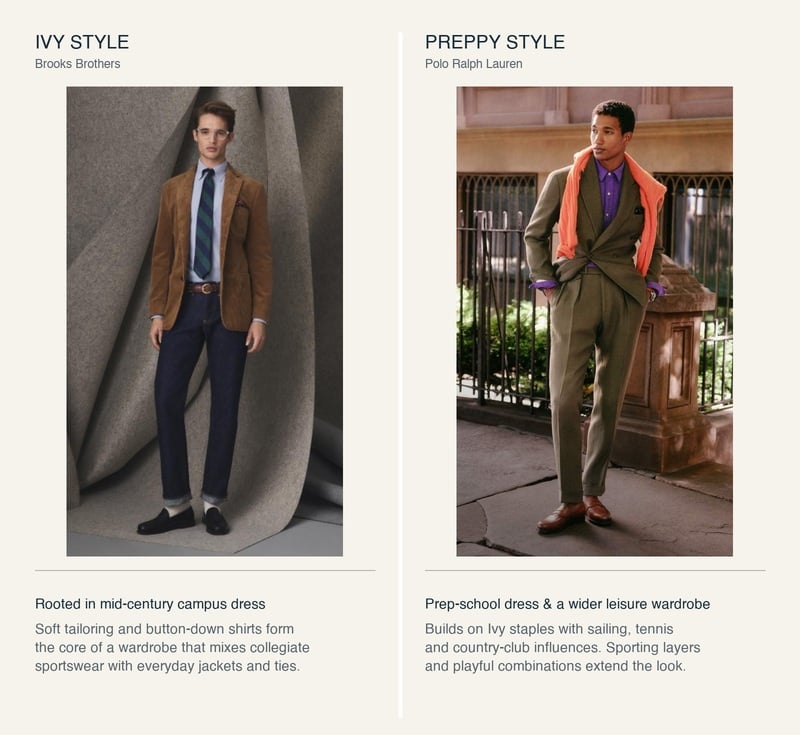
Ivy and preppy style share a wardrobe and a social history, so the boundary is porous. Ivy usually describes the collegiate look that took shape in the early and mid-20th century, with particular attention to tailoring and shirt construction. Preppy is a broader label, encompassing prep-school dress and later interpretations of East Coast leisurewear.
Bright color alone does not separate them. Madras checks and colorful knitwear belong in Ivy dressing, too. Nor is Ivy simply another name for the old money aesthetic, which places more emphasis on the appearance of inherited wealth. Ivy has a specific clothing history, and that history includes people challenging the status its clothes once represented.
A Brief History of Ivy Style
In the early 20th century, students at universities such as Princeton and Yale adapted British sporting clothes to American campus life. Brooks Brothers and J. Press helped establish the wardrobe, combining traditional fabrics with softer tailoring.
After World War II, returning servicemen widened the college population, and Ivy’s influence spread beyond campus. The 1950s and early 1960s became its defining period. The Museum at FIT’s history of Ivy style traces its movement into the wider culture, its decline in the late 1960s, and its renewed popularity in the 1980s.
Black Ivy
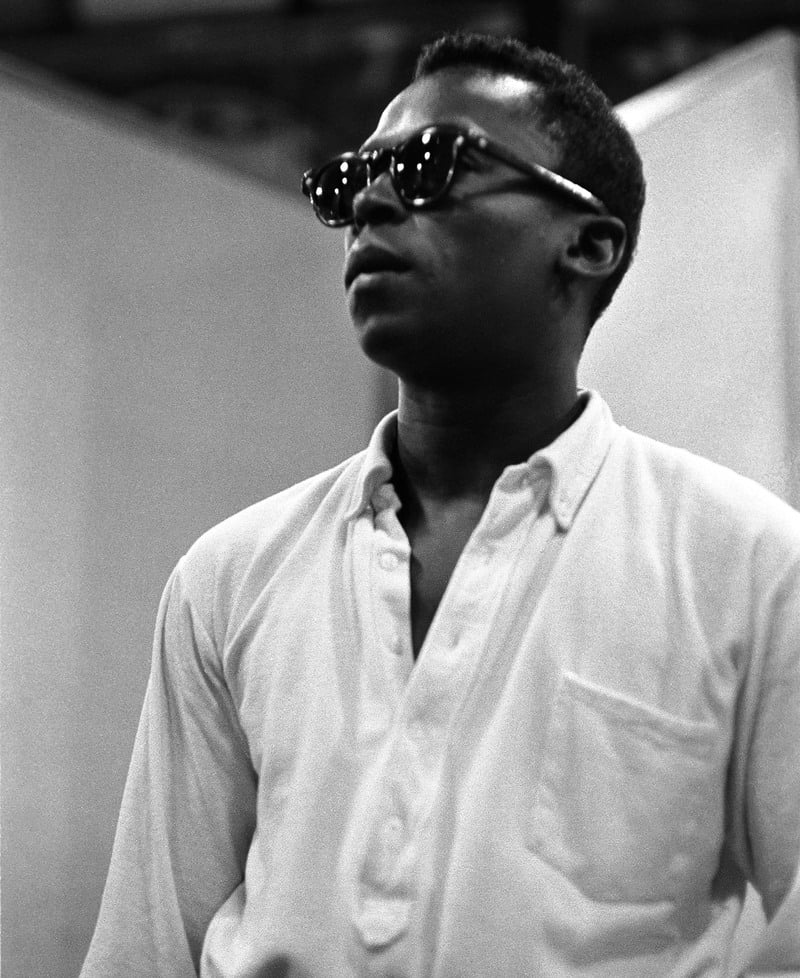
Black Ivy complicates the idea that these clothes only expressed conformity. Musicians such as Miles Davis and John Coltrane, alongside writer James Baldwin, made the Ivy wardrobe part of a much wider cultural story. Their use of button-downs and soft tailoring placed clothes associated with privileged institutions in a different context.
Jason Jules’s book Black Ivy: A Revolt in Style, with art direction and design by Graham Marsh, documents that relationship between dress and self-determination during the civil rights era. The significance lies in who wore the clothes, and the freedom they claimed in doing so.
Japanese Ivy & Take Ivy
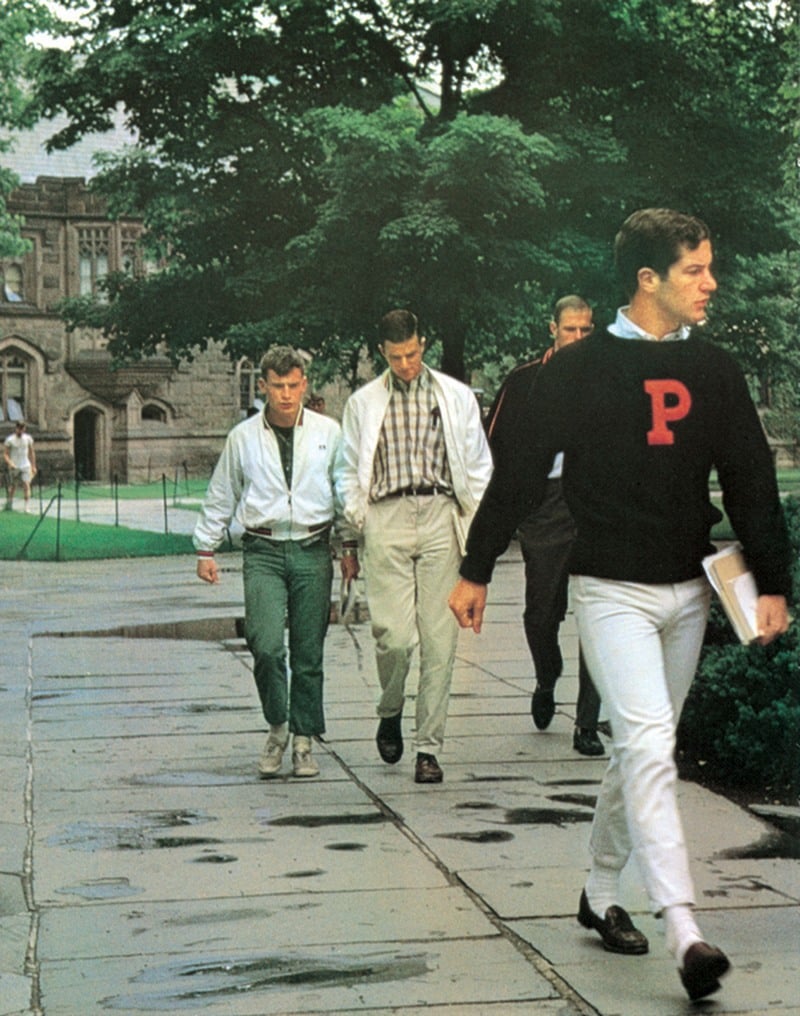
Published in Japan in 1965, Take Ivy photographed American students going about campus life. Teruyoshi Hayashida’s pictures recorded how the clothes were actually worn, including the casual combinations that a formal fashion portrait might miss.
Japanese Ivy grew through close observation and reinterpretation of that American wardrobe. It sits within the broader story of ametora, or American traditional style, explored in W. David Marx’s Ametora. That exchange helps explain why Ivy remains an international menswear reference long after its campus heyday.
Ivy League Style Essentials

The useful starting point is a small wardrobe whose pieces work together. Look for enough room to move, fabrics with visible character, and jackets that sit comfortably over a shirt or sweater. An Ivy League look depends more on those relationships than on a college crest.
Oxford Cloth Button-Down Shirts

The Oxford cloth button-down, often abbreviated to OCBD, is central to Ivy dressing. Oxford describes the textured basket-weave fabric; button-down describes the collar points fastened to the shirt. They are separate details, and both matter here.
A soft collar that rolls around a tie gives the shirt its characteristic ease. White and pale blue are useful foundations, with pink or stripes adding variety. When choosing an Oxford shirt, check that the collar sits comfortably and the body has enough room to stay tucked as you move.
Polo Shirts

The polo shirt brings a sporting alternative to the button-down. Its soft collar works beneath a sweater or casual jacket, while the short sleeves suit warmer weather. Wear one with chinos and loafers, or use white jeans for a lighter summer combination.
Ivy League Sweatshirts

A collegiate sweatshirt makes the campus connection explicit. Grey marl and a simple university print are easy to wear with chinos or denim. A crest supplies the reference, but the fit still does the work; the sweatshirt should leave room for a shirt underneath.
Shetland & Cable-Knit Sweaters

Shetland sweaters bring a woolly surface that contrasts with a smooth cotton shirt. A brushed version, such as J. Press’s Shaggy Dog, makes that texture more pronounced. A crewneck can sit over an OCBD with the collar showing, or beneath a roomy sport coat in colder weather.
Cable-knit sweaters offer another kind of texture. The navy crewneck pictured here keeps the pattern restrained, while a V-neck with contrasting trim moves closer to sporting dress. Choose the knit’s thickness with the rest of the outfit in mind; a bulky sweater needs a jacket with room through the chest and sleeves.
Blazers & Sport Coats

The navy blazer is a dependable starting point because it works with khakis or grey wool trousers. Softer shoulders and moderate shaping bring it closer to Ivy tailoring than a sharply padded, tightly fitted jacket.

Flannel adds a softer surface for cooler months. Worn with an open-neck shirt and denim, a dark jacket shows how tailoring can remain part of everyday dress.

Tweed offers more visible texture and often more pattern. Wear the jacket separately with plain trousers when you want the cloth to lead. The matching trousers shown here create a suit, a useful distinction from a sport coat worn with contrasting bottoms.
The Ivy League Sack Suit
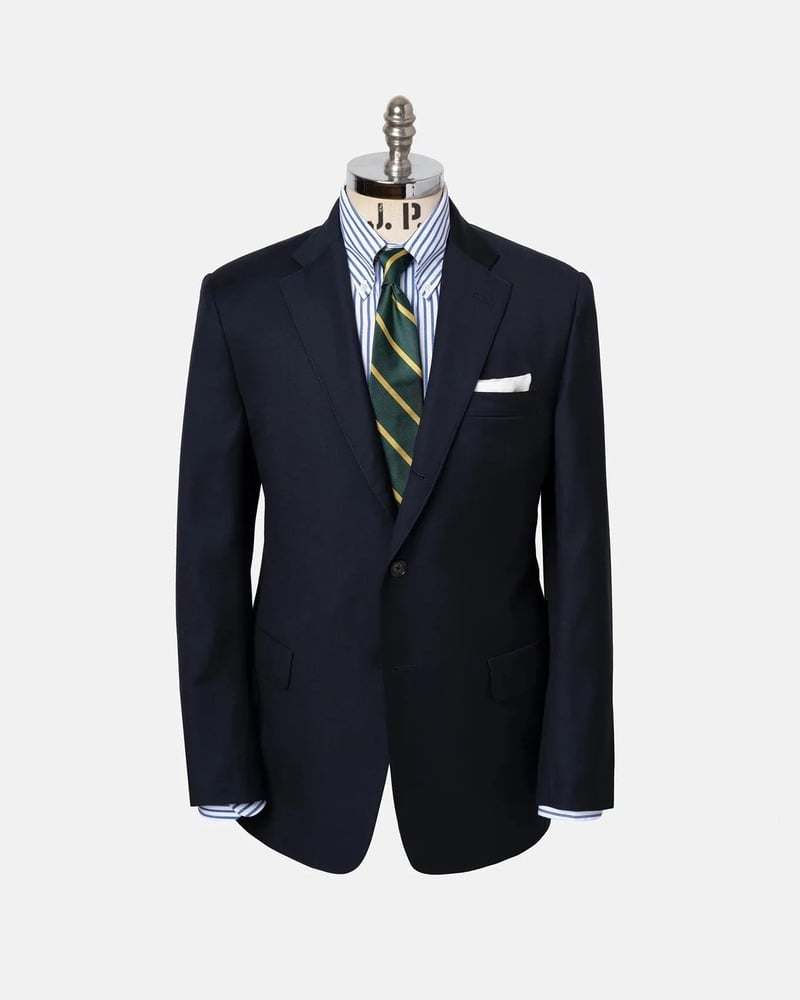
The sack suit is one of Ivy’s defining tailoring forms. Its jacket has a relatively straight body and an undarted front, meaning it lacks the vertical shaping seams that draw many suit jackets inward at the waist. A natural shoulder keeps the outline soft.
The classic three-roll-two front has three buttons, but the lapel rolls past the top one so the jacket fastens at the middle button. This creates an easy line through the chest. The aim is a relaxed silhouette that fits correctly at the shoulders, not an oversized suit.
Chinos & Khakis

Chinos give Ivy tailoring a less formal partner. Khaki is the classic color, while cream or olive can serve the same purpose. A straight or gently tapered leg leaves the cloth room to fall cleanly; a very tight ankle can make the upper half of an outfit look disproportionately heavy.
Varsity Jackets

Varsity jackets carry the athletic side of collegiate dress. Ribbed edges and letter patches establish the reference even when the jacket departs from the traditional leather-sleeved version. Keep the rest simple enough that the lettering does not compete with another large logo.
Peacoats & Trench Coats

A peacoat adds warmth over knitwear, while a trench provides a longer outer layer for changeable weather. Neither belongs exclusively to Ivy style. Their usefulness comes from the way military-derived outerwear fits around a civilian wardrobe of shirts, trousers, and jackets.
Repp Ties & Bow Ties

Striped repp ties are an Ivy staple, particularly with an OCBD and navy blazer. Repp refers to the fabric’s ribbed weave, not the stripe itself. Among the different neckties, a small knot suits the soft roll of a button-down collar. Bow ties are another option, though they make a more deliberate impression.
Loafers & Boat Shoes

Penny loafers have a leather strap with a cutout across the instep. They work with chinos and can also dress down a suit. Horsebit loafers, pictured here, use metal hardware instead; both are slip-ons, but they are different styles.

Boat shoes bring a more casual, nautical association. Their leather uppers and deck-shoe construction suit shorts or lightweight trousers, particularly in summer.

Driving moccasins offer another relaxed option. Their soft construction works well with light trousers, though their role here is as a contemporary alternative to the traditional penny loafer.
Summer Ivy with Madras & Seersucker

Madras shirts introduce lightweight checks, while seersucker’s puckered cotton surface gives warm-weather tailoring a different texture. These fabrics also challenge the idea that Ivy must be muted. A madras shirt with plain shorts is an easy entry point; a seersucker suit takes the same seasonal logic into tailoring.

Ivy Style Outfits
A Casual Ivy League Outfit

A navy polo, white jeans, and brown loafers make a straightforward casual combination. The contrast between the dark shirt and light trousers provides enough interest on its own. In cooler weather, replace the polo with an OCBD and crewneck sweater.
Dressing Up with Ivy Tailoring

A navy blazer with a button-down shirt and chinos belongs to business-casual or smart-casual dressing, not formalwear. Add a tie when the occasion calls for one. For a setting that requires a suit, move to matching trousers and a sack jacket; follow the stated dress code for genuinely formal events.
Ivy League Sportswear

A striped rugby shirt works with dark jeans and loafers for a more contemporary interpretation. Its broad stripes provide the main pattern, leaving the rest of the outfit simple. The heavier collar and long sleeves distinguish it from a lightweight tennis polo.
Ivy League Brands & Their Modern Interpretations
The brands associated with Ivy approach the wardrobe from different directions. Some preserve its tailoring traditions; others draw on its sporting clothes or East Coast leisurewear. That distinction is more useful than treating every label as an interchangeable source of prep.

Polo Ralph Lauren combines tailoring with sportswear, often using layering to loosen the result. Here, a herringbone jacket sits over a polo and striped tee, with a baseball cap bringing the outfit into everyday dress.

J. Press remains a reference for the Ivy sack silhouette and Shetland knitwear. Its summer 2026 collection also shows the tradition’s seasonal range, including madras jackets and seersucker suits.

Brooks Brothers connects the wardrobe’s shirtmaking and tailoring traditions to casual clothes. White jeans, a checked shirt, and a light jacket show a relaxed way to use those pieces together.

Vineyard Vines leans toward coastal leisurewear. A striped quarter-zip and shorts sit at the casual, preppy end of the spectrum.

Tommy Hilfiger draws on American sportswear, with polos and chinos offering an accessible version of the collegiate wardrobe.

L.L. Bean contributes the outdoor side of New England dressing. Textured sweaters and practical layers work naturally alongside Oxford shirts and khakis.

GANT uses button-down shirts and varsity references to connect its shirtmaking identity with sportswear. The layered jacket outfit here makes that campus influence especially clear.

Lacoste supplies the tennis-rooted polo, a useful alternative when a woven shirt feels too dressed up. A long-sleeve version can take the place of a light sweater.

Barbour brings British outerwear into the mix. The short Harrington-style jacket shown here works with a tee and light trousers, keeping the silhouette simple.
JFK Style & the Ivy Wardrobe

John F. Kennedy remains a useful reference for the relationship between public dress and private ease. A shawl-collar cardigan over a light shirt is a small combination, yet it captures much of the appeal of his casual wardrobe. The knitwear has shape, but it still looks comfortable aboard a boat.

His presidential tailoring offers a different lesson. The suit’s proportions and restrained accessories carry the outfit. It is worth separating that example from the claim that every Kennedy suit was an Ivy sack suit; the broader connection is an American approach to dress that lets the wearer remain central.

In the sailing photograph, a crewneck sweater and light trousers do most of the work. The lesson is easy to apply now: choose a few compatible pieces and allow the setting to determine how dressed up they need to be.
Modern Ivy Style

Ivy style remains part of contemporary menswear, both through traditional outfitters and labels that reinterpret its clothes. Rowing Blazers offers a more playful example in the tartan suit pictured here. Its color does not erase the relationship to collegiate tailoring.
Wearing Ivy today need not mean reproducing a complete period outfit. An OCBD with straight jeans, or a soft jacket over a sweater, can carry the idea into an existing wardrobe. The Ivy League hairstyle is a related grooming reference, not a requirement. The clothes work best when they serve the person wearing them.