Fashion has always had a peculiar relationship with money. It loves spending it, photographing it, dressing it up as aspiration. It becomes considerably less glamorous when somebody asks when the invoice will be paid.
For an independent designer, that question can determine the life of a label. A collection sells through, buyers reorder, and editors pay attention. From the outside, the familiar machinery of a fashion success story has started turning. Inside the company, however, the bank account may be telling a different story.
The problem is timing. Factories want payment, fabric suppliers want deposits, and employees want salaries. The next collection begins consuming cash months before much of the previous collection’s wholesale revenue arrives. Success can therefore create its own financial emergency. More orders require more production, more production requires more cash, and the cash generated by those orders is still sitting somewhere else.
This is the part of fashion rarely photographed because there is nothing particularly seductive about accounts receivable. Yet for a small label, it can matter as much as the clothes. Plenty of designers know how to make something people want. The harder trick is staying alive long enough to get paid for it.
You Pay First. You Get Paid Last.

The economics of making clothes contain a slightly cruel proposition. The person making the product frequently assumes the financial risk before the person selling it assumes much of anything. Fabric can require a substantial deposit before cutting begins, and sampling generates another run of bills. Factories have their own payment schedules, and freight, duties, packaging, commissions, and payroll accumulate while the collection works its way toward a customer.
Then comes wholesale. A designer can ship an order in March under net-60 terms and still be waiting for payment as the next collection begins demanding deposits. One season can effectively be financing the next before the previous one has finished paying the company back.
When the money finally arrives, it may sit for weeks or months before the next production bill comes due. The cash already has a destination, so taking meaningful investment risk with it makes little sense. Leaving it entirely dormant has its own cost.
So how does compound interest work in this situation? A label can keep money earmarked for future production in an interest-bearing account, letting it grow a little between a wholesale payment arriving and the next production bill coming due. The return may be modest, but the principle holds up. Cash waiting for its next job can still grow a little instead of sitting flat. Liquidity comes first, though, and a fabric supplier has little interest in hearing that its deposit is temporarily enjoying an investment horizon.
Growth makes the problem more expensive. A store orders 100 units, they sell, and the retailer comes back asking for 300. The designer now needs enough cash to manufacture three times the product before collecting the larger payment. Finance has a term for that trap, overtrading, when growing sales outrun the cash available to fund them. Success has sent the bill first.
The Money Is Somewhere. It Just Isn’t Here.

Fashion likes talking about sales. Designers announce sellouts, retailers talk about strong categories, and brands celebrate revenue growth. None answers the question that matters on payroll day. How much cash is available?
A profitable wholesale order can create a cash shortage because its costs arrive before its payment, and a strong DTC month can make the bank balance look generous even though much of that money is already destined for production, taxes, returns, or operating expenses. Separating operating cash, tax obligations, and reserves gives a label a clearer picture of what it can spend. The percentages differ by company. The principle is simpler. Know what the money is for before spending it.
The same discipline applies to products. A bestselling jacket can become considerably less impressive once fabric, manufacturing, freight, duties, returns, markdowns, commissions, and fulfillment enter the calculation. Fashion teaches designers to recognize a hero product aesthetically. Running a company requires recognizing one financially.
A founder should also be able to answer a few questions quickly. Who owes us money, and how much cash is already committed? Which products make money, and what has to be paid over the next 30, 60, and 90 days? If those answers require an afternoon of searching through invoices, the problem has already announced itself.
A Bestseller Can Still Be Expensive

Imagine a trouser becomes the breakout piece of a collection. Retailers want reorders. Customers keep asking when sizes will return. The obvious response is to make more.
Except the fabric supplier has a minimum order quantity. The factory wants a deposit. The original production run has yet to be fully paid by wholesale accounts. The designer has demand and insufficient cash to satisfy it.
This is where finance begins changing fashion. A fabric gets replaced by a cheaper alternative, and a color gets dropped. Sample development gets reduced, and a complicated piece disappears. A factory offering better terms wins business over one offering better workmanship.
The overdue invoice rarely makes the retrospective, but it can exert enormous influence over what eventually reaches the rack. Financial breathing room buys more than security. It gives a designer time to make a decision before necessity makes it for them.
The Reserve Is About Saying No

The conventional case for a cash reserve is defensive. It covers payroll, rent, or production when revenue slows. For a fashion business, its more interesting value is leverage. Cash gives a designer the ability to refuse.
A retailer places an exciting order but asks for punishing payment terms. A factory increases its minimums. A wholesale account wants deeper markdown support. The company with available cash has choices. The company operating deposit to deposit frequently has one.
There is no universal reserve figure. A made-to-order business faces different risks than a company holding seasonal inventory. A DTC-heavy label faces a different cash cycle from one dependent on department stores. A more useful question is simpler. What plausible event could put the company in trouble tomorrow?
A cancelled wholesale order, or a late payment from the largest account? A production mistake, or a weak season? Build around the risks the company faces. Sometimes the smartest response to a successful season is having enough money to remain the same size for another one.
Wholesale & DTC Tell Different Stories

Wholesale can deliver large orders, distribution, and important stockists. It can also bring long payment terms, cancellations, markdown negotiations, and substantial production exposure. DTC settles in one to three business days and gives a label faster access to its money and potentially higher margins, while placing fulfillment, returns, customer acquisition, and e-commerce costs on the company.
Neither model wins automatically. What matters is understanding which one is supplying the cash. A label may discover that DTC receipts are financing wholesale production while wholesale generates the more impressive revenue number. Another may find wholesale provides the predictable volume its online business lacks.
Many independent designers already operate as compact organizations, handling design, production, and sales alone, with no staff to absorb the wait. There may be nobody nearby to point out that the apparent success of the season has created a working-capital problem. The clothes can be selling while the company underneath them becomes more fragile.
The Collection Is Only Half the Business
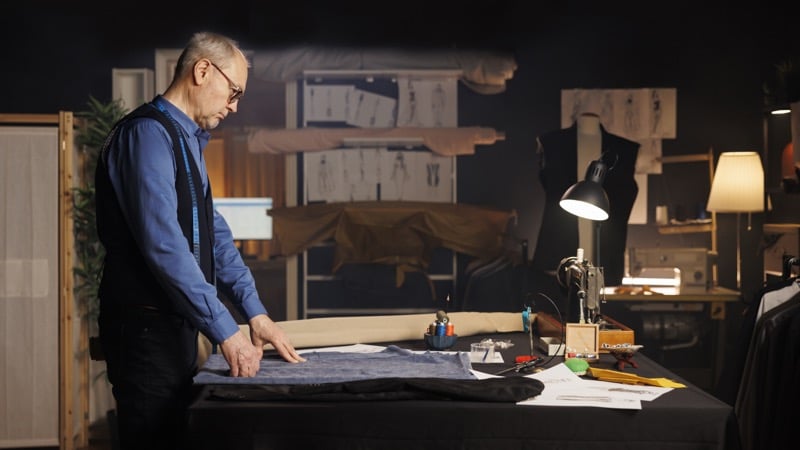
A designer can spend years learning proportion, fabrication, construction, casting, styling, and the countless judgments required to make a convincing collection. Then the label opens and another education begins, covering payment terms, inventory, receivables, tax, payroll, freight, and working capital. None of it photographs particularly well. All of it determines whether another collection gets made.
Fashion prefers the breakthrough. The important stockist. The celebrity placement. The review. The garment suddenly appearing everywhere. Those moments matter. They also create another problem. Demand has to be financed.
Labels that survive long enough to build something lasting understand that commercial momentum means little if the company runs out of money trying to service it. The clothes worked. The buyers came. The audience followed.
The bank, naturally, has a less romantic definition. For an independent designer, survival often comes down to the months between two versions of success. The moment everybody wants the collection, and the moment the money for it finally arrives. Creativity gets a label into the conversation. Cash flow determines how long it gets to stay there.