
Jeans have dressed cowboys and rock stars, but neither offers much help in a fitting room. The useful question is how your jeans feel when you sit down and how the cut works with your clothes. A good fit stays secure at the waistband, gives you room to move, and follows the intended silhouette. Skinny jeans and relaxed jeans should look different. Neither should make bending your knees a negotiation.
Quick Tips for Achieving the Perfect Jeans Fit
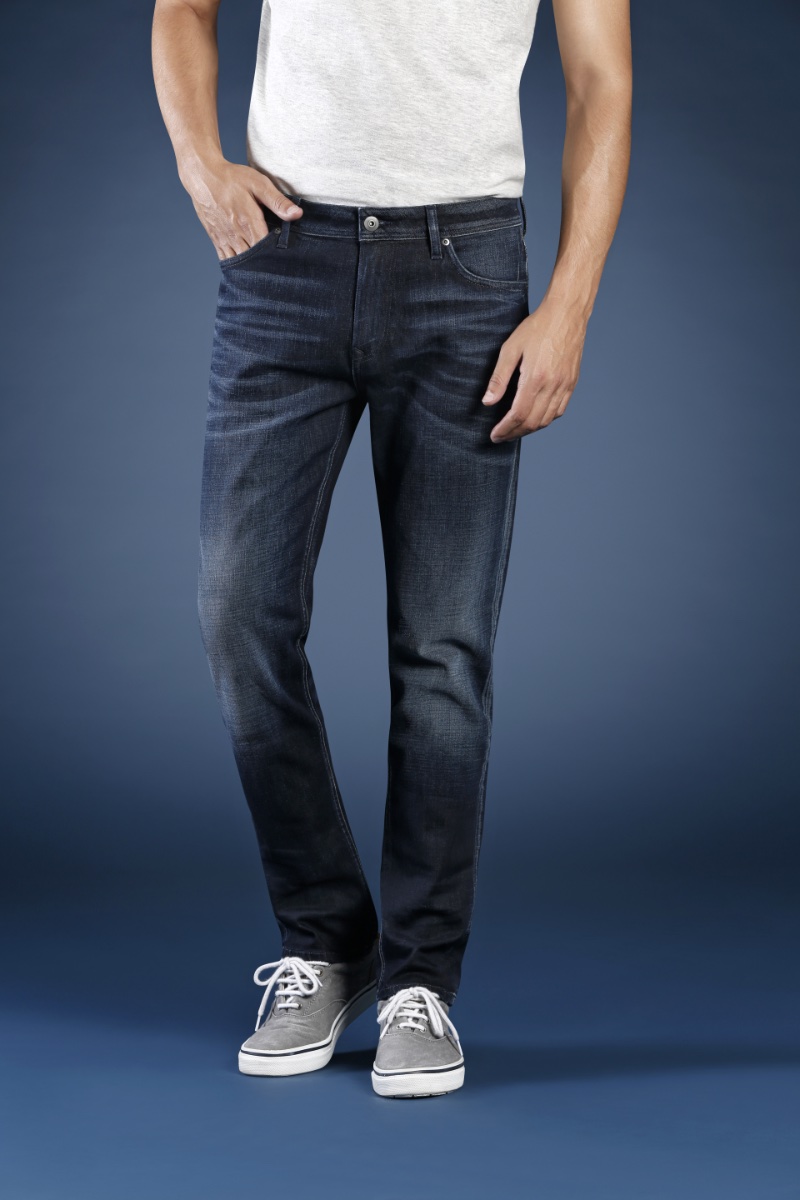
Start with the waistband and seat before judging the leg shape. Extra room through the thigh can be intentional; a waistband that slides down every few steps usually signals a sizing or cut problem.
The Two-Finger Test
Sliding two fingers inside the waistband is a rough check, not a sizing standard. Finger size, denim thickness, and the position of the waistband all affect the result. When trying on denim jeans for men, fasten them, sit down, and bend forward. The waistband should feel secure and comfortable through those movements.
Detailed Fit
- Waist: Jeans should stay at their intended position with the belt off. A belt can finish the outfit, but it should not have to gather several inches of excess fabric.
- Seat: Check for pulling across the fly and pockets. The fabric should give you room to sit; extra volume can be part of a relaxed cut.
- Thighs: Walk, sit, and bend your knees. If the fabric restricts movement, try a roomier cut before simply increasing the waist size.
- Calves: Close-fitting jeans should still let you bend comfortably. Straight and relaxed cuts can leave more space here.
- Length: Try jeans with the shoes you expect to wear. A small break is versatile, while cropped hems and deliberate stacking produce different effects.
- Cuffs: A turn-up changes the visible length and can show a selvedge edge. It does not taper the leg or correct an unsuitable cut.
How Different Jeans Styles Should Fit
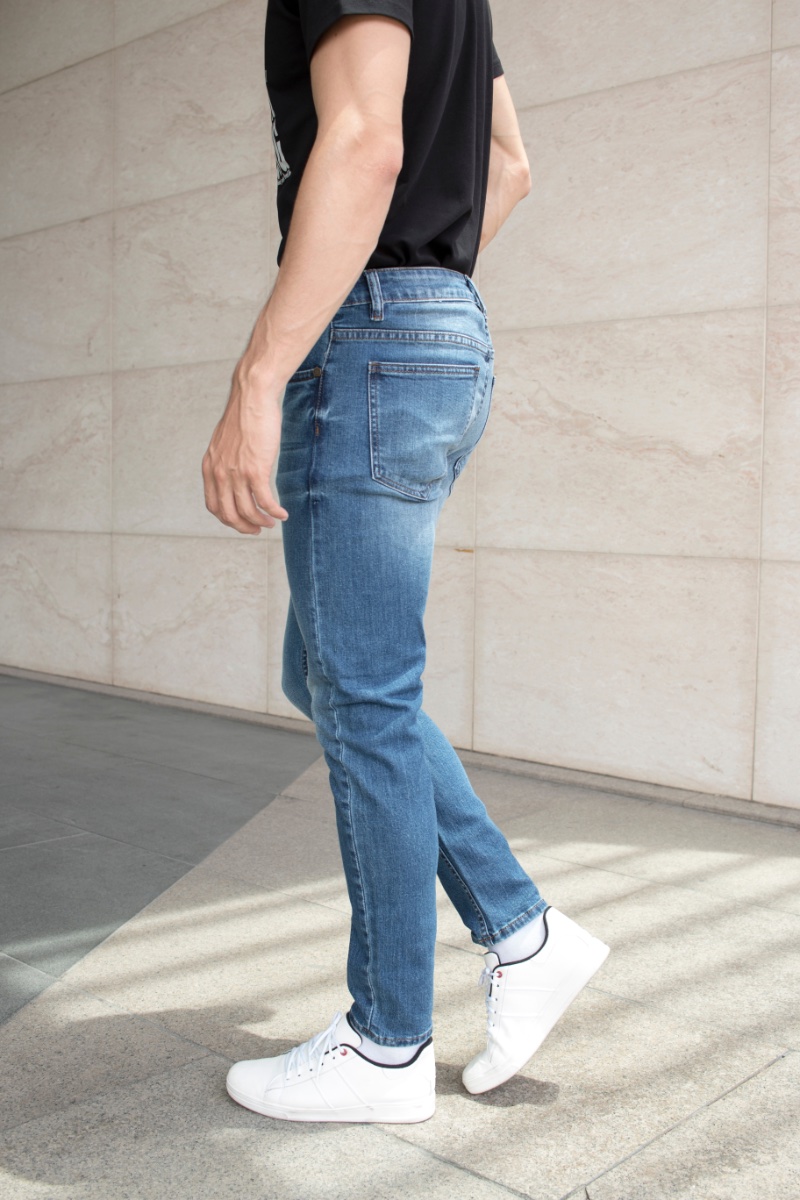
Fit names describe the intended shape, though their measurements vary by brand. Use them to narrow the search, then judge the actual jeans.
- Skinny jeans: These follow the leg closely through the thigh and calf. You should still be able to sit comfortably. Extra length creates stacking at the ankle, but it is a styling choice, not a requirement.
- Slim-fit jeans: These sit close to the leg with less restriction than skinny cuts. Many taper toward the ankle, though the amount varies.
- Straight-fit jeans: These maintain a straighter line through the leg, especially from knee to hem. They should leave enough thigh room for movement.
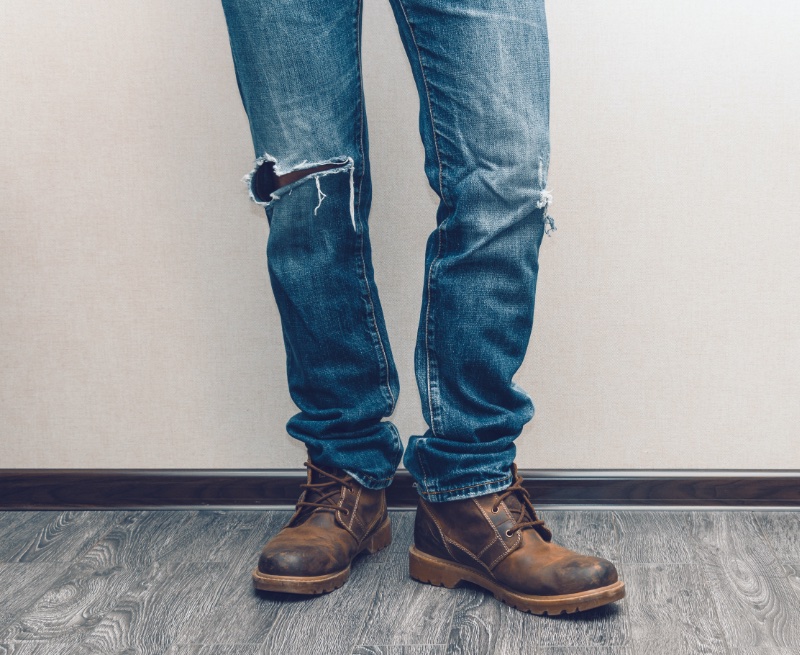
- Bootcut jeans: These widen below the knee to accommodate boots. Check that the hem falls over the boot shaft and clears the ground.
- Relaxed-fit jeans: These allow more room through the seat and thighs. That volume is part of the design; the waistband should still fit securely.
Checking Your Fit

Judge size and silhouette separately. A wide leg is not automatically too large, and a close leg is not automatically a good fit.
Jeans may be too large if the waistband repeatedly slips or the seat sags more than the cut intends. Excess length can also make an otherwise suitable pair look oversized, so try a cuff before dismissing them.
Signs that jeans are too tight include pinching at the waist, restricted movement, and persistent pulling across the fly or pockets. Try another cut if one area feels tight while another fits well. A larger size may solve the thigh problem only to create a loose waistband.
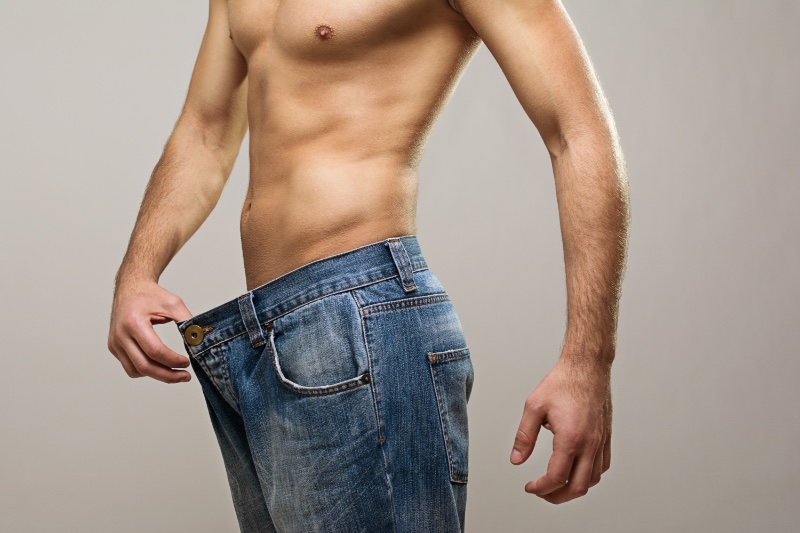
Sizing down: Do not choose a painful fit on the assumption that the denim will stretch into shape.
Sizing up: A larger size can help, but check the seat and rise as well as the waist. Buying jeans that need extensive reconstruction is rarely the easiest route.
Stretch: Denim can relax with wear, but the amount depends on the fabric and construction. Stretch denim should feel comfortable when new. For rigid or unsanforized denim, follow the maker’s specific sizing and shrinkage guidance.
Tailoring Jeans

Tailoring jeans can improve a promising fit, particularly when the length needs adjusting. It has limits, so get the rise and overall shape right before planning alterations.
- Waist adjustment: A tailor may be able to reduce a loose waistband. Larger changes can affect the pockets and seat; letting the waist out depends on available fabric.
- Hemming: Shortening jeans is a common alteration. Bring your intended shoes and discuss whether to preserve the existing hem or create a new one.
- Leg tapering: Narrowing the lower leg can reduce excess width. Ask how the alteration will affect the seams and any visible selvedge edge.
- Seat and thigh adjustments: Some excess fabric can be removed, but making tight jeans roomier is limited by the seam allowances.
- Repairs: Patching or darning can strengthen worn areas and extend the life of jeans you already like.
- Rise alterations: Changing the rise is complex and can affect the fly, pockets, and crotch. Choosing another cut is usually more practical.
- Detail changes: Replacement hardware, patches, or altered stitching can personalize jeans, though these changes do not necessarily improve fit.
- Resizing: Small adjustments may accommodate weight changes. Extensive resizing can distort the original proportions and cost more than the jeans justify.
- Individual requirements: Discuss seated comfort, fastening access, or other specific needs with a tailor experienced in those adjustments.
- Reinforcement: A tailor can reinforce areas that receive heavy wear. Address thinning fabric before it becomes a larger tear.
The Art of Proportion

Slim jeans can emphasize the volume of a bulky sweater, while wider jeans can give a short jacket a stronger outline. These are options, not rules requiring every loose garment to meet a fitted one.
Look at where your top ends and how your shoes meet the hem. A long shirt can obscure the rise; a tucked shirt makes it more visible. The same jeans can look quite different with low-profile sneakers and heavy boots.
Caring for Your Denim
Follow the care label, especially when the denim has specific shrinkage instructions. Wash jeans when they need it, using a cool cycle where recommended, and turn them inside out to help reduce surface fading.
High heat can change the fit. Air drying is a useful default when the label permits it, though it cannot guarantee that denim will retain exactly the same measurements. Check the maker’s guidance before washing raw or unsanforized jeans for the first time.
Choose the Cut Before the Alterations

Start with jeans that suit your preferred silhouette and feel comfortable through the seat and rise. Length is comparatively easy to adjust; a restrictive crotch or badly positioned waistband is a stronger reason to try another pair. The fitting-room mirror gives you one view. Sitting down gives you another. Give both a vote.