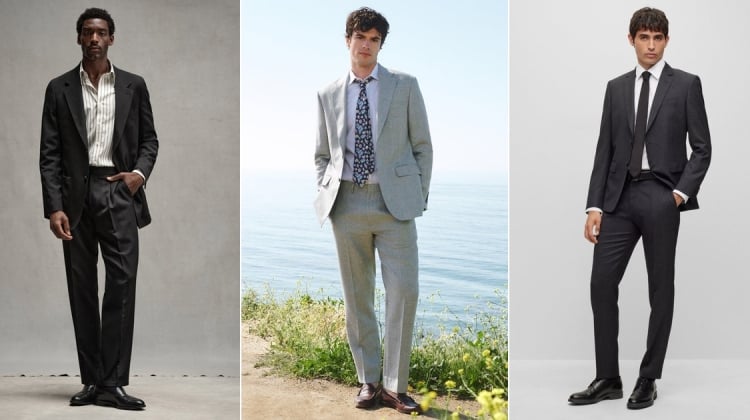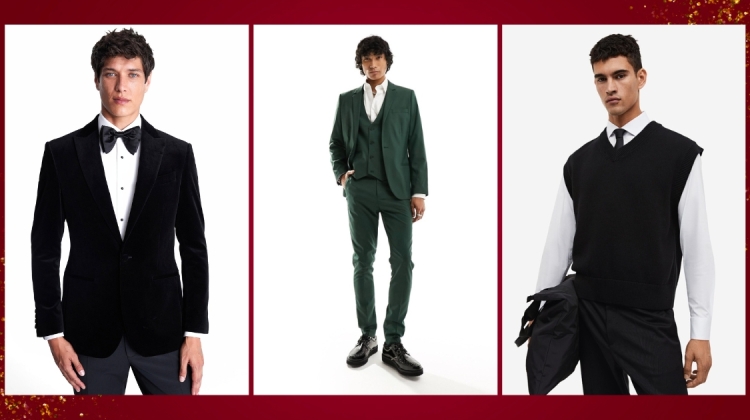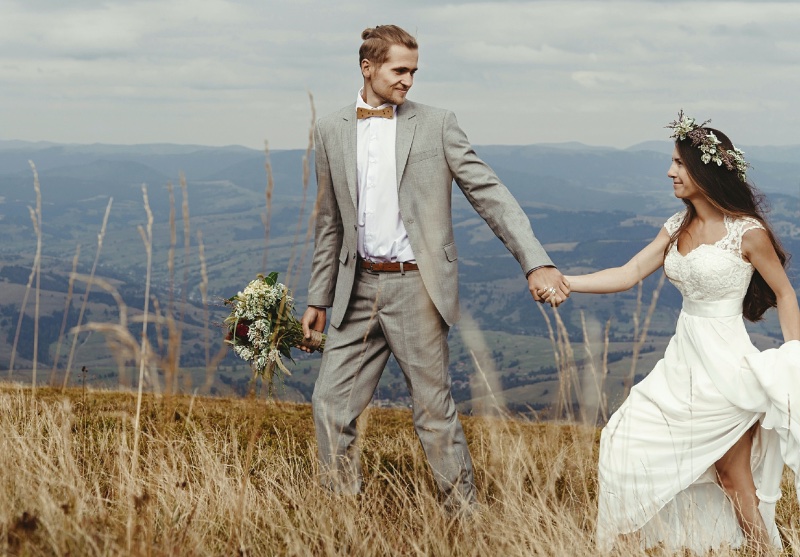
A groom’s outfit has an unusually long afterlife. The flowers disappear and the cake gets eaten, but that suit will turn up in photographs for decades. There is a temptation to dress for posterity, which can lead a man surprisingly far from anything he actually likes wearing.
The more useful ambition is to look like yourself with the occasion taken seriously. A black tuxedo can do that, as can a light summer suit. The wedding’s dress code supplies the starting point; the cut and the way you wear it give the outfit its character. It should look right beside your partner and still feel comfortable several hours into the reception.
Groom Outfits
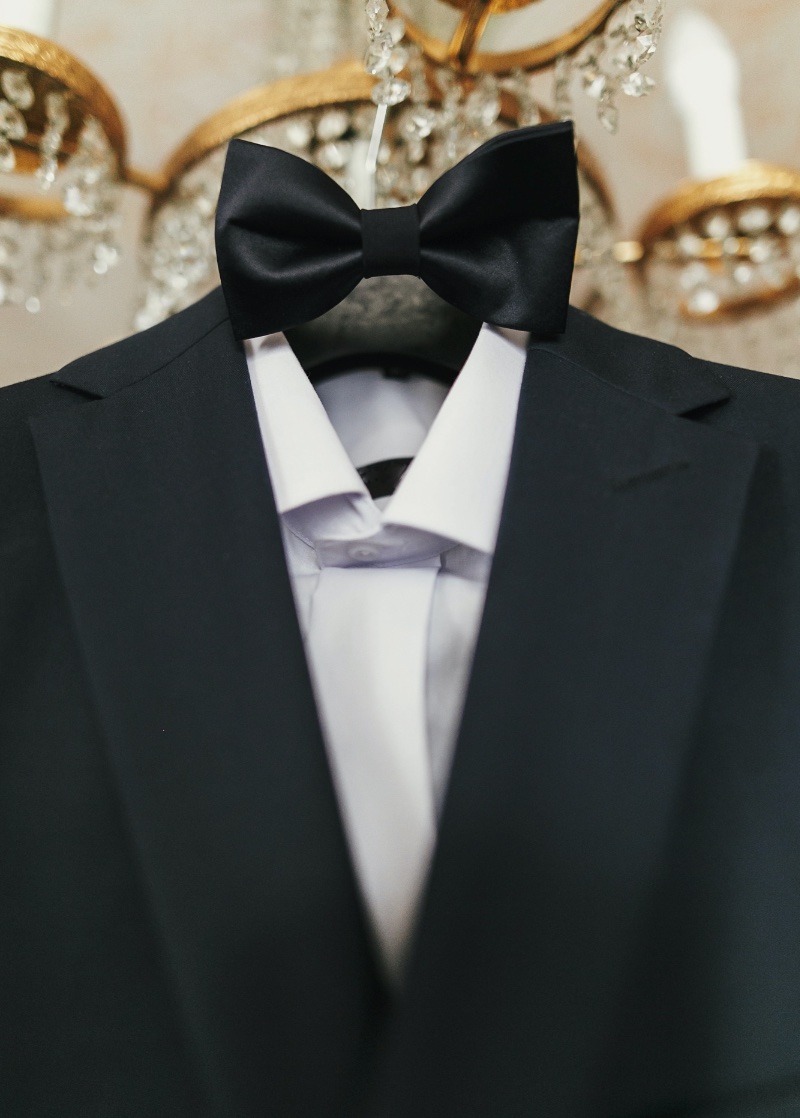
Wedding dressing becomes easier once the level of formality is settled. A tuxedo belongs to black tie, while a tailored suit answers most cocktail and semi-formal invitations. Casual weddings allow softer tailoring and separates. Color comes after that decision. A beige suit with a bow tie is still a beige suit, however enthusiastically it has been accessorized.
| Wedding dress code | Starting point for the groom |
|---|---|
| White tie | Black evening tailcoat, white waistcoat, and white bow tie |
| Black tie | Tuxedo with a formal white shirt and black bow tie |
| Formal or black tie optional | Tuxedo or a dark suit, depending on the stated dress code and timing |
| Cocktail or semi-formal | Tailored suit with a dress shirt and appropriate neckwear |
| Casual | Relaxed suit or coordinated jacket and trousers suited to the setting |
“Formal” is the slippery term. Some couples mean eveningwear; others mean a dark suit and tie. As the groom, you have a say in the distinction, so make the invitation reflect what you intend to wear. Traditional daytime morning dress follows its own conventions and is separate from evening white tie.
The Black Tuxedo
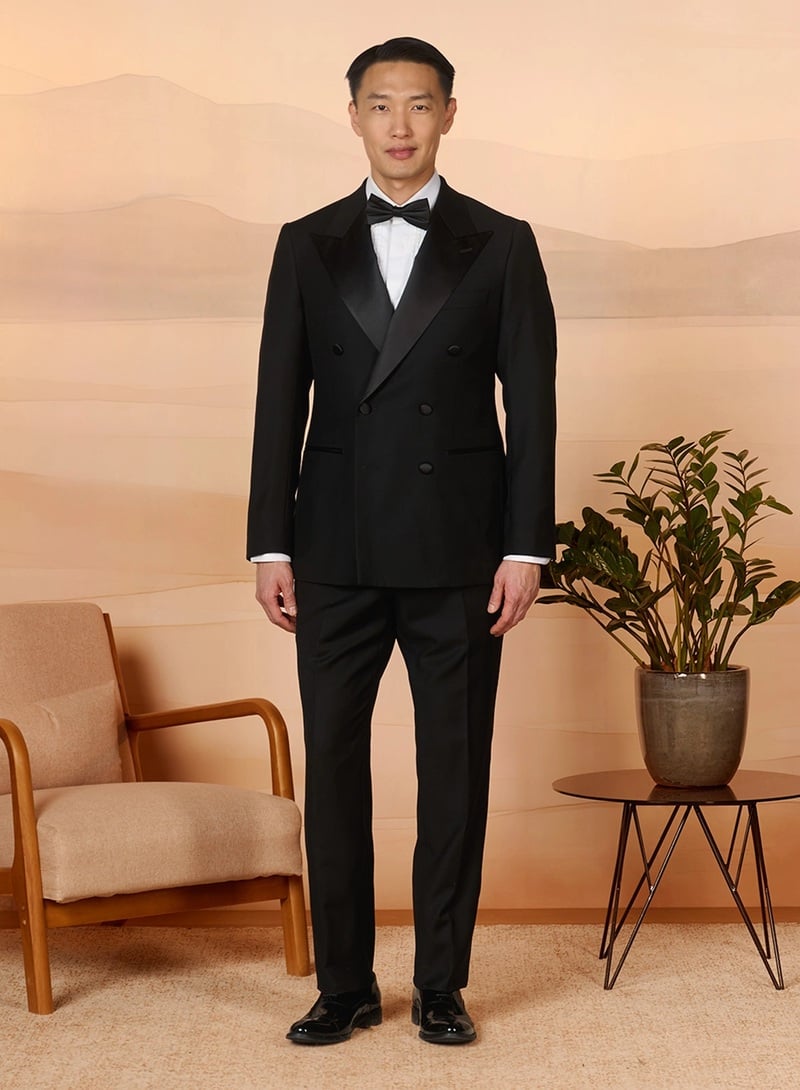
For an evening wedding with a black tie dress code, a black tuxedo gives the groom a silhouette with a sense of occasion built into it. Silk-faced lapels catch the light against the matte cloth, while a white shirt draws attention to the face. Much of its appeal comes from those few controlled differences.
Spier & Mackay’s double-breasted version gives the chest breadth through wide peak lapels, then draws the jacket in at the waist. The effect is assertive enough that a black bow tie and patent shoes finish the thought. When the jacket is fastened, its overlapping front also covers the waistband, so a separate waist covering is generally unnecessary.
The Blue Tuxedo
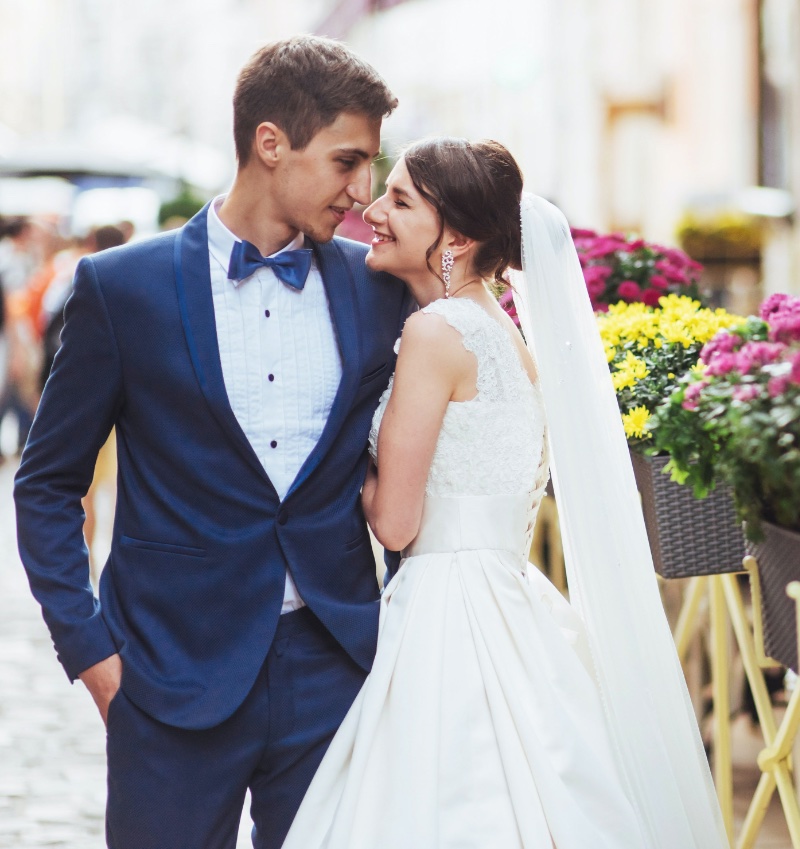
Blue brings a more expressive quality to the tuxedo. Here, black lapels frame the white shirt and keep the jacket tied to evening dress, while the blue bow tie takes a more individual turn. For a traditional black-tie wedding, a black bow tie would give the outfit a firmer connection to the convention. The distinction is useful when deciding how much of the dress code you want to reinterpret.
The Navy Three-Piece Suit
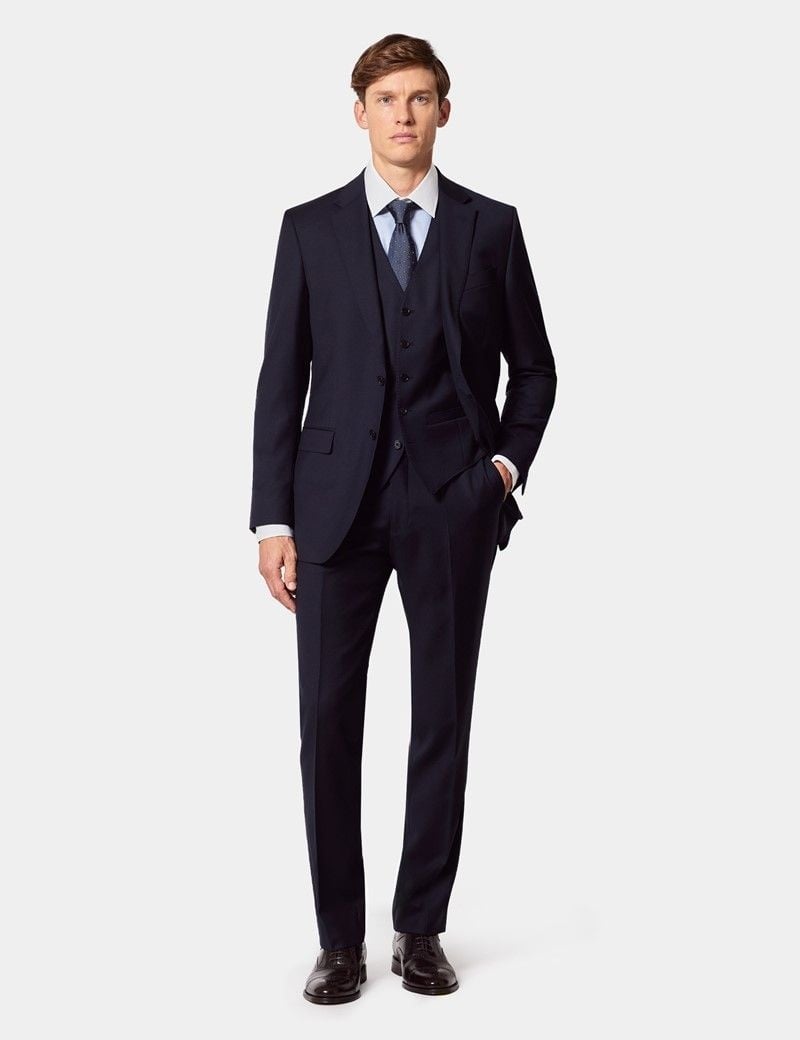
A suit in navy is often the sensible purchase, especially for a man who wants to wear it again. A matching waistcoat gives that practical decision a ceremonial quality. It also means taking off the jacket at the reception feels like a change of pace, with the outfit still intact beneath it.
The Hawes & Curtis look stays within a close range of blues, creating a continuous line through the body. A white shirt would make it more emphatic; light blue softens the transition into the navy. The waistcoat should meet the trouser waistband, and the jacket needs to close comfortably over both layers. A strip of shirt showing at the stomach quickly interrupts the effect.
The Sage Suit
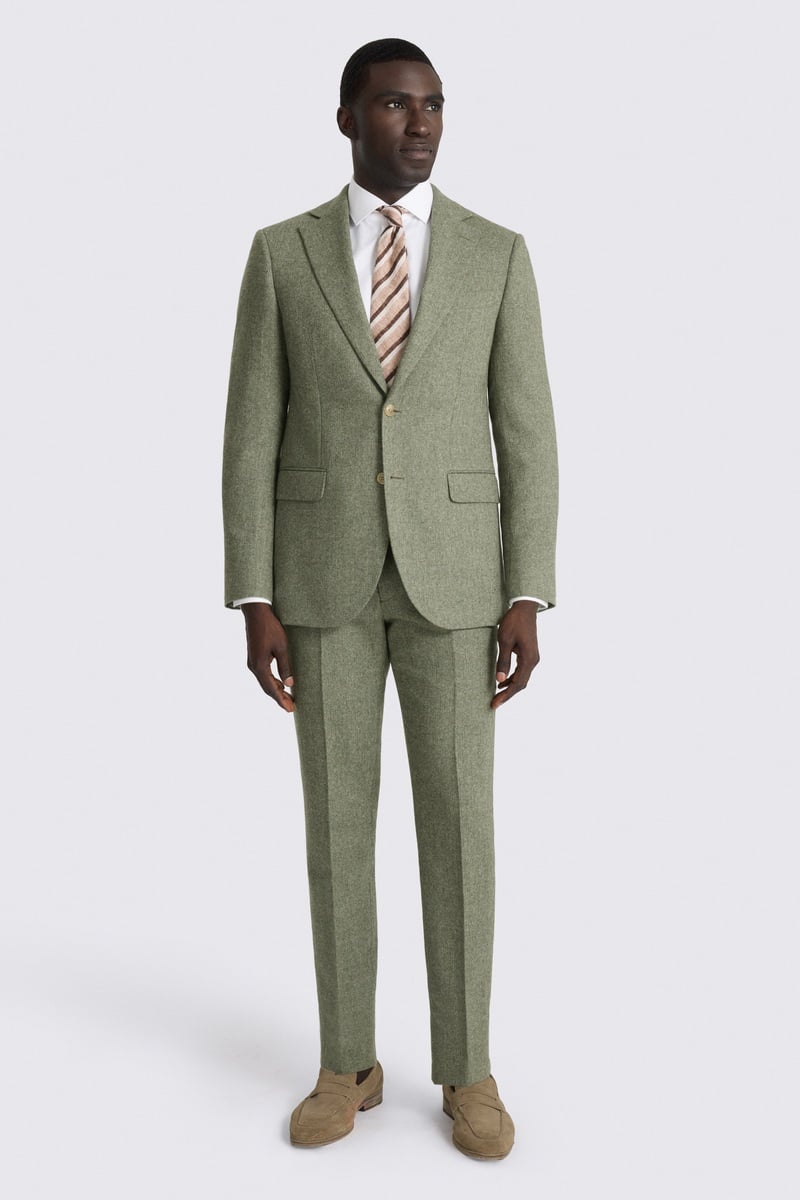
Sage gives a wedding suit individuality at a relatively low volume. It has a natural affinity with a daytime garden setting, but the traditional cut keeps the color from becoming the whole story. This is a useful approach for the groom who wants something more personal than navy and still enjoys looking conventionally dressed.
The herringbone in this Moss suit gives the green some depth. Its white shirt and striped tie bring definition to the softer cloth, while suede loafers make sense of the relaxed setting. Leather Oxfords and a quieter tie would take the same suit in a dressier direction. That flexibility is part of the attraction of choosing color within a traditional silhouette.
The Light Gray Suit
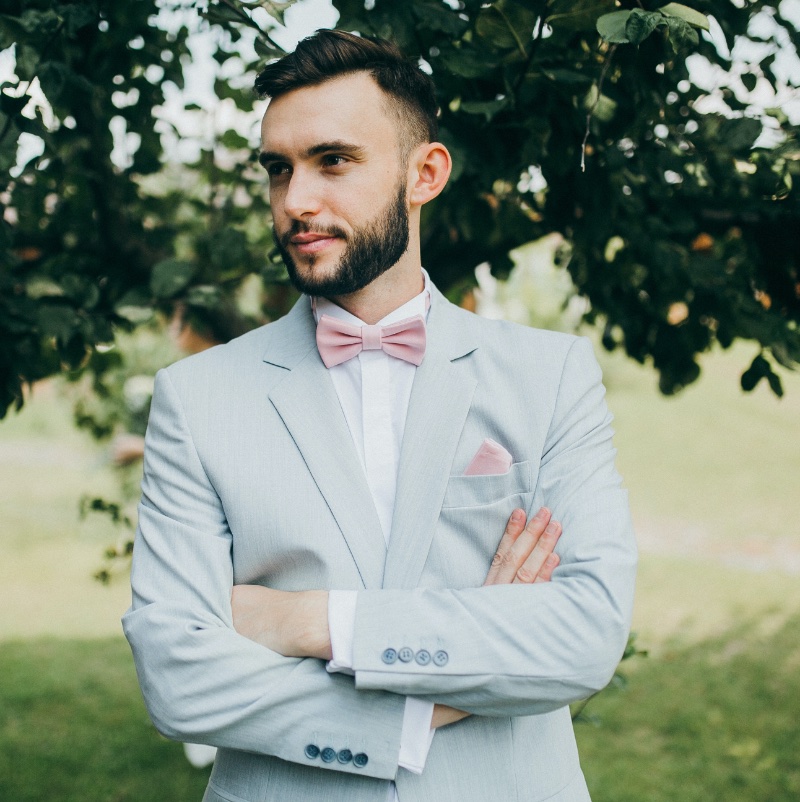
Light gray has an easy relationship with daylight. At a garden ceremony or city wedding, it lets the shirt and neckwear register clearly, which is useful when the groom wants to pick up a color from the flowers. Pink works especially well against it, bringing warmth to the cooler cloth.
A pocket square can continue that conversation through a secondary color or a different texture. Exact tie-and-square sets tend to make the decision look prepackaged. A little variation gives the outfit more of its wearer’s hand.
The Beige Summer Suit
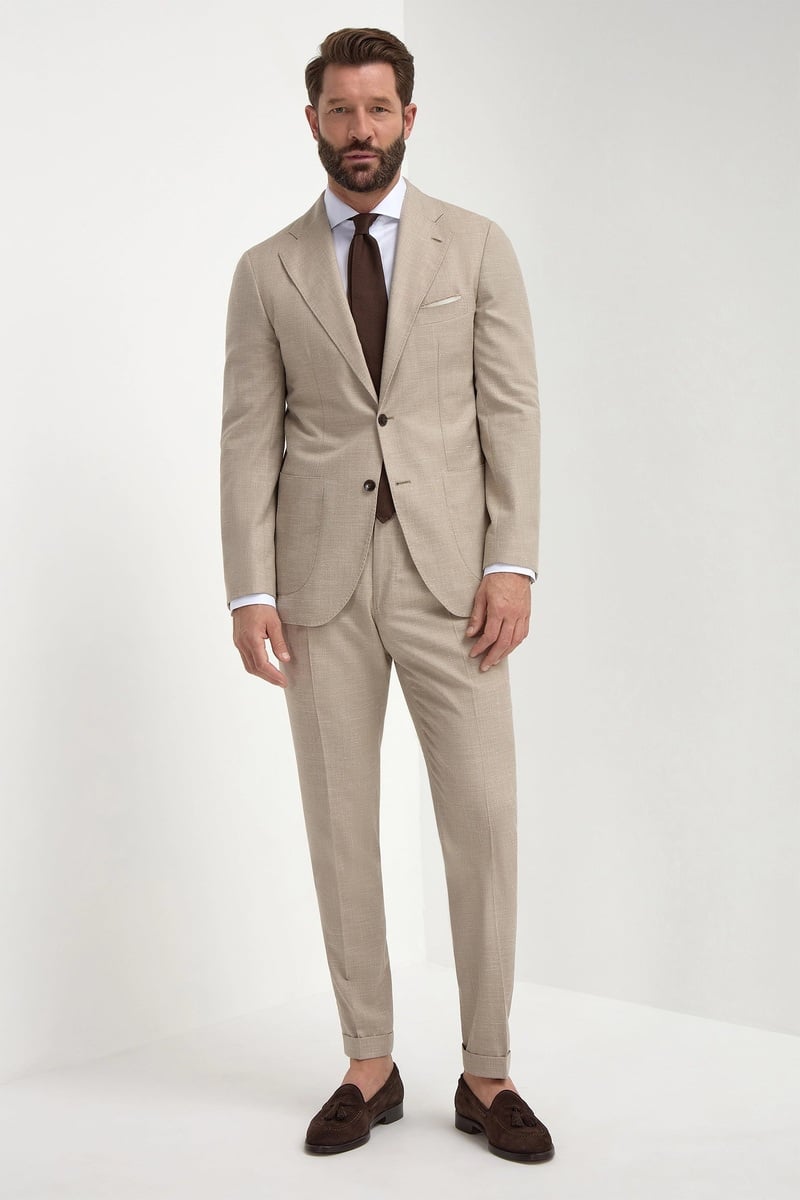
Beige tailoring has a relaxed association that can be useful at a summer wedding. The ceremony still deserves a degree of dress, and Pini Parma’s wool-silk-linen suit gets there through its shape and accessories. A white shirt gives the textured cloth definition, with the brown tie and tassel loafers adding depth to the light palette.
This is a convincing option for a daytime garden or destination wedding where a tie belongs. The trousers are as important as the jacket here. Their short hem and turn-ups make a feature of the loafers, so check the length while sitting as well as standing. The wedding photographs will include both.
The Winter Wedding Suit
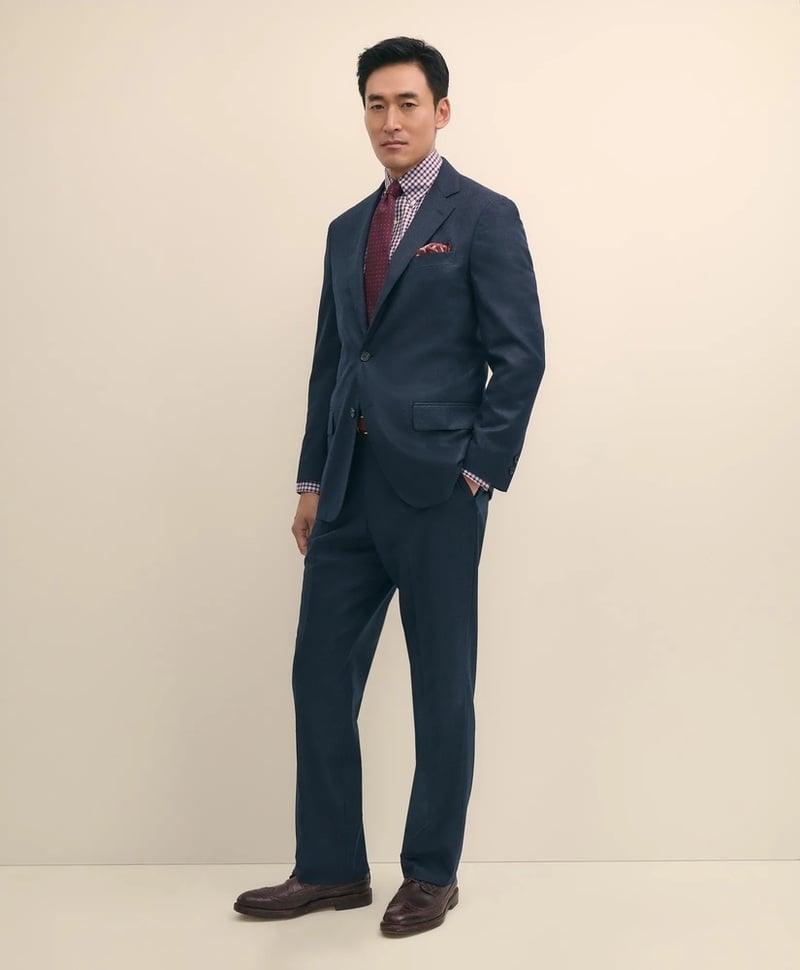
Winter gives the groom a reason to enjoy the heavier end of tailoring. Flannel has a soft surface that suits the season, while a textured waistcoat can change the character of an otherwise straightforward navy or charcoal suit. The appeal of fall wedding suits often lies in that fabric choice as much as the color.
Brooks Brothers’ navy flannel suit takes a relaxed approach to the body, with natural shoulders and a straighter jacket front. The checked shirt and burgundy tie give it a collegiate character suited to an informal winter celebration. A white shirt would make the same suit feel more ceremonial, particularly with a silk tie.
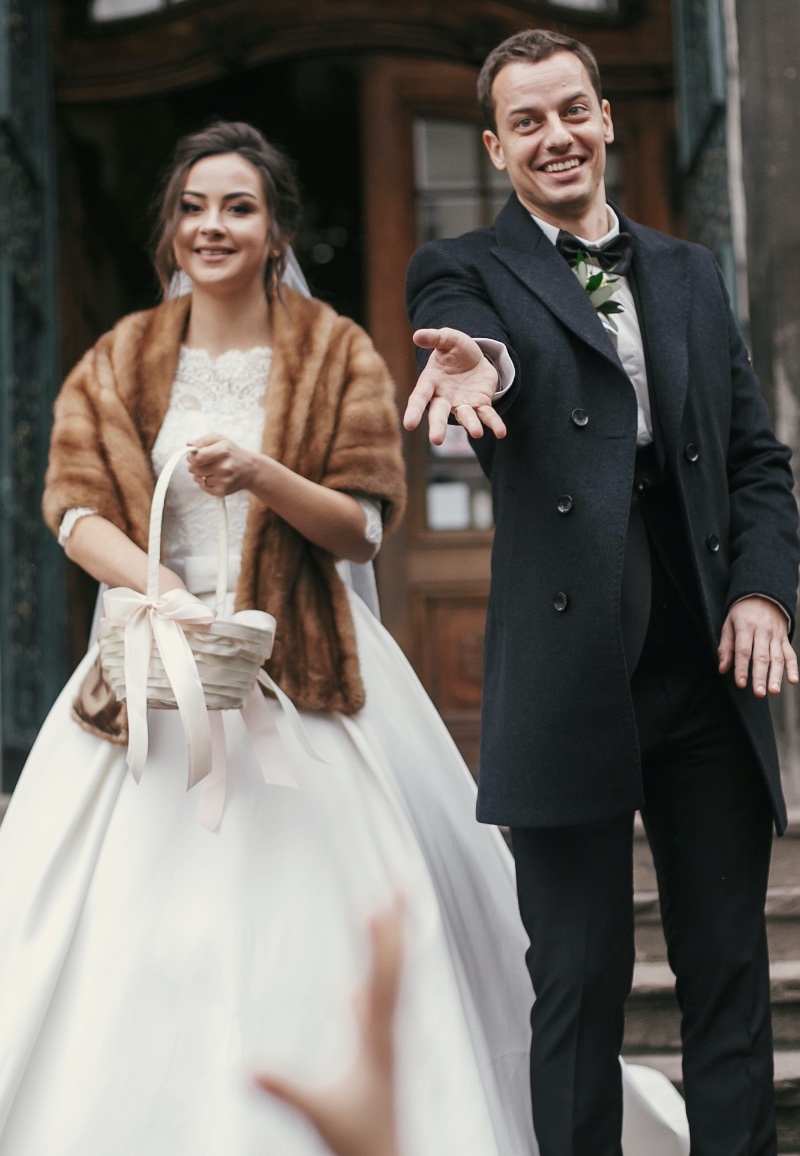
An overcoat will become part of the wedding outfit as soon as the photographs move outdoors. Give it the same attention as the suit, with enough space for the jacket beneath and a length that covers it properly. Trying both together is more useful than discovering on the day that the coat was bought for a sweater.
White Tie
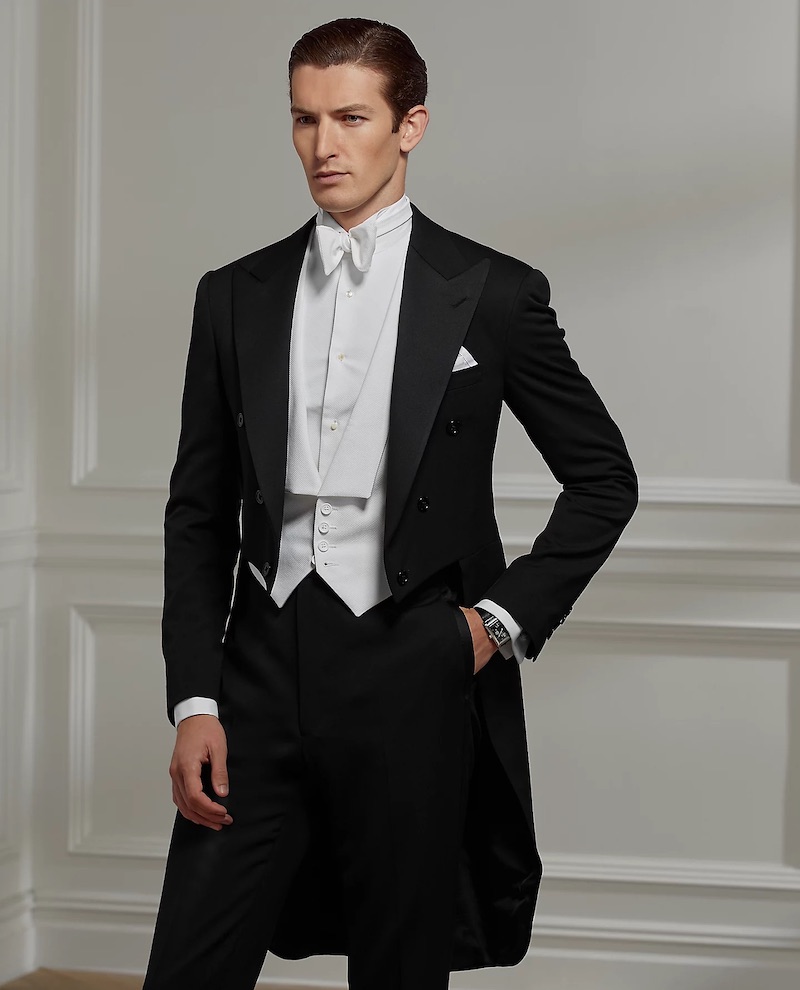
White tie is a more exacting commitment to formal dress. The evening tailcoat is worn with matching trousers, a formal white shirt, white waistcoat, and white bow tie. In the Ralph Lauren example, the short coat front makes the fit of the waistcoat particularly visible. This is an outfit for a specialist fitting, where the relationship between the pieces can be judged together.
Casual Groom Attire
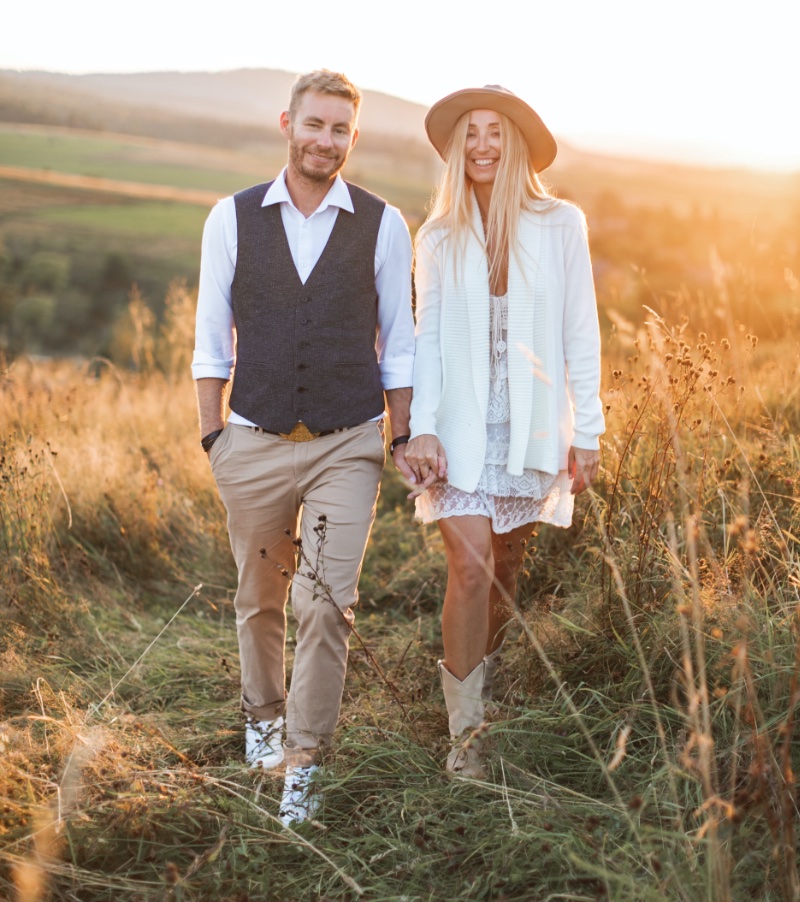
The casual groom has more freedom and fewer ready-made answers. A soft suit and open-collar shirt can feel entirely appropriate for a courthouse ceremony followed by lunch. A country wedding might allow a waistcoat and tailored trousers, provided the rest of the celebration is dressed at the same level. The clothes should make the occasion legible, even at its most relaxed.
An open collar puts more responsibility on the shirt. It needs to sit securely inside the jacket and hold its shape as you move. Leather or suede loafers finish this type of outfit naturally, giving the tailoring a relaxed foundation that still feels dressed for the day.
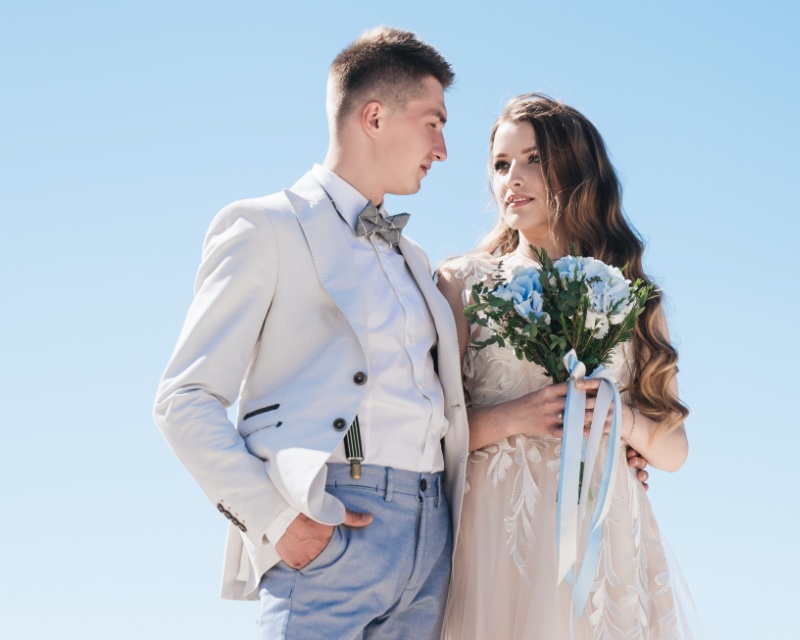
Beach weddings make the setting impossible to ignore. Linen and lightweight wool offer two different approaches to the heat, with the choice depending on how relaxed the suit should look. Summer wedding style also has to account for the reception. Shoes that work on the sand may feel less convincing at dinner, so consider the full itinerary before settling on them.
Fabric, Fit & Color
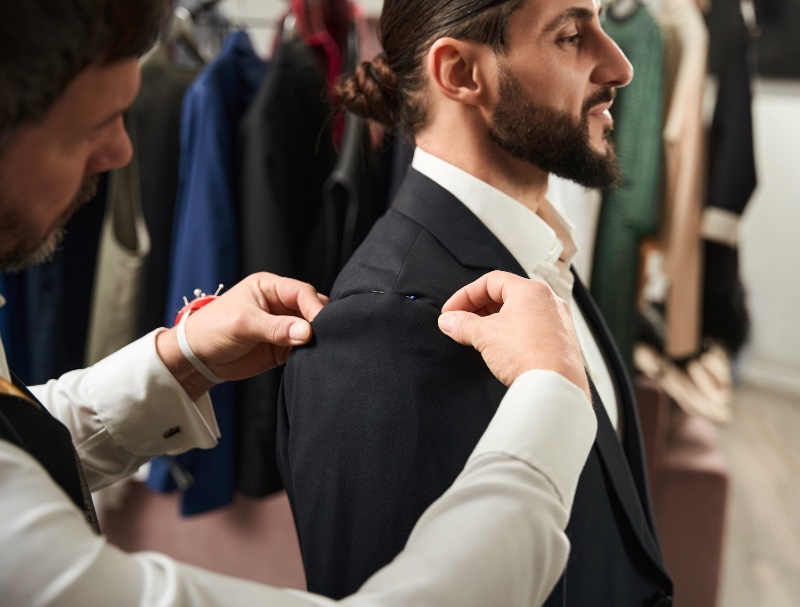
A fitting can flatter a man who stands perfectly still. Weddings involve considerably more movement. Sit in the trousers, fasten the jacket, and see what happens when you raise your arms. The collar should follow the neck and the jacket front should lie smoothly when closed. Bring the shirt and shoes you will actually wear so the sleeve and trouser lengths can be judged in context.
Think about the temperature of the reception as well as the ceremony. Heavy cloth chosen for winter photographs can become a commitment once the dancing starts. In summer, lining and construction matter alongside the fiber on the label. Linen develops creases as the day goes on; lightweight wool tends to keep a smoother line. Choose the appearance you will enjoy living in.
Coordinating with Your Partner & Groomsmen
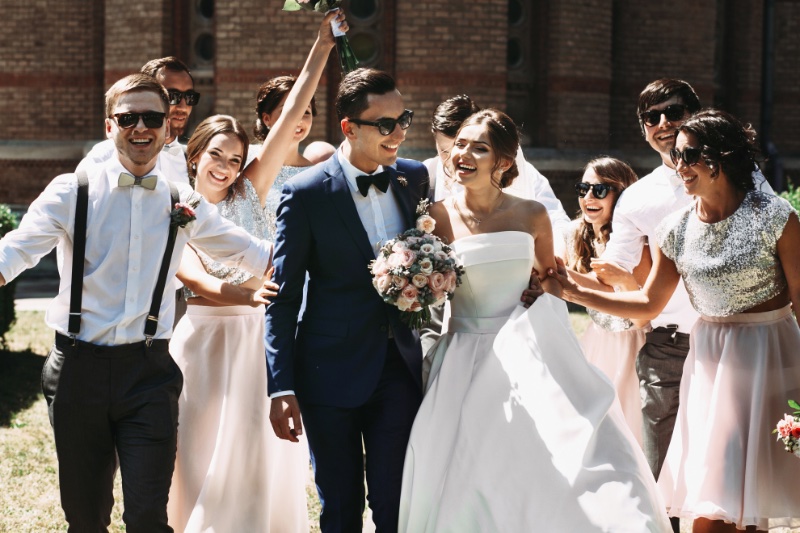
The most useful conversation with your partner is about formality. Two outfits can be very different and still look as though they belong at the same wedding. Texture and silhouette give each person a point of view, while a small shared accent can connect them. The palette used in invitations or save the date templates can supply that connection through flowers or neckwear.
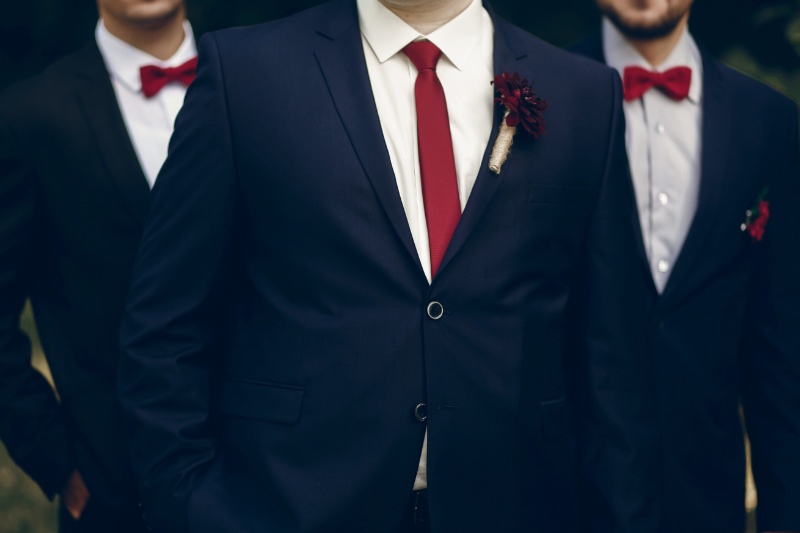
The groom can wear a different suit from the groomsmen and remain part of the group. A related color family or shared cloth provides continuity, leaving a waistcoat or different tie to distinguish him. There is usually more style in one clear distinction than in giving the groom an entirely separate dress code.
Groom Shoes & Accessories
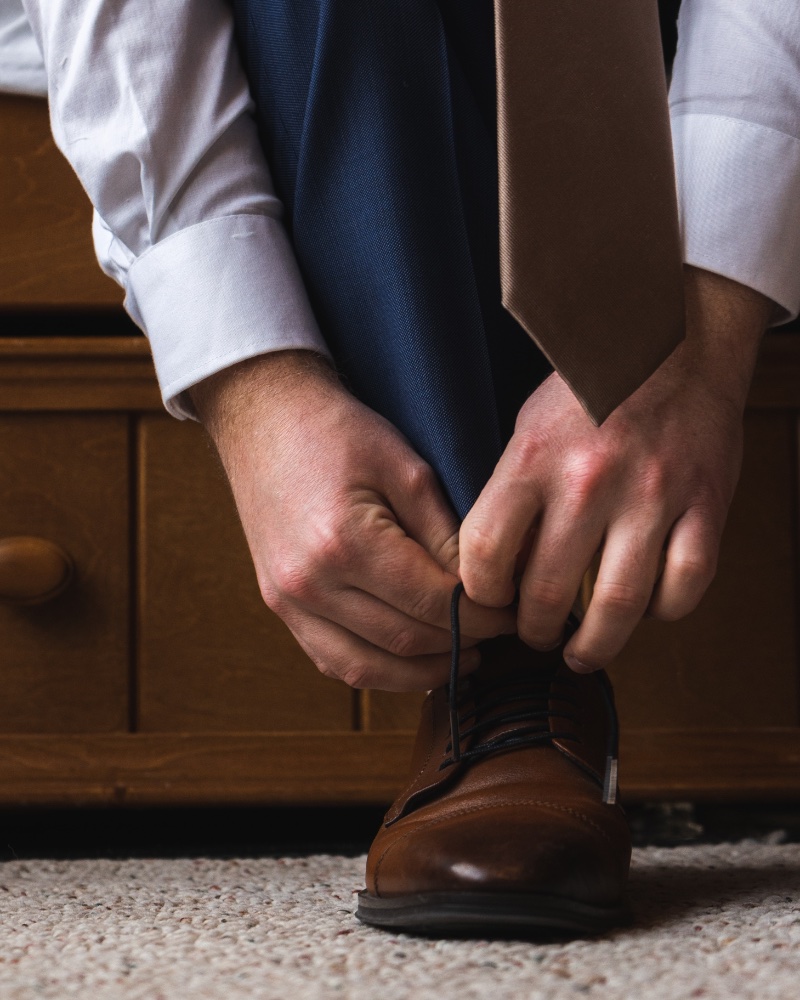
The shoes reveal how seriously the rest of the outfit should be taken. Patent shoes finish traditional black tie, while leather Oxfords give a suit a dressier foundation. Derbies and loafers can bring a more relaxed quality when the setting allows. Wear the shoes before the wedding and have the trousers fitted over them. A handsome pair loses some of its appeal by the fourth hour if you can barely stand in it.
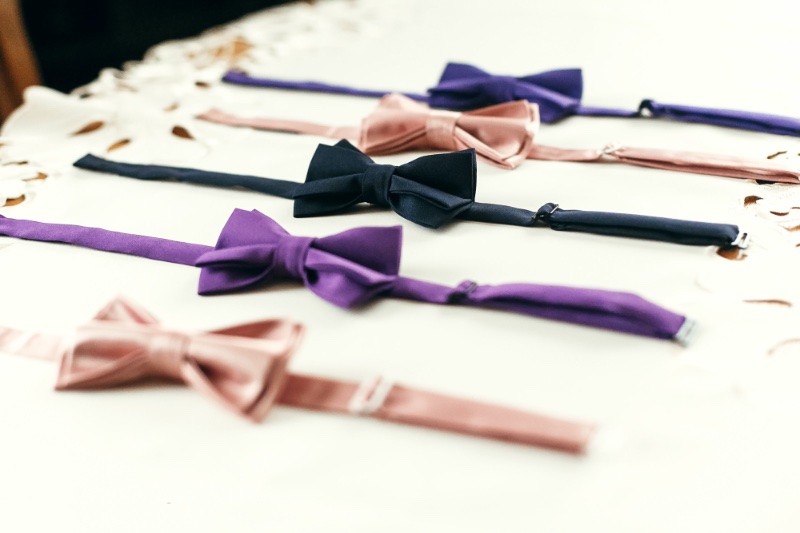
Choose groom accessories once the tailoring is settled, so the details answer the outfit. Suit trousers with belt loops can take a belt; side adjusters or braces offer other ways to secure the waist. Cufflinks depend on the shirt cuffs. With a suit, a tie’s small pattern or textured weave can introduce a wedding color more subtly than a large block of matching satin.
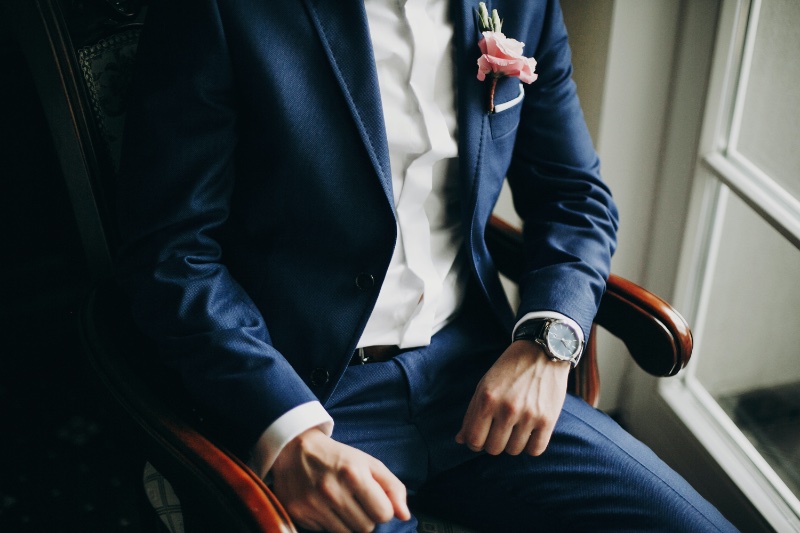
A boutonniere belongs on the left lapel, with its size kept in proportion to the jacket. It gives the flowers a place in the outfit, while inherited cufflinks or a sentimental watch bring a different type of connection. Those objects can make the clothes feel personal long before anyone notices a monogram.
The Final Fitting & Wedding Morning
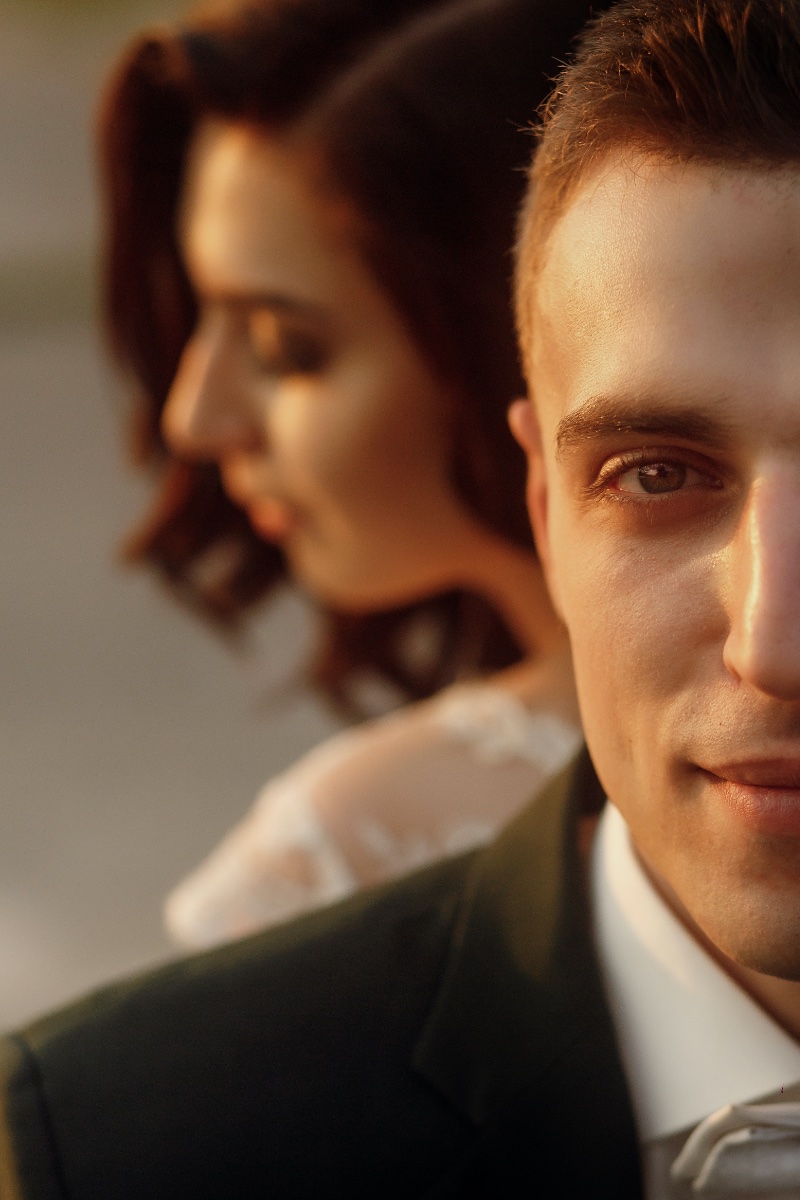
Try on the complete outfit once the alterations are finished. The shirt should work with the neckwear, and every small piece should be accounted for. A fresh haircut is worth timing around the way your hair normally behaves, especially after a change in length. The wedding morning is a demanding moment to discover a new styling routine.
Set the accessories out in advance and allow enough time to dress at a human pace. Once the ceremony starts, the clothes have done their part. Being able to sit comfortably through dinner and stay on the dance floor is a more useful final test than another minute in front of the mirror.