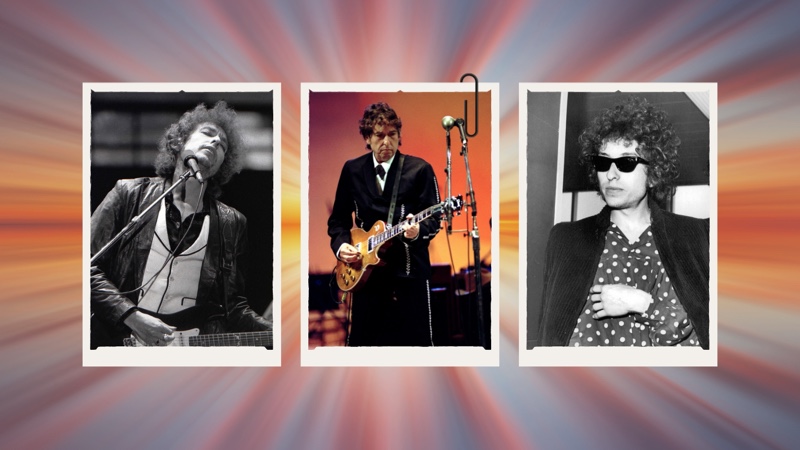
Bob Dylan’s wardrobe has outlasted every musical era he passed through. Specific garments from across his career have re-entered menswear as standalone reference points, worn by men who engage with them entirely on visual terms. Dylan’s style across more than sixty years of public life is coherent enough to stand as its own argument about the relationship between clothes and the self, each major wardrobe change arriving alongside a musical evolution.
Bob Dylan Fashion Through the Decades
Bob Dylan’s style across six decades amounts to one of the most thoroughly documented personal wardrobes in music history. The photographs that follow each major period show a man who used clothes the way he used chord changes, as a signal that one version of himself was closing and another was opening. From the plaid flannel of Greenwich Village to the embroidered Western suits of his late career, each era of Bob Dylan style produced a visual identity distinct enough to stand on its own.
Bob Dylan’s 1960s Style: Folk, Beatnik & the Suede Jacket Look
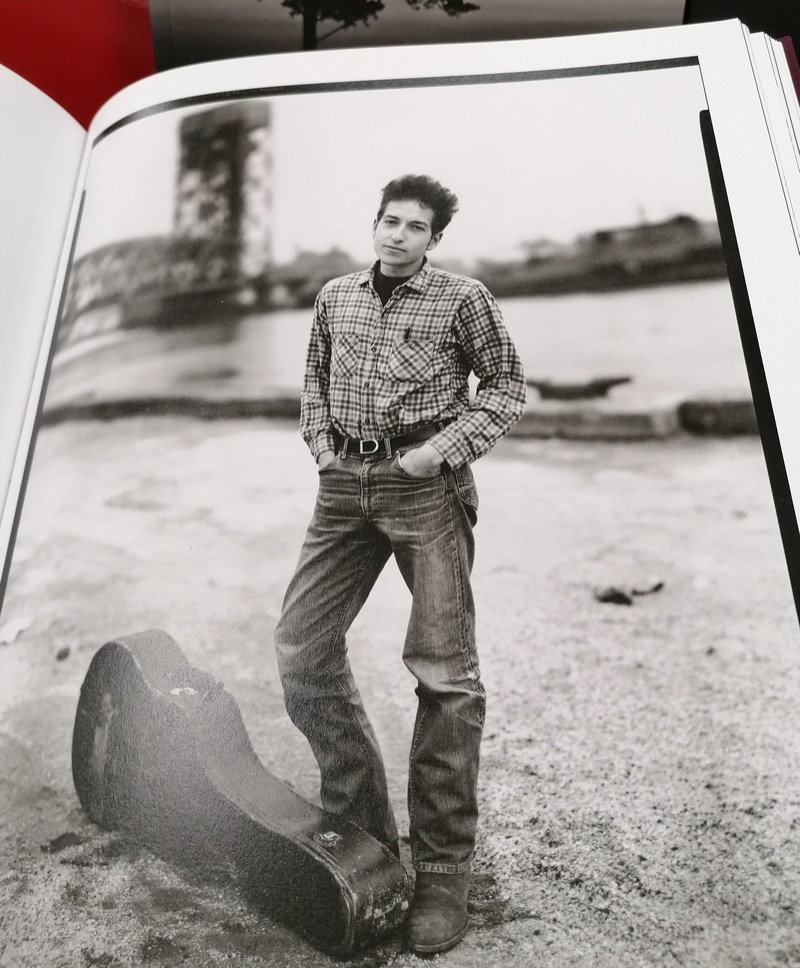
When Dylan arrived in Greenwich Village in 1961, he dressed to place himself inside a tradition. The plaid flannel shirt, straight-leg jeans, and work boots of the early photographs declared the lineage he was claiming, work clothes aligned with folk musicians who had come before him.
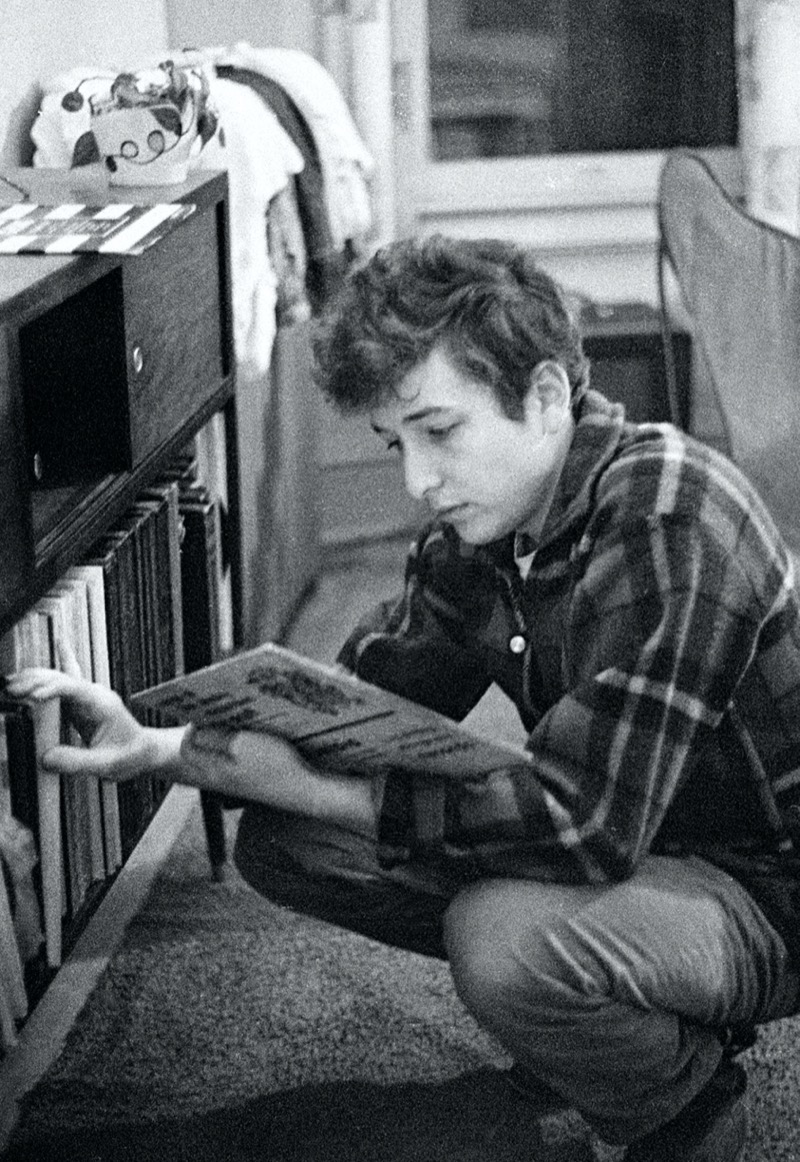
Crouching with a record in his hand, attention on the sleeve notes, he wore the same working-man plaid indoors that he wore on stage, the folk persona as consistent in an unguarded interior as it was in public. At that stage of his career, the costume and the person had not yet separated.
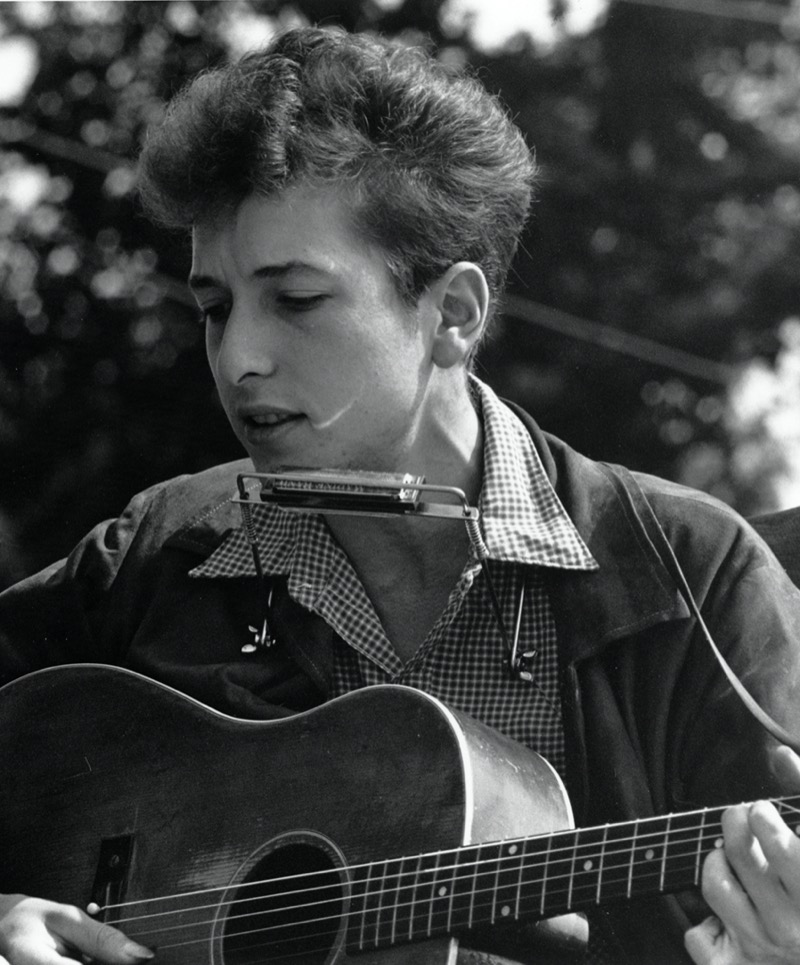
A 1963 photograph from the Civil Rights March shows a suede jacket open over a checked shirt, guitar in hand, harmonica rack around his neck. That jacket placed him in the visual lineage of Woody Guthrie as directly as any lyric he performed that day, and it produced one of the defining images of early-60s male style in the process.
Its appeal came from the same source as the music, work clothes that predated the Village scene by decades and belonged to no fashion moment the scene could absorb.
The beatnik crowd in Greenwich Village dressed in dark turtlenecks and projected a downtown intellectual posture. Dylan’s early wardrobe had stayed in the folk tradition, but the two scenes ran alongside each other in Greenwich Village long enough for the crossover to show in his dress.
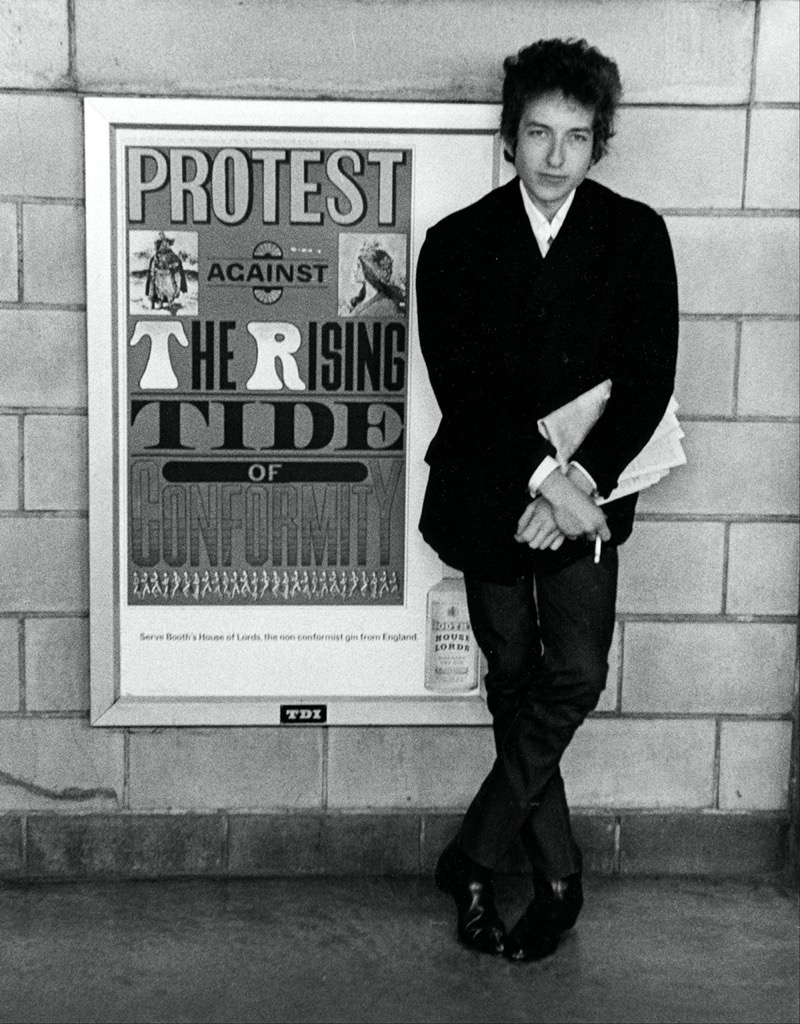
A photograph from around 1963-64 makes that crossover plain. Dylan stands next to a poster bearing the phrase “Protest Against the Rising Tide of Conformity,” in a dark single-button blazer, narrow trousers, Chelsea boots, and a white collared shirt. The mod silhouette spreading from London into New York that year had arrived in his wardrobe, the jacket cut close, the trousers tapering. The suede jacket had been a costume for one identity. This was another.
Bob Dylan’s Polka Dot Shirt & the 1966 Style Shift
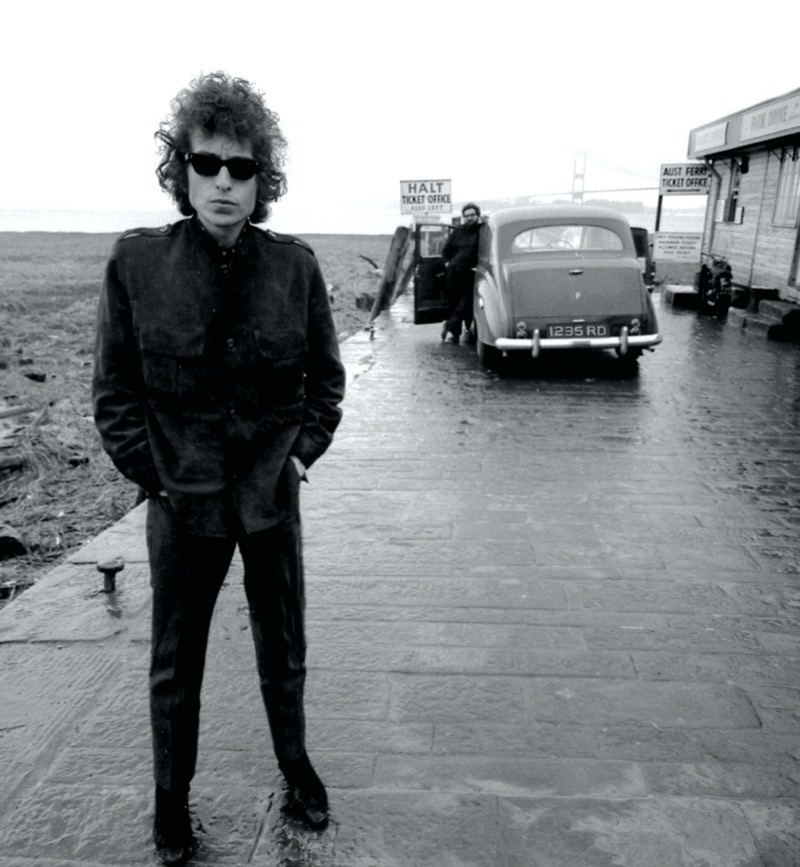
Dylan stands at a rain-soaked British ferry crossing in a late-1960s photograph, in an all-black outfit, a close-fitted dark jacket over narrow trousers and ankle boots, hands deep in his pockets. The hair is already a halo of curls, the sunglasses already closing off the face. The jacket, fitted close with epaulette-style shoulder details, takes a cut that places it a long way from the plaid of 1962.
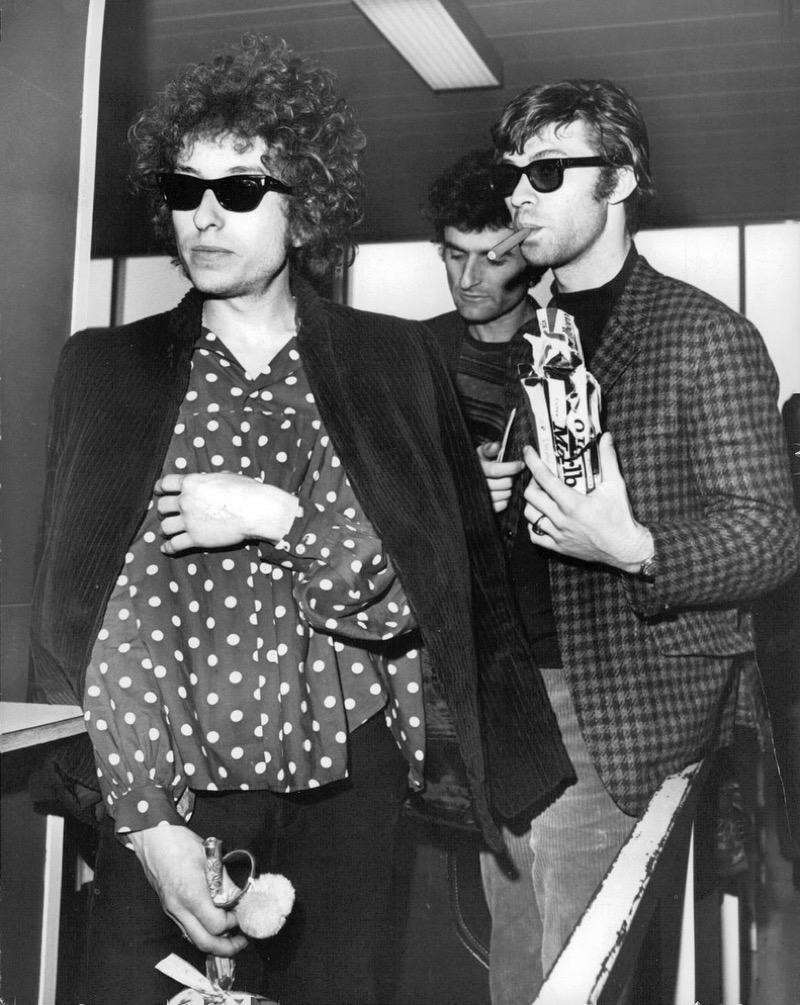
Dylan had gone electric at Newport in 1965 and spent the months that followed building a visual identity to match the music’s new register. The oversized shirt, the halo of curls, the dark glasses, and the corduroy worn open arrived in photographs at the same moment the acoustic folk era closed, and the timing was close enough that the image and the rupture became inseparable in the record.”
Bob Dylan’s Rolling Thunder Outfits & Desire Era Look (1975-1976)
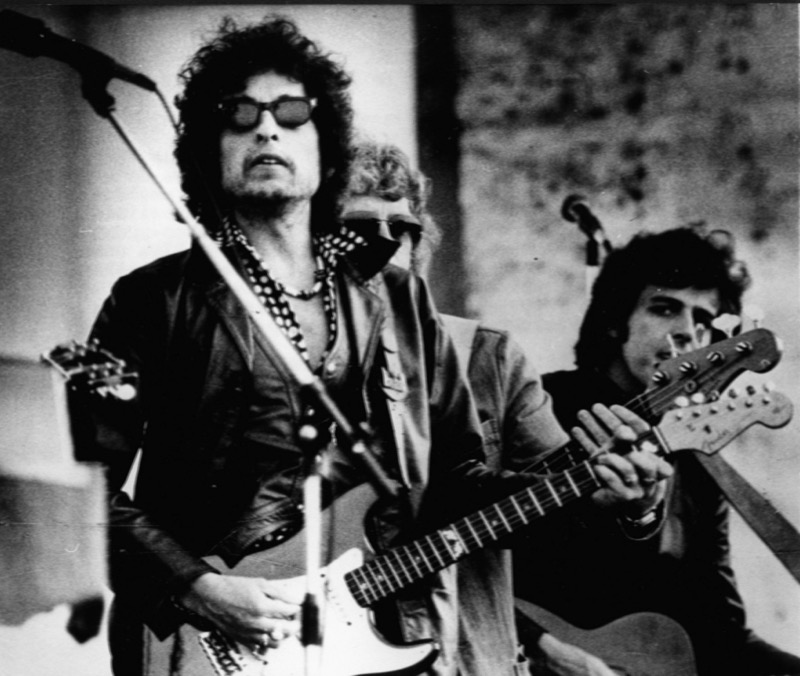
By 1975, Dylan’s style had become openly theatrical. On stage that year, a dark leather jacket, large dark sunglasses, and a halo of wild curls produced a figure assembled from rock performance and American carnival tradition.
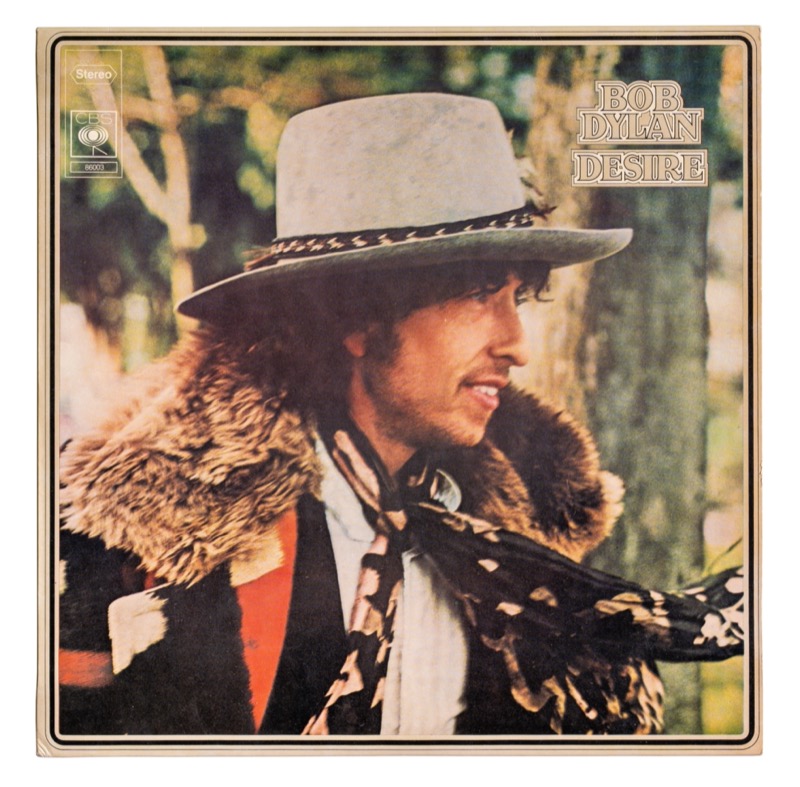
The Desire album cover (1976) is the clearest single image of this period. The wide-brim hat, the fur-trimmed coat collar, and the patterned scarf stacked over each other belong to a visual tradition too layered to fit any single genre. The American road troubadour and something closer to Romany wanderer imagery sit in the same frame, a combination that could not have been assembled from the wardrobe of folk, rock, or country alone.
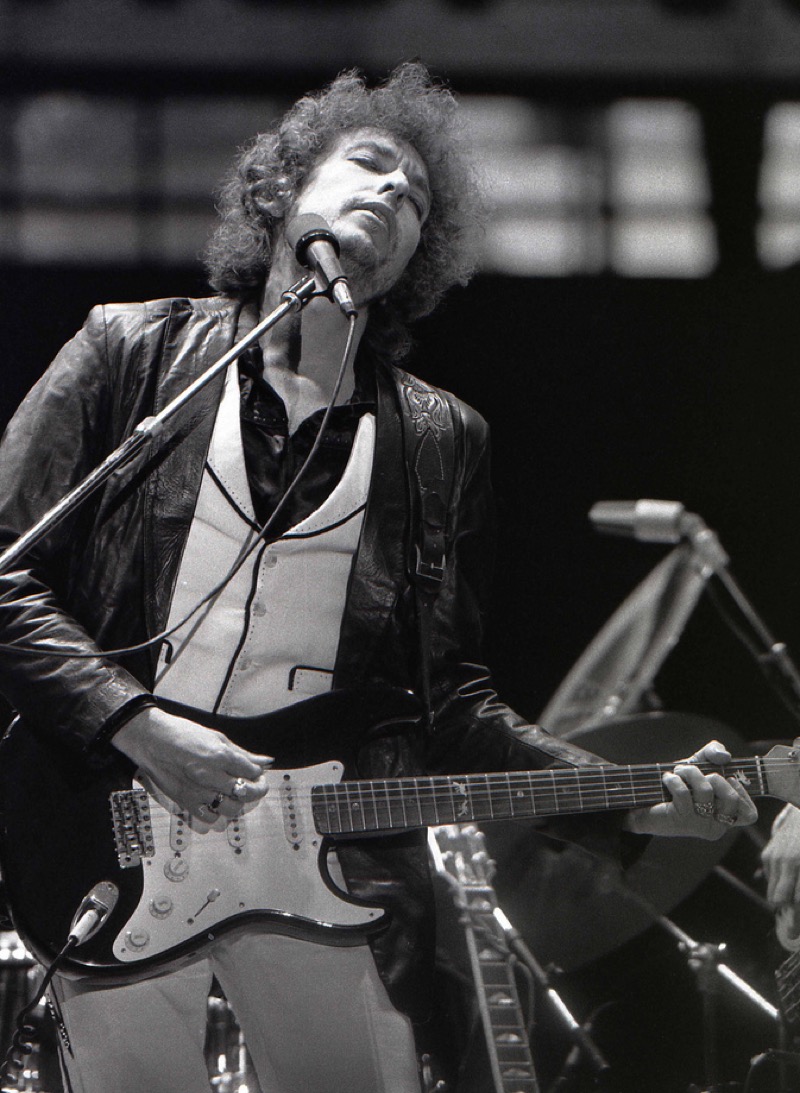
That layering extended into the later touring years. A black leather jacket worn open over a white vest, the vest’s decorative detailing visible against the dark leather, pushed the combination into more formal and ornamented territory. The Rolling Thunder era established the layering principle. The later stage photographs show him applying it to more ornamented materials, vests with embroidered trim against dark leather jackets, the carnival instinct refined into stage formality.
Bob Dylan’s 1980s & 1990s Fashion
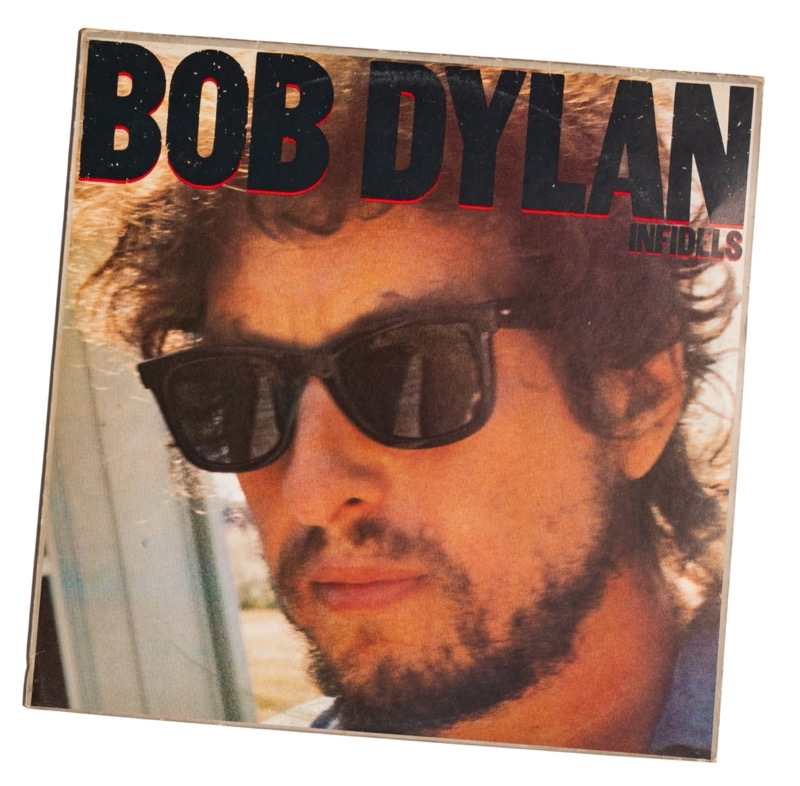
The eighties produced some of Dylan’s least-examined style choices. The Infidels album cover from 1983 presents him in close-up, Wayfarer sunglasses and a beard the only visual points, the curly hair loosened from the tight halo of the 1966 photographs. Where the Desire cover had shown furs, layered scarves, and a wide brim, Infidels held just a face.
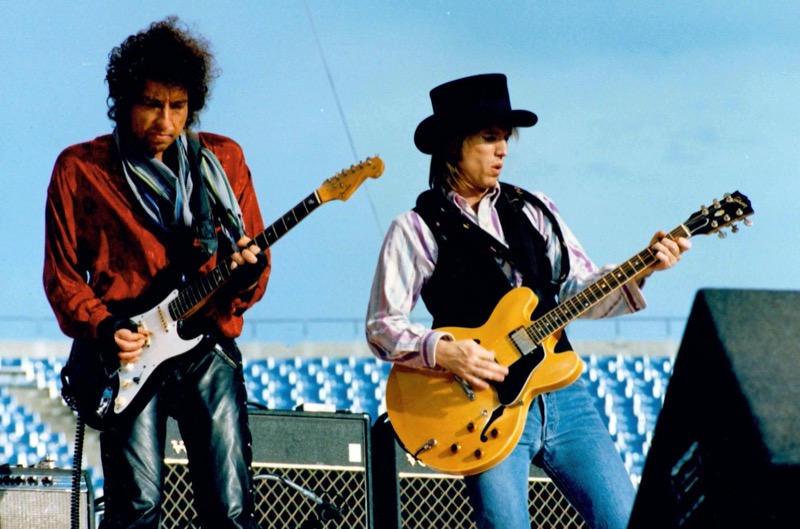
A 1986 concert photograph alongside Tom Petty shows a red satin shirt worn with a blue scarf at the neck and black leather trousers. The satin and leather were the shared materials of arena rock that decade, worn across every major stage, and Dylan in them placed himself inside a collective visual identity for the first time in his career.
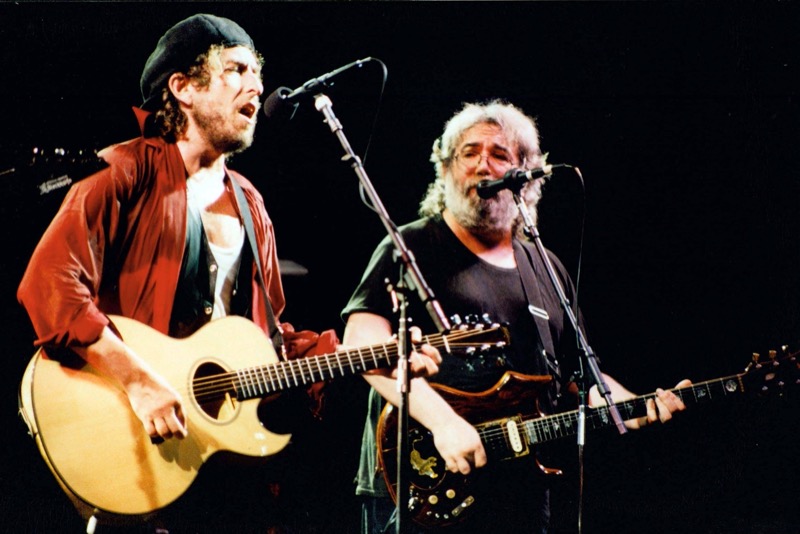
Performing with the Grateful Dead in 1987, Dylan wore a dark beret pulled low over his curls and a red shirt open over a white T-shirt. The beret pulled the look back toward the Greenwich Village photographs of twenty-five years earlier, a bohemian register the Desire era had traded for theater.
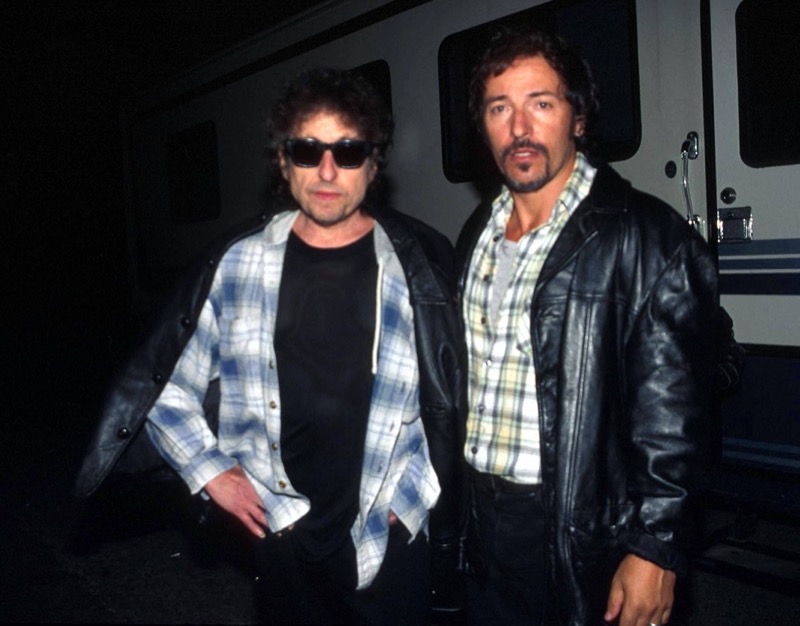
By the mid-1990s, a photograph alongside Bruce Springsteen shows Dylan in a blue and white plaid flannel shirt open over a black T-shirt. The plaid puts 1962 and 1995 in the same frame, though the decades and several reinventions between those two appearances complicate the resemblance.
Bob Dylan’s Western Style & Late-Career Outfits (1997-2010)
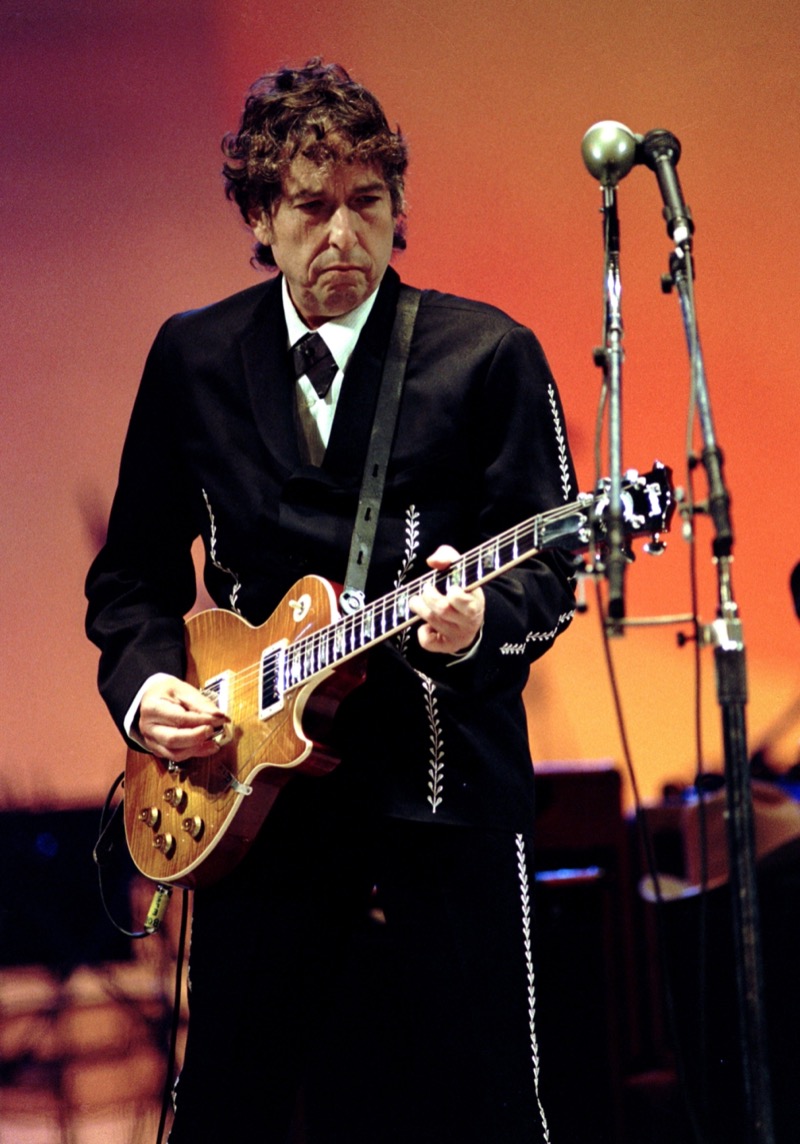
The least discussed chapter in Dylan’s visual history may be the most consistent. From the late 1990s onward, he increasingly wore embroidered Western suits in the tradition associated with Nudie Cohn, the Hollywood tailor who dressed Hank Williams, Elvis Presley, and Johnny Cash.
Captured in Italy in 1997, a concert photograph shows a black suit with vine-and-leaf embroidery worked across the chest and sleeves, the Nudie Cohn tradition transplanted to a European touring stage. By 2010, the wide-brim hat and bolo tie had joined the embroidered jacket as fixed elements, the complete Western silhouette holding across decades of touring with more consistency than any look he had worn before.
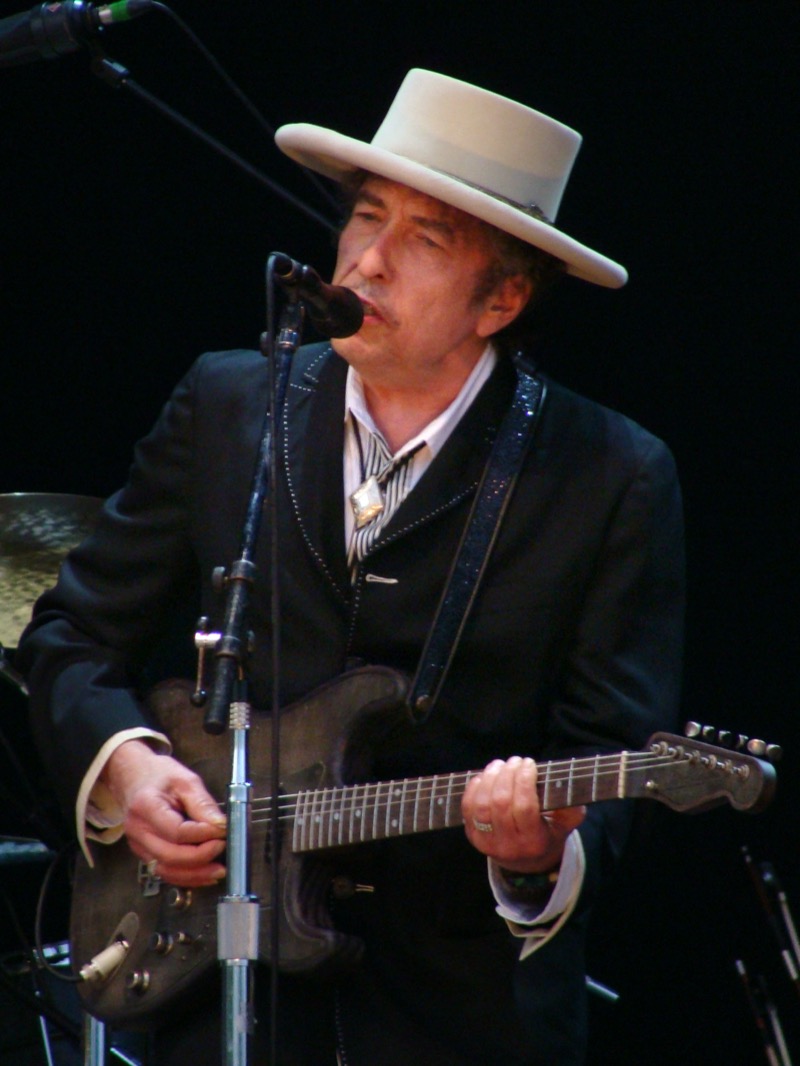
Western wear in the Nudie Cohn tradition was itself a form of theatrical dandyism, working-class American materials elevated into something ornate. That lineage connects Appalachian dress to Hollywood cowboy costume to honky-tonk excess, and Dylan’s turn to it in his later career suggests he was reaching for something older than any of the genres he had passed through.
The embroidered suits place him in an American vernacular tradition that predates folk, rock, and gospel. The Bob Dylan bolo tie and wide-brim hat complete a look that is simultaneously anachronistic and completely coherent. Whether this constitutes a final position or simply another costume is a question the visual record poses and leaves open.
How to Dress Like Bob Dylan
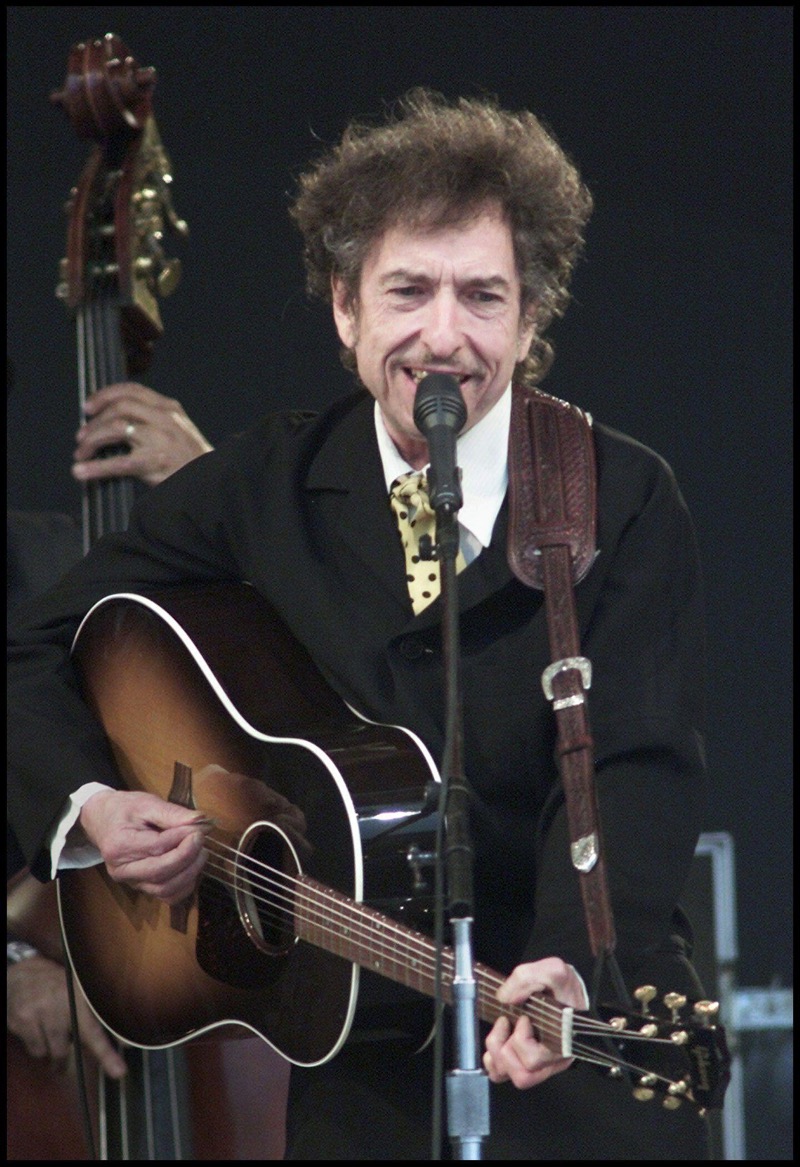
The Bob Dylan aesthetic exists in several distinct forms, each tied to a different era and a different musical identity. The individual pieces with the most visual weight across the record make the most useful starting points, because they work in isolation and translate across decades.
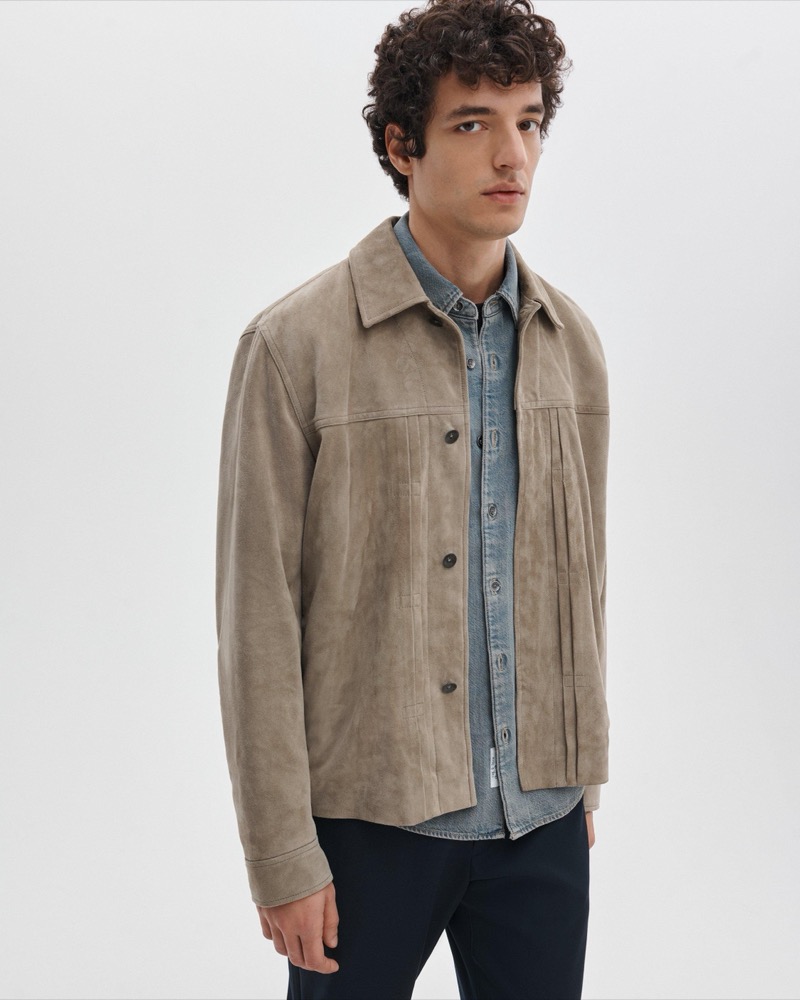
The suede jacket remains the most wearable entry point. A suede trucker or blouson jacket in tan or brown, worn over a plaid or checked shirt with straight-leg jeans and work boots, produces a version of the early-60s folk look that has held up across sixty years of photographs.
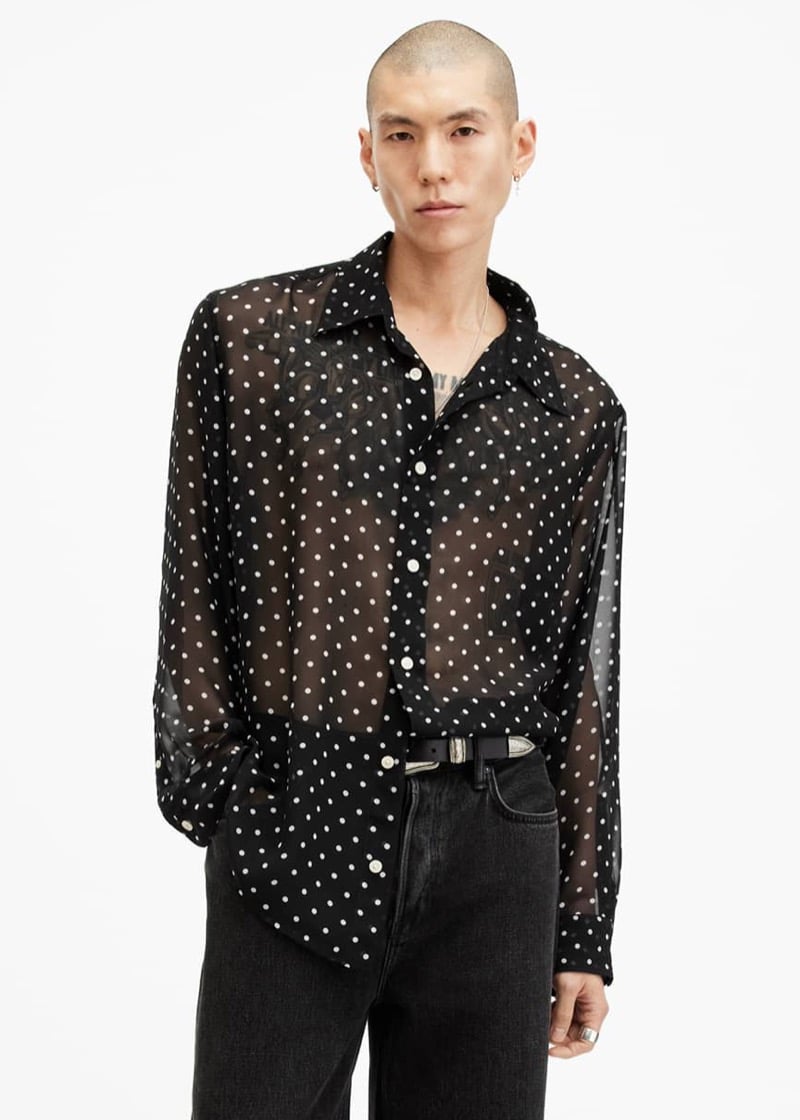
The polka dot shirt is the most photographed single garment in Dylan’s wardrobe and also the most specific in its proportions. The 1966 version was oversized, the collar wide, the pattern bold enough to read from a distance. A contemporary equivalent works on the same logic, a shirt worn a size larger than expected, with the collar open and the volume doing the work that accessories would otherwise do.
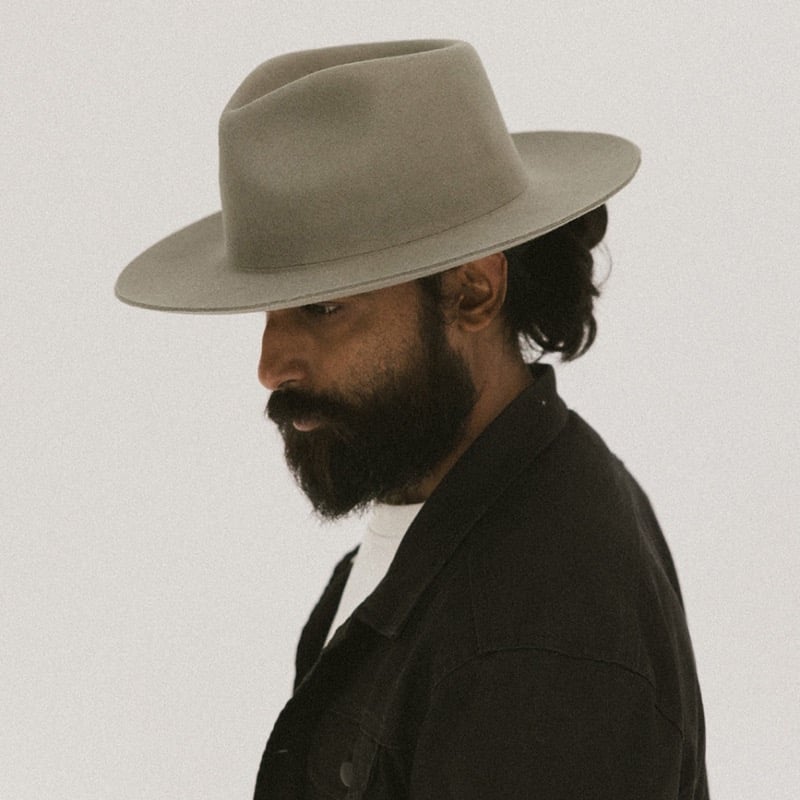
The wide-brim fedora from the Desire era works best when it is the single theatrical element in an otherwise plain outfit. Dylan’s version was straw over layers, which produced the troubadour effect. In contemporary terms, a felt or wool wide-brim worn with a simple dark jacket is the usable interpretation.
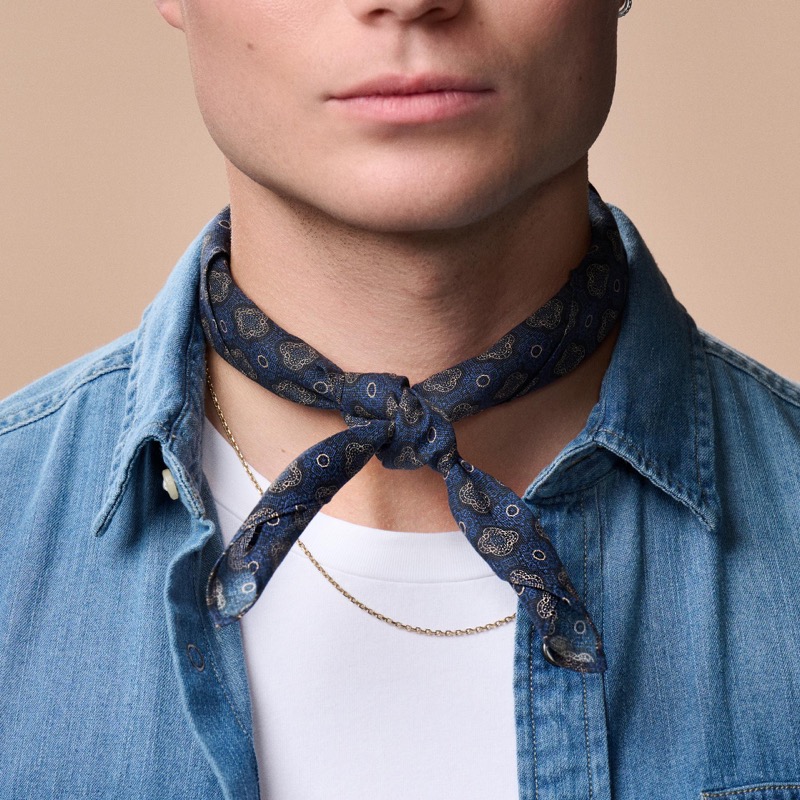
The neckerchief appears across multiple Dylan eras and is the most transportable single piece in the wardrobe. A loosely knotted scarf or bandana at the open collar of a plain shirt or beneath a jacket lapel picks up the troubadour thread that runs from the Desire period through the touring years.
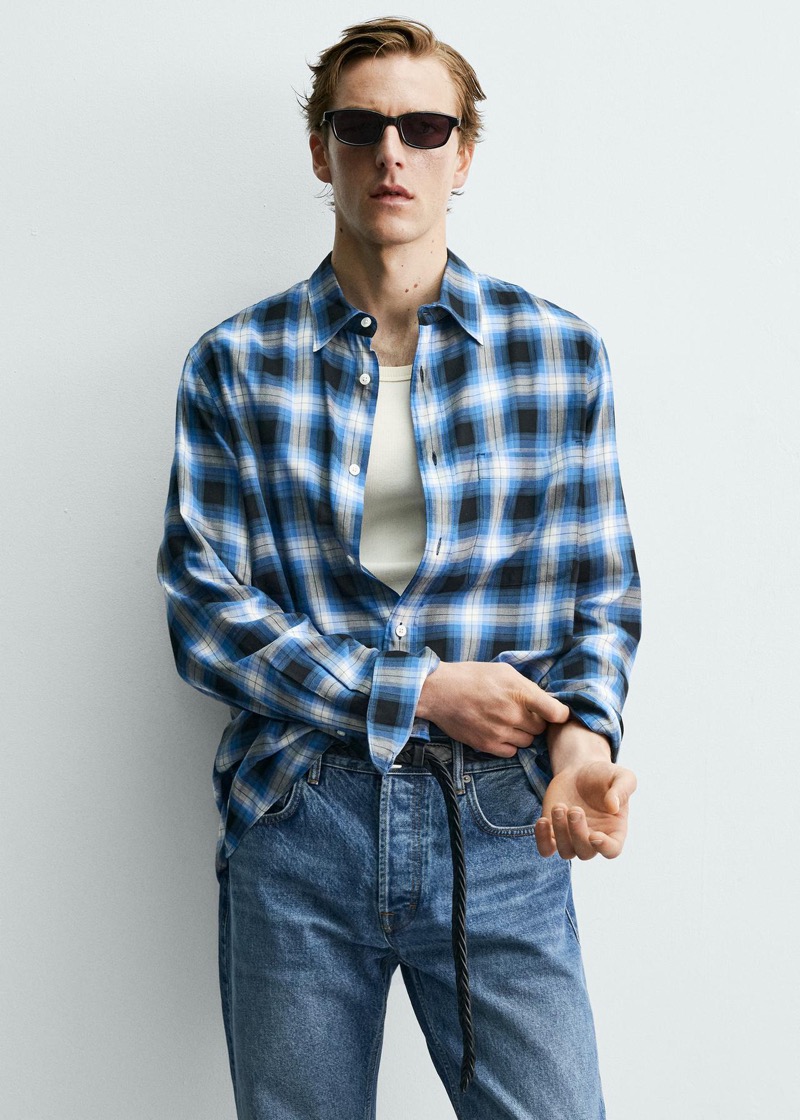
A plaid shirt worn open over a plain top with straight-leg denim produces a modern version of the look Dylan wore in 1962 and returned to in 1995. The decades of costumed reinvention between those two appearances make the plaid’s reappearance the most telling detail in the visual record. It was honest.