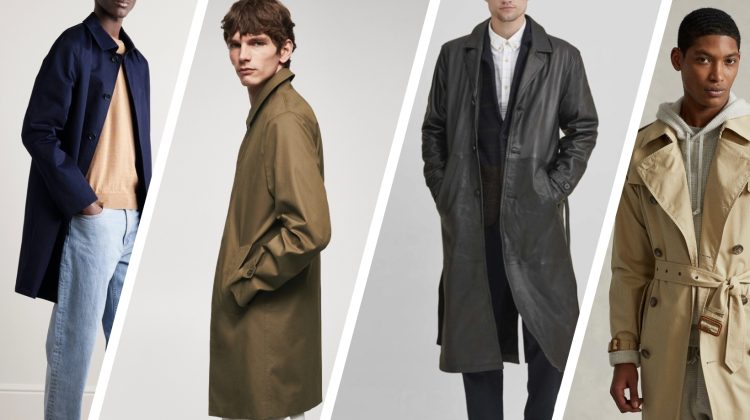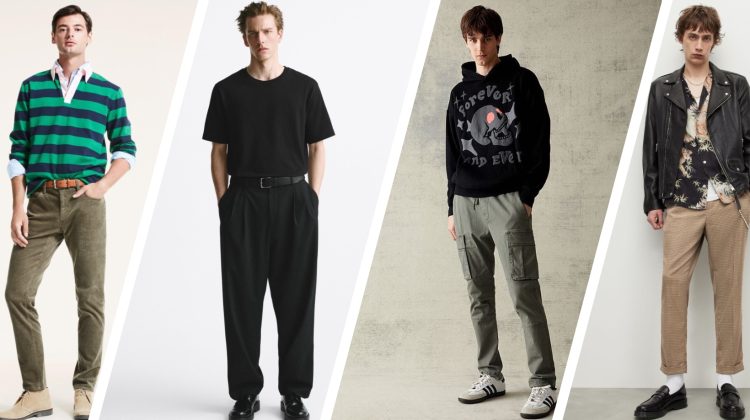
Put on a trench coat, and even the trip to the station can acquire a little intrigue. Officers and screen detectives have seen to it. Beneath the associations, though, there’s a practical piece of rainwear, shaped with a belt and fitted with details inherited from military service. Those buckles and flaps explain how the coat works, as well as why it still has so much character a century later.
What Is a Trench Coat?
A trench coat is a belted outer coat traditionally made from water-resistant cloth, usually cotton gabardine, with a double-breasted front and military-derived details. Classic versions typically finish around the knee or below it. The combination is what counts. Plenty of long beige coats share the color and length, but the trench has a more specific set of credentials.
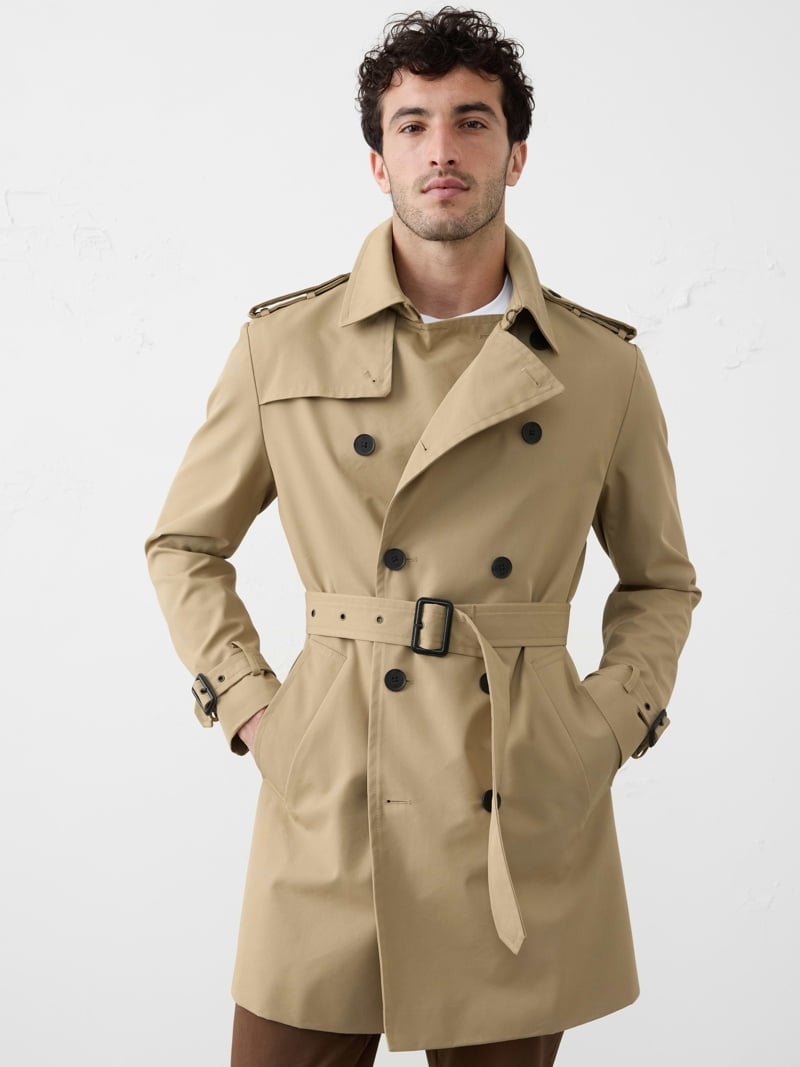
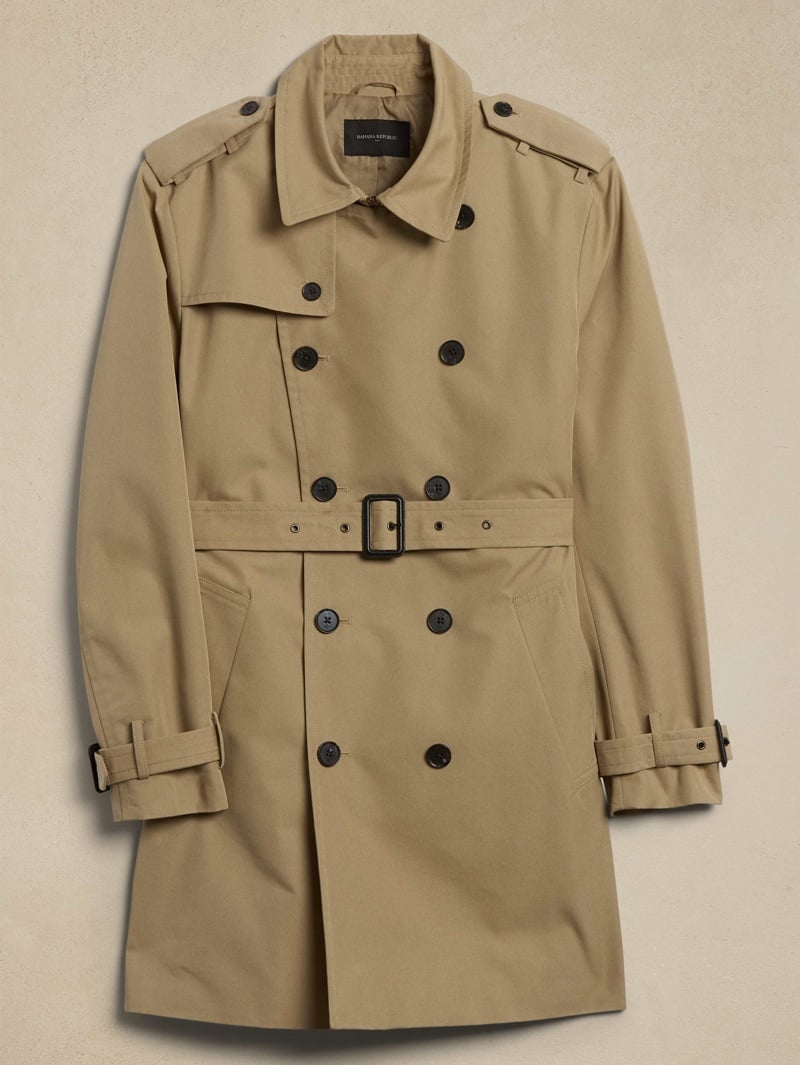
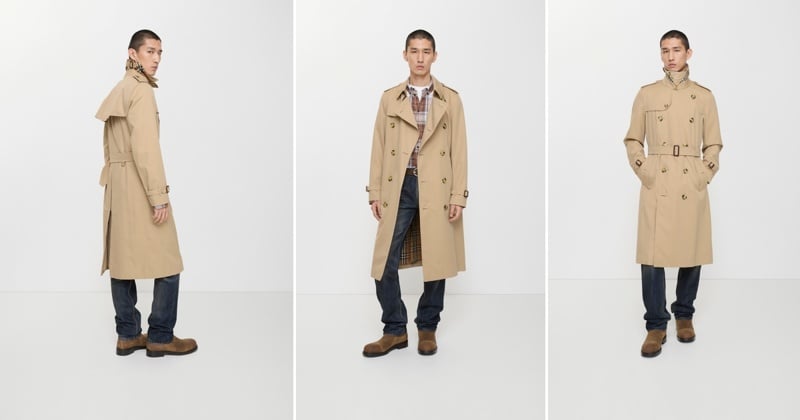
Start with the overlapping front, which adds coverage across the chest. The lapels turn up toward the neck, where a throat latch helps hold the collar closed. Shoulder straps, commonly called epaulettes in clothing descriptions, give the coat its uniform associations. At the wrists, buckled straps adjust the sleeve openings. The waist belt pulls everything together over the clothes beneath. On many classic versions, D-rings on the belt provided attachment points for small pieces of military equipment.
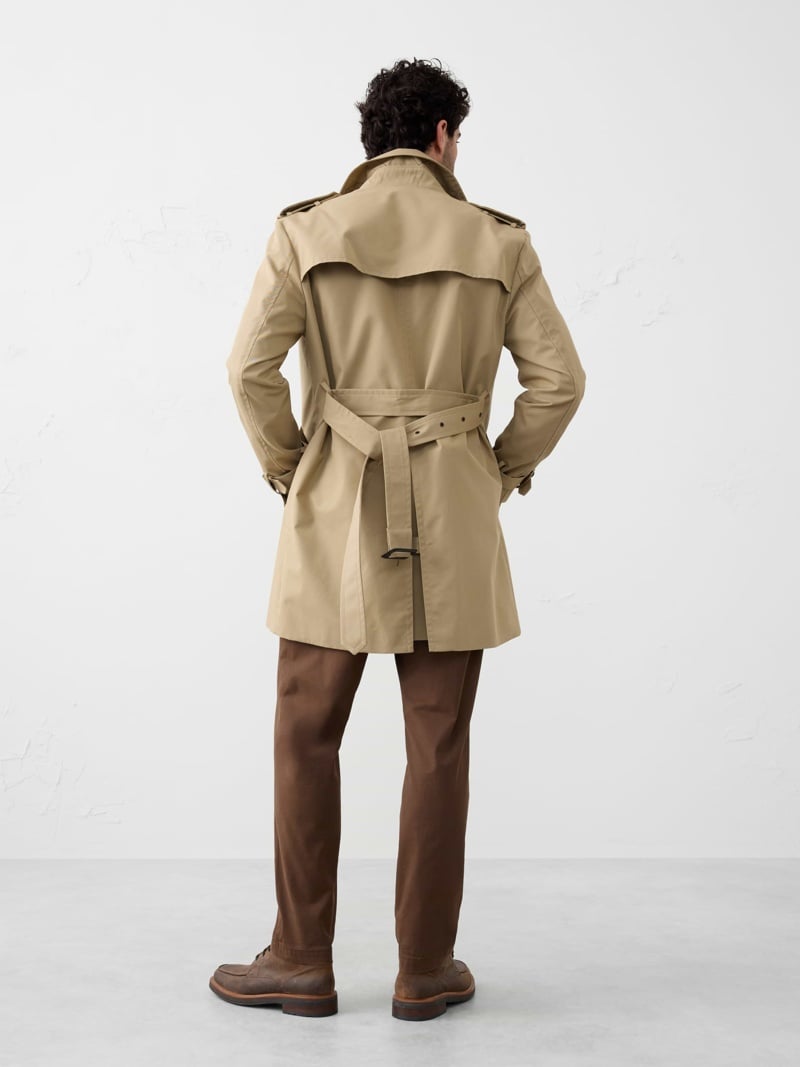
Turn the coat around, and there’s a storm shield across the shoulders, a short cape-like layer designed to help shed rain. A vent farther down lets the hem open as you walk. Back at the chest, the extra panel is commonly called a gun flap. It’s a lot of detail for one coat, but much of the apparent decoration began as equipment.
Banana Republic Factory's beige trench shows how these parts work together. Cinched at the waist over brown trousers, it gives an everyday outfit some of the bearing of a uniform. The front and rear views show how the belt shapes the coat while the chest flap and shoulder shield add coverage. Beige is the color most closely associated with the look, though navy and black are established alternatives.
Where the Trench Coat Came From
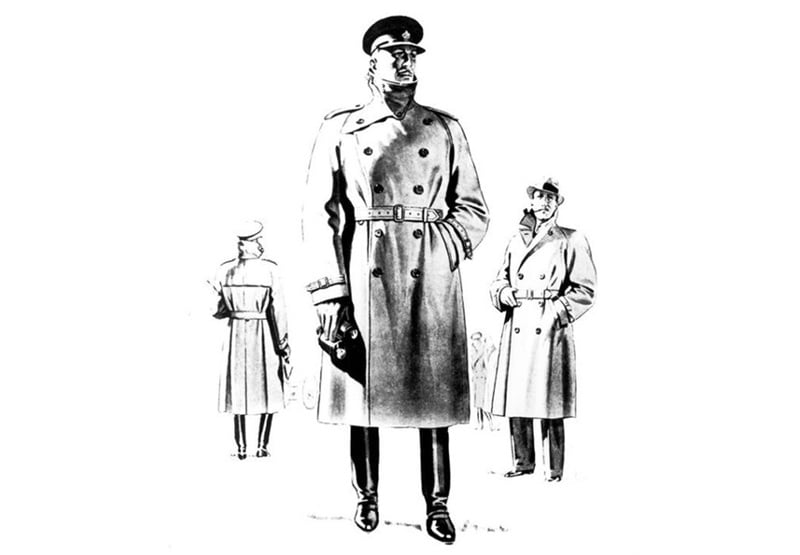
The trench developed from earlier weatherproof outerwear and acquired its name through military use during World War I. Its story includes several British makers, notably Burberry and Aquascutum, whose military illustration shows the belted, double-breasted silhouette in uniform.
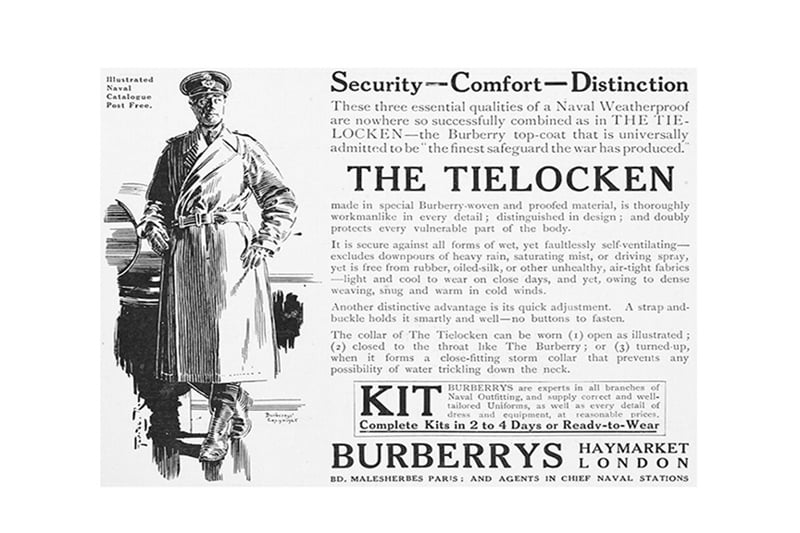
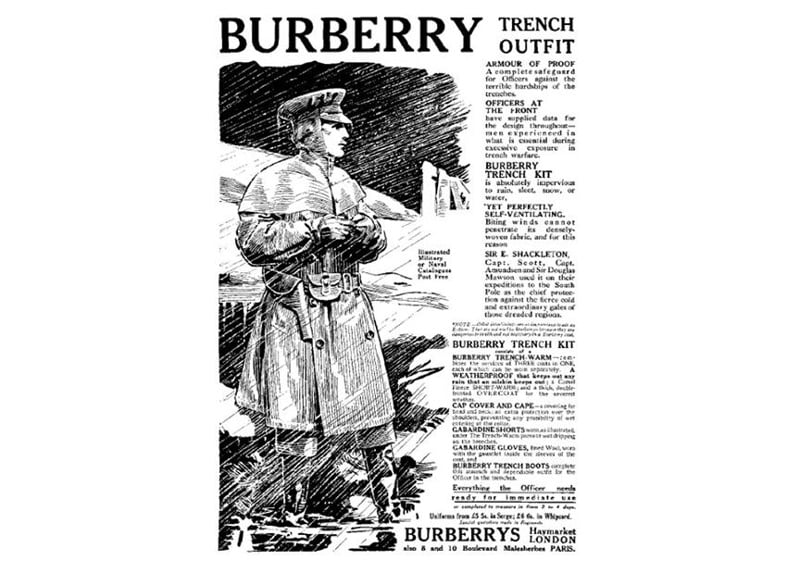
Thomas Burberry developed gabardine in 1879. Its tightly woven twill construction offered breathable protection against rain, helping establish an alternative to heavier outerwear. The later Tielocken coat, patented in 1912, used a wrap fastening and became a predecessor to the Burberry trench. During World War I, officers adopted gabardine coats with practical additions, including shoulder straps and adjustable cuffs. The V&A’s historical account traces this progression from weatherproof clothing to military kit.
The coat evolved through existing designs and officers’ requirements, so the popular picture of every soldier receiving a trench compresses a more complicated history. Its civilian life expanded after the war, taking the military associations into everyday dress. The belt still suggested authority, even when the destination was an office.
Fabric, Rain Protection & Fit
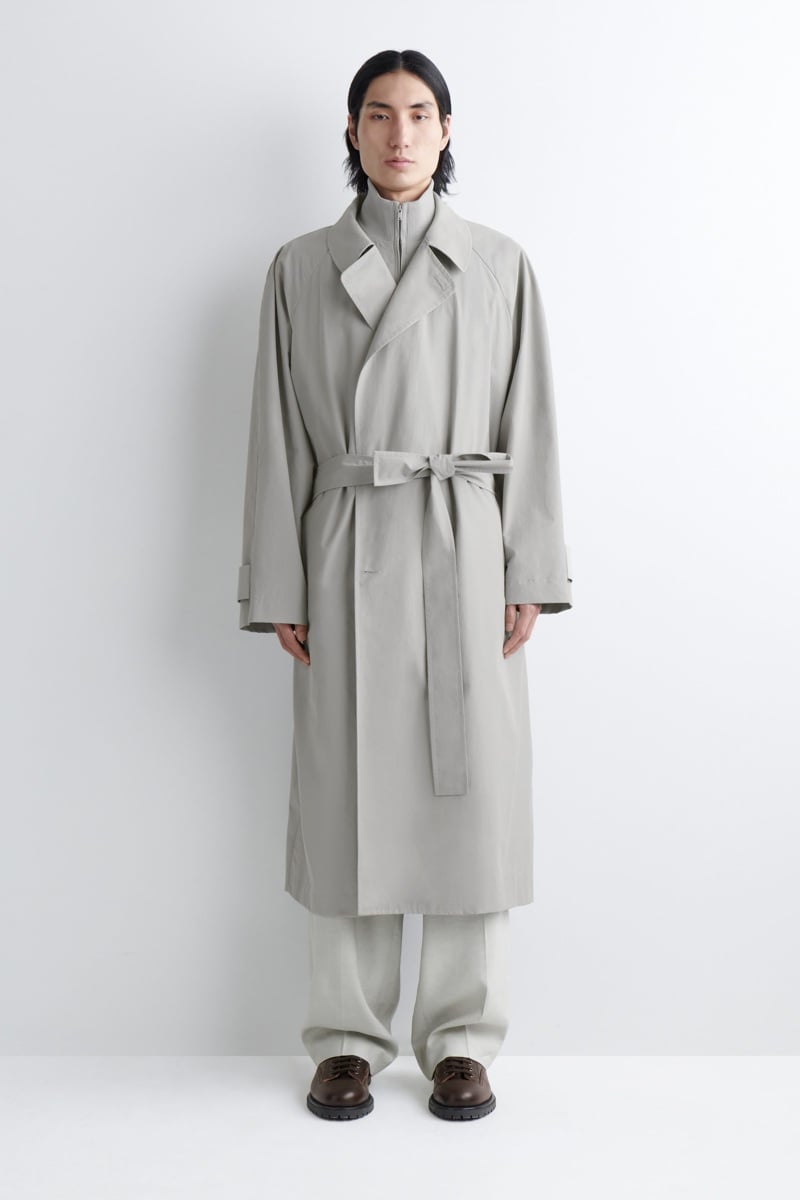
Cotton gabardine remains the classic starting point, but different types of trench coats also use blended fabrics and technical textiles. Calling something a trench describes its design, so the label alone says little about surviving a downpour. Water-resistant or shower-resistant cloth offers some protection. For prolonged rain, check the maker’s waterproof specification and how the seams are constructed.
Then there’s the temperature. An uninsulated trench is generally most useful between seasons, with a removable liner or padded insert extending its use into cooler weather. COS uses a detachable padded gilet in its gray version. Worn with tonal trousers, the longer cut lets the fabric fall in broad folds below the belt. The uniform connection loosens up considerably.
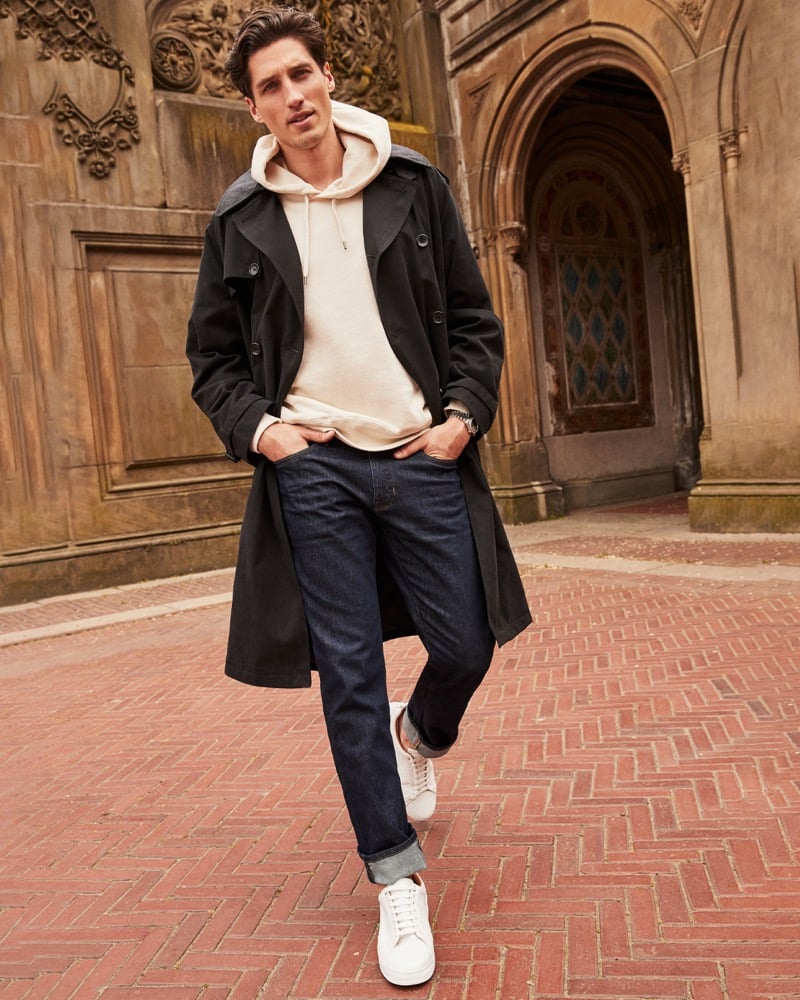
Try a trench over the clothes you’ll actually wear beneath it. If it’s going over a suit, wear the jacket when checking the fit, then button the coat and move your arms. Look for a smooth chest and sleeves which cover the layer underneath. The belt should gather the waist gently. Part of the appeal is the movement of the fabric around your legs, and an over-tightened belt can leave the front looking bundled up.
Trench Coat vs. Mac
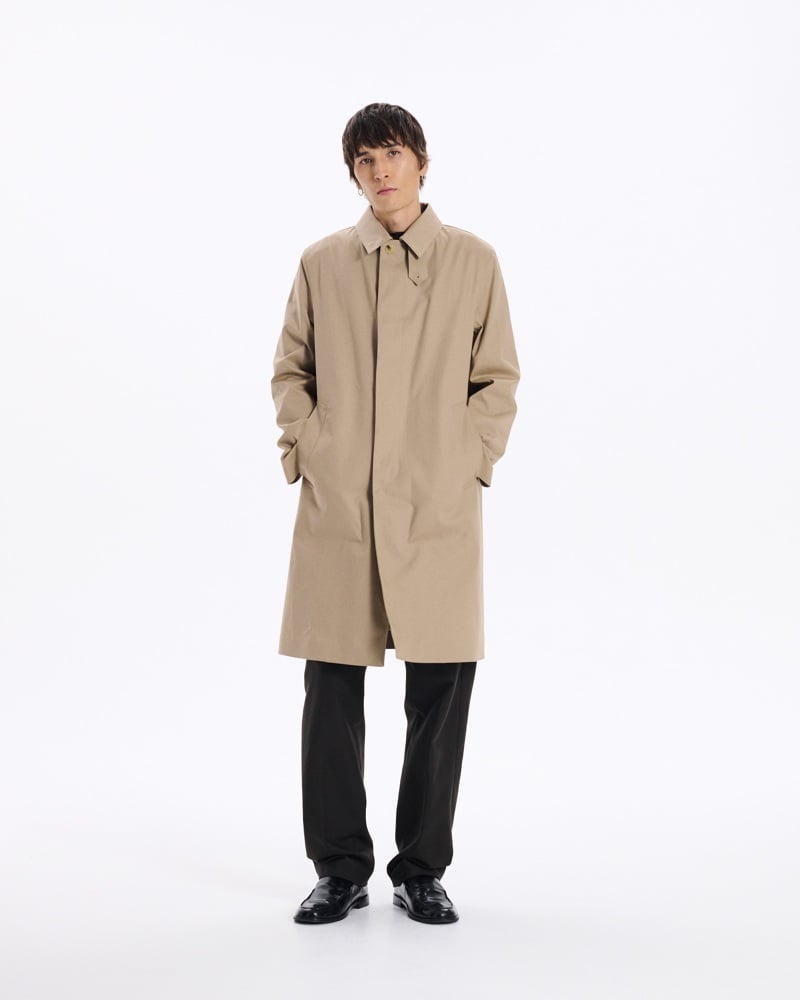
A mac usually keeps things simpler. Expect a single-breasted front, often with concealed buttons, and a straight body left unbelted. The trench defines the waist and puts more of its military hardware on show. Traditional rubberized cotton macs use waterproof fabric and sealed seams, while cotton gabardine trenches generally offer water resistance. Both belong to the raincoat family, with different levels of protection.
On the fawn raincoat, the cloth falls directly from shoulder to hem. Compare it with the trench’s gathered waist and overlapping panels, and the difference goes beyond a few missing buckles. It’s also a question of how much character you want the coat to bring to your clothes. The mac keeps the outline simple. The trench has already been cast in a few leading roles.
Trench Coat vs. Wool Overcoat
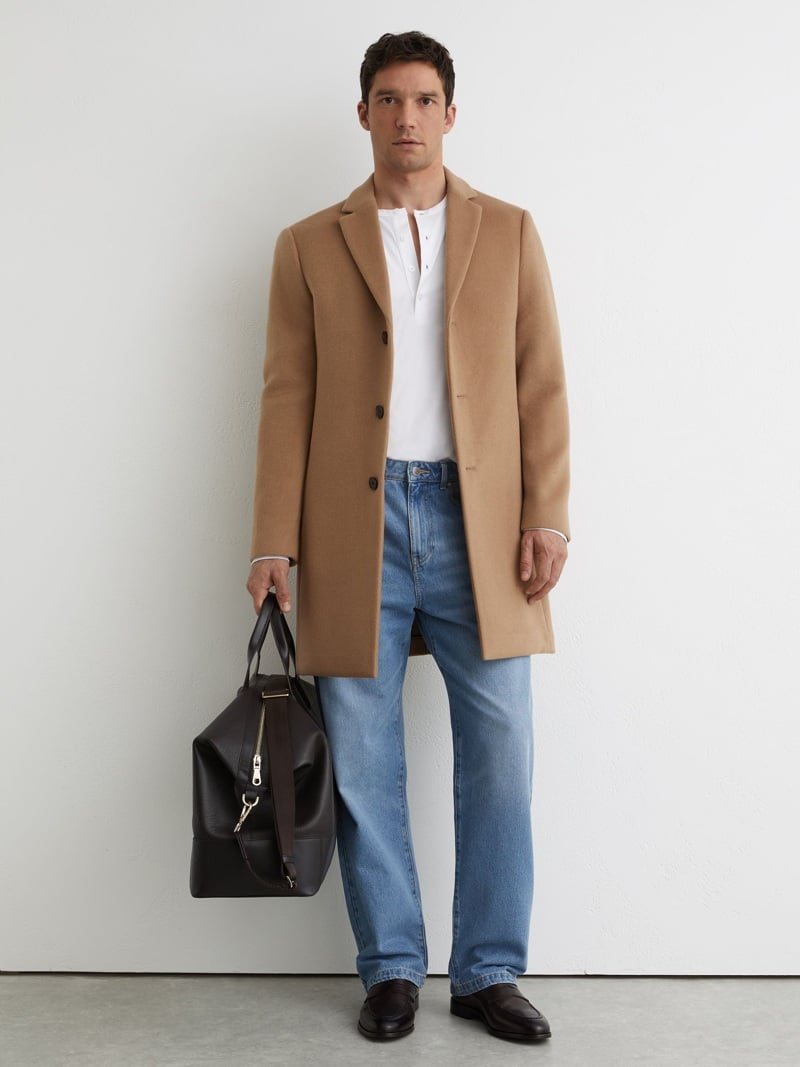
With a traditional wool overcoat, warmth moves higher up the agenda. Insulating cloth and a tailored shape are central to the design, while a conventional cotton trench puts wind and rain protection first. Fabric weight and lining still matter, of course. The category gives you a starting point, and the actual construction tells you when you’ll want to wear it.
The camel overcoat borrows the notched lapels of a suit jacket, with a brushed surface which softens the look of jeans. The trench gets more of its character from the belt and weatherproofing details. Both work over everyday clothes, but they answer different needs. A trench suits changeable spring or fall days, especially when you’re adding or removing layers. Once keeping warm becomes the main concern, wool or insulation is usually the more useful starting point.
The Trench in Everyday Dress
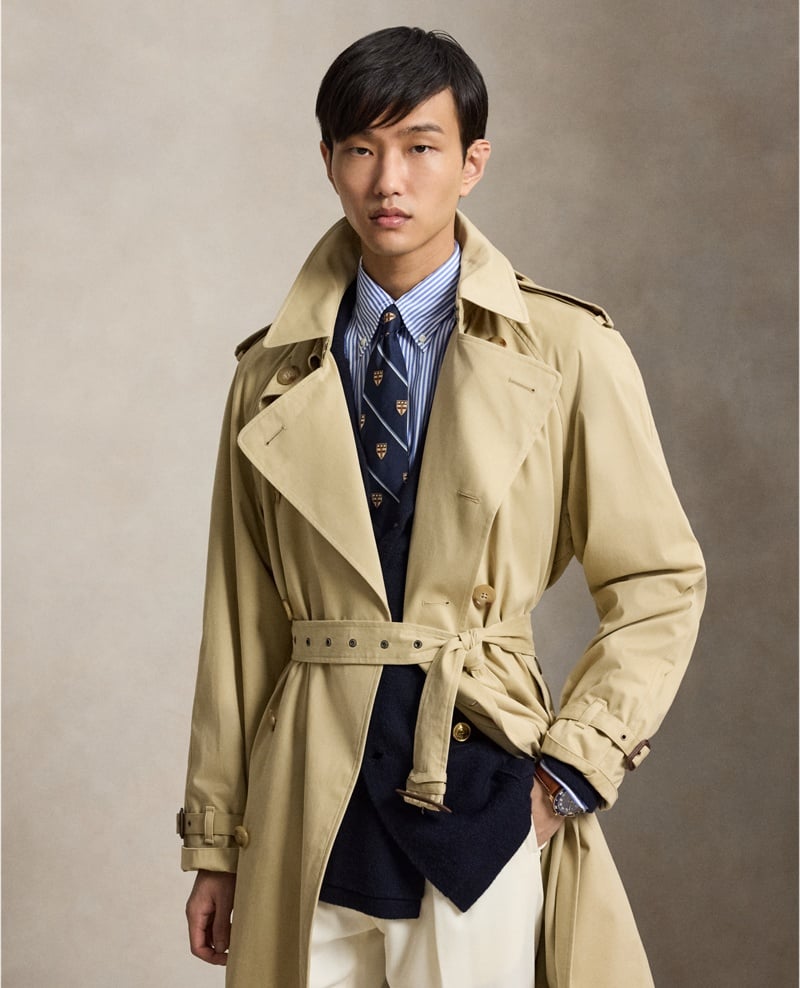
Over a blazer and tie, the trench's belt gives several layers a shared shape. Worn open over jeans, the same construction feels more casual. Choosing one comes down to the clothes beneath it and the weather outside. Look for enough space to move, a length you enjoy wearing, and rain protection suited to your day. The military details provide the character, but the fit determines how naturally it becomes part of your wardrobe.
Part of the trench’s appeal is how much you can do with it. Turn up the collar against the wind or leave the belt hanging loose, and its attitude changes along with its function. The history is already there. How much you play it up is your business.