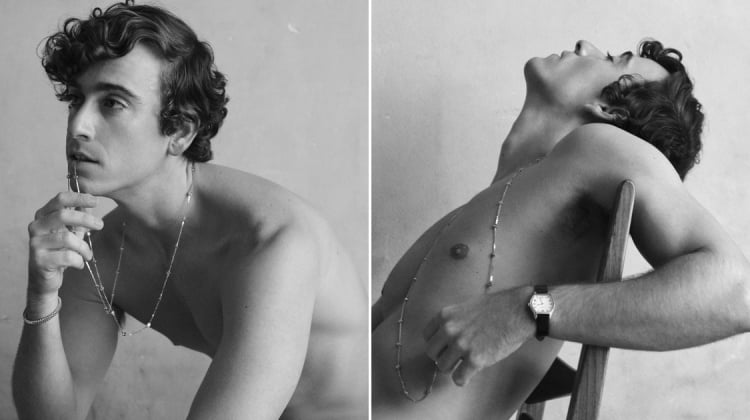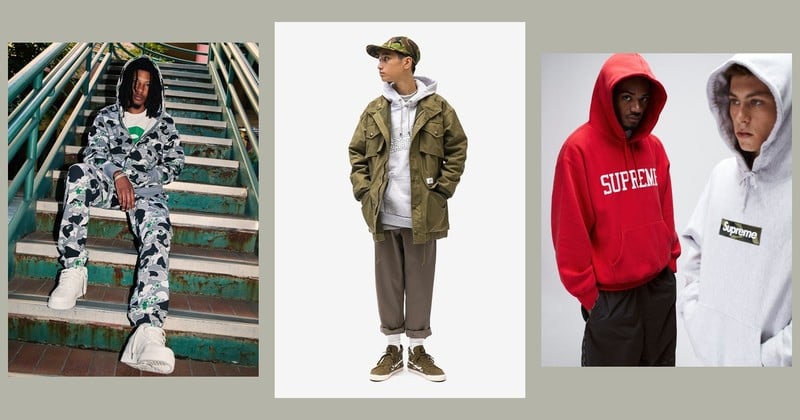
A Supreme box logo and a Fear of God overcoat belong to the same fashion conversation, though they propose very different ways of dressing. One announces an allegiance across the room. The other depends on the shoulder, the length and the weight of the cloth. Both reveal how much territory streetwear brands now occupy.
The most popular streetwear brands draw from skate shops, hip-hop, Japanese collectors and luxury fashion. The history of streetwear traces those connections. The clothes reveal the differences, from BAPE’s camouflage to the canvas jackets that took Carhartt WIP from workwear into clubs and skate parks.
Streetwear Brands
Stussy
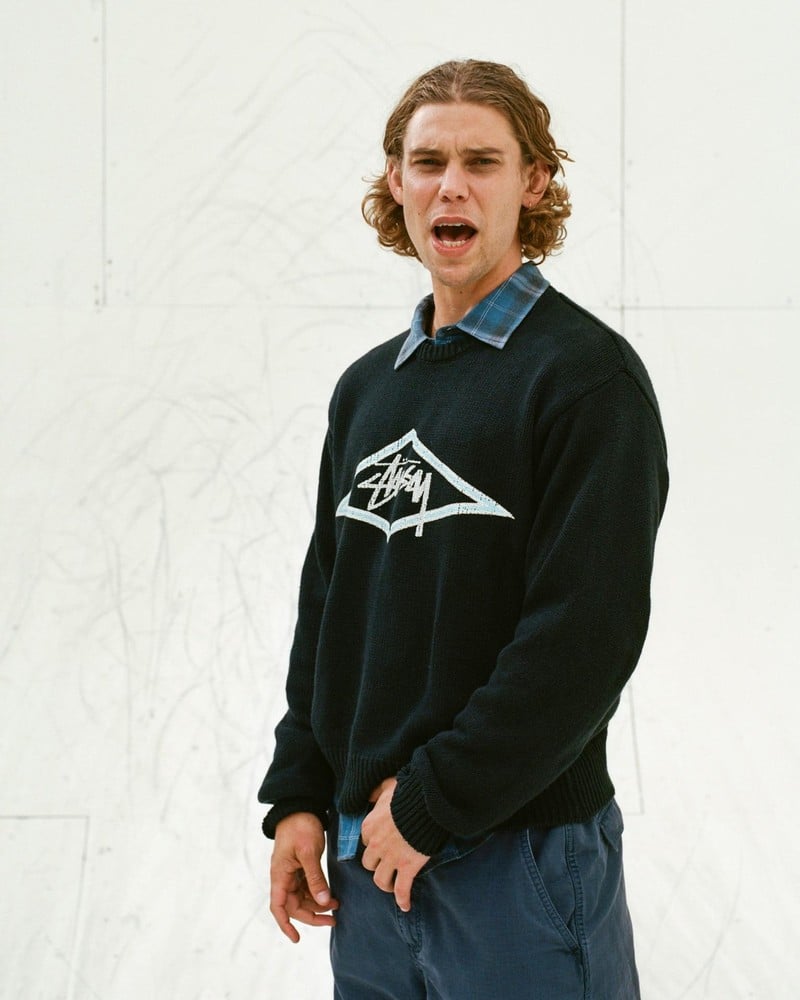
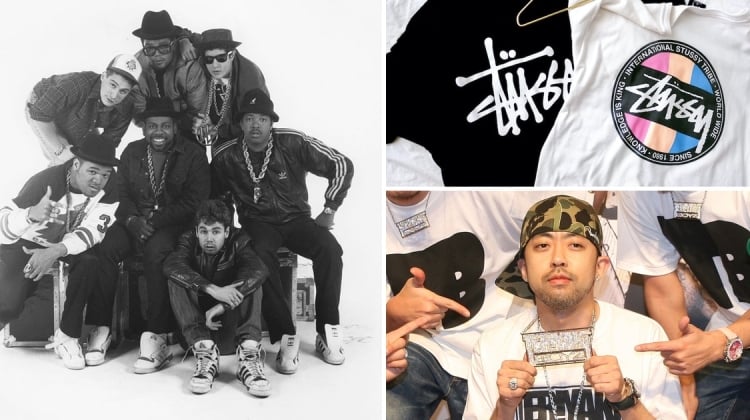
Stussy’s handwritten signature began on surfboards. Its lasting achievement was giving a wider circle of people something to wear. Loose trousers, patterned shirts and substantial knitwear sit comfortably beside the graphic tees, with Southern California providing the starting point for a wardrobe informed by music and international exchange.
That range helps explain the label’s longevity. A man can discover Stussy through a logo tee and stay for the clothes. The generous cuts and unexpected combinations preserve something of youth culture’s curiosity as his wardrobe expands.
Supreme
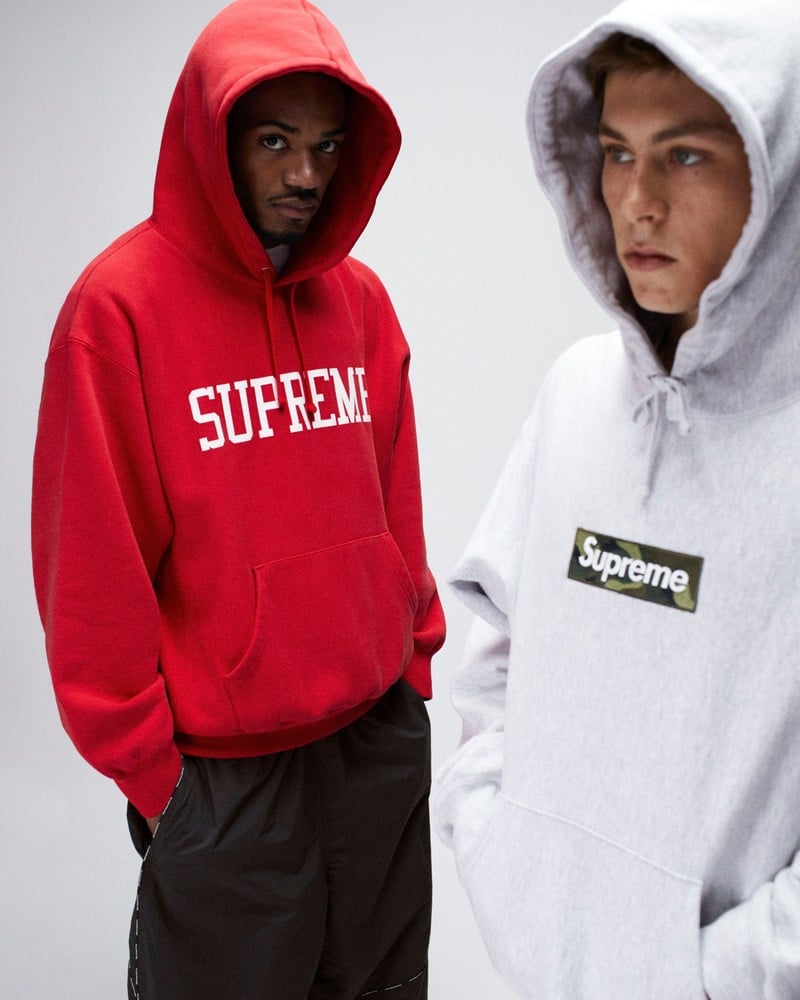
Supreme made a skate shop’s taste into something people wanted to collect. Since opening on New York’s Lafayette Street in 1994, the label has drawn from art, music, film and the clothes worn around its own scene. A work jacket and a photographic tee belong together because the people choosing them say they do.
The box logo is the most efficient expression of that belonging. Yet the more revealing releases often require a little knowledge. Recognizing a reference supplies its own satisfaction, turning an ordinary T-shirt into a conversation between people who get it.
A Bathing Ape
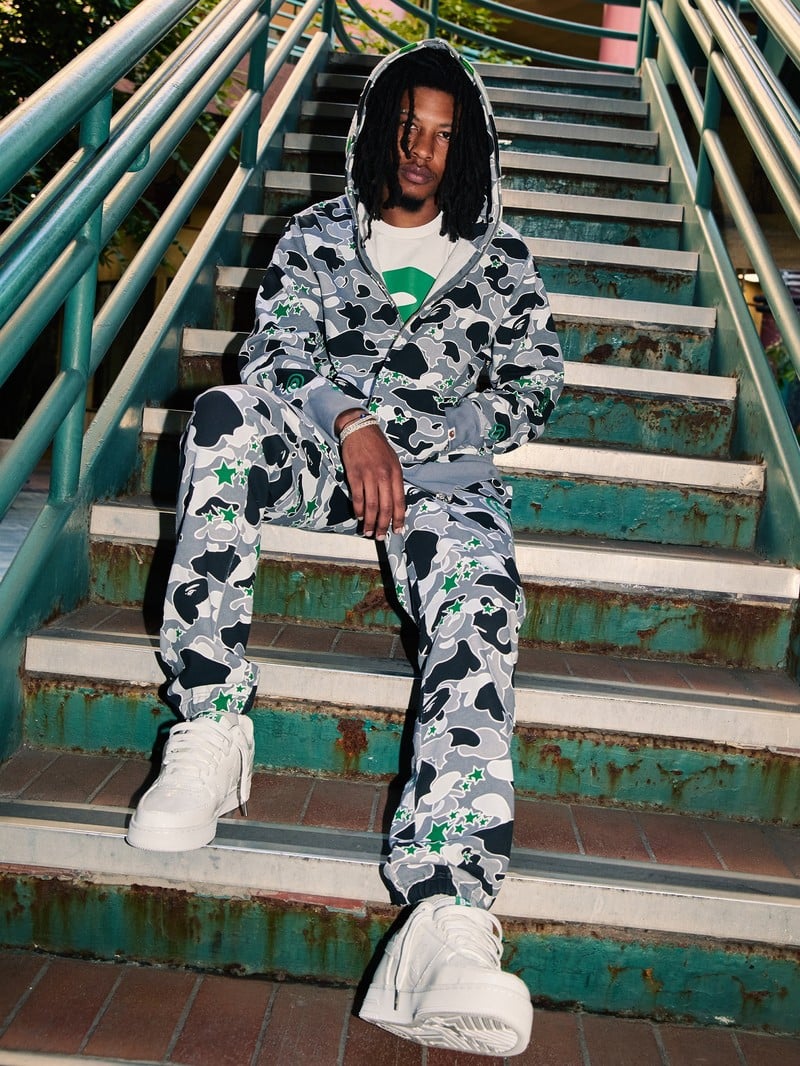
BAPE made camouflage conspicuous. Nigo’s Tokyo label, founded in 1993, filled the pattern with ape heads and applied it in colors that demanded attention. The shark hoodie went further, turning a zipped hood into a face. BAPE STA sneakers supplied another instantly recognizable object.
The effect suited hip-hop’s appetite for clothes that could establish a personality at a glance. BAPE made the whole garment memorable, from the print to the shape of the hood. Its best-known pieces remain convincing examples of streetwear as something to be seen in.
Palace
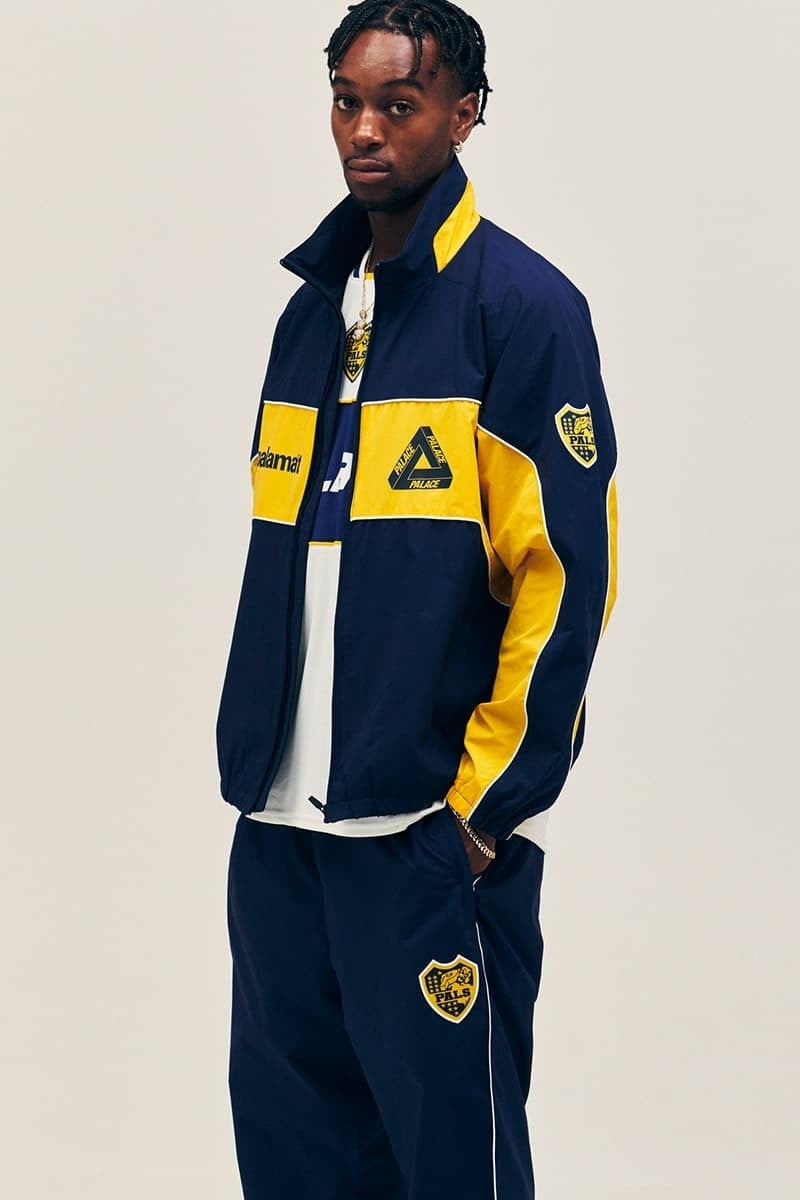
Palace dresses the London skater who grew up around football shirts, tracksuits and the British talent for taking the piss. Shell jackets and sportswear give the collections a local accent. Fergus Purcell’s Tri-Ferg supplies the symbol that travels.
The humor matters because it keeps the clothes connected to the people wearing them. Even as collaborations reach into luxury, Palace retains the sensibility of a skate crew amused by its own success. A football shirt can explain that identity as effectively as a hoodie.
WTAPS
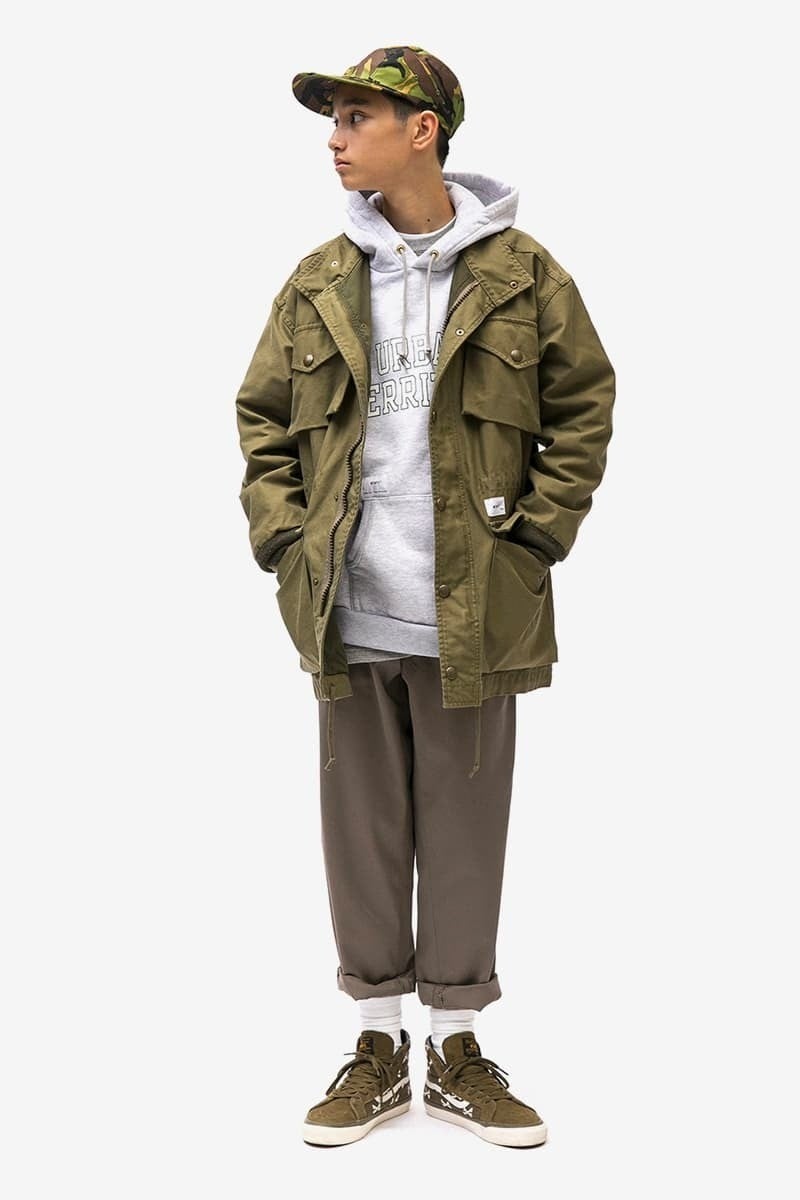
At WTAPS, the uniform is the attraction. Tetsu Nishiyama takes military clothing’s practical details and turns them into a closely considered wardrobe of broad trousers, overshirts and substantial outerwear. Olive, navy and black allow pockets, patches and proportions to do the talking.
The pleasure is in the small decisions. A trouser falls a particular way. An overshirt has the right amount of room. WTAPS speaks to the collector who can become as invested in those differences as another man becomes in a rare graphic tee.
Neighborhood
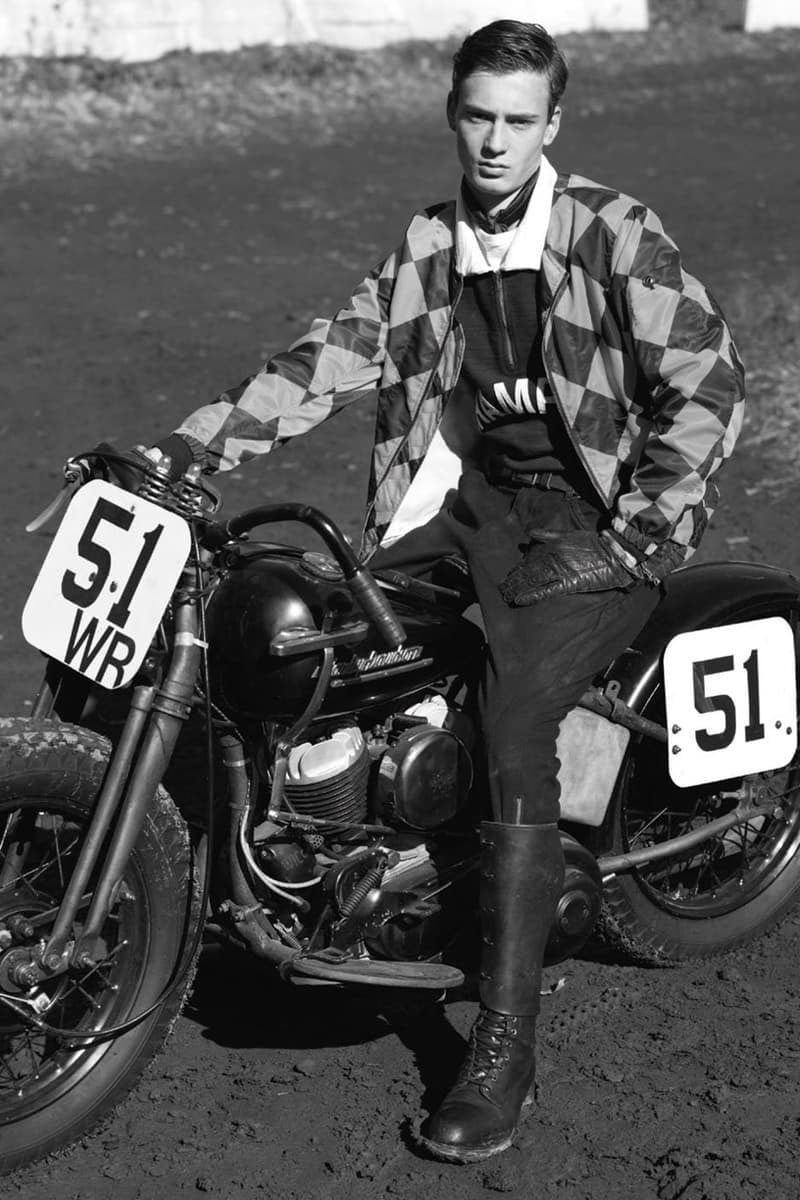
Neighborhood’s version of American dressing comes through a Japanese motorcyclist’s eye. Shinsuke Takizawa established the label in Harajuku in 1994, drawing on biker clothing, workwear and military garments. Worn denim and leather give the clothes a sense of life beyond the shop floor.
There is a particular masculinity here, expressed through workshop clothes and the romance of the motorcycle. Neighborhood makes those associations desirable even for the man whose daily journey ends at an office. The attraction is as much the imagined life as the jacket.
Undercover
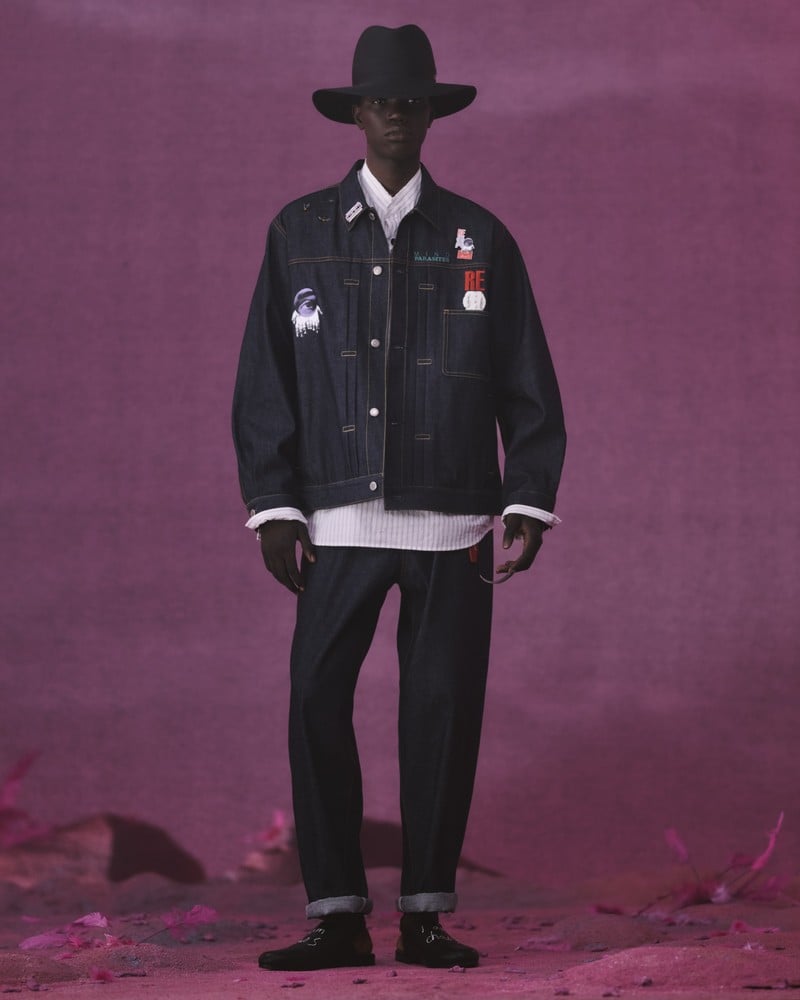
Undercover treats the graphic tee with the seriousness of a record sleeve. Jun Takahashi’s punk background informs clothes that can be tender, disturbing or deliberately awkward. An image or an altered garment can introduce a little unease into an otherwise straightforward outfit.
Its roots in Tokyo’s Ura-Harajuku scene explain its place in streetwear. Its experimental collections explain why that label only tells part of the story. Undercover gives the wearer access to a designer’s particular obsessions, with music often providing the way in.
Human Made
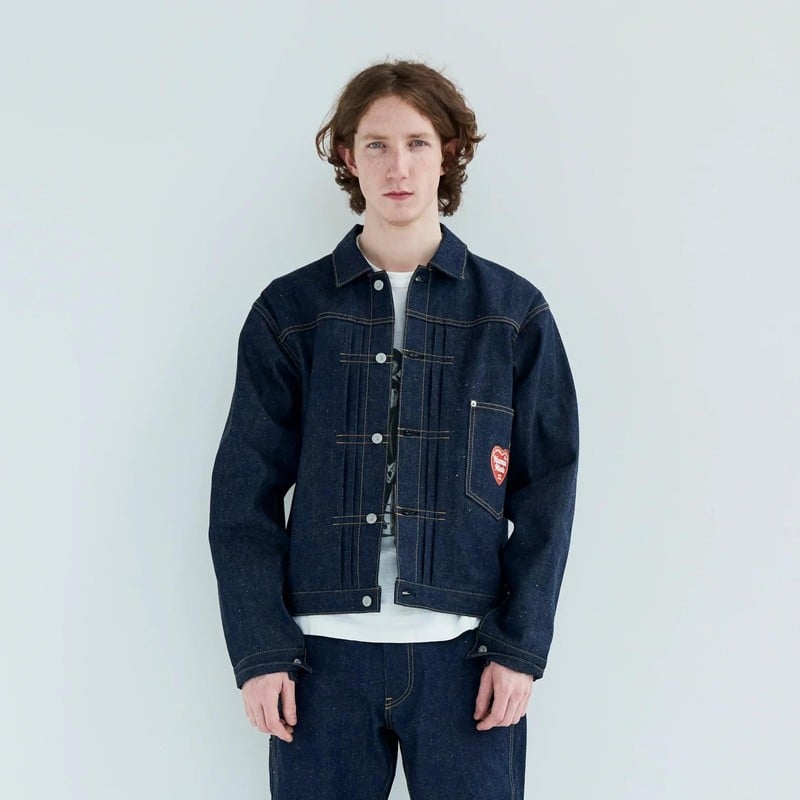
Human Made reveals the vintage collector behind Nigo’s reputation for conspicuous streetwear. Work jackets, sweatshirts and old sporting clothes become the basis for a wardrobe populated by hearts and animal graphics. The affection for the originals shows in the fabrics and details.
Compared with BAPE’s exuberance, the pleasure is more intimate. An old-fashioned sweatshirt can feel like a discovery, even when its graphic is widely recognized. Human Made turns knowledge of vintage clothing into something approachable enough to wear with jeans.
Kapital
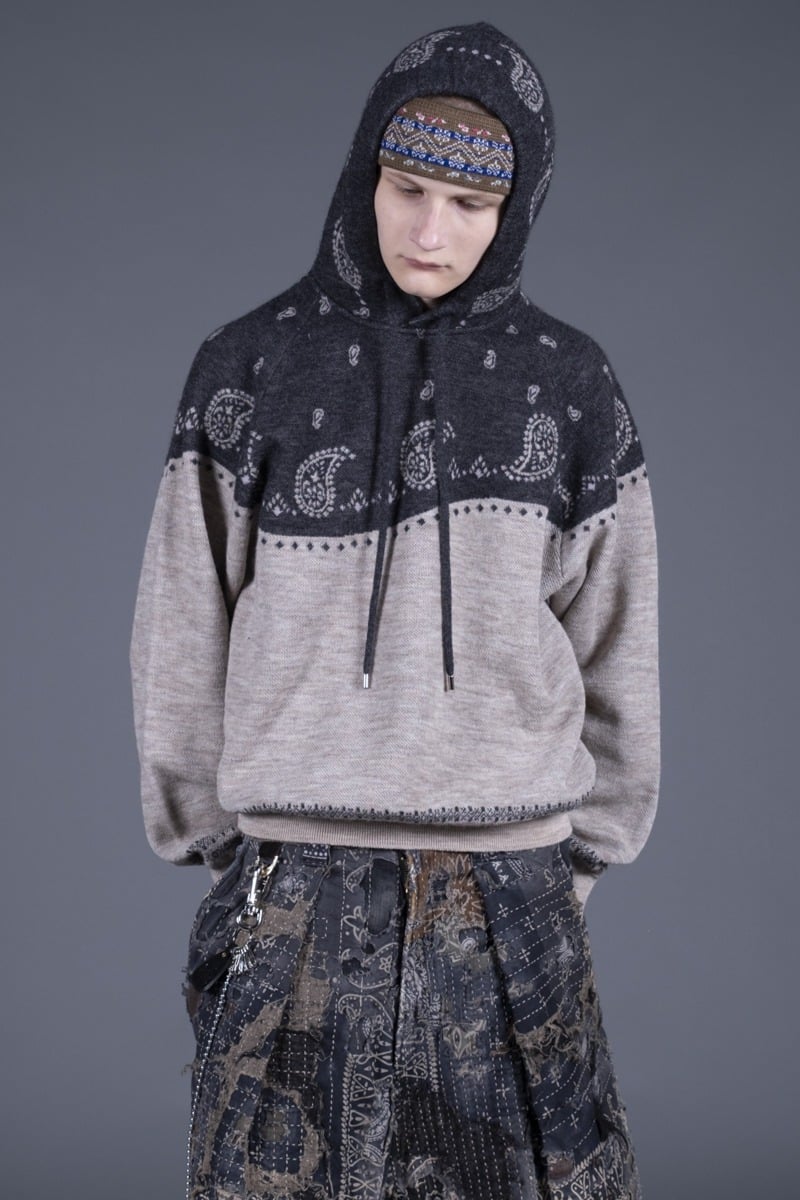
Kapital makes American workwear look as though it has lived several lives. Denim, bandana cloth and patchwork arrive washed, repaired or rearranged, while bone motifs add a macabre joke. The Japanese label’s following extends from denim enthusiasts to streetwear collectors who want a garment with something happening on its surface.
A single jacket can account for most of an outfit’s personality. That is Kapital’s particular gift. The interest remains in the cloth and what has been done to it, rewarding a closer look after the initial recognition.
Billionaire Boys Club / Icecream
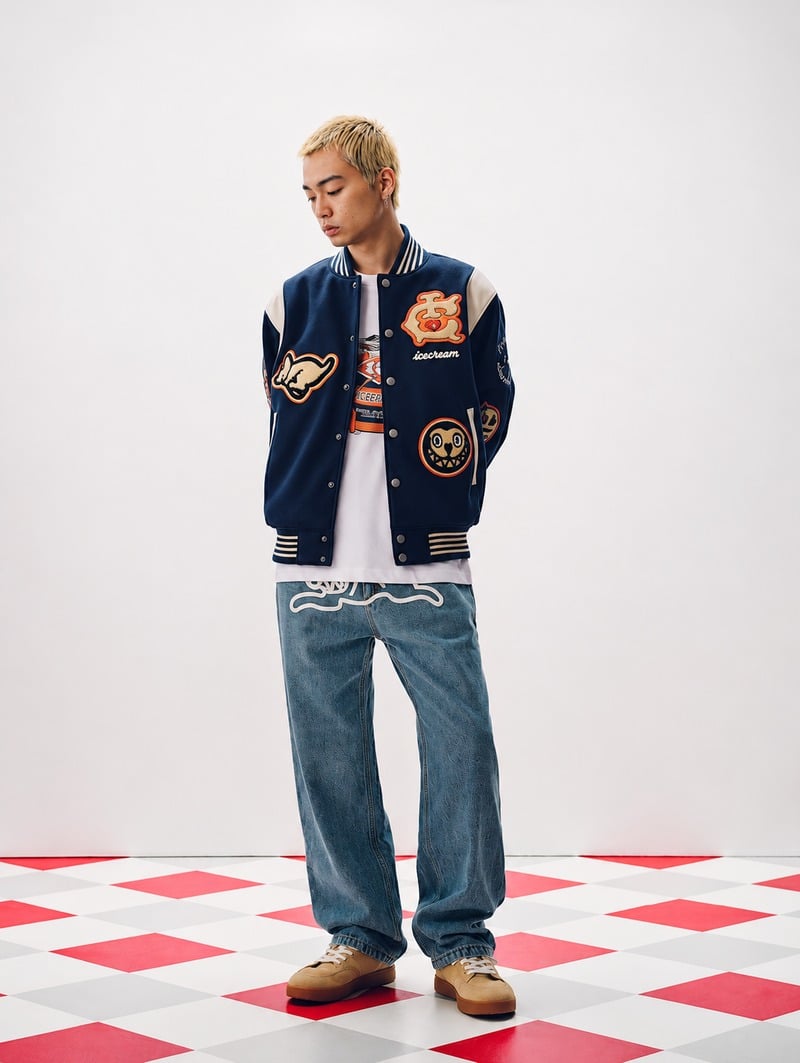
Pharrell Williams and Nigo gave hip-hop’s wardrobe a brightly colored alternative with Billionaire Boys Club and Icecream in 2003. Astronaut imagery, cartoon graphics and playful patterns proposed a different kind of aspiration, one informed by Japanese streetwear and Pharrell’s willingness to look unlike his peers.
The related labels have distinct emblems but share an appetite for fun. Their significance lies partly in making that attitude persuasive. A graphic tee could suggest curiosity and eccentricity as readily as status.
Cactus Plant Flea Market
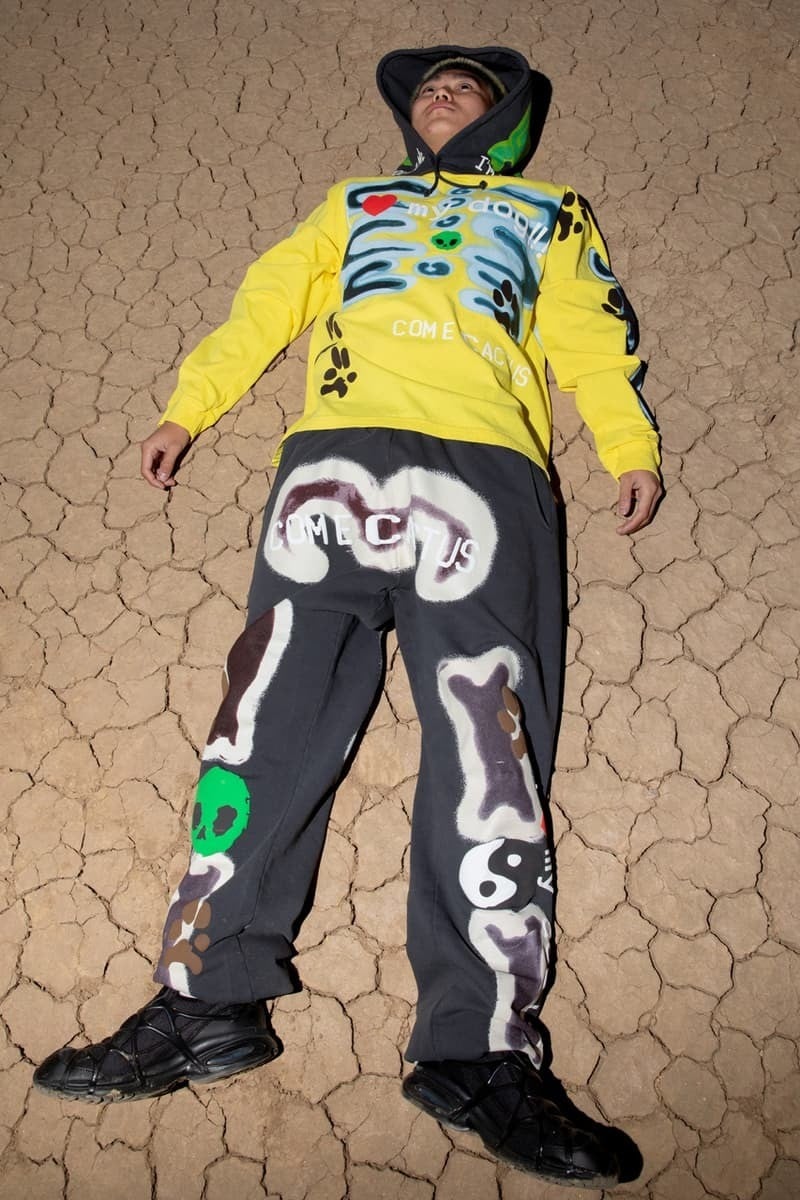
Cactus Plant Flea Market’s lettering looks as though it might escape the T-shirt. Puffy words, smiley faces and irregular arrangements give Cynthia Lu’s designs a handmade eccentricity. Even a widely recognized piece retains the feeling that someone has been experimenting with it.
Musicians and Nike collaborations have introduced that sensibility to a large audience. The graphics explain why it sticks. CPFM turns the casual tee into an odd, cheerful object with a personality of its own.
Denim Tears
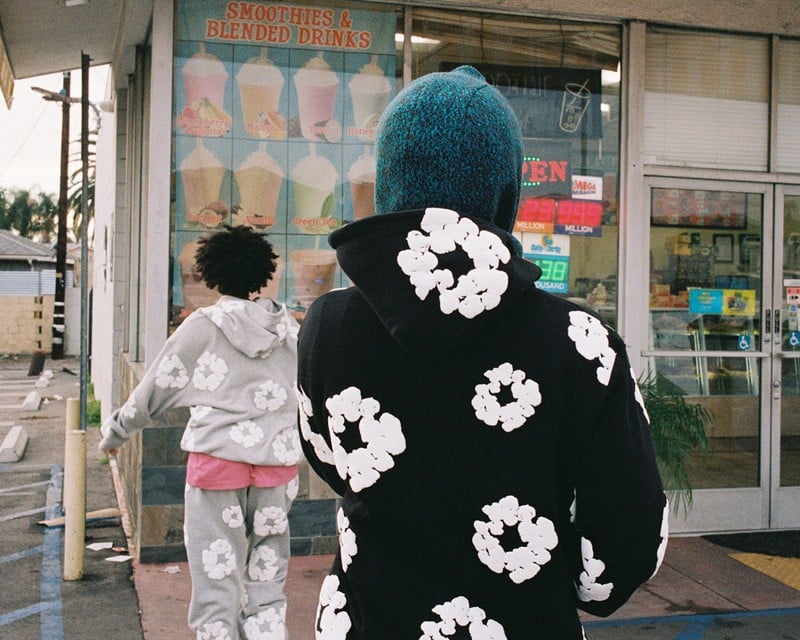
The cotton wreath on a Denim Tears sweatshirt asks more of its wearer than recognition. Tremaine Emory connects the motif to cotton and the history of slavery in America, placing that history on garments that circulate through contemporary popular culture.
The label’s wider subject is the African diaspora, explored through denim, sportswear and collaborations. Its success introduces a tension central to the clothes. A design can become a coveted symbol while the history behind it still demands attention. Emory makes room for both desire and that responsibility.
Kith
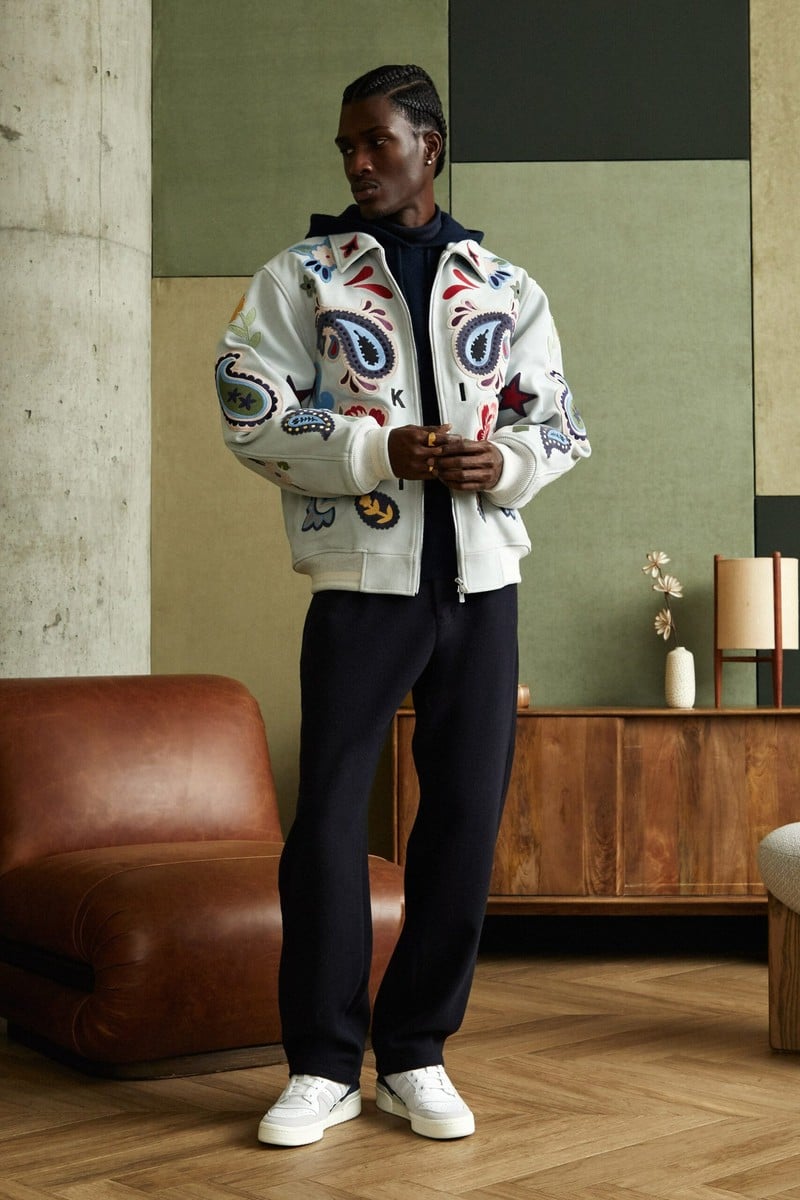
Kith understands the man who came for sneakers and stayed for an entire wardrobe. Ronnie Fieg’s label extends the specialty shop’s appeal into knitwear, outerwear and coordinated sets, with collaborations connecting sport, entertainment and luxury. The selection feels like an expression of personal taste on a much larger budget.
The shop is part of the proposition. Clothes, footwear and surroundings describe the same desirable life. Kith gives streetwear’s collector somewhere to go as his interests expand from the next release to the way he wants to live.
Aime Leon Dore
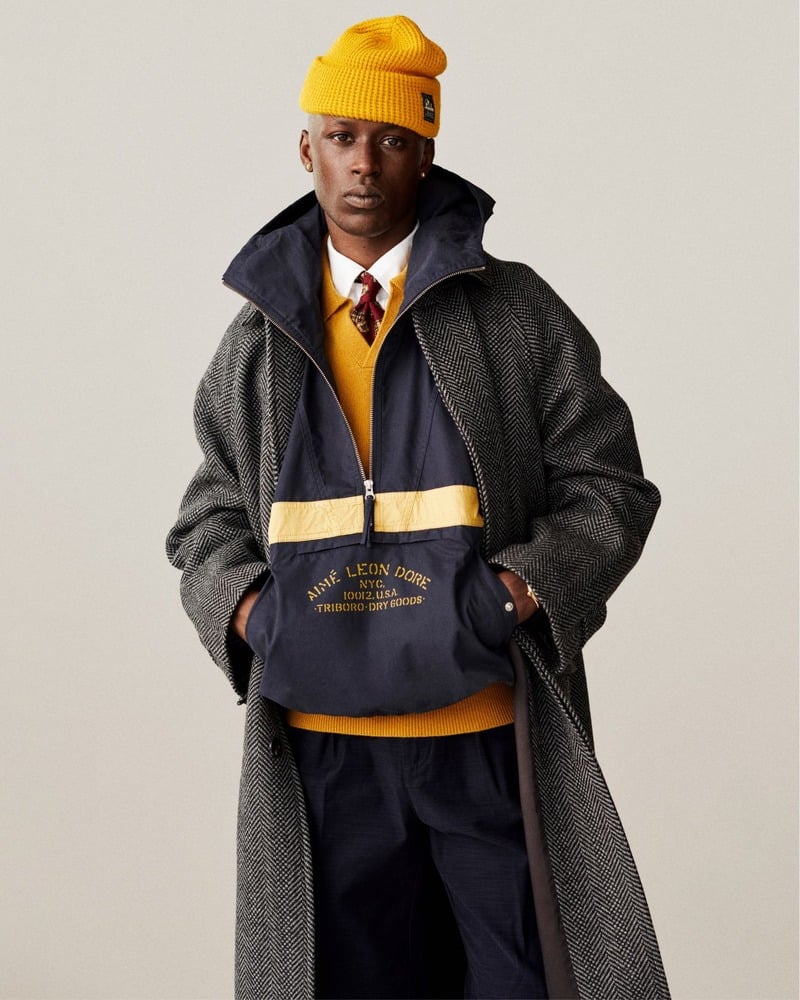
Aime Leon Dore makes the distance between a basketball court and a good overcoat feel short. Teddy Santis draws on New York sportswear and traditional menswear, putting loafers, knitwear and tailoring into the same wardrobe as sweats and New Balance sneakers.
The clothes propose adulthood with loyalties intact. A man can acquire a taste for a substantial coat while keeping the sporting references that shaped his first ideas about style. ALD makes the combination feel like a natural development in his life.
Noah
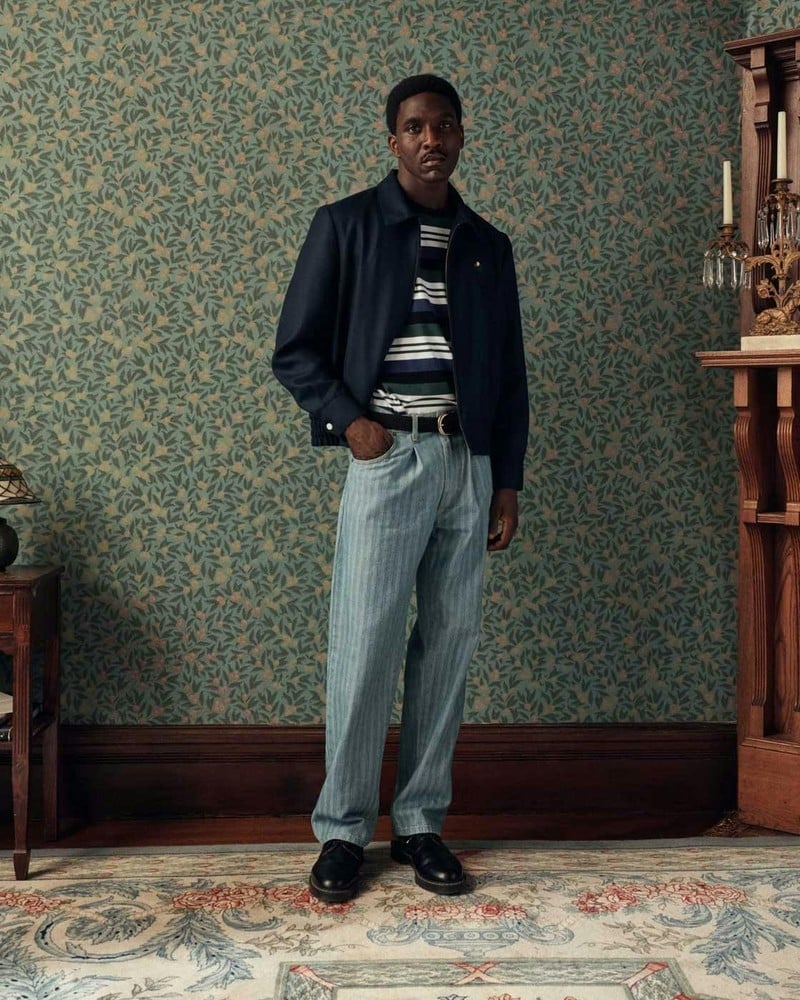
Noah’s striped tops and tailoring suggest a skater who has developed strong opinions about fabric. Brendon Babenzien and Estelle Bailey-Babenzien bring surf, skate and music into a wardrobe with an appreciation for traditional menswear. The cross-logo hoodie is one part of that broader taste.
The label also makes consumption itself a subject, discussing environmental and social issues alongside the clothes. That gives the well-made jacket a larger purpose. Noah imagines a lasting relationship with garments in a culture often preoccupied with the next release.
Carhartt WIP
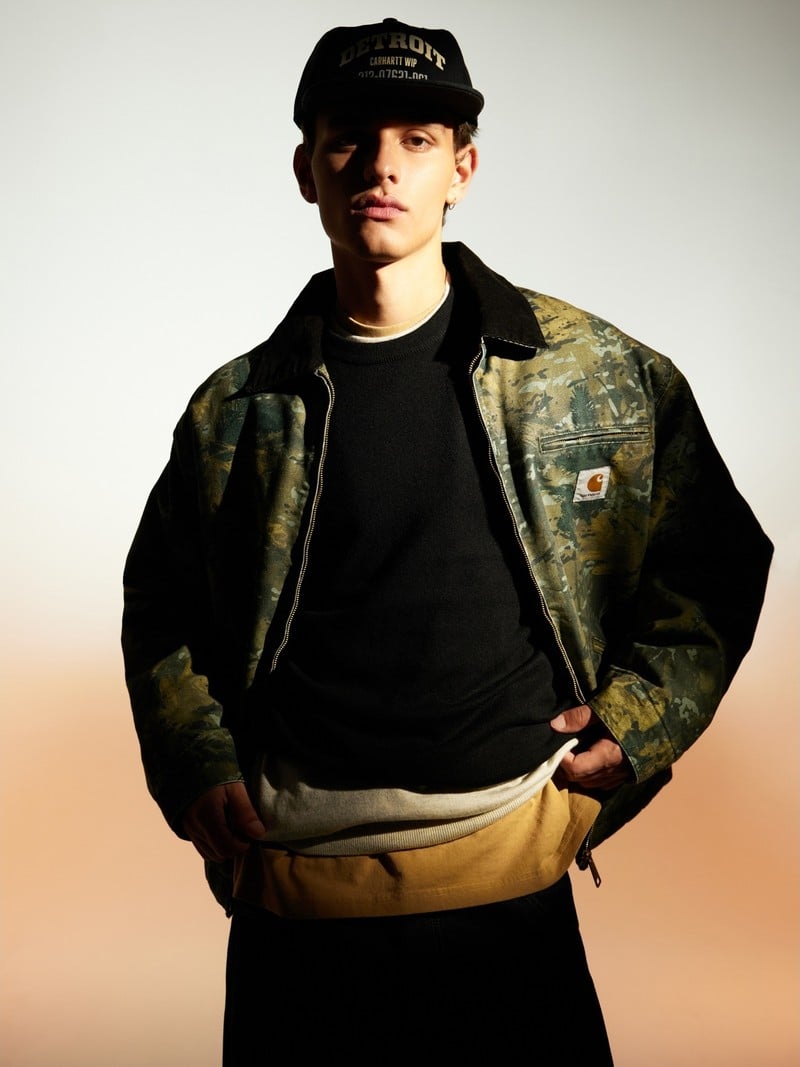
Carhartt WIP demonstrates what happens when work clothes acquire another working life. Canvas jackets and loose trousers found audiences in skateboarding and music, where durability and generous cuts served new purposes. Edwin Faeh established WIP in 1994 to develop collections from Carhartt’s American foundations.
The distinction matters. WIP adapts those clothes for an audience whose associations may begin with a skate clip or a club. The workwear remains recognizable, while the people wearing it change what it means.
Off-White
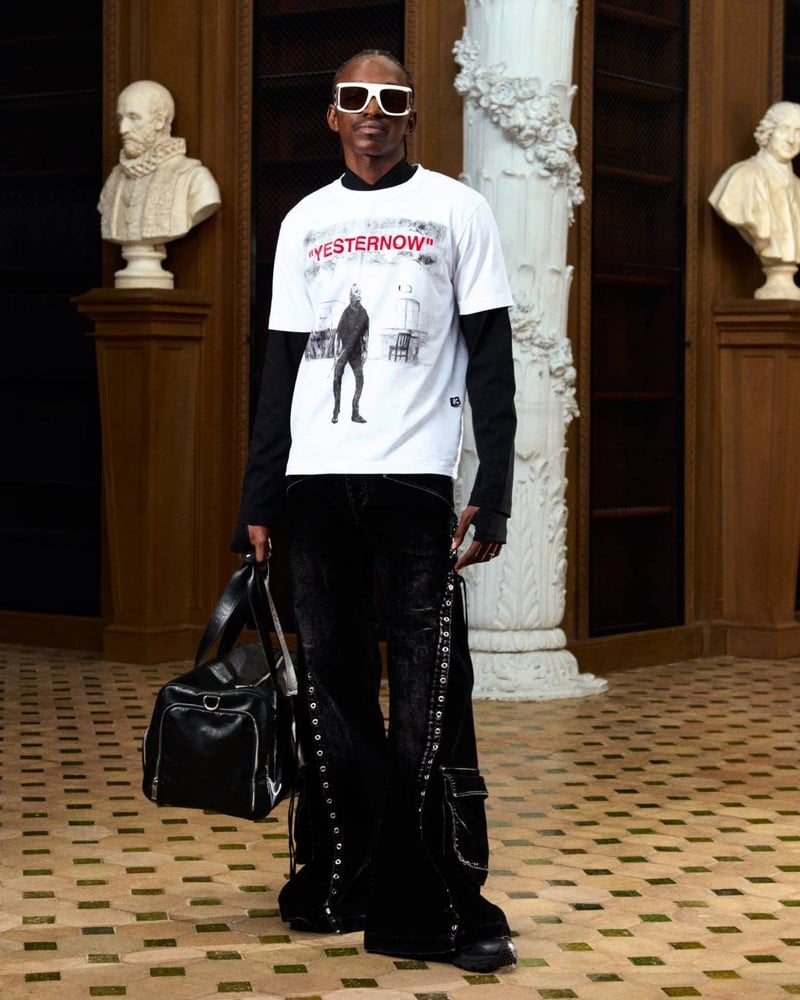
Virgil Abloh understood how a small intervention could change the way a garment was read. At Off-White, founded in 2013, quotation marks, arrows and industrial references made casual clothes into recognizable design objects. A label or a printed word could become the point of the piece.
That approach helped translate streetwear’s habits of sampling and referencing into luxury fashion. The hoodie arrived with an idea attached. Off-White’s importance rests in that exchange as much as in the graphics that made it immediately identifiable.
Fear of God
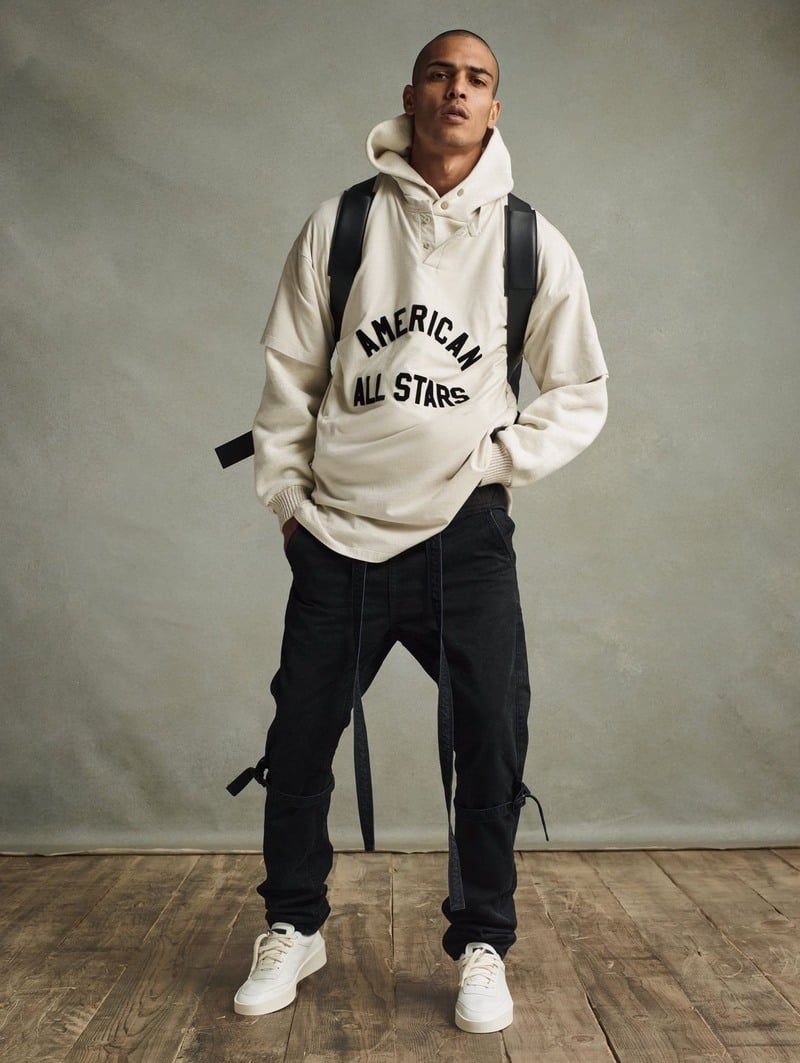
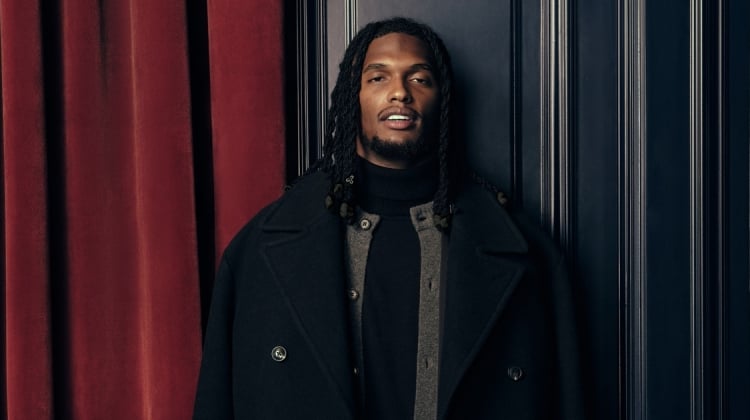
Fear of God makes a convincing argument for the silhouette as a status symbol. Broad shoulders, long lines and substantial volumes give Jerry Lorenzo’s clothes their identity, even when the branding is subdued. The main collection’s tailoring and knitwear extend an approach that began with layered American casualwear.
Among luxury streetwear brands, Fear of God stands out for treating sportswear as the basis for a complete luxury wardrobe. An overcoat and a sweatshirt can share the same attitude through their proportions. That continuity explains the label’s influence beyond the graphic-heavy side of streetwear.
Essentials
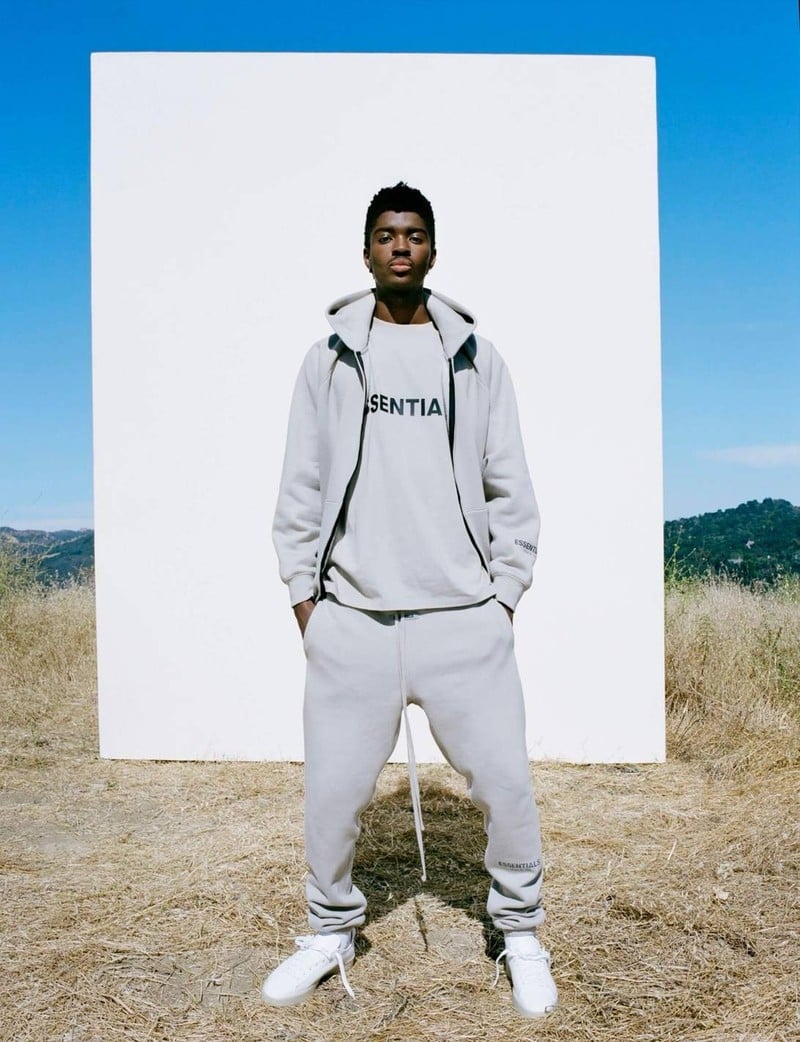
Essentials made Jerry Lorenzo’s generous proportions available to a much wider audience. Roomy hoodies, sweatpants and T-shirts offer a recognizable silhouette in coordinated colors, with the name printed prominently enough to establish the connection.
The appeal is straightforward. A few casual pieces can suggest a complete look. That separates Essentials from the material ambition and tailoring of Fear of God’s main collection, giving the line its own place in the everyday streetwear wardrobe.
Anti Social Social Club
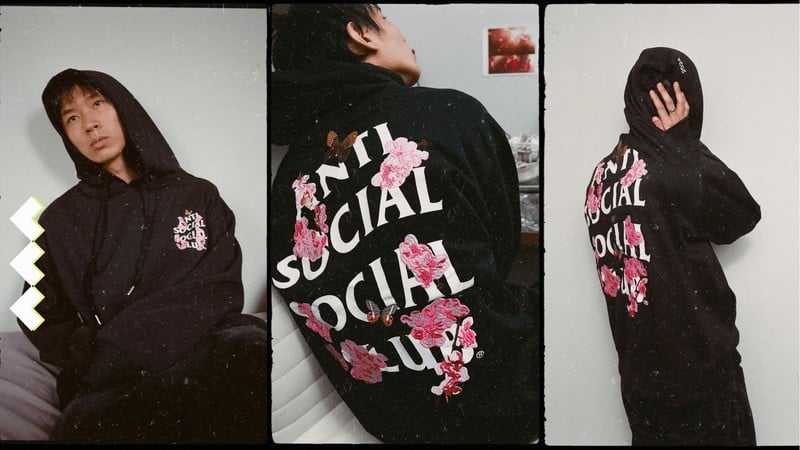
Anti Social Social Club turned the discomfort of belonging into a brand people wanted to belong to. Neek Lurk’s label, founded in 2015, put its wavy name and melancholic phrases on colorful tees and hoodies. The large back print made a private mood publicly recognizable.
That contradiction explains much of ASSC’s appeal. The garment itself is straightforward. The statement supplies the identity, offering a shared language for an audience accustomed to expressing its feelings through a screen.
FTP
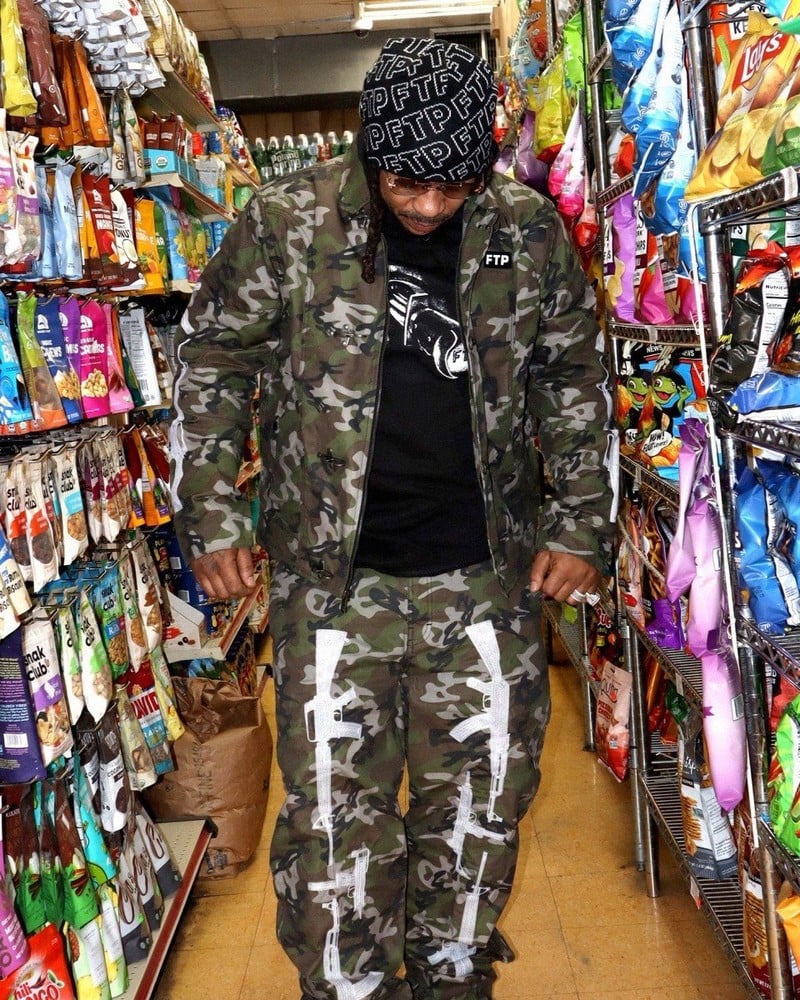
FTP spells out its position in its name, Fuck the Population. Zac Clark’s Los Angeles label, started in 2010, uses provocative graphics and blunt language to make casual clothing feel like an allegiance. The hostility is part of the attraction.
Tees and hoodies provide the most direct expression of that attitude, although the range extends further. FTP occupies the confrontational end of streetwear, where wearing the name can matter as much as recognizing the image. Respectability has little to contribute to the proposition.
Corteiz
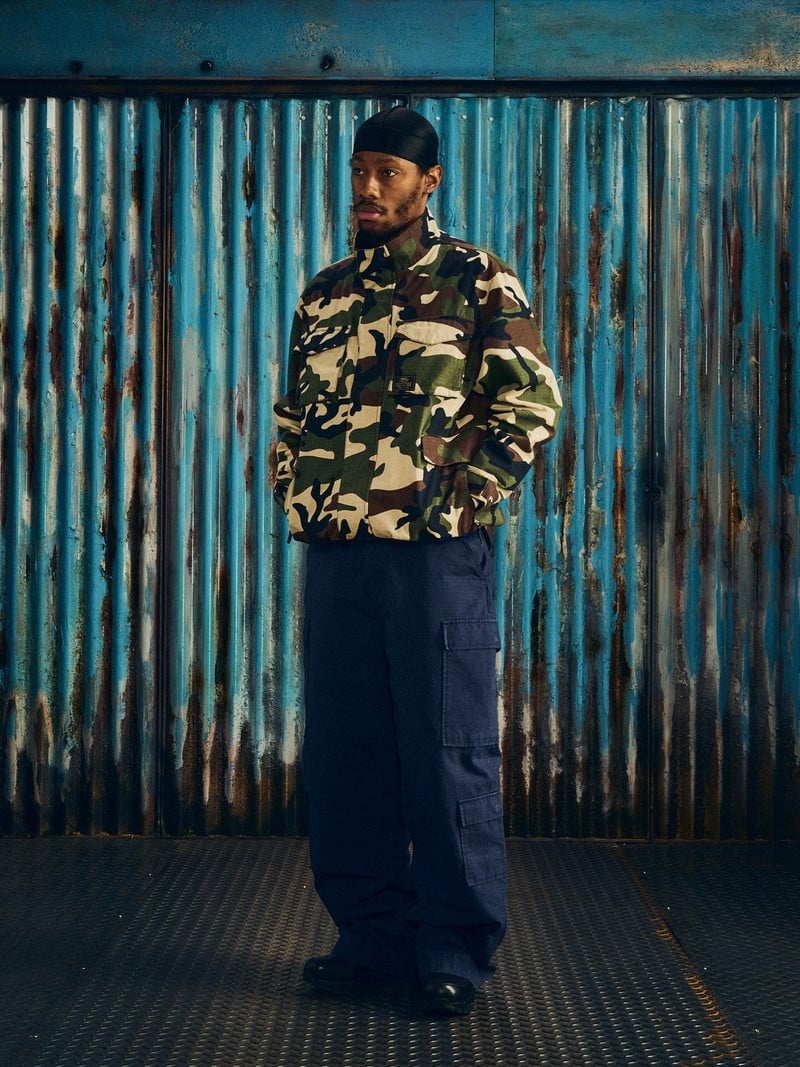
Corteiz makes belonging feel like participation. Clint’s London label has used its Alcatraz emblem, cargo trousers and tracksuits to establish a recognizable uniform, while product releases give its audience something to turn up for. Nike collaborations have expanded the reach of an identity rooted in the city.
The strength is the connection between clothes and community. A pair of cargos has a practical appeal before it becomes a sign of membership. Corteiz gives that ordinary garment the added attraction of being part of something happening now.
Hellstar
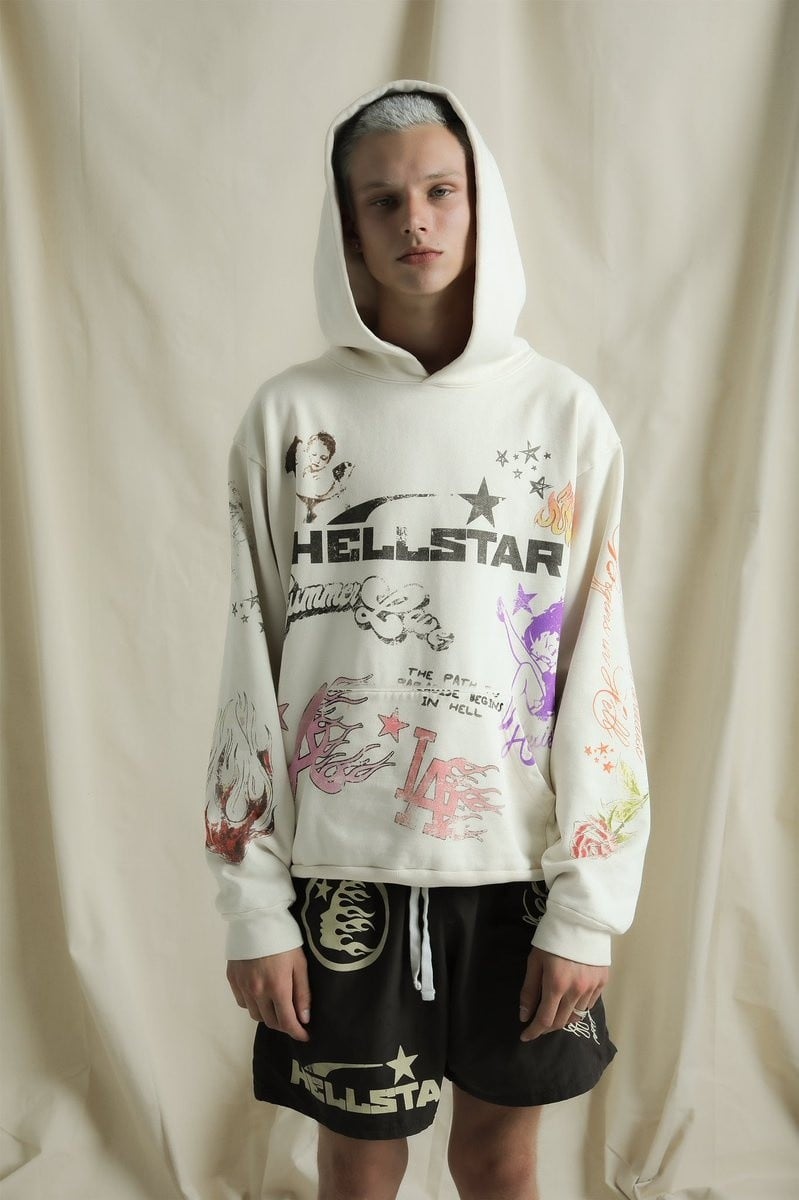
Hellstar brings the graphic back to the center of attention. Flames, dense imagery and washed surfaces cover T-shirts and sweats, giving simple garments the visual impact of a piece of music merchandise. Sean Holland and his fellow founders launched the label in 2020.
Its audience has grown around the overlap of music, sport and conspicuous casualwear. The clothes suit that setting. A Hellstar tee supplies the focal point of an outfit, with enough happening in the print to make the rest of the wardrobe secondary.
Chrome Hearts

Chrome Hearts gives streetwear a taste for rock-star excess. The Los Angeles label began in 1988 with leather clothing and silver accessories, developing gothic lettering, crosses and substantial metalwork into recognizable signatures. Its appeal among musicians helped those objects reach another generation of collectors.
The silver matters as much as the sweatshirt. Jewelry, eyewear and leather details give the symbols physical substance, making the attraction both visual and tactile. Chrome Hearts brings the romance of biker clothing into a wardrobe where a hoodie can command the attention once reserved for a leather jacket.
Sneakers & the Wider Wardrobe
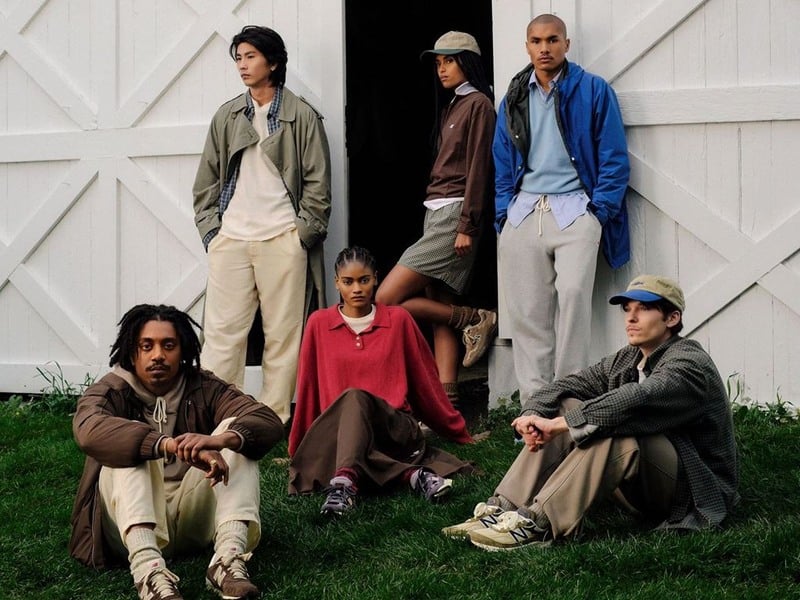
Nike, Jordan, adidas and New Balance connect many of these labels through collaborations and the wardrobes of the people who wear them. Converse and Vans belong to the same discussion. Their athletic and skate backgrounds supply another set of references, from a basketball shoe’s history to a particular team’s influence.
The relationship works in both directions. A collaboration can introduce a clothing label to sneaker collectors, while the clothes give a well-known shoe a different context. The streetwear style guide explores the pieces that bring that wardrobe together.