Before Louis Vuitton’s menswear shows became events capable of taking over a Paris landmark, there was a man in a good coat with somewhere to go. The distance between that customer and today’s runway spectacle is one of the pleasures of tracing Louis Vuitton menswear history.
Louis Vuitton Menswear, subtitled The Complete Collections, gives that evolution a collection-by-collection record. Published by Yale University Press on November 3, 2026, with texts by Anders Christian Madsen, the book puts the quieter beginnings back into a story now dominated by its most famous appointments.
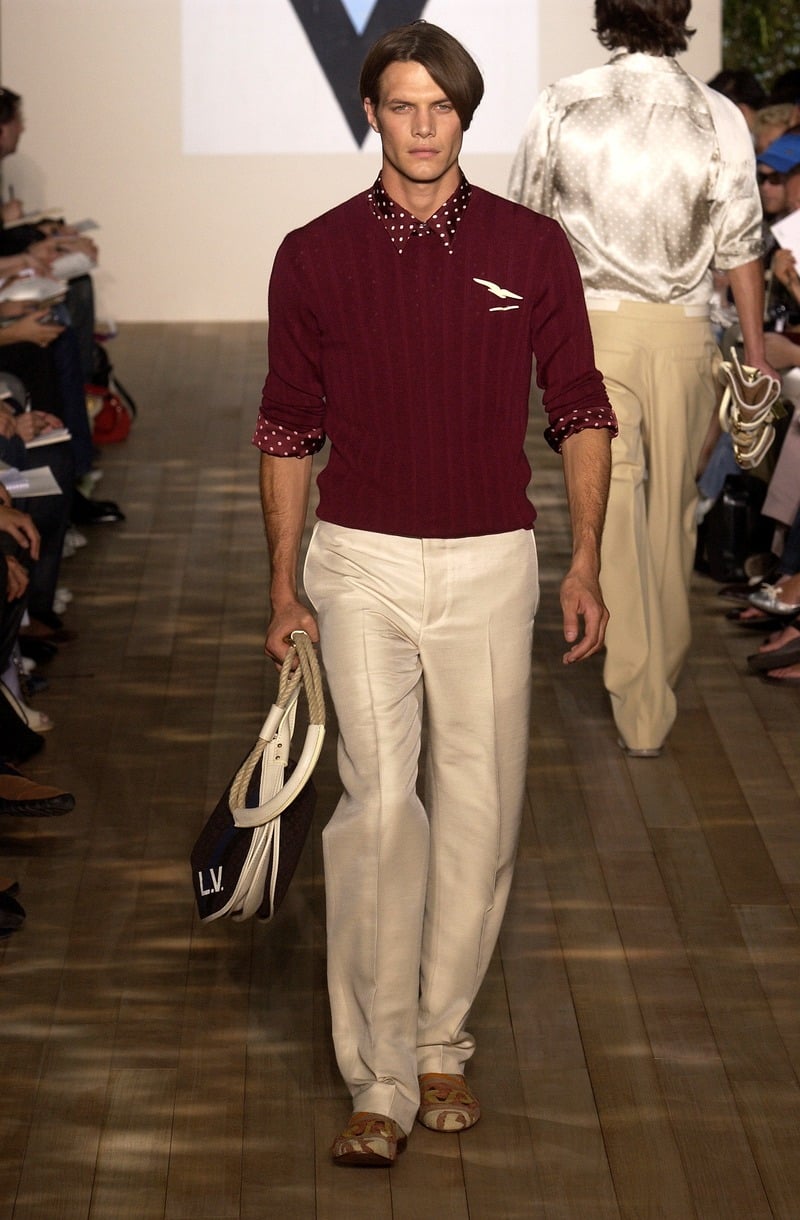
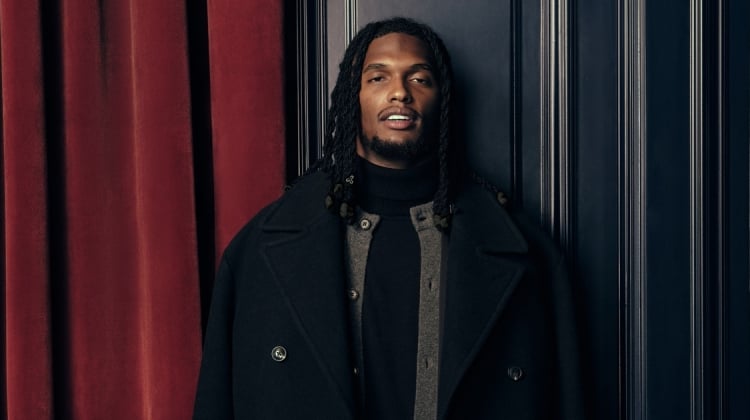
Marc Jacobs joined Vuitton in 1997, introducing menswear for fall-winter 1999 before the house staged its first standalone men’s show in January 2001. His early proposition was grounded in recognizable clothes whose luxury depended on materials and execution. A dark coat over a gray top could do the work. Later collections explored other identities, including the collegiate wardrobe of spring-summer 2005, informed by Brideshead Revisited. For a house built on luggage, the clothes supplied a plausible answer to what its customer might pack.
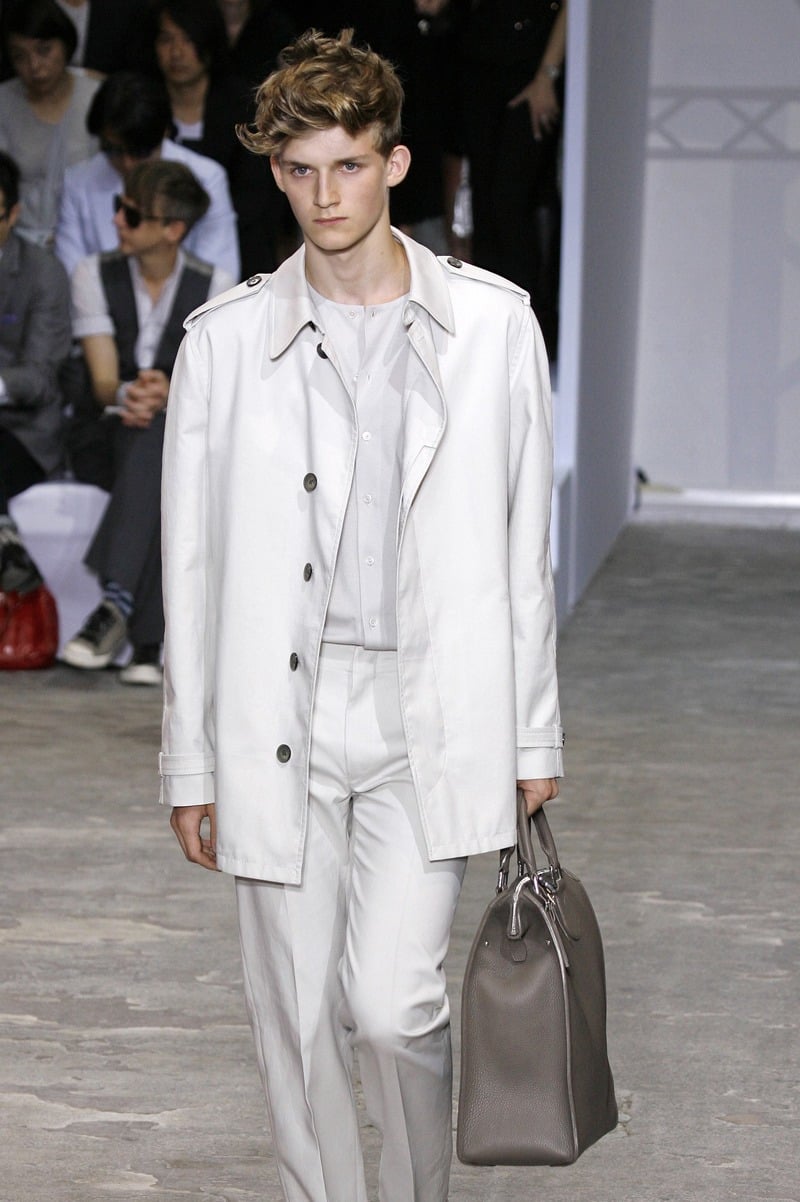
Paul Helbers, who joined as men’s studio director in 2006 and formally took the menswear reins in 2008, deserves space in that history. His spring-summer 2009 collection drew on Charlie Chaplin, while the dark double-breasted tailoring of fall-winter 2010 suggested an assured, adult wardrobe. These years complicate any account that treats Vuitton menswear as a waiting room for streetwear. There was already a customer, and the clothes had a point of view.
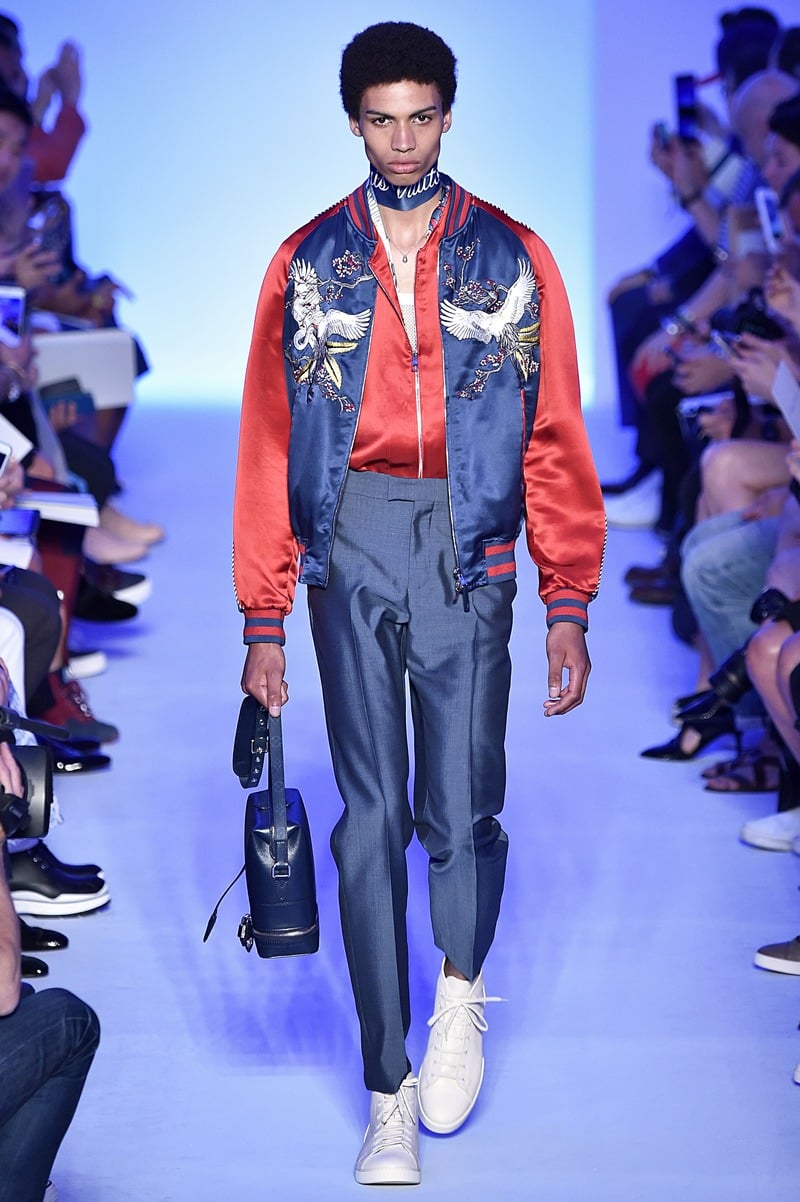
When Kim Jones arrived in 2011, travel became more personal. His debut connected East African references with Ivy League sportswear, drawing on his childhood across several African countries. Souvenir jackets later offered another way to dress the traveler, with the souvenir itself becoming the desirable object.
The Supreme collaboration for fall-winter 2017 made the shift especially clear. Vuitton’s Monogram could now announce membership in a skate-informed fashion culture as readily as access to luxury travel.
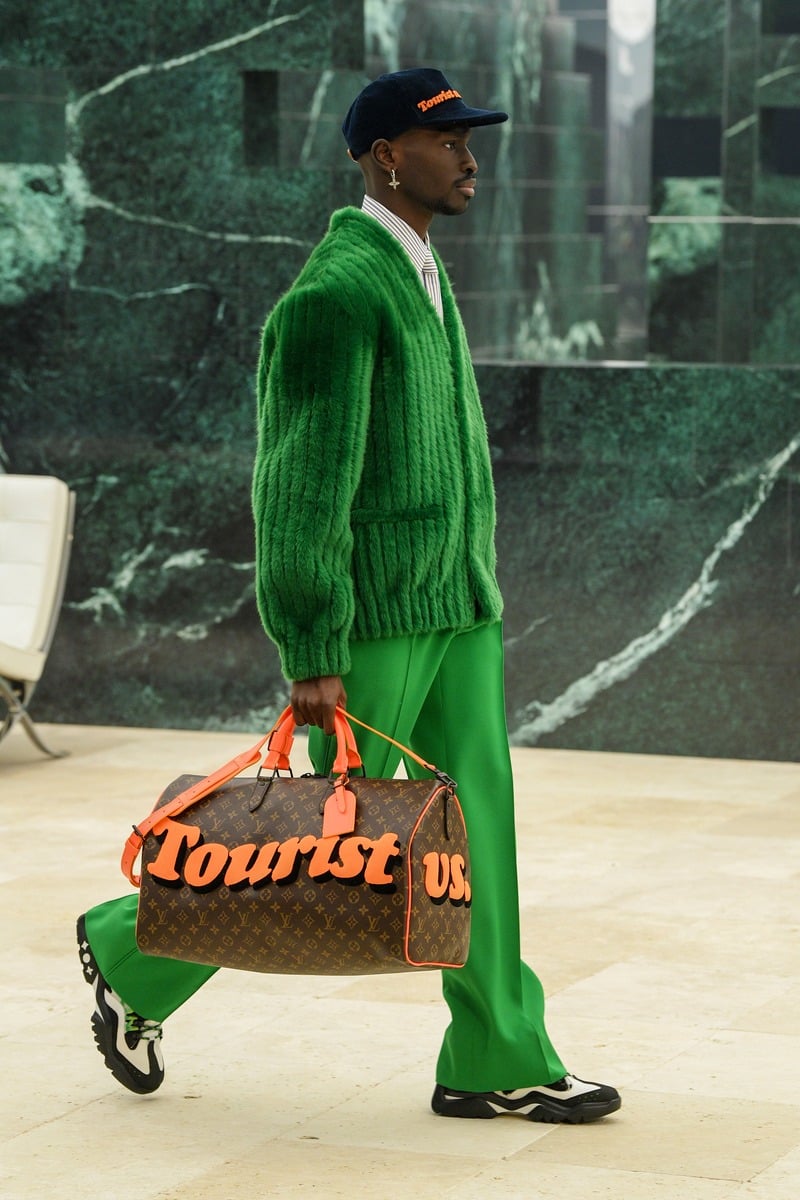
Virgil Abloh succeeded Jones in 2018 and widened the question of who could see themselves inside the house. His spring-summer 2019 debut used a rainbow runway and references to The Wizard of Oz to introduce that ambition.

Tailoring remained central, but saturated color and unfamiliar styling challenged the authority usually attached to a suit. The Studio Homme collections that followed his tenure belong in the record too, preserving the work of the team between named creative directors.
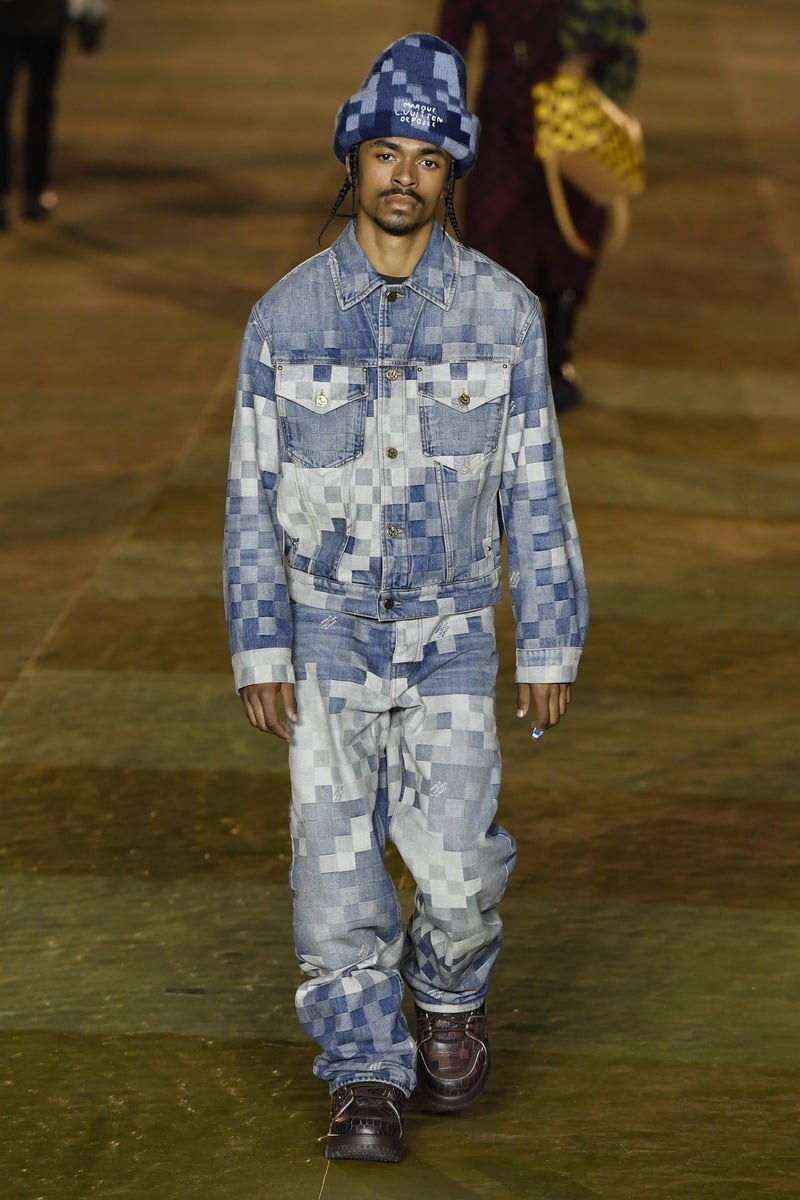
Pharrell Williams, appointed in 2023, brought his debut to the Pont Neuf for spring-summer 2024. Pixelated Damier workwear translated a luggage signature into an image legible across a vast stage. Seen against the early collections, the change extends beyond louder clothes or bigger shows. Vuitton once proposed a wardrobe for the man who could afford the journey. Increasingly, its menswear has offered him a part in the event.