A tailored jacket, a good shirt, correct shoes, and then a neck the color of a fresh sunburn sitting above the collar. You’ve seen it. You’ve probably been it.
Most men treat shaving as a hair removal task with a fixed cost of irritation, when the irritation is optional. It comes from a specific sequence of things happening to your skin barrier in the ten minutes around the shave, and almost all of it responds to changes that take no extra time. Here’s what the razor does, and what to do about it while the window is still open.
A Blade Is an Exfoliation Tool in Disguise
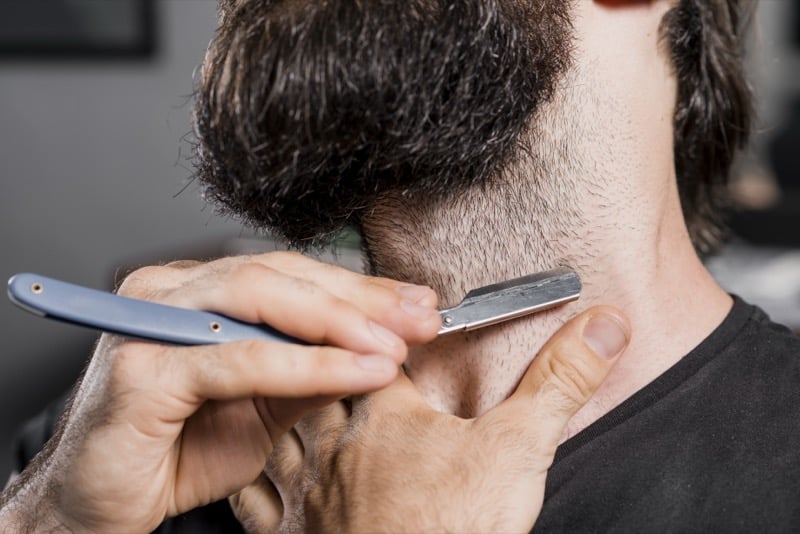
Dermatologists have measured the effect. Shaving removes a portion of the stratum corneum, the outermost layer of dead cells, along with the hair. That layer is what holds water in. Take some of it off and transepidermal water loss climbs, staying elevated for hours after you rinse.
The redness is more than mechanical scraping. Part of it is a face that has temporarily lost its ability to hold moisture, reacting to everything you put on it next.
This reframes the whole routine as reconstruction. You’re rebuilding a barrier that already has a head start on drying out.
The Window After You Rinse
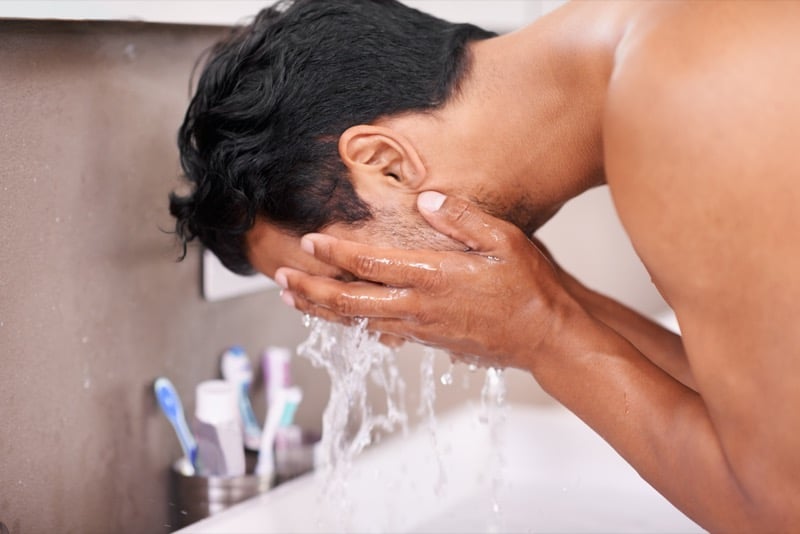
Damp skin absorbs and holds product in a way dry skin resists. Once your face air-dries completely, you’ve missed the useful part of that window. You’re now applying moisture onto a sealed, dehydrated surface instead of trapping water that’s already there.
Here’s the practical version. Cool rinse, pat the skin dry with a clean towel, leave it slightly damp, then apply a moisturizer, balm, or facial oil. This is the post-shave step most men skip: replacing moisture while there is still water in the skin to hold onto. Two minutes is plenty.
What you apply matters here because freshly shaved skin is already losing water. Look for formulas that help replenish moisture and support the compromised barrier. Plant oils rich in linoleic and oleic acids give your skin the raw material it uses to rebuild ceramides, which is why botanical-oil formulations work well on freshly shaved skin.
Prima’s clean skin care line uses jojoba, rosehip and squalane instead of the alcohol-and-menthol combination men’s grooming defaulted to for fifty years. Glycerin, panthenol, allantoin and niacinamide are the other ingredients worth scanning a label for.
Quick tip: Keep your cologne off freshly shaved skin. Ethanol-based fragrance on a compromised barrier is a reliable route to stinging and, over time, sensitization. Spray it on your chest or the back of your shirt collar instead.
Razor Burn & Razor Bumps Are Different Problems
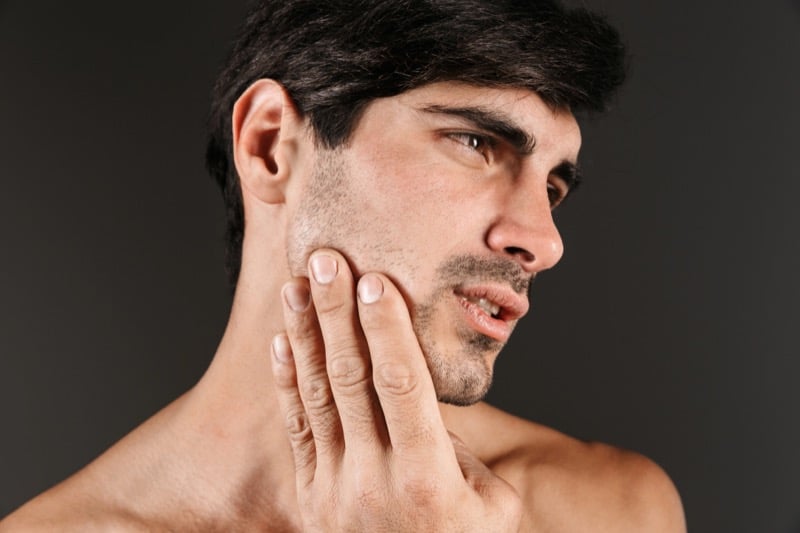
Worth separating, because the fixes point in opposite directions. Razor burn is irritant, caused by blade trauma, too many passes, a dull edge, or dry shaving. It shows up immediately as diffuse redness and a hot, tight feeling. It resolves in a day or two.
Razor bumps are pseudofolliculitis barbae, hair cut below the skin surface that curls and grows back into the follicle wall. Your body treats it as a foreign object and mounts an inflammatory response. The response shows as papules, sometimes pustules, sometimes dark marks that linger for months. Men with coarse, tightly curled hair are far more prone to it, because a curved hair needs less depth to re-enter the skin.
The real trigger is stretching the skin taut while you shave, a habit most men overlook. It gives a closer result by pulling the follicle up to the blade. Then the skin relaxes and the cut hair tip retracts below the surface, prime territory for an ingrown.
Quick tip: If you get bumps on your neck specifically, loosen the pull and shave with the grain there. Neck hair grows in swirls, changing direction across the neck. Spend one morning mapping which way yours goes with a dry hand before you lather, and use that map forever.
Why Aftershave Stings & What the Sting Signals
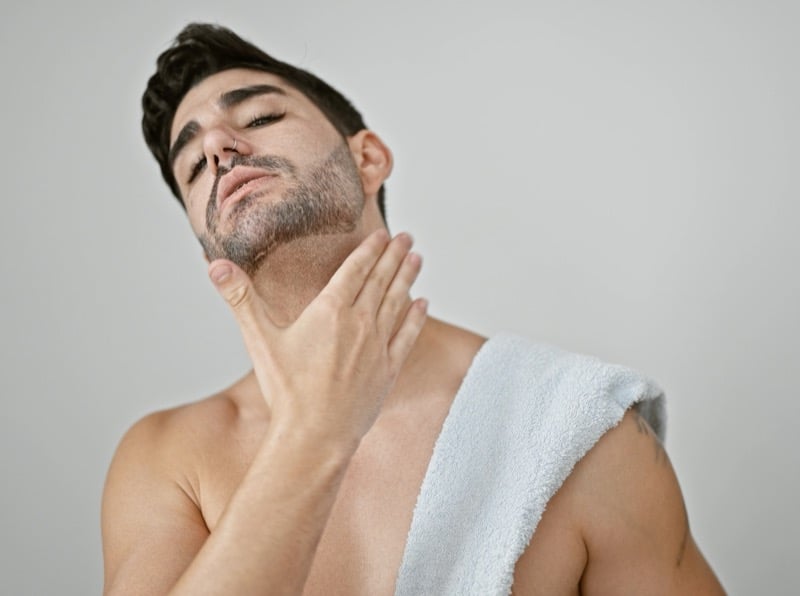
Denatured alcohol splashes are antiseptic and evaporate fast, which feels bracing. They also strip the lipids you just lost more of. The sting is your skin reporting damage, a signal easy to mistake for the product working.
An alum block has a real use. It’s astringent, and it will stop a weeper, but daily use on the whole face is drying. Use it on the nick. Keep it off the neck.
Alcohol-free witch hazel delivers the tightened feeling minus the strip, a reasonable middle ground. But it does not replace the post-shave moisture step. Follow it with a moisturizer, balm, or facial oil while the skin is still slightly damp.
The Fixes That Happen Before the Blade Touches You

Shave right after the shower. Hair absorbs water and swells, which drops the force needed to cut it substantially. Same razor, less trauma.
Change blades sooner than you think. A dull edge drags and tears instead of slicing, and drag is where burn comes from. If you’re on pass three of the same area, the blade lost the argument two passes ago.
One pass with the grain gets you 90% of the way there. The last 10% is where nearly all the damage happens.
What Non-Shave Days Are For
Prevention happens on the days between shaves. A leave-on salicylic or glycolic acid product, used on days off from the razor, keeps follicle openings clear so hairs exit instead of turning inward. On a freshly shaved face, though, acids on a stripped barrier sting for a reason, so space them out.
And if your bumps are already inflamed, growing the beard out for two weeks resolves more than any product will. It’s the actual cure, worth keeping in reserve for whenever the schedule allows it.
The Two Minutes That Matter
The larger fix is simpler than most shaving routines make it sound. Treat the few minutes after the razor as part of the shave itself. Rinse, leave the skin slightly damp, and replace the moisture the blade helped remove. The best post-shave routine is less about the old-school sting of aftershave and more about giving your skin back what shaving just took away.