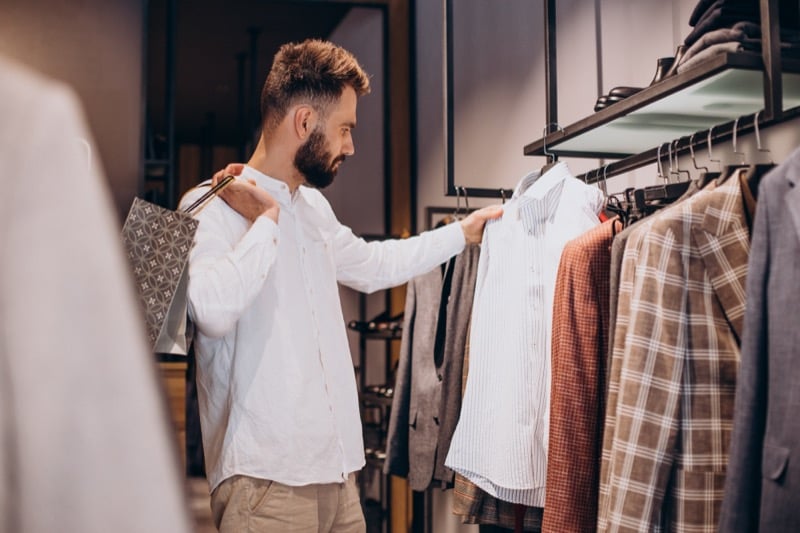
You walked into a store last week and bought a pair of jeans. The receipt showed a price, a size, and a timestamp. What it did not show was the second transaction happening underneath, the one where every detail of your visit was logged, cross-referenced, and sold before you reached your car. Retail in 2026 runs on a currency most shoppers never see, and that currency is you.
The shift happened gradually enough that few people noticed. A decade ago, shopping was still semi-anonymous. You could pay cash at a department store and walk out as a stranger. Today, from the moment your phone connects to a store’s Wi-Fi signal to the moment a retargeted ad appears on your laptop that evening, your identity is the product moving through the most efficient supply chain in commerce.
The retail analytics market now exceeds $13 billion globally, a figure that reflects how much money there is in knowing who you are, what you want, and what you will pay for it. The old model asked you to buy things. The new model buys information about you, constantly, and at a scale most consumers do not fully understand. As online shopping continues to reshape retail, the transaction between shopper and retailer has expanded well beyond the point of sale.
Most of this tracking depends on one thing: identification. Retailers need to know that the person browsing a leather jacket on a phone at lunch is the same person opening a laptop that evening. Your IP address is the thread that ties those sessions together, which is why a VPN remains one of the few tools that severs the connection at its source. But IP masking only addresses one layer of a system that runs far deeper than most shoppers realize.
The Data Collected on Every Shopper

Purchase History
Every item you buy is time-stamped, categorized, and linked to your profile permanently. This goes well beyond remembering that you bought a navy blazer last October. Retailers track purchase frequency, average spend per visit, brand preferences within categories, and seasonal buying patterns over years. That data creates a consumer portrait so specific that algorithms can predict your next purchase weeks before you think of it yourself. When you swipe a loyalty card or tap a saved payment method, you connect every past transaction to every future one.
Demographic and Financial Data
Retailers collect your age, gender, income bracket, and ZIP code. Combined, these data points create a neighborhood wealth profile that determines how you are marketed to. A shopper in a high-income ZIP code sees different product placements, different email campaigns, and increasingly, different prices than a shopper ten miles away. Kroger’s data operation, as The Markup reported in 2023, extends to financial information, employment details, and race and ethnicity inferred from purchasing patterns and third-party data enrichment.
Online Behavior
If you have ever lingered on a product page, added an item to your cart, and then closed the tab, that entire session was recorded. Retailers track which products you view, how long you spend on each page, what you compare side by side, and what you abandon at checkout. Abandoned cart data is among the most valuable behavioral signals in e-commerce, because it reveals what you wanted but hesitated on, giving the retailer a direct opening to retarget you with ads and discount prompts. Browse a suede jacket for forty-five seconds on Tuesday and expect to see it again on Wednesday, on a different site, priced ten dollars lower.
Location Data
In-store tracking now operates at the level of individual footsteps. Wi-Fi and Bluetooth beacons can identify your phone the moment you enter a store, track your path through every aisle, and measure how long you stand in front of a specific display. Some retailers map foot traffic patterns to determine which product arrangements generate the most engagement, effectively turning your physical movement into a data stream. The store layout you walk through was likely optimized by analyzing thousands of shoppers who walked it before you.
Cross-Device Tracking and Device Fingerprinting
Your phone, laptop, and tablet each have a unique digital signature composed of hardware specs, browser settings, screen resolution, installed fonts, and operating system version. Foundational research in device fingerprinting showed that these attributes could uniquely identify over 90 percent of users. Retailers use this to link all of your devices to one profile, so the sneakers you browsed on your phone at lunch appear as an ad on your desktop that afternoon. Browser fingerprinting code now appears on more than a quarter of the most-visited websites, and because it operates at the hardware level, clearing your cookies does nothing to stop it.
Inferred Data
This is where retail data collection becomes most invasive. By analyzing what you buy, retailers infer personal details you never volunteered. The most famous example remains Target’s pregnancy prediction model, developed by statistician Andrew Pole, which analyzed purchases across roughly 25 product categories to assign shoppers a pregnancy likelihood score. The resulting story, reported by Charles Duhigg in The New York Times Magazine in 2012, described a Minneapolis father who discovered coupons for baby clothes and cribs addressed to his teenage daughter. Whether every detail of the anecdote holds up to scrutiny, the underlying capability is real and has only grown more sophisticated. Retailers now infer health conditions, relationship status, financial stress, and major life events from purchasing patterns alone.
How Retail Data Collection Works

Loyalty Cards and CRM Systems
The loyalty card is the oldest data pipeline in retail and remains the most powerful. When you scan your rewards card, you hand over a complete purchase history in exchange for a modest discount. Kroger’s loyalty program connects purchases to demographic profiles enriched by third-party brokers, creating a data asset so valuable that the company’s “alternative profit businesses,” which include advertising and data operations, are projected to generate one billion dollars in annual profit. The math is plain. A five-percent grocery discount costs the retailer far less than the data it extracts.
How Tracking Pixels Follow You Across the Web
A tracking pixel is a 1×1-pixel image embedded in a webpage, email, or ad. It is invisible to you. When your browser loads the page, it fetches the pixel from a remote server, and that single request transmits your IP address, device type, operating system, and the exact moment you viewed the content. Retailers embed these pixels across their sites and in marketing emails to monitor which products you view, which emails you open, and which ads drive you back to the store. Because pixels send data directly to the server, they persist even when you clear your cookies.
Wi-Fi and Bluetooth Beacons
Beacons are small hardware sensors placed throughout physical stores. When your phone’s Bluetooth or Wi-Fi is active, beacons detect your device and log your location within the store at intervals of a few seconds. This produces a heat map of your shopping trip, recording which departments you visited, how long you spent in each, and which displays caught your attention. Some systems match your in-store beacon data to your online profile, linking the jacket you touched on a rack to the jacket you browsed on your phone the night before.
Facial Recognition and In-Store Cameras
AI-powered cameras in retail stores can estimate your age, gender, and mood in real time. Some systems track how long you look at a shelf and correlate that attention data with purchase outcomes. Kroger has deployed sensor technology that detects customer presence, dwell time, and door activity at select locations. The company maintains that its systems do not store facial data or attempt to identify individual shoppers, though the technical capability to do so exists within the hardware itself.
Third-Party Data Brokers
Retailers do not collect all of this data themselves. They buy it. Data brokers compile consumer profiles from public records, financial institutions, social media activity, app usage, and other retailers, then sell these enriched profiles to anyone willing to pay. A single consumer profile purchased from a data broker can include hundreds of attributes, from estimated household income to pet ownership to political affiliation. When a retailer combines its first-party transaction data with a broker-supplied profile, the result is a composite portrait of you that is more comprehensive than anything you would voluntarily share.
From Targeted Advertising to Surveillance Pricing

Surveillance Pricing
The most consequential use of retail data may be the one shoppers notice least. Surveillance pricing uses your browsing history, location, and purchase patterns to calculate a personalized price, one designed to reflect the maximum amount you are likely to pay. In December 2025, Consumer Reports caught Instacart charging different shoppers up to 23 percent more for identical items in the same store. The practice triggered a $60 million FTC settlement and a wave of legislation.
The regulatory response has been swift. As of mid-2026, at least 24 states have introduced bills to regulate personalized algorithmic pricing, already outpacing the total number of such bills from all of 2025. Maryland became the first state to ban it outright for food retailers in April 2026, and New York’s Algorithmic Pricing Disclosure Act now requires companies to display a notice stating that a price was set by an algorithm using the customer’s personal data. California’s proposed AB 2564 would impose fines up to $12,500 per violation per consumer. The era of one price for all customers is ending, and the replacement system favors the retailer.
Targeted Advertising That Follows You Everywhere
The ads that trail you across the internet after you browse a pair of boots are not coincidence. They are the output of retargeting systems fed by tracking pixels, device fingerprints, and purchase data. Retailers know which products you viewed, how close you came to buying, and how much discount pressure it takes to convert you. That information travels through advertising networks that serve you the same product on news sites, social media, and streaming platforms for days or weeks after your initial visit.
The mechanics are worth understanding. When you view a product page, a retargeting pixel fires and logs the specific item, the time you spent on the page, and whether you added it to your cart. That signal enters an ad exchange where brands bid in real time for the right to show you that product again. The bid price depends on how likely you are to convert, a probability calculated from your past purchase behavior. You are not seeing random ads. You are seeing the output of an auction that your own data made possible.
Predictive Modeling
Retailers are not content to react to what you buy. They want to predict what you will buy next. Machine learning models trained on millions of transaction histories can forecast purchasing behavior with increasing accuracy, identifying the moment you are most likely to need a new pair of running shoes or the week you tend to restock grooming products. These predictions drive email timing, app notifications, and the product carousels that greet you on a retailer’s homepage. The recommendations feel convenient because they are engineered from your own behavioral data.
Retail Media Networks
Retailers have transformed their customer data into advertising platforms. Amazon’s advertising revenue reached $68.6 billion in 2025, and Walmart Connect grew 44 percent in early 2026. US advertisers will spend $69.3 billion on retail media this year, making it the fastest-growing advertising segment in the country. The model is straightforward. Retailers collect your shopping data, then sell brands the ability to target you with ads based on that data, on the retailer’s own website, app, and in-store screens. Your purchase history funds the advertising ecosystem that sells to you. Amazon and Walmart together capture 89 percent of incremental retail media spending in 2026, concentrating that power in two companies.
How to Protect Your Privacy Online

The data collection described above is systemic, and no single tool eliminates it entirely. But a combination of practical steps can reduce your exposure significantly. The goal is to break the links that connect your devices, your location, and your browsing into one unified profile. For those already thinking about ethical shopping and where their money goes, understanding the data side of that equation is the next step.
Start with your connection. A VPN masks your IP address and encrypts your browsing traffic, preventing retailers from linking your online activity to your geographic location or internet service provider. This is one of the most effective first steps against cross-device tracking and location-based pricing, because it removes the IP address that ties your sessions together. It also prevents your ISP from selling your browsing history, which data brokers routinely purchase and resell to retailers.
Shopping in incognito or private browsing mode prevents your browser from storing cookies and site data after you close the window. It does not make you anonymous, but it limits the accumulation of browsing history that retailers use for retargeting. Pair it with a VPN for stronger coverage. The combination blocks two data streams at once, the stored browser data and the network-level IP tracking.
Disable location permissions on retail apps. Most retail apps request location access during installation, and most shoppers grant it reflexively. Revoking that permission prevents the app from tracking your movements and eliminates one data stream that feeds in-store beacon matching. While you are in your phone’s settings, audit all app permissions. Many apps request access to contacts, photos, and microphone data that has nothing to do with their core function.
Use guest checkout when possible. Creating an account links every purchase to a persistent profile. Guest checkout severs that connection, forcing the retailer to treat each transaction as isolated. Skip loyalty cards when the discount is not worth the data trade. A three-percent savings on groceries costs less than the value of the behavioral profile it builds over a year.
Exercise your opt-out rights. Under the California Consumer Privacy Act, updated in January 2026, consumers can opt out of the sale or sharing of their personal information. Businesses must now confirm that they have processed your opt-out request and display that status on their website. The Global Privacy Control browser setting automates this process for every site you visit. Install it and your opt-out preference travels with every page load.
Use privacy-focused browsers like Brave or Firefox with enhanced tracking protection enabled. These block third-party cookies and known fingerprinting scripts by default. For search, DuckDuckGo does not build a profile of your queries. Switching browsers takes five minutes and immediately reduces the fingerprinting surface available to retailers.
Delete old retail accounts you no longer use. Every dormant account holds a data profile that the retailer can sell or that a breach can expose. JustDelete.me maintains a directory of direct links to account deletion pages for hundreds of companies. Clearing out unused accounts is one of the simplest ways to reduce the volume of personal data sitting in corporate databases.
The Future of Retail Surveillance

The trajectory is clear. AI-powered tracking is moving from experimental to standard. Cameras that estimate demographics at the shelf are becoming shelf sensors that predict purchase intent in real time. Beacon systems that once tracked aisle visits now model entire shopping journeys and feed that data into pricing algorithms before the customer reaches checkout. The next generation of retail surveillance will not just watch what you do in a store. It will adjust what the store does to you.
Anonymous shopping is disappearing. Cash transactions, the last anonymous retail exchange, account for a shrinking share of purchases every year. Digital wallets, tap-to-pay, and app-based transactions all generate data trails. Even when you avoid loyalty programs and guest-check every purchase, device fingerprinting and beacon detection can identify you by hardware alone. The infrastructure that makes checkout faster is the same infrastructure that makes anonymity harder.
Legislative pushback is accelerating, but it remains uneven. Maryland, New York, and California have moved first, and over 40 bills are circulating across 24 states. The pattern mirrors what happened with online data privacy five years ago, where a patchwork of state laws eventually forced national attention. Whether a federal standard emerges before retail surveillance deepens further will determine whether privacy stays a right or becomes a premium feature.
Privacy is becoming something you have to actively maintain, a set of tools and habits that require effort and technical knowledge. That gap between those who protect their data and those who do not is widening, and the retailers profiting from the gap have no incentive to close it. The next shirt you buy will cost you a price and a profile. Knowing the difference is the first step toward deciding which one you are willing to pay.