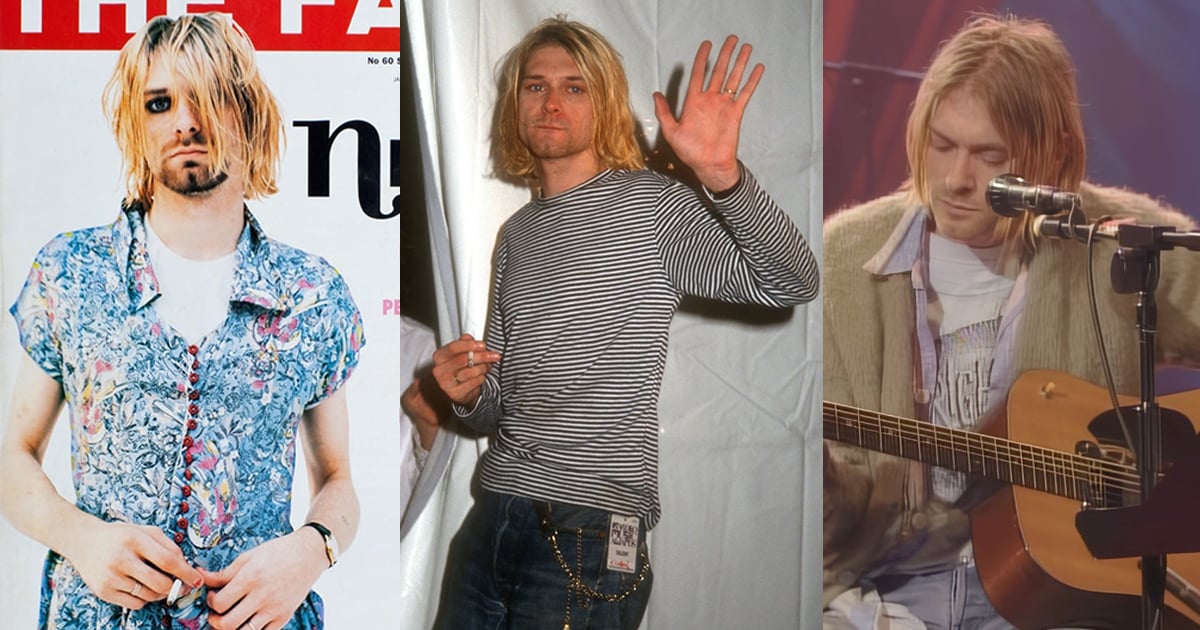
In September 1993, David Sims photographed Kurt Cobain for the cover of The Face in a floral blue button-front dress, a cigarette loose in his fingers. The headline read “WHO GIVES A FROCK?” The fashion industry, which had spent the prior two years trying to claim grunge style as a seasonal trend, was left working out what to do with the image.
Kurt Cobain’s style is now among the most searched wardrobes in 90s fashion, referenced in collections from McQ to Saint Laurent, recreated in editorials, and returned to in mood boards year after year. He would have found that absurd.
Cobain shopped at thrift stores in Aberdeen and Seattle when Nirvana was breaking even and kept shopping at them after the money came in. He chose the cardigans, the striped shirts, the ripped jeans himself, from the same racks he had been working since before anyone put a camera on him. The prices were easy to match. The decade of accumulated indifference belongs to the original.
Kurt Cobain’s Outfit Formula
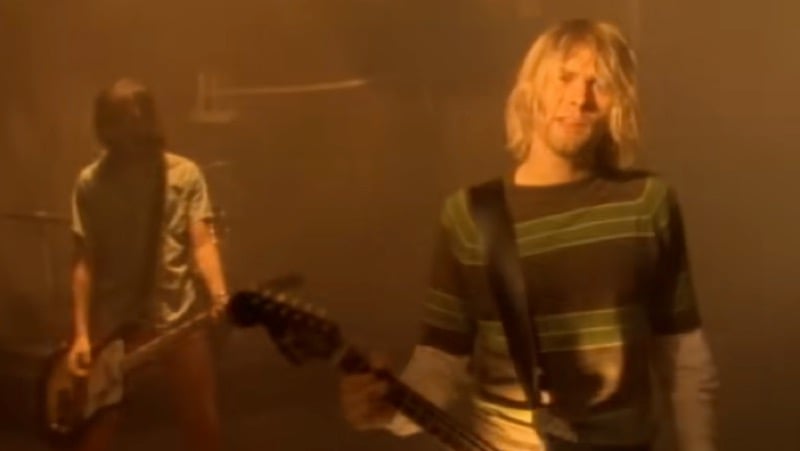
Nirvana’s wardrobe in the early years was a direct extension of the Seattle music scene’s working-class closet, running to striped tees, ripped denim, flannel shirts, and whatever was clean enough. The 1991 “Smells Like Teen Spirit” video shows Cobain in a grey and green striped short-sleeve tee and dark jeans, a look that could belong to any member of any Pacific Northwest band playing a high school gymnasium. That particular plainness was the default wardrobe of 1991. By 1993, with Nevermind having spent months in the top ten, the exact same wardrobe had become a reference point for an entire industry scrambling to source it.
The Striped Long-Sleeve
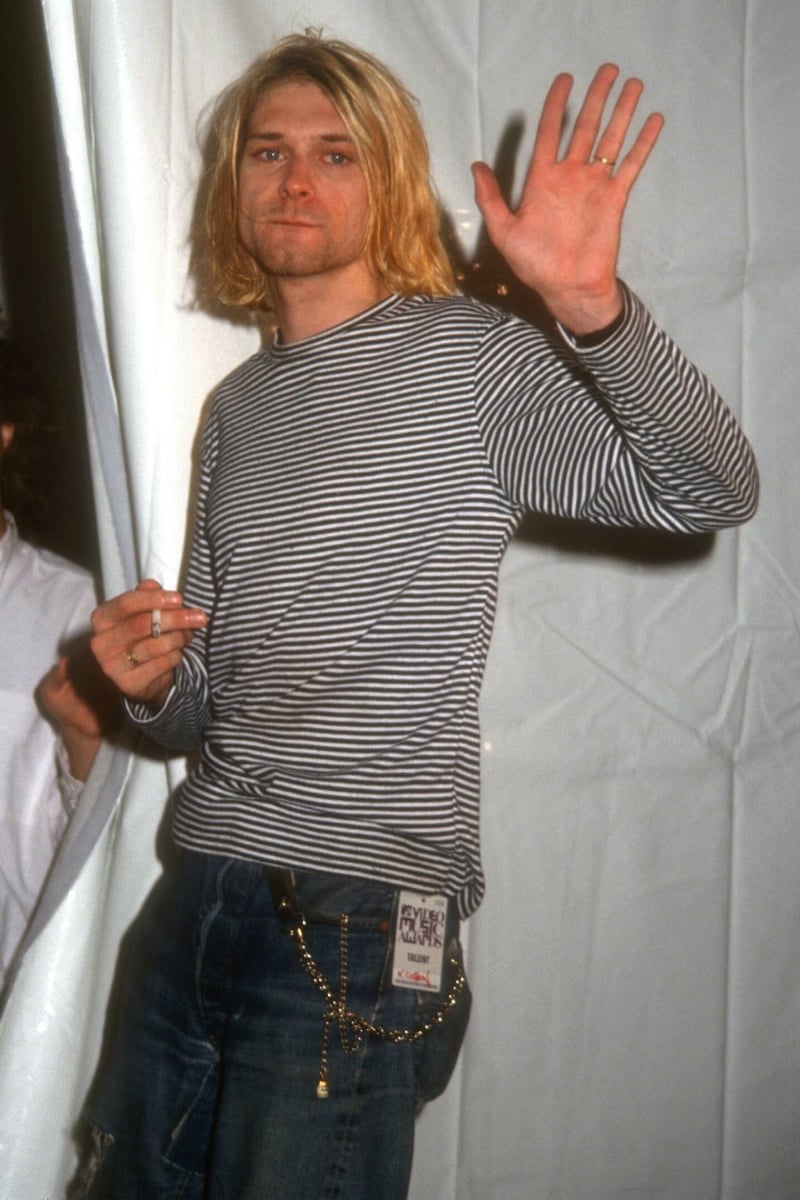
At the MTV Video Music Awards in September 1993, Nirvana collected multiple trophies and Cobain arrived in a black and white fine-stripe long-sleeve shirt, washed blue jeans, and a gold wallet chain clipped to his belt loop. Every other performer on that stage dressed for the occasion. He dressed like he had a soundcheck in 40 minutes.
The striped shirt was a constant across photographs, interviews, and performances throughout 1992 and 1993, a slim cut with close horizontal banding that has since become one of the most imitated garments in grunge-adjacent menswear. The wallet chain was the only detail that acknowledged the setting at all, and it had the look of something worn for months before a camera found it.
The MTV Unplugged Cardigan
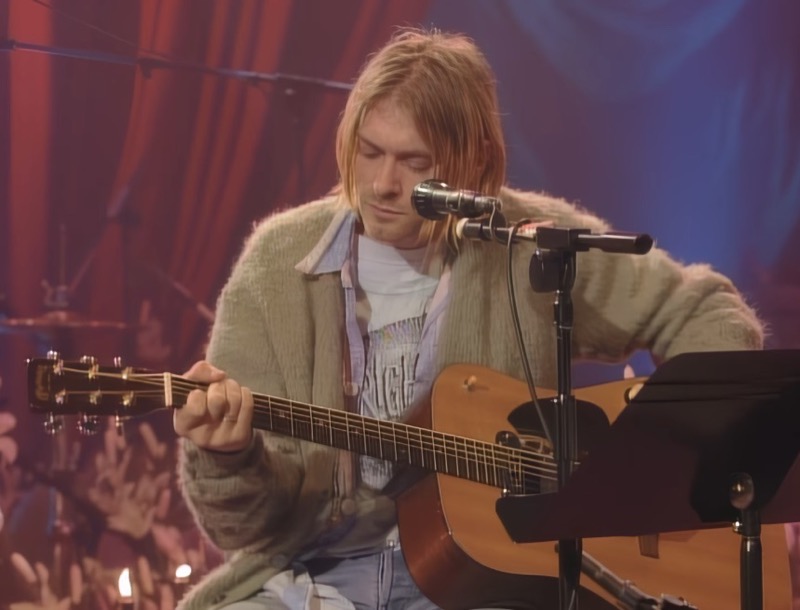
The MTV Unplugged recording in November 1993 produced Cobain’s most borrowed outfit. He wore an oversized cardigan in olive and sage tones, a thick shaggy knit over a white graphic crew neck tee, and sat with an acoustic guitar for a set that traded the standard concert format for the texture of a confession. The cardigan’s weight and length on his frame gave the performance its visual texture alongside the song selection.
This Kurt Cobain cardigan outfit has been referenced in men’s fashion more than any other single piece from the grunge era. The olive mohair silhouette has appeared in collections from Études, Bally, and a half-dozen other labels in the years since. The surface transfers cleanly. The November 1993 performance that charged it stays with the original.
The Dress
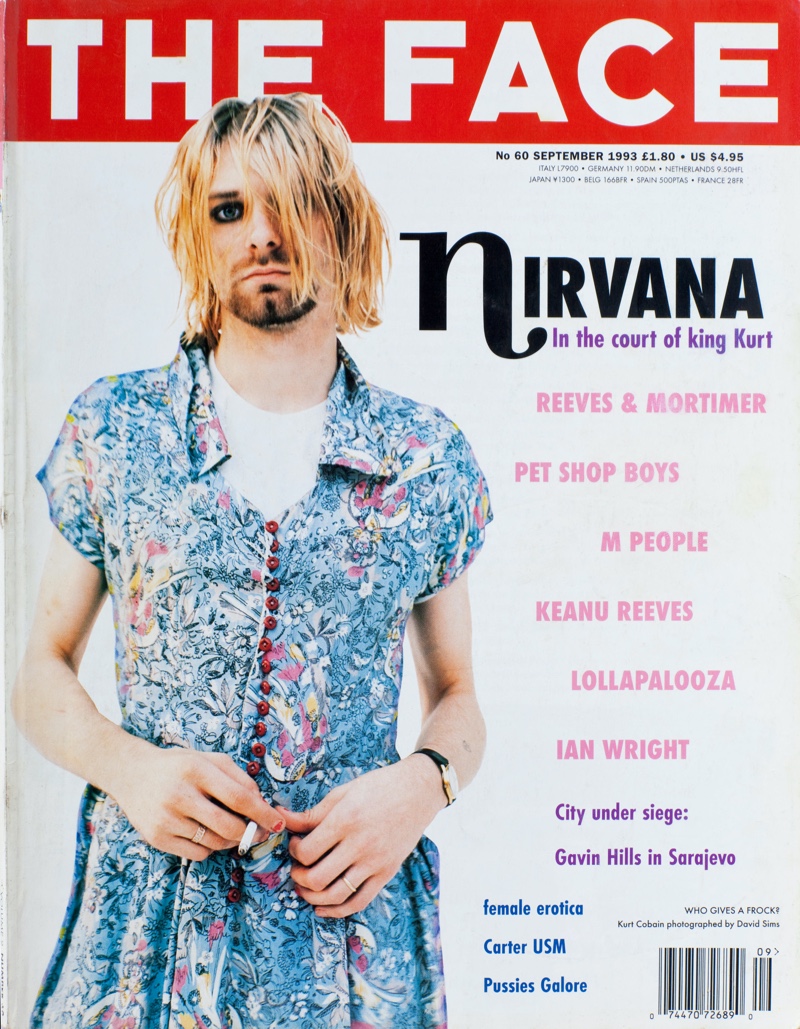
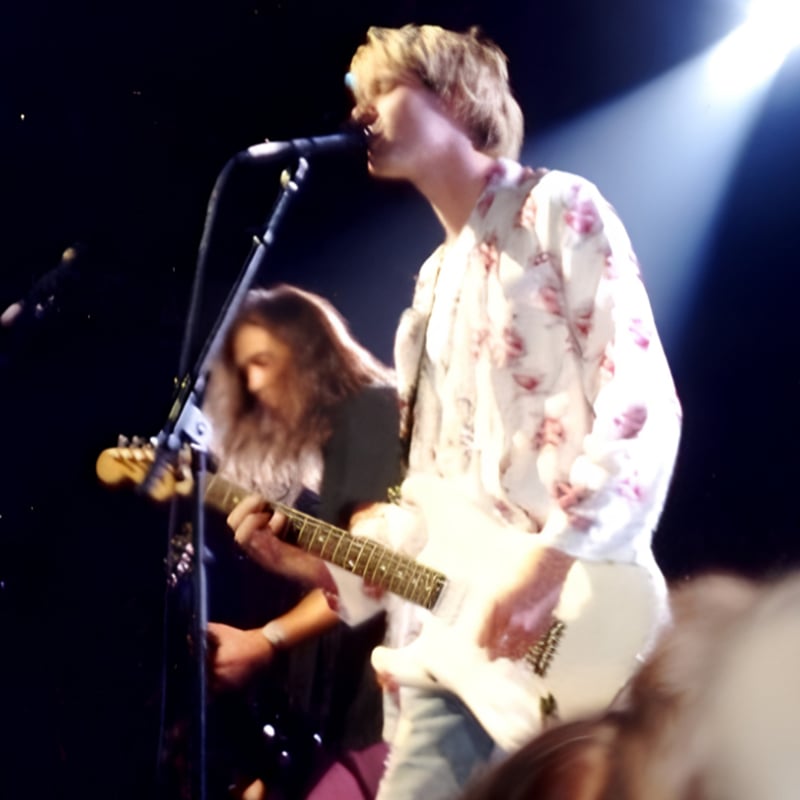
The Face cover is the compressed version of something Cobain had been doing in full view for years. He wore a floral shirt at 1992 performances in what appears to be a women’s top, appeared in a dress in the “In Bloom” music video, and turned up for a British magazine cover in a blue thrift-store button-front dress with no apparent awareness that this would become a culture touchstone.
His reasons were personal. He liked wearing women’s clothes and he liked that it bothered a certain segment of his audience. Cobain’s willingness to appear in a dress in 1993, on the cover of a major magazine and in a photograph by one of fashion’s leading photographers, forced the fashion industry into a position it arrived at unprepared. The oval-frame sunglasses from his photographs in this period appeared on runways within two years. The floral dress appeared on magazine covers within one.
The question that keeps surfacing in searches about why Kurt Cobain wore dresses has a simple answer and a more complicated one. The simple answer is that he wanted to. The more complicated one is that wanting to wear a dress in 1993, as the lead singer of the most commercially successful rock band in the world, was a position that arrived ahead of what either industry knew how to package. The image holds partly because neither industry had a frame ready for it.
The Layering
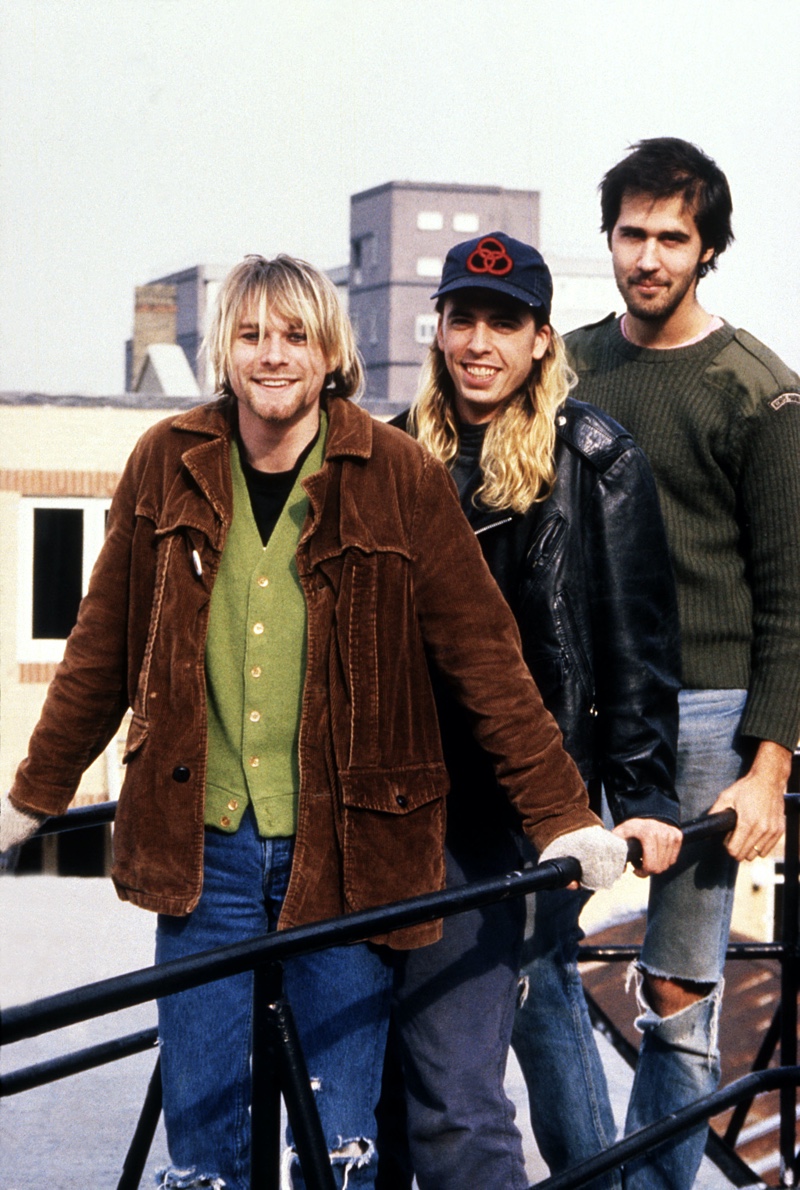
A 1990 band photograph shows Cobain in a brown corduroy zip jacket worn open over a green knit cardigan, with blue jeans. The logic of that outfit held for the next four years. He layered a base, a mid layer, and an outer layer in colors and weights that matched loosely at best, all of them fitting slightly large, and the habit was consistent enough to become a visual signature before he had any apparent reason to develop one.
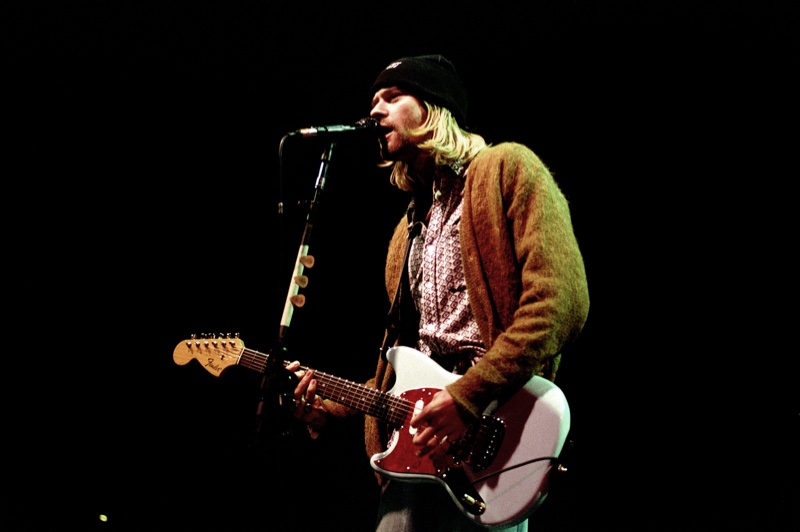
At the January 1994 concert in Milan, he wore a fuzzy cardigan over a patterned shirt with a black beanie, assembled in the way of someone grabbing what was nearest on the way out the door. Kurt Cobain’s layering habit was a Pacific Northwest response to the climate, and it stayed with him long after the temperatures became irrelevant. On stage in Milan, the stacked textures and loosely matched colors had the texture of private habit made public, which is what gave the style its weight.
The Oval Frames
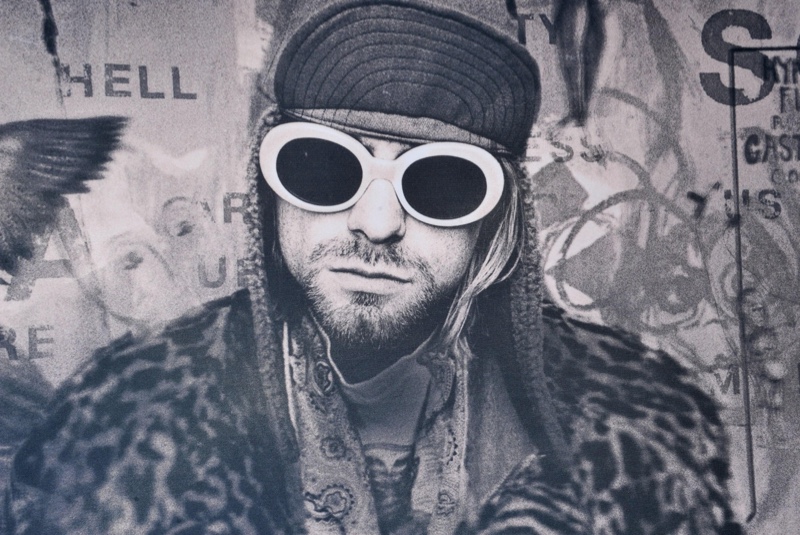
A photograph used in promotion for the 2015 documentary Montage of Heck became one of the most circulated images of Cobain in the years following his death. He wears a patterned coat, a trapper hat, and a pair of oval white-frame sunglasses, staring directly into the camera. The oval silhouette, small and retro against the oversized shapes common in early 1990s eyewear, appeared in collections within a year of the documentary release.
The specific white plastic frame became a reference for a visual mood that fashion has been attempting to reproduce for over a decade. The white plastic frame is the reproducible part. The stare belongs to a man looking through the camera rather than into it, and that part stays with the photograph.
The Lasting Influence
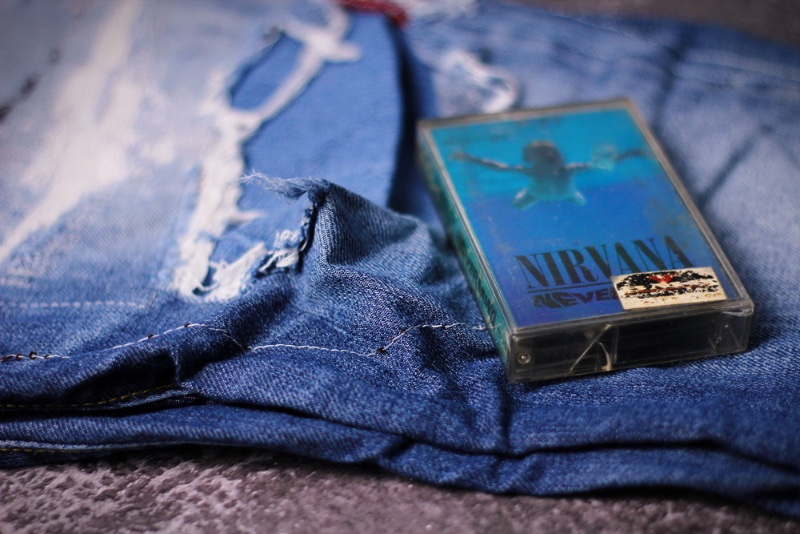
Fashion returns to Cobain’s wardrobe on a reliable cycle. The cardigans, the striped shirts, the oval frames, the floral dress from The Face cover have all been lifted, sampled, and restaged since 1994. The surface of Kurt Cobain’s fashion transfers cleanly, down to the specific shade of olive in a mohair knit or the horizontal spacing on a striped tee. Cobain’s style has fed collections, editorial directions, and mood boards across three decades. Every reference captures the surface. What produced the surface stays with the original.