A wedding band survives thirty years of gym chalk, salt water, keyboards, and a career, while most men choose it during a single jewelry store visit that lasts fifteen minutes. That mismatch produces most of the regrets jewelers hear about later, from a white gold band that needs replating every year to a tungsten ring cracked off a swollen finger with cracking pliers in an emergency room to a design that looked sharp on the day it was bought and dated within a decade.
The fix is a twenty-year test. Ask what a wider, older, less fashion-focused version of you will still want to wear twenty years from now. That’s a different question than what looks good on the day you buy it, and it should shape the metal, the width, and the finish before any of them get chosen.
Start With How You Actually Live
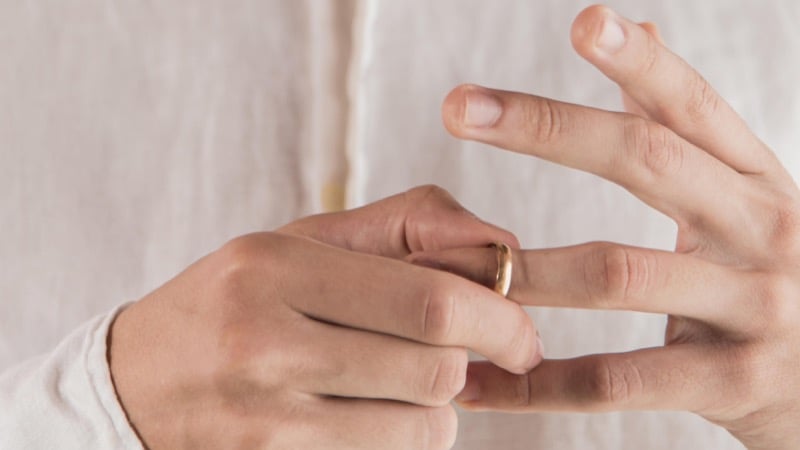
Trade work, gym sessions, hospital shifts, and climbing put a ring through more in one week than a desk job puts it through in a year. The field of men’s wedding bands has widened specifically to answer that split, with tougher metals and rounder profiles designed for hands that grip, lift, and catch on things all day. A carpenter or an electrician needs a ring that survives a hammer strike and a live wire first and photographs well in a box second. A guy who spends his day at a keyboard has more room to prioritize the look of the ring over its ability to take a hit.
Anyone who lifts heavy, climbs, or works around machinery should know about ring avulsion. A ring catches on a hook, a bar, or a rung, the finger takes the full force of the fall, and the ring stays put long enough to deglove or amputate the finger in a fraction of a second. That risk is the argument for a silicone band as a second ring, worn during workouts or shifts and swapped back to the real one once the risk passes.
The Metal Decision, Ranked by What Survives
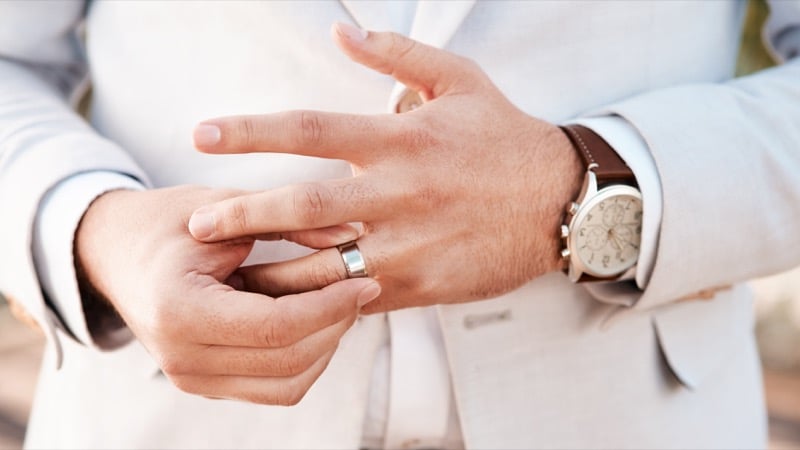
Platinum is the long-haul pick. A scratch displaces the metal instead of removing it, so the ring keeps its weight and its edges for decades even under daily wear. The surface develops a soft patina over time, and a jeweler can polish it back to a mirror finish whenever that patina gets old. Platinum costs more up front and weighs more on the hand, and it needs refinishing every so often, but the metal itself holds its substance for the life of the ring.
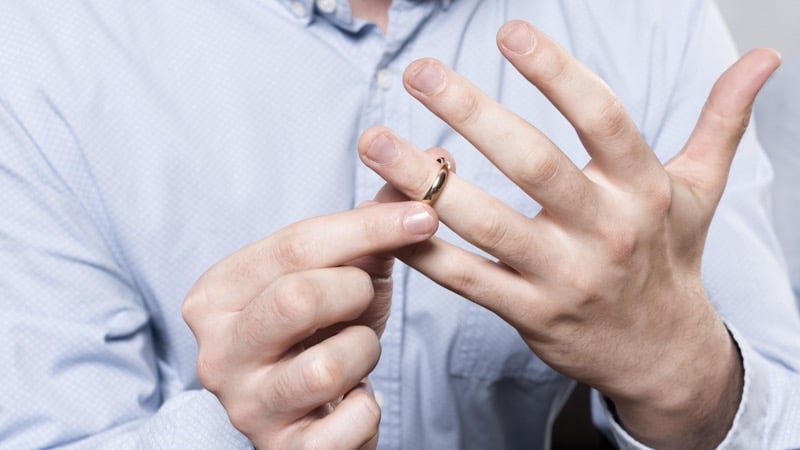
18k and 14k gold remain the classic choice. Yellow, white, and rose all wear well, and 14k is harder and more scratch-resistant than 18k because it carries a higher share of alloy metals. White gold’s catch is rhodium plating. The bright white surface is a rhodium coat over a naturally yellowish gold, and that coat wears down and needs replating every one to two years with daily use, a maintenance cost few men budget for at the counter.
Platinum vs white gold usually comes down to that math. Platinum keeps its white color for good, while white gold’s color depends on a plating that wears down, and white gold still costs less to buy up front.
Palladium runs lighter and cheaper than platinum while sharing its resistance to tarnish, which makes it underrated for a metal so similar to the one everyone asks for by name.
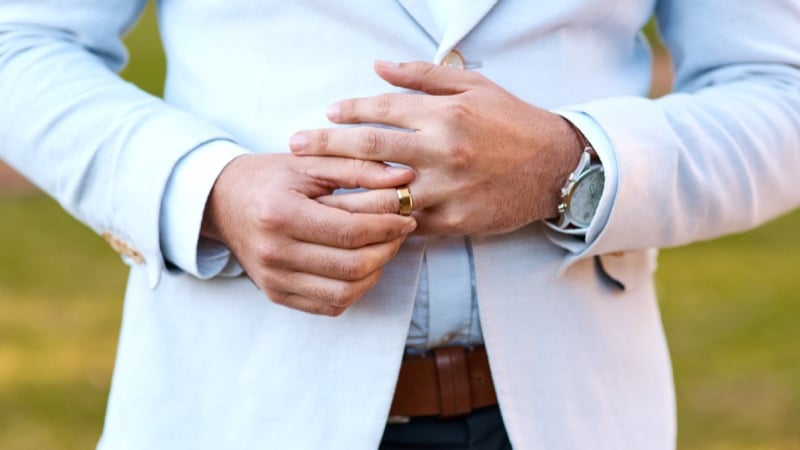
Tungsten carbide takes scratches better than any metal on this list, but it’s brittle like ceramic. A hard enough hit cracks the ring instead of bending it. Because the ceramic itself resists a blade, an ER team removes one by clamping it in vice grips or cracking pliers and applying pressure until it shatters into pieces. The size is fixed for good once it leaves the shop.

Titanium, cobalt, and damascus steel land in a different place. All three match tungsten for scratch resistance, but their ductile metal structure bends under serious force instead of shattering the way tungsten’s ceramic structure does, so an ER team cuts them off with a heavy-duty or diamond blade instead of cracking them apart. They share tungsten’s other limitation. The size stays fixed at whatever they’re cut to, for good.
Tungsten vs titanium comes down to a choice between two versions of unresizable, one that cracks under impact and one that bends. Both make sense as a first ring bought young and cheap. Both get harder to justify as the one ring worn for thirty years. The same tension shows up outside the jewelry counter, in how male celebrities’ wedding rings swing between trend metals on the red carpet and the plain gold band worn every day after.
Silicone bands round out the field as workout gear that stands in for a metal ring on days when a metal ring is a liability.
Width, Profile & the Fit Nobody Explains
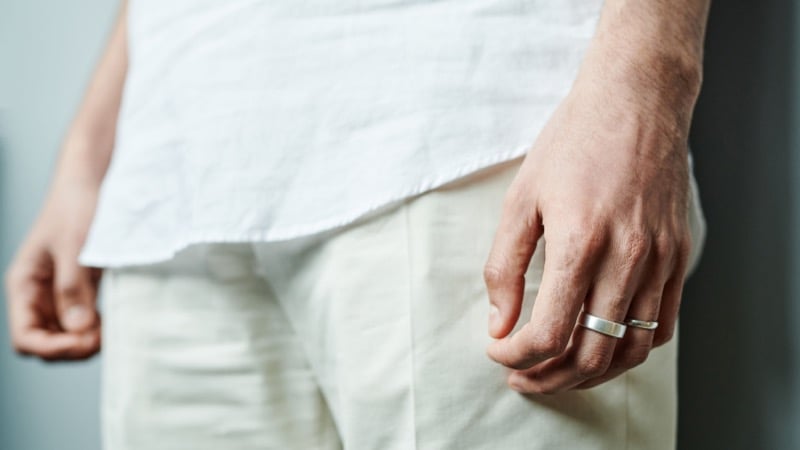
A 4mm to 6mm band fits most hands well. Anything 7mm or wider looks bold on a slim finger and proportionate mainly on a bigger hand, so match the width to finger length and hand size instead of to a general sense of how substantial the ring should feel.
Comfort fit describes a band with a domed interior that curves instead of sitting flat against the finger. It slides on and off with less resistance and usually runs a half size larger than a standard fit in the same stated size, so get sized in the same profile you plan to buy, because comfort fit and standard fit run to different actual sizes under the same stated number.
Fingers swell in heat and after salt and shrink in cold, so get sized late in the day, at room temperature, sober, and hours away from a workout. Size in the same width you plan to buy, because a wide band sits tighter on the finger than a narrow one cut to the same number.
Finishes & Details That Age Well
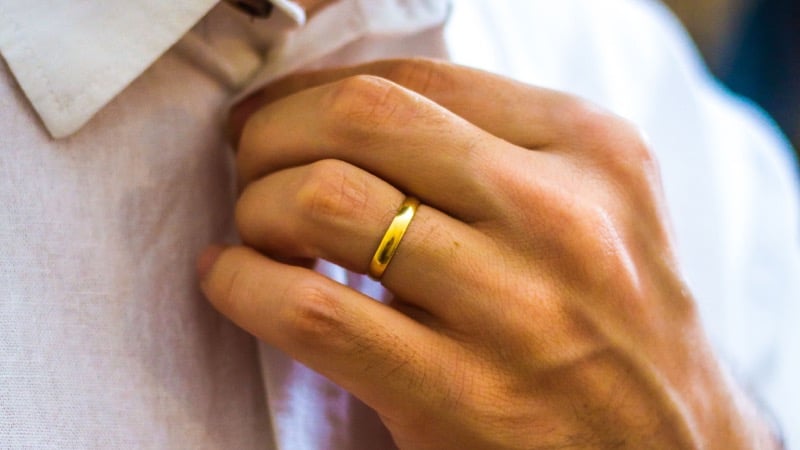
A polished finish shows every scratch and takes a full shine again with one visit to a jeweler. A brushed or matte finish hides daily wear and softens into a gentle shine of its own after a few years on the hand. A hammered finish hides the most, since the texture already looks like worked metal before the first scratch lands. Beveled edges hold up better than sharp ones, which catch and chip with repeated contact against doorframes, weights, and steering wheels.
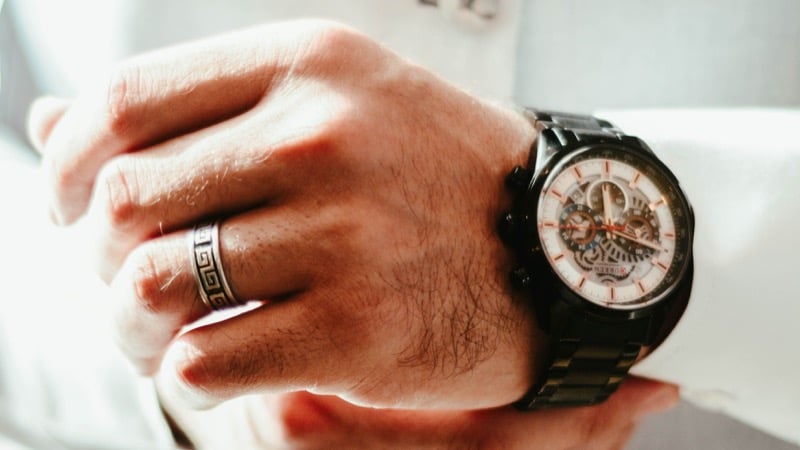
Heavy engraving collects grime along every line and gets harder to keep clean each year. Trend inlays such as wood, meteorite, or carbon fiber are one crack or one discoloration away from a full and costly inlay replacement. A ring that borrows a watch bezel’s stepped edge or knurled texture dates itself to the decade it launched in. Interior engraving is the one personal touch immune to trend, since nobody sees it but the man wearing the ring.
Budget & What to Do When It’s Lost or Broken
Frame the ring’s cost as dollars per year worn. A $1,200 platinum band worn for thirty years runs $40 a year, a number that reframes what counts as expensive at the counter.
Before buying, ask the jeweler three questions. Can the ring be resized as your finger changes over the decades? Can it be refinished when the surface shows its age? Does the maker back it with a replacement or lifetime warranty if something goes wrong?
Rings get lost in oceans, gym bags, and garbage disposals on a regular schedule, so plan for a replacement path before it happens. Add the ring to a homeowner’s or renter’s policy as a rider, and keep the receipt and any appraisal paperwork somewhere that survives a move.
The ring that passes the twenty-year test rarely looks expensive on day one. It looks like the plain platinum band a grandfather wore until the engraving on the inside wore smooth enough that a thumb finds it before an eye does, the metal on the outside still holding its shape through fifty years of hammers, dumbbells, dish soap, and handshakes. That’s the ring worth choosing now.