
Splitting your life across two places changes what a wardrobe has to do. A closet that works for one address, one climate, and one set of social expectations turns impractical once half your year happens somewhere else. Clothes get duplicated. Suitcases fill with things that turn out to be wrong for the weather on arrival. Money leaks out in small, forgettable amounts, from a rain jacket bought twice to a suit that lives in the wrong country when you need it.
The capsule wardrobe idea gets pitched as a minimalist lifestyle upgrade, but for people who move between countries it functions as logistics. The real goal is a system that survives being split, packed, shipped, and worn in two different contexts and still holds together. A smaller closet follows from that system as a side effect.
Start With the Shape of Your Split

Most capsule wardrobe advice starts with a count, some tidy figure like thirty-three pieces or thirty-seven that sounds achievable. Skip it. The number should come last, because it depends entirely on how your two lives are shaped.
Map the Time Alongside the Places
Write down how your year divides. Someone who spends nine months in one country and three in another has a different problem from someone alternating every six weeks. Long blocks let you keep two semi-independent wardrobes and move a small set of pieces between them. Short, frequent hops mean nearly everything you own needs to travel, which pushes you toward fewer, lighter, adaptable pieces.
Be honest about the ratio. People often plan for the trip they wish they took, ignoring the one on the calendar.
Account for Climate Overlap

Two cities can have the same average temperature and demand completely different clothes. Humidity, wind, rain frequency, and how much time you spend outdoors outweigh the number on a forecast. A damp coastal winter at 8°C ruins a wool coat that would be fine in a dry inland winter at the same temperature.
Look at the actual conditions instead of your memory of them. Historical climate data from a source like NOAA’s climate records shows what a given month looks like, often milder or wetter than you remember.
Name the Dress Codes
Each country has its own baseline for what counts as normal. Office norms differ, and so do the unwritten rules about how casual you can be at dinner, at a family event, at a neighbor’s house. Clothes that make you invisible in one place can make you conspicuous in the other.
List the situations you dress for in each location. Three or four categories per country is usually enough, covering work, everyday, something a bit smarter, and whatever your specific climate demands.
Center the Wardrobe on a Shared Core

Once the shape of your split is clear, the wardrobe design follows. The system that works best combines a shared core with two small local sets.
The Core Travels
Your core is the group of pieces that work in both places, in most weather, across most dress codes. These live in your suitcase and go where you go. Think in terms of neutral colors that pair on sight, fabrics that recover from being folded, and cuts that suit any season.
Keep this set small. Ten to fifteen items is plenty for most people. Every piece needs to work in at least three of your listed situations to make the cut.
Local Sets Stay Put
Anything bulky, seasonal, or context-specific stays in the country where it’s needed, from winter boots and a heavy coat to a formal outfit for events that only happen in one place. These are the items that make packing miserable and cost the most to replace, so they get an address and stay there.
The trick is catching local sets before they grow past what you meant to keep. Every visit adds something, and six visits later there’s a full second wardrobe you never planned. Set a physical limit, one drawer, one shelf, or one section of a rail, and hold to it.
Choose Fabrics That Forgive
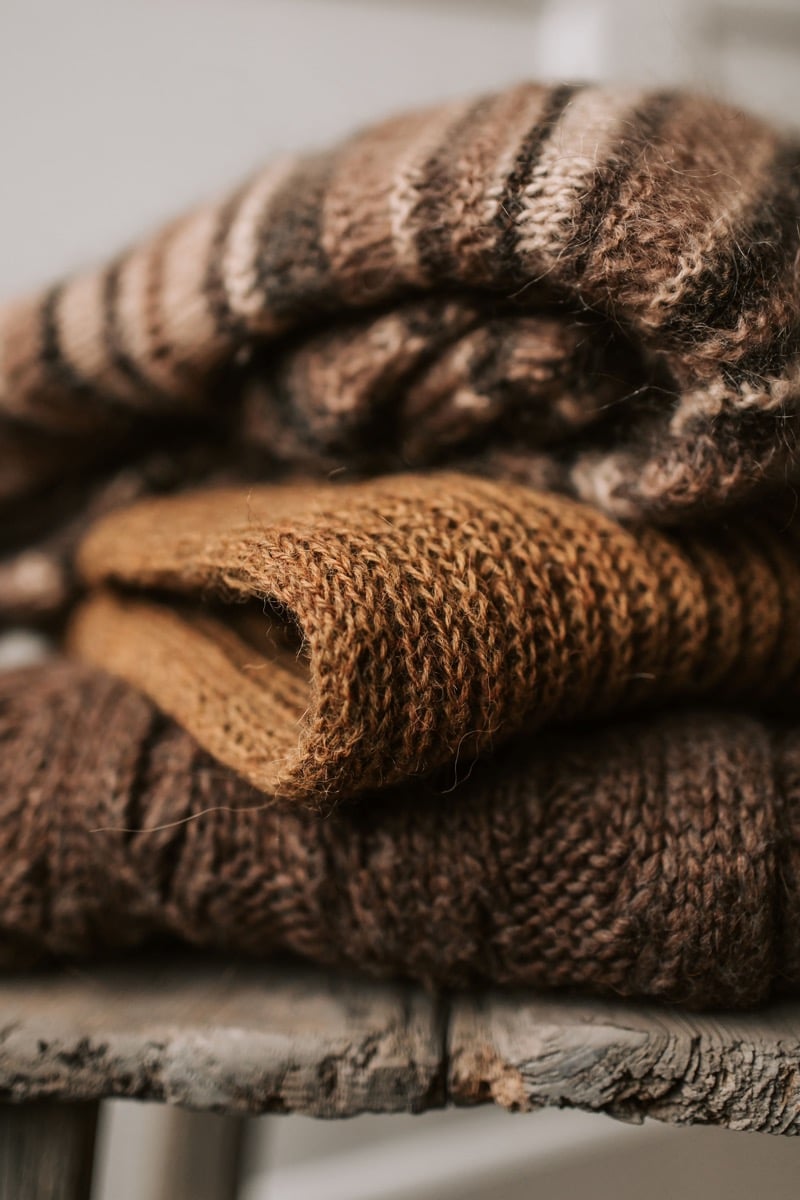
Fabric outweighs cut as the deciding factor in a traveling wardrobe. Merino wool handles a wide temperature range and stays wearable across several days between washes. Linen and linen blends breathe in heat, and creasing sits naturally in the fabric’s character. Heavy cotton is comfortable but slow to dry and awkward to pack.
Buy fewer pieces in better materials. It costs extra upfront and saves money across several years, cutting the emergency purchases that make split-country wardrobes expensive.
Managing the Money Across Borders
A wardrobe designed this way involves spending in two currencies, and that’s where a lot of the hidden cost lives. Replacing a coat in the country where it’s needed usually beats buying it at home and hauling it over. But paying for things abroad, sending money to cover a purchase, or keeping a working balance in a second currency all come with friction.
Card fees are the obvious drain. Foreign transaction charges of two to three percent on every purchase compound with each trip, and the exchange rate your card applies is rarely the one you saw quoted. Worse, dynamic currency conversion at checkout, where the terminal offers to charge you in your home currency, adds a markup on top of the local price.
For larger amounts, moving money in a single transfer beats paying as you go. If you’re funding a second-country account, covering a tailor, or settling a bill with a local shop, a service like SoFi’s international wire transfer online lets you send funds directly and skip the card markups on every transaction. The mechanics are worth weighing directly, the total cost of a single transfer against dozens of small conversion fees, since the transfer usually wins once the amounts get meaningful.
Watch the rate itself, too. Currencies move enough over a year that timing a larger transfer well can cover the cost of a decent coat. The European Central Bank publishes daily reference rates, which gives you a neutral benchmark to check any quote against.
Maintain the System Over Time
A split wardrobe drifts. Left alone, it doubles. Maintenance is the part most people skip, and it’s the part that determines whether the system holds after two years.
Audit at Each Transition
Every time you move between countries, do a short review before you pack. What sat untouched the last stint? What did you reach for constantly? What was missing badly enough that you bought a replacement on the spot?
That last question is the useful one. Emergency purchases point directly at gaps in the core.
Repair Before Replacing

Fewer, better pieces only pay off if you keep them alive. Find a tailor and a cobbler in both countries early, before you need them urgently. A reheeled boot and a rewoven sweater cost a fraction of replacements, and they keep your core intact instead of forcing substitutions.
Let It Change
Your split will shift. Jobs change, relationships change, the ratio of months in each place changes. A wardrobe designed around last year’s pattern will start feeling wrong before you can name why. Revisit the map once a year and adjust the core accordingly.
Two Addresses, One Wardrobe

Living between two countries turns a wardrobe into a system, where every piece answers to two addresses instead of one. The pieces have to work harder, travel better, and hold their cost down over time, because every inefficiency gets multiplied by the distance between them.
The approach that holds up stays unglamorous. Map how your year divides. Assemble a small core that goes everywhere, then hold two restrained local sets in place. Spend with a plan, including on the money movement itself. Check the whole system on a regular schedule and let it change as your life does.
None of this asks you to own fewer things for the sake of owning fewer things. It asks you to own things that fit the shape of a life spread across two places, a harder problem than minimalism, and a useful one to solve.