The Fast & Furious films turned the shaved head into something close to an action uniform. Its stars could fill a poster with enough muscle to suggest that the cars were optional. Elsewhere, a bald man could be the person to consult about a wardrobe or trust with the command of a starship. Bald actors have given the leading man a much wider range of faces than the action blockbuster suggests.
The association with toughness has some basis in perception. In a study published online in 2012, researcher Albert E. Mannes found that men with shaved heads were rated as more dominant. Cinema has had plenty of fun with that expectation, giving the look to dangerous men and then handing it to the person everyone wants to date. Shaved scalps and receding hairlines belong to different stories, too, as do the wigs actors put on when a character calls for one.
Bald Celebrities
Bruce Willis

John McClane still had thinning hair when Bruce Willis climbed through the machinery of Die Hard. The vest and exhausted wisecracks made him an action hero who looked as though the job was taking its toll. Willis' later shaved head became a signature of its own, but that first McClane look gave ordinary male vulnerability a place inside the spectacle.
Morris Chestnut

Morris Chestnut helped make the shaved head part of the romantic leading man's vocabulary. In The Best Man, his Lance Sullivan had the physique of a professional athlete and a wounded pride that threatened to derail his wedding. Chestnut's appeal allowed strength and emotional exposure to occupy the same frame, with desire very much part of the picture.
Jason Statham
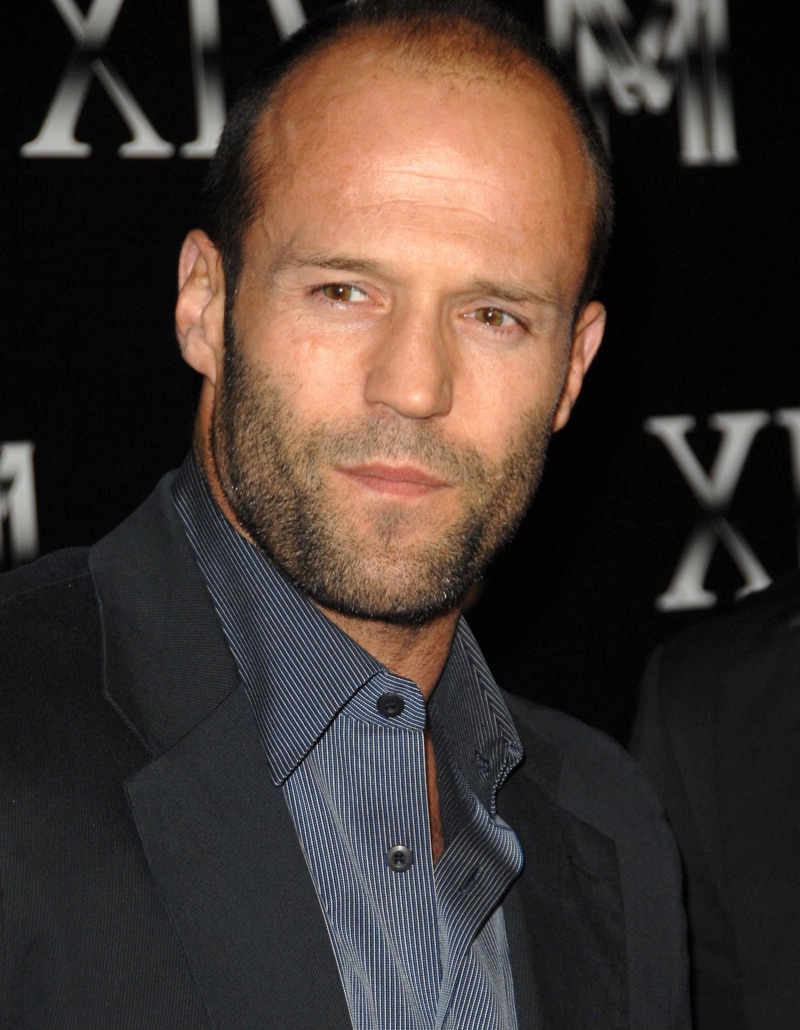
The suit was essential to Jason Statham's Frank Martin in The Transporter. It gave a professional appearance to a man whose working day could involve spectacular violence. The close-cut hair and economical delivery completed that disciplined image. Statham made the action hero look as though he had arrived for an appointment and expected everyone else to respect the schedule.
Tyrese Gibson

Tyrese Gibson's Roman Pearce brought a useful appetite for self-preservation to the Fast & Furious films. Among people willing to drive toward almost anything, he was often the one questioning the plan. His shaved head fitted the franchise's muscular look, while his comic reactions let anxiety join the action. In Baby Boy, Gibson had already explored a much more difficult struggle with adulthood.
Stanley Tucci

Stanley Tucci gave Nigel in The Devil Wears Prada the glasses and exacting eye of someone who could spot a wardrobe mistake across the office. Taste became a form of authority, delivered with enough wit to soften the verdict. Tucci's bald head is central to his public image, though a film such as The Hunger Games could transform him through Caesar Flickerman's extravagant hair.
Dwayne Johnson

Dwayne Johnson took the physical scale of professional wrestling into films that treated his body as part of the attraction. As Luke Hobbs in Fast Five, the shaved head and straining uniform announced an exceptionally forceful arrival. Jumanji: Welcome to the Jungle put that physique at the service of a nervous teenager trapped inside an adult action avatar, letting the imposing exterior become the joke.
Mark Strong

Mark Strong made the bald head look particularly at home above an expensive collar. His Merlin in Kingsman: The Secret Service supplied technical expertise and dry corrections while the younger recruits tried to survive their training. The glasses and tailoring suggested a man accustomed to knowing more than he said, with the occasional outburst all the more effective for it.
Mike Colter

As Luke Cage, Mike Colter gave the superhero a shaved head and a place in Harlem's everyday life. His bullet-riddled hoodie, now held by the Smithsonian, put an ordinary garment at the center of an extraordinary body. The character's strength came with responsibilities to a neighborhood, bringing the muscular hero closer to the people outside his door.
John Travolta

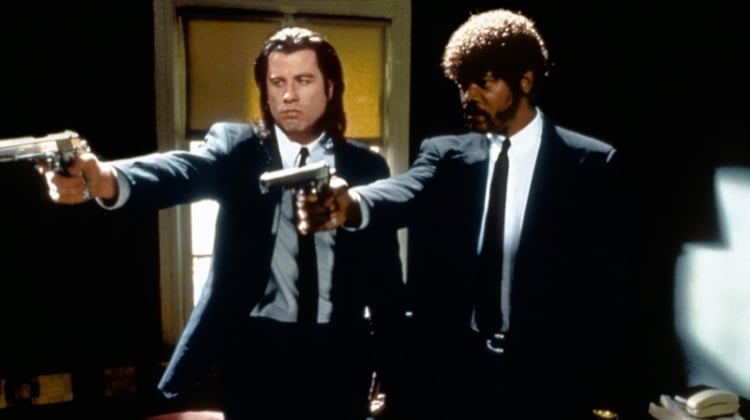
Hair was practically a co-star in John Travolta's early career, from Tony Manero's preparations for the disco in Saturday Night Fever to Danny Zuko's greaser image in Grease. His later shaved head changed the outline of one of Hollywood's most recognizable faces. The contrast is especially striking beside Vincent Vega's long-haired, black-suited appearance in Pulp Fiction.
Vin Diesel

Vin Diesel's Dominic Toretto gave the shaved-headed action star a domestic concern. The races and impossible stunts kept returning to family, with the sleeveless shirts making him look ready to repair the car or lift it. His Riddick films pushed the same silhouette toward science fiction, exchanging the communal table for a fugitive's struggle to survive.
Terry Crews

Terry Crews turned an enormous physique into an invitation to comedy. As Terry Jeffords in Brooklyn Nine-Nine, he was a physically formidable detective who also worried about his children and cared deeply about yogurt. The shaved head belonged to a man whose tenderness was as recognizable as his muscles, making fatherhood part of the appeal.
Woody Harrelson

Woody Harrelson has worn thinning hair and close crops across a career that repeatedly upset expectations. The guileless bartender of Cheers was a long way from Marty Hart's compromised masculinity in True Detective. As Tallahassee in Zombieland, the cowboy hat and appetite for destruction gave him another variation, with a weakness for snack cakes interrupting the hard-man routine.
Michael Keaton

Michael Keaton's receding hairline accompanied a particularly restless type of leading man. In Birdman, Riggan Thomson tried to turn a theatrical production into proof that his career still mattered. Keaton made vanity and panic painfully visible. The man remembered for inhabiting Batman's armored silhouette became compelling in the much less protected business of asking an audience to take him seriously.
Damon Wayans

Damon Wayans brought the shaved head into the family sitcom as Michael Kyle in My Wife and Kids. His fatherly authority often involved devising a lesson elaborate enough to become a problem of its own. The pleasure was in watching a man so certain of his methods encounter a household with competing ideas, giving bald masculinity a thoroughly domestic setting.
Patrick Stewart

Patrick Stewart's Jean-Luc Picard made a bald captain the intellectual center of Star Trek: The Next Generation. His authority depended on judgment and the ability to make an ethical argument, with diplomacy often more valuable than a weapon. As Charles Xavier in X-Men, Stewart gave another science-fiction leader the same combination of mental power and responsibility toward others.
Taye Diggs

Taye Diggs arrived in How Stella Got Her Groove Back as Winston Shakespeare, the younger man who made a Jamaican holiday considerably more interesting. His shaved head belonged squarely to the romantic fantasy. As Harper Stewart in The Best Man, he played a more anxious version of masculine appeal, with a writer's revelations putting his friendships and love life in jeopardy.
Ed Harris

Ed Harris made the receding hairline part of a face that could suggest concentration or severe displeasure. In The Truman Show, his Christof watched over an entire manufactured life, treating control as a form of care. Westworld put him beneath the Man in Black's hat, where the weathered appearance accompanied a far more brutal sense of entitlement.
Samuel L. Jackson

Samuel L. Jackson has a public look recognizable through the shaved head and expressive eyewear, but his characters have often arrived with hair of their own. Jules Winnfield's curls in Pulp Fiction became as memorable as his black suit. Nick Fury's bald head and eye patch created another instantly legible figure, with Jackson's delivery making institutional authority sound impatient with the paperwork.
Corey Stoll

Corey Stoll gave Peter Russo in House of Cards the appearance of a politician trying to hold himself together while more calculating people assessed his usefulness. His bald head became part of a notably exposed screen image. As Darren Cross in Ant-Man, Stoll moved into corporate ambition, letting the tailored executive's confidence develop a much more dangerous edge.
Steve Harvey

Steve Harvey's shaved head, mustache, and emphatic suits have become a television signature. On Family Feud, an extended look of disbelief can be as effective as a spoken response. His earlier work in The Steve Harvey Show placed that comic authority in a school, where Steve Hightower's past as a musician complicated his responsibilities as a teacher.
John Malkovich

John Malkovich can make impeccable manners feel like a warning. In Dangerous Liaisons, Valmont's elaborate appearance served a practiced seducer; Con Air gave Cyrus the Virus a much harsher outline. The receding hairline familiar from Malkovich's public appearances became part of the surreal attraction of Being John Malkovich, which turned the actor himself into a destination other people wanted to enter.
Forest Whitaker

Forest Whitaker made the shaved-headed figure of Ghost Dog in Ghost Dog: The Way of the Samurai seem absorbed in a private code. The measured movements and modest clothes gave the hired killer an almost monastic life. His Idi Amin in The Last King of Scotland occupied the opposite social position, using charm and unpredictable anger to keep the people around him off balance.
Ben Kingsley

Ben Kingsley gave baldness radically different meanings in Gandhi and Sexy Beast. Gandhi's slight figure and simple clothing expressed a rejection of material display. Don Logan arrived in the latter film with the furious certainty of a criminal who expected obedience. Kingsley made a change in speech and behavior enough to turn a closely shaven head into an altogether different proposition.
Common

A shaved head and closely shaped beard give Common a recognizable outline across music and film. His Cassian in John Wick: Chapter 2 wore the suit of a security professional and fought with a colleague's almost courteous persistence. In Selma, as activist James Bevel, Common entered a historical story in which collective purpose shaped a very different form of resolve.
Wesley Snipes

Wesley Snipes wore a short, shaped haircut as Blade, making hair part of the vampire hunter's precise visual identity alongside sunglasses and black leather. His shaved-headed red-carpet appearances offer another version of the face. The colorful courtside bravado of White Men Can't Jump put him in another wardrobe again, with trash talk as essential as the basketball.
J.K. Simmons

J.K. Simmons made Terence Fletcher's bald head and fitted black clothing into a severe image of discipline in Whiplash. The music teacher's demands turned rehearsal into a test of endurance and submission. As J. Jonah Jameson in the Spider-Man films, Simmons used a very different hairstyle and a barrage of complaints, making the irate boss one of his specialties.
Christopher Meloni

Christopher Meloni's receding hairline and physical intensity helped make Elliot Stabler a recognizable television detective in Law & Order: Special Victims Unit. The character's protectiveness could become anger, giving his authority a volatile edge. Meloni's work in Wet Hot American Summer took that same capacity for commitment into absurdity, with a cook's unraveling treated as seriously as a criminal investigation.
Djimon Hounsou

In Gladiator, Djimon Hounsou's Juba gave the spectacle of combat a quieter emotional center through his friendship with Maximus. The shaved head and powerful build suited the arena, while his thoughts of home made the cost of captivity personal. Hounsou's Solomon Vandy in Blood Diamond also fought toward a family reunion, giving physical endurance a purpose beyond survival.
Jonathan Banks

Jonathan Banks made Mike Ehrmantraut's age part of his professional advantage in Breaking Bad and Better Call Saul. The receding hair and impassive face suggested a man who had long since stopped needing to advertise his capabilities. His early courthouse parking-booth encounters with Jimmy McGill turned a dispute over validation stickers into a small demonstration of who controlled the situation.
Ving Rhames

Ving Rhames gave Marsellus Wallace a shaved head and a voice that made even a calm instruction sound consequential in Pulp Fiction. As Luther Stickell in the Mission: Impossible films, that weight of authority became reassuring. His technical skill and loyalty made him the colleague worth listening to while everyone else prepared to do something spectacularly dangerous.
Michael Chiklis

The shaved head and tight shirts of Michael Chiklis's Vic Mackey made physical force central to The Shield. He wore a police badge, but the methods repeatedly exposed the corruption beneath his claims of getting results. Chiklis's earlier lead in The Commish offered a gentler version of police work, making the later transformation especially unsettling.
Dave Bautista

Dave Bautista's Drax in Guardians of the Galaxy turned a muscular, hairless silhouette into a source of literal-minded comedy. Blade Runner 2049 gave him a different assignment as Sapper Morton, with thinning hair and small spectacles making his massive frame look weary. His restraint in that opening encounter made the possibility of violence feel sad before it became frightening.
D.B. Woodside

D.B. Woodside gave Amenadiel in Lucifer a shaved head and the solemn bearing of someone accustomed to a divine chain of command. His gradual involvement in human life complicated that certainty. As Wayne Palmer in 24, Woodside occupied a more earthly structure of power, moving through a political world where authority offered little protection from danger.
Billy Zane

Billy Zane's Cal Hockley in Titanic had carefully dressed hair and the wardrobe of a man who expected money to settle personal disagreements. Zane's bald public appearance creates a striking contrast with that elaborate screen image. The immaculate presentation in the film helped make Cal's possessiveness more revealing, as his manners deteriorated when he lost control.
Howie Mandel
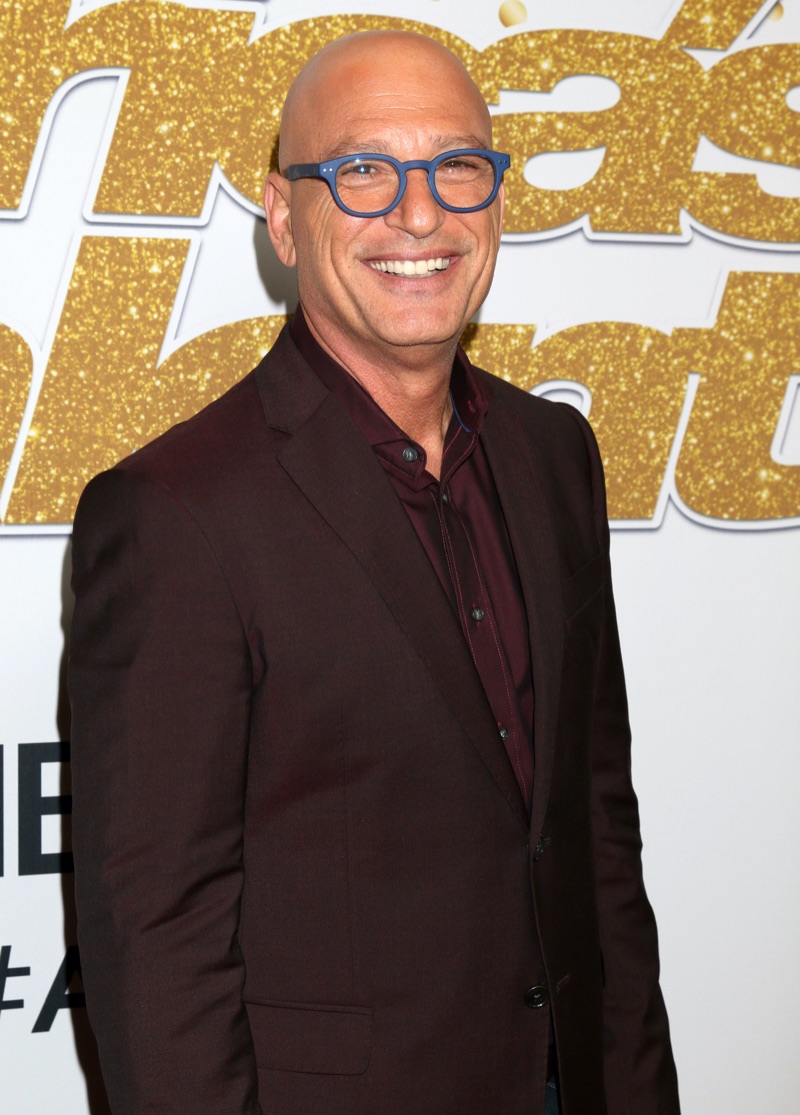
Howie Mandel's bald head and glasses became central to his image as a television host, with Deal or No Deal turning a pause into an event. Earlier, as Dr. Wayne Fiscus in St. Elsewhere, he wore curls and played a very different professional. His voice work as Gizmo in Gremlins supplied another route to recognition, this time entirely separate from his appearance.
Jeffrey Wright

Jeffrey Wright has worn a receding hairline and close crops across roles that made listening look like a form of intelligence. His James Gordon in The Batman treated the masked vigilante as a working partner, bringing patience to a city full of theatrical threats. As Bernard in Westworld, Wright let small hesitations expose the instability beneath an apparently controlled life.
Keegan-Michael Key

Keegan-Michael Key made a shaved head part of an exceptionally adaptable comic face in Key & Peele. As Luther, President Obama's anger translator, he supplied the explosive reactions that official composure held back. The joke depended on the distance between what a public figure could say and what his translator was very willing to shout.
Vincent D'Onofrio

Vincent D'Onofrio's Wilson Fisk in Daredevil combined a bald head and imposing frame with an unexpectedly careful manner of speaking. The tailored clothes and interest in art gave his brutality a cultivated exterior. His shaved scalp in Full Metal Jacket belonged to another process entirely, as military training stripped Leonard Lawrence of individuality with devastating consequences.
Boris Kodjoe

Boris Kodjoe made the shaved head part of a romantic television image as Damon Carter in Soul Food. Attraction existed alongside the difficulties of sustaining a relationship, giving the handsome exterior a daily emotional life. His later work in Station 19 placed that physical assurance inside a fire-service hierarchy, where leadership brought its own complications.
Delroy Lindo

Delroy Lindo gave Paul in Da 5 Bloods a bald head beneath a red cap and a face that could move rapidly from affection to suspicion. The veteran's return to Vietnam brought unresolved trauma into the group's search. Lindo made his anger painfully intimate, particularly when Paul's grievances collided with his need for connection to his son.
Dean Norris

Dean Norris's Hank Schrader initially looked comfortable inside the loud, backslapping masculinity of Breaking Bad. The bald head and solid build suited a federal agent confident of his position. As the story exposed fear and injury beneath the jokes, Norris gave that image greater fragility, making Hank's certainty something he had to work to recover.
Laurence Fishburne

The shaved head and small sunglasses made Laurence Fishburne's Morpheus instantly recognizable in The Matrix. His long coat gave the mentor a theatrical silhouette, while his measured speech made belief sound like a serious responsibility. In Boyz n the Hood, Fishburne had already played another influential guide as Furious Styles, grounding paternal authority in a neighborhood's immediate realities.
Bill Burr

Bill Burr took the exasperation of his stand-up into roles that made irritation part of a character's everyday equipment. In Old Dads, fatherhood exposed a man's attachment to his own way of doing things. As Mayfeld in The Mandalorian, Burr gave a hired gun's sarcasm a more troubled history, allowing a bald, middle-aged comic face to register something much darker.
Donald Faison

Donald Faison's Turk in Scrubs made surgical confidence compatible with an extravagant attachment to his best friend. His shaved head belonged to a doctor whose competence survived plenty of ridiculous behavior outside the operating theater. Faison had earlier worn close-cut hair as Murray in Clueless, giving a teenage boyfriend's self-assurance its own comic limits.
Jackie Earle Haley

Jackie Earle Haley made Rorschach in Watchmen unsettling long before the character's mask came off. The civilian appearance included thinning reddish hair, a marked contrast with Haley's closely shaved public look. His Freddy Krueger in A Nightmare on Elm Street required a more extensive transformation, continuing a career in which a recognizable face could become almost impossible to locate beneath the character.