At a party full of navy and charcoal, the man in a white suit has already introduced himself. It is tailoring with a social life, equally capable of suggesting a summer wedding or a musician who has come straight from the stage. The shirt and shoes tell you which evening he has in mind.
That is the pleasure of learning how to wear a white suit. The jacket and trousers supply the occasion; everything around them gives it a personality. Among the many variations on men’s suit style, white makes even a small change of shirt feel consequential.
White Suit for Men
Bright white has a graphic quality that suits black shirts and dark leather. Cream and ivory are warmer, particularly alongside brown shoes or a washed blue shirt. Neither requires an elaborate supporting wardrobe. The important distinction is between a matching suit and separates: two almost-identical whites in similar fabrics can look as though the trousers came from the wrong hanger.
As with other white outfits, cloth gives the color its character. White linen outfits accept a little rumpling as part of the day, while smooth wool keeps a more exact outline. A try-on in daylight is useful for checking how clearly pockets and underwear show through. Fit deserves the same scrutiny, since white makes pulling around a jacket button or a tight trouser seat particularly visible.
White Suit with a Patterned Shirt
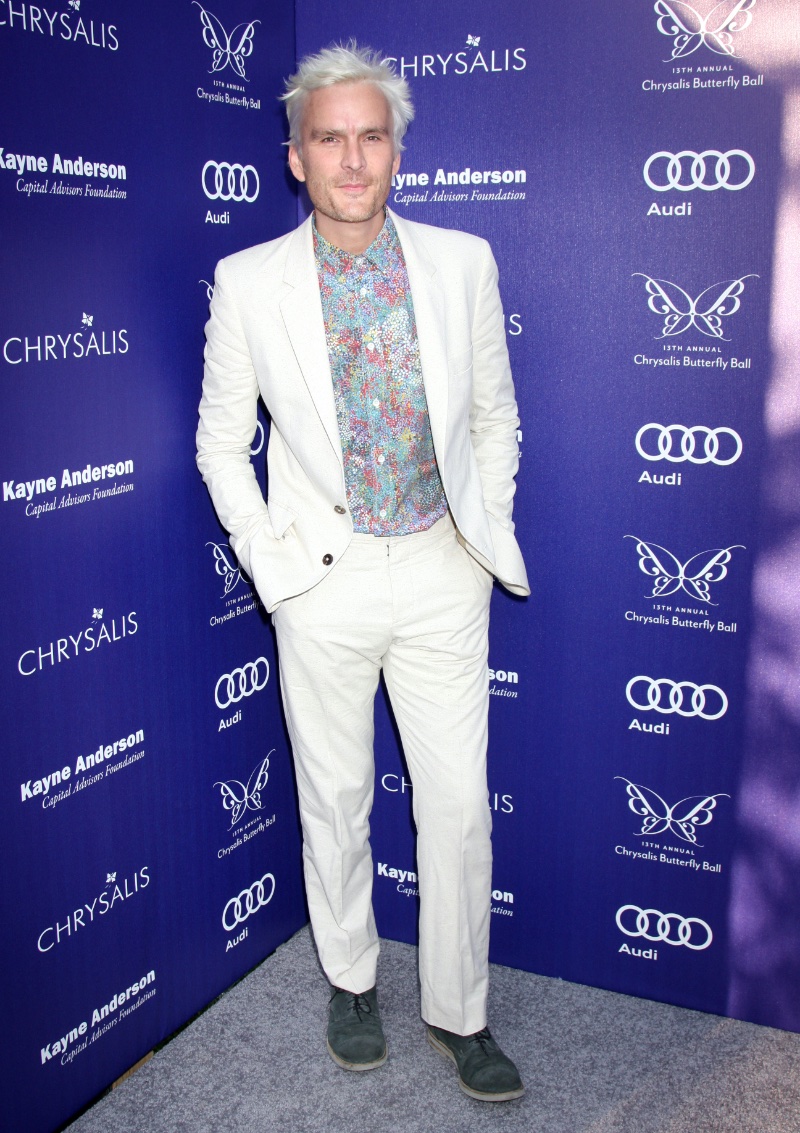
A floral shirt gives a white suit the mood of a party already in progress. The open jacket frames the print, and the dark casual shoes keep the outfit sociable. There is enough happening at the chest to make a tie feel like an extra guest.
The print’s scale changes the effect. Small flowers merge into texture from across a table; larger motifs announce themselves much sooner. An open collar lets either approach feel relaxed, especially when the rest of the outfit borrows one of the shirt’s quieter colors.
Off-White Suit with a Black Shirt
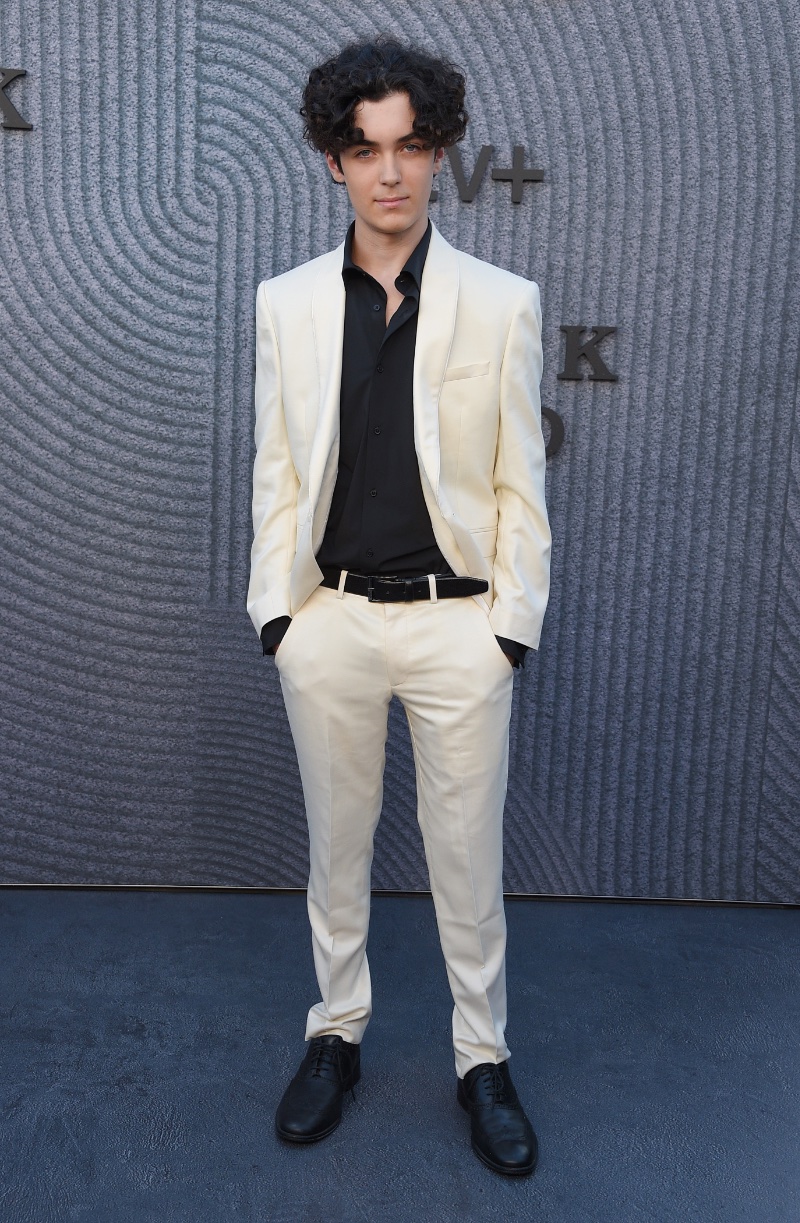
An ivory suit and a black shirt have a certain after-dark appeal. The shirt creates a strong center, while the warmer white keeps the combination from looking too stark. Black leather shoes continue the line below the hem, making the whole outfit feel connected.
This is also where a little attention to the collar pays off. It should sit comfortably inside the lapels and stay there through dinner. A black belt works with belt-loop trousers; side adjusters leave the waist clean. The choice comes from the trousers, not a universal rule about accessories.
White Suit with a Black Waistcoat
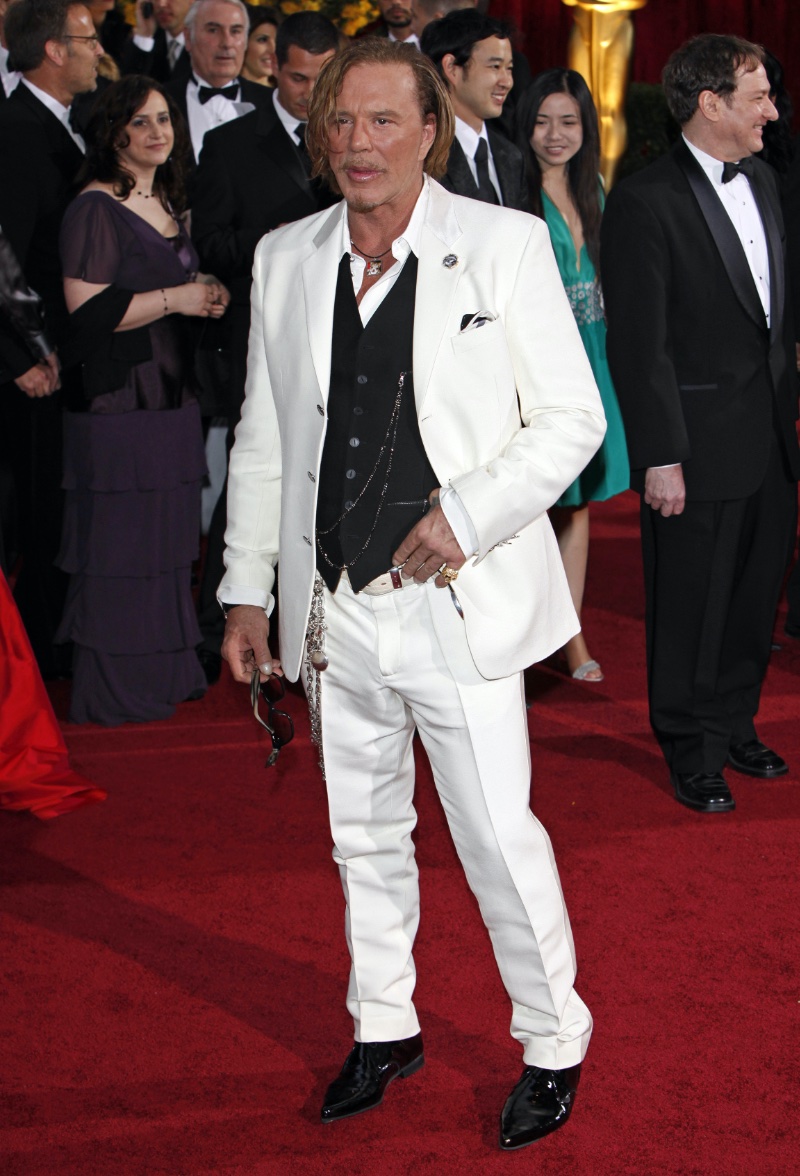
The black waistcoat gives this white suit a streak of theatricality. With the jacket open, it shapes the torso and makes the white shirt more visible at the collar. The chain and decorative details push the outfit toward the stage, where a suit is allowed a little showmanship.
A simpler waistcoat brings the same contrast into everyday tailoring. It should cover the waistband, with enough space beneath the jacket for the front to fasten comfortably. That small matter of fit determines whether the extra layer looks assured or feels like a struggle.
White Suit with Black Accessories
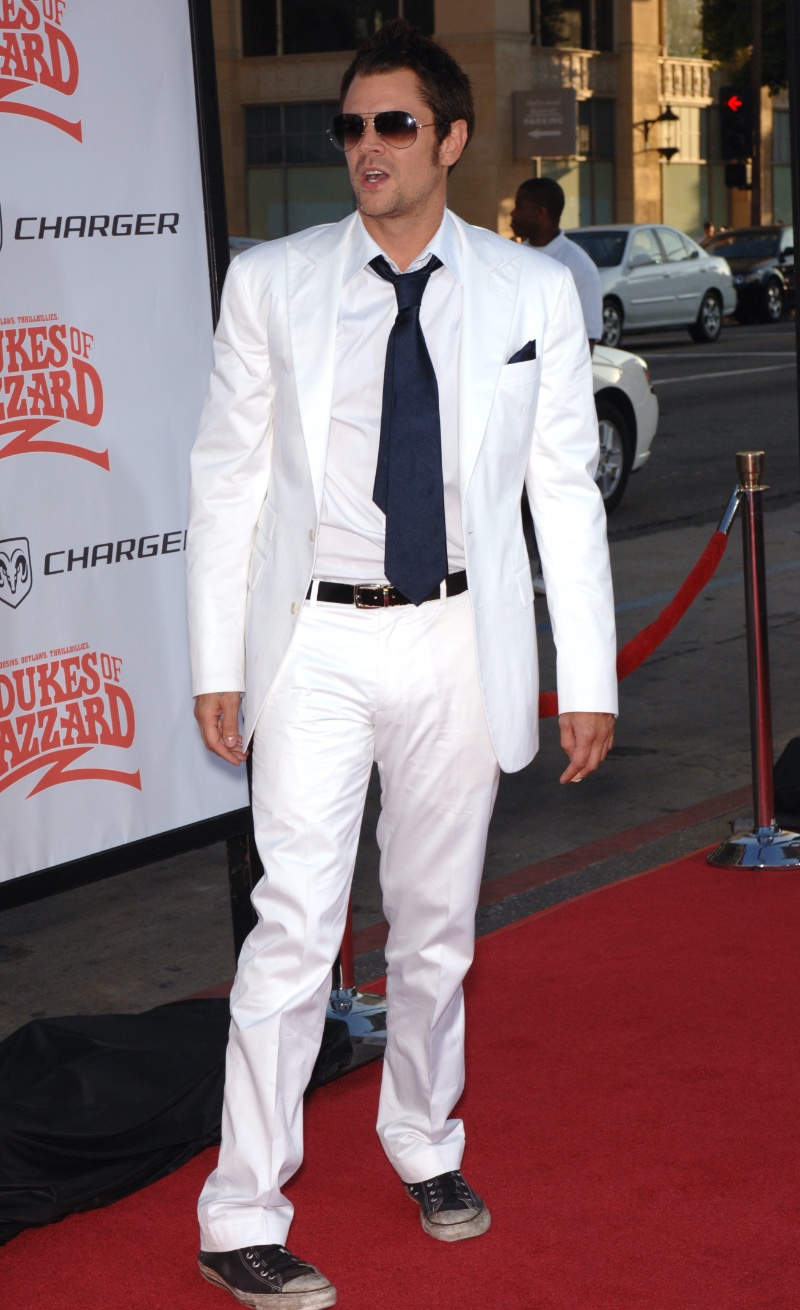
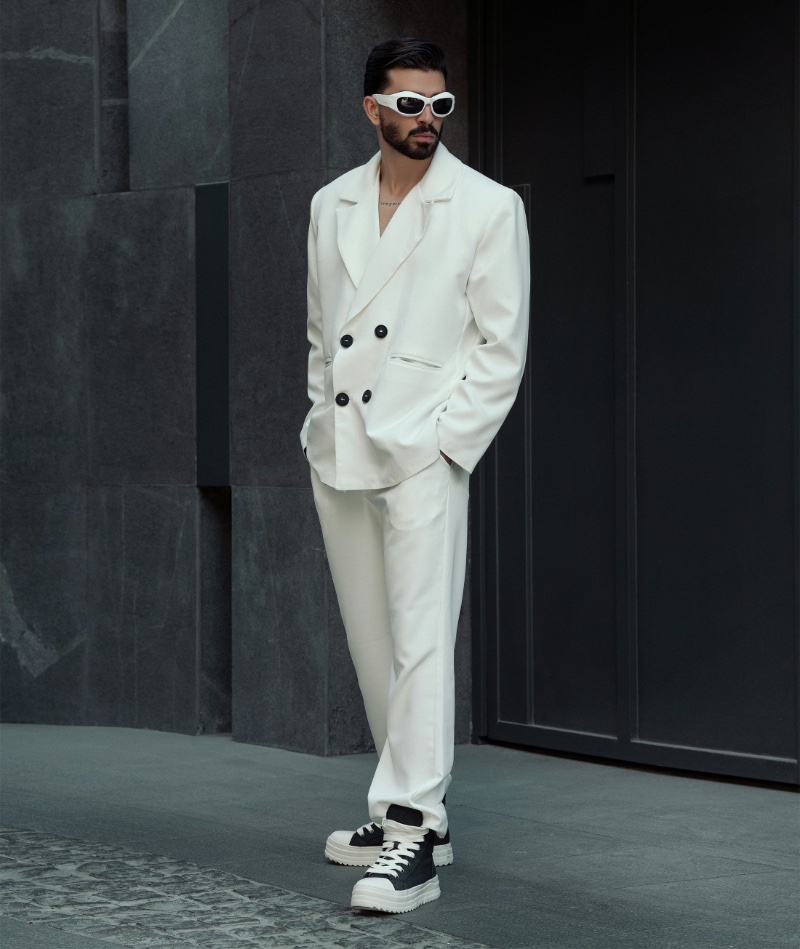
A black tie over a white shirt gives the suit a graphic center, but the sneakers supply the punch line. The outfit has borrowed the gestures of formal dressing and taken them to a party. Black lace-ups would change its manner immediately, making the same jacket and trousers feel more dressed up.
The invitation still gets a vote. Sneakers belong where the dress code permits them, even when a tie is involved. At a less formal celebration, though, their casualness gives all that white a welcome sense of humor.
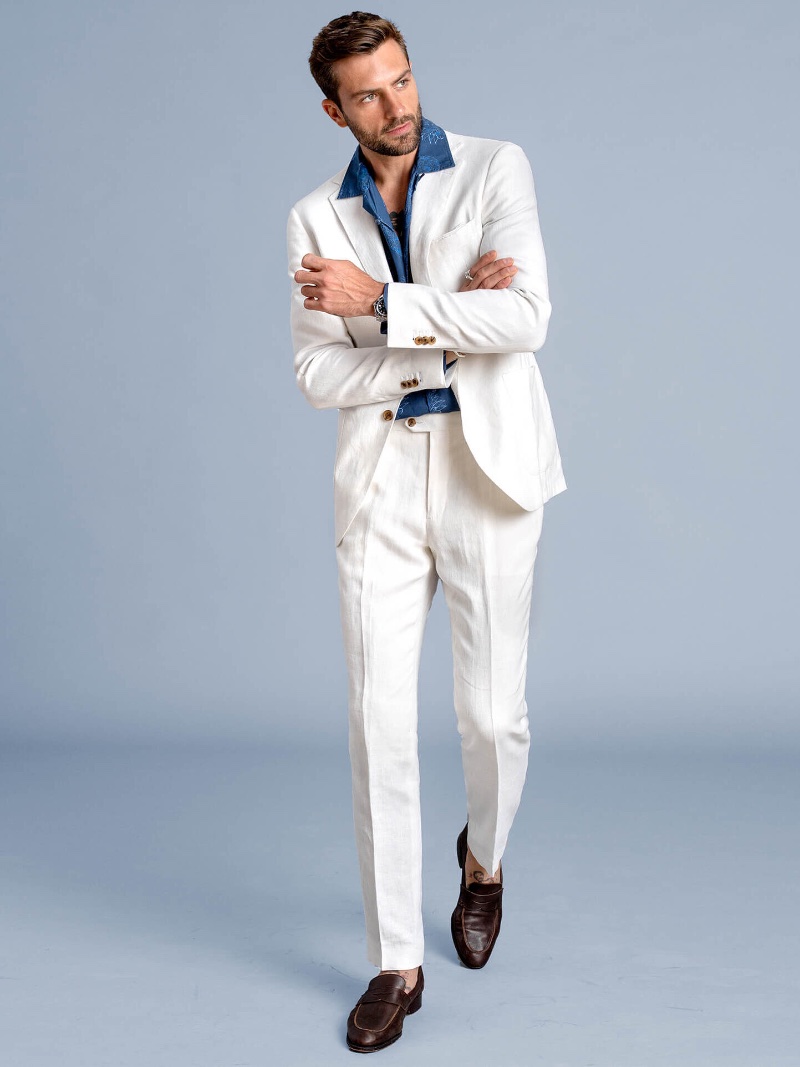
White Suit with a Light Blue Shirt
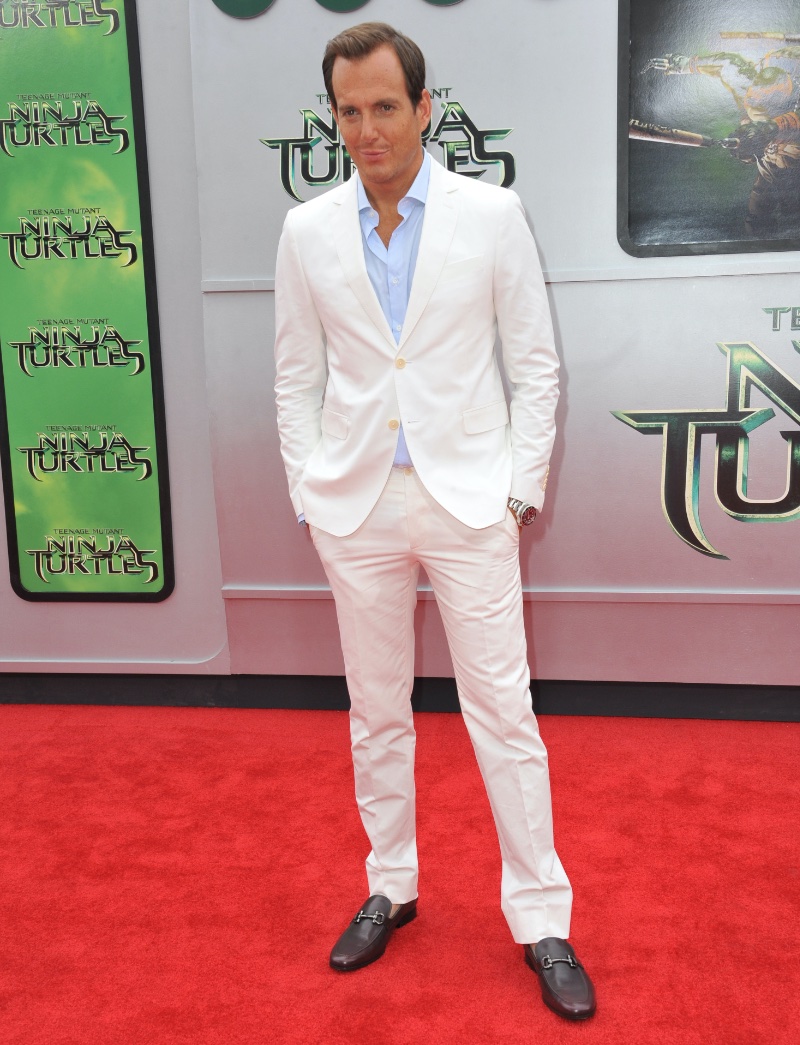
A light blue shirt is an agreeable companion for white tailoring. It introduces enough color to distinguish the layers while keeping the outfit light, and brown loafers give it the air of a long lunch. The open collar does much of the work; adding a tie would turn the conversation toward business.
Cotton poplin gives the shirt a smoother finish, while linen lets its texture join the suit’s. Keep the trouser hem clean over the loafers. Fabric gathering at the ankle can make this otherwise uncomplicated combination look heavy at the feet.
White Suit with Decorative Accessories
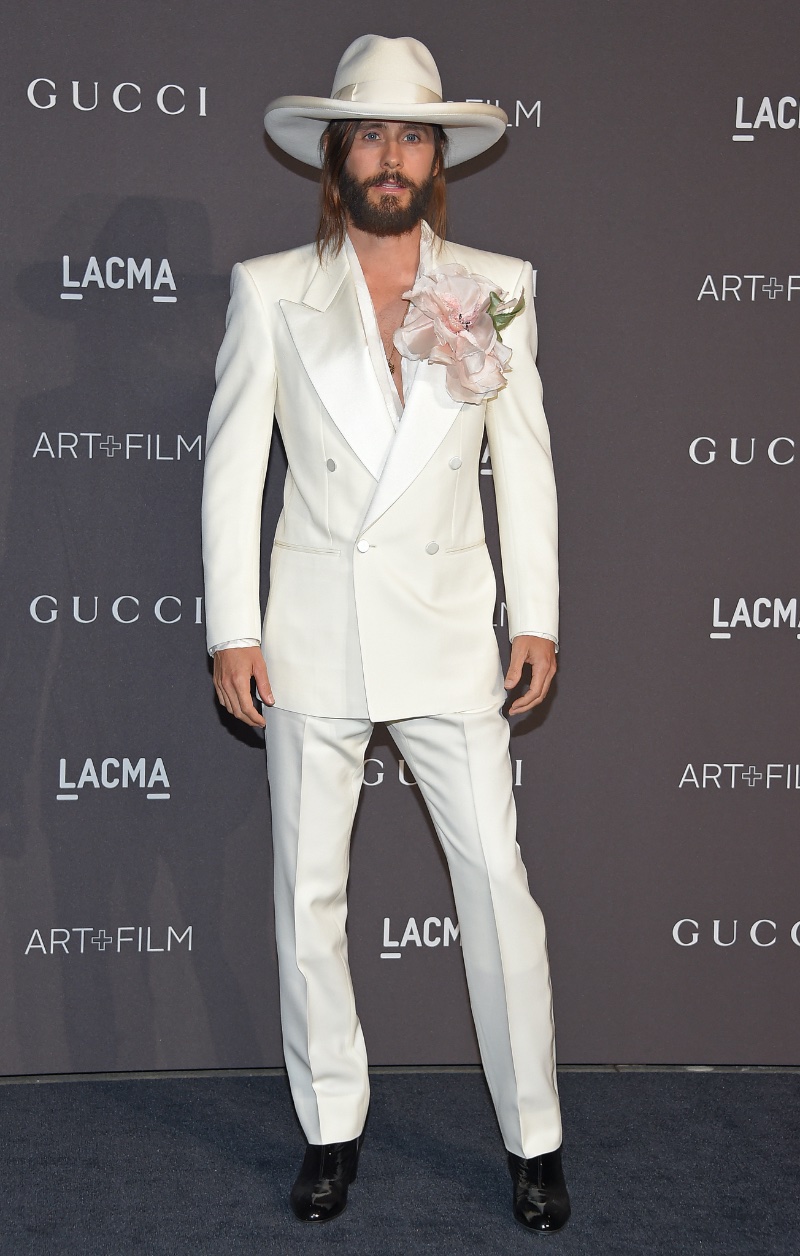
The hat and oversized flower establish the terms of this outfit immediately. Here, white tailoring becomes a setting for ornament, with broad lapels and an open shirt giving the flower enough space beside the face. The scale is part of the enjoyment.
There is a wearable idea beneath the red-carpet ambition. One accessory you love can lead the rest of the outfit, whether that is a lapel flower or a favorite hat. White gives it a clear background, so the supporting details can afford to be quieter.
Off-White Suit with a Bow Tie
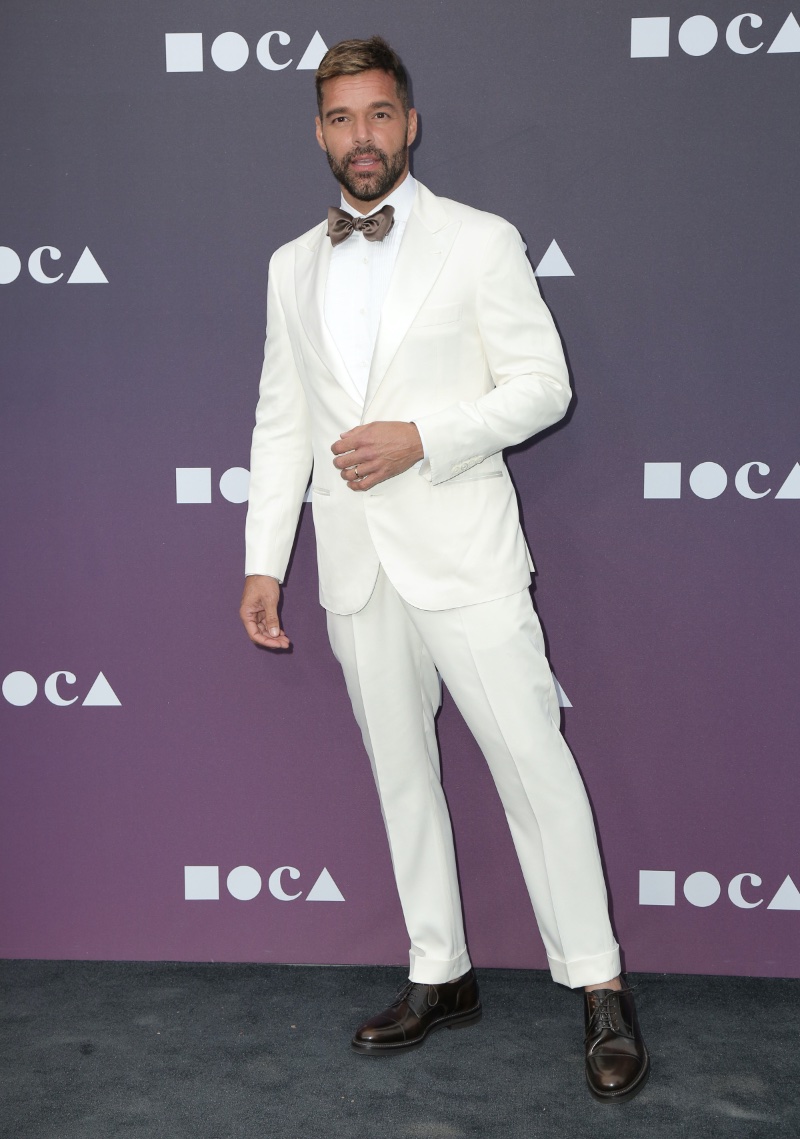
A patterned brown bow tie brings a personable, slightly old-fashioned charm to an off-white suit. Brown leather footwear repeats its warmth, while a white shirt keeps the combination light. It feels appropriate to a celebration where dressing up is part of the pleasure.
The notch lapels identify this as a suit, an important distinction among formal outfits. A bow tie is an accessory, not a conversion to eveningwear. Traditional warm-weather black tie calls for a white or ivory dinner jacket with black evening trousers and a black bow tie. The invitation decides which version of dressing up the evening requires.
Off-White Suit with a Patterned Tie
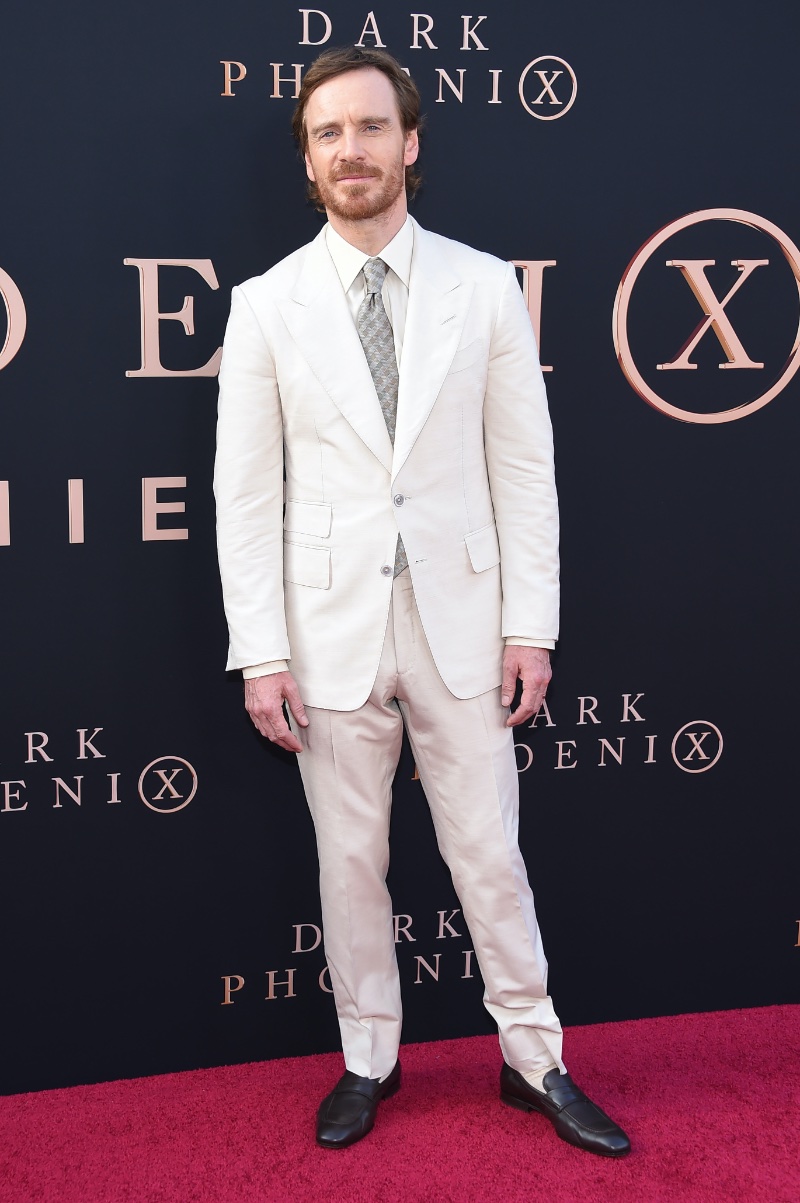
A patterned tie gives an off-white suit a quieter type of decoration. Against a white shirt, the muted design draws attention through texture and detail, keeping the whole outfit close in tone. Black shoes give it a firmer finish at the ground.
It is an appealing direction for groom outfits when the setting calls for light tailoring. The shade should be chosen alongside the partner’s clothes and the wedding party’s, since ivory and bright white can look surprisingly different together. Guests should check with the couple before arriving in an all-white or ivory suit, particularly when those colors are reserved for the people getting married.
White Suit with a Tank Top
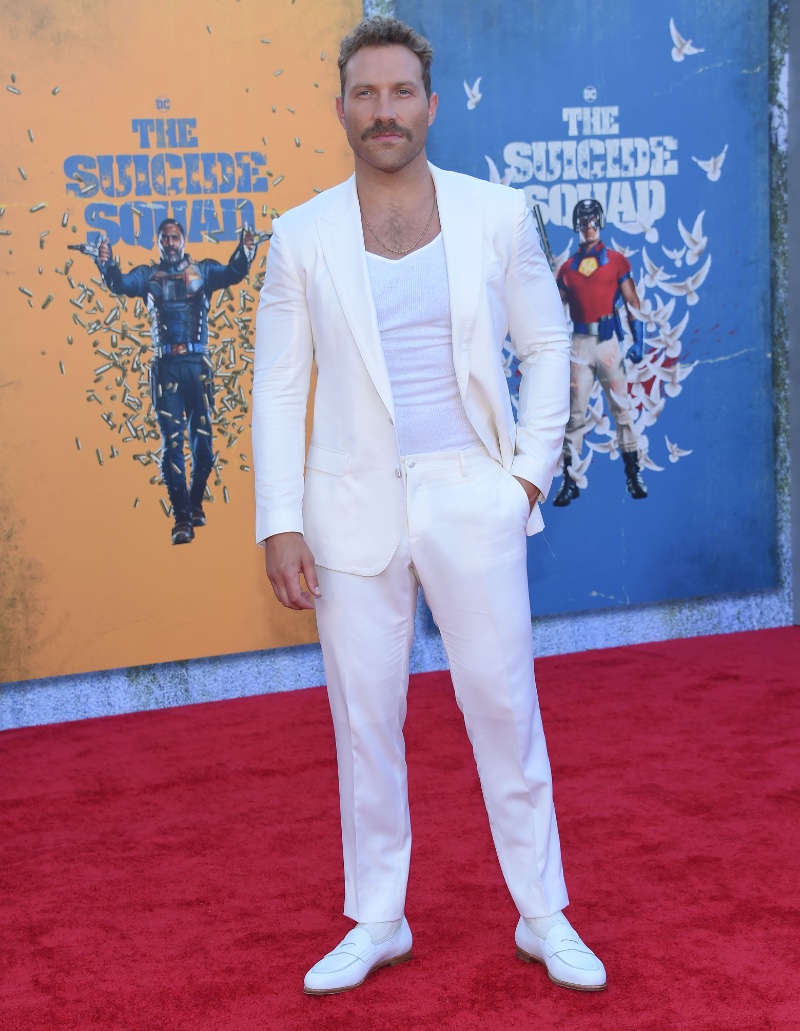
The white tank top takes this suit into more physical territory. A low neckline exposes the chest between the lapels, while white sneakers keep the outfit casual all the way down. The jacket still gives it shape, even as the clothes beneath it suggest a much less formal evening.
A tank that sits close to the body will lie more smoothly beneath the tailoring. Its armholes should stay covered as you move; a cotton T-shirt offers a little more coverage. Either approach suits a party with a flexible dress code and makes the jacket feel like something worn for enjoyment.
White Suit with Jewelry
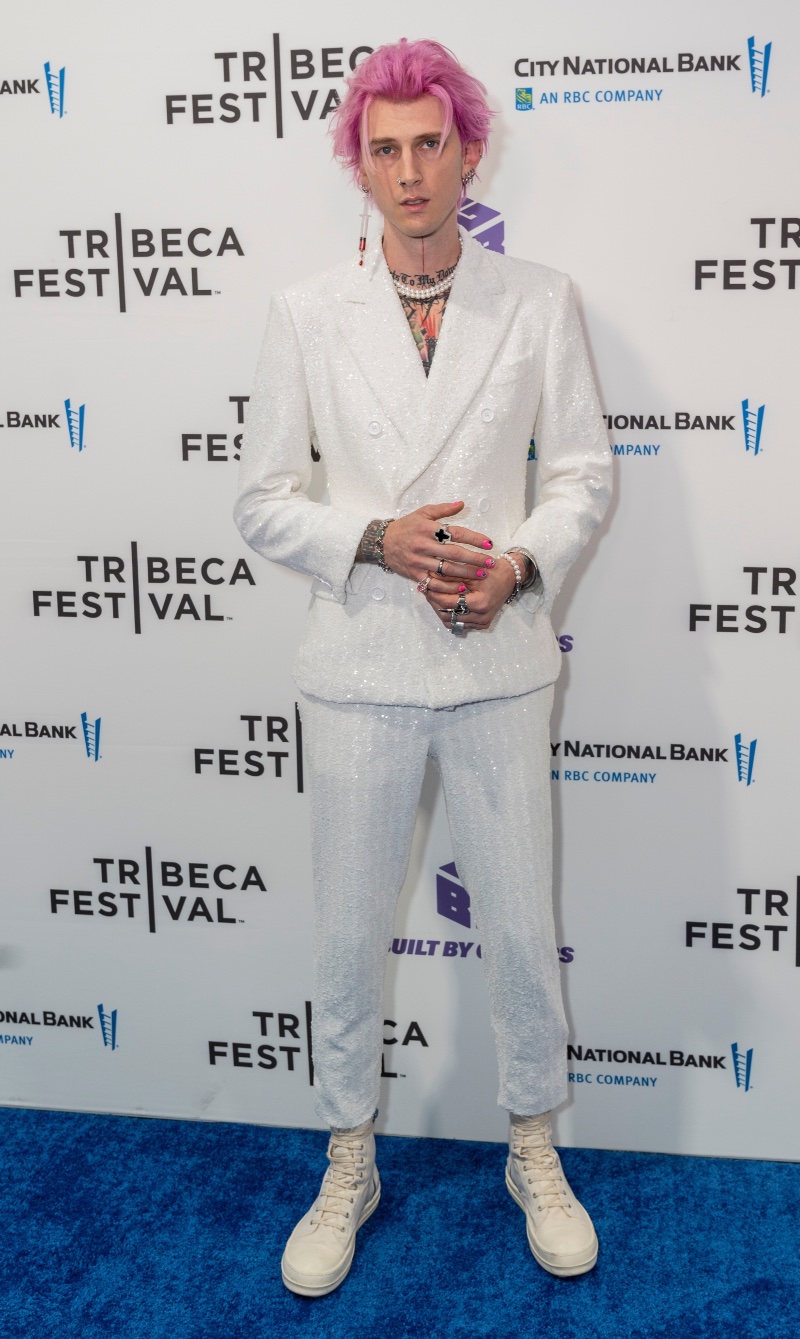
Jewelry finds a particularly effective setting in the open neckline of a white suit. Here, layered necklaces occupy the space between the lapels, and the textured tailoring gives their shine something to play against. Light boots continue the outfit’s color below the trousers.
The relationship between necklace and neckline matters more than the number of pieces. A short chain sits near the collarbone; a pendant draws attention lower. With a double-breasted jacket, fastening the front changes how much is visible, so the jewelry and tailoring are worth trying together before the evening begins.
White Jacket with Black Trousers
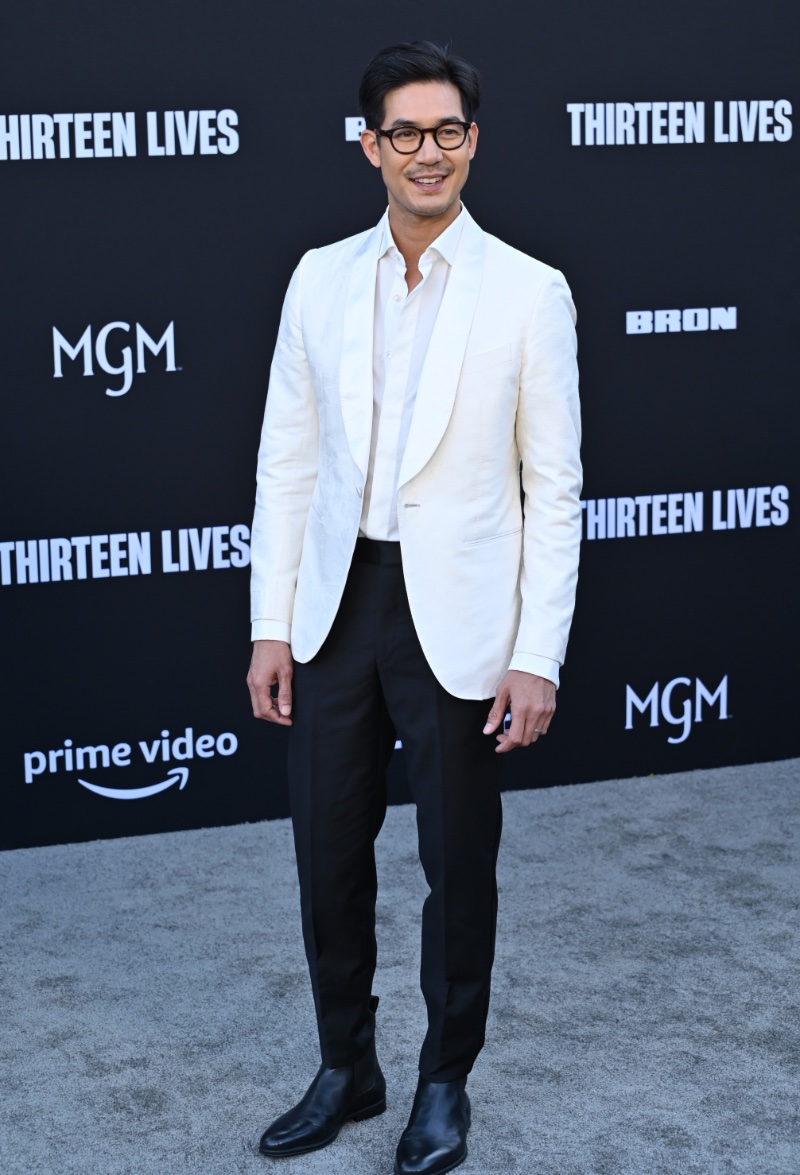
Black trousers give a white jacket a different job. The jacket lights up the upper half of the outfit, while the trousers and boots form a continuous dark base. A white open-neck shirt extends that lighter area and keeps the combination relaxed.
These are separates, so the fabrics should look compatible and the cuts should belong to the same idea of fit. A conventional black-tie version requires a dinner jacket and evening trousers. This open-collar interpretation is for occasions where tailoring can be a little more personal.
White Patterned Suit with a Black Turtleneck
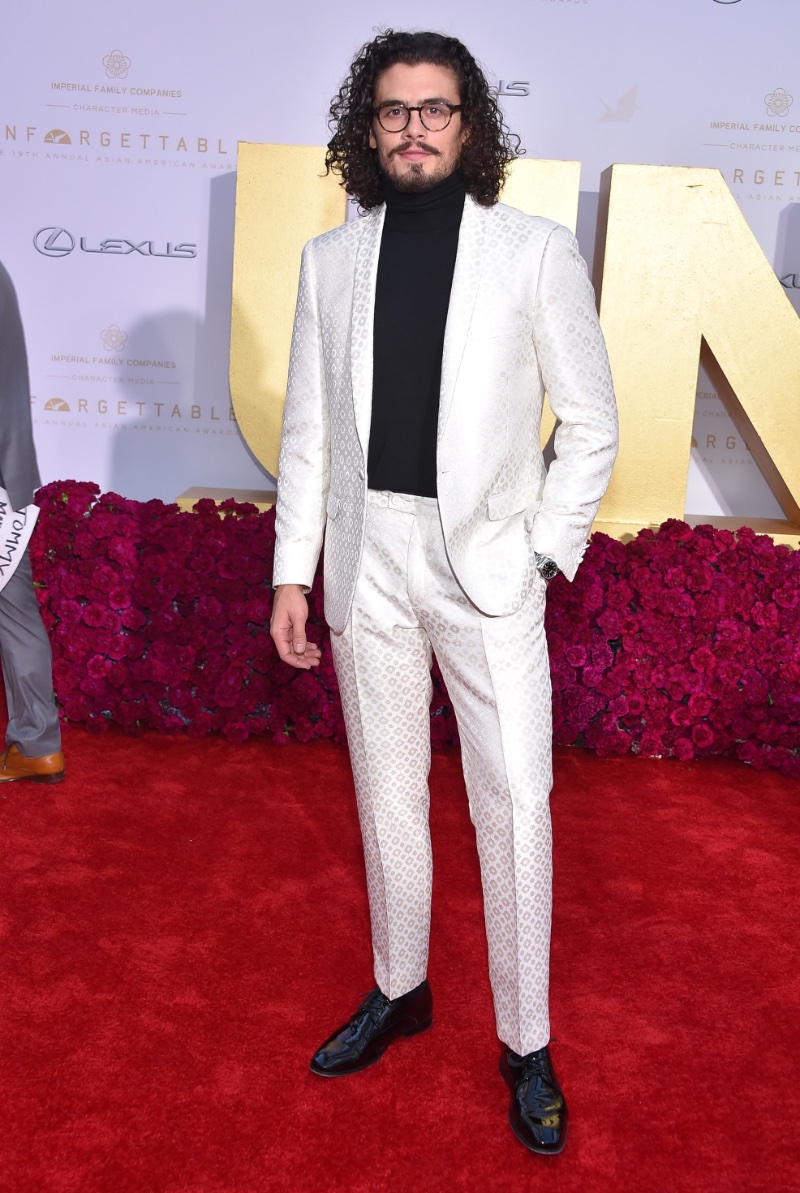
The black turtleneck gives the pattern on this white suit a clear backdrop. Its uninterrupted color runs from neck to waist, drawing attention to the jacket’s lapels and the texture of the cloth. Black loafers pick up the knit’s color below the hem.
A fine-gauge black turtleneck with a suit keeps the layers comfortable beneath the jacket. It also offers a persuasive way to take white tailoring into cooler weather when the fabric suits the temperature. The effect comes from that dark column of knit against light cloth, a contrast that looks just as compelling after summer has ended.