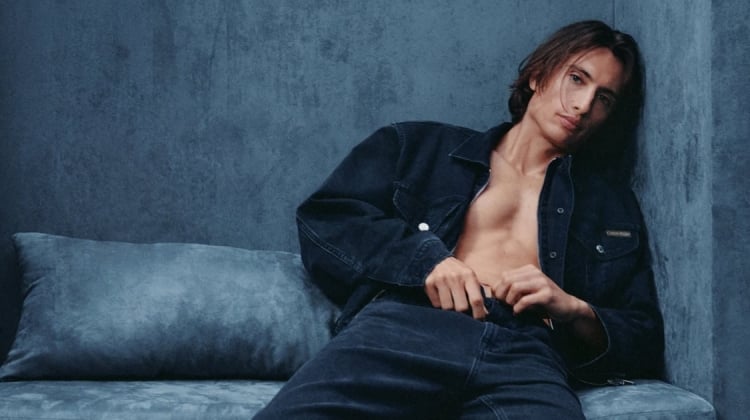
Collar types help explain why one white shirt looks ready for a job interview and another suggests dinner after dark. A narrow point draws the eye toward a tie; a camp collar opens the chest and changes the shirt's whole attitude. Before color or pattern enters the conversation, that small patch of fabric has already said quite a bit.
Types of Shirt Collars
The different types of collars for men reflect different ideas about getting dressed, from the ceremony of a wing collar to the soft roll of an Oxford. Their construction explains much of the effect. The spread is the distance between the points, while the band determines how high the collar sits against the neck. Stiffness gives the same shape a more formal character; softer cloth lets it relax.
Point Collar

Downward-facing tips and a relatively narrow opening give the point collar its straight, vertical line. It is the dependable option for a business shirt, especially with a compact four-in-hand knot. Longer points introduce a touch of vintage tailoring, particularly when they slip beneath a jacket's lapels. Worn open, a soft version looks casual, while a firm band keeps a more upright bearing. The shape may be conventional, but its proportions can change the decade it brings to mind.
Spread Collar

With its points set farther apart, the spread collar gives the tie a broader frame. A moderate spread is an accommodating choice for men who alternate between a suit and an open-neck shirt. You see the appeal in Italian shirts, where the collar often helps establish the relationship between shirt and tailoring. Try it beneath a jacket. The points should sit comfortably under the lapels, with a knot that fills the opening.
Cutaway Collar
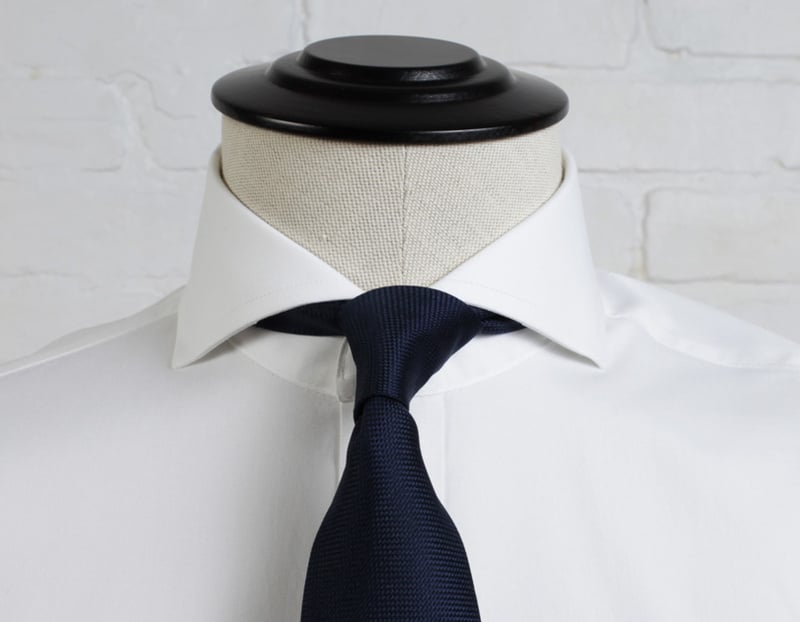
The cutaway collar sends its points outward toward the shoulders, putting more of the tie on display. It brings a certain confidence to a conventional suit, especially when the shirt is otherwise plain. A fuller knot can suit that wide opening, though thick silk may produce all the volume required with a simpler knot. Worn open, the collar fans across the chest, giving even sober tailoring a more expansive neckline.
Button-Down Collar
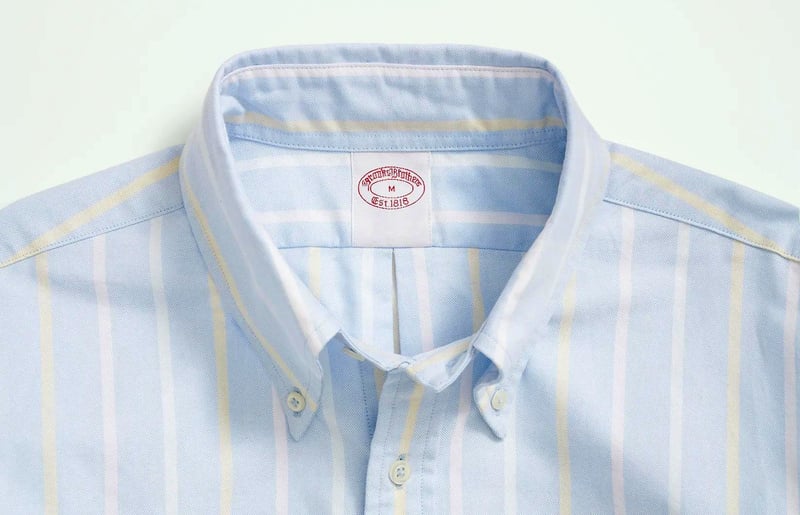
The small buttons fastening each point give the button-down collar its name and much of its character. They are also what distinguish a button-down from any shirt that buttons up the front. On a soft Oxford, the cloth rolls between the band and those fastenings, creating a curve that looks particularly right beneath a casual jacket. Add a knitted tie and the effect turns collegiate; leave the neck open and the same shirt gets on with the weekend.
Hidden Button-Down Collar

For men who like their collar points to stay put, the hidden button-down collar offers a discreet fastening underneath. From the front, it resembles an ordinary point or spread collar. The practical benefit becomes apparent under a jacket, where unsecured points can wander beneath the lapels or curl away from the chest. Here, the buttons do their job behind the scenes, keeping an open-neck shirt looking composed through a working day.
Tab Collar
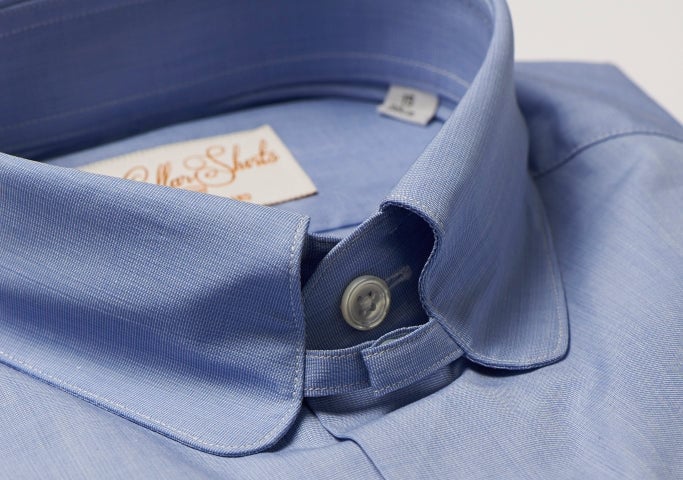
A tab collar gives a tie knot a little lift. A small fabric fastening joins the collar's two sides beneath the knot, drawing them together and pushing the tie forward. That extra dimension makes a plain shirt feel more dressed, with particular appeal for men who enjoy the ritual of putting on a tie. The tab can sit beneath pointed or rounded ends, as the curved example shows. A compact knot lets the fastening shape the result.
Wing Collar

The upright band and folded front tips of a wing collar announce an occasion. A bow tie sits prominently against it, with more of the tie's band exposed than on a turndown collar. The shape belongs to formal evening dress, reaching its most ceremonial expression in the detachable collars worn with white tie. For a tuxedo, a turndown collar is another established choice. Let the invitation set the level of ceremony before choosing the shirt.
Eton Collar
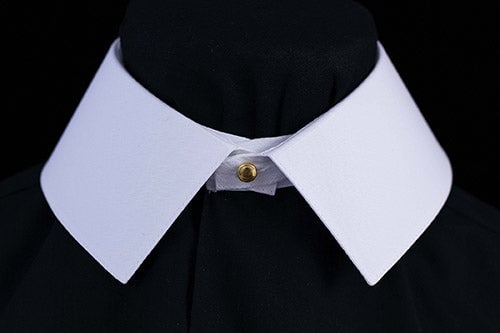
The historical Eton collar had broad, stiff white points that extended over the jacket, making the collar an unmistakable part of British school dress. Its scale turned a practical detachable piece into a declaration of belonging. The reproduction pictured preserves that wide outline, which differs from the rounded ends of a club collar. Today, it is chiefly a reference for period dressing, a reminder of how much social information a shirt collar once supplied.
High Collar

Height can change a shirt as decisively as the shape of its points. A high collar rises farther up the neck, creating an enclosed frame that can hold its own against a large tie or cravat. The effect is especially apparent in ceremonial dressing, where neckwear occupies much of the space above the waistcoat. This is a description of proportion across collar designs. When trying one on, turn your head and sit down; comfort has to survive both.
Stand Collar

A stand collar finishes the neckline with an upright band, directing attention toward the shirt's fabric and fastening. Band and mandarin collars belong to this broader family, though their height and front openings can differ. On a casual shirt, the compact neckline works particularly well with linen or visible embroidery. There is less fabric around the face, so the texture of the shirt gets a larger share of the attention.
Notched Collar

Pajama shirts give the notched collar one of its most recognizable settings. The collar turns back toward the front opening, creating a small indentation often traced with piping. It gives loungewear a suggestion of tailoring while letting the neckline lie flat. A jacket's notched lapel uses related terminology, though its construction serves a different garment. On a pajama-style shirt worn outdoors, that little lapel is part of the pleasure, giving bedtime clothing a social life.
Camp & Cuban Collar

The camp collar, also sold as a Cuban or resort collar, folds back into an open neckline that lies across the upper chest. Its appeal comes partly from how it lets the shirt hang, especially in draping rayon or lightweight linen. A plain version can look restrained with tailored trousers; a print sends it toward mid-century holiday dressing. Some designs include a loop fastening at the neck, so the relaxed appearance can conceal a little more engineering than expected.
Round & Club Collar

Rounded ends give the club collar its slightly eccentric charm. On an otherwise conventional shirt, that curve is enough to suggest an interest in tailoring beyond the office uniform. A small knot keeps the collar's outline visible, while a pin can draw the sides together beneath the tie. Contrast fabric heightens the old-fashioned effect. It suits a man who enjoys dressing up and is happy for that enjoyment to show.
Johnny Collar

The Johnny collar builds an open V into a polo or knitted shirt, letting the neckline stay open by design. It offers some of a collared shirt's definition with the softness of knitwear, which explains its appeal beneath a lightweight jacket. A fine knit can move into evening, while a textured cotton version feels more daytime. Pay attention to the depth of the V, which determines how much chest, or undershirt, joins the outfit.
Shawl Collar

On a cardigan, the shawl collar rolls around the neck and continues down the front, adding thickness just where a sweater feels most protective. Cable knitting emphasizes that enveloping quality, especially over a simple crewneck. The continuous curve has a tailored relative in a dinner jacket's shawl lapel, though the cardigan gets its character from the knit itself. Button it high against the cold or let the collar fall open over the chest.
Bowling Collar

The bowling collar usually shares the open construction of a camp collar. Much of its identity comes from the shirt around it, particularly contrast panels and embroidery that recall mid-century leisurewear. The collar helps establish the mood, while the whole garment supplies the reference. Stripes offer a less literal approach, bringing the open neckline into an everyday outfit with plain trousers. The bowling alley is optional.
Wearing a Collar Open or Buttoned


Opening the neck changes a shirt's attitude, even when the rest of the outfit stays the same. A point collar loosens up; a spread collar opens farther across the chest. These are ways of wearing a shirt, while shirt collar styles describe the underlying construction. Put the jacket on before judging the result, since its lapels can push a soft collar into a different position.
Buttoned at the neck, the collar becomes a frame for the tie. The band should feel comfortable, with the knot sitting between the two sides instead of levering them apart. Collar points and jacket lapels should cooperate too. Those small relationships explain why a shirt can look convincing on a hanger yet feel slightly wrong once dressed. The useful test happens in front of the mirror, wearing the clothes it will actually accompany.