The same black frames can suggest an incognito exit or a conversation across the table, depending on what sits inside them. Dark gray conceals the eyes; yellow puts them on show. Lens color gives a pair of sunglasses much of its attitude, even before you get to the shape.
There is a practical side to that choice, too. A tint changes the brightness and color of the view, so the best sunglass lens color is one you enjoy looking through as much as wearing. Gray and brown are sensible starting points for an everyday pair. Blue or orange gives even a T-shirt something to answer to.
Sunglass Lens Color Guide
Sunglass lens colors describe the tint you look through. Polarization filters reflected glare, while a mirror is a reflective surface coating. Each is a separate feature. A blue mirror can sit over a gray lens, and a green lens can be polarized or nonpolarized.
Check for 99–100% UVA and UVB protection or a UV400 label. Darkness alone tells you little about UV protection. Visible light transmission (VLT): the percentage of visible light a lens lets through. A lower number means a darker view. As ZEISS explains, tint and UV protection serve different purposes, so a lightly colored lens can still provide UV protection when properly specified.
| Lens color | Effect on the view | Style character |
|---|---|---|
| Gray | Reduces brightness with relatively little color change | Versatile, discreet |
| Brown & amber | Adds warmth; can enhance contrast | Earthy, vintage-leaning |
| Green | A relatively neutral option, depending on the tint | Classic or playful according to depth |
| Blue | Introduces a cool color cast | Graphic, especially in clear frames |
| Purple | Adds a violet cast that varies with intensity | Subtle in a dark gradient |
| Red & pink | Introduces a rosy or red cast | Expressive, even in fine wire frames |
| Orange | Adds a pronounced warm cast | Vivid, with a sporty association |
| Yellow | Adds a yellow cast; still reduces incoming light | Retro, with the eyes on show |
Gray Lenses

Gray leaves the scenery largely as you found it, reducing brightness with relatively little change to color. That makes it a useful everyday choice, especially if you prefer your sunglasses to get on with the job. For daytime driving, choose an appropriate darkness and check the pair’s stated suitability.
Its apparent simplicity also gives the frame more authority. Round wire frames with gray gradients have a different character from heavy black acetate: the former suggests vintage record shopping, the latter a wish to browse undisturbed. With a denim jacket, the lighter lower edge of a gradient keeps the combination from looking too severe.
Brown & Amber Lenses

Brown and amber warm the view and can increase contrast, with the effect depending on the exact tint. Try them beside gray and the difference becomes more useful than any color chart. Gray keeps the view relatively neutral; brown lends the afternoon a little autumn.
That warmth has obvious allies in tortoiseshell and gold metal, as well as suede jackets and sun-faded denim. Dark brown inside a black frame is restrained enough for daily wear. Lighter amber reveals more of the eyes and brings a vintage inflection, especially in a larger frame. A plain shirt is often all the company it needs.
Green Lenses

Green has two quite different personalities. A dark gray-green lens belongs to the classic sunglass vocabulary, with a relatively balanced view and an appearance that works across tailoring and casual clothes. A light green tint is more playful, particularly when the eyes remain visible.
In clear rectangular frames, the color seems almost suspended in front of the face. It supplies the interest that patterned acetate would otherwise provide, making a navy T-shirt feel like a choice. Keep the rest of the outfit straightforward and the glasses can handle the curiosity.
Blue Lenses

Blue tint looks especially persuasive in clear acetate, where it has little competition from the frame. The effect is cool and graphic, with enough transparency to keep the face expressive. Dark denim picks up the color naturally; a white shirt gives it a brighter backdrop.
There is a distinction worth checking before buying. Blue-tinted lenses color the view, while a blue mirror describes the reflective front surface and may cover a gray or brown base. If you like the blue for its appearance, choose it on those terms. Polarization is a separate specification for dealing with reflected glare.
Purple Lenses

Purple can be surprisingly discreet. In a dark gradient it sits close to gray, revealing more color near the bottom of the lens. A black frame keeps the effect contained, giving a dark jacket a small eccentricity that only becomes obvious at closer range.
Lighter violet moves the glasses further into accessory territory. It works particularly well when the clothing offers a calm background, such as charcoal knitwear or a white shirt. The depth of the tint matters as much as the name: lavender and deep plum make very different introductions.
Red & Pink Lenses

A fine wire frame can look positively theatrical once red lenses enter the picture. Round shapes accentuate the effect, bringing a music-festival mood to a white T-shirt and a necklace. There is little need to keep adding accessories when the glasses have already volunteered.
Pink takes the same idea in a softer direction. A light rose tint leaves more of the face visible and sits comfortably with washed denim or cream knitwear. Both colors alter the view, so spend a moment looking through them before deciding how much red you want in your afternoon.
Orange Lenses

Orange invites a little commitment. Repeating the color in a hoodie turns narrow rectangular sunglasses into part of a coordinated look, especially beneath a muted jacket. Against navy or black, the lenses take charge of the color instead.
The frame helps determine whether the result feels sporty or retro. Slim rectangles suggest one direction; a large wire aviator suggests another. For actual sport, choose eyewear specified for the activity and light conditions. Orange fashion lenses and purpose-built sports lenses may share a color while doing different jobs.
Yellow Lenses
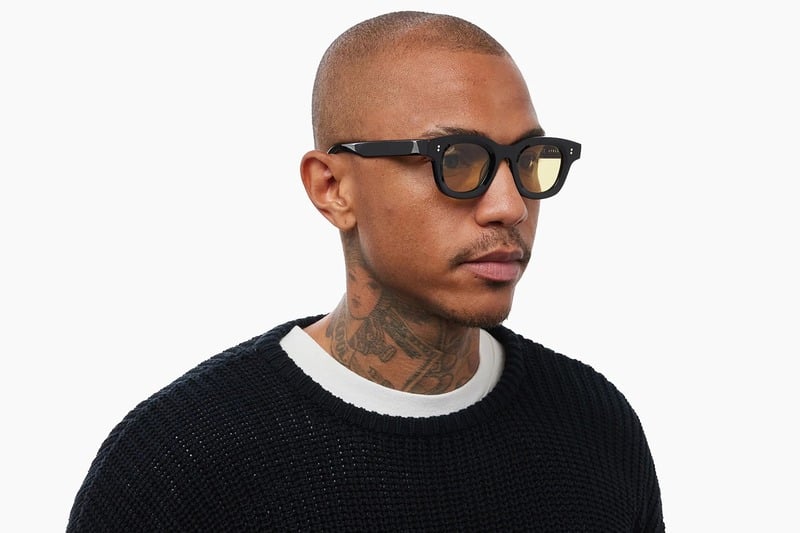
Yellow gives thick black frames an unexpectedly sociable quality. You can still see the eyes, which changes the expression of a shape that might otherwise appear imposing. A textured black knit is an effective companion, keeping the color close to the face and letting the contrast do the work.
The retro appeal is part of the attraction, but yellow also changes the view. A scene may seem brighter even as the tint blocks some incoming light. The American Optometric Association advises against yellow and other colored lenses for night driving. Enjoy the tint in suitable daylight conditions and use clear lenses, with your prescription if needed, after dark.
Polarized & Mirrored Lenses
Color sets the mood, while polarization and mirror coatings change how a lens handles light. Both can accompany different tints, so it helps to treat them as separate choices.
Polarized Lenses

Polarization is one of the more useful features to look for when reflected glare is the problem. It filters much of the glare bouncing off water and roads, making it worth assessing for boating or daytime driving. Some digital displays can become harder to read, so check your dashboard before choosing a pair for the car.
Visually, polarized sunglasses can be as quiet as dark frames worn with a wool coat and knit cap. The feature is in the lens, leaving you free to choose the shape and color on their own merits. Confirm UV protection separately in the product details.
Mirrored Lenses

A mirror coating reflects some incoming light and gives the lens its metallic front surface. In a yellow-green wraparound, the result belongs to the sporting end of the wardrobe. It has an immediate relationship with technical jackets and cycling jerseys, though a plain T-shirt can give it a more casual setting.
The reflection is what other people see; the base tint determines much of the view you get. Check both, along with UV protection and suitability for your intended use. For an everyday pair, gray, brown, and green are useful places to start. A second pair is where yellow or blue can indulge a different side of your wardrobe.