The Jack Purcell has an unusually cheerful face for a shoe associated with Hollywood rebels. That curved stripe across the toe, known as the “smile,” belongs to a design that started on the badminton court and found admirers in James Dean and Steve McQueen. Converse came later. Behind the sneaker was a Canadian champion whose taste ran to golf shirts and plaid trousers, a useful reminder that clothes can acquire quite a different reputation from the people who create them.
Converse Jack Purcell Shoes
The Badminton Champion Behind the Name
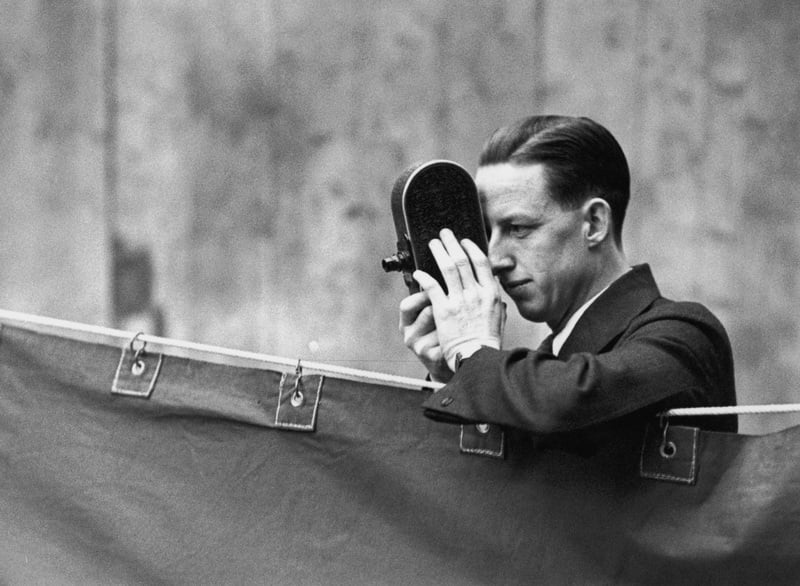
John Edward “Jack” Purcell was born in Guelph, Ontario, in 1903. Canadian singles titles in 1929 and 1930 helped establish his reputation before he entered professional badminton. He went on to dominate the game through the following decade, retiring in 1945, according to Canada’s Olympic Hall of Fame. His name on a shoe came with the authority of someone who knew exactly what happened to feet during a match.
Off court, Jack’s life had a country-club character. In a Tennis profile, his family remembered a mild-mannered golfer and fisherman who became a stockbroker. His son Peter recalled shoe royalties of eight cents a pair for about 20 years. The plaid trousers were his own preference; the rebellious associations arrived courtesy of the men who bought the sneakers.
A Shoe Built for the Court
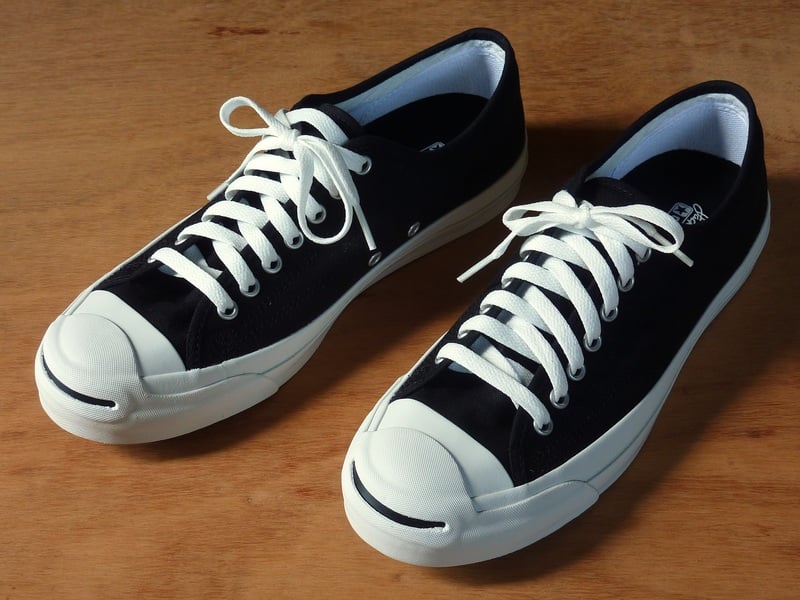
Jack worked with B.F. Goodrich on a canvas-and-rubber shoe that offered badminton players more support. The partnership dates to the 1930s, though even the brand’s histories disagree on the debut. Converse’s current US account gives 1933; its Japanese archive records the first model in 1935. Both place the shoe’s beginnings decades before Converse took ownership.
The low profile and reinforced toe came from sport. What made the design memorable was the small flourish across its front. Against black canvas, white rubber and laces give the shoe a graphic outline; on an all-white pair, the smile supplies most of the punctuation. That modest amount of decoration is part of the appeal. With jeans or chinos, the shoe has enough character to register beneath a trouser hem.
Hollywood & the Converse Years
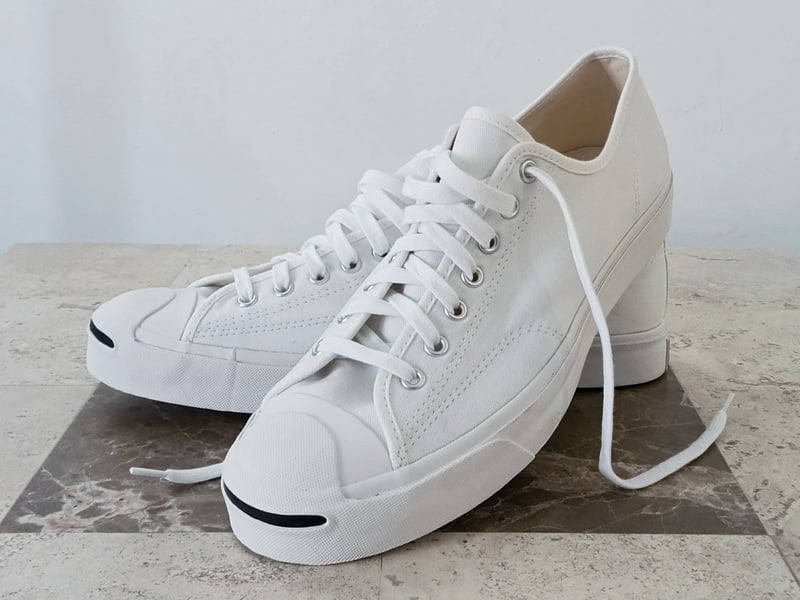
James Dean and Steve McQueen helped give the Jack Purcell its association with postwar American style. Their attraction for menswear has always involved the apparent accessibility of the clothes. A canvas sneaker was something a man could actually buy and wear, even if the movie-star bearing proved harder to acquire.
Converse acquired the line in 1972, joining its history to a shoe that already had a sporting pedigree and a Hollywood following. The Jack Purcell name therefore reaches back further than its Converse branding. Its identity also rests on a particularly small detail. Change the canvas color, wear down the rubber, let the laces get a little grubby, and the smile still tells you what you’re looking at.
The First String Revival
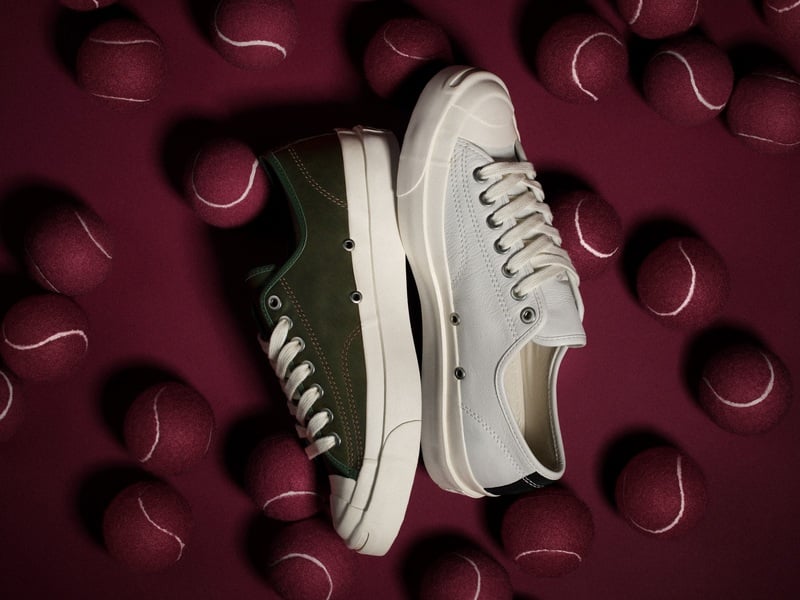
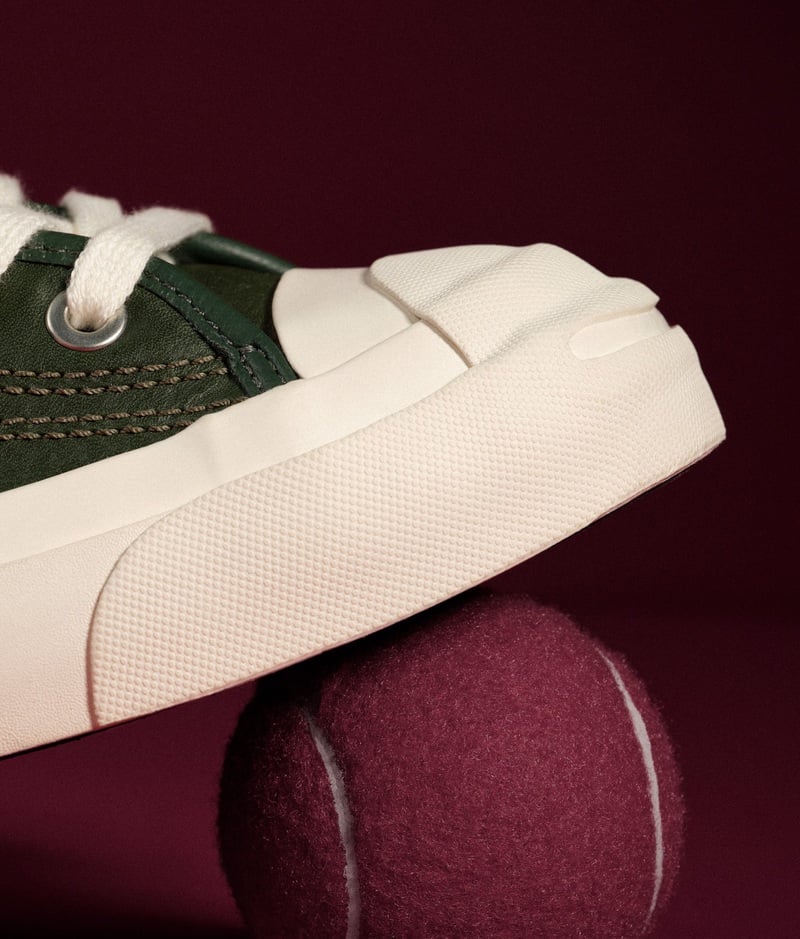
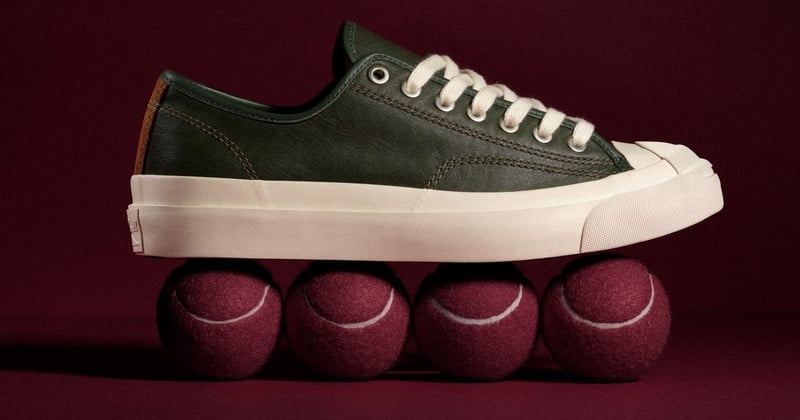
Converse’s 2026 First String edition brought a more luxurious treatment to the old court shoe. Leather uppers met a Vibram outsole, with CX foam and Nike Air technology incorporated into the cushioning. The heel branding drew on earlier versions, while a revised toe profile retained the signature smile.
Leather gives the silhouette a different finish, but the canvas versions explain why it became such a persuasive everyday shoe. The low cut leaves the trousers to set the proportions, and the rubber toe adds a sporting note beneath denim or cotton twill. Jack supplied the name and the court experience. Generations of men supplied their own ideas about how to wear it.