The Talented Mr. Ripley style owes much of its appeal to a man who dressed for a vacation he had no intention of ending. In Anthony Minghella’s 1999 film, Dickie Greenleaf’s style made a persuasive advertisement for staying in Italy on his father’s money. Jude Law supplied the tan and the entitlement; open shirts and white trousers did the rest. For Tom Ripley, played by Matt Damon, the attraction extended well beyond borrowing a shirt.
The Talented Mr. Ripley Fashion

Costume designers Ann Roth and Gary Jones understood the difference between having money and wanting to look as though you did. Their approach to men’s fashions from the late 1950s gave Dickie the wardrobe of someone accustomed to being well dressed. Tom was more conscious of the impression he made, right down to his carefully knotted tie.
Speaking to Live Design in 2000, Roth explained that Dickie’s clothes had to suggest his wealthy background even when they were worn. Jones described Tom’s change as a gradual process involving borrowed accessories and transitional clothes, including the corduroy jacket that stayed with him. Tom’s original wardrobe consisted largely of vintage garments remade for the production, while the suits he wore as Dickie were custom-made. The clothes became more expensive as the deception became more elaborate.
Dickie Greenleaf’s Riviera Wardrobe

Dickie’s black short-sleeve shirt and white trousers remain an especially tempting combination. He wore the shirt open at the neck, with enough buttons undone to let his tan become part of the outfit. The trousers supplied a defined waist and a long, clean line below. It was a simple look, but the proportions gave it more character than the usual shirt-and-shorts approach to summer.

His relaxed resort wear also had a useful informality. A white shirt could hang open on a boat or sit above short pink swim shorts beside the water. The patterned, button-front knit he wore over another white shirt brought a dressier texture into the same coastal setting. Dickie looked comfortable moving between these clothes because they all belonged to the life he already had.
Even his swim trunks had a definite shape. Cut high on the thigh, the printed pair he wore on the beach exposed far more leg than the long board shorts that would follow decades later. That shorter length is central to the film’s summer appeal. The clothes showed the body and gave it a frame, from the waistband of his trousers to the open collar of his shirt.
Tom Ripley’s American Wardrobe

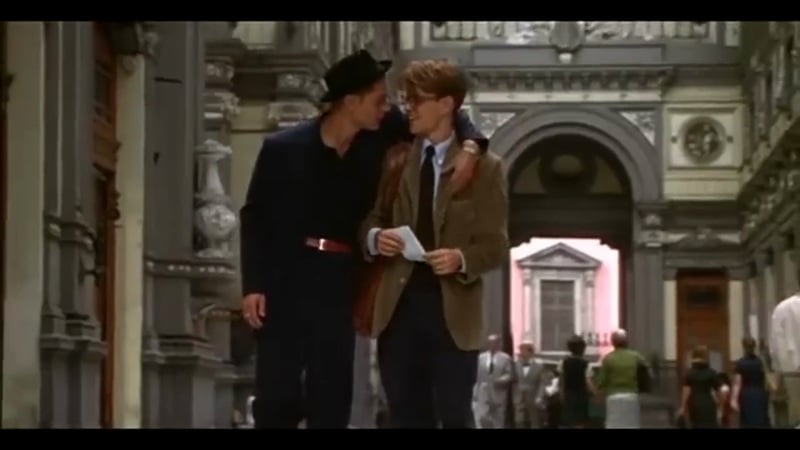
Tom’s corduroy jacket looked as though it had accompanied him to Italy along with several worries about what to wear. With a white shirt and narrow tie beneath it, he was more dressed than the occasion seemed to require. His glasses completed the studious effect, with thick upper rims and rounded lenses that gave his face a recognizable outline. At the restaurant table, he looked like the guest who had checked the dress code.
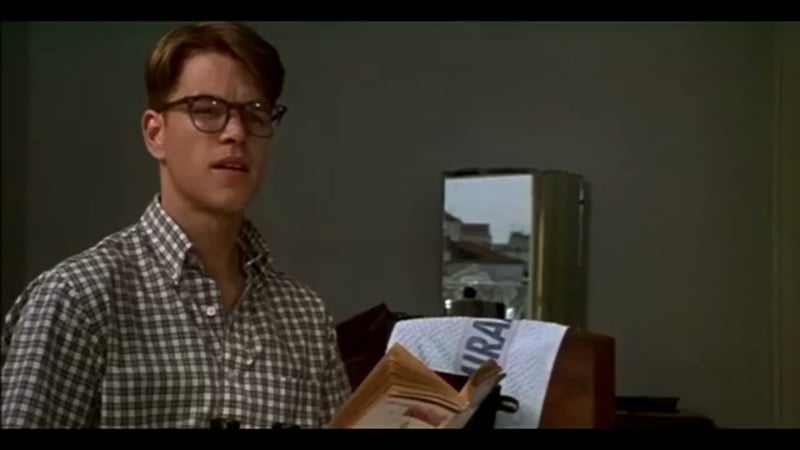

Casual dressing brought its own problems. His checked short-sleeve shirt and blue patterned shorts competed for attention, particularly beside Dickie’s white shirt and pink swim shorts. The individual pieces were straightforward holiday clothes; together, they suggested Tom was still figuring out how this particular holiday worked.
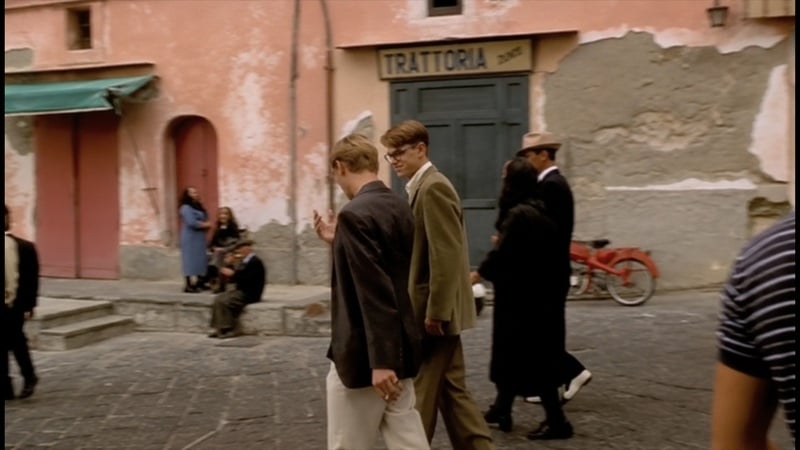
There was appeal in his more reserved clothes, too. The corduroy gave the jacket a tactile, slightly academic quality, and his blue Oxford button-down shirt had the directness of an American wardrobe staple. Those pieces established a recognizable Tom before the expensive suits arrived. His clothes were part of the identity he would spend the rest of the film trying to escape.
Tom’s Changing Wardrobe
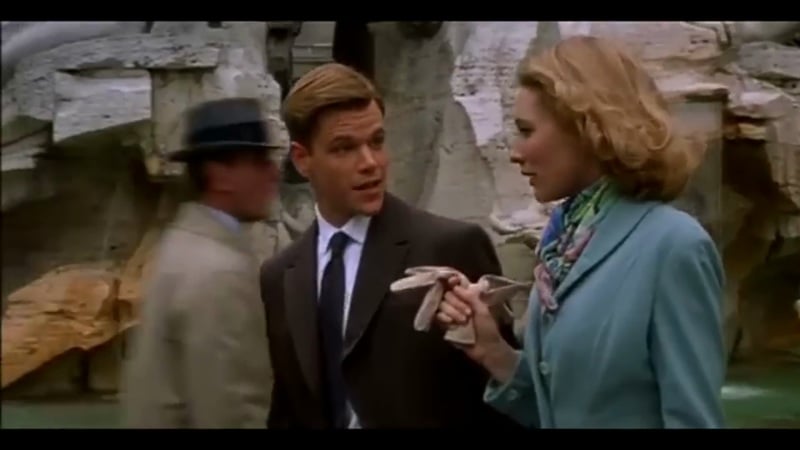
The dark suit Tom wore with Meredith Logue changed the impression immediately. A white shirt and dark tie gave him the appearance of someone with appointments to keep, while the removal of his glasses brought his face into sharper focus. He had learned how to look like a man whose account of himself would be accepted.
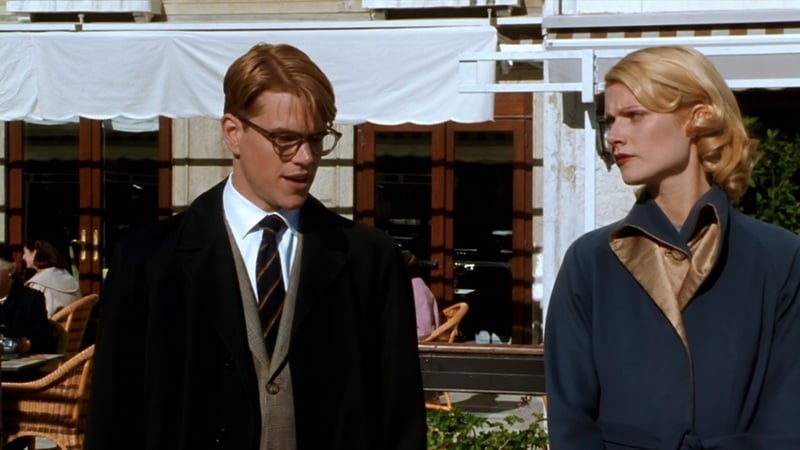
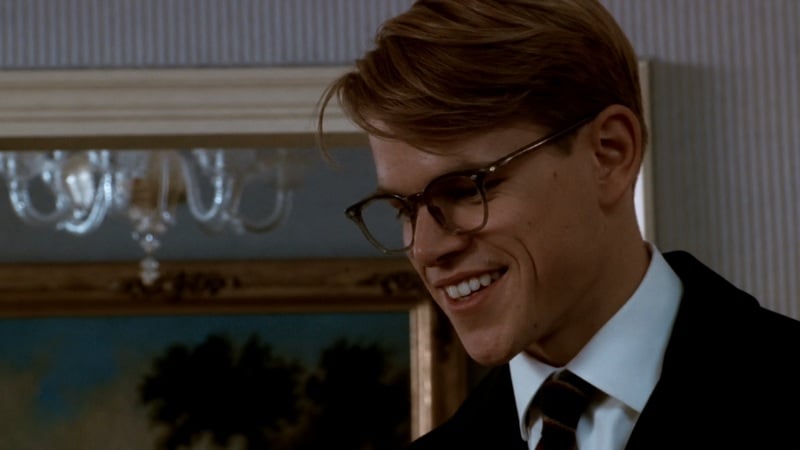
The glasses also worked with his later tailoring. Above a striped tie and buttoned waistcoat, with a dark overcoat on top, the frames suggested an educated young man who could afford to dress the part. Their lighter lower rims kept the effect from becoming too heavy. They were as convincing with a suit as they had been with corduroy, a useful accessory for someone maintaining more than one account of himself.
His black knitwear was similarly effective. The close neckline framed his face, and the plain surface drew attention to his expression. Beside Dickie’s open black shirt, it also showed how differently the same color could work. Dickie had exposed his chest and reclined in the sunshine; Tom looked increasingly contained.
Tom’s later wardrobe had its own attractions, especially for anyone more likely to need a city suit than another afternoon on a boat. The danger was in his belief that the clothes could complete the transformation. He could order the suits. The family history was harder to arrange.