Every guy who wears jewelry has one bracelet that stays on for years, the one that’s picked up a scuff or two, darkened slightly at the clasp, and still looks right with a suit or a t-shirt. The metal underneath decided that outcome long before the design did, and it’s the one spec most men skip at the counter.
Silver, gold, steel, titanium, even brass, each behaves differently against skin, sweat, and a decade of wear. Knowing what each one does turns the choice from guesswork into a five-minute read, and it’s the shortcut to picking the one you keep instead of the one you retire to a drawer.
Why the Metal Is the Whole Decision
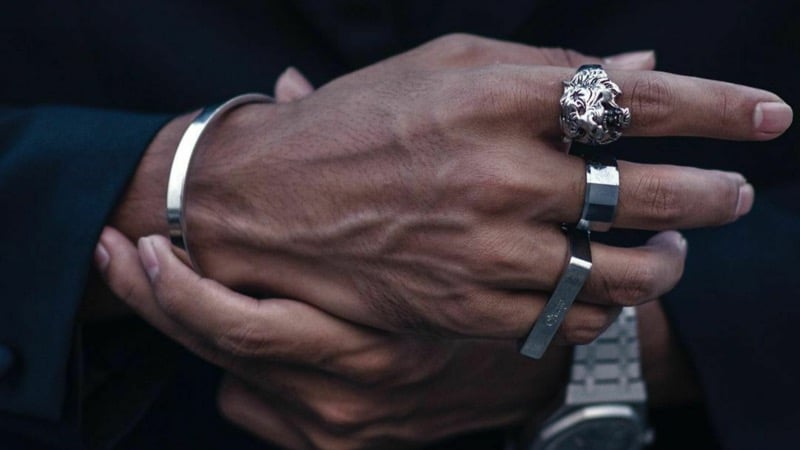
A bracelet takes more contact than any other piece of jewelry on your body. It hits a desk edge a hundred times a day, slides against a shirt cuff, grips a steering wheel, and sits in sweat on a run. A ring stays in one spot, and a watch has a case designed to take a hit, but a bracelet is out in the open the entire time, which is why the metal underneath does most of the work of how it ages. The good ranges of men’s bracelets list the metal and the grade right on the spec, which turns comparing two similar-looking pieces into a straight read instead of a guess.
Judge a metal on three things. How it wears, meaning whether it scratches, develops a patina, or holds a plating. How it sits on skin, meaning its weight, its warmth, and whether it reacts with anyone’s skin. And what it costs to live with across years, weighed against the price on day one. Get those three right and the design part takes care of itself.
The Metals, & What Each One Is Best At
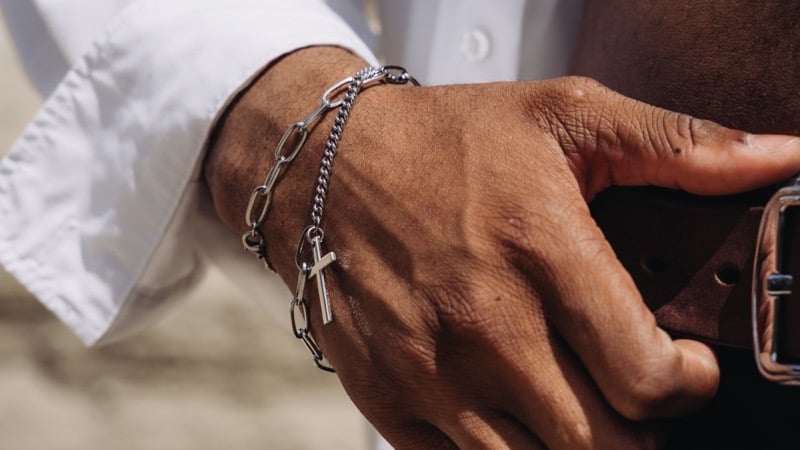
Sterling silver (925) is the character pick. The number means 92.5% pure silver, with the rest usually copper for the hardness that pure silver doesn’t have on its own. Does sterling silver tarnish? Yes, and that’s the copper reacting with air, the same process that gives worn silver its character. A polishing cloth brings the shine back in about two minutes, and the tarnish that settles into the recesses of a chain link becomes the depth that makes worn silver look better than new silver on most skin tones. Dollar for dollar, silver is the best value in a precious metal.
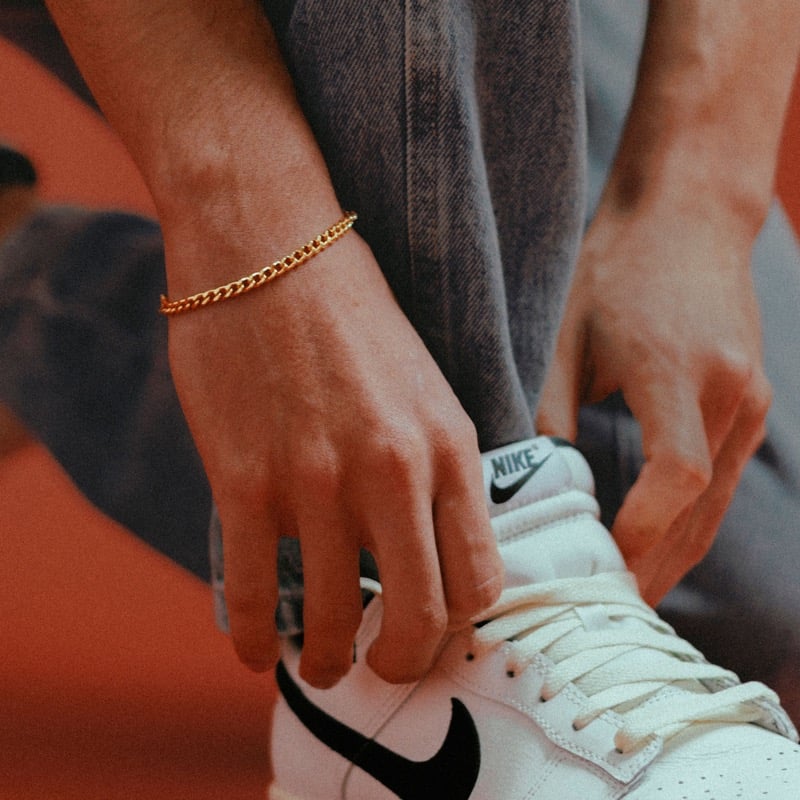
Solid gold, in 14k or 18k, is the buy-it-once pick. There’s no plating to wear through, so a solid gold bracelet looks the same in year ten as it did on day one. 14k holds up to daily knocks better because it’s mixed with a higher share of alloy metal. 18k runs richer in color and softer than 14k. White gold is the one exception worth knowing: it’s rhodium-plated, and that plating benefits from a re-plate every few years to stay bright.
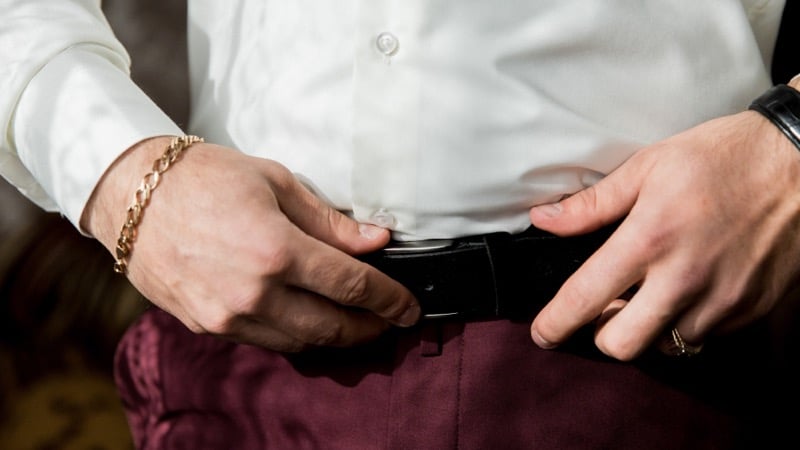
Gold filled, gold plated, and vermeil get confused constantly, and the difference decides how long the piece lasts. Gold filled bonds a real layer of gold to a base metal, measured as a percentage of total weight, and it holds up for years of daily wear. Gold plated jewelry, and yes, it does tarnish eventually, uses a coating measured in microns, thin enough to treat as a seasonal piece instead of a long-term one. Vermeil is gold plated over sterling silver instead of brass, a better base but the same thin layer on top. Gold filled vs gold plated comes down to that gap: gold filled is where the value sits.
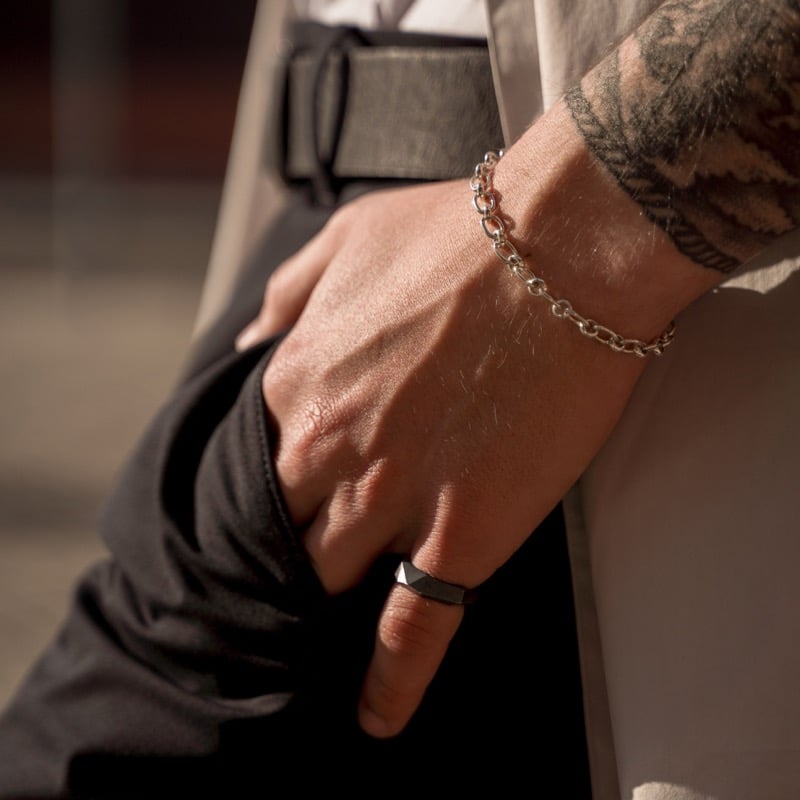
Stainless steel is the workhorse. Does stainless steel tarnish? No, and that’s the appeal. It shrugs off water, sweat, and salt air at a fraction of the cost of a precious metal. Look for the grade 316L specifically, which contains a small amount of nickel that only matters to the minority of wearers who react to it.
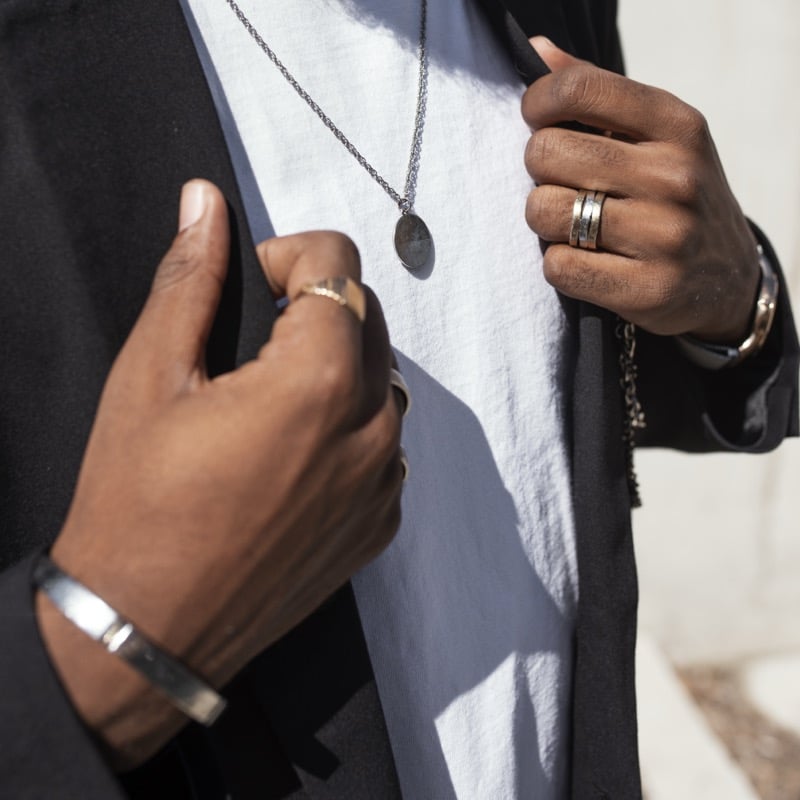
Titanium is the one you forget you’re wearing. It’s nickel-free and a fraction of the weight of steel. Does titanium tarnish? No. It sits inert against both air and skin, which is why the people who wear it stop noticing it’s there. It looks more technical on the wrist than dressy.

Men buy brass, bronze, and copper for the patina itself. All three darken with air and can leave a faint green mark on skin where sweat mixes with the metal, and that’s the metal doing what it’s always done. It washes off with soap and water.
Leather and beaded bracelets still come down to metal at the clasp and the spacers, so every rule above applies to those small parts too.
Matching the Metal to Your Wrist & Your Week
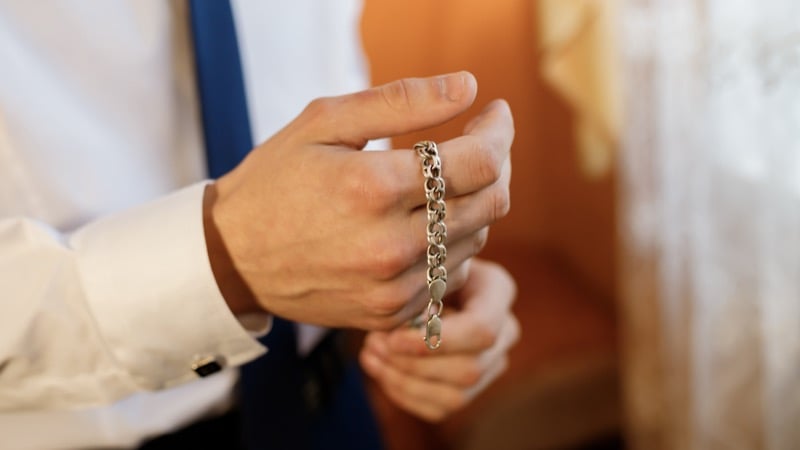
Desk-bound and dressed up calls for solid gold or sterling silver, since the finish is the whole point when a wrist sits visible under a cuff all day. Hands-on work, the gym, water, and travel call for steel or titanium, since both take a beating and still look the same at the end of the week.
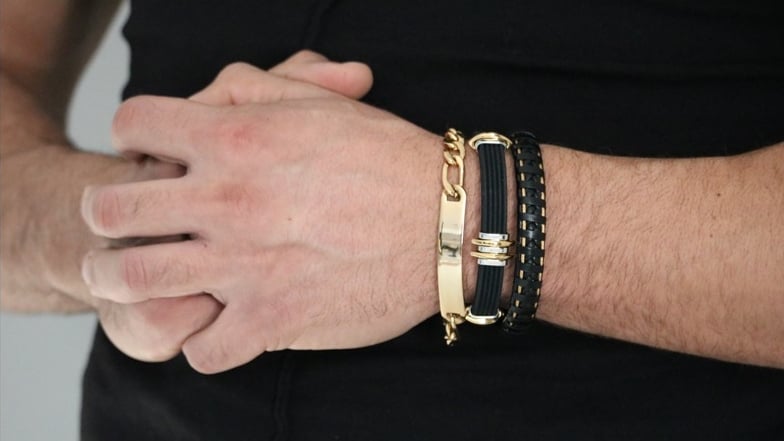
Building a stack works across a few different bracelet types, a chain, a cuff, a beaded band, as long as one metal leads and the others repeat around it. Tie the dominant metal to your watch case instead of your belt buckle, since the watch sits closest to the bracelet and the two get compared on the same wrist all day.
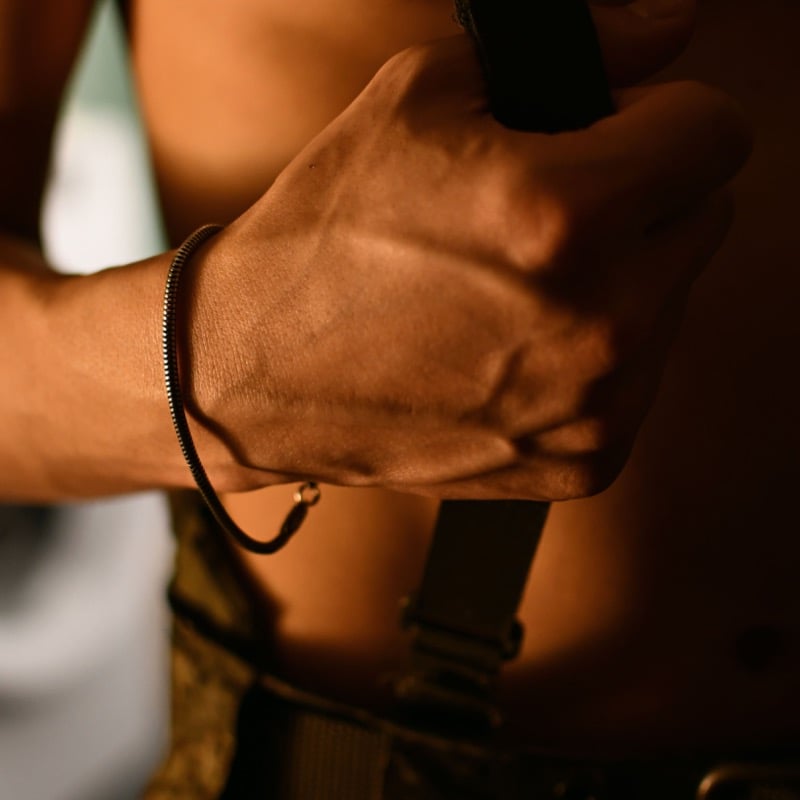
Sensitive skin points toward titanium, niobium, platinum, and solid high-karat gold, the metals least likely to cause a reaction. Look for the stated grade, 316L, 925, or 14k, instead of the word “hypoallergenic,” a term with no regulated definition. A reaction that shows up as consistent itching, not just a washable dark mark, is worth a dermatologist’s opinion.
Budget makes more sense measured as cost per year of wear than as a number on a price tag.
Keeping It Looking Right
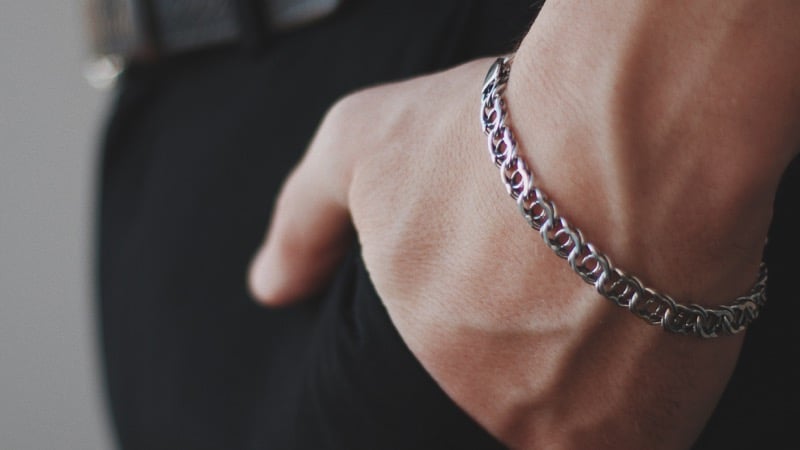
A bracelet that comes off for the pool, the ocean, and the shower lasts longer, since chlorine and salt water are the two real threats to almost every metal on this list. The bracelet goes on last, after sunscreen and cologne, so neither ends up trapped against the metal all day. A quick dry with a towel before it goes back on keeps moisture from sitting against the clasp.
How do you keep silver from tarnishing? Store it in a closed bag or box with the air pressed out, since tarnish is a reaction with air more than anything else, and keep a polishing cloth nearby for the two-minute fix when it needs one. Steel and titanium ask for even less. Warm water and a soft brush handle both metals completely.
The bracelet that lasts is the one whose metal matches how you live, priced for the years it stays on your wrist instead of for the case it came in. A guy who swims, lifts, and travels wears titanium or steel for years and forgets it’s there. A guy who sits at a desk all day gets the same payoff from solid gold or sterling silver, worn until it develops its own patina and starts looking like it’s always been on his wrist.