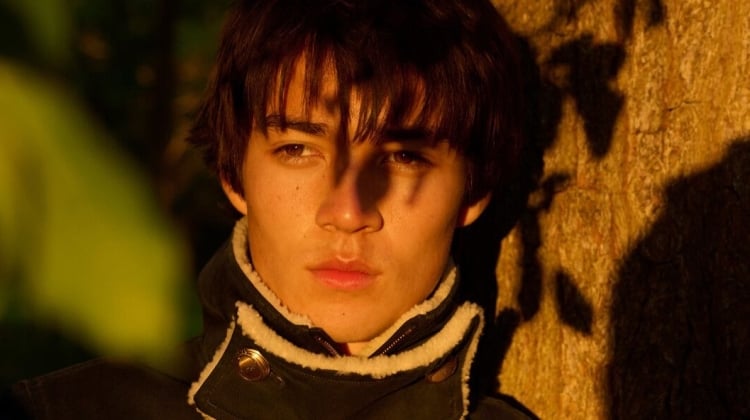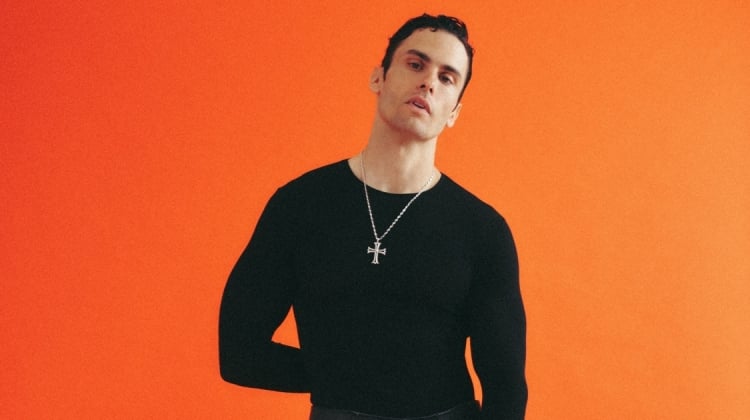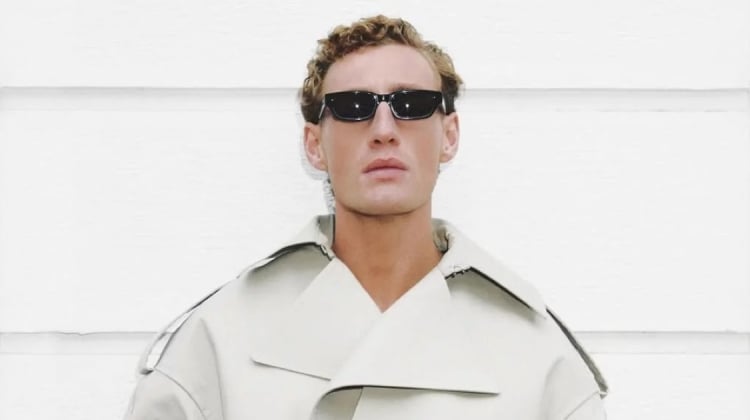
Fantastic Man strips the studio editorial back to essentials, leaving the clothes to shape the mood. Photographed by Reto Schmid, Thibaud Charon moves with a cool austerity. Leendert Sonnevelt’s styling turns the story into a survey of contemporary independent fashion.
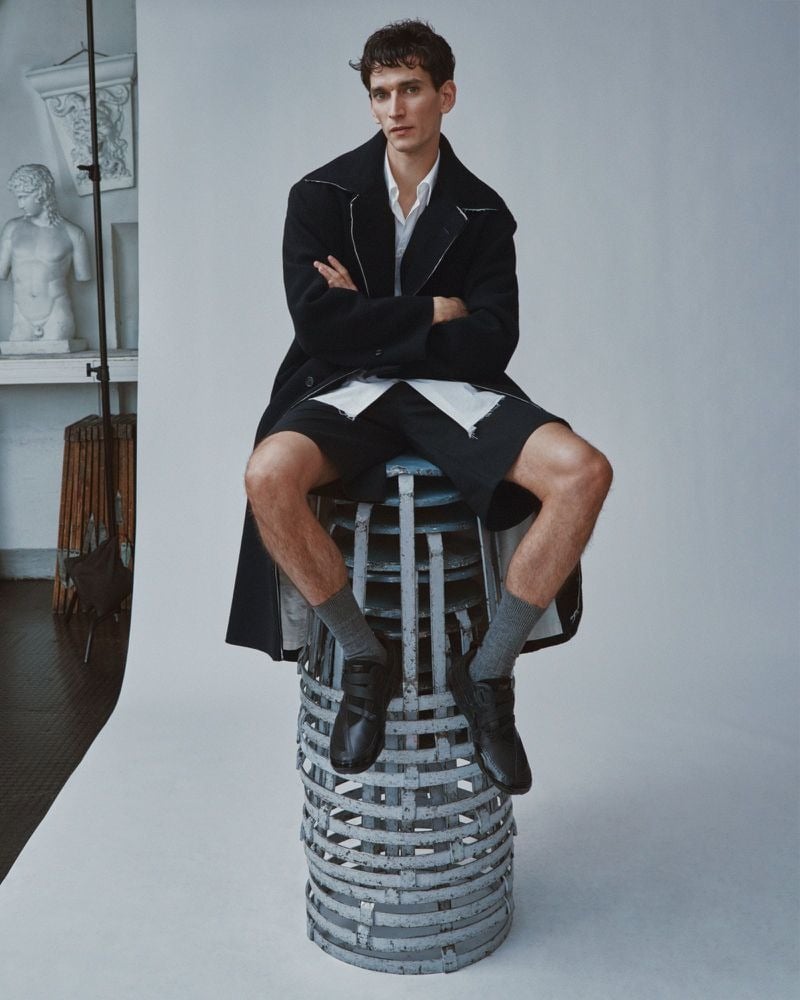
Camiel Fortgens appears, working his familiar language of unfinished hems, exposed shirting, and proportions that pull off-center. The oversized black coat with contrast topstitched lapels, worn over a raw-hemmed white shirt, black shorts, and heavy derbies, tracks back to the gawky, oversized tailoring of Raf Simons, when the silhouette belonged to teenagers swallowed by their own jackets.
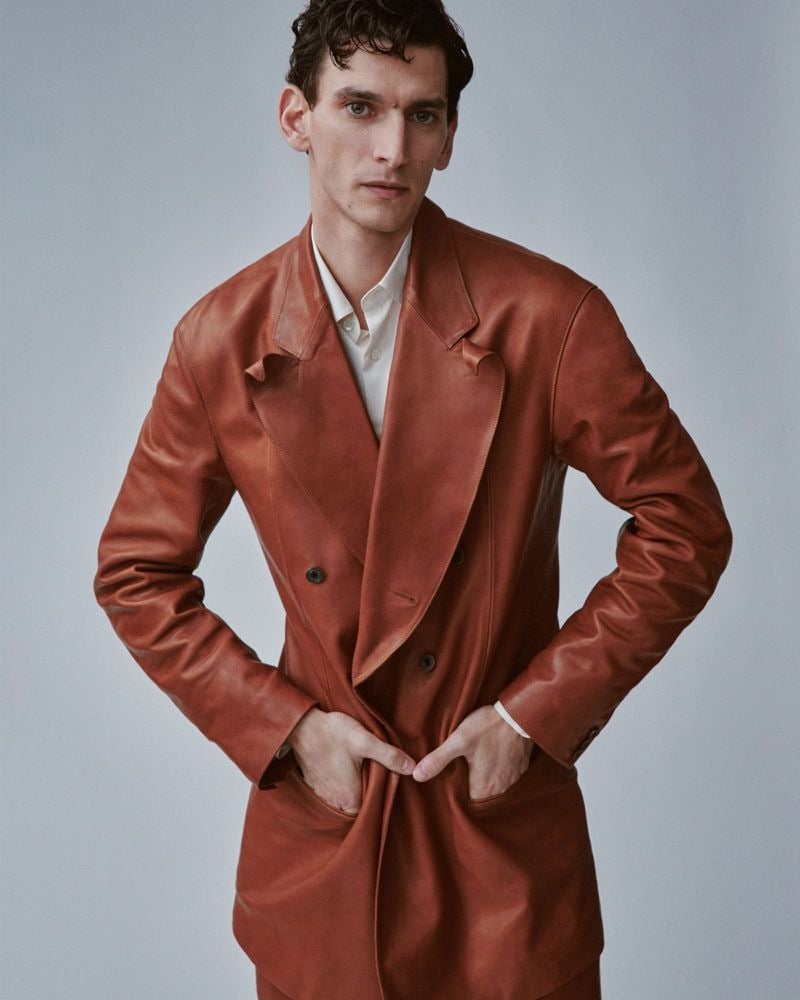
Soshiotsuki pushes the mood into something darker and more clinical. The Japanese label’s warped tailoring and sculptural leather outerwear pull classic menswear off its usual axis, peak lapels widened past the shoulder, and the jacket falling well past the hip.
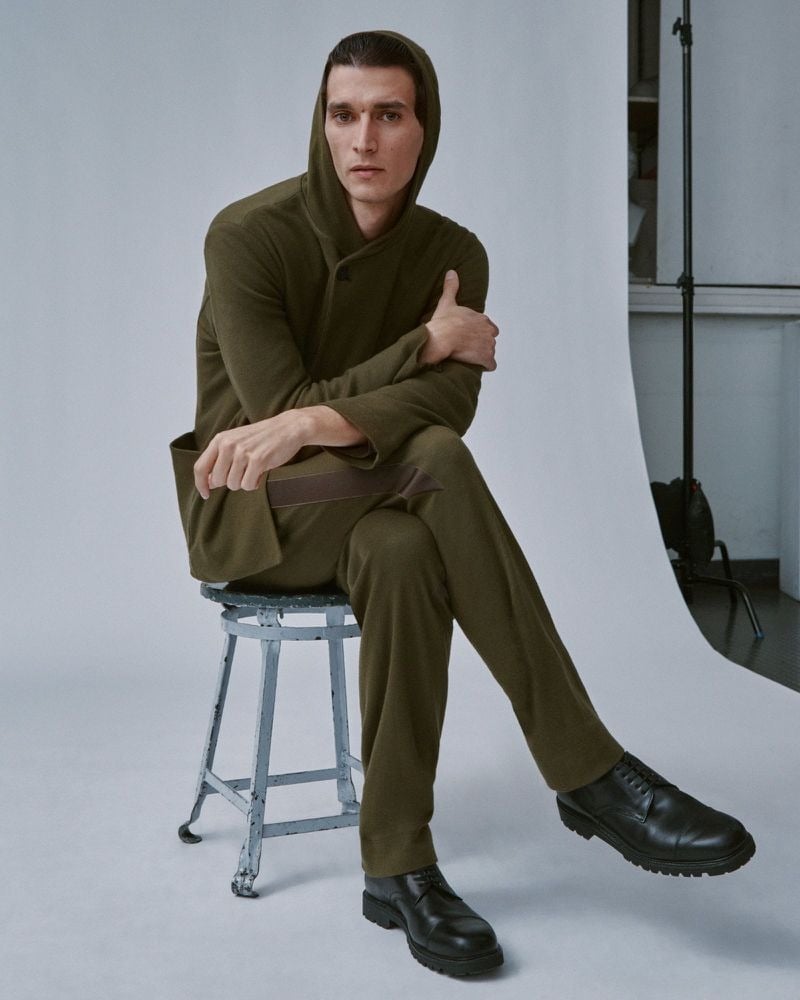
Derrick offers the cleanest, most pared-back look in the story. An olive hooded jacket and matching trouser, finished with black derbies, treat loungewear as tailoring. The look lands with almost monastic restraint.
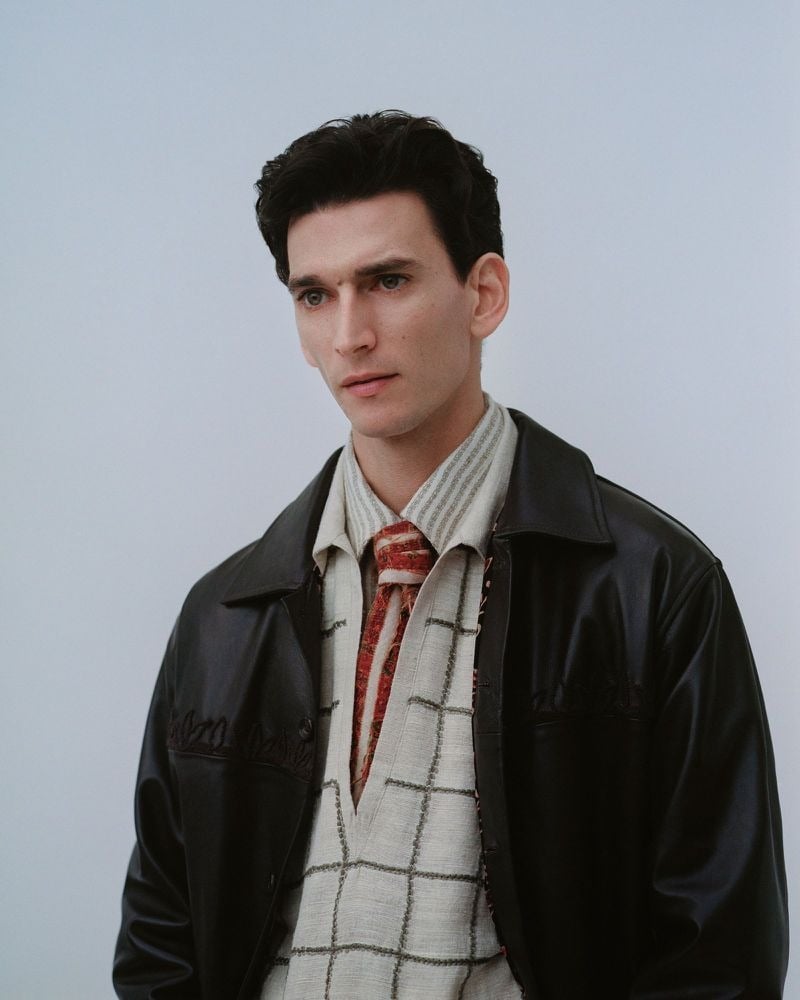
Kartik Research brings texture and craft. The cream windowpane knit top layered under a black leather jacket pulls from South Asian handloom weaving, the yarns slubbed and uneven, the grid loosened by hand at the loom.
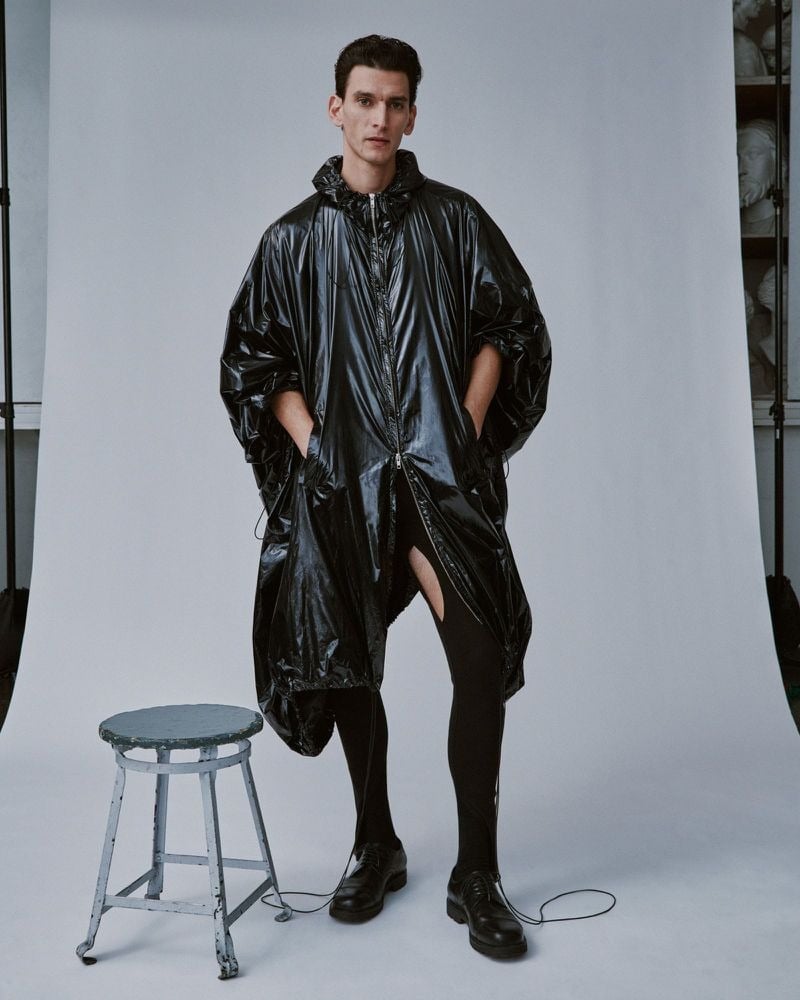
The editorial then turns toward technical experimentation. LII brings glossy outerwear, a compressed hooded silhouette, and the wet shine of coated nylon. The black hooded poncho hangs heavy from the shoulders and falls to the knee in loose folds, the hood pushed back to sit collar-like at the neck. Throughout, Fantastic Man keeps the focus on clothes that distort, soften, or rethink familiar menswear codes.
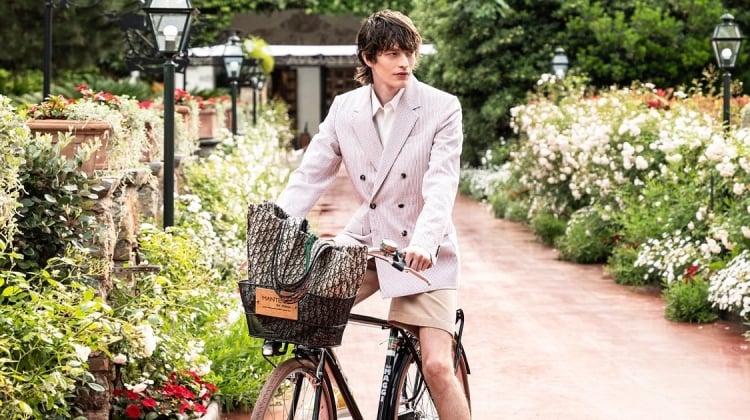
Thibaud Charon’s clinical posture here sits in sharp contrast to his work in Paul Smith’s spring 2026 campaign, all linen, light, and slow afternoons.