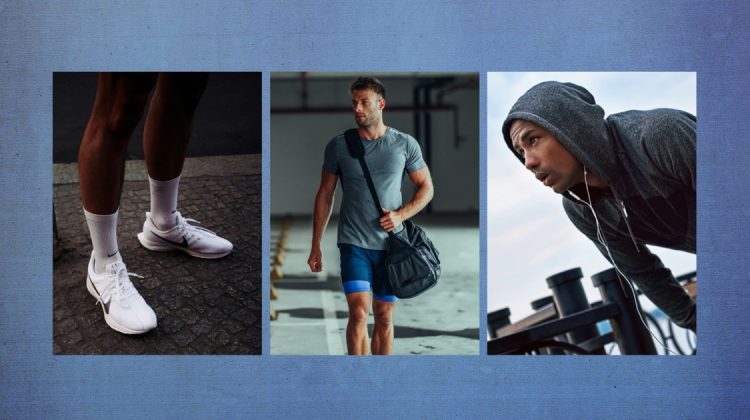
Most men dress for the gym the way they pack for a last-minute trip, grabbing whatever is nearby and hoping it holds together. That approach costs nothing until you are standing next to someone who clearly thought about it, and then it costs you everything.
The gym is not a fashion show, but it is a context with its own logic. What you wear affects how you move, how you feel, and whether you look like someone who belongs there or someone who wandered in from a moving sale. The gap between those two is smaller than most men think.
How to Dress for the Gym

Start With the Right Fabric: Performance fabrics cut from polyester, nylon, or spandex blends pull moisture away from the skin and dry fast. Cotton absorbs sweat and holds it, which means a gray cotton tee turns into a visible map of your effort within twenty minutes. Moisture-wicking synthetics are the baseline.
Get the Fit Right: Not skintight, and not a parachute. Shorts and tees should allow a full range of motion without excess fabric catching on equipment or getting in the way during a movement. A slightly relaxed fit in a technical fabric is the target. Compression gear, leggings or fitted shorts, serves a specific purpose for high-output cardio or lower-body training, and works best as a base layer worn under looser shorts.
Go Dark: Dark colorways in navy, charcoal, black, or deep olive handle sweat stains better than anything in the lighter half of the spectrum. Light gray is the most unforgiving fabric color ever introduced to a fitness setting. Choose accordingly.

Wear Athletic Shoes Made for What You Are Doing: Running shoes are designed for forward motion, which makes them a poor choice for lateral training or heavy lifting. A flat-soled cross-trainer gives you a more stable base for compound movements and handles most general gym sessions well. What does not work is anything with a heel, a sandal, a dress shoe, or a boot.
Sort Out Your Socks: Athletic socks with some ankle height are the call. Low-cut no-show socks work fine for cardio, but mid-cut provides better protection against chafing when you are wearing anything that sits above the ankle. Compression socks earn their place in long runs and recovery, but they are overkill for a standard session.
Leave the Watch and Jewelry at Home: A heavy chronograph on a loaded barbell is an accident in progress. A bracelet stack during a pull-up set is more of the same. Keep anything valuable, or anything that could catch, cut, or scrape, off your wrists and out of your pockets entirely.

Keep a Stock of Plain Tees: A bulk pack of plain performance crew neck tees in two or three dark colors handles most gym situations. These are the gym equivalent of a utility knife. Inexpensive, replaceable, and immediately effective.
Throw Out Anything With Visible Stains: Sweat stains that have set into fabric do not come out, and they make even well-fitting clothes look neglected. A three-year-old tee that has yellowed at the collar or browned at the underarms is not a gym shirt anymore. It is a rag.
Add a Hoodie When It Gets Cold: A gray heather hoodie in a midweight fleece is as close to a gym universal as menswear produces. It layers cleanly over a short-sleeve tee, washes well, and has been a gym standard long enough to require no explanation. Zip or pullover, both work.
Wash Your Gym Clothes After Every Session: Performance fabrics trap odor-causing bacteria efficiently, which is part of what makes them so effective at managing moisture. Wearing them twice before washing accelerates the breakdown of the fabric and builds an odor that laundering eventually cannot fully remove. One session, one wash.