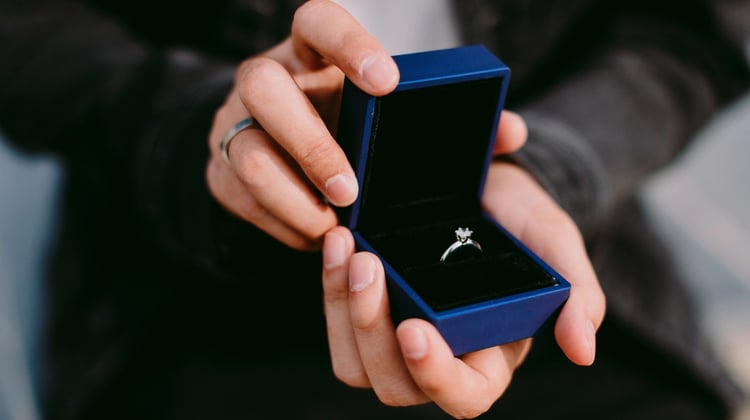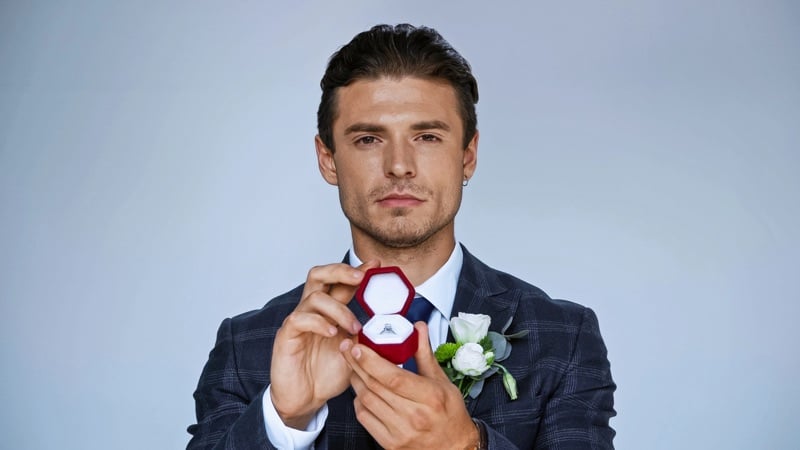
Most grooms shop for one engagement ring in their life, and they shop for it with almost no practice. The categories blur together in a display case, and every stone looks bright under store lighting.
The way through is a working map of the styles, what each one signals, and how each one behaves on a hand that wears it every day. The styles sort into a few clear families, and knowing the families turns an intimidating purchase into a series of small decisions.
Start With Her Hand, Not the Catalog
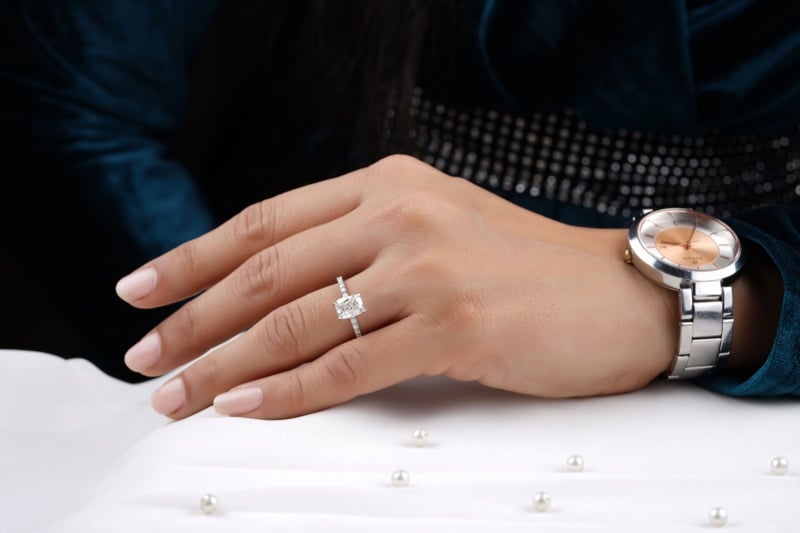
The ring will spend its life on one specific hand, so that hand is the first data point. Long fingers keep wide bands and bold stones in proportion. Shorter fingers gain from elongated shapes and thinner bands, which draw the eye lengthwise.
A groom keeping the choice a surprise can borrow a ring she already wears, trace the inside on paper, and note whether her current jewelry runs delicate or substantial.
Her existing pieces are a record of taste, more reliable than any quiz. A woman who wears one thin gold chain every day is telling you something different from a woman who stacks three rings on one finger.
The Classic Camp: Solitaires & Round Brilliants
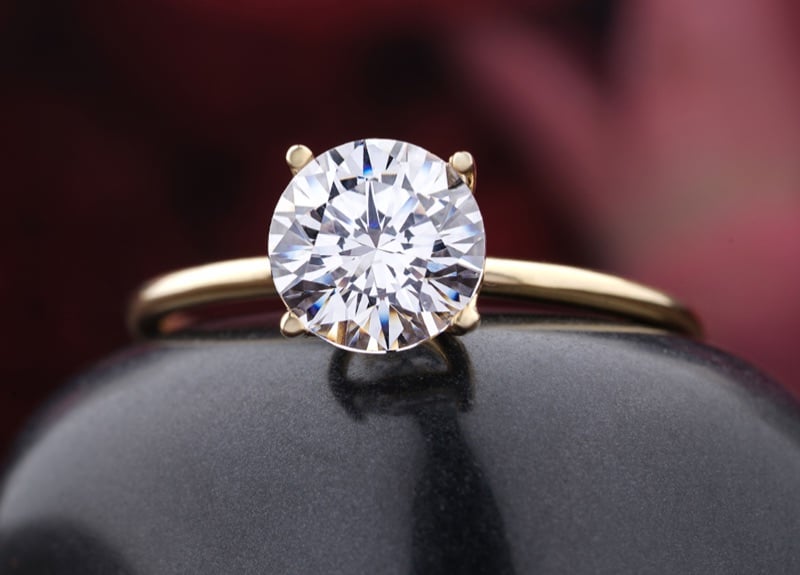
The solitaire is the default for a reason. One stone sits alone on a plain band. It has barely changed in a century, so it pairs with any wardrobe from any decade. Within the solitaire family, the round brilliant is the dominant stone shape, and its 58 facets are arranged specifically to return the most light to the eye.
Cut quality matters more to that sparkle than carat weight does, which is the single most useful fact a groom can bring into a store. A well-cut smaller stone will outshine a poorly cut larger one, and it will cost less doing it.
The cushion and the princess sit in the same classic camp. The cushion softens the outline with rounded corners and an older, warmer style of sparkle. The princess keeps a sharp square edge and suits a partner whose taste runs geometric.
All three shapes hold decades of jewelers’ familiarity behind them, which shows up at resizing, repair, and resale.
The Elongated Shapes: Oval, Pear, & Marquise
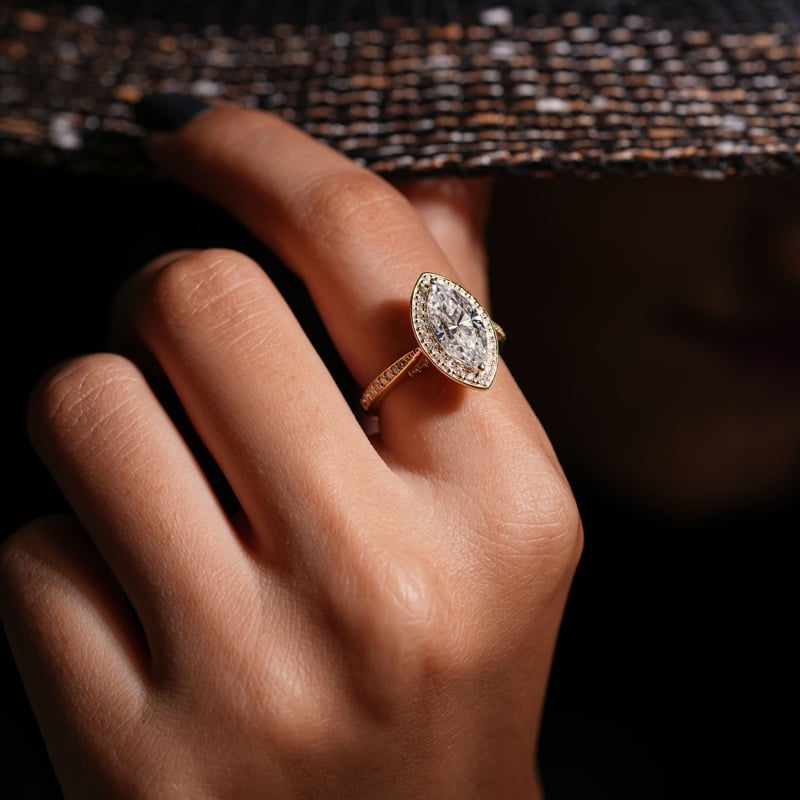
Elongated stones dominate the current market, and the shape justifies the attention. A long outline lines up with the finger, lengthens the look of the hand, and shows a larger face per carat than a round stone of the same weight. The oval is the gentlest entry, a stretched round whose curve removes any point that could chip. The pear adds a single point and a little drama.
The marquise cut engagement ring is the boldest of the three, a pointed ellipse that shows roughly 15% more surface area than an equivalent round and makes a slim, pointed statement on the hand. It suits a partner who wants her ring recognized from across a room.
The elongated shapes come with one practical note. Pointed tips on a pear or marquise are the most vulnerable part of the stone, so the setting should protect each point with a small V-shaped prong.
A jeweler who skips this detail is worth a second opinion. Handled correctly, an elongated stone is as durable as any other, and it delivers more visible ring for the same budget.
Vintage Styles & the Art Deco Revival
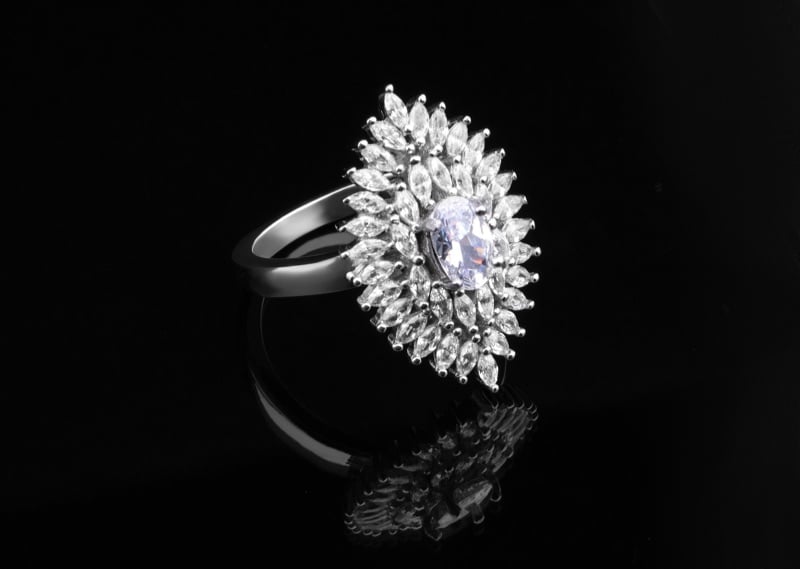
Most vintage-style rings sold today are new pieces shaped by old design language, and the strongest of that language comes from the Art Deco period of the 1920s and 1930s.
The tells are geometric patterns, stepped settings, milgrain detailing along the edges, and stones like the emerald cut with its long, mirror-like facets. A vintage-style ring suits a partner who dresses with reference points, who thrifts well, or who owns more than one thing she describes as having a story.
The trade-off is upkeep. Intricate settings collect more debris and hold more small stones that can loosen over years of wear. A groom choosing this route should budget for an annual inspection the same way he would budget for the ring itself.
The Modern Minimal Camp
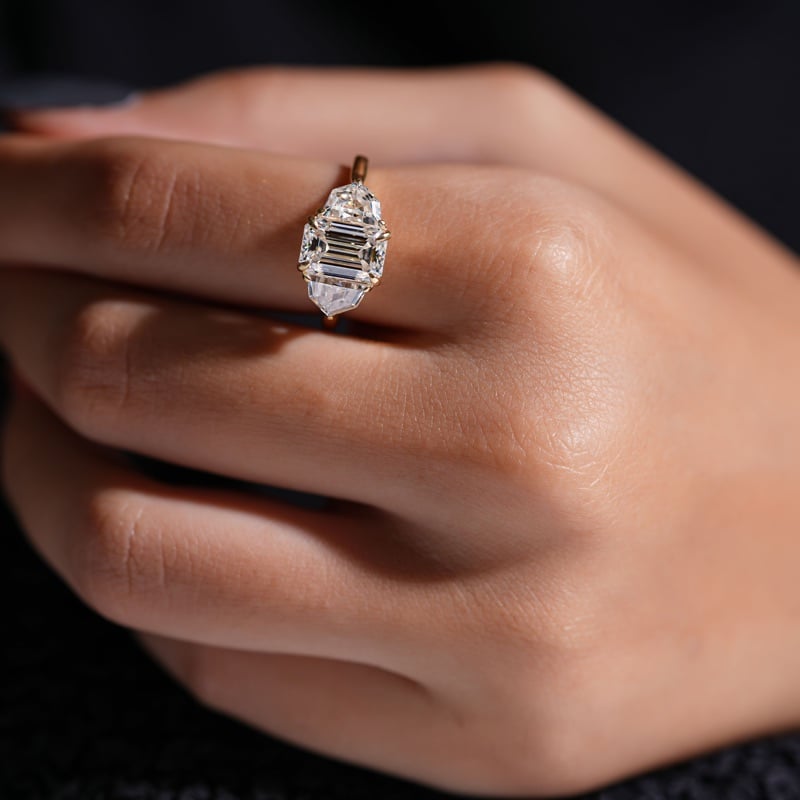
At the other end sit the modern styles, and subtraction defines them. Bezel settings wrap the metal fully around the stone, which lowers the profile, protects the edges, and gives the ring a clean, machined look.
East-west settings turn an elongated stone sideways across the finger, a small rotation that marks it as current. Toi et moi rings pair two stones on one band and have gone from novelty to mainstream in the past few years.
Modern styles suit a partner who works with her hands, favors a pared-down wardrobe, or has told you plainly that she wants a low-profile ring that clears every task. The bezel in particular is the most practical setting sold, and it has shed its old reputation as a compromise. The risk with modern styles is the same as with any trend, which is that the sharpest version of current can date itself. A simple bezel ages well. A highly specific novelty shape dates fast.
Metal Is Half the Ring
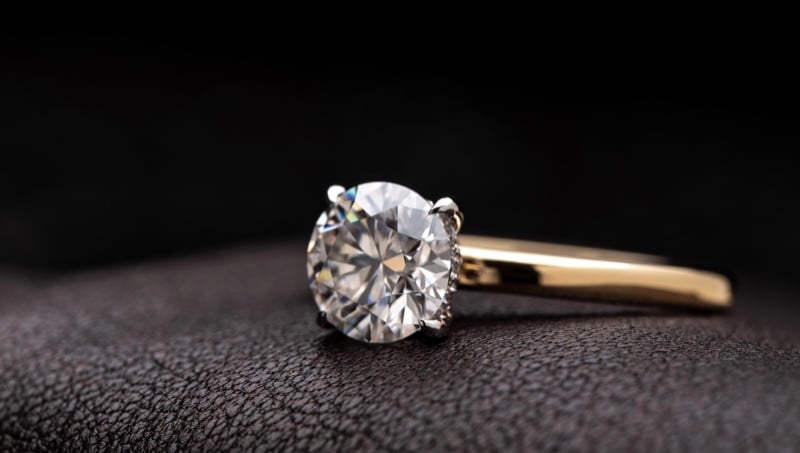
The band decides the ring’s overall look, and the choice is simpler than the stone. Yellow gold is warm and traditional and pairs with earth tones and warm skin. Rose gold looks romantic and slightly fashion-forward.
White metals look modern and cool, and within that group platinum is the workhorse, denser than gold, naturally white, and resistant to the corrosion and replating cycle that white gold requires. The quickest guide is the jewelry she already owns. Match the metal she wears most, and the ring sits naturally alongside her existing pieces.
A Simple Way to Decide
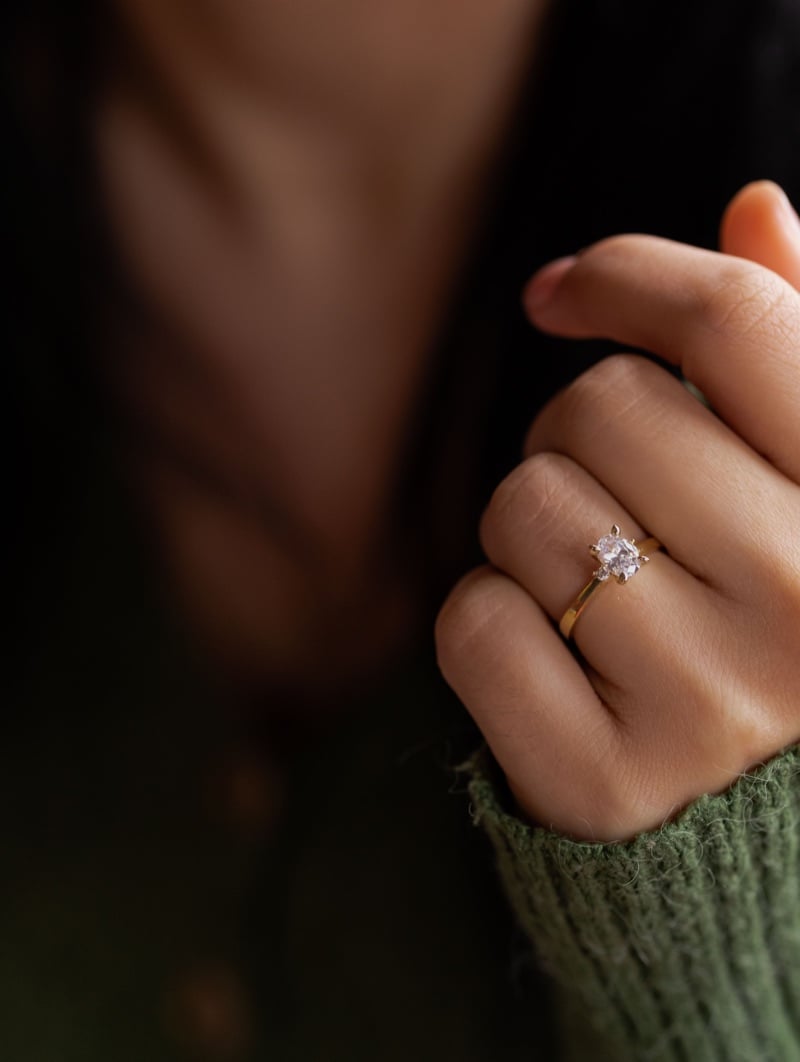
Sort the decision in this order. Her taste first, taken from the jewelry she already wears. Shape second, matched to her hand and her style, classic round, elongated, vintage geometric, or modern minimal. Setting third, weighted toward how she uses her hands every day.
Metal last, matched to what is already in her jewelry box. A groom who follows that order will land inside the right family every time, and the difference between a good ring and the right ring is usually one conversation with a jeweler after that. The ring only has to be chosen once. It gets worn for the rest of the story.