A man who spends the working week in navy can arrive on the mountain wearing head-to-toe red and feel entirely appropriately dressed. Ski and snowboard outfits for men allow that change of register. Color gets louder, pants get wider, and a silver one-piece becomes a plausible purchase. The clothes have a job to do, but there’s plenty of personal taste in how they do it.
Some outfits borrow the easy proportions of streetwear; others take the matching ski suit as their starting point. Even the quieter combinations have something to say, particularly when black and gray share a chairlift with fluorescent green.
Ski & Snowboard Outfits for Men
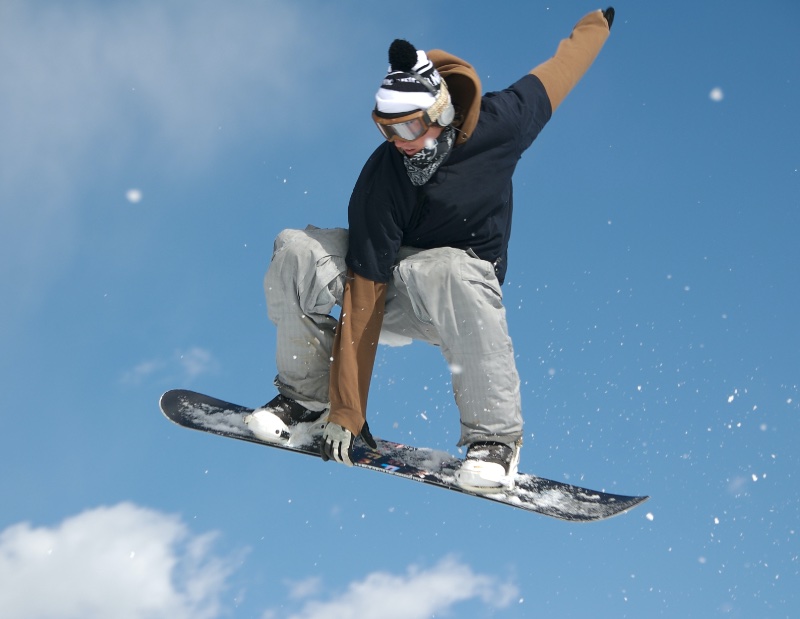
The navy-and-tan jacket has the casual confidence of something you might wear around town. Gray snow pants widen the silhouette below it, giving the outfit the easy balance associated with snowboard clothing. The colors are restrained, so the proportions get most of the attention.
That relationship is worth watching when shopping for men’s snow gear. A longer jacket brings the upper half lower over the pants; a shorter one gives their width more emphasis. The boots finish that shape, which is why separates make more sense tried on together.
A Matching Red Ski Outfit
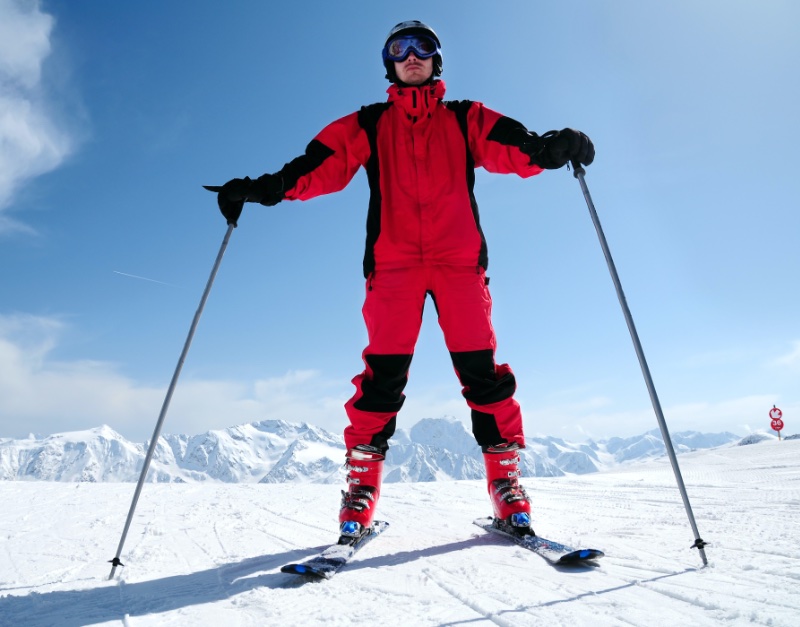
Head-to-toe red is an enthusiastic commitment to being seen. Here, black panels interrupt the color at the shoulders and knees, linking the suit to the gloves and giving it a sporting edge. Matching the upper and lower halves also removes most of the morning’s outfit negotiations.
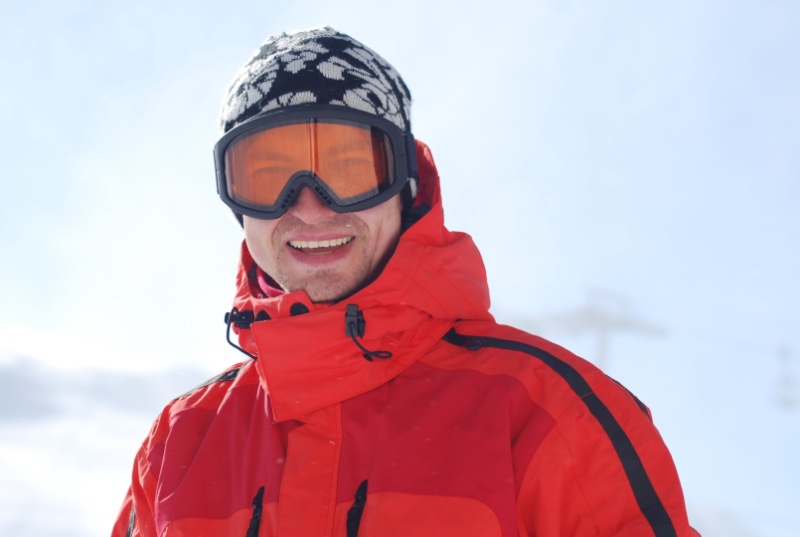
Once the helmet comes off, a patterned knit cap gives the red another point of interest. Its smaller scale keeps the outfit from becoming one uninterrupted block of color.
A Patterned Snowboard Jacket
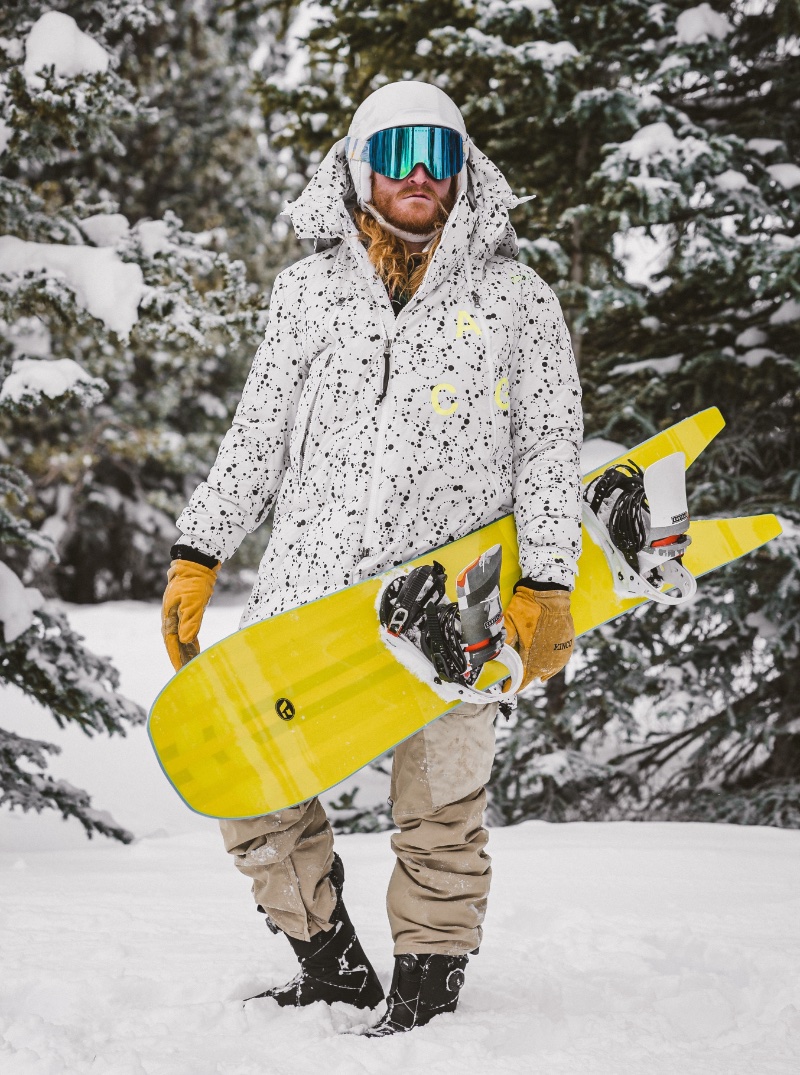
The white jacket’s fine black pattern feels almost like a print borrowed from a casual shirt, enlarged to mountain proportions. Tan pants take some of the starkness out of the black and white, while mustard gloves add an unexpectedly warm note.
It’s a useful way to approach patterned outerwear. Plain snow pants give the print space to register, and a neutral such as tan makes the whole outfit feel less rigidly coordinated. The gloves supply just enough mischief.
Bright Separates
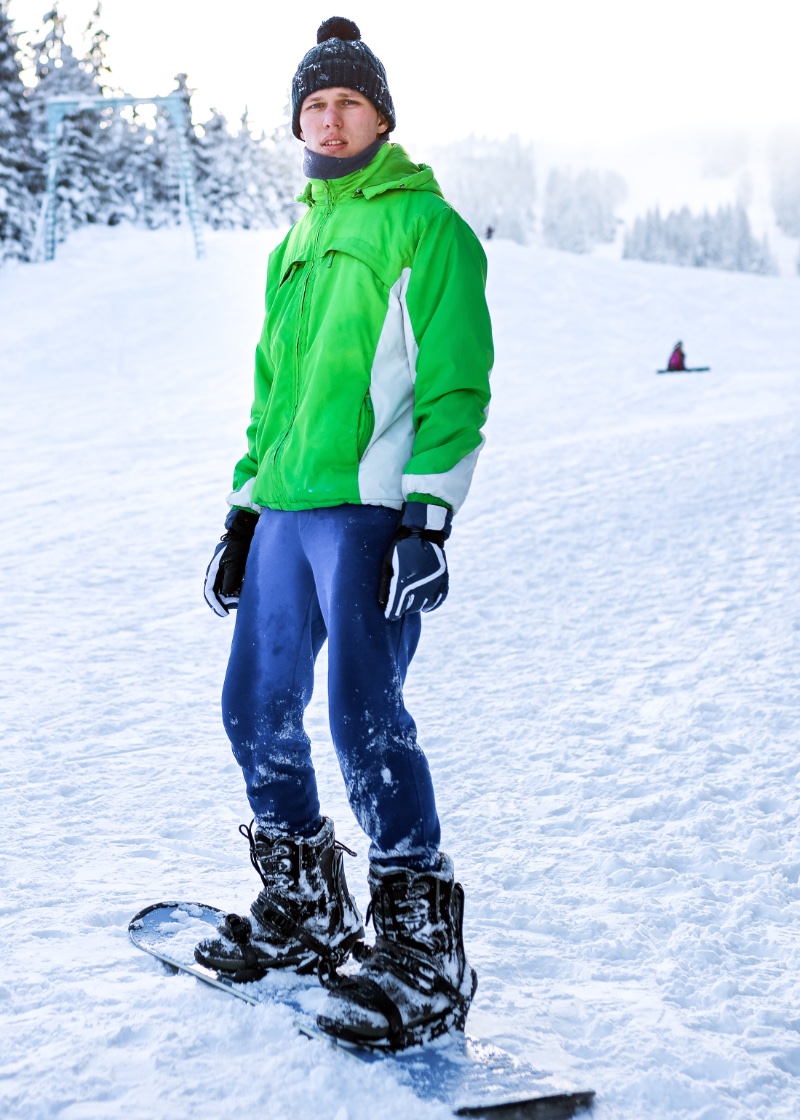
A bright green jacket over blue pants treats color with admirable directness. Both pieces are plain, so their appeal comes from the contrast between them. Black boots anchor the lower half, allowing the brighter shades to hold their own above.
Separates also let a ski wardrobe acquire some history. The pants can stay as jackets change, or a favorite jacket can find a different partner after several winters. Color compatibility tends to outlast the appeal of buying everything as a set.
Color-Block Outerwear
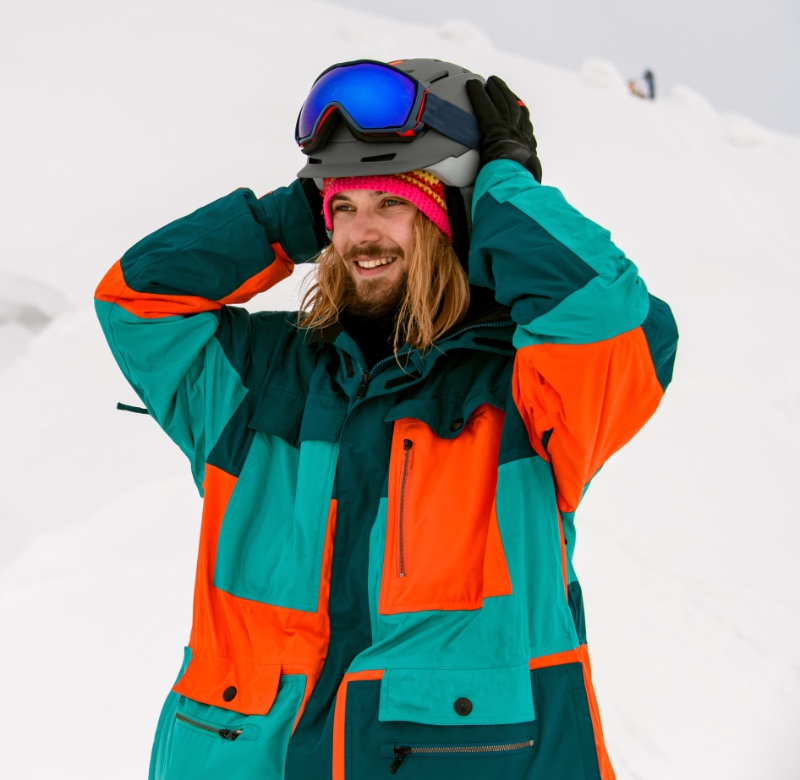
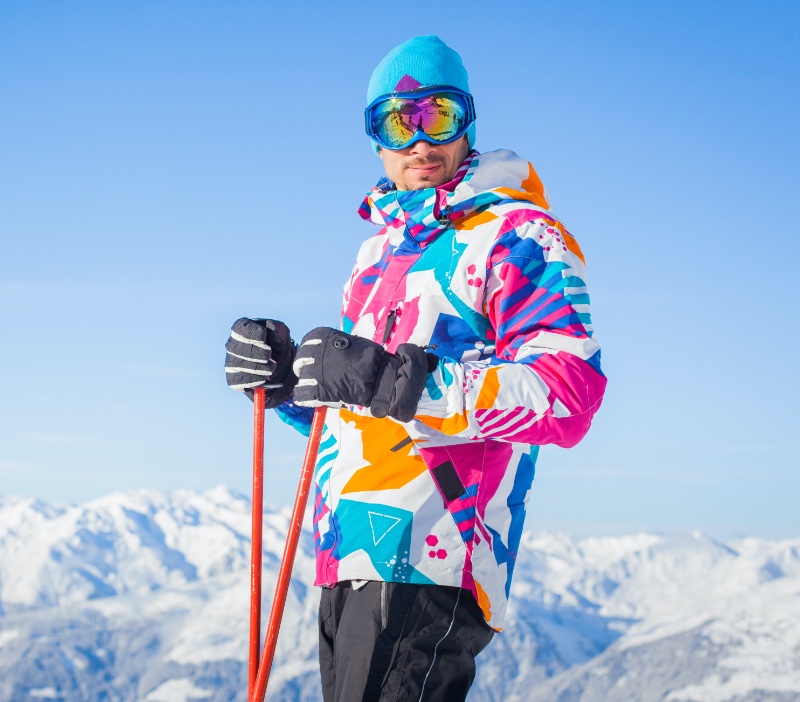
Orange panels across teal outerwear have the exuberance of sportswear designed to be noticed. The multicolored jacket takes that impulse further, spreading graphic shapes across the chest and sleeves. Each turns the most practical layer into the outfit’s most expressive piece.
With this much happening above the waist, plain snow pants give the eye somewhere to rest. Repeating one jacket color in the gloves can tie things together, though an exact match for every accessory starts to feel a little too organized for a day off.
An All-Black Snowboarding Outfit
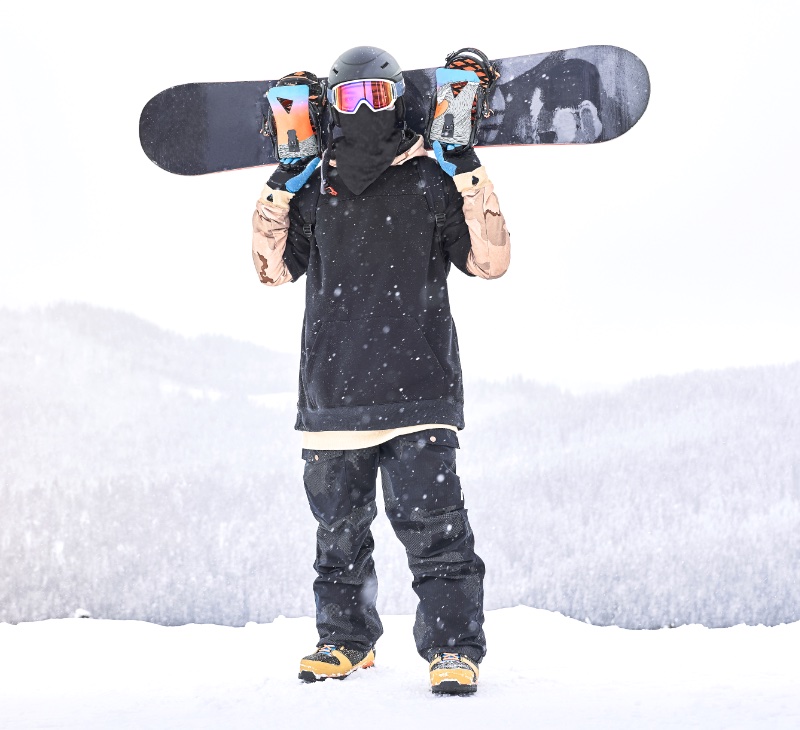
Black takes snowboard proportions in a different direction. A long top over loose pants creates a broad, continuous silhouette, with the lighter underlayer marking the hem. Tan gloves break into the black near the face, a small detail that makes the outfit feel more personal.
The appeal is in the cut. There should be enough ease for the layers and movement beneath it, with the pants falling naturally over the boots. Those lengths do the work that brighter colors do in the other outfits.
Gray Outerwear & Black Pants
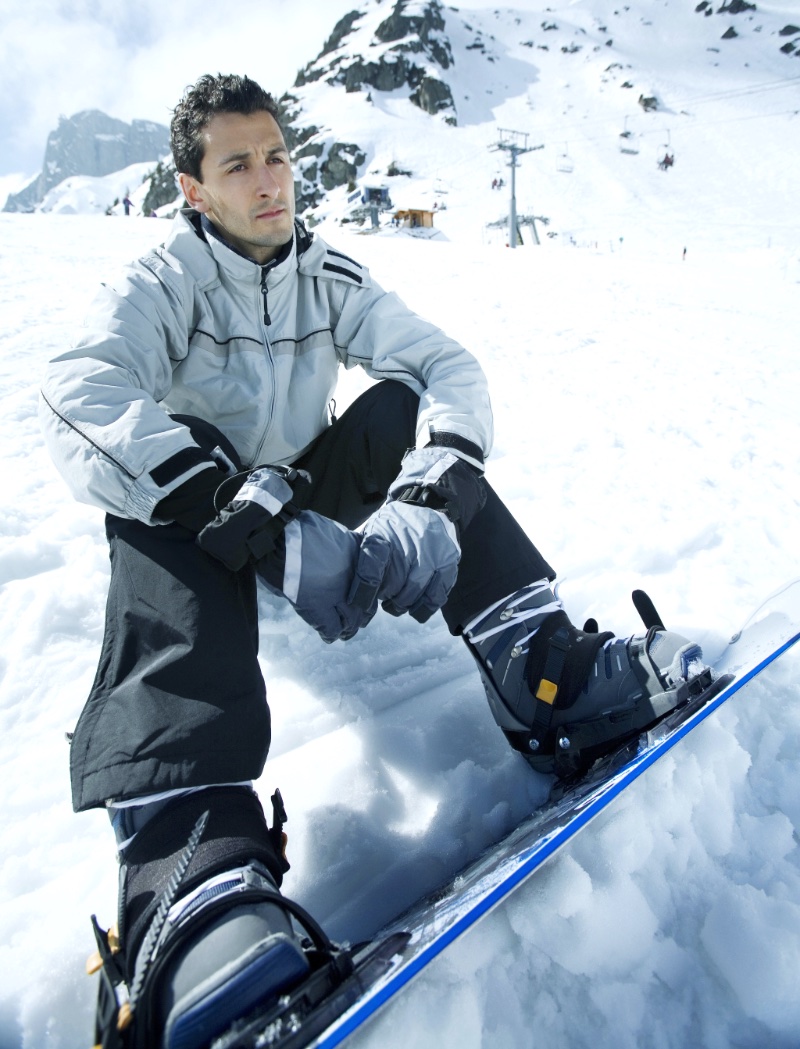
Gray and black will appeal to the man who enjoys the mountain more than the prospect of dressing like a highlighter. The light jacket lifts the darker pants, while its black trim gives the two pieces an obvious connection. It’s close to an everyday winter palette, translated into snow clothing.
Goggles become a more noticeable accessory against that restraint. Their frame and strap can introduce a little contrast, while the lens choice follows the day’s light conditions.
A Silver Ski Suit
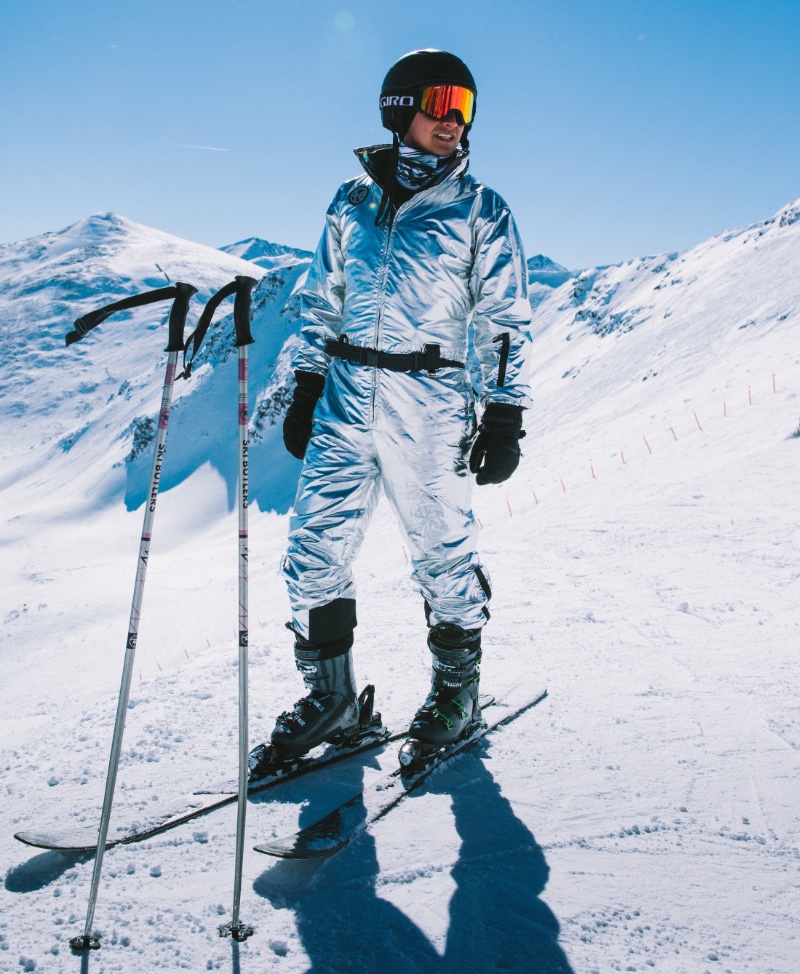
A silver ski suit suggests that the future will involve chairlifts. The reflective fabric makes even a simple standing pose look theatrical, while black gloves and a belt give the shine a few firm boundaries. The continuous silhouette is part of the attraction: one garment, very little ambiguity about the intended effect.
That much silver is quite enough to build an outfit around. Simple accessories keep the look coherent, with the suit’s fit and weather protection checked as carefully as those of any jacket and pants.
A Slim Cross-Country Ski Outfit
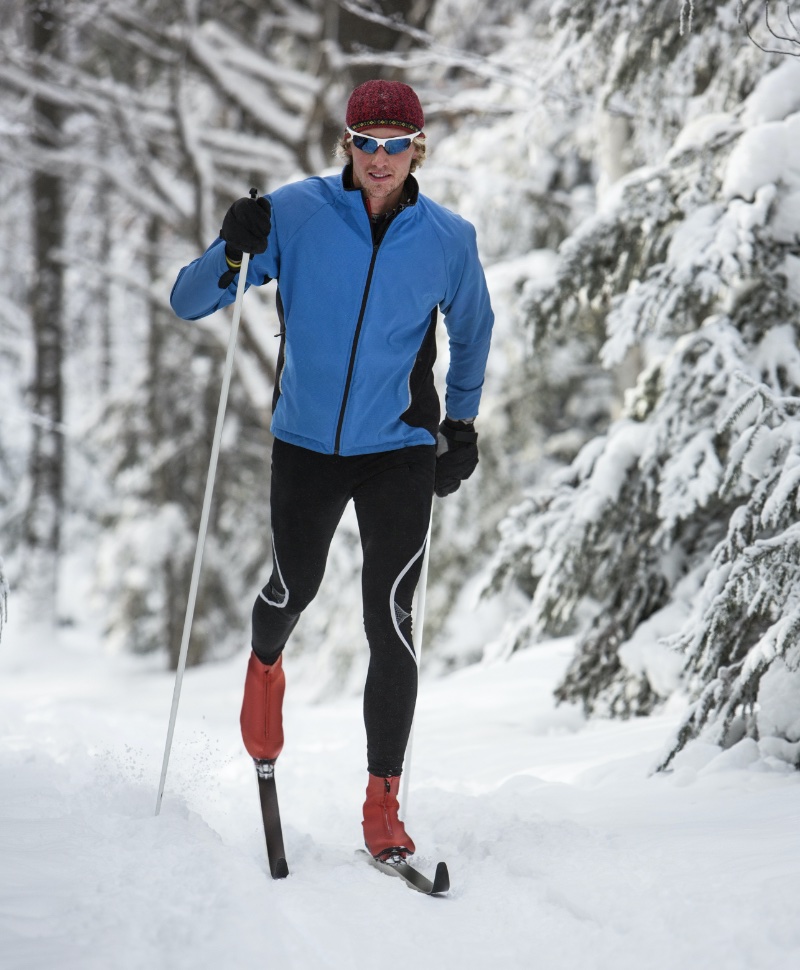
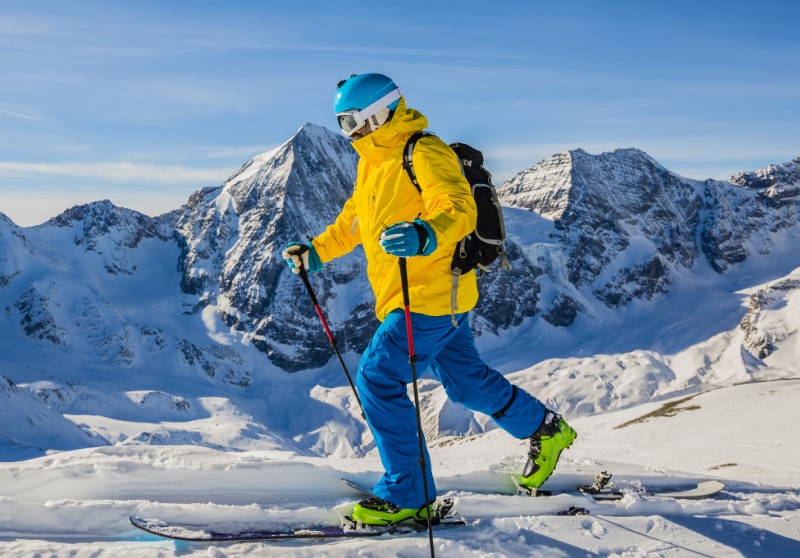
Cross-country skiing changes the proportions completely. The blue jacket sits close to the body above fitted black leggings, drawing attention to the movement of the legs. It has the lean outline of clothing intended for sustained effort, a different proposition from the looser shapes worn for lift-served skiing.
Blue above black keeps the outfit direct. Activity-specific clothing matters here, since the exertion of cross-country skiing calls for its own approach to layers. The resulting silhouette follows the sport.
A Hoodie for a Dry Break
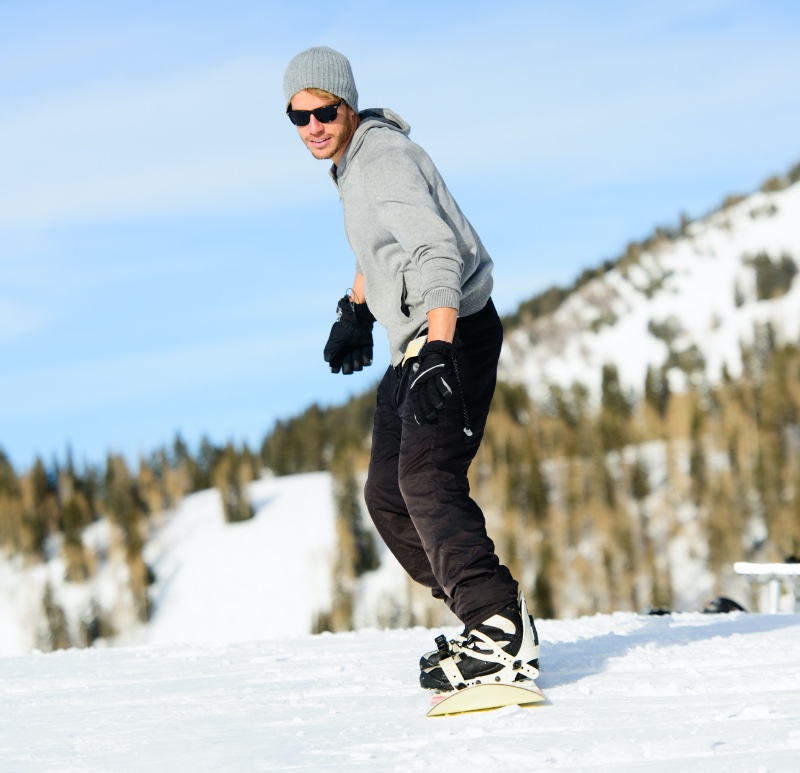
The gray hoodie makes a snowboard outfit feel closest to something worn on an ordinary Saturday. Above black snow pants, it softens the silhouette when the outer jacket comes off. That ease is particularly welcome during a dry break at the base or a stop inside the lodge.
Its place on the mountain still depends on the fabric and conditions. A casual sweatshirt works as a casual sweatshirt; riding layers need the moisture management and weather protection appropriate to the day.
The Layers & Accessories Beneath the Look
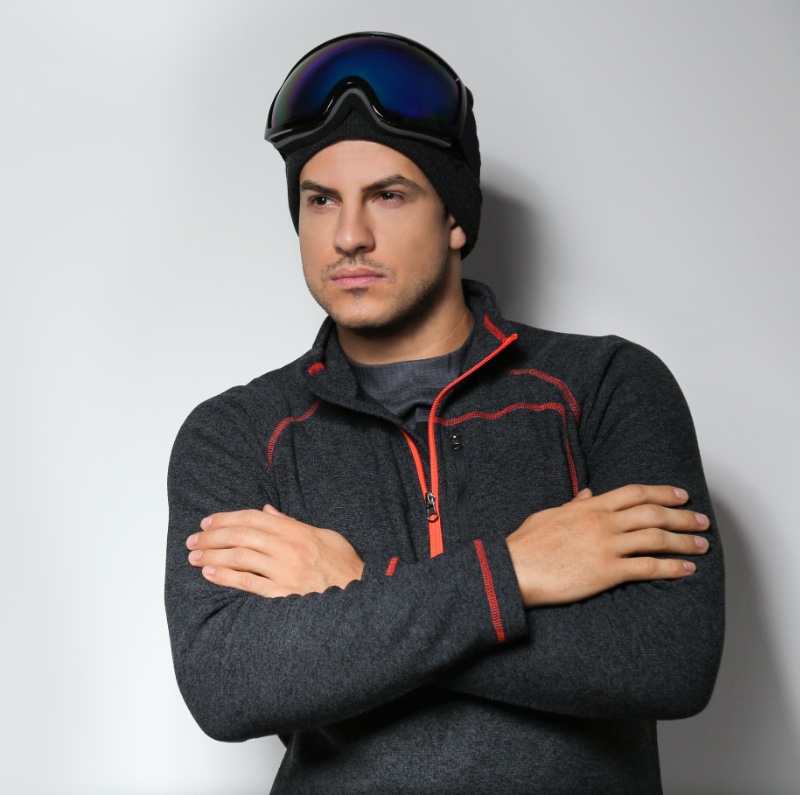
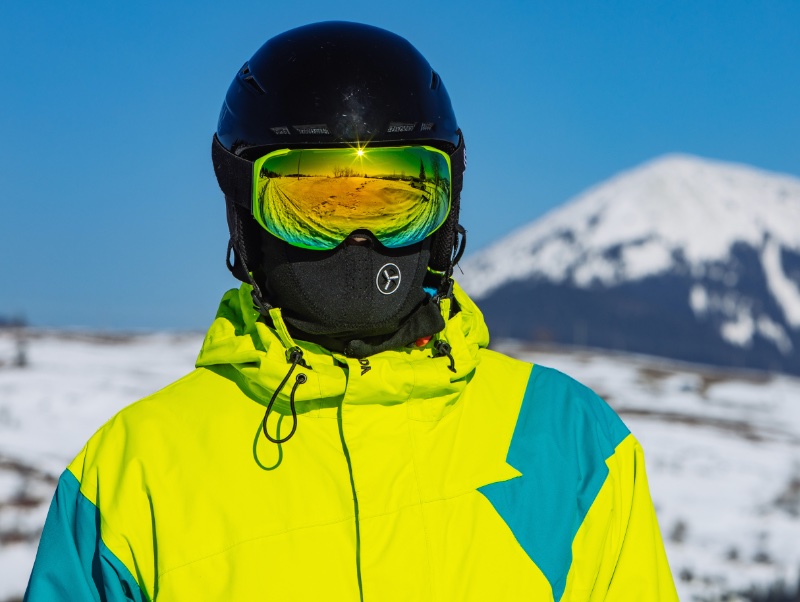
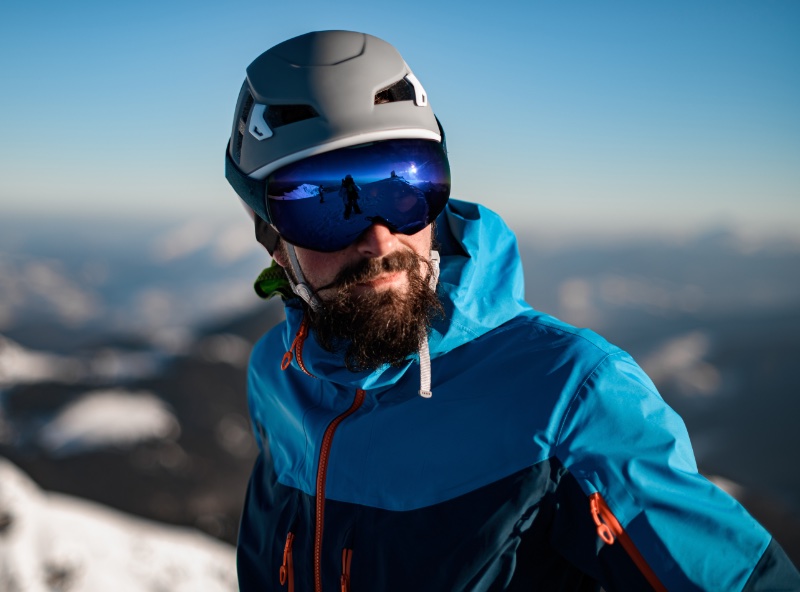
The less visible clothes influence how everything above them sits. A useful layering system starts with moisture management next to the skin, adds insulation as needed and finishes with protection from wind and snow. A membrane such as Gore-Tex addresses weather protection; warmth also depends on the garment’s construction and the layers beneath.
Trying the jacket over those layers gives a more honest picture of its fit. Helmet and goggle compatibility, suitable gloves and snow-sport socks complete the practical side. Once those decisions are made, choosing between red and silver becomes a matter of temperament.
From the Slopes to the Lodge
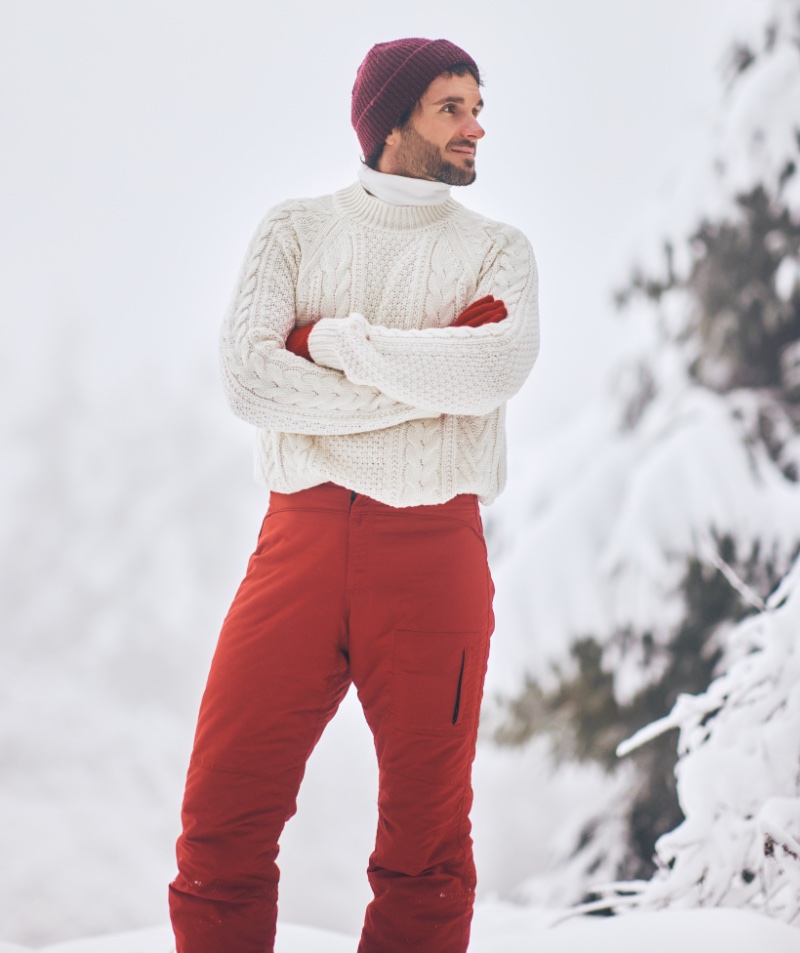
A cream cable knit changes the character of red pants immediately. The color remains exuberant, but the sweater brings it into the world of fireside seating and an afternoon that may now extend into dinner. A burgundy cap keeps the reds related, with enough difference to feel easy.
For après-ski, dry clothes and footwear suited to the next stop make the transition comfortable. The red pants can stay part of the plan. After a day on the mountain, they hardly count as adventurous.