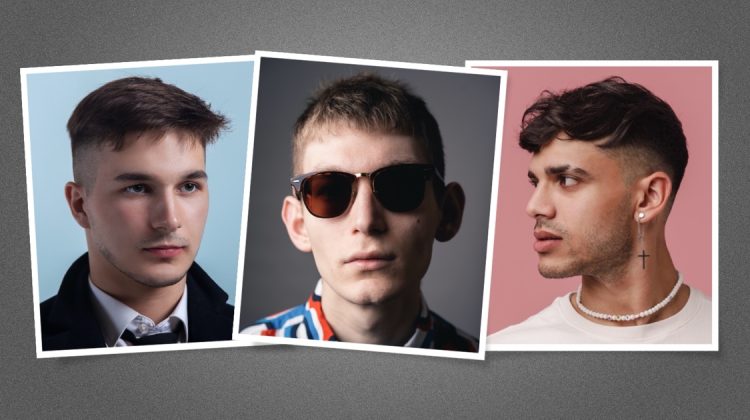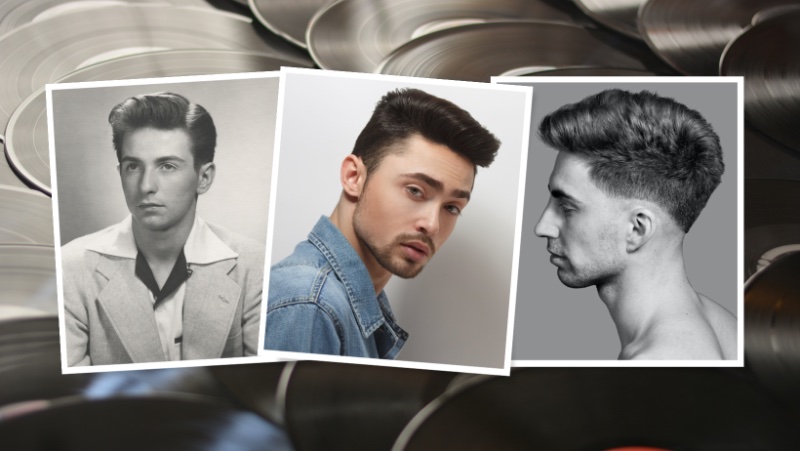
Fashion takes what it needs from history and leaves the rest. The pompadour has survived that selection process more than almost any other men’s hairstyle, lifted from the 1950s into the 1980s, from rockabilly into punk, from Elvis Presley’s Memphis into the Saint Laurent runway. Each return came with slightly different proportions but the same essential shape. Volume swept up from the forehead. Shorter sides. A silhouette that announces itself before the man has said a word.
That staying power has specific reasons. The pompadour connects image to era more directly than almost any other men’s hairstyle. On the runway it places a figure in time; in the barbershop it makes a statement about the wearer. This guide traces both threads, covering the style’s origins, its appearances in fashion, and the variations available to any man considering it today.
What Is a Pompadour Haircut?
The pompadour is defined by one feature above all others. Volume sweeps upward and back from the forehead, held in place with product, while the sides are cut shorter or faded to frame the shape. The height of the top section, the degree of the fade, and the finish (slick, textured, or tousled) vary across individual interpretations, but the basic geometry stays consistent. Hair grows long on top, short on the sides, and the styling direction runs away from the face.
The name comes from Madame de Pompadour, the 18th-century French courtesan who wore her hair swept high off the forehead in a style that influenced European fashion for decades. The men’s version as recognized today is a 20th-century invention, shaped largely by American pop culture in the 1950s.
The Pompadour Through Time
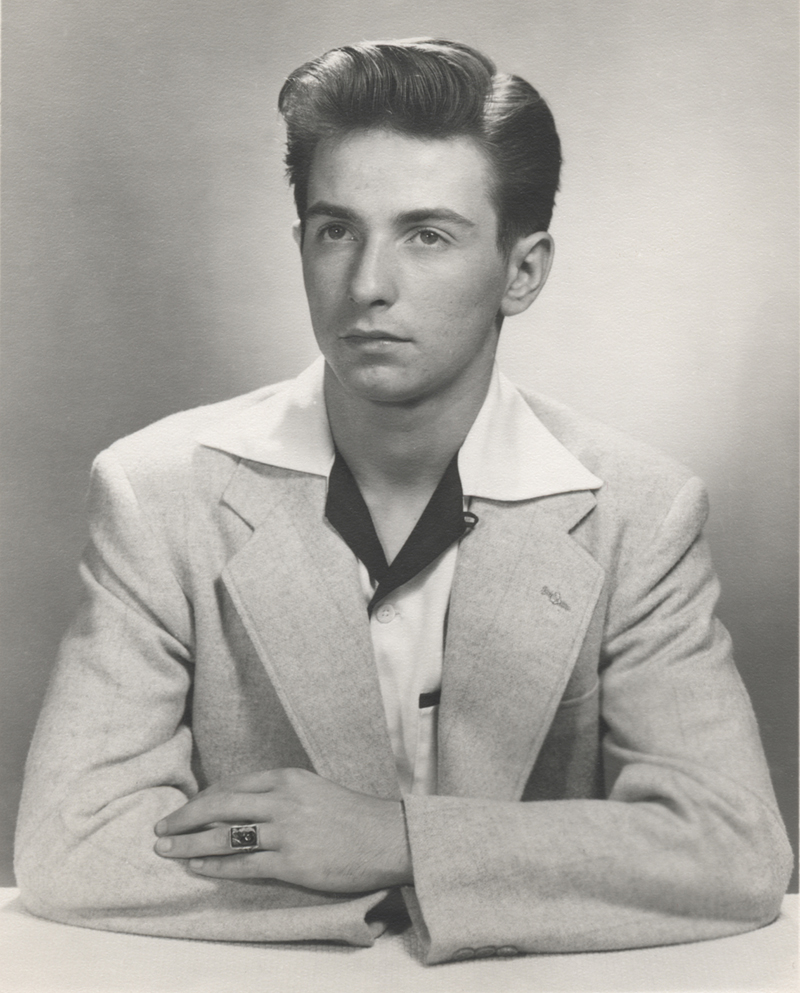
The modern men’s pompadour arrived in force with the rockabilly generation of the early 1950s. Elvis Presley is its most visible early figure, but the style was part of a broader working-class aesthetic that combined grease, volume, and a specific defiance of the era’s conservative grooming norms. Hair slicked high with pomade, sides close-trimmed with a razor, the silhouette announced rebellion before a note was played.
Through the 1960s, the pompadour underwent refinement. British mods reduced the volume and sharpened the sides, folding the shape closer to the tailored shape they were building across the rest of their wardrobes. The exaggerated height came down; the precision came up. The swept-back structure and the clean contrast between top and sides stayed.
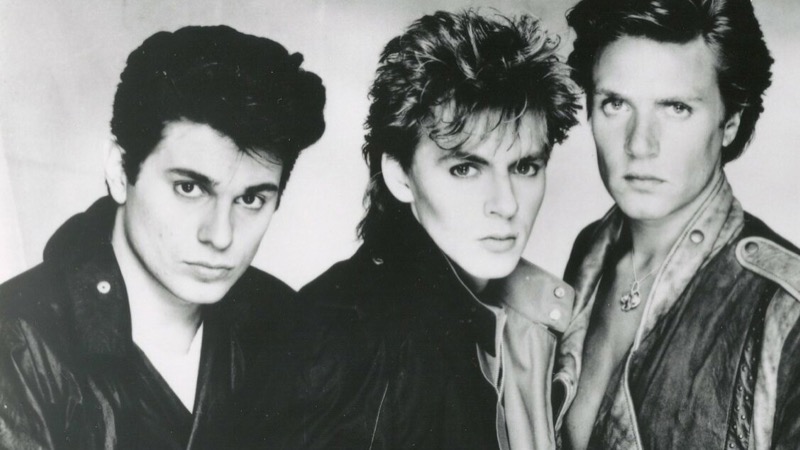
The 1980s brought a third wave with more volume and a sharper finish. Punk took the shape and spiked it; rockabilly revivalists brought back the grease; the New Romantic movement restyled it in gel and symmetry. Each version was in conversation with the 1950s original, confirming the pompadour’s status as a style men reach for when they want their hair to signal something specific.
The current version trades high shine for a textured finish, hard fades for lower tapers, and the fixed silhouette for a range of interpretations suited to different hair types and face shapes. The underlying geometry has stayed the same.
The Pompadour in Fashion
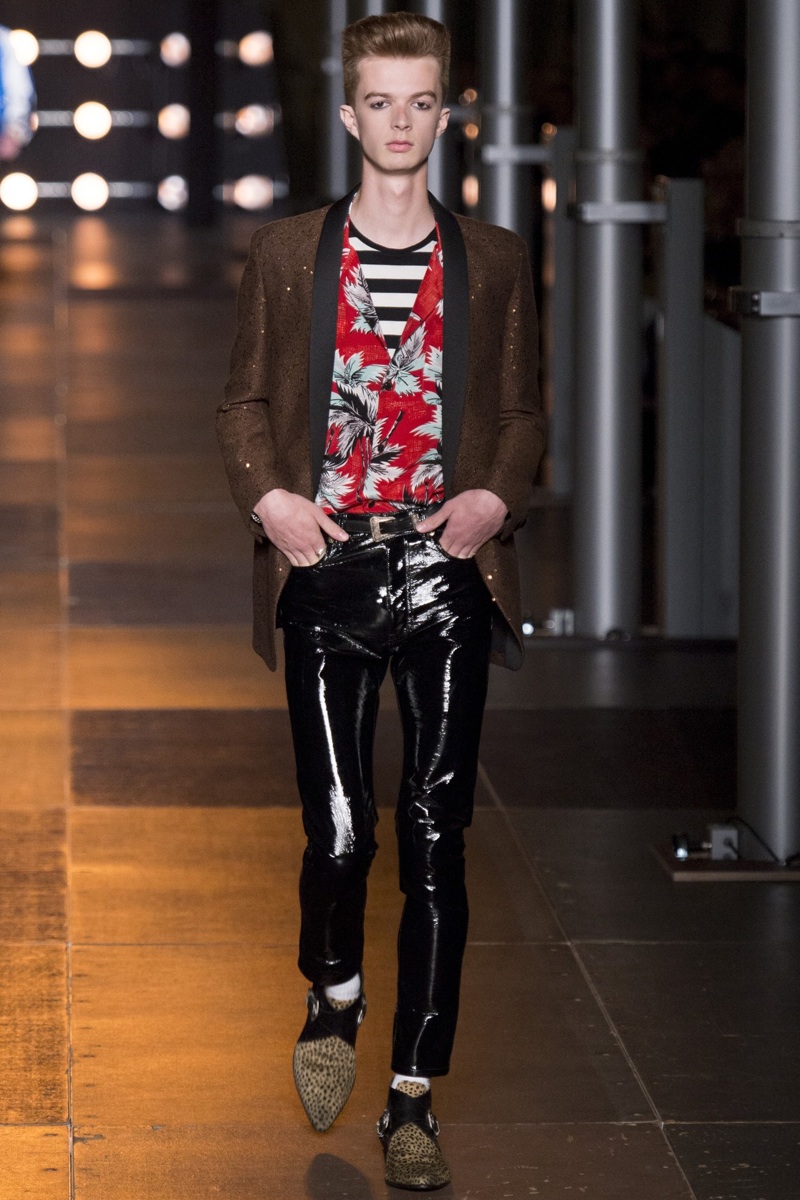
The pompadour appears on the runway as shorthand. Hedi Slimane put it on Saint Laurent’s male models in closely cut suits in the early 2010s, pairing volume on top with the narrowness of the jacket to create a proportional tension that referenced the 1950s and the 1970s at once. At Dior Men, swept-back top sections surfaced alongside tailoring doing similar historical work. In these contexts the pompadour operates as a costume decision, placing the figure in a specific time.
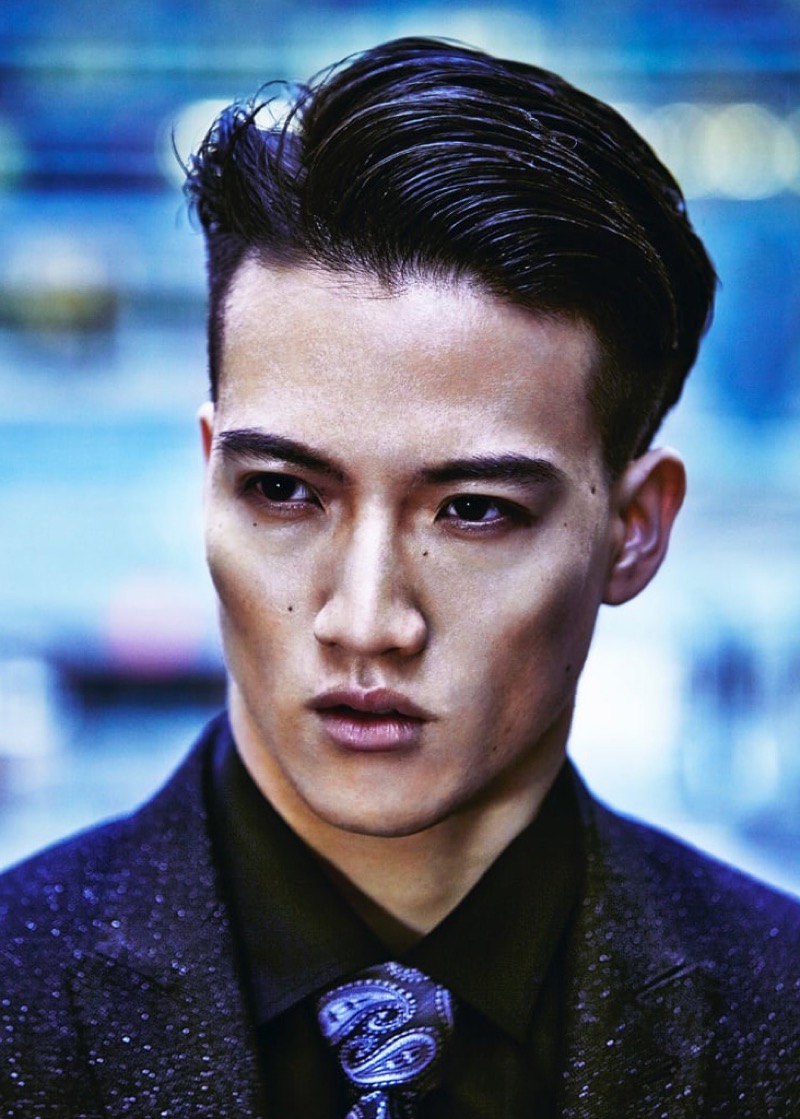
In editorial photography, the style functions as a primary signal. A campaign organized around a retro reference uses the pompadour alongside period-appropriate tailoring and prop selection because the hairstyle holds enough cultural code to alter how an entire image lands. That weight is worth knowing before the barber visit. The pompadour arrives with associations attached. The choice is which set of those associations the wearer wants to invoke.
The Modern Pompadour
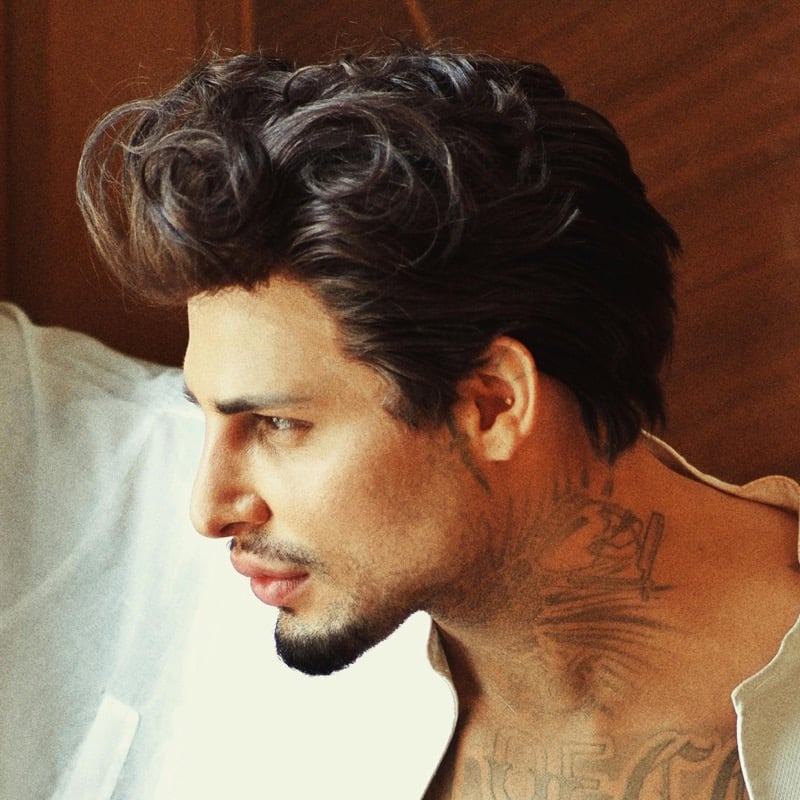
The modern pompadour keeps the swept-back top and shorter sides of its predecessors but shifts the finish from slick to textured. Where the 1950s version required pomade that caught the light and held the shape into something close to architecture, the current interpretation uses matte products that preserve the volume at a lower surface shine. The height tends to be lower than the classic silhouette, and the sides are more often tapered than faded hard, which softens the contrast and makes the style compatible with a wider range of settings.
This shift has a tradeoff worth understanding. The matte finish and lower profile work well in contemporary professional and social settings, but they also reduce the style’s period-specific signal. The wearer who wants the pompadour to land with the full weight of its 1950s reference will want the grease and the height. The wearer who wants the shape to stay recognizable across a modern wardrobe will use clay and keep the volume lower.
The modern pompadour also allows for variation in texture on top. Wavy and curly hair work well within the structure when the top is cut to let natural movement show. Straight hair can be worked into a cleaner, more sculpted shape. Either approach produces a recognizable pompadour; the choice between them is as much about personality as it is about hair type.
Pompadour Haircut styles
The Classic Pompadour with Full Beard
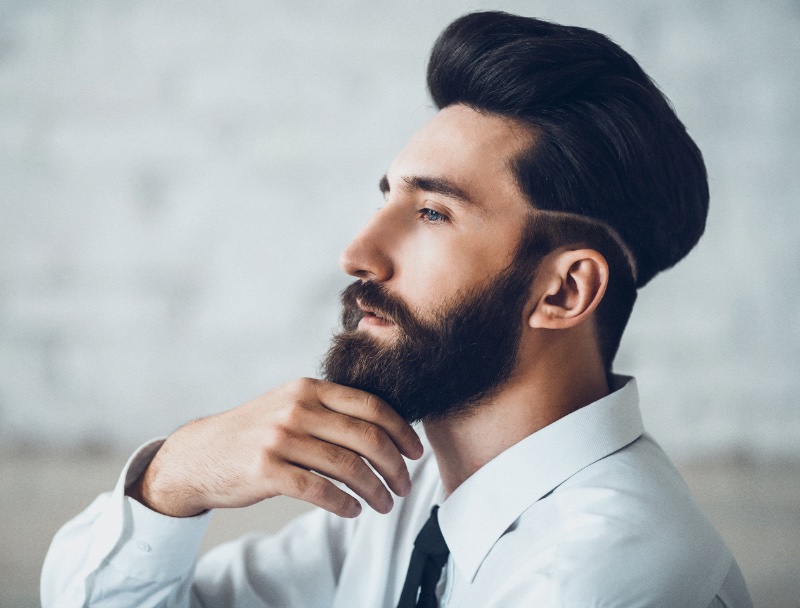
The volume sits high and smooth on top, swept back from the forehead with a medium-high shine finish that shows the comb lines through the top section. The sides drop sharply from the longer top in a clean disconnection, producing a defined separation between the two lengths. The full beard is shaped tight at the cheekbones and allowed more volume at the chin, which balances the height above without competing with it. A water-based pomade at medium-to-high hold keeps the surface smooth and the comb-through lines visible.
The Pompadour with Side Part & Taper Fade
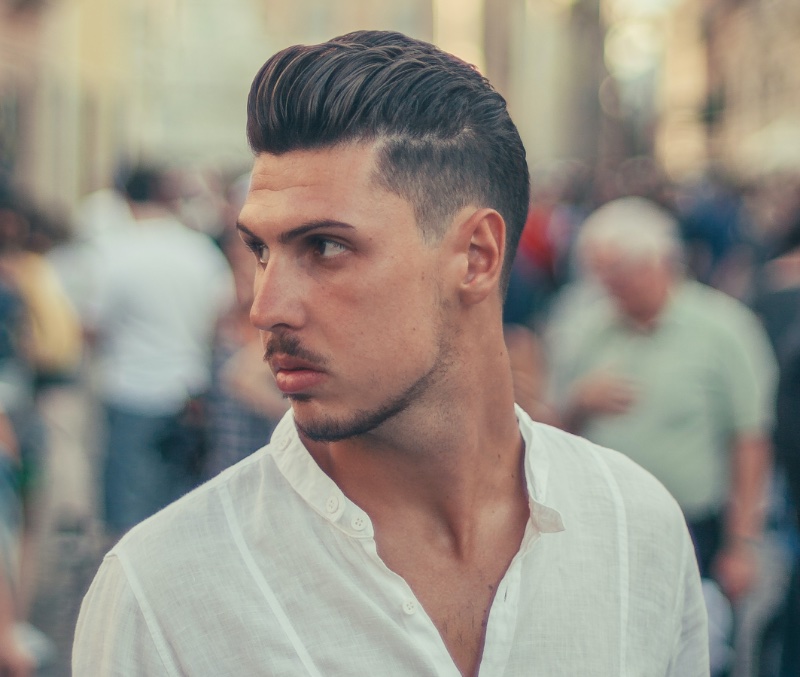
A razor-sharp side part sets the direction for everything above it. The longer side sweeps back and up from the part line with a high-shine finish, the comb lines running parallel from the hairline to the crown. The sides carry a medium-low taper that keeps coverage near the temple while narrowing toward the neckline. This is the most formal interpretation in the set, with the part line and high-shine finish moving it into professional and event territory. A high-hold water-based pomade applied to dry hair with a fine-tooth comb produces the surface clarity.
The Refined Pompadour with Tapered Sides
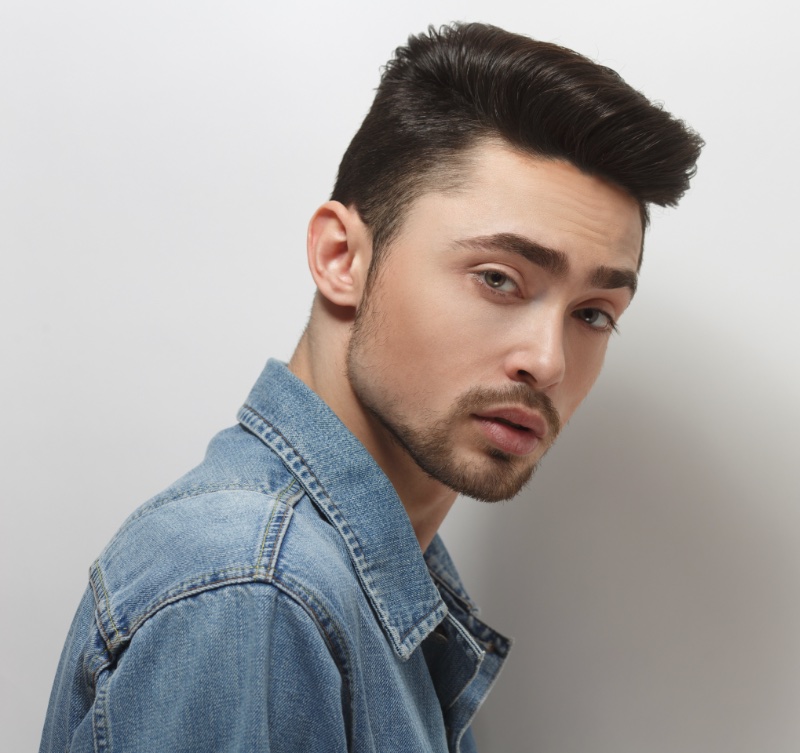
The top sweeps back with moderate volume and a natural, matte finish that lets individual strands show at the surface. The sides taper gradually from the temple downward, keeping the skin covered throughout the transition. This version sits at the casual end of the range. The proportions are balanced, the finish is low-maintenance, and the style fits most settings. A light-hold clay applied to slightly damp hair and then blow-dried into shape gives the lift and the separation.
The Modern Pompadour
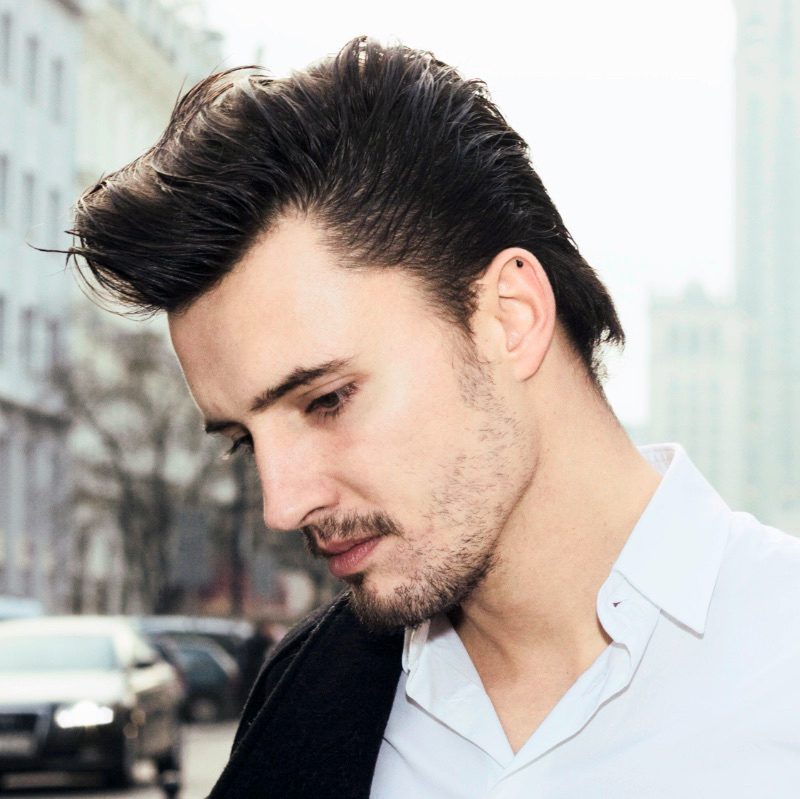
The top builds significant height behind the hairline, with the individual strands separated and the surface showing visible texture rather than a smooth plane. A matte product holds the volume and the direction while the hair’s own movement shapes the surface. The sides taper to a medium length, keeping weight at the temples. The combination of height and surface texture places this version between the polished classic and a fully undone finish, which makes it the easiest modern interpretation to wear across different contexts.
The Tousled Pompadour
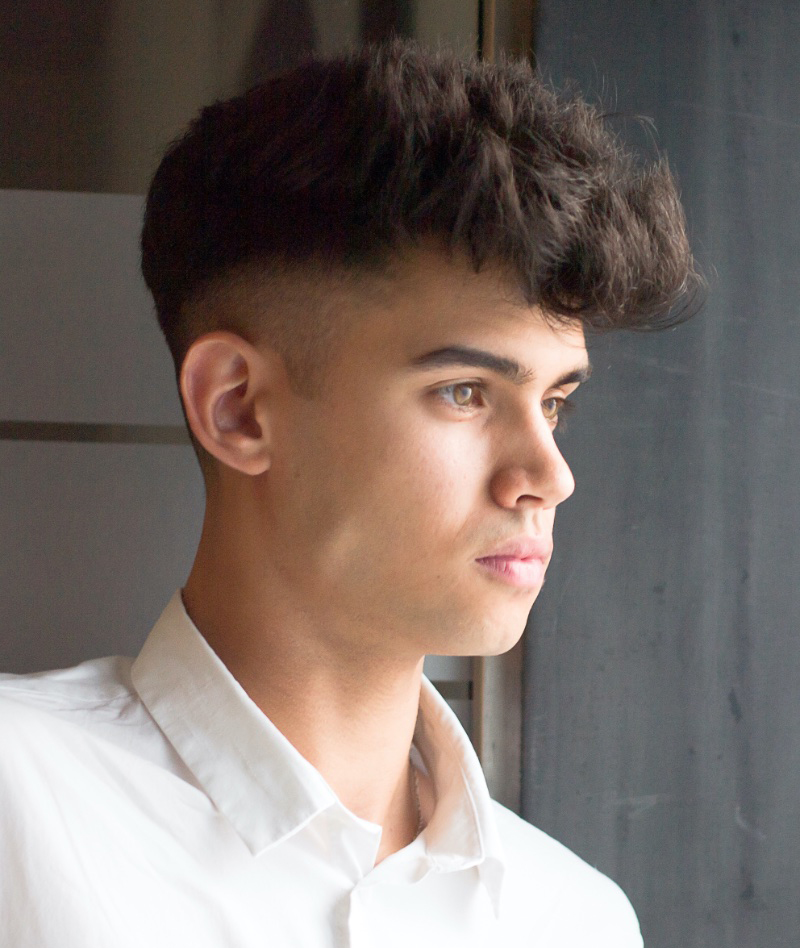
The top section has enough natural wave to move forward slightly at the front hairline before sweeping back, giving the shape a less precise front edge than most pompadour versions. The surface is completely matte and the strands sit in loose groups rather than lying flat against each other. The sides include a mid fade that keeps the perimeter tidy while the top stays relaxed. This version requires the least product and the least styling time of any interpretation here.
The Textured Pompadour
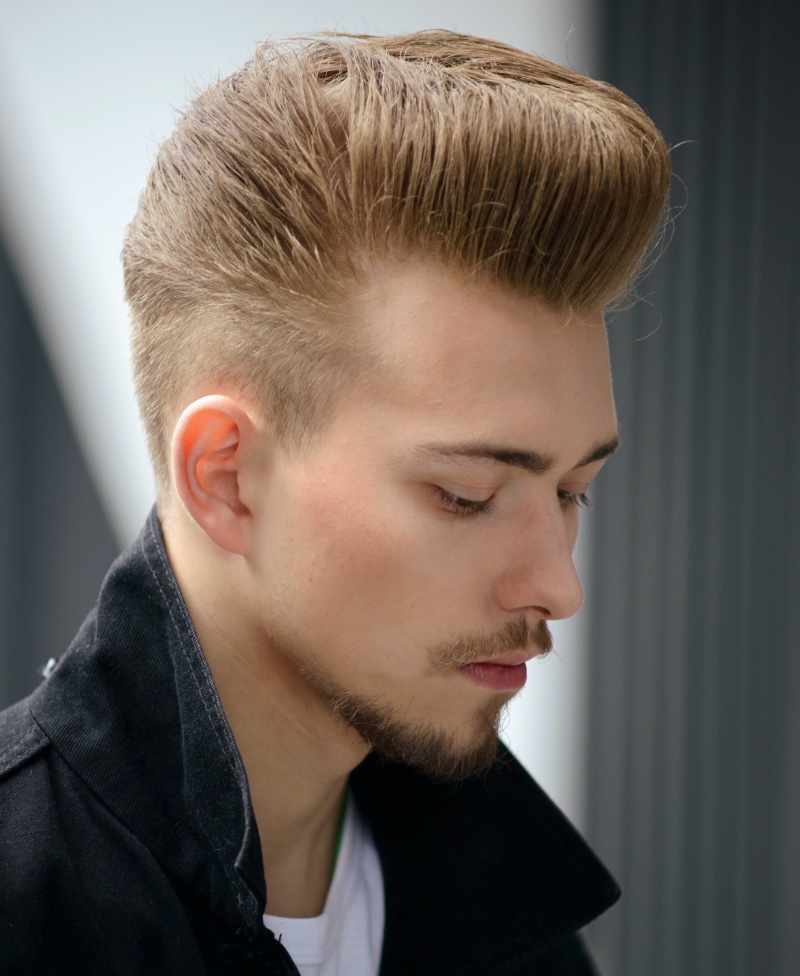
The height here is considerably more than the standard modern interpretation. The top section rises well above the hairline and maintains that height across the crown. The outer surface is smooth from a distance but individual strands are visible at closer range, giving the shape a semi-textured quality that stops short of a fully matte finish. The sides carry a low fade that keeps the transition gradual and lets the volume on top dominate the proportions. This is the most volumetrically ambitious version in the set.
The Textured Pompadour with Low Fade
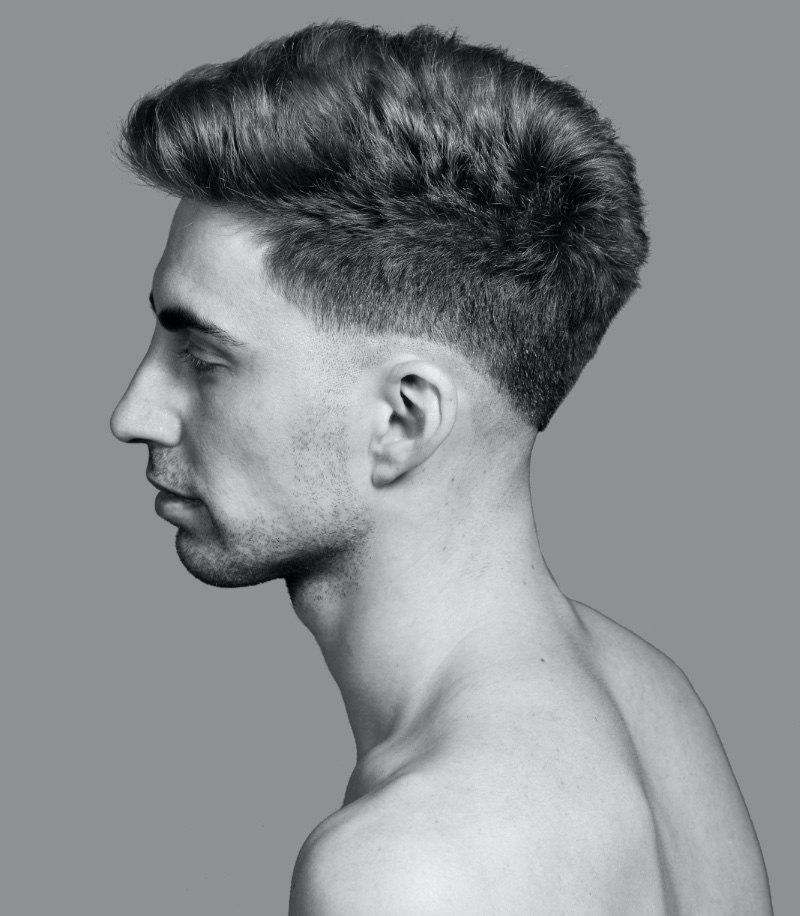
The side view makes the pompadour’s geometry clearer than most frontal shots can. The shape here is wide and rounded at the top rather than peaked, building from the front hairline back across the crown in a consistent arc. Visible texture across the surface gives the shape depth. The low fade begins near the bottom of the ear, keeping the sides fuller and allowing the transition from longer to shorter to happen over a wider area.
The Pompadour with Low Fade
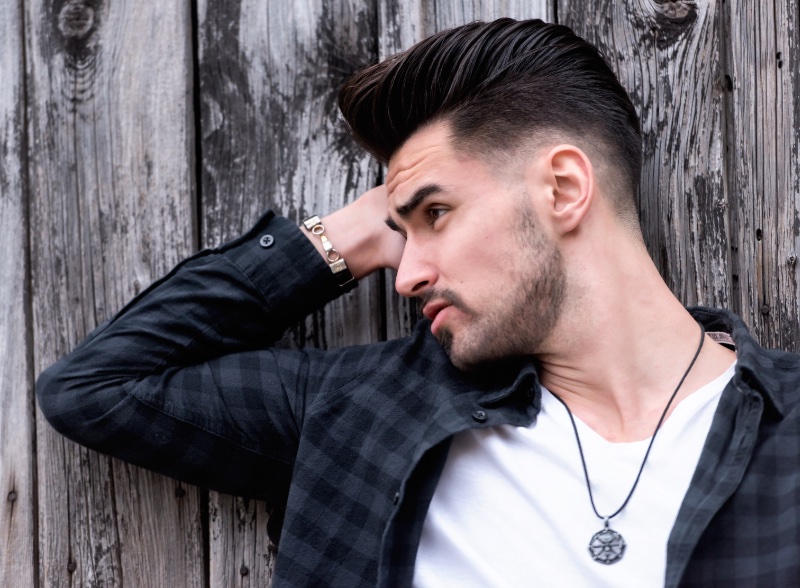
The fade starts well below the temple and narrows gradually toward the neckline, leaving the sides fuller through the mid-section. The top is swept back with medium volume and a smooth finish that sits between high-shine and matte. It has enough hold to maintain the shape over the course of the day. The overall proportions are relaxed, and the longer sides mean this version holds its shape for several weeks between cuts before the fade starts to soften visibly.
The Curly Pompadour with Taper Fade
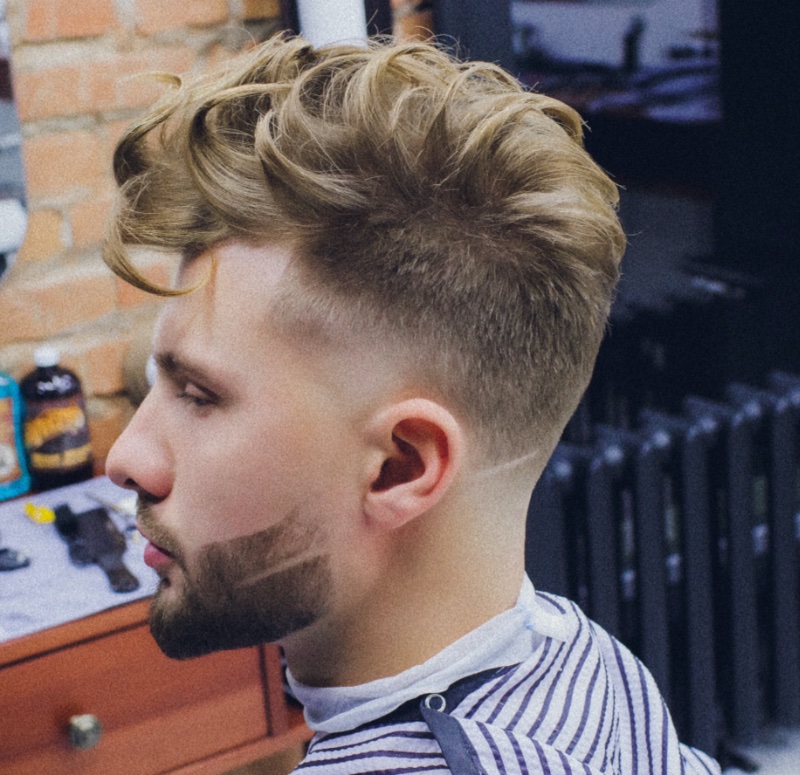
The waves here are large and loose. They stack and sweep back from the hairline in a voluminous shape that the cut supports by leaving generous length on top. The high taper fade takes the sides to near-skin level, producing a strong contrast between the full top and the cropped sides that makes the wave pattern the dominant visual element. A line beard follows the jawline cleanly. Styling calls for a curl-defining cream worked through damp hair before air-drying or diffusing, directing the waves back and upward.
The Pompadour with High Fade
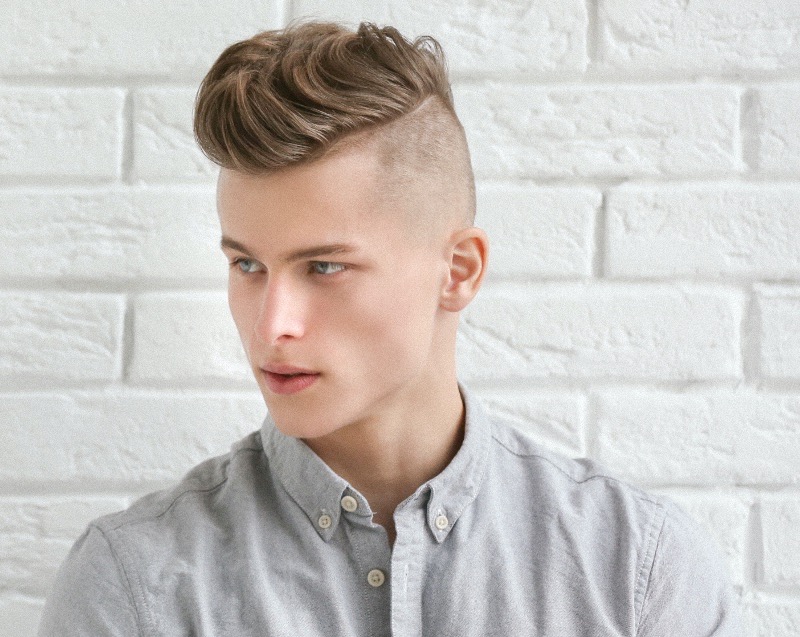
The fade here is tight. It takes the sides to near-skin level from the mid-temple up, maximizing the contrast between the shaved sides and the full top section. The top is smooth and clean-surfaced with a medium-matte finish, swept back with enough hold to keep the shape throughout the day. A close-trimmed beard follows the jawline. Of all the fade variations here, this one requires the most frequent barbershop maintenance. The sides show growth within a week and the contrast softens noticeably within two.
The Pompadour Undercut
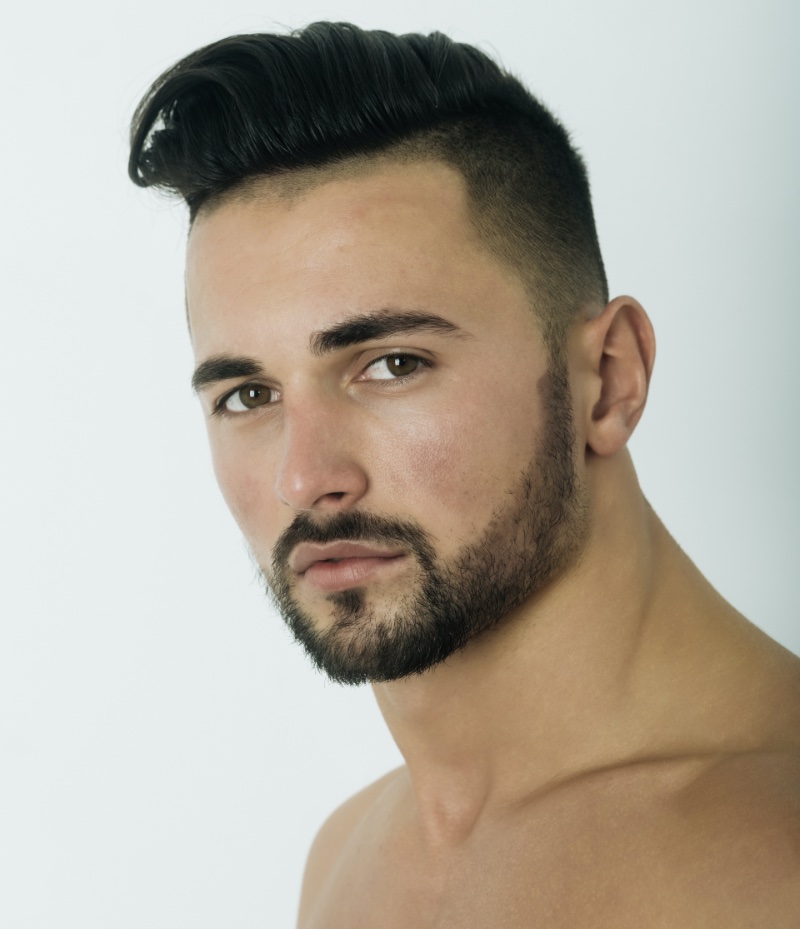
The sides are faded from the mid-temple to a close length, producing a clear visual boundary between the shorter sides and the longer top. The top section sits at a moderate height with some natural texture. The surface has slight movement rather than a smoothed finish. The overall volume is contained rather than dramatic, which makes this version more compatible with everyday settings than the high-fade or volumetrically aggressive interpretations.
The Slick Back Pompadour
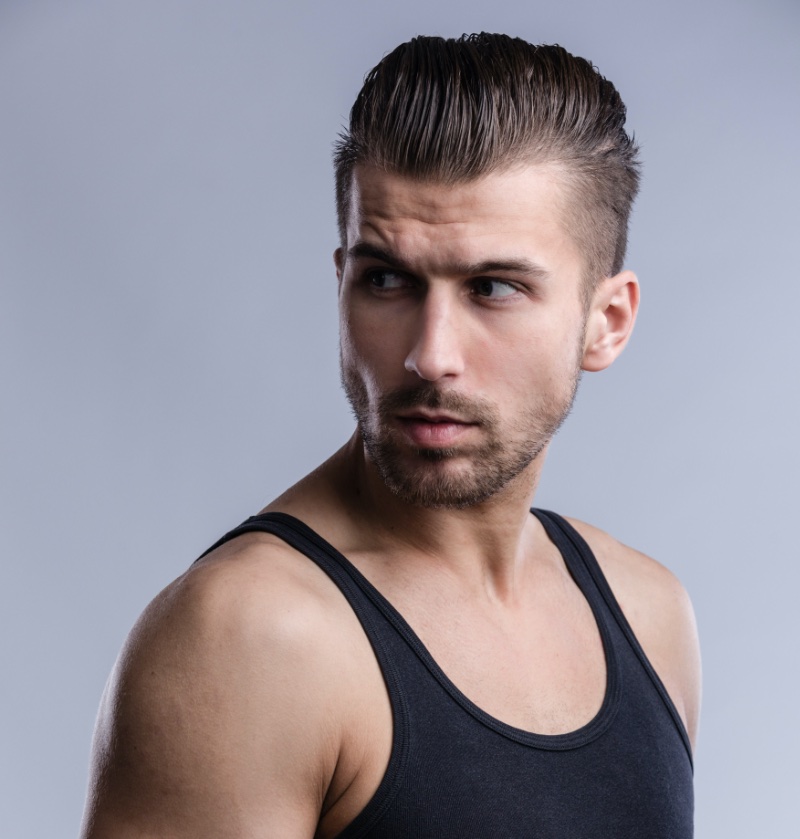
The hair runs straight back from the hairline in a single flat plane with no height or forward break at the crown. The comb lines are visible from the forehead to the back of the head. High-shine pomade holds the surface flat and produces a reflective finish across the entire top section. The sides are clipped to a moderate length rather than faded to skin, which gives the style a more even distribution of length from top to sides. Of all the pompadour variations here, this one sacrifices volume entirely and keeps only the rearward direction.
The Sculpted Pompadour with Fade
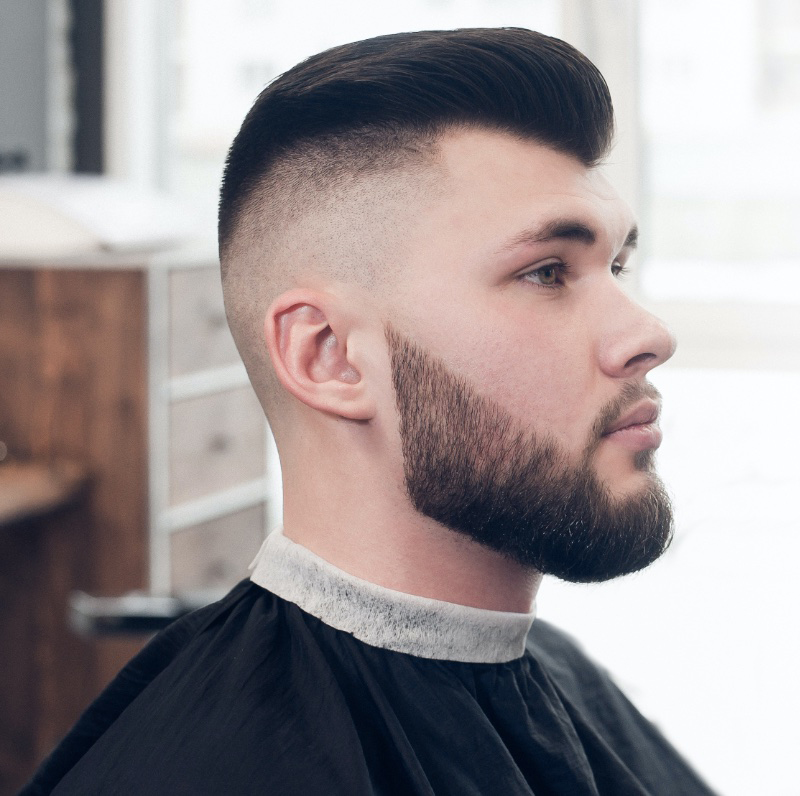
The front hairline section rises slightly before the hair sweeps back, producing a subtle crest at the forehead that sits closer to a quiff at the front and a pompadour at the crown. The sides are faded to near-skin from above the temples, leaving very little hair on the sides and drawing attention to the top section’s shape and movement. The finish is semi-matte with visible texture across the surface. This version suits men with naturally thick hair that has enough body to hold the forward rise at the front.
The Asymmetrical Pompadour
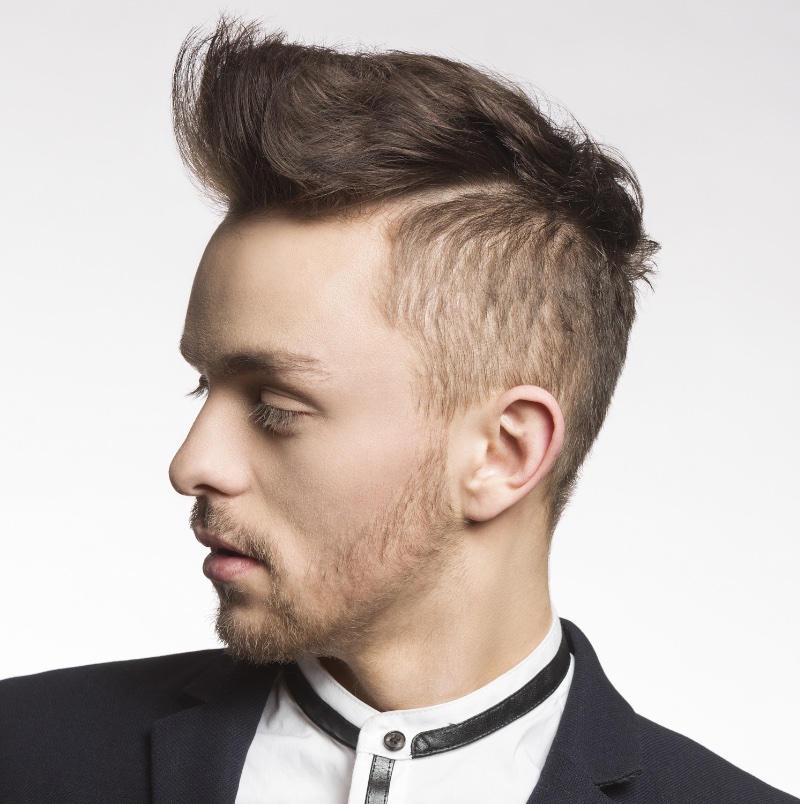
The top section has volume and height but falls sideways instead of sweeping straight back. The strands separate and fan across the crown in an asymmetrical spread that breaks from the style’s usual directional logic. The sides are cropped very close, framing the fuller, more expressive top. The overall effect is closer to editorial fashion than daily grooming. A strong-hold texturizing product applied to dry hair and worked section by section produces the separation and the directional break.
The Deconstructed Pompadour

The top section has the length of a pompadour but the direction is sideways and forward, with the hair falling loosely across the forehead instead of sweeping back. The sides feature an undercut that creates a clear boundary between the close-cropped sides and the longer top, but the top itself has no structured sweep. It moves with the hair’s own weight. This is the farthest interpretation from the classic silhouette while using the same underlying cut. Minimal product and no blow-dry produce this finish deliberately.
The Edgy Spiky Pompadour
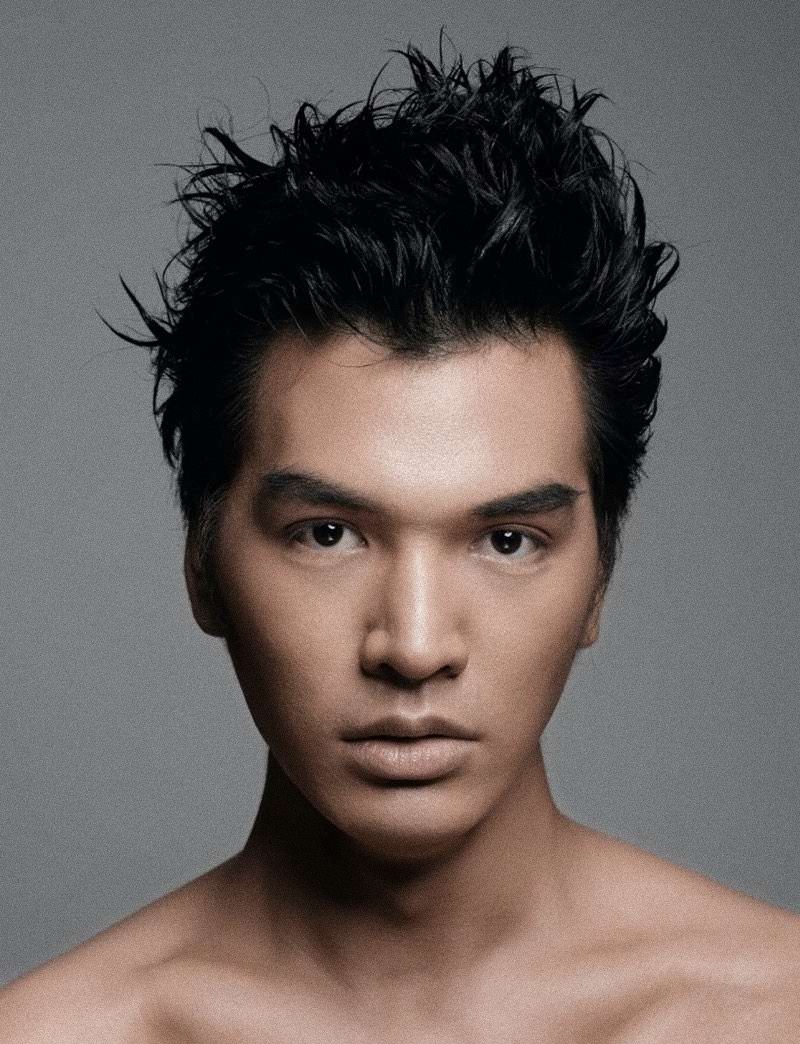
The top section has been worked into individual spikes that point upward and slightly forward, with each strand separated and holding its own line. The overall mass goes up in the direction of a pompadour but abandons the smooth, swept surface entirely in favor of sharp, separated tips. The effect is high-contrast and editorial. This version belongs to a fashion context more than a barbershop one. A strong-hold wax or fiber product applied to dry hair strand by strand produces the separation and the individual spike definition.
How to Style a Pompadour
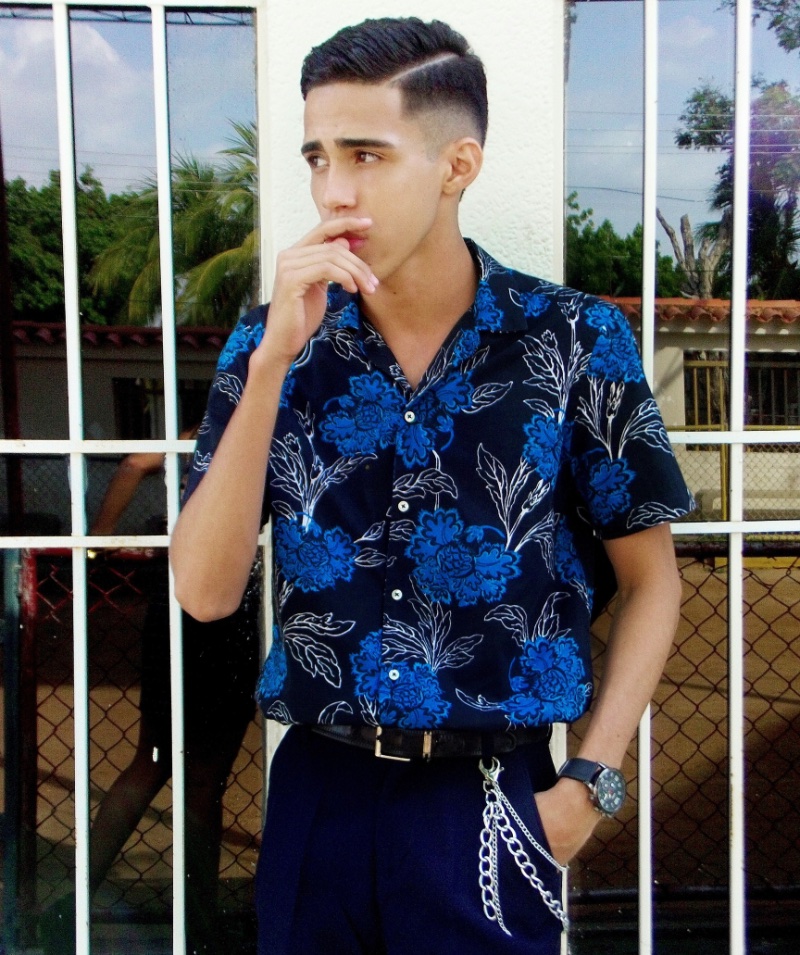
Build the Volume Before You Apply Product. Blow-dry the top section upward and back with a round brush, working from the roots. The lift starts at the scalp. Product manages hold, but the blow-dry builds the actual height. A session skipped means the style runs flatter than its shape requires.
Match the Product to the Finish. A water-based pomade with medium to high hold produces the slick, defined finish of the classic version. A matte clay or paste produces the textured, lower-shine finish of the modern version. Mixing the two produces a middle result by applying a small amount of clay first, then a very light pomade on top. Most pomades go into dry hair; most clays into slightly damp hair.
Use Less Product Than You Think You Need. A fingernail’s worth of pomade is a reasonable starting point. Spread it between the palms first to soften it, then work it through the hair. Adding more is easy; removing excess requires a full wash.
Direct the Hair in Sections. Work from the front back, pushing the hairline section up and away from the face first. Move backward through the top, maintaining the upward and rearward direction throughout. The crown section may need a separate pass to keep it lifted.
Trim the Sides Every Three to Four Weeks. The top can grow longer between cuts and the style holds its shape. The sides and neckline show age fastest. A taper or fade grown out by two weeks already looks notably softer than it did on the day of the cut. Factor in the maintenance schedule before committing to a tight fade.