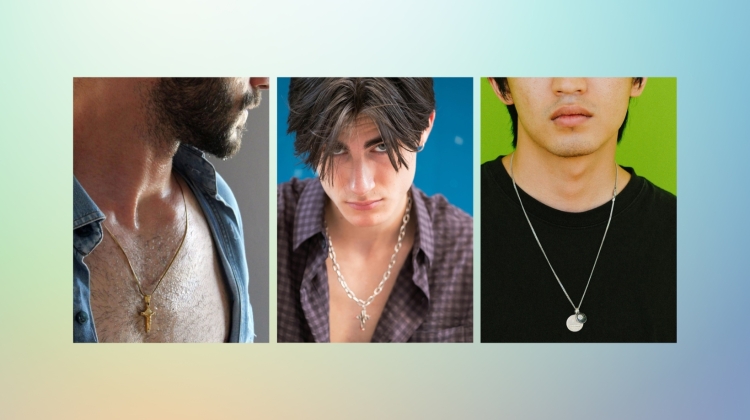
Earrings sit close enough to the face to become part of how a man is recognized. A tiny stud might stay through several haircuts; a hanging hoop can change the character of a plain T-shirt. Male ear piercing spans both approaches, with placement doing as much of the work as the jewelry itself. The same silver ring looks quite different at the lobe and high on the ear.
Ear Piercings for Men
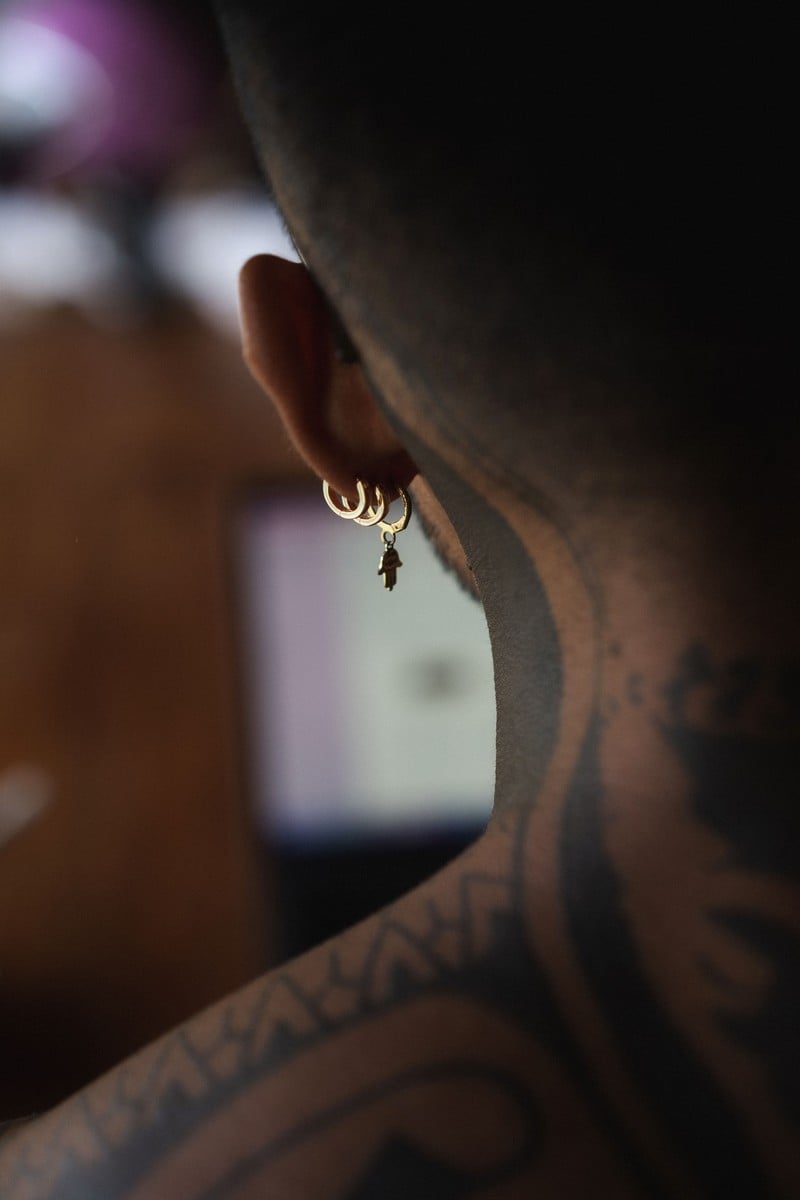
The lobe is the natural starting point for many men, partly because an earring there is visible head-on. Cartilage piercings introduce other possibilities. A ring along the upper rim draws attention to a short haircut, while jewelry tucked inside the ear rewards a closer look. Scale makes a difference, too. A larger piece can lead the arrangement, with smaller studs playing supporting roles.
That relationship is what makes ear piercing stacks work. Repeated gold hoops have a sense of continuity, while a hanging charm breaks up the line. Matching every piece is optional; giving them something in common helps. Your ear’s anatomy sets the available positions, and a professional piercer can help translate the look you want into a suitable arrangement.
Types of Ear Piercings for Men
Standard Lobe Piercing

The standard lobe piercing passes through the soft lower part of the ear, where a stud can become as habitual as a watch. It also leaves plenty of stylistic choices once healed. Small hoops sit close to the jaw; pendants move as you turn your head. For a first piercing, it offers a simple way to discover how much jewelry you actually like wearing.
Upper Lobe Piercing

An upper lobe piercing sits above the first, extending the line of earrings upward. Two small hoops can look quite restrained, especially when their size decreases toward the top. A stud beside a larger ring gives a different balance. Placement deserves some planning, since the boundary between soft lobe tissue and cartilage varies from ear to ear.
Helix Piercing

A helix piercing goes through the outer cartilage rim, bringing jewelry higher into view. It has a particular affinity with cropped sides and hair swept behind the ear, where a small silver ring becomes part of the haircut’s outline. A stud gives a more contained accent, while several rings follow the curve of the rim.
Forward Helix Piercing

The forward helix sits at the front of the upper rim, near where the ear joins the head. Its compact position favors small jewelry, with a single stud catching the light beside the temple. A series of studs can make a finer, more detailed arrangement, provided the ear has suitable anatomy and enough space for each piercing.
Flat Piercing

A flat piercing uses the flatter upper cartilage inside the outer rim. This puts the face of a decorative stud on display, making shape especially important. A small disk gives a simple finish; a clustered top takes up more of the upper ear. It is a placement for someone who pays as much attention to the jewelry’s design as to its size.
Conch Piercing

The conch sits in the bowl of cartilage near the ear’s center. A stud nestles into that hollow, while a ring on a healed piercing can sweep around the outer edge. One draws attention inward; the other gives the ear a larger outline. Discuss the jewelry you eventually want with your piercer, since the placement and fit need to support it.
Tragus Piercing

The tragus is the small flap of cartilage in front of the ear canal. A stud or ring here sits close to the face, separate from the usual row of lobe earrings. It can add a small point of interest to an otherwise simple arrangement. Earbuds are a less glamorous consideration, but an important one when planning a piercing in this position.
Daith Piercing

A daith piercing passes through the innermost cartilage fold above the ear canal. A curved ring brings out that sheltered position, giving the center of the ear a piece of jewelry of its own. It is especially effective when the outer rim is kept relatively simple. The fold’s depth and shape determine whether the placement is suitable.
Rook Piercing
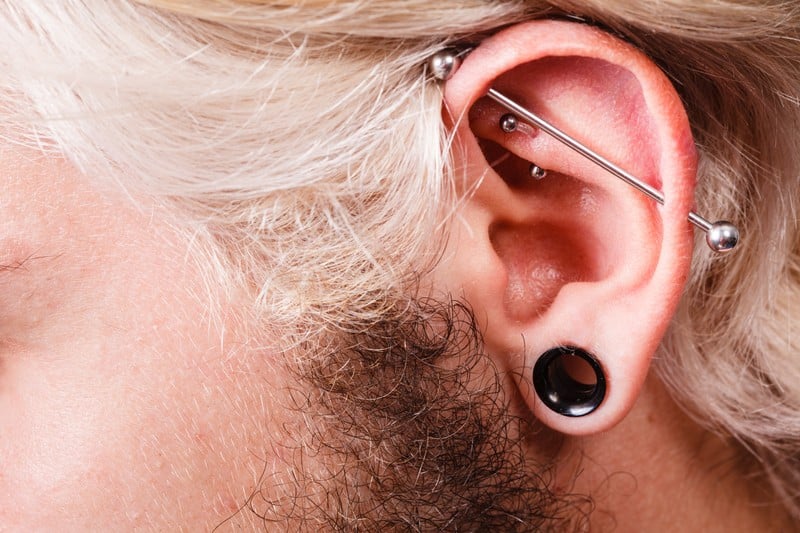
The rook passes through the upper inner cartilage ridge, above the daith, with the ends of a curved barbell visible on either side. Here, the smaller rook jewelry sits beneath an industrial bar. The contrast in scale lets both pieces register, even though they share the upper ear. A pronounced enough fold is essential for this placement.
Auricle Piercing

Auricle is often used for a piercing along the middle of the outer rim, between the lobe and upper helix. A small hoop here can bridge the gap between earrings below and cartilage jewelry above. Studios may call it mid-helix or lower helix, so pointing out the exact position is more useful than relying on the name alone.
Anti-Tragus Piercing

The anti-tragus is the raised cartilage above the lobe, opposite the tragus. Jewelry here sits close to the lobe earrings but follows a different part of the ear’s structure. That proximity makes scale worth watching: smaller jewelry can leave a larger hoop or plug below as the main feature. Suitability depends on having enough pronounced cartilage to pierce.
Snug Piercing

A snug piercing travels across the inner cartilage ridge through the antihelix. The jewelry follows the ear’s contours closely, adding a compact detail inside a broader arrangement. It can appeal to men who already enjoy several piercings and want to work farther inward. The shape of the ridge is decisive, so an anatomy assessment comes first.
Industrial Piercing

An industrial connects two piercings with one bar, commonly across the upper ear. It gives the eye a continuous line to follow, which explains its impact even beside a large lobe plug. A straight bar has a graphic simplicity; shaped jewelry can introduce a more playful turn. Both channels must align with the jewelry and the ear’s structure.
Orbital Piercing

An orbital connects two piercing channels with a single ring, creating a loop that belongs to both. It can sit in the lobe or cartilage, with the position changing its effect. Along the rim, the ring emphasizes the ear’s curve. The distance and angle between the channels need to suit one shared piece of jewelry.
Transverse Lobe Piercing

A transverse lobe piercing travels sideways through the lobe, leaving the ends of a barbell visible at either side. It changes the usual front-facing arrangement of a lobe stud, turning the jewelry across the tissue. The result depends on the lobe’s shape and thickness, so this is one to plan with a piercer experienced in the placement.
Stretched lobes take the look in another direction. If you plan to buy plugs for stretched ears, choose jewelry for your established size and discuss any stretching plans with your piercer.
Choosing Jewelry & Caring for Your Piercing

The earrings you want to wear eventually and the jewelry suited to a fresh piercing may be different. A professional piercer should select the material, dimensions, and shape for the placement. Implant-certified titanium is one option for initial jewelry, with construction and surface finish also part of the decision. The more decorative choices can follow when the piercing is ready.
Healing continues beneath the surface after a piercing starts to look settled. The Association of Professional Piercers recommends sterile saline wound wash containing 0.9% sodium chloride, gentle drying, and leaving jewelry still instead of rotating it. Sleeping on a healing cartilage piercing can cause irritation. Your piercer can advise when downsizing or a jewelry change is appropriate.
After healing, a piercing becomes something you dress with. A small hoop might suit almost everything you own; a pendant may be the detail you choose before the rest of the outfit. Start with the jewelry you are drawn to, then think about where you want the eye to land.