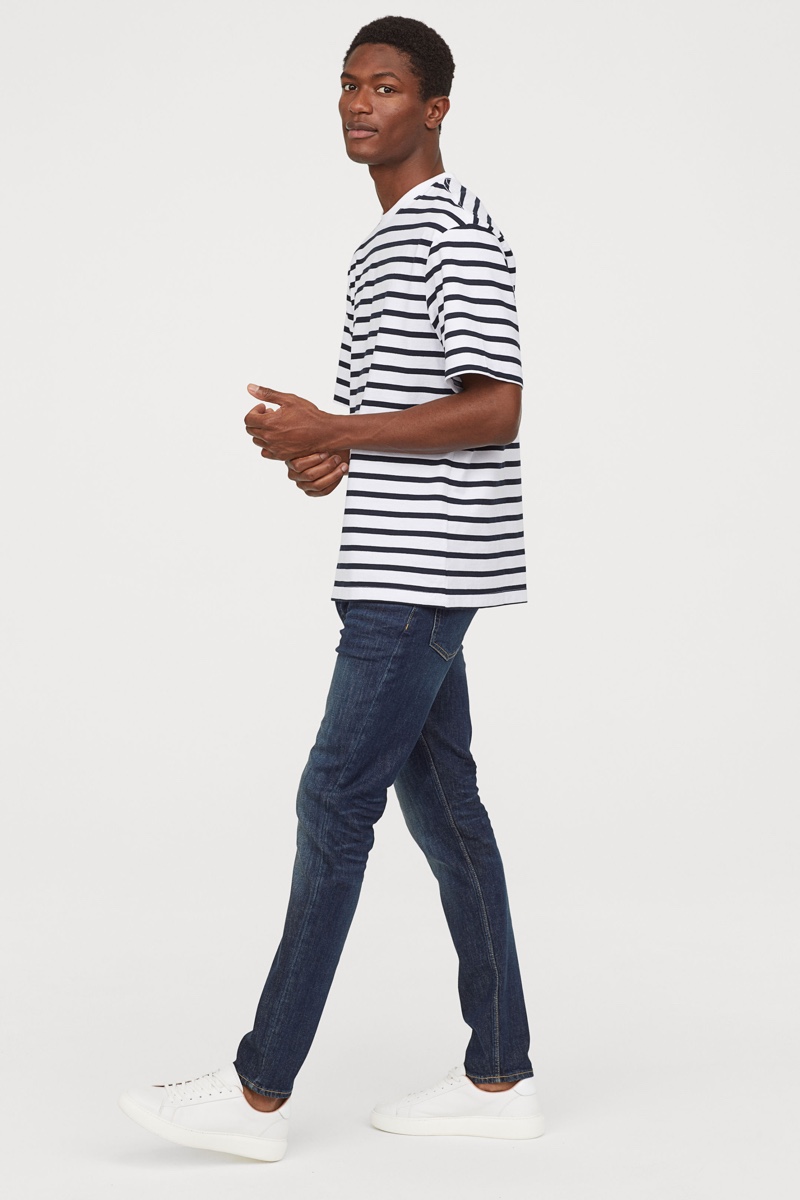
Slim and skinny jeans can look similar on a hanger. The difference becomes clearer through the lower leg: a slim cut leaves more space between denim and skin, while a skinny cut follows the calf more closely and usually ends in a narrower opening. H&M’s examples show how that change affects the whole outfit, even with a plain sweater or T-shirt.
Slim Fit vs. Skinny Jeans
Finding a pair of jeans for everyone involves more than choosing a label. Rise, leg shape and fabric all affect how jeans sit, and the same named fit can feel different between brands or individual designs.
When comparing H&M’s most popular denim jeans for men, read the individual fit and fabric descriptions together. Slim and skinny describe the silhouette; stretch content describes another part of how the garment behaves.


H&M Men’s Jeans
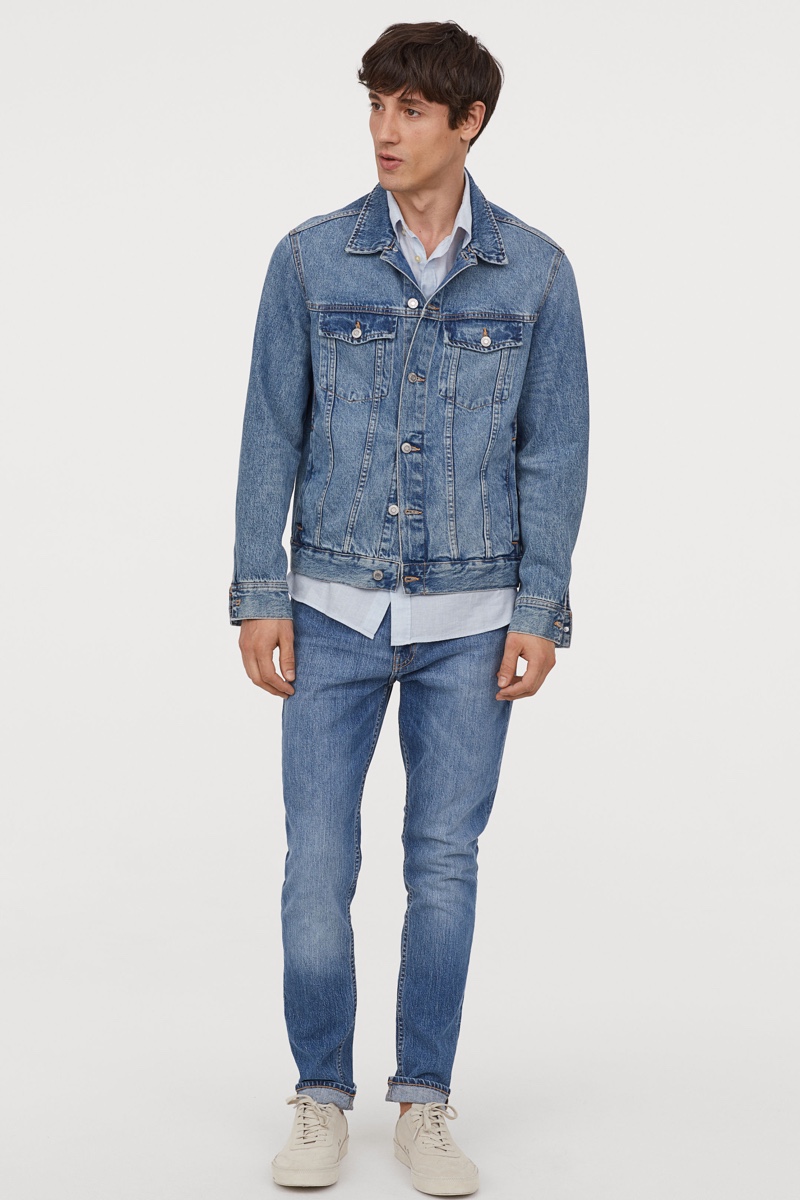
The photographs compare H&M’s slim and skinny shapes across several outfits. Look at the space around the knee and calf, then at how the hem meets the shoe. Those details are more useful than deciding by waist size alone.
Slim Fit Jeans
Slim-fit jeans follow the leg while leaving some space through the thigh and lower leg. The result is a narrow silhouette that can sit beneath a loose sweater or a closer-fitting shirt. The exact taper depends on the design.
Slim Jeans Fabric & Construction
Slim jeans may use rigid cotton denim or a stretch blend. Check the fiber composition for elastane or other stretch fibers, along with the product’s description. Slim fit and bootcut describe different qualities: a bootcut leg widens toward the hem and is not a defining feature of slim jeans.

Fabric weight also changes the feel. A dense denim can hold its shape away from the leg, while a softer stretch fabric may sit closer. Judge the finished pair, not just the fit name.
How Slim Jeans Sit on the Leg
In the black-jeans outfit above, the leg stays narrow beneath a looser sweatshirt. There is still a visible distinction between the line of the calf and the denim, particularly toward the ankle.
When trying on slim jeans, sit down and bend your knees. Check for pulling at the fly and pockets, then see whether the waistband stays comfortable. A narrow silhouette should still allow normal movement.
Skinny Jeans
Skinny jeans bring the fabric closer to the body through more of the leg. The difference is often most apparent around the calf and ankle, where the opening leaves less space above the shoe.
Stretch & Taper
Many skinny jeans use stretch denim to accommodate the close cut. Stretch fiber content varies, and a small change in fabric construction can affect how the jeans feel when you move.
A tapered leg becomes narrower toward the ankle, but taper alone does not make jeans skinny. A pair can taper from a loose thigh or follow the leg closely throughout; compare both the upper and lower halves.
Checking the Comfort of Skinny Jeans
Comfort depends on the pair and the wearer. Fabric weight, rise and the amount of stretch all matter, so a skinny label tells you little about how warm the jeans will feel on a particular day.
Try the jeans through normal movements before deciding. If the waistband digs in or the fabric pulls hard across the crotch, compare another size or cut. That discomfort is a fit problem to resolve.
H&M’s Approach to the Skinny Jean
H&M uses separate slim and skinny categories, with individual products offering their own fabric blends and washes. The photographs here illustrate the shapes; check the current listing for the specifications of the pair you are considering.
Read the rise and leg descriptions alongside the composition and size guide. A different rise can change where the waistband sits even when two pairs have the same labeled waist size.


Slim vs. Skinny Jeans for Men
Choose between the cuts by looking at the silhouette you want and how the jeans feel on your body. Slim usually leaves more space around the leg; skinny creates closer contact and a narrower lower half.
Try each with the shoes you expect to wear. Extra length can gather at the ankle, making a narrow hem look different from the same cut at a shorter length.
Trying on Slim Jeans
A slim cut is a useful starting point if you like a narrow leg with some separation from the body. Check the thigh fit as carefully as the ankle opening, especially if the jeans pull when you sit.
Look at the side view as well as the front. Fabric should fall in a way you like through the seat and knees, with enough movement for everyday wear.
Alterations can adjust some details, such as hem length. Ask a tailor before buying jeans that need more extensive changes, since narrowing the leg or changing the seat can affect the intended shape.
Trying on Skinny Jeans
A skinny cut gives the lower half a closer outline. An overshirt or jacket can add volume above it, as the H&M outfits show, while a fitted top continues the narrow silhouette.
Neither combination is compulsory. Compare the overall proportions in a full-length mirror, then choose whether you prefer contrast between the top and bottom or a consistently fitted look.
Keep your usual underwear on when checking the fit, and make sure you can sit and walk comfortably. Stretch should help the jeans move with you, not serve as a reason to accept a waistband or crotch that feels too tight.
The choice is a difference in shape, not a contest between comfort and style. Find the pair that gives you the leg line you want and remains comfortable through the day.